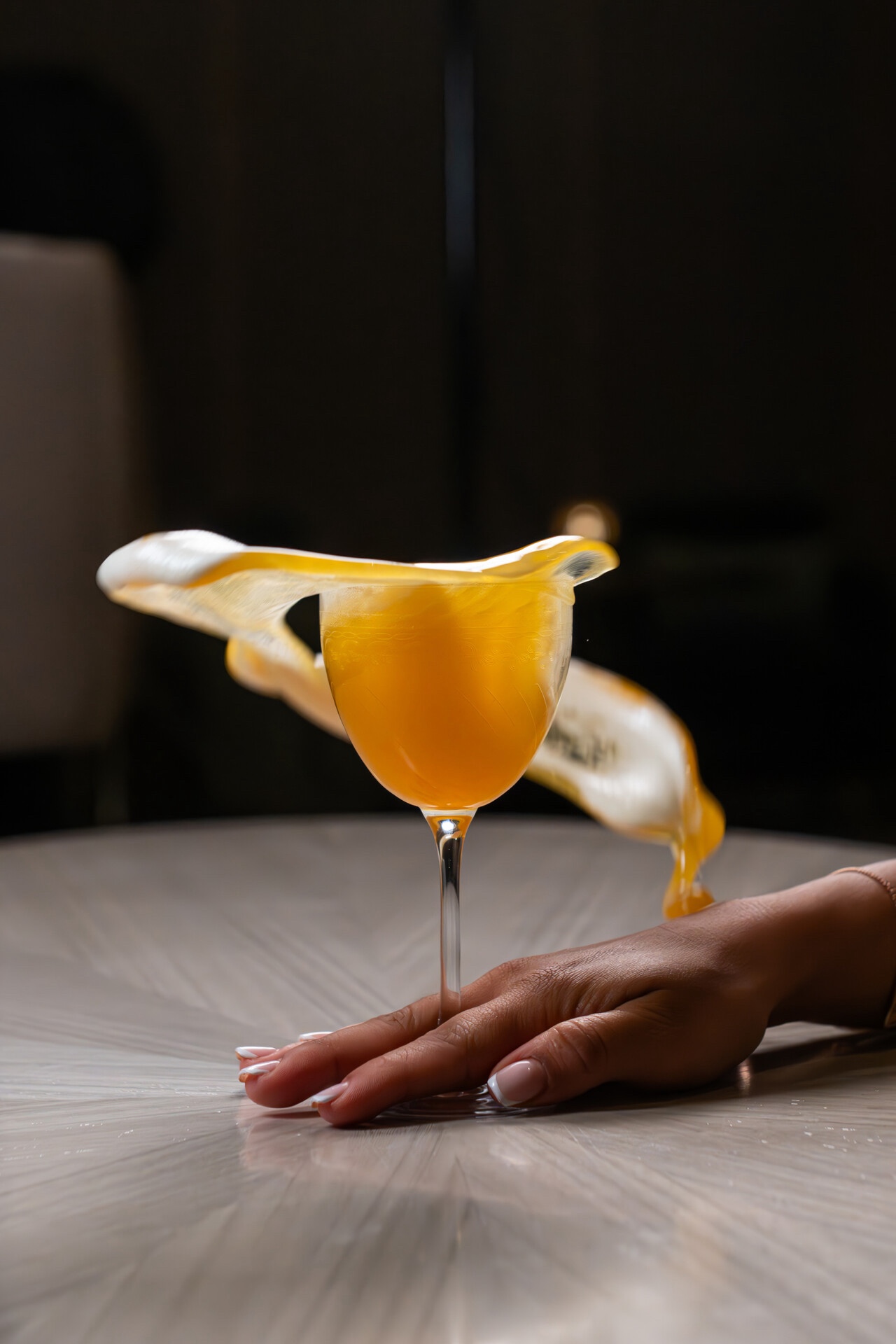
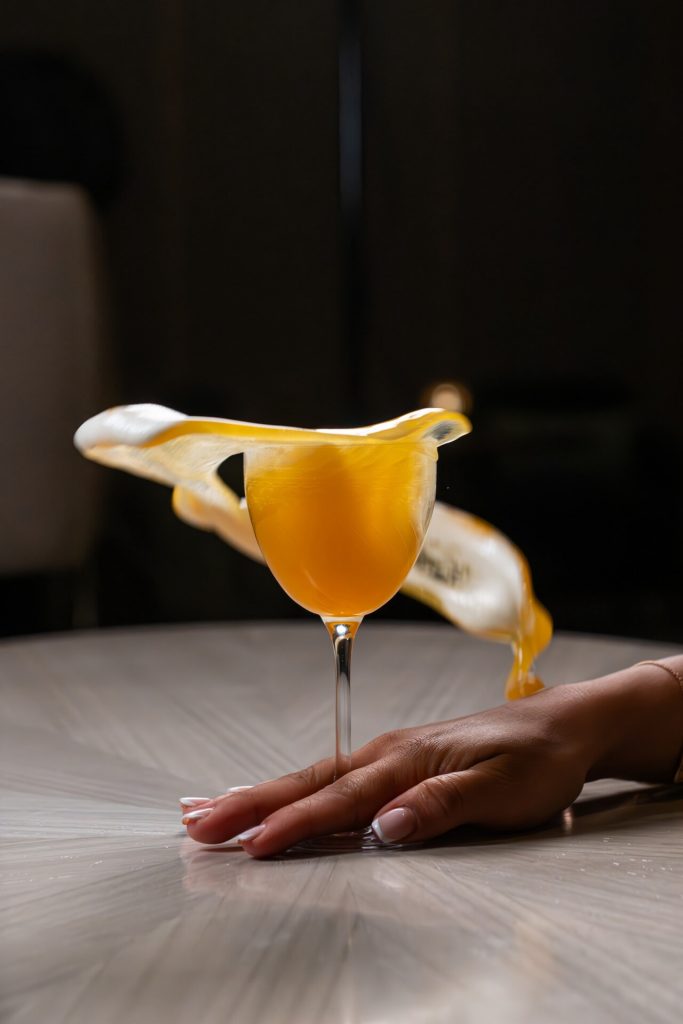
Whether driven by wellness culture, conscious living, or sheer sober curiosity, the nonalcoholic movement is having a global moment—and top chefs and mixologists are shaking, stirring, and fermenting to meet the demand. What was once an afterthought has developed into an art form, where spirit-free cocktails rival their boozy counterparts in complexity, craft, and storytelling.
Even celebrity tastemakers are getting involved. Formula One champion Lewis Hamilton’s Almave nonalcoholic spirits brand recently released Almave Humo, a distilled “mezcal” that delivers the depth and complexity of the real thing.
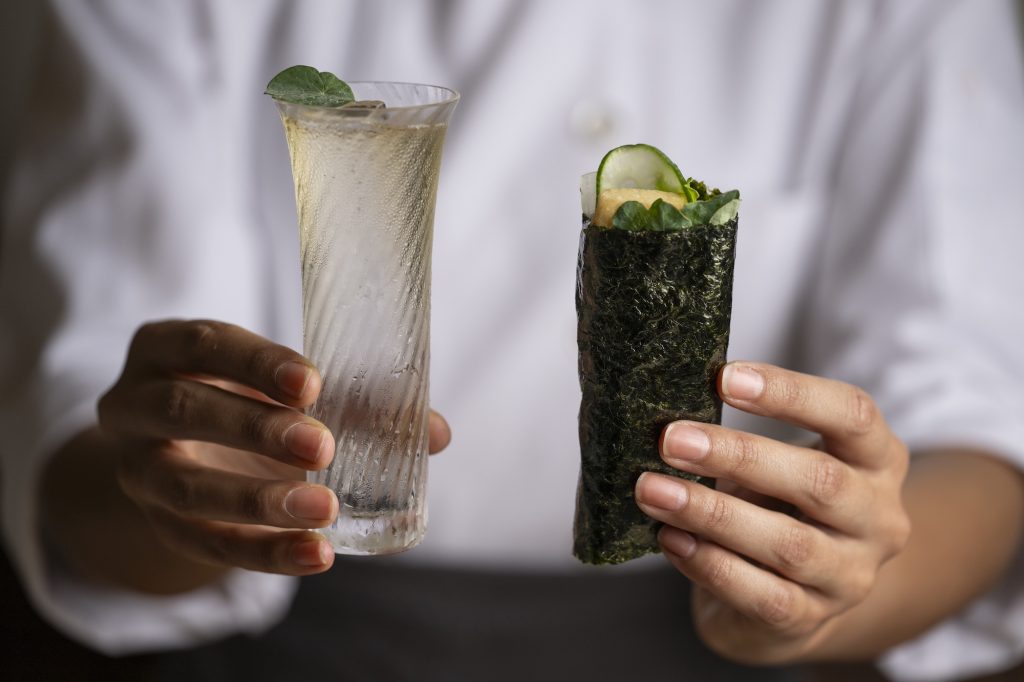
At New York City’s Clemente Bar, located above Eleven Madison Park, nonalcoholic drinks complement such savoury, plant-based small bites as agedashi tofu paired with a fizzy concoction of yaupon tea, yuzu, and cucumber soda.
A highball-style NA cocktail coupled with an agedashi tofu hand roll at Clemente Bar. Photograph by Evan Sung.
In Wyoming, at Four Seasons Resort and Residences Jackson Hole, Jhett Brown brings mountain sophistication to the zero-proof scene. Inside the 80 Proof speakeasy and the newly opened Steadfire Chophouse, the bartender’s modern mixology creations avoid added sugar while highlighting flavour-forward local ingredients like pine and wild berries.
Leo—one of Latin America’s most acclaimed restaurants, in Bogotá, Colombia—pairs its tasting menu with “botanical infusions” derived from the country’s ecosystems: guava fermentations, cassava starch elixirs, and floral macerations that taste like a journey through the jungle.
Four Seasons Hotel Riyadh at Kingdom Centre recently doubled down on nonalcoholic wine. The hotel has opened both Tonic Bar, Saudi Arabia’s first nonalcoholic bar, and Café Boulud Cheese Library, which offers an enticing selection of fromage and beverages like the Italian zero-alcohol sparkler Bella.
The Naughty Amaretti—with Amaretti-infused white sesame, tangerine, apricot, and saffron—at Tonic Bar at Four Seasons Hotel Riyadh at Kingdom Centre.
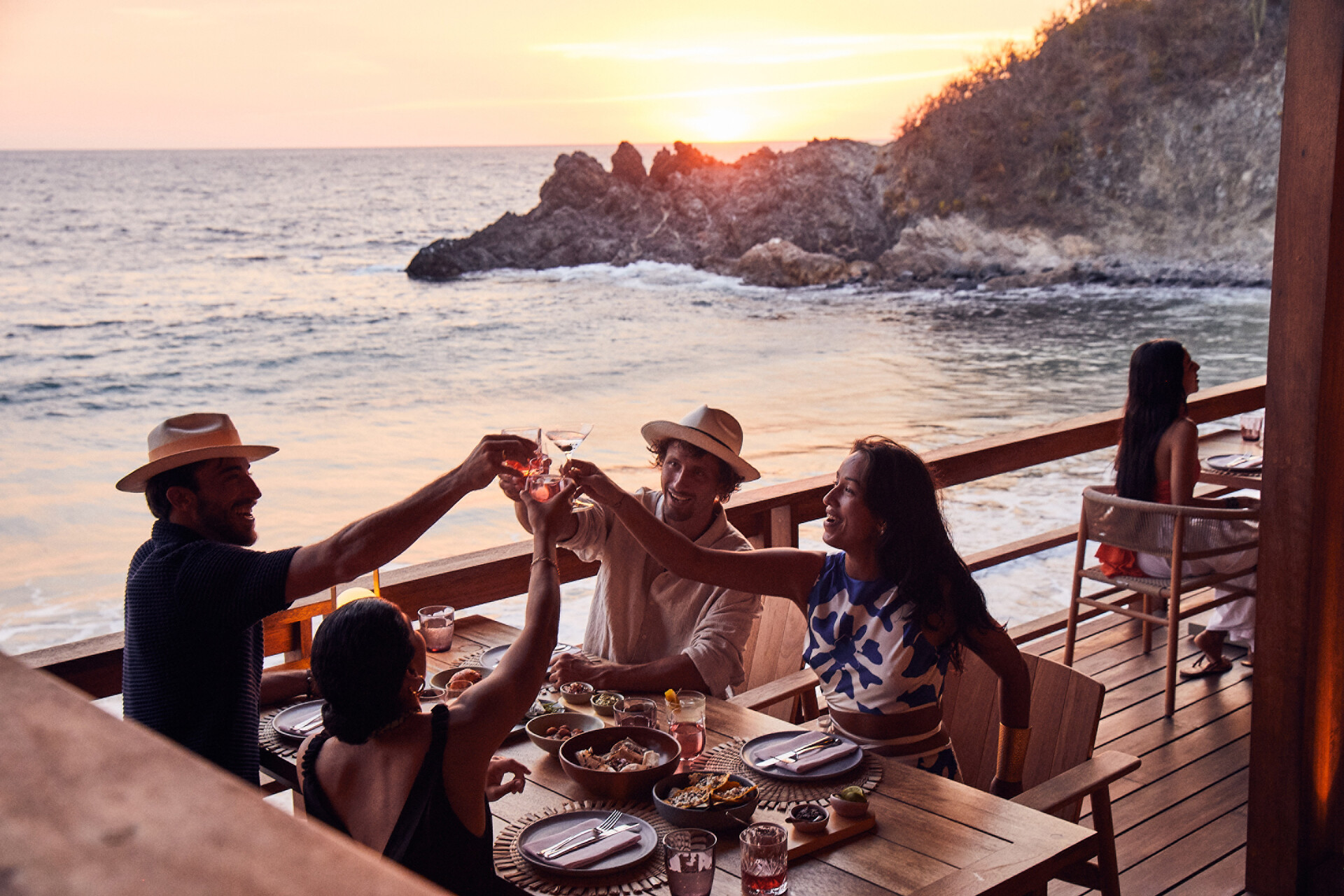
And at Four Seasons Resort Tamarindo, México, head mixologist Arturo Barroso celebrates Mexico’s heritage and traditions through fermentation. He reimagines tepache and tejuino—time-honoured beverages made from local fruits, herbs, and corn—as elegant, alcohol-free expressions. Halting fermentation at just the right moment, Barroso preserves flavour and texture.
“Authenticity” is a word that marketers love to bandy about—for good reason. Authenticity is shorthand for something that has real chops, that has integrity, that isn’t manufactured. And nowhere is that more important than in the fine-dining world, where success is impossible without it.
Fortunately, at Four Seasons, authenticity isn’t just a buzzword; it’s a must. Here, we profile three destinations—in Anguilla, Maui, and Tamarindo—that are offering guests culinary experiences that are unique to the place, and personal to the chefs who create them.
Anguilla is known as the culinary capital of the Caribbean—and the dining options at Four Seasons Resort and Residences Anguilla live up to the island’s reputation. Executive Chef Emmanuel “Manu” Calderon oversees all dining at the destination, infusing each offering with the flavours and traditions of his upbringing and heritage. He grew up in the Yucatán Peninsula—“hungry all the time,” he says—watching his mother and grandmother prepare family meals. At the Resort, his love for the bold flavours of his native country is most evident at Lima-Limon, the Resort’s beachfront Mexican restaurant.
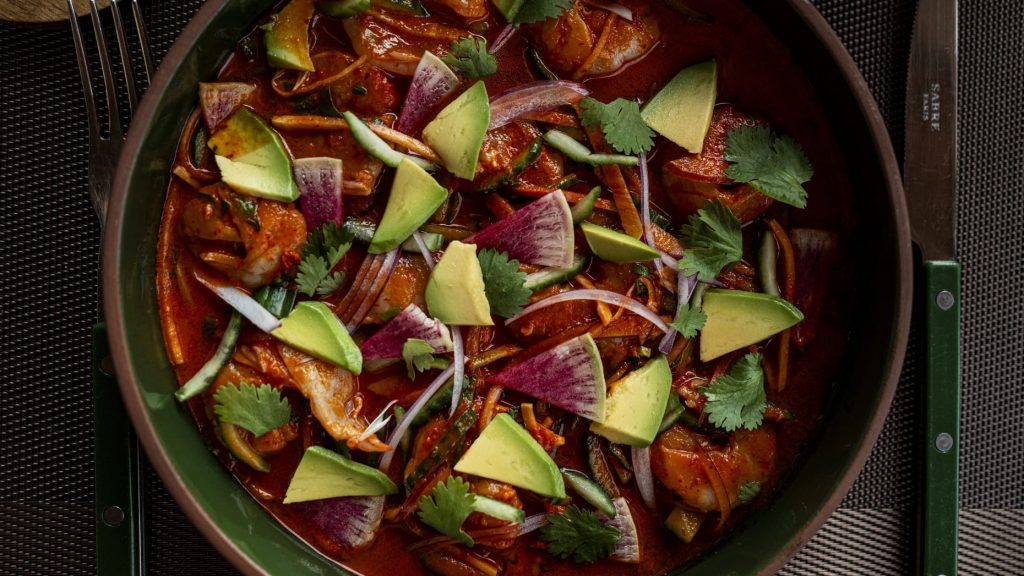
Shrimp in a fermented red pepper infusion with radish and avocado slices at Lima-Limon.
Set on a terrace overlooking Barnes Bay, Lima-Limon serves up elevated versions of crowd-pleasers like carnitas tacos, street corn, birria-style short rib, and churros. Chef Jorge Lopez De Lira currently helms the restaurant and has imbued the menu with his own take on Mexican cuisine—one that hints at the regional flavours of his hometown of Guadalajara. It’s an authentic dining experience that can only come to pass when the people behind it have spent a lifetime feeding their obsession.
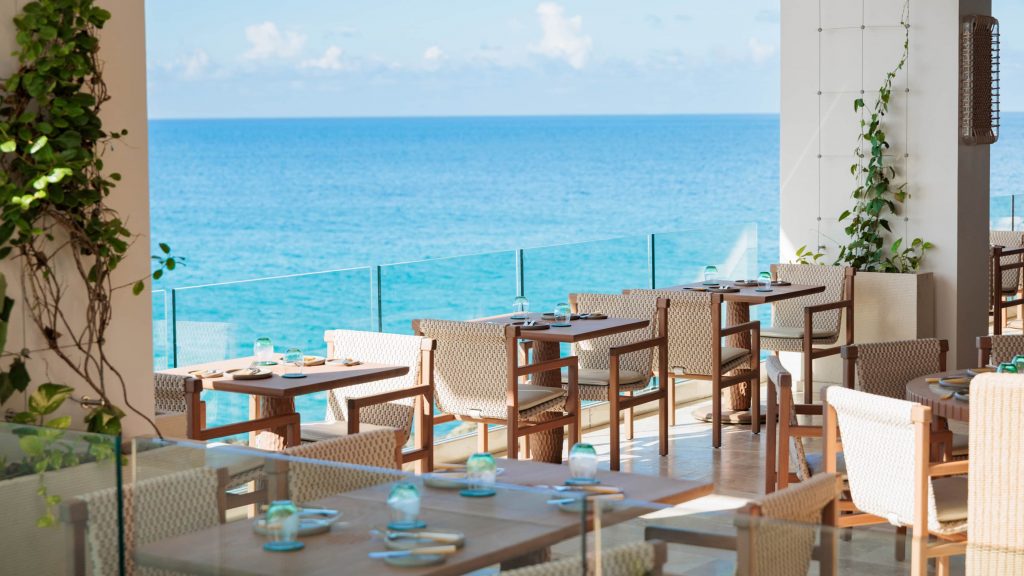
Sophisticated oceanfront dining at Salt.
Rounding out the Resort’s dining experiences is Salt, the newly renovated signature restaurant that celebrates Anguilla’s deep connection to the sea. Perched over the ocean in an elegant setting, Salt presents refined Caribbean cuisine, highlighting pristine local seafood and thoughtfully sourced ingredients. The refreshed space and menu invite guests to linger over beautifully crafted dishes that feel both elevated and rooted in place—an experience that captures the understated sophistication for which Four Seasons Anguilla is known.
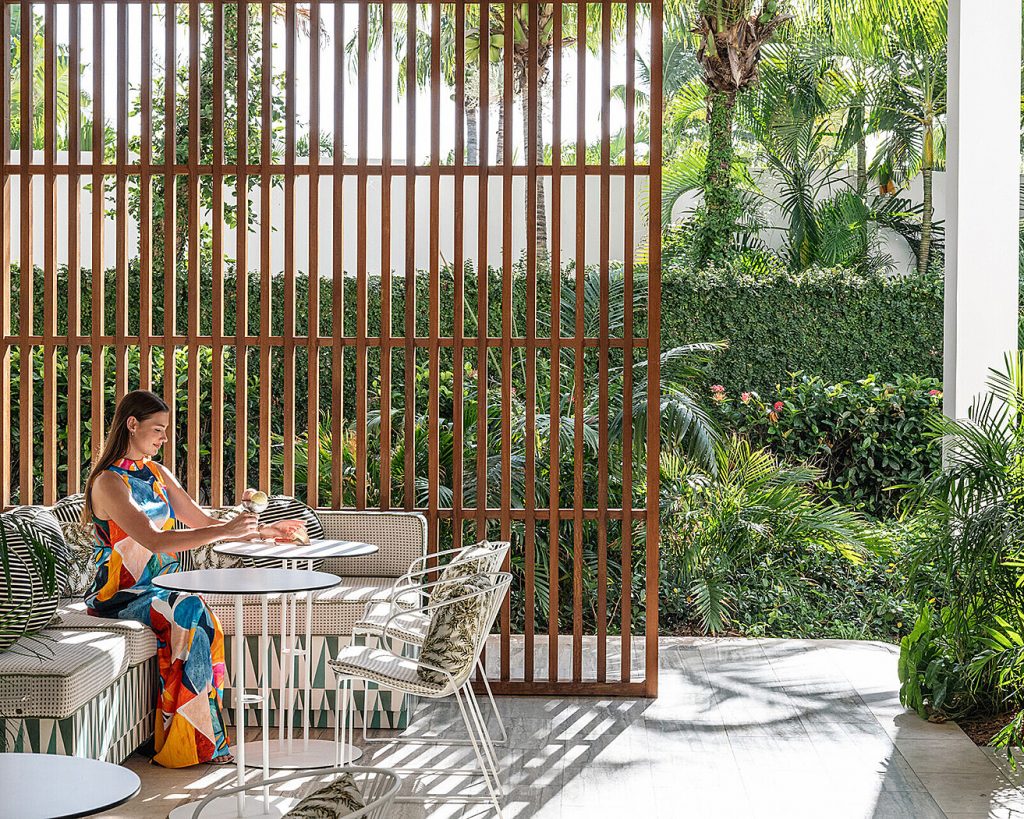
Bright and airy Café Nai.
Coffee aficionados, meanwhile, should make sure to stop by Café Nai, the on-site cafe that’s become the island’s go-to spot for a cup of artisanal java, a fresh smoothie, or grab-and-go delights like fresh pastries and creamy gelato.
Hawaii is an incredibly diverse state, with an ethnically Asian majority and 25 percent of the population speaking a language other than English at home. The dining options at Four Seasons Resort Maui at Wailea reflect this multicultural melting pot.
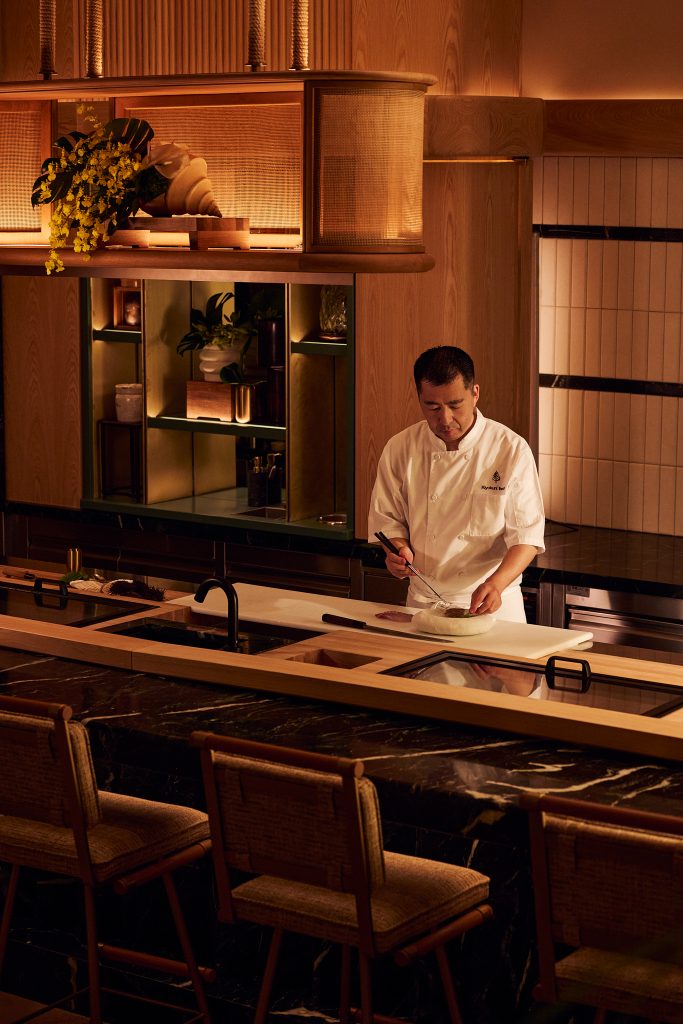
At KOMO, the Resort’s newest addition, extraordinarily fresh sushi—and time-honored Japanese culinary technique—is the main attraction. The über-chic 50-seat restaurant, designed by Atelier Pond, is led by Tokyo-born chef Kiyokuni “Kiyo” Ikeda, who honed his craft at Morimoto. From house-made dashi and custom-blended soy sauce to hand-grated wasabi and premium sake, KOMO’s commitment to authenticity is clear.
Chef Kiyo at KOMO’s sushi counter.
For a truly memorable experience, make a reservation at the 14-seat sushi counter and consider ordering the “Mystery Box,” an ever-changing selection of nigiri based on multiple weekly shipments from Tokyo’s famous Toyosu Market. Even Chef Kiyo doesn’t know what will arrive until the boxes are opened, ensuring that no two visits are ever the same as he transforms each surprise delivery into an unforgettable omakase experience.
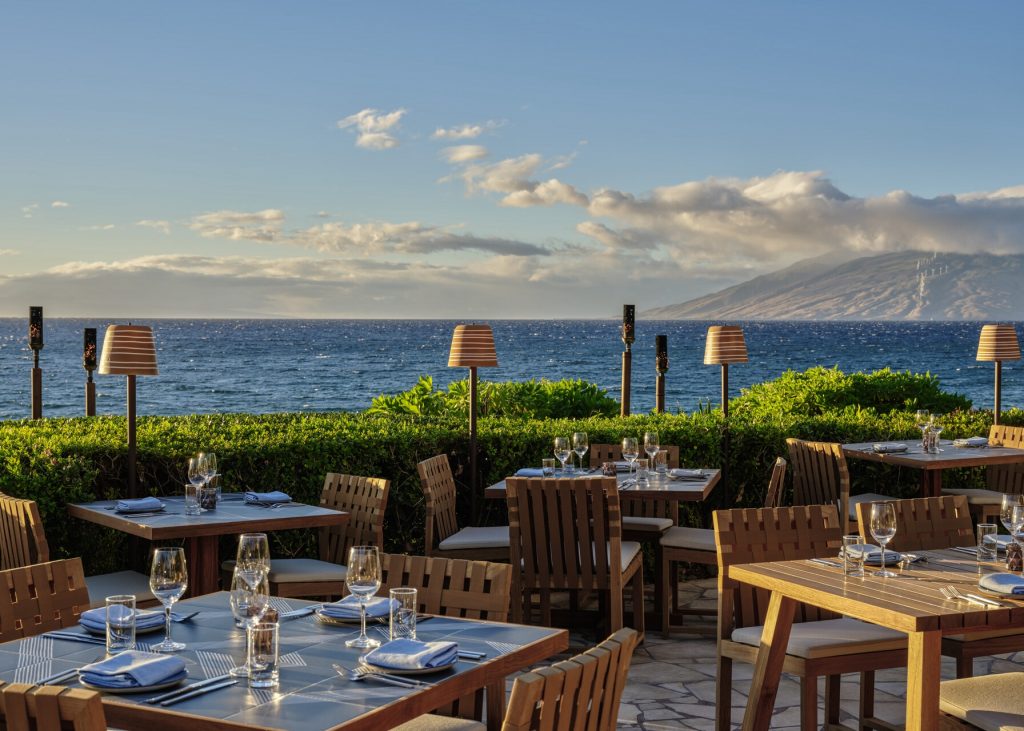
Ferraro’s al fresco dining space.
Then there’s Wolfgang Puck’s Spago outpost, which serves up locally inspired fare alongside Spago classics, and Ferraro’s, an open-air oceanfront restaurant that churns out elevated Italian dishes (think fresh seafood and house-made pastas). In addition to serving lunch and dinner, the exceptionally situated Ferraro’s offers a special Golden Hour menu, timed to take advantage of the photo-perfect hours leading up to sunset.
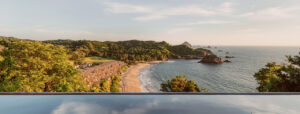
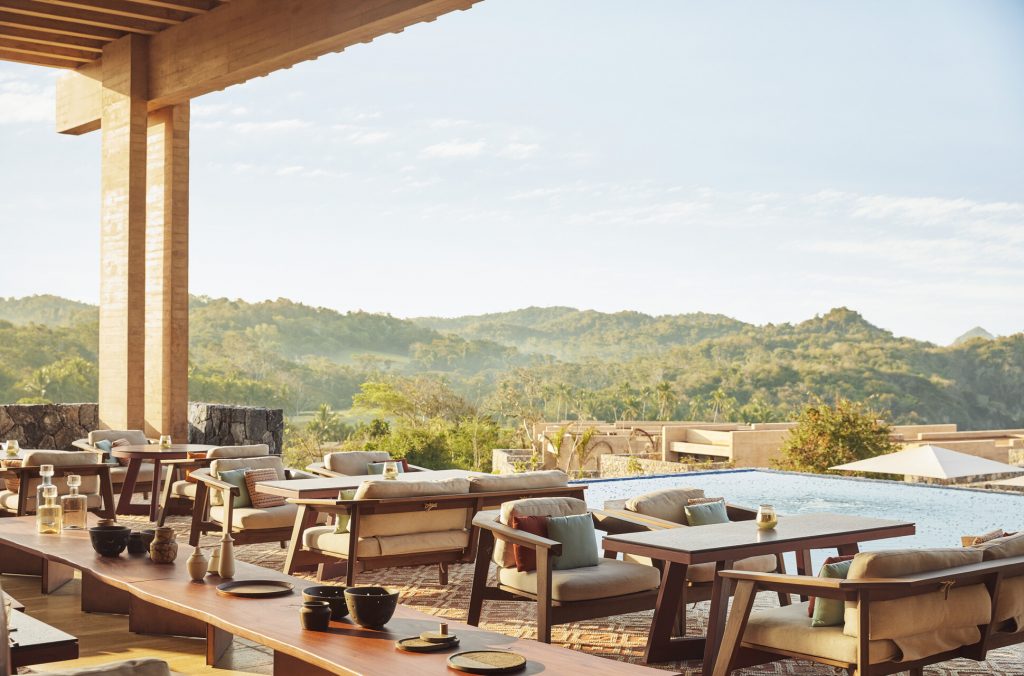
Discerning travelers who want to get away from it all are making a beeline for Four Seasons Resort Tamarindo, in western Mexico’s relatively undiscovered and pristine Costalegre region. One glimpse of the 3,000-acre property, tucked within a secluded nature preserve and ringed by miles of lush jungle that culminates with the blue waters of the Pacific, and you’ll understand the allure. Foodies, in particular, won’t be disappointed.
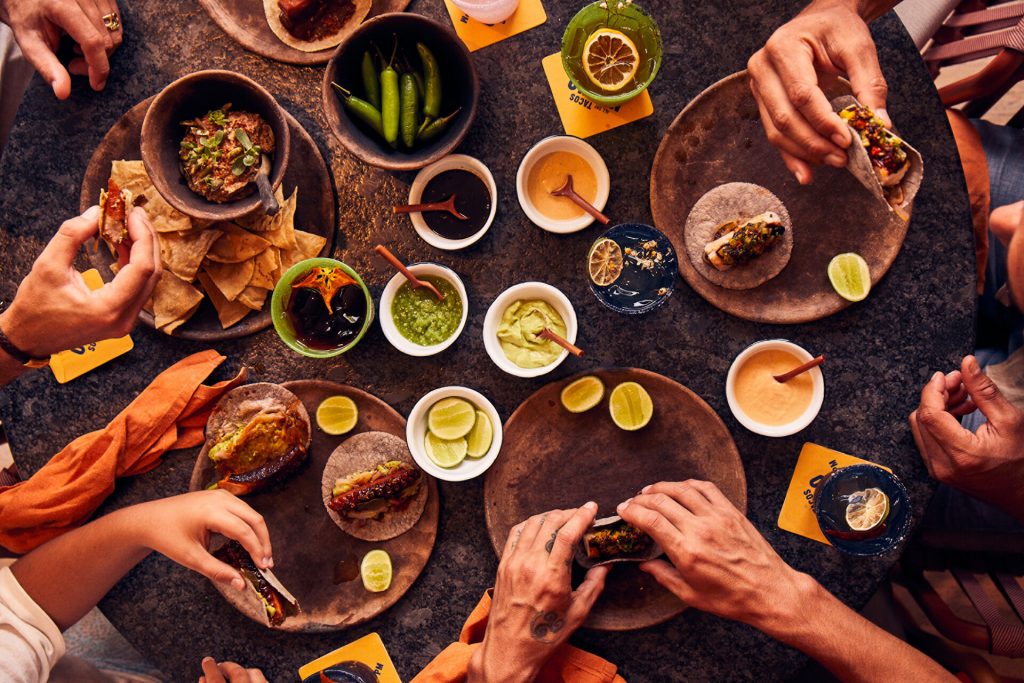
Tamarindo has three on-site restaurants, all highlighting Mexican heritage and gastronomy: Nacho, a casual taqueria; Sal, a seafood-focused terrace restaurant overlooking Majahua Beach; and Coyul, created in partnership with Elena Reygadas, who was named World’s Best Female Chef 2023 by The World’s 50 Best Restaurants. Reygadas is the chef-owner of a clutch of world-renowned eateries in Mexico City, including Michelin-starred Rosetta. At Coyul, she’s helped develop a menu that’s an irresistible fusion of Italian and Mexican flavours that emphasize regional ingredients and seasonality.
Coyul serves both breakfast and dinner.
Sustainability is a theme that guides the resort’s culinary ethos, with some restaurants sourcing ingredients from Rancho Lola, the Resort’s on-site farm that grows indigenous crops and practices traditional farming methods. At the farm, guests can take a tour (and meet its resident chickens, goats, and pigs); plant a tree; sign up for a cooking class in the open-air kitchen; or enjoy a traditional Mexican breakfast, complete with just-harvested vegetables, fresh tortillas, artisanal Cuyutlán salt, and traditional coffee.
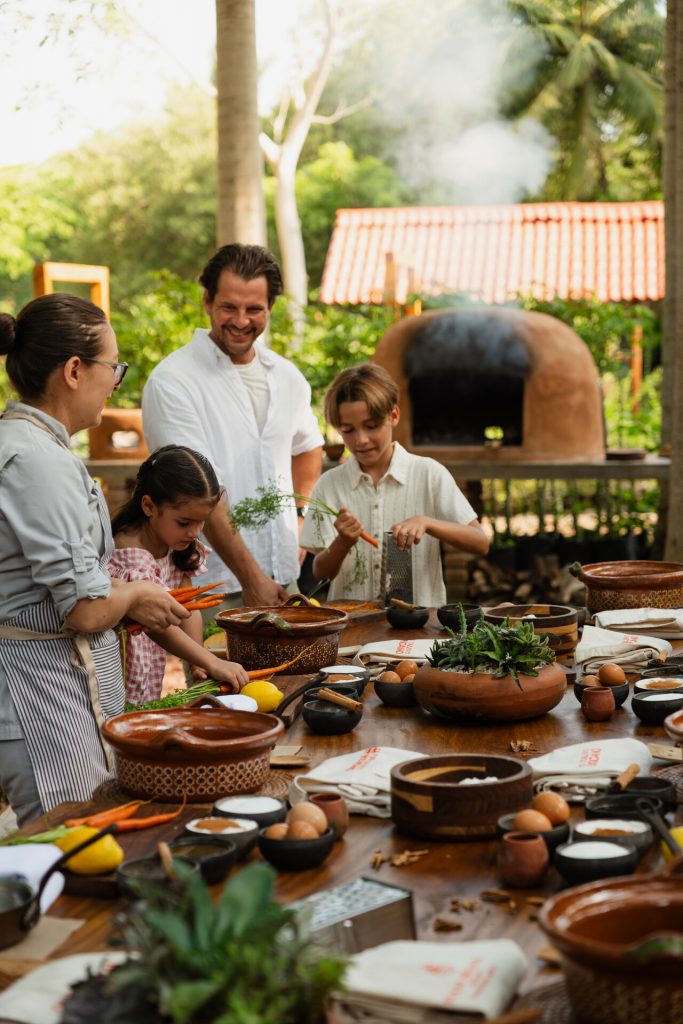
Gather fresh ingredients—eggs, carrots, and honey—at Rancho Lola, then learn how to make carrot cake from scratch.
“When I think of beauty, I also think of beautiful landscapes that I know,” said the Irish poet John O’Donohue. I feel this in my bones. The most meaningful moments of my life have taken place outside—in wilderness, in the presence of something so large it made me feel small. Boating down the Ganges in Varanasi. Walking a suspension bridge high above the jungle in Costa Rica. Staring into a midnight bay in the San Juan Islands and watching creatures bloom bioluminescent beneath the black water. Sitting on a heap of rag rugs on a rooftop beneath the blazing sun in Chefchaouen, Morocco, with a cup of hot mint tea in hand.
The word awe has roots in Old English: ege—fear, dread, terror. Go deeper and you land in Old Norse: agi. Same meaning, only more intense. The kind of fright that makes your stomach drop and your skin hum. Awe once meant trembling before something vast and unknowable. Awe had nothing to do with fumbling in your pocket for your phone to snap a selfie, to prove to other people you’d been to a place and been moved by it. It was about standing still, overcome by the magnificence of the world, your brain sizzling with majesty. It was about being afraid—in a good way—of how big the universe is. It was about bowing down. The experience of awe was an embodied one. Reverence and surrender, a mystery inside your bones.
By the time of Middle English, the idea of awe had evolved into something more attainable—the tender recognition of quiet beauty everywhere. A perfect rainbow after a storm. A temple where your breath echoes. At the edge of a birth, a death, or a galaxy too big to name. One could even find awe in the tiny, mundane moments or minutiae of the natural world—a rose petal, a frozen pond. Vastness veined with grace. As Walt Whitman wrote in Song of Myself, “I believe a leaf of grass is no less than the journeywork of the stars.”
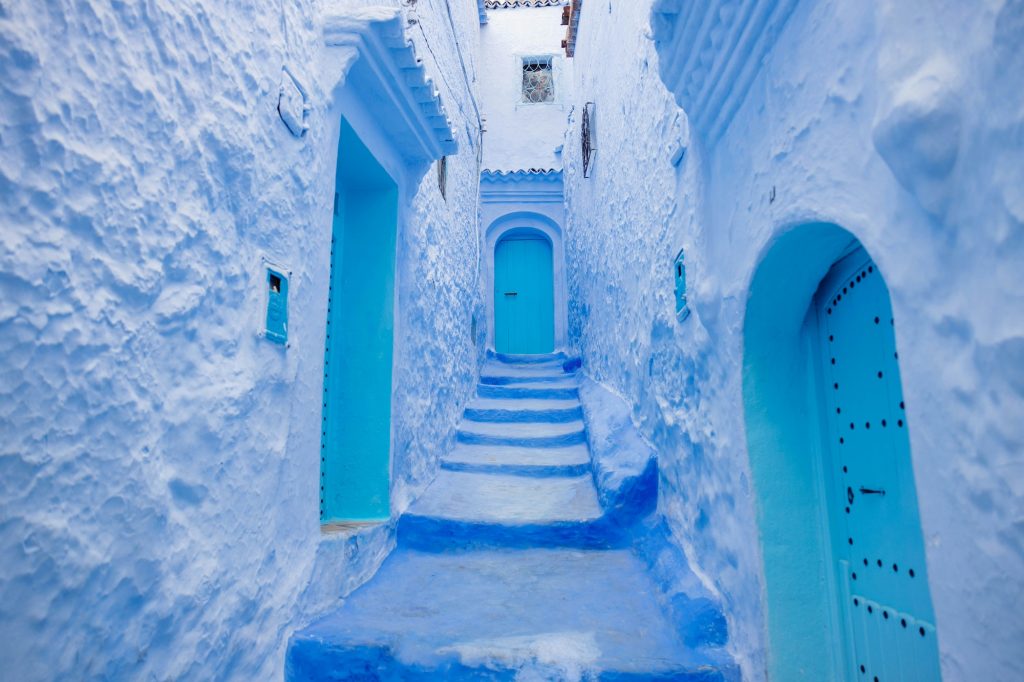
Dreamy blues in Chefchaouen, Morocco. Photograph by Taisha Ellison / Unsplash.
Now neuroscience is catching up to what mystics, poets, and travellers have always known: Awe rewires us. According to Dacher Keltner, a professor of psychology at University of California, Berkeley, awe is not a luxury—it’s a biological necessity. Defined by Keltner as “the feeling of being in the presence of something vast that transcends your current understanding of the world,” awe has measurable effects on the body and brain. A 2015 study co-authored by Keltner revealed that participants who felt positive emotions, such as awe, wonder, and amazement, had lower levels of the cytokine interleukin-6, a marker for inflammation. And Keltner’s research also has found that experiencing awe can trigger the release of oxytocin, the bonding hormone, which has been shown to decrease anxiety levels.
In his book Awe: The New Science of Everyday Wonder and How It Can Transform Your Life, Keltner identified “eight wonders of life”: nature, the moral beauty of others, collective movement (shared joy in groups), music, visual design, spirituality, big ideas, and, as he puts it, “encountering the beginning and end of life.” These are the stimuli that pull us into the present, that return us to the why.
And it gets more interesting. In Soft-Wired: How the New Science of Brain Plasticity Can Change Your Life, neuroscientist Dr. Michael Merzenich says that to stay sharp and healthy as we age, we need the unfamiliar. We need to jolt the system.
Travel does that, scrambling the senses in the best way. A new language in your ear. Smoke and spice in your nose. A cerulean sky, deep and rich as the ocean. When exposed to new stimuli, the brain forms new neural pathways. According to Merzenich, novelty keeps the brain lit up. People who stay curious don’t just age; they grow. “This lifelong capacity for plasticity, for brain change, is powerfully expressed. It is the basis of our real differentiation, one individual from another,” he said.
For me, simply navigating a foreign grocery store—figuring out which fruit is which or translating a label—is a way of triggering brain activity. And curiosity itself is neurologically rewarding. When you explore something new, your brain’s reward system is activated, releasing dopamine, its built-in pleasure chemical. The stronger the dopamine response, the stronger the reinforcement signal, making us more likely to repeat the behaviour. The more you explore, the more you want to explore. Wonder can become a feedback loop. And we need that loop now more than ever.
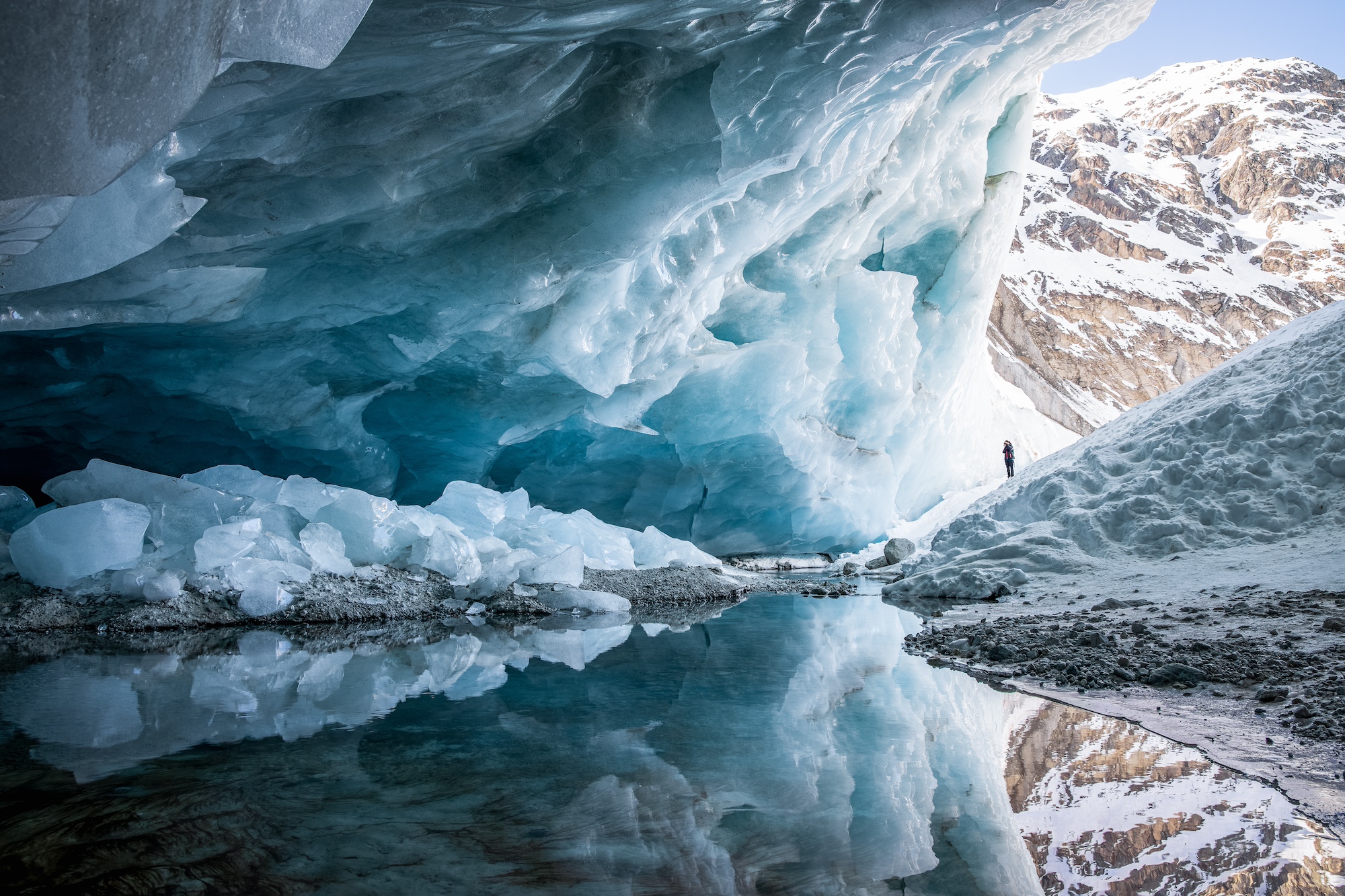
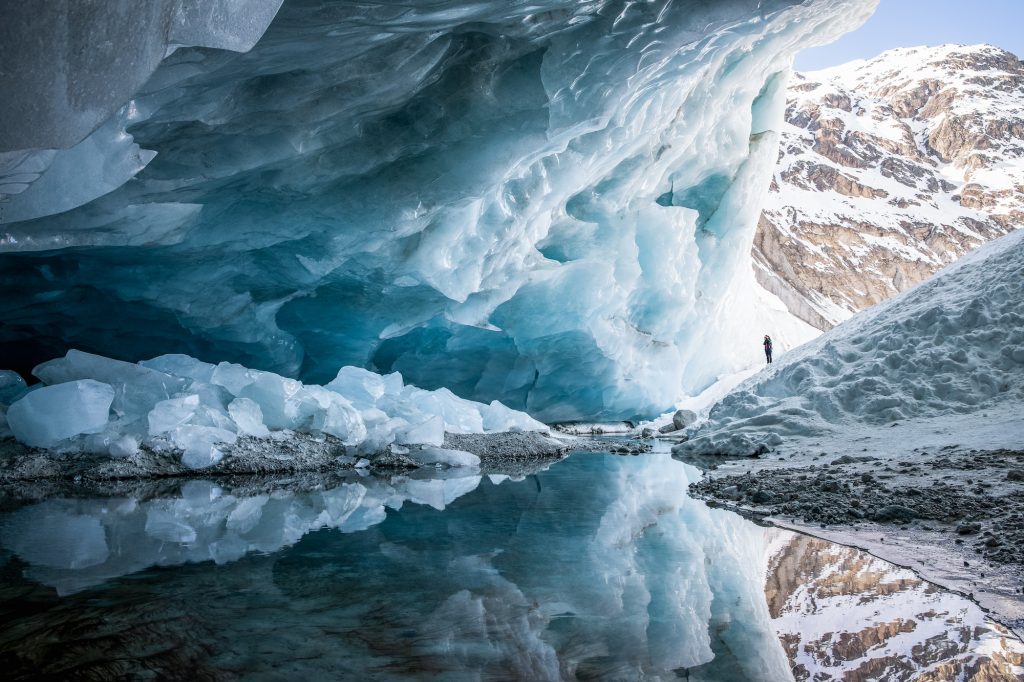
Ice cave exploration in Zinal glacier in Switzerland. Photograph by Frédéric Sabalette / Wirestock / Adobe Stock.
The goal is to put down your phone and feel what it’s like to be in the presence of great beauty—to metabolize your own relationship to the divine in real time.
More and more of us are seeking “mental wellness.” We’re booking getaways not to check out but to check back in. We’re exhausted, depleted from hyper-productivity and hyper-connectivity. We want the reset. Yet nearly 72 percent of global travellers use social media while on vacation, according to a study out this year. Many now use AI to plan, curate, and narrate the experience before it’s even begun. We consult influencers before we consult the wind.
We’ve turned awe into content—and risked missing it altogether. The goal is to put down your phone and feel what it’s like to be in the presence of great beauty—to metabolize your own relationship to the divine in real time. To be humbled by it all and do nothing but breathe. No stories. No likes. No selfies.
In my travels, I’ve learned that awe must be experienced firsthand. It reveals itself in the most beautiful places on Earth, such as the Sea of Stars on Vaadhoo Island in the Maldives, where the waves glow turquoise and footsteps spark light across the beach. The Banyumala Twin Waterfalls, in Bali, cascading through thick jungle. The glacial caves of Aletsch and Zinal in Switzerland—frozen, echoing, otherworldly. The Byodo-In Temple near Kyoto, still and ancient. These places carry a sacred frequency.
Awe doesn’t always announce itself. This past winter, standing barefoot on Playa Majahua, a secluded beach on the Pacific Coast of Jalisco, near Four Seasons Resort Tamarindo, Mexico, I felt something inside of me shift. It was sunrise. The moon was sliding down the sky as the sun rose. The air was balmy and fragrant with cypress and gardenia. There was a puma print pressed into the cool, smooth sand. For a moment, it felt like the whole world was holding its breath.
What if luxury is not what you think it is? We tend to view certain foods as fixed and universal signifiers of “living well.” These are the ingredients that make everyone at the table smile and sigh when the server mentions them, and they’re the ingredients that usually come accompanied by a supplement, meaning that the server is happy to ask the kitchen to dollop or shave one of them onto your dish as long as you’re amenable to paying an extra $100 or so. Truffles, caviar, foie gras—behold the Three Musketeers of haute cuisine, with uni increasingly cast as the young D’Artagnan who has joined forces with the classic trio. Such ingredients have become so entrenched in contemporary menus, so ubiquitous, you might assume they’ve always dominated the epicurean conversation.
But luxury evolves—it moves around. One era’s cattle feed is the next era’s pricey indulgence. As the food essayist and New York Times critic Ligaya Mishan has written, “In medieval Russia, caviar was a peasant staple, less expensive than fish itself.” So abundant were the briny sturgeon eggs, and so removed from any idea of fanciness, that once upon a time, country folks shoveled heaps of caviar to their pigs “to fatten them up,” as Mishan tells us. (Lucky swine!)
Luxury is evolving right now, too, and the new idea of opulence often manifests in subtle ways. Beyond the realm of caviar and truffles, there are other ingredients whose appearance on a menu tells you that the chef is thinking deeply about the art of cooking and the experience of pleasure. Maybe the chef has decided to elevate staples, such as rice, corn, and butter, or draw on ancient methods of intensifying flavour by drying out an ingredient, be it salty mullet roe or a sweet persimmon. Here we present five examples of extravagance-in-evolution: five ingredients that represent la dolce vita in 2025, even though they’ve been around for centuries.
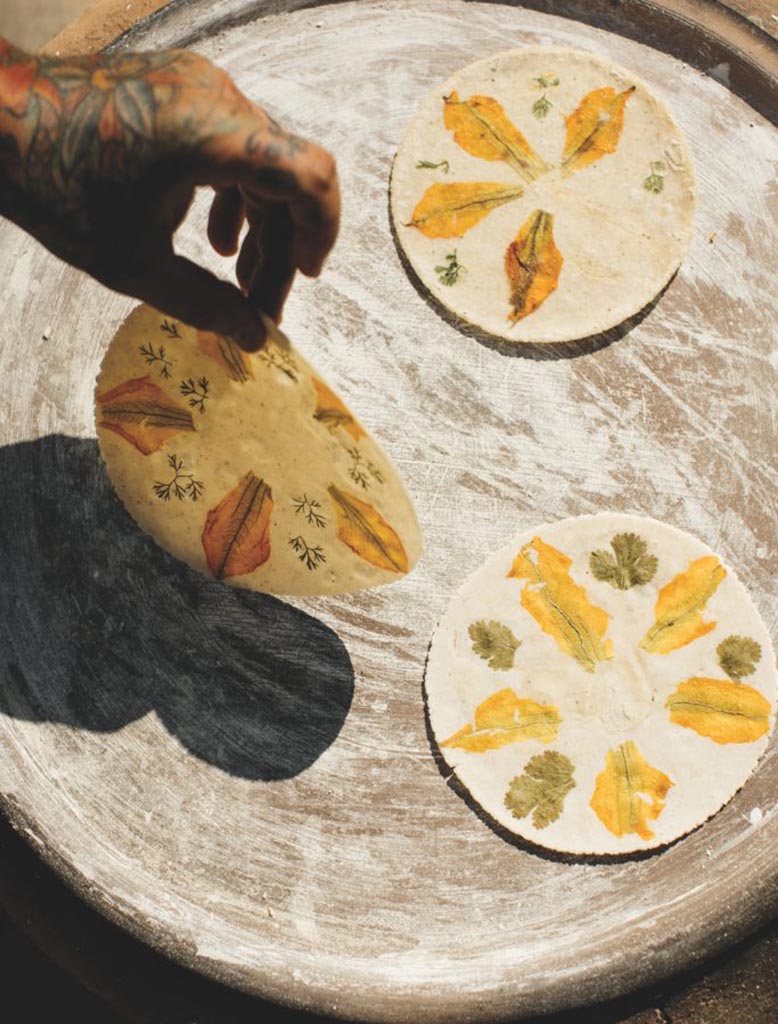
Heirloom Masa
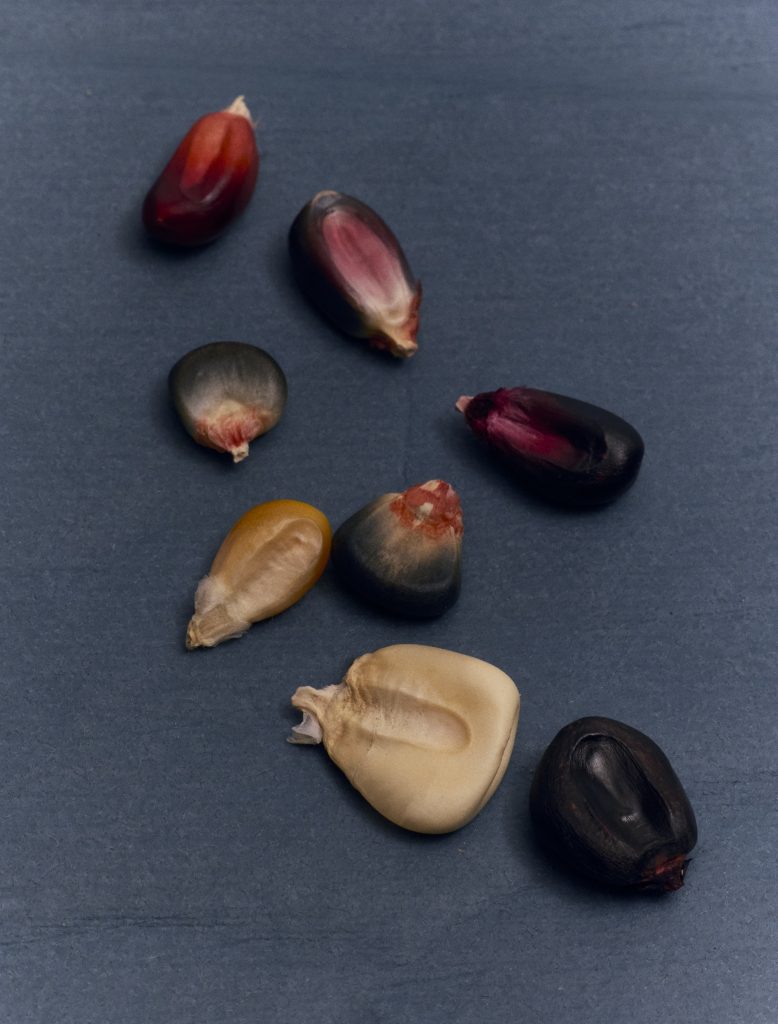
Photograph by Vanessa Granda; food styling by Pearl Jones.
Photograph by Maureen Evans.
Dine in one of lauded chef Enrique Olvera’s restaurants—maybe Pujol in Mexico City, Cosme in New York, or Damian in Los Angeles—and you realize that few things come close to the deep, glorious earthiness of a tortilla made with heirloom masa. In fact, Olvera himself speaks of this ingredient in almost mystical terms: “The ability to taste the place,” he says. That, to him, represents the soul of luxury, especially in this age in which sturgeons can spend years swimming back and forth in stationary pools for the production of farm-raised caviar. “Luxury now is whatever is from that place that you cannot get any other place,” he says. “That flavour from the heirloom corn is from the soil, and flavour is a reflection of the health of the soil.”
Heirloom corn, unlike its mass-market counterpart, comes in myriad hues and husks and sizes and names, from Pink Xocoyul (native to Tlaxcala, Mexico) to Cacahuazintle, a large, white variety used in pozole. And through the centuries-old process of nixtamalization—the soaking of kernels in an alkaline solution that unlocks their essence (as well as their nutrients)—the resulting masa dough can express itself in an endless spectrum of flavours: nuttiness, sweetness, barnyard-iness, even cheesiness.
At Atlas Restaurant Group’s Maximón in Four Seasons Hotel Baltimore, Atlas corporate chef Aaron Taylor goes the distance in pursuit of these truer flavours and textures. He and the Maximón team buy whole yellow, blue, and white kernels from Masienda, a respected supplier of heirloom corn, and they nixtamalize and grind them on-site for tacos and quesadillas. “We do this every single day,” Taylor says. It’s a serious investment of time and labor, he adds, but “I think our tortillas are far superior to anything you find around town.”
Masa isn’t just food; it’s culture. When chef Miguel Soltero at Four Seasons Resort Tamarindo in Mexico offers a quesadilla de milpa made with heirloom masa, that simple dish tells a story about all the good things that come from the milpa, or field, from corn to squash to chiles. And when Olvera, at Pujol in Mexico City, offers a basket of tortillas alongside a “mole madre” that has aged and deepened for longer than a decade, he is serving the greatest luxury of all: time.
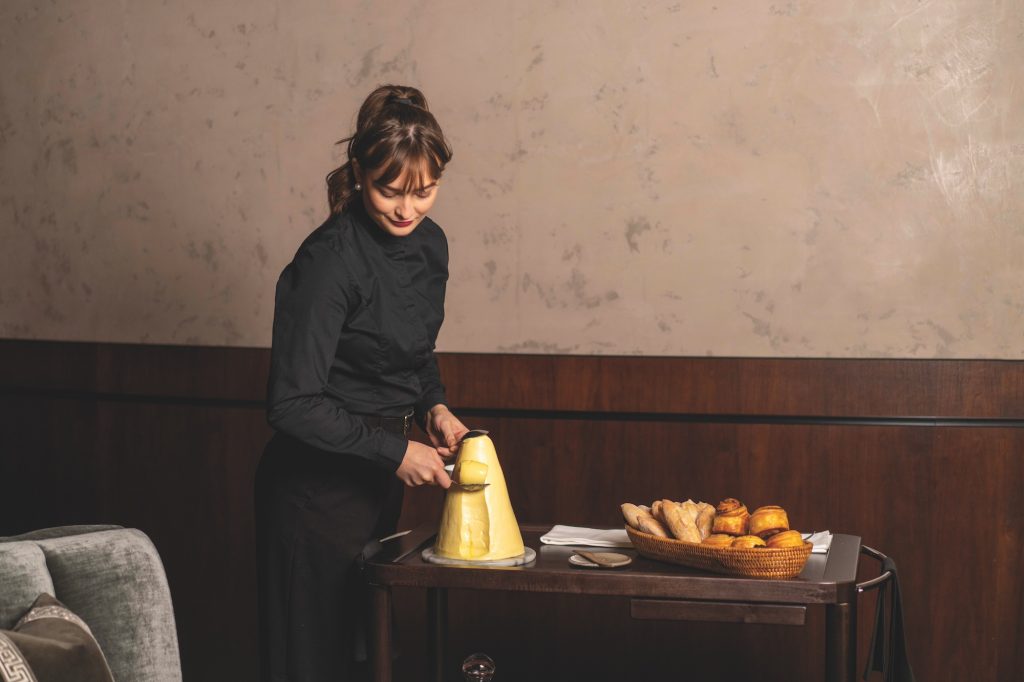
Beurre de Baratte
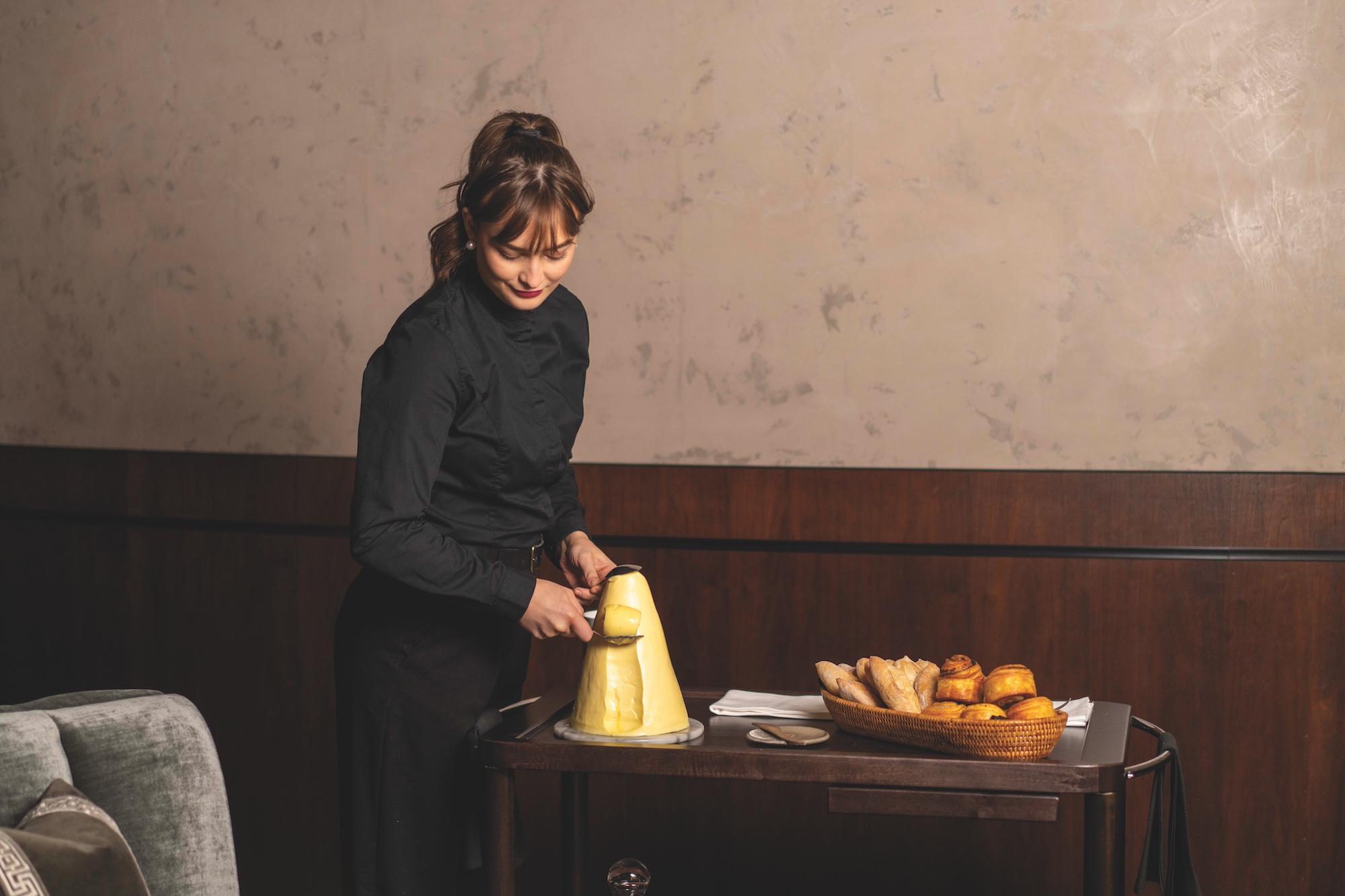
Beurre de Baratte at Emeril’s. Photograph courtesy of Food Story Media.
At Emeril’s in New Orleans, a cart rolls up to the table, crowned by a pale yellow pyramid. That creamy tower is a solid mass of Beurre de Baratte, a French butter whose slightly tangy and nutty base notes and borderline cheesiness of texture come from the patient, tedious, time-honoured practice of churning milk by hand. “I prefer Beurre de Baratte, as it’s rich and complex,” says E.J. Lagasse, the chef at Emeril’s in New Orleans. (Yes, he’s Emeril’s kid.) “I love the saltiness of it and the velvety texture. In my opinion, it’s ideal served at room temperature, which is how we serve it at Emeril’s.”
The man behind the spread is Rodolphe Le Meunier, who grew up in a cheesemaking family in France, and whose approach to butter is patient and traditional and precise: cream from Normandy cows gets a chance to ferment, à la yogurt, before being churned and molded with wooden equipment of the type that might have been used hundreds of years ago. The result is cultured—in all senses of that word. It has depth.
At Corner Office, a wine bar in Taos, New Mexico, you might encounter it as a soft and silky bed for sardines. But the butter is so delicious that at top spots around the world—including the three-Michelin-star restaurant Caprice at Four Seasons Hotel Hong Kong—chefs step back and let it own the spotlight, serving Le Meunier’s Beurre de Baratte seasonally with bread. That’s it—that’s the dish. What could be more luxurious?
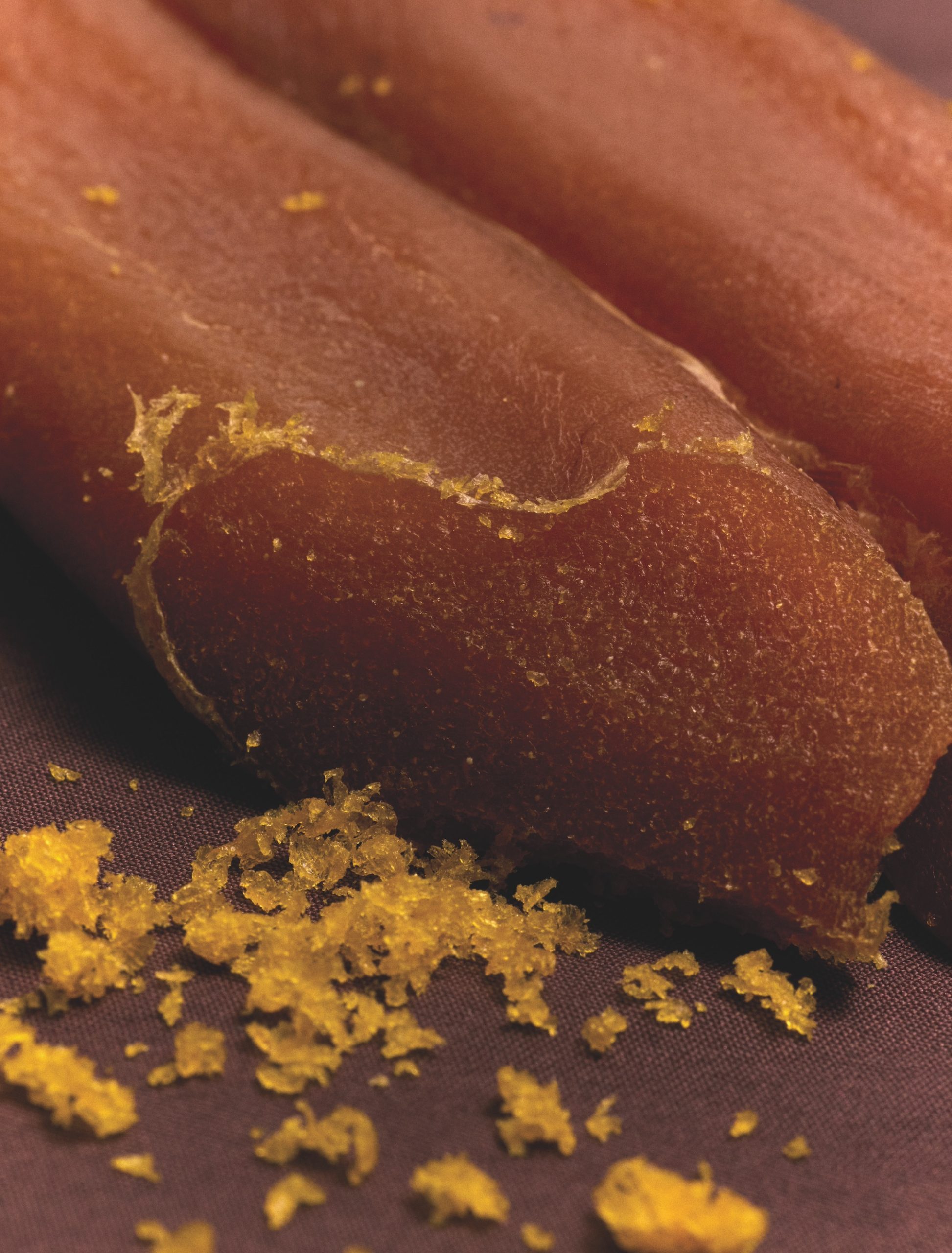
Bottarga
Photograph by Vanessa Granda; food styling by Pearl Jones.
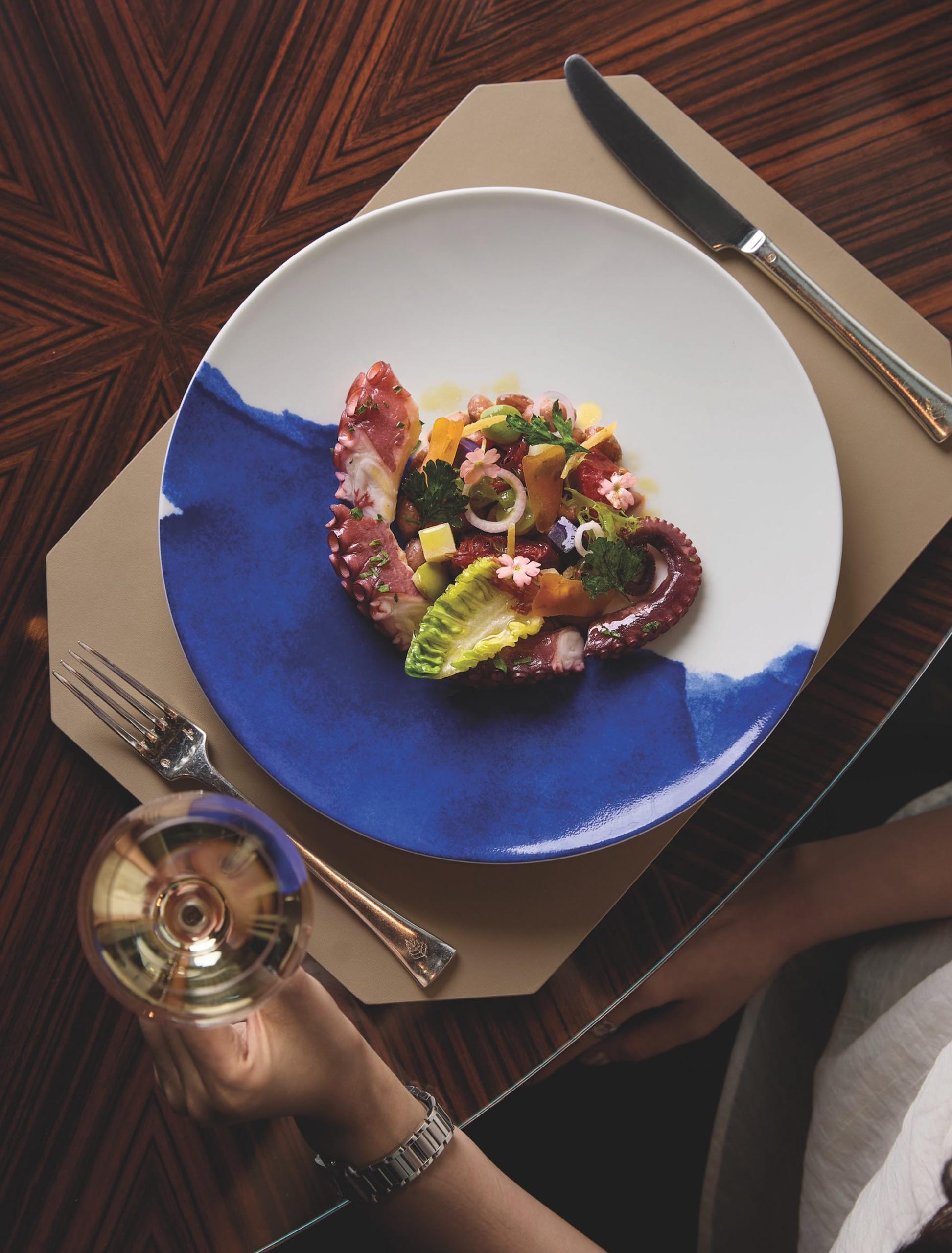
Warm octopus salad with bottarga, at Four Seasons Hotel Hong Kong.
“I love [bottarga]. I eat it just cut up with a little olive oil on it. Caviar has its place, but bottarga has so much more complexity, for me. It’s one of those ingredients that’s still a little cultish.” —Nicholas Stefanelli, chef at Masseria
How special is bottarga? Put it this way: Jurgen Kulli, executive chef at Fuego Grill at Four Seasons Resort Maldives at Landaa Giraavaru, uses bottarga that makes a trip all the way from the Mediterranean island of Sardinia to his kitchen on an island in the middle of the Indian Ocean. “It’s very rich in flavour,” says Kulli, who serves it with a carpaccio of dry-aged cobia, the large and hard-to-catch whitefish known for its subtle sweetness.
Bottarga doesn’t necessarily sound inviting—it’s basically a lobe of mullet roe that has been compressed and desiccated in the sun until it’s a chunk of orange-yellow umami wax—but at first taste, all doubts evaporate. At Mode Kitchen & Bar at Four Seasons Hotel Sydney, executive chef Gaurav Bide views it as the perfect funky counterpunch to fresh seafood, serving it shaved over yellowfin tuna tartare. At The Lounge at Four Seasons Hotel Hong Kong, bottarga adds a bold note to the warm octopus salad.
“I love it,” adds Nicholas Stefanelli, the chef at Masseria, a Michelin-starred Italian restaurant in Washington, D.C., who sources his bottarga from Gustiamo, a way station in New York’s South Bronx for all good things from Italy. “I eat it just cut up with a little olive oil on it. Caviar has its place, but bottarga has so much more complexity, for me. It’s one of those ingredients that’s still a little cultish.” At Masseria, Stefanelli shaves it over stuffed pasta with spring peas; at home, he uses it to luxury-boost a baked potato. It tastes like the sea and the sun, and bottarga aficionados know that there is only one sensible response when you spy it on a menu: Order it.
Heirloom Rice
Heirloom Rice, Photo by Vanessa Granda, Food Styled by Pearl Jones
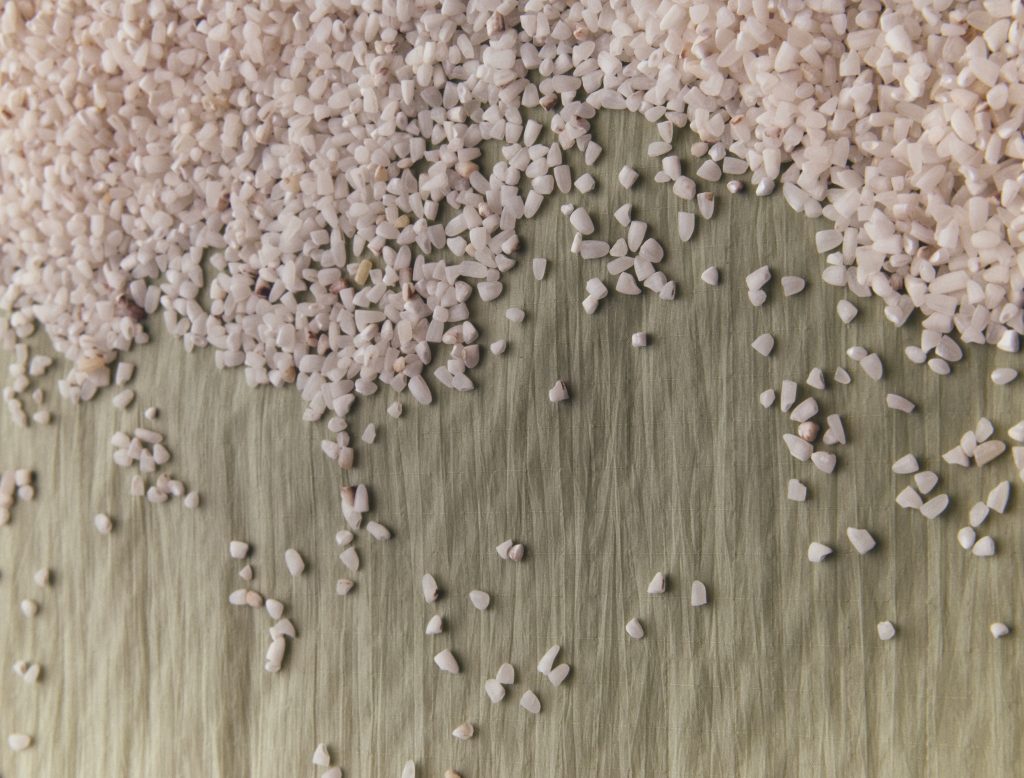
Anyone who has enjoyed the highest level of sushi artistry knows what a difference the rice can make. Far from a bland canvas for fish, rice is often the component of a meal through which sushi chefs express the core spirit of their approach to omakase, selecting based on the grain’s taste, texture, and serving temperature. This is true beyond sushi counters as well. When chefs opt to use premium strains of rice that are rooted in tradition and terroir, take note, because this tells you that you’re in a restaurant that prefers not to cut corners.
What’s that nuttiness that you taste when you get a mouthful of shrimp risotto at Dunsmoor, a Los Angeles spot that celebrates traditional American foodways, or jollof-inspired crab rice at Bludorn, a Houston restaurant with an innovative approach to global ingredients? It’s Carolina Gold. An American variety, it was originally cultivated in the Lowcountry of South Carolina by West Africans who had been enslaved for their agriculture knowledge, and it almost vanished until the team at the heirloom grain company Anson Mills rescued it from obscurity. “We use it in all four of our restaurants,” says chef Aaron Bludorn. “There’s a richness to it that I can taste—almost a meatiness.”
Sticky and pearly, koshihikari rice is at the opposite end of the spectrum. Where Carolina Gold is robust, koshihikari is diaphanous, which is why chef Rogelio Garcia uses it to accompany Japanese bluefin tuna at Auro, the Michelin-starred restaurant at Four Seasons Resort and Residences Napa Valley. “I love working with koshihikari because of its pearl-like texture and aromatic quality,” he says. “There’s a subtle sweetness to it, a clean finish that allows the fish to shine while quietly elevating the dish. It’s not just about taste—its colour and sheen also create a beautifully refined presentation on the plate.” Rice is nice, but koshihikari and Carolina Gold are just a little bit nicer.
Hoshigaki
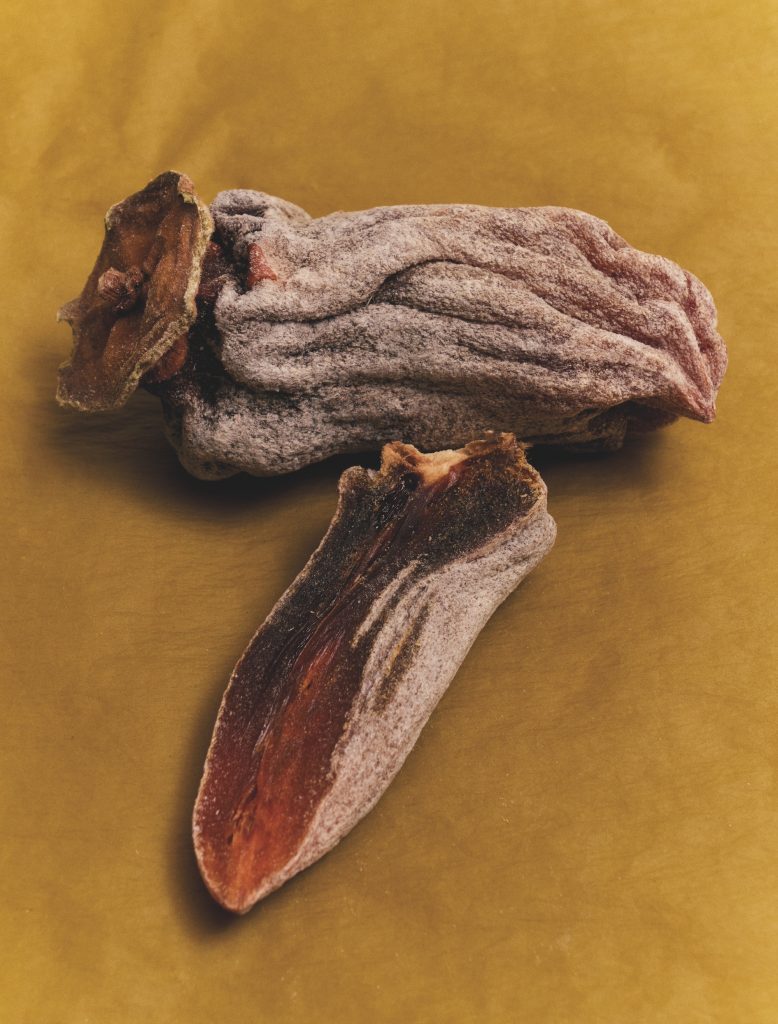
Photograph by Vanessa Granda; food styling by Pearl Jones.A hoshigaki dessert at Four Seasons Hotel Tokyo at Otemachi.
If you have a food-obsessed friend who makes the Japanese snack at home (a practice that has been trending in recent years), you might spy hachiya persimmons drying in their kitchen. Squint and they almost look like golden lanterns hanging from a temple. The persimmons dangle on strings in sunlight and fresh air until they shrivel into gnarled, chewy, sugar-dusted delights. (Caretakers have to massage them now and then to break down pulp—talk about luxury.) They’ve been revered in Japan and across Asia for hundreds of years, but only in recent decades have hoshigaki begun appearing on Western menus. Raisins and prunes, of course, represent common examples of what happens when we concentrate the flavour of fruits by drying them out, but hoshigaki (known as gotgam in Korea) can take that process to an exalted place.
Pair them with a sharp cheese—as chef Ignacio Mattos occasionally does at Estela, his intimate and creatively influential flagship on East Houston Street in New York City—and the marriage of fruit and funk will make you melt on the spot. Honouring the seasonal nature of this Asian delicacy, pastry chef Michele Abbatemarco, of Michelin-starred est restaurant at Four Seasons Hotel Tokyo at Otemachi, serves hoshigaki in the autumn months with ricotta cream, chamomile gelato, persimmon jelly, candied persimmons, a mandarin sauce, and a dusting of coffee powder. Whatever the presentation, the best approach is to take your time relishing every bite—dried persimmons are a slow food, after all.
Visiting a new destination is more than an exploration of unfamiliar lands—it’s an exploration of self. If you’re willing to cast off traditional ideas about travel and welcome something different, perhaps even something that pushes you beyond the limits of personal comfort, you can unleash your creativity, shift your perspective in subtle yet extraordinary ways, and experience the world with intention.
Follow four bold travellers to some of their favorite destinations and learn how these places and their experiences there shaped the way they view the world and connect with it. You’ll discover that what you fear may be too daring is the starting point for truly transformational travel.
Commune with nature to connect with yourself
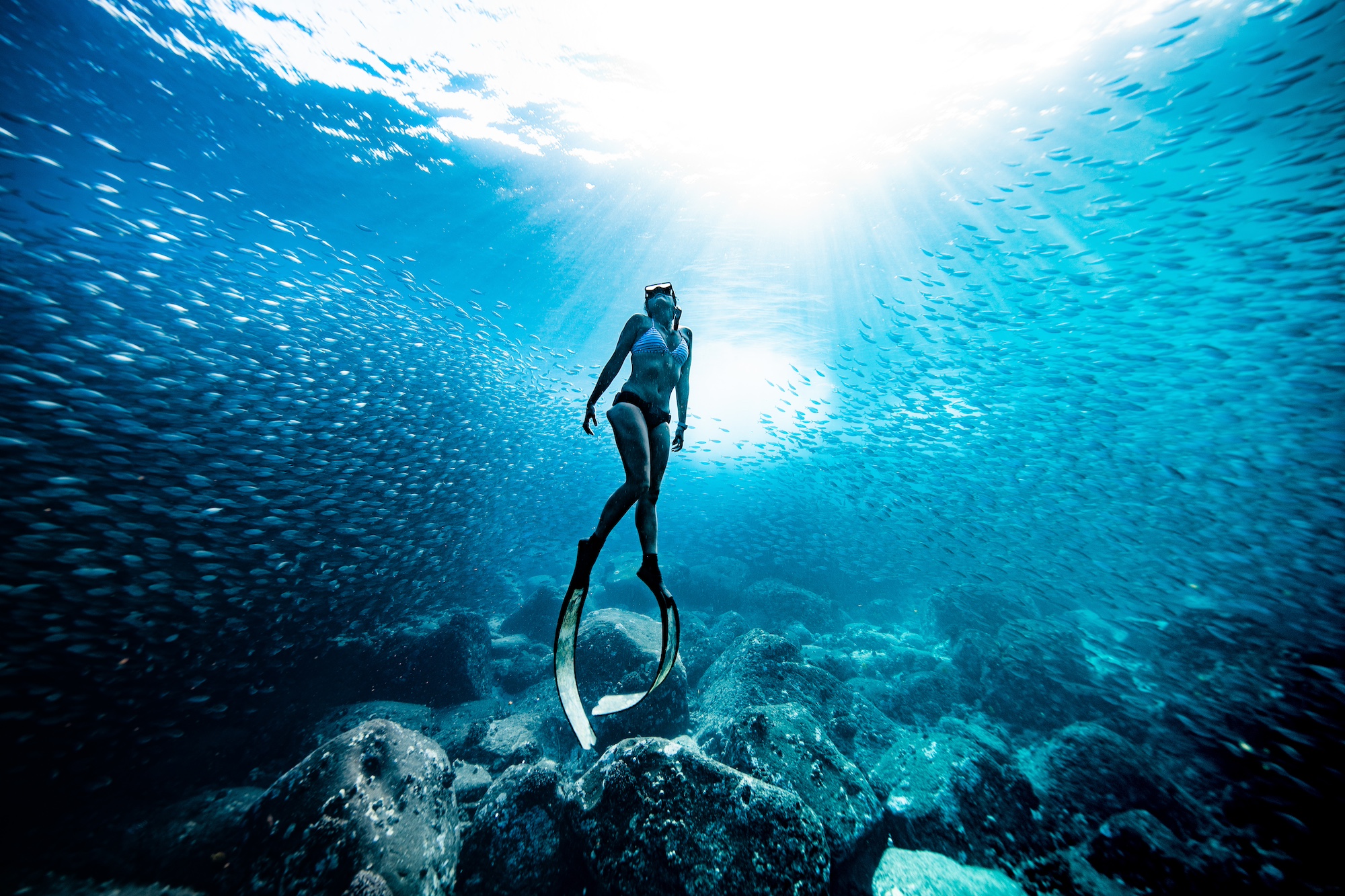
To say Kimi Werner is comfortable in the water is a vast understatement. As a child growing up in coastal Maui, she would often go snorkeling with her father as he free-dove and spearfished (what he caught was the family’s main source of food). And as an adult, Werner continues to find the ocean at the center of her life—and career(s): She is a U.S. National Spearfishing Champion, a bold free diver, a seafood-focused chef, and an ocean conservationist.
Free diver and U.S. National Spearfishing Champion Kimi Werner in her element.
Photograph by Perrin James
Werner has traveled all over the world—even to Antarctica—in pursuit of natural beauty and in service of protecting it, but her favorite place to explore remains her home state of Hawaii. She and her family live on Oahu’s North Store, which, she says, “still does function as a small town.The community is very much in tune with nature, and a lot of people live here because they want nature to dictate their lives, their choices, their schedules.”
Her top destination when it comes to Oahu? “Waimea Bay is hands down my favorite beach, and I think it’s one of the most magical places in the world. Whenever I go, I find myself questioning why I travel so far when I have something so beautiful right here.” For hiking enthusiasts, she recommends Keālia Trail (“I call it the StairMaster of the North Shore”) and Ka’ena Point Trail, where there is a bird sanctuary. All of these breathtaking spots are within a 45-minute drive of Four Seasons Resort Oahu at Ko Olina, which offers a morning or sunset Ma’ili Pillbox Hike for a closer hiking experience.
At Four Seasons Resort Hualālai, situated on an expansive stretch of coastline on the Big Island of Hawaii, you can get a taste of what it feels like to explore the ocean’s depths and push your physical limits via the Kimi Werner Freediving Experience, in which as many as four guests can spend two half-days learning to free dive with the national spearfishing champ. The package includes a four-course private dinner crafted by the resort’s executive chef, Richard Polhemus.
More experiences to inspire you to head outside
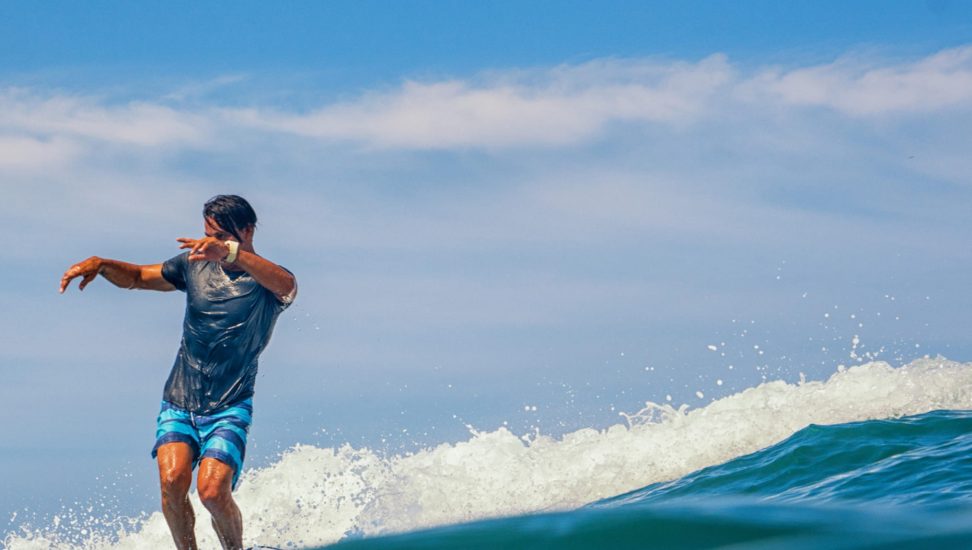
Learn to shred the waves with Surfing Lessons at Four Seasons Resort Punta Mita. All you’ll need is a swimsuit and sunblock. They’ll provide the rest: surfboard, rash guards, wetsuits, reef boots—and an unforgettable experience.
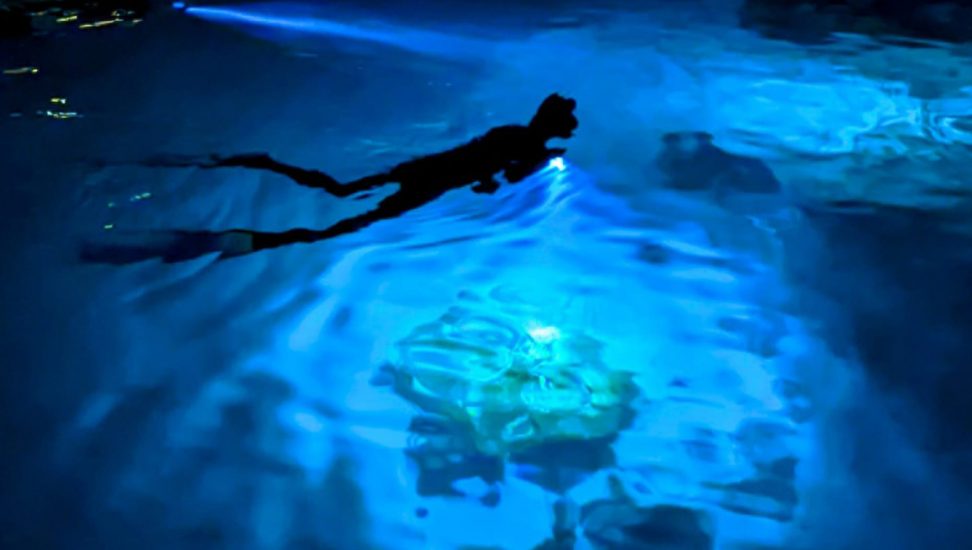
Join the resident marine biologist at Four Seasons Maldives at Landaa Giraavaru for Nighttime on the Reef, an after-dark snorkeling tour to find nocturnal sea creatures that wake up after the sun sets.
Whether you’re exploring the world or exploring creative pursuits, you’ll find one common thread: The most meaningful experiences occur when things happen unexpectedly. Unplanned adventures and thinking beyond the expectations of a typical vacation may lead to a deeper connection with your destination and yourself.
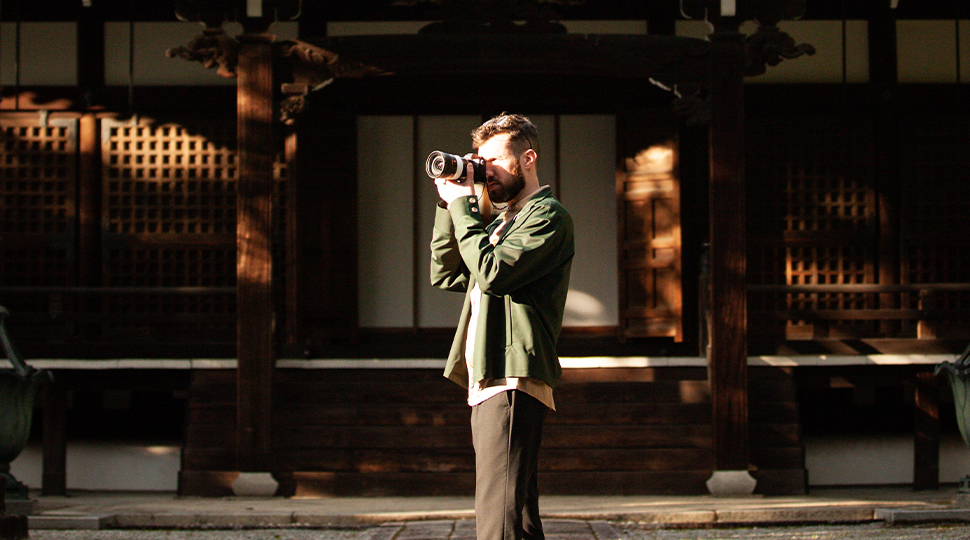
Photographer Dave Krugman captures a golden-hour moment in Kyoto.
Just ask photographer and creative director Dave Krugman. His numerous world travel experiences – including time spent in Kyoto – have led him to believe that one of the most essential elements of a successful trip, regardless of destination, is keeping an open mind.
“I try to leave a lot of breathing room for spontaneity and serendipity, because my favourite moments are when something happens, the path diverges, and I’m exposed to this thing that I couldn’t have planned even if I wanted to,” he says.
In Kyoto, those moments could be immersing yourself in the world of geiko and maiko – kimono-clad entertainers who perform traditional song and dance – and an ozashiki asobi dinner in one of the city’s historic geisha districts. Or learning the art of Zen meditation from the deputy head monk of Shoden Eigen-in.
During his stay at Four Seasons Hotel Kyoto, Krugman discovered a variety of new people, environments and experiences: A hotel guide led him on a tour of an ancient bamboo forest, and the Concierge arranged a visit to a local lantern workshop, where artisan lantern-makers taught him how to carefully layer thin sheets of paper over a frame to build his own mini lantern.
Even the Hotel’s atmosphere provided opportunities to connect with the culture and history of the city. Set around the 800-year-old Shakusui-en pond garden – one immortalized in a 12th-century epic poem – every setting at Four Seasons is carefully crafted with purpose.
Krugman cites travel as one of the biggest influences on his photography and his relationship with the world around him. “There is nothing more inspiring and invigorating than travel,” he says. “It always shows me that the world is so much larger than we imagine, so much more diverse. Witnessing this complexity and the vastness of the world is a humbling feeling, and it inspires me. Photography allows me to connect more deeply with all I see and experience.”
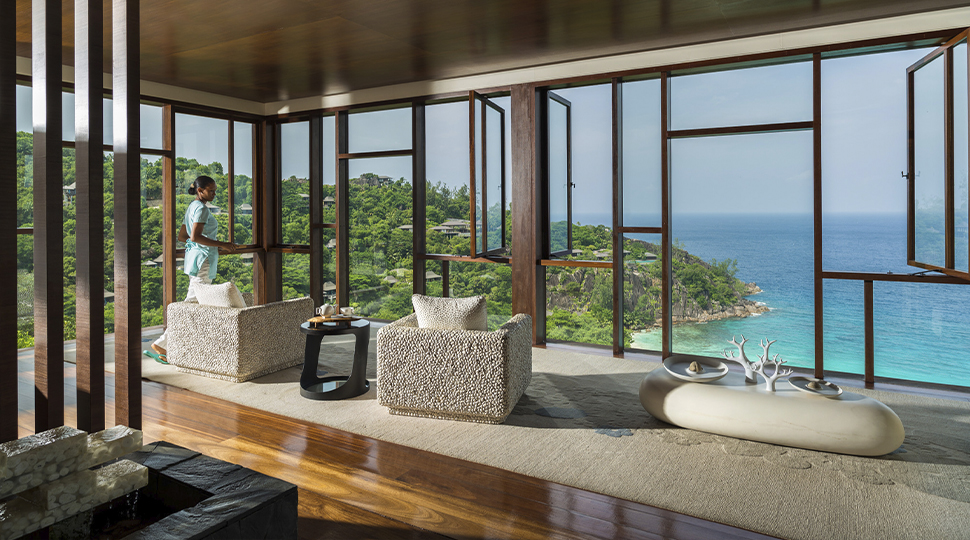
Head to the highest point of Four Seasons Resort Seychelles – the rooftop of Le Syel Spa. There, locally renowned artist Nigel Henri will help you sketch the picture-perfect setting during a personalized art class. Afterwards, your sketch will be scanned to create your own postcards, which will be mailed to your home along with your original artwork for framing.
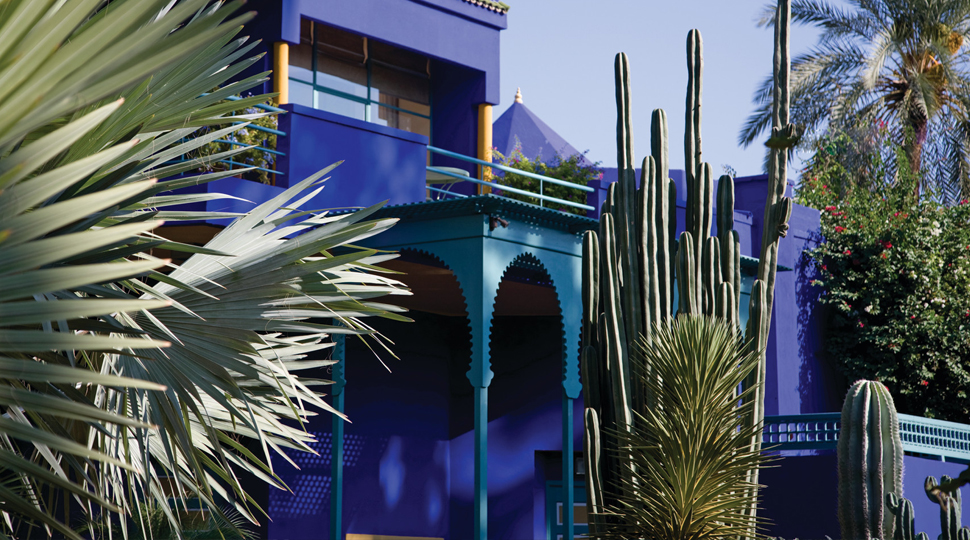
The bold colours of Marrakech inspired famed fashion designer Yves Saint Laurent, as you’ll see during a private tour of Villa Oasis, the home he shared with Pierre Bergé. Afterwards, step into the Musée Yves Saint Laurent Marrakech for a private guided tour before returning to Four Seasons Resort Marrakech for a dinner inspired by his Moroccan motifs.
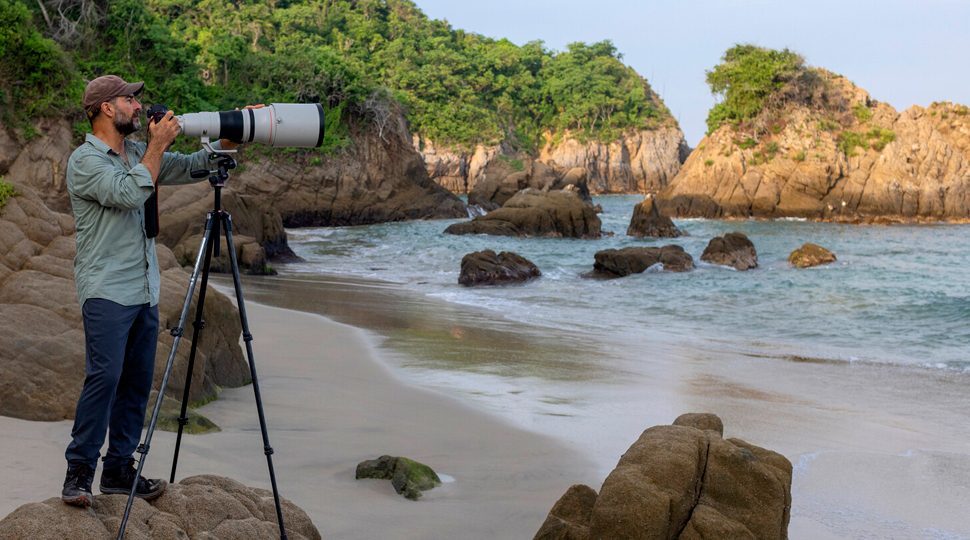
Get inspired by the natural wonders of the private reserve at Four Seasons Resort Tamarindo, México, during a unique macro photography class led by renowned “National Geographic” photographer Mauricio Ramos. You’ll explore the flora and fauna of this pristine coastline as you learn the art of capturing the perfect shot.
Redefine your own horizons
There are many valid reasons to talk yourself out of the adventure of a lifetime – a lack of travel companions, language barriers, concerns about food. But writer and entrepreneur Jessica Nabongo believes that embracing the unfamiliar in spite of your worries can improve your life and deepen your understanding of connection. She also believes that being afraid has no place in a travel itinerary.
Writer, entrepreneur and world-traveller Jessica Nabongo enjoys the Michelin-starred cuisine at Il Palagio.
“I would say that my travel philosophy is to travel without fear,” says Nabongo, the first Black woman to visit all 195 countries in the world. “I’m constantly living outside of my comfort zone. I think my comfort zone is discomfort,” she quips.
In Florence, one of Italy’s most beautiful cities and the centre of the cultural and intellectual revolution that swept through Europe during the Renaissance, Nabongo leaned into the unfamiliar to become uniquely acquainted with the region. A truffle-hunting excursion led her through the scenic Italian countryside, while a Michelin-starred dining experience and tours of iconic landmarks – like the Duomo, with its distinctive terracotta-tiled dome – offered new perspectives of the storied city.
Aside from abandoning fear, Nabongo’s second travel philosophy is to explore new places with a positive mindset: “I always say positive energy coats my stomach, because I’ve never had food poisoning!”
Arguably, sampling local fare is among the easiest ways to connect with a new place, a new culture and new people. In Florence, that could mean queueing up with the locals to eat lampredotto at one of the city’s myriad food stands. Or it could mean indulging in an intimate sunset dinner at the renowned Ponte Vecchio, the city’s signature arch bridge. Available exclusively to guests of Four Seasons Hotel Firenze, the bridge’s only open-air terrace provides a romantic setting for a decadent meal above the glittering jewellery boutique Dante Cardini.
Travelling with a reasonable amount of abandon can alter our perspective and shape the way we connect with the world around us, with others – and with ourselves. It can even change how we think of travel. For Nabongo, each new adventure doesn’t involve leaving home, but arriving there. Her experiences with hospitality in Florence and beyond have taught her to appreciate the fact that any destination is just as much about the people as it is about the location.
“For me, now, home is in people,” she says. “Yes, I physically live in Detroit, but I have homes in London, Accra, Dakar, Bangkok, Rome – I can think of so many places that I have homes because my people are there.”
On the Platinum Desert Safari curated by Four Seasons Resort Dubai at Jumeirah Beach, you’ll depart from the Resort for a wildlife drive through a pristine natural reserve. On your journey, you’ll spot rare desert species, enjoy a falconry performance and ride camels before enjoying a sumptuous six-course meal with a fire show and fragrant shisha.
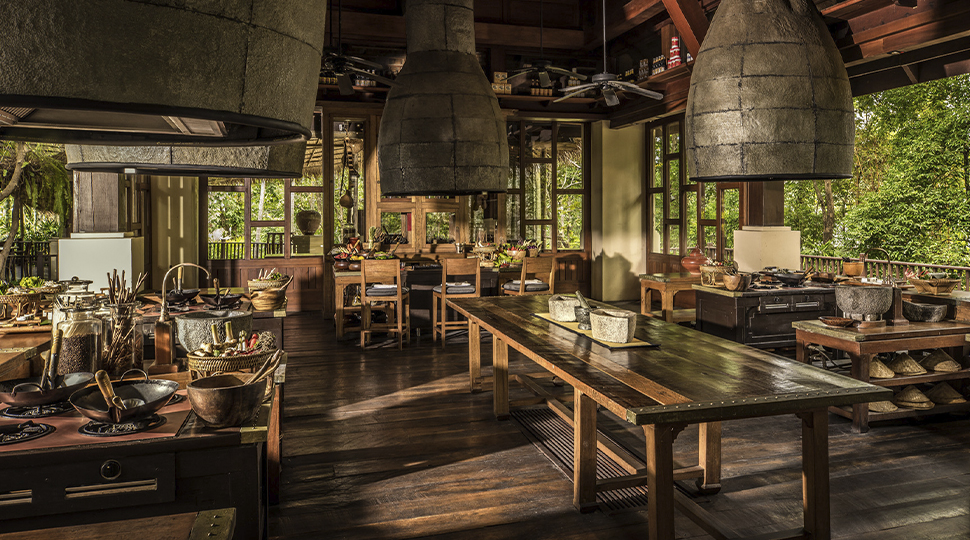
Explore new flavours and create a delicious souvenir in a cooking class at Four Seasons Resort Chiang Mai. Discover fresh indigenous ingredients in a secret garden as the chef gives you a tour, then learn to prepare them during a hands-on lesson in traditional Thai cuisine at the Resort’s Rim Thai Kitchen.
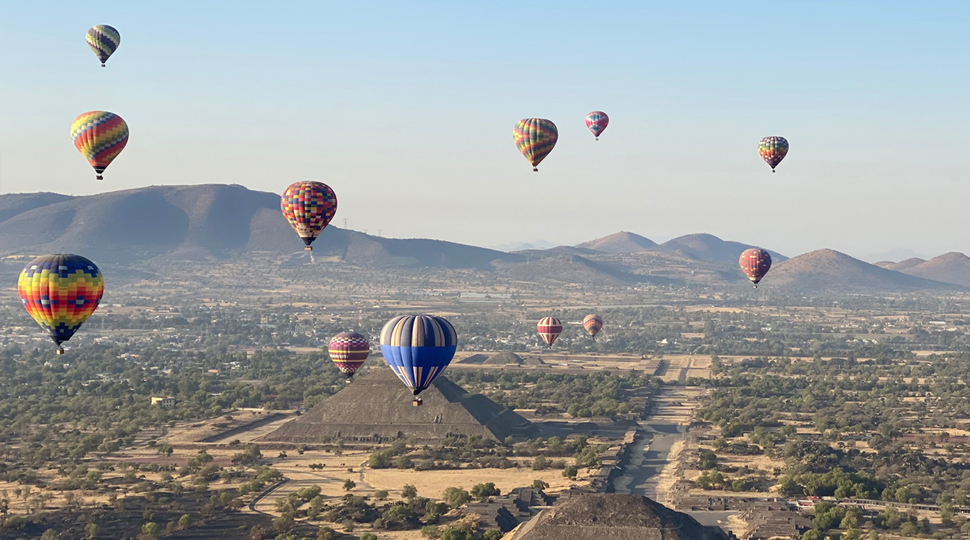
Experience the mystique of Teotihuacán pyramids like never before with Four Seasons Hotel Mexico City. On a private hot-air balloon flight, you’ll feel a thousand thrills inspired by the majesty and unsolved mysteries of these magnificent ancient temples.
Travel with intention for deeper cultural immersion
Trips all too often become mired in travel itineraries: Sights to see, foods to eat, things to do. Recommendations from friends or something you saw on social media. The pressure to check items off a list becomes so great that a long-awaited getaway can quickly turn into a chore instead of a rewarding experience.
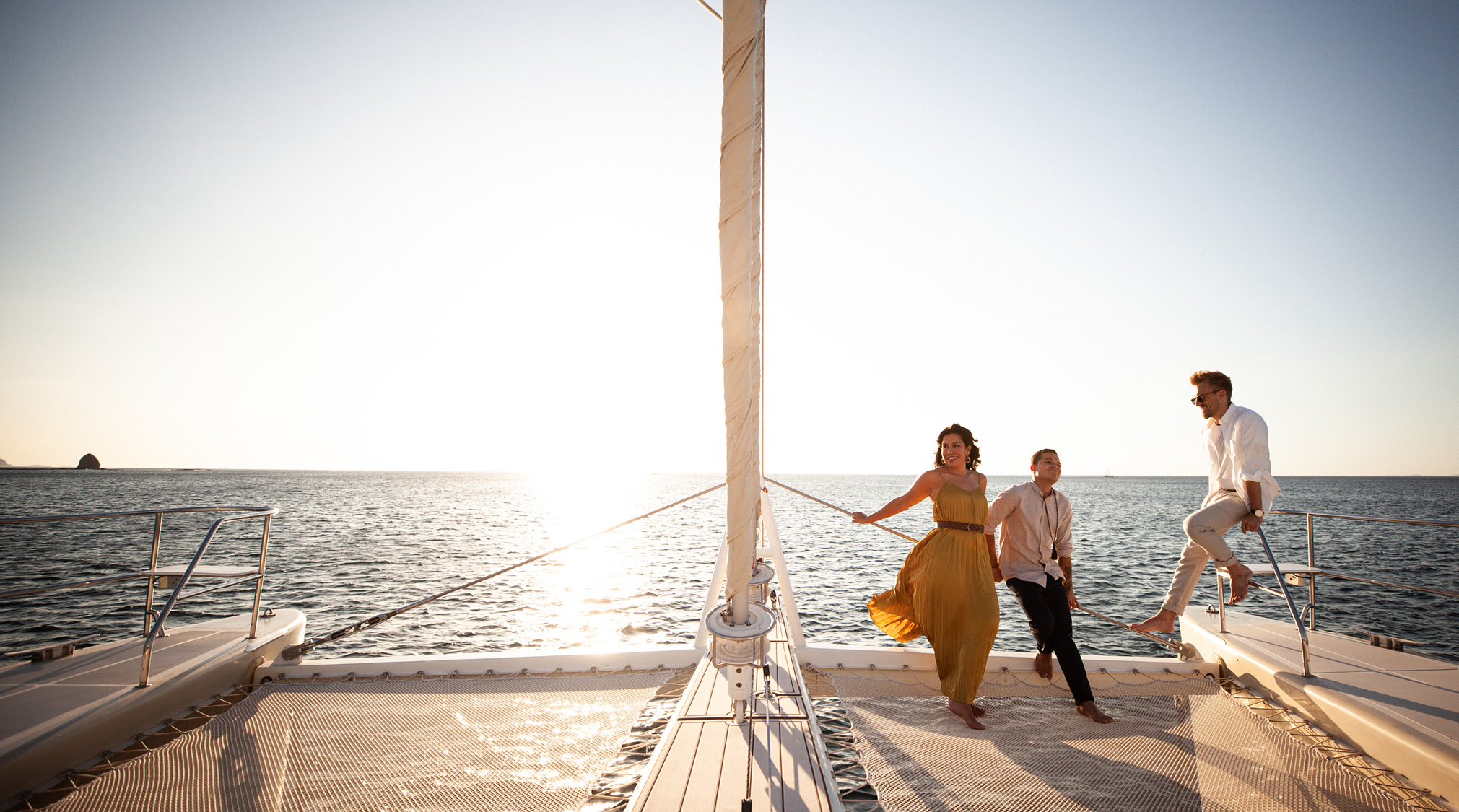
Social entrepreneur, yogi, activist and mountaineer athlete Georgina Miranda sets sail in Costa Rica.
Georgina Miranda, who cites yoga and energy practice among her laundry list of talents, thinks about this a lot. She believes travel that’s overly focused on getting things done can limit your ability to truly arrive at a destination and connect with it. Instead, she suggests giving yourself 20 to 30 minutes upon arrival to be present in the moment without any obligatons. “It’s this art of being versus doing,” she says. “And I think Western culture really encourages us to constantly be doing, so we miss out on so much magic.”
Costa Rica is one of the destinations where she lets her senses capture that magic – the sight of verdant rainforests, the sound of waves rushing to shore, the cool mist of a thundering waterfall, the salty scent of the ocean breeze.
“It’s been in the recent years that [I realized] my travelling has changed so much,” she says. “I no longer want to see the world – I want to feel the world. And that really shapes how I travel.”
“If you’re open enough, you can let a lot of wonderful things come into your life when you travel,” says Miranda. “It snaps you out of autopilot and it gives you the opportunity to wake up to yourself again.” In Costa Rica, that experience could come in the form of a yoga session or meditation class at the Resort’s Spa to help you find your balance or set your intention for the day. The on-site Wellness Concierge can design a custom plan with you to help your best self emerge – centring your breath, body and mind to restore balance.
“There’s a moment when travelling that you realize you will never be the same because of what you’ve experienced,” Miranda says. “You have felt, touched, tasted and been immersed in a new reality, and so now your own reality is different.”
More experiences to help you travel with intention
Intentional travel can set the stage for a transformative experience. Reconnect and recharge at Four Seasons Hotel Westlake Village, where expert coaches will help you learn personalized strategies for life balance, optimized energy and overall health at the Center for Health & Wellbeing.
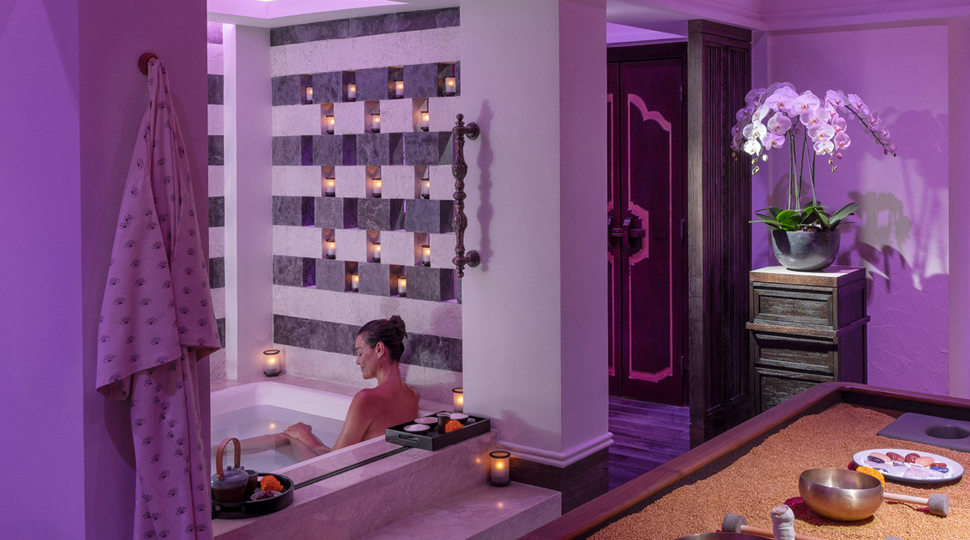
Enjoy a unique spa day at Four Seasons Resort Bali at Jimbaran Bay in the Illume Room, where science, technology and wellness merge for the ultimate therapeutic experience. Stimulate inner healing responses as you bathe in colour on a heated quartz-sand bed of crushed crystals, surrounded by the soothing sounds and vibrations of alchemy crystal singing bowls.