Let the Festivities Planning Begin

Thanksgiving, Hanukkah, Christmas, Kwanzaa—some of the calendar’s biggest holidays anchor the tail end of the year, but it’s never too early to start planning for them. Whether you’re hoping to gather the entire extended family for a festive reunion or celebrate with just your nearest and dearest, Four Seasons will help you craft a holiday experience for the books. From seasonal events to special menus, these four properties go above and beyond to spread joy and mirth.  

Festive at Four Seasons Hotel Prague
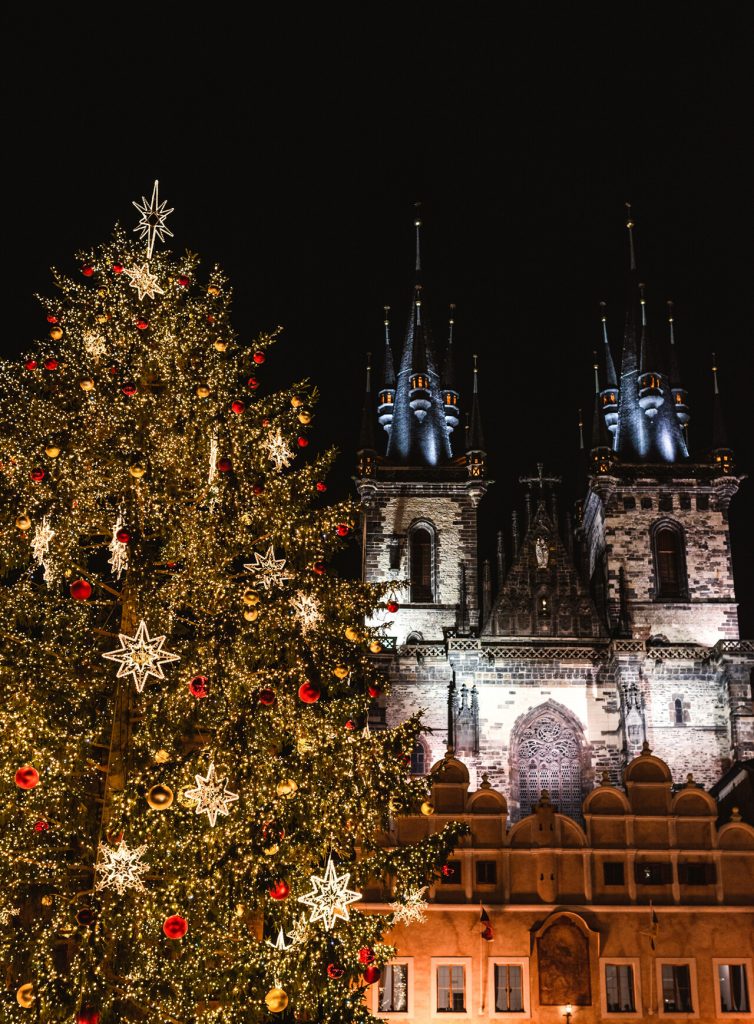
Christmas Market Prague
The Christmas tree at the Old Town Square’s Christmas Market.

If a classic old-world holiday experience is what you’re after, Prague should be high on your list of destinations to consider for your end-of-year vacation. The Czech Republic’s capital city has charmed many a travel writer with its cobblestone streets and beautiful architecture; now imagine the city all decked out for the holidays. It’s a veritable winter wonderland straight out of a fairy tale.  

Bonus: No need to pack presents. Just a seven-minute walk from Four Seasons Hotel Prague is the Old Town Square, site of the city’s largest Christmas Market (and tallest Christmas tree). Sip on mulled wine, treat the kids to gingerbread, and shop for handmade souvenirs to bring home. This year, the market starts November 26 and ends January 6.  
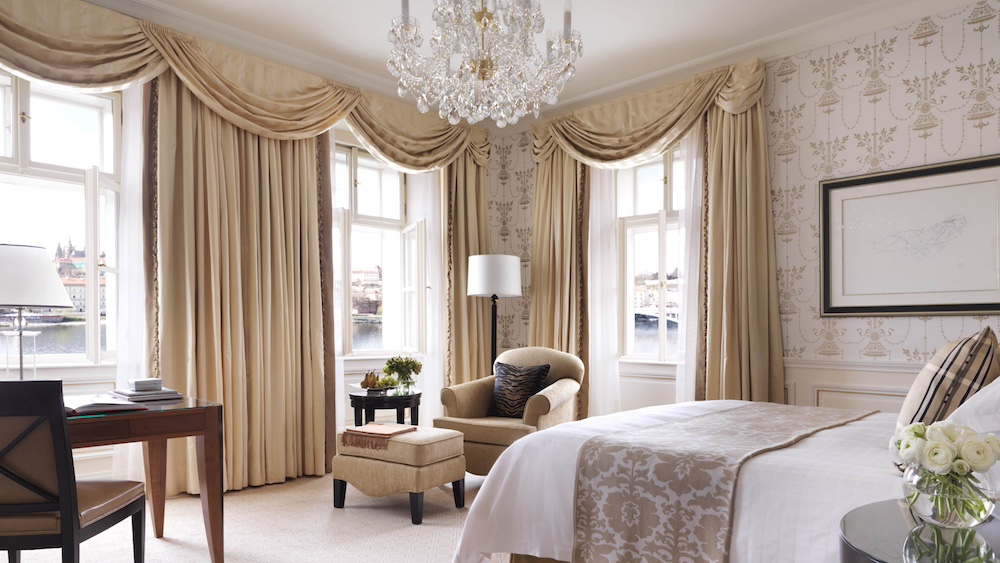
Four Seasons Hotel Prague, Room

After a day of exploring, retire to the hotel, itself decorated to the nines, and indulge in the Dior Afternoon Tea at the Gallery lounge (preferably by the fireplace), where you can warm up with a spot of tea and a selection of canapés, scones, and desserts.  

When you book a stay at Four Seasons Hotel Prague, you also have at your disposal its incredible curated experiences—including a private tour through the Old Town Square Christmas Market, an evening ride in an antique car to take in the city’s holiday lights and decorations, and cultural happenings like Advent concerts at the National Library of the Czech Republic in the Klementinum.  

Festive at Four Seasons Hotel Nashville
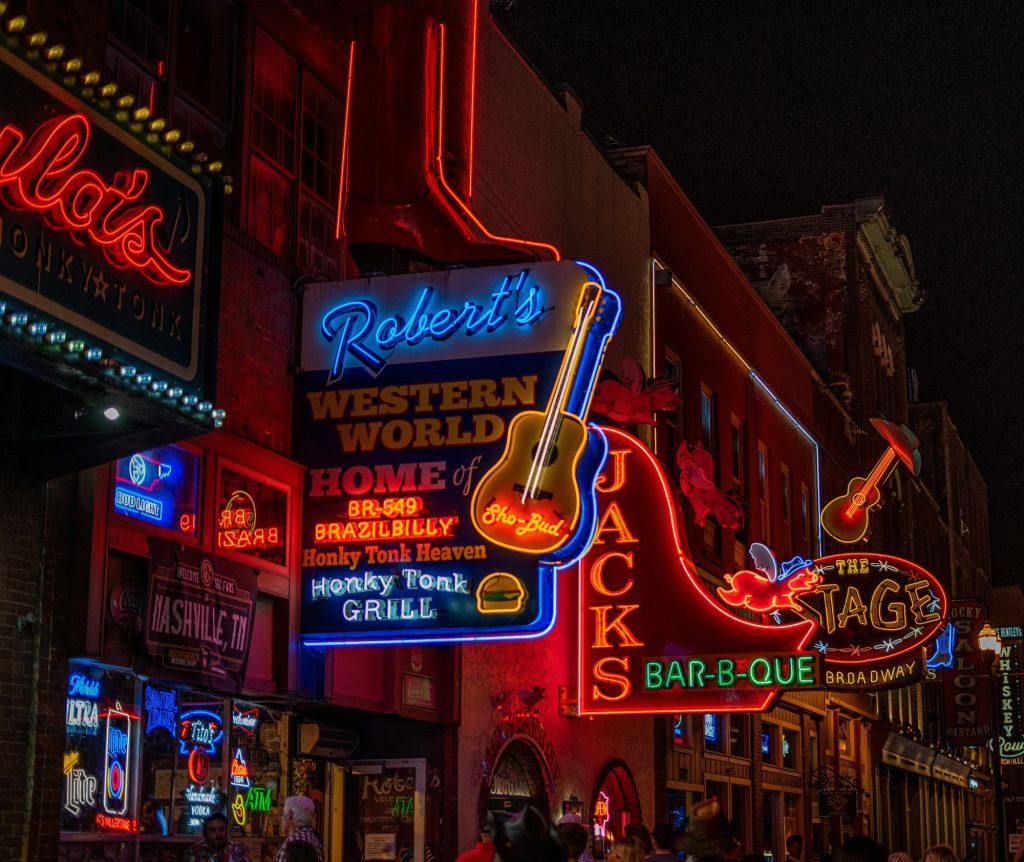
Broadway in Nashville
Lower Broadway in Nashville. Photograph by mana5280 on Unsplash.

Nashville’s nickname is Music City—for good reason. It’s a mecca for country music buffs and live music aficionados. And come winter, the city adds carols and jingles to its musical repertoire.  

 This season, holiday-themed shows happening in Tennessee’s capital city will include Opry Country Christmas at the Grand Ole Opry House; screenings of Elf and Home Alone accompanied by live music at the Schermerhorn Symphony Center; A Drag Queen Christmas at Ryman Auditorium; and Nashville Ballet’s Nashville’s Nutcracker at the Tennessee Performing Arts Center’s Andrew Jackson Hall.  
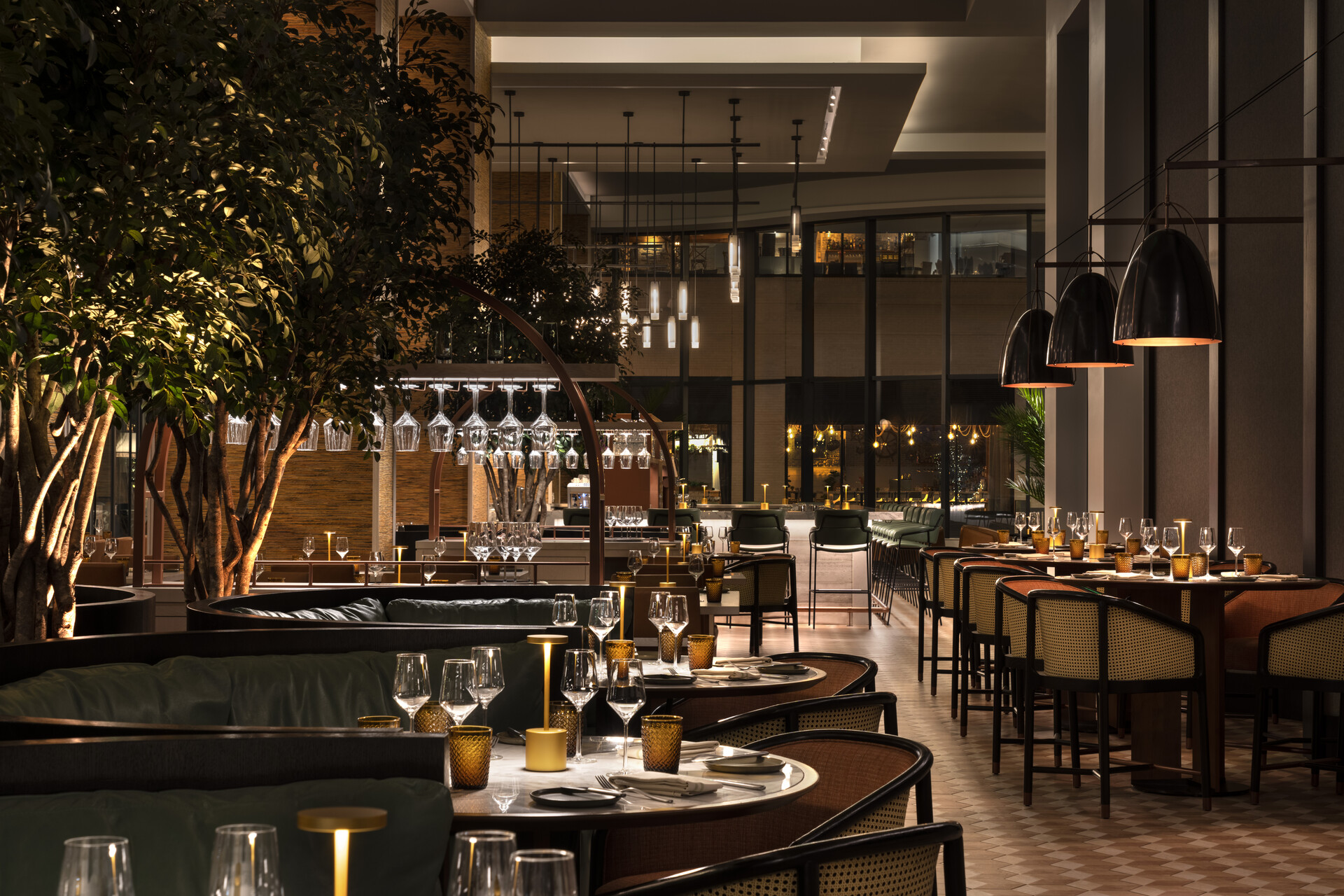
Four Seasons Hotel Nashville Mimo

 At Four Seasons Hotel Nashville, the holidays are all about delighting guests with special treats and events. At the Festive Carolers Dinner, carolers spread cheer from table to table, singing Christmas classics. At the Christmas Day Brunch, Santa Claus drops in for a thrilling visit, and guests get to try their hand at gingerbread house decorating. And on both Christmas Eve and Christmas Day, Mimo, the hotel’s Tuscan-inspired restaurant, hosts a special prix fixe, four-course dinner. At evening’s end, every guest receives a holiday gift to take home.  

Festive at Four Seasons Hotel London at Park Lane
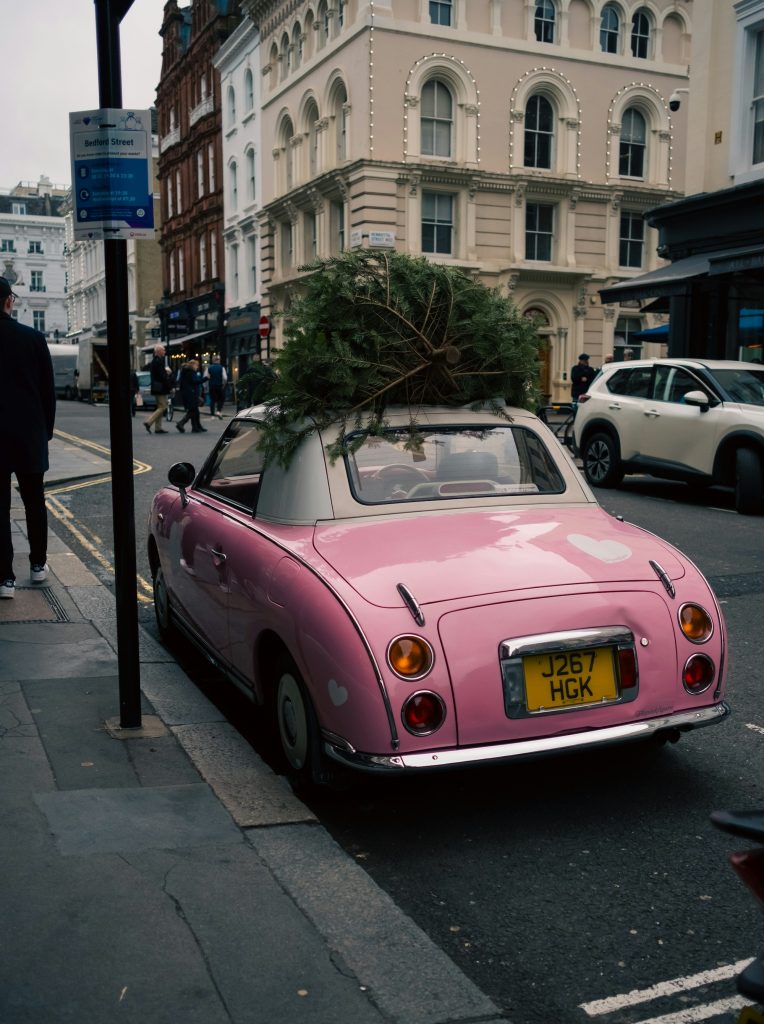
Christmas in London, Photo by Arafat Khan on Unsplash
Christmas in London. Photograph by Arafat Khan on Unsplash.

Love Actually. A Christmas Carol. Bridget Jones’s Diary. The Holiday. Some of our favourite Christmas movies (and likely yours, too) take place in London, the city that popularized beloved Victorian-era traditions—decorated trees and storefronts, Christmas crackers, holiday cards—that continue to this day.  

In addition to Christmas markets, ample shopping, and holiday lights viewing, London also offers plenty of places to ice skate. These outdoor venues, often surrounded by historical beauty, include Somerset House, where in late November the imposing and vast neoclassical site’s outdoor courtyard is transformed into an ice rink. Another magical spot for skating: Hyde Park Winter Wonderland, the biggest outdoor rink in the United Kingdom. Here, you can glide beneath 100,000 twinkling lights to a Christmas soundtrack.  
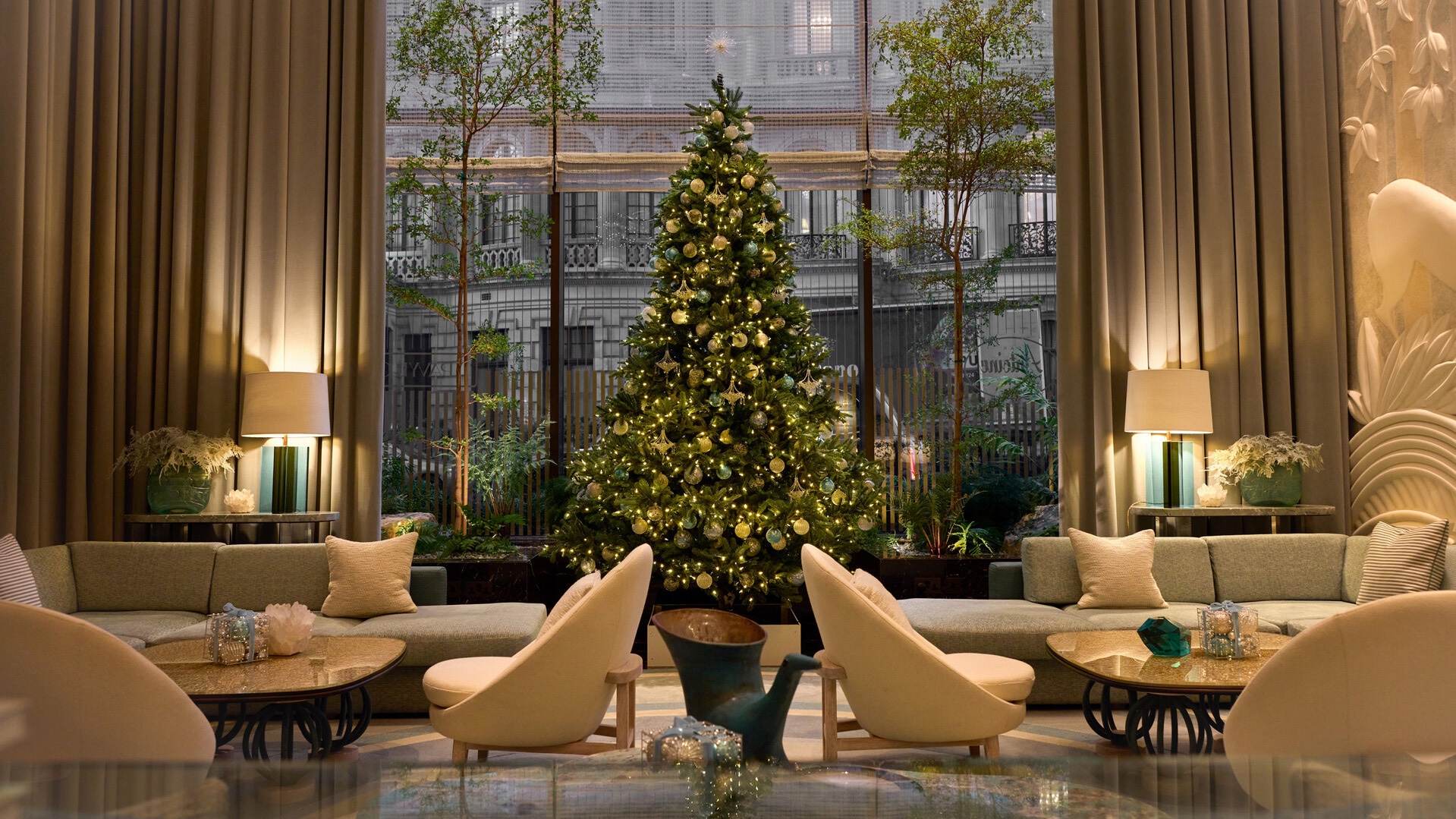
Four Seasons Hotel London at Park Lane, Christmas

 Hyde Park is, conveniently, just a one-minute walk from Four Seasons Hotel London at Park Lane. Located on a quiet corner in the heart of Mayfair, the hotel goes all out for the holidays with elegant decorations and special menus at the French-inspired, Michelin-starred Pavyllon London, helmed by chef Yannick Alléno. And should you need help arranging exclusive, unique experiences across the city, the hotel’s concierge team—the largest in London—is ready to assist.  

Festive at Four Seasons Hotel Dubai International Financial Centre  
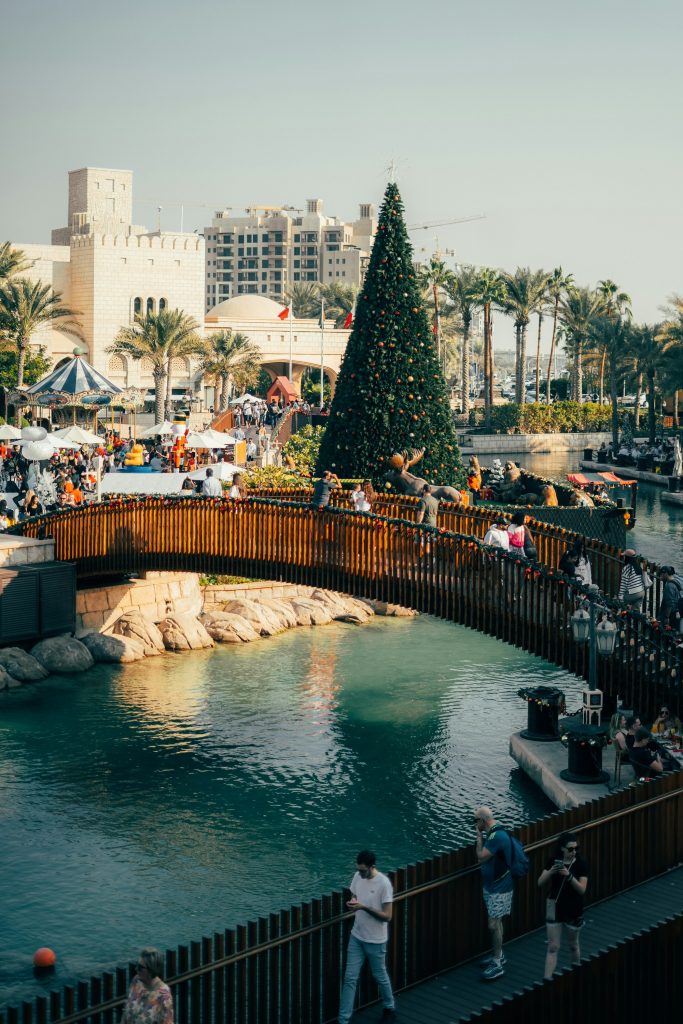
Christmas in Dubai
Dubai decorated for the holidays. Photograph by mahyar motebassem on Unsplash.

Travel to Dubai during the holidays, and you’ll encounter lit trees, holiday markets, even Santa and his elves—but you’ll experience these traditions in warm, parka-free weather. That said, should you want a taste of wintry weather, simply head over to Ski Dubai, a gargantuan indoor ski resort where you can ski, snowboard, sled, and even meet some penguins. It’s housed in the Mall of the Emirates, one of the largest malls in the world.  

 Speaking of malls, luxury shopping is practically a sport in Dubai, and with the winter months comes the annual Dubai Shopping Festival, five weeks in December and January when stores offer irresistible discounts. And because Christmas isn’t a national holiday there, stores stay open, and you won’t have to wait for Boxing Day to shop.  
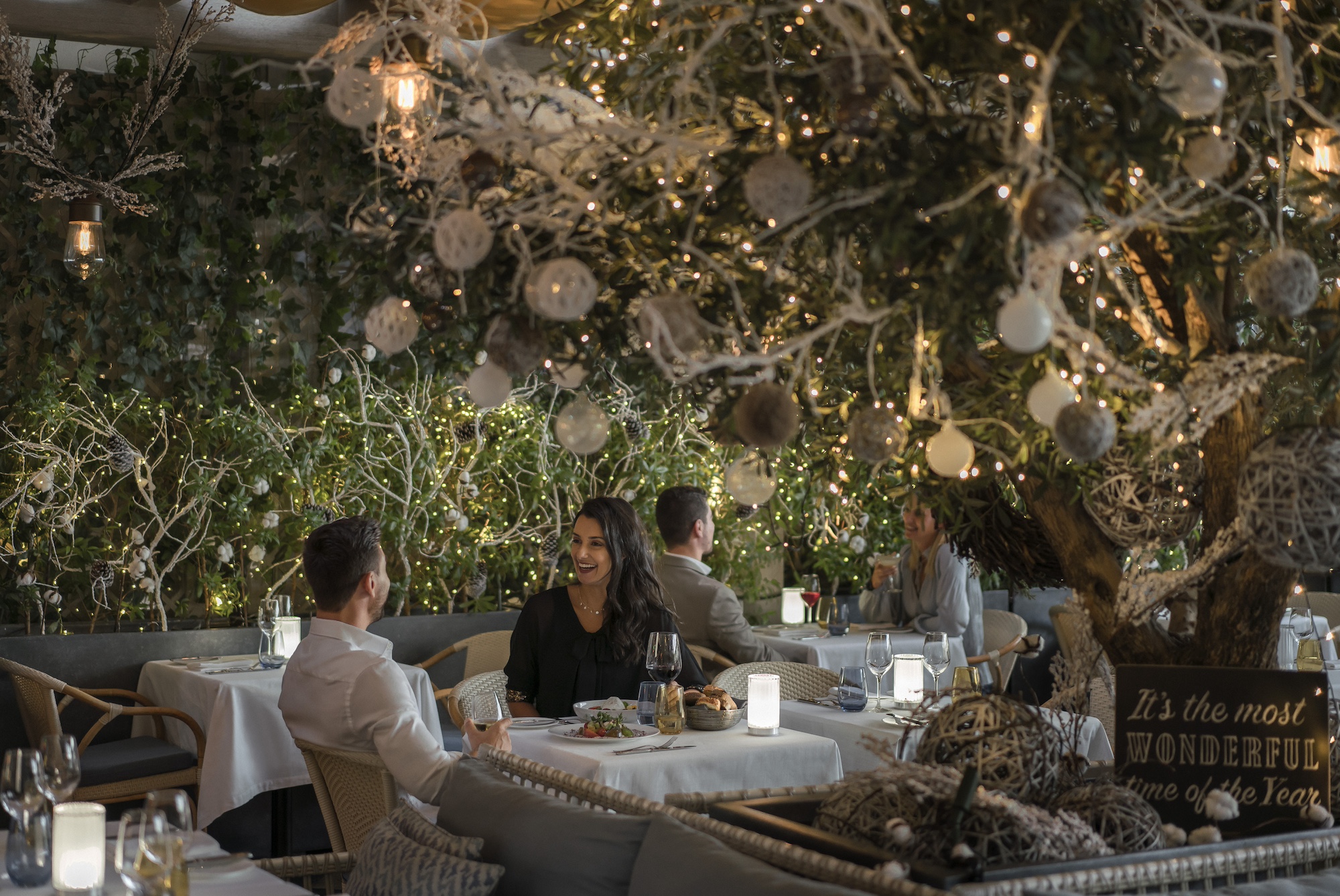
Four Seasons Hotel Dubai International Financial Centre, Mina, Festive

 Outdoor excursions also abound in Dubai: desert safaris, yacht adventures, hot-air balloon rides, and cultural sightseeing can all be arranged when you stay at Four Seasons Hotel Dubai International Financial Centre. The boutique hotel is a quiet oasis in the middle of the financial district, close to downtown and just minutes from the beach. Though small, with just 106 tastefully appointed rooms and suites, the hotel offers a range of dining options, from afternoon tea at Penrose Lounge and French Mediterranean dishes at Michelin-recommended Mina Brasserie, to small bites at Luna Dubai and Middle Eastern meze poolside, both on the roof with skyline views.    
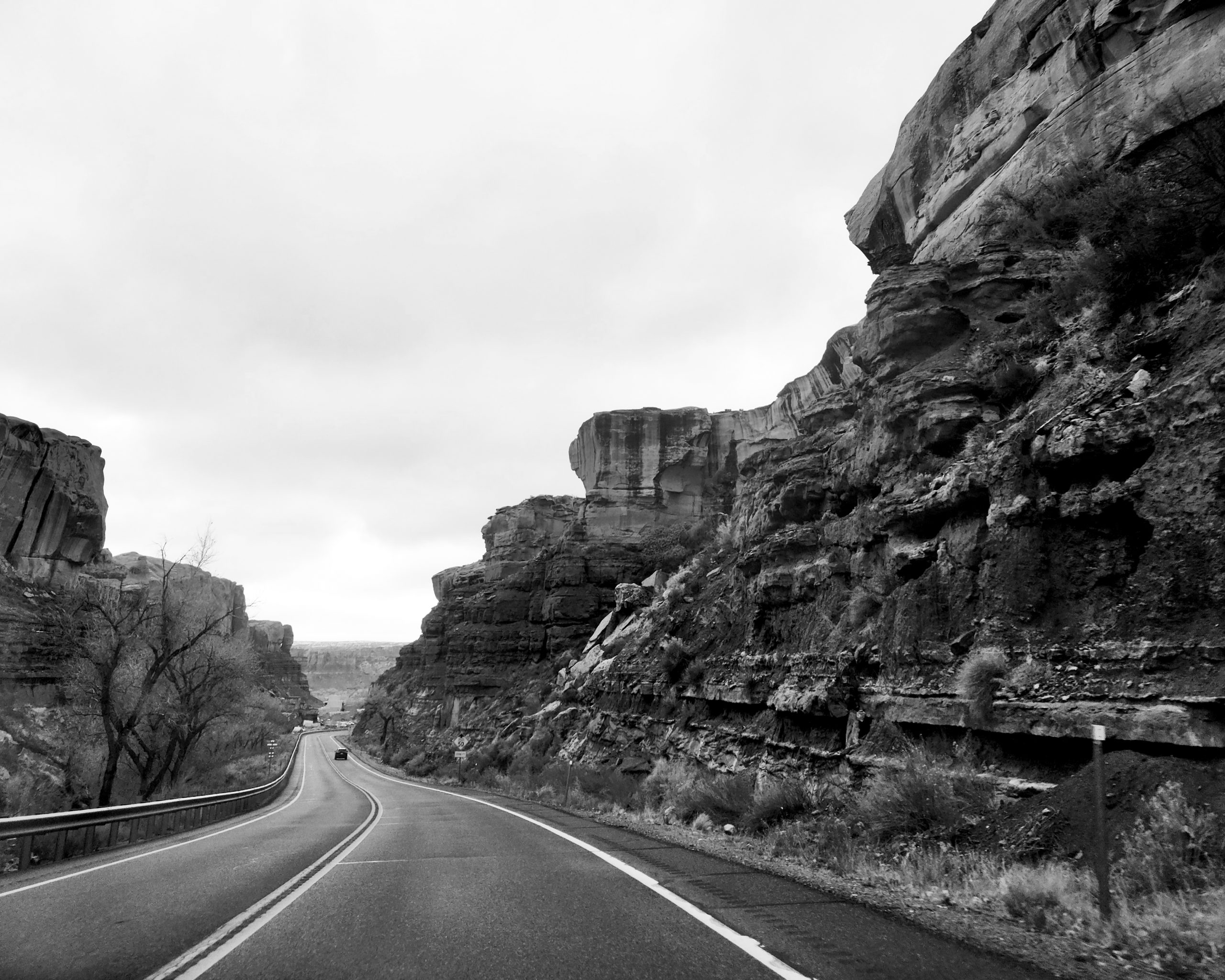
Peak Summer: A Road Trip Across the American West

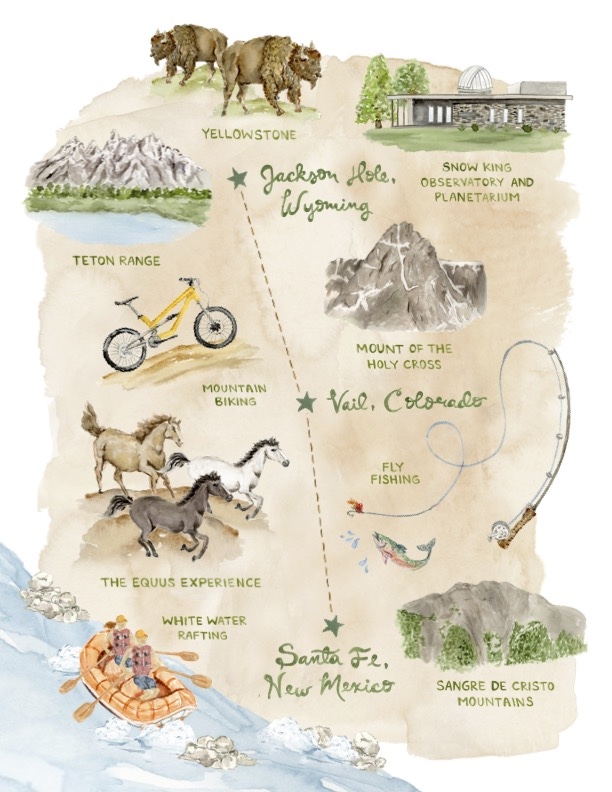
Map by the Land of LA
Map by the Land of LA.

1. Start in: Jackson Hole, WY

For wildlife lovers and extreme sports enthusiasts alike, there are few destinations as thrilling as Jackson Hole, Wyoming, famed gateway to the Grand Teton and Yellowstone national parks. During the summer, locals of all stripes cheer ropers and rodeo clowns at the season-long Jackson Hole Rodeo (which offers a special “Behind the Chutes” VIP experience); pack the lawns at classical concerts held during the Grand Teton Music Festival (through August 23); and drink Wyoming Whiskey at the famous Million Dollar Cowboy Bar

Boasting some of the best hiking, climbing, biking, rafting, and fly-fishing spots in the country, Jackson Hole is much more than a ski town. And the opportunities are endless. After 25 years in Jackson, legendary ski mountaineer Kit DesLauriers is still finding new mountains to summit in the Teton Range, where some of the tallest peaks rise above 12,000 feet. Says DesLauriers, “I think the Tetons are the most magnificent mountains in the lower 48—and they are right outside of town.” 

EXPERIENCES

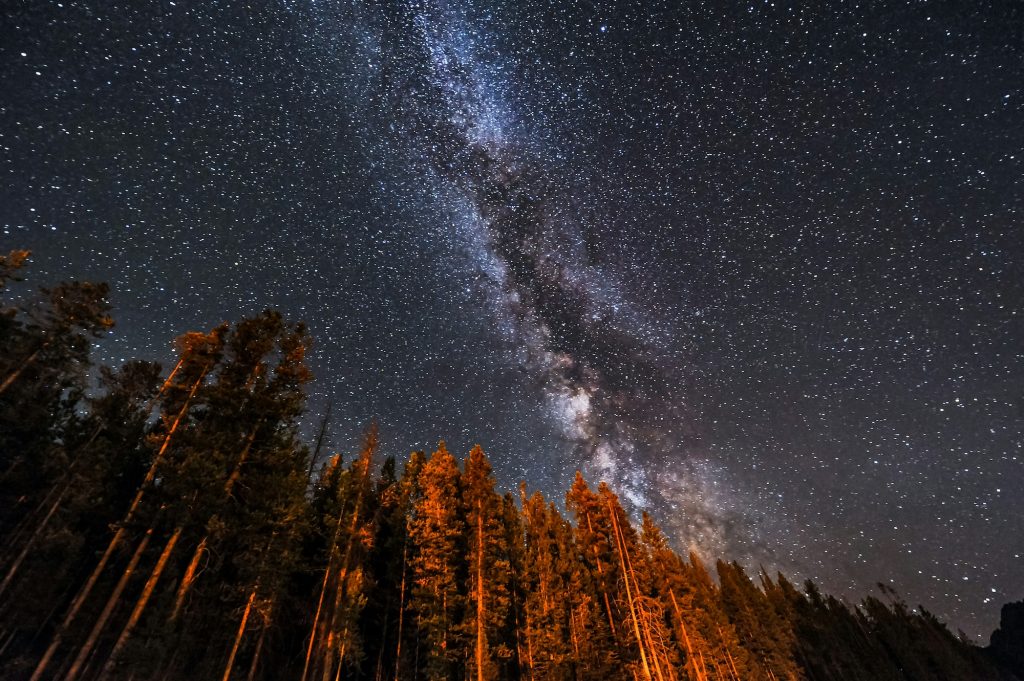
Dark Sky Heaven: Amateur astronomers will find the wide Wyoming skies an ideal way to explore the universe. Featuring some of the darkest skies in the lower 48, Teton County has become the first county in the world to be designated an International Dark Sky Community, and stargazers reap the rewards. A three-hour nighttime safari with Wyoming Stargazing in Grand Teton National Park features dinner and a show, where guests view star clusters, planets, and galaxies with the aid of powerful telescopes and learned experts. At the Snow King Observatory and Planetarium, visitors can get an even closer look at the cosmos through a state-of-the-art PlaneWave telescope. 

Dark Sky, Jackson, Photograph by Zetong Li/Unsplash
Teton County has become the first county in the world to be designated an International Dark Sky Community. Photograph by Zetong Li/Unsplash.

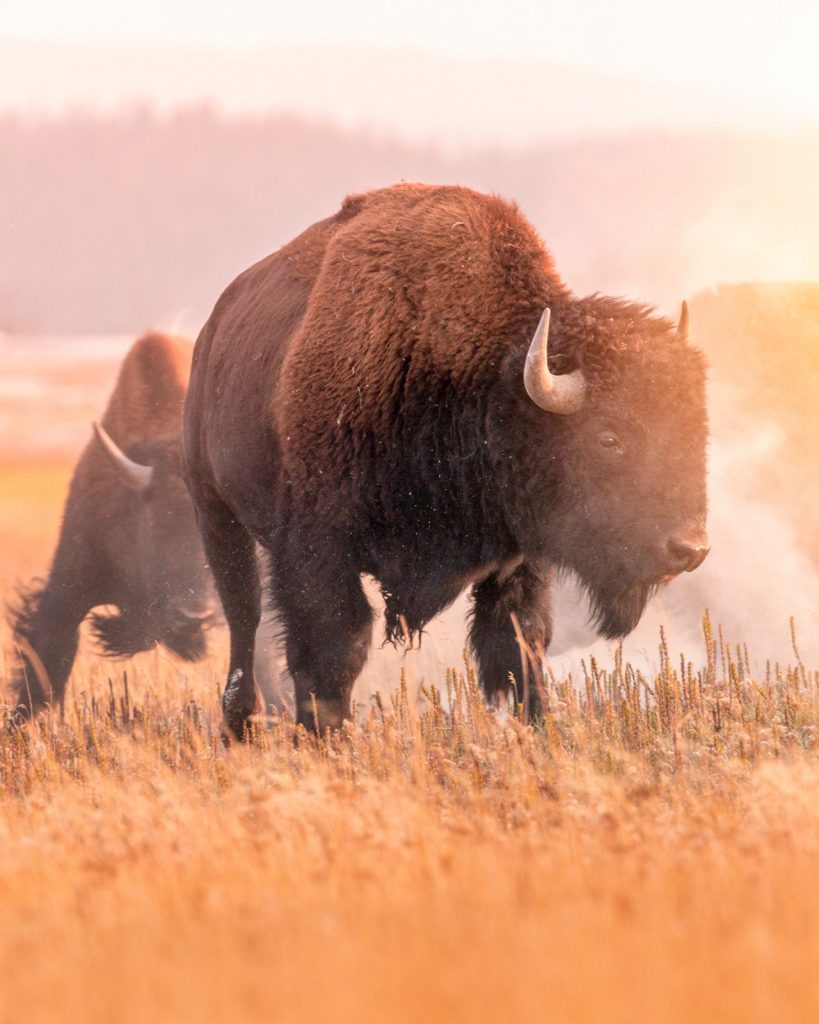
Safari in the U.S.A.: At Four Seasons Resort and Residences Jackson Hole, which debuts its new restaurant Steadfire Chophouse this summer, guests can explore Yellowstone National Park on an all-day excursion created in partnership with Jackson Hole Wildlife Safaris and Yellowstone Safari Company. The “American Serengeti” experience begins with a private flight (for up to seven guests) into northern Yellowstone that soars over natural wonders like the Grand Prismatic hot spring and the Old Faithful geyser. Visitors encounter astonishing fauna, including Yellowstone’s bison herds, all while hiking through one of America’s extraordinary landscapes. “Two weeks ago, we had a moose at our office; then we had a raccoon that was fishing by the office the next day,” says Jackson Hole Wildlife Safaris owner Matt Scott. “I was in town yesterday and there were mule deer walking through. As far as wildlife goes, Jackson is in the middle of a very healthy ecosystem, and it’s just a part of life here.” 

Buffalo on Safari, Jackson Hole
Where the bison roam.

Bring It Home: an antler chandelier. The local firm Wild West Designs creates and sells the perfect statement pieces for any rustic retreat: chandeliers produced from elk antlers that the animals shed naturally. 

2. Continue to: Vail, CO

Cool alpine breezes make summer an appealing time to explore this charming mountain enclave. Built to resemble a quaint town in the Alps, Vail Village offers an array of restaurants, such as Tavernetta Vail, at Four Seasons Resort and Residences Vail, and upscale stores, including Moncler for jackets, Davidor and Squash Blossom for jewelry, and Kemo Sabe for Western wear. In the warmer months, the famous ski destination beckons with horseback riding, wagon rides, and even llama hikes (they carry hikers’ packs).  

This season, Four Seasons is launching Four Seasons Vail Adventures by Sage, a daylong experience with fly-fishing, rafting, a side-by-side ATV tour, and a gourmet lunch. The property is also making the Chalet (its ski-in, ski-out pavilion) a hub for activities such as wine tastings, cocktail pop-ups, art shows, and music.  

On Sundays in the town center, the Vail Farmers’ Market and Art Show brings vendors and artisans together, while Hot Summer Nights at the Gerald R. Ford Amphitheater features musicians, dancers, and comedians. Even the gondolas can be a summer experience—rides give visitors a bird’s-eye view of the Rockies, with fields of wildflowers across the wide expanse. 

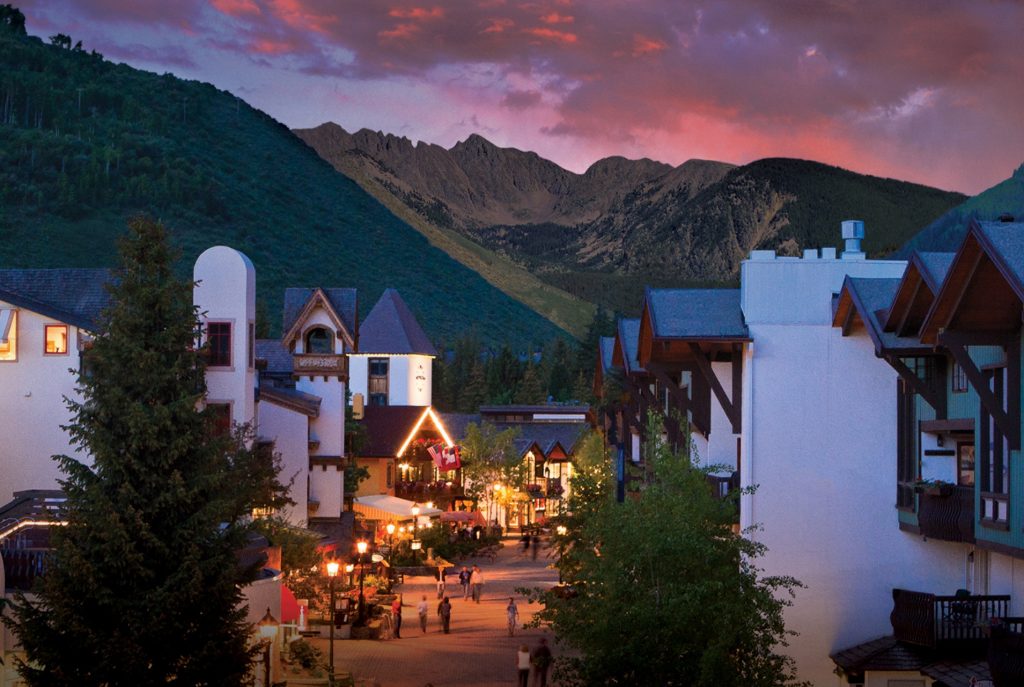
Vail
Vail’s village hub.

EXPERIENCES

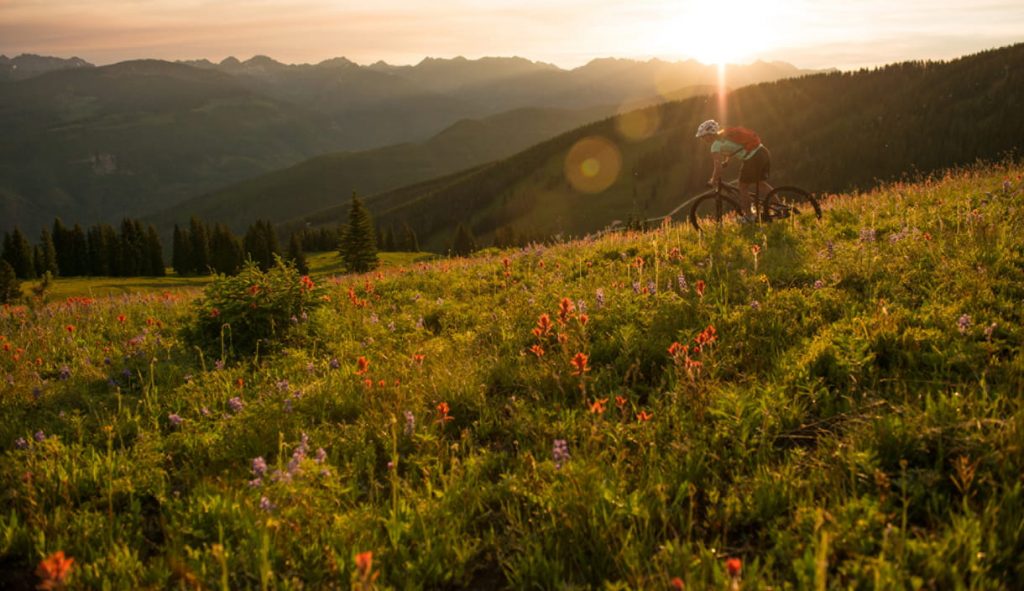
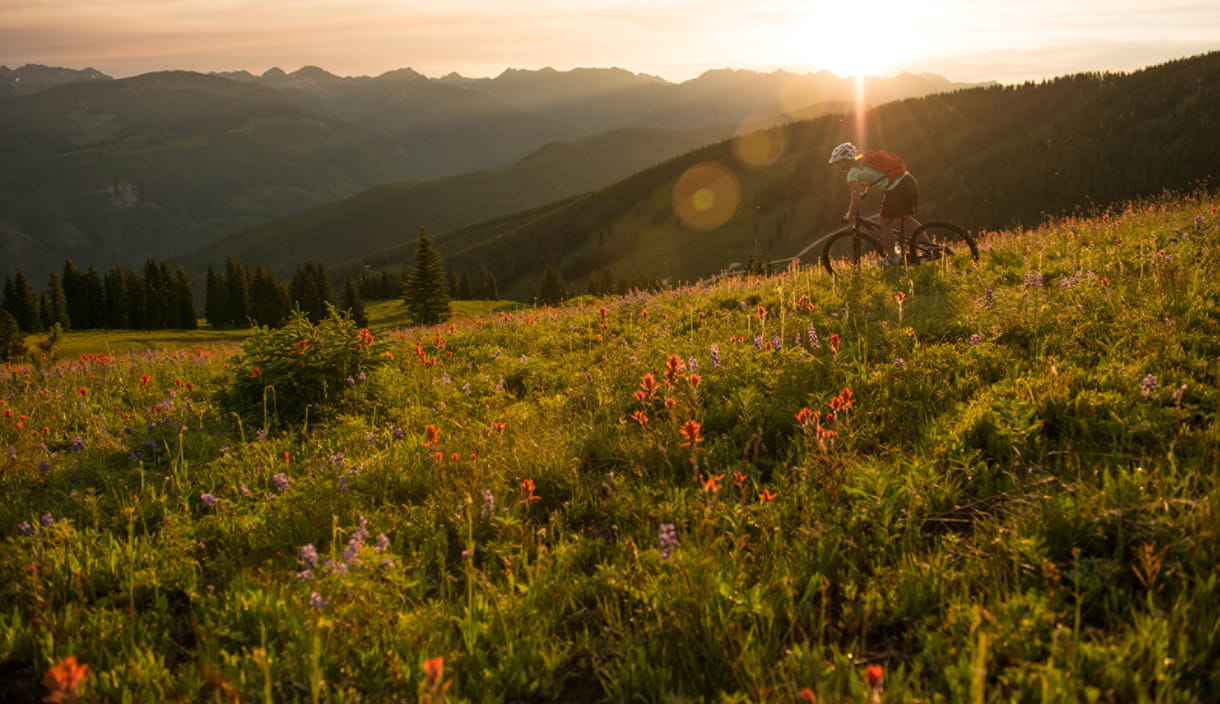
Endless Biking: Vail is a mountain biker’s dream, with 58 miles of paved recreational paths in Eagle County alone. A trip up Vail’s famous gondolas with a bike haul pass takes you to some of the most exhilarating high-elevation trails in Colorado, featuring breathtaking views of Gore Range. Those looking for a challenge flock to the Grand Traverse Mountain Trail, which twists and turns through fragrant pine forests and offers spectacular views of Mount of the Holy Cross. Looking for a downhill thrill? The Radio Flyer Mountain Trail descends 900 feet in elevation. 

Four Seasons Resort Vail
Vail is heaven for mountain bikers.

Reel It In: Colorado’s rushing waters teem with brown trout, rainbow trout, brookies, and cutthroat. Vail Valley Anglers, the beloved fishing store in nearby Edwards, offers lessons, along with float, wade, and specialized fly-fishing trips led by seasoned guides along the Eagle, Colorado, and Roaring Fork rivers. Colorado Angling Company also offers customized fly-fishing tours from its base-camp cabin set up on a quarter-mile stretch of private trout stream in the Vail Valley. Anthony Mazza, a fly-fishing guide with the outfitter, says the joy—and the challenge—of the sport is “the change. It’s never the same. The same float on the same stretch of the same river can be completely different from one day to the next. We don’t speak fish, so you’ve got to figure it out every day.” 

Bring It Home: a Golden Bear necklace. The Golden Bear jewelry store, open since 1975, is famous for its handcrafted necklaces with a unique bear emblem. “If you are a Vail local,” says a resident, “you have to have a Golden Bear necklace.” 

3. End in: Santa Fe, NM

Magical Santa Fe has held both creatives (like painter Georgia O’Keeffe and author George R.R. Martin) and nature lovers in its thrall for centuries. A bastion of old-world charm and rich history, the city—founded in 1610—offers a profusion of lively restaurants and Southwestern art galleries (more than 250). Visitors can get into the spirit of Santa Fe at the beloved organic chocolatier Kakawa Chocolate House, known for its regionally inspired chocolate drinks, including mezcal and prickly pear. After a day of summertime fun, many flock to the acclaimed Santa Fe Opera, where the 2025 repertoire features such classics as La Bohème and The Marriage of Figaro. There are also endless ways to tune into the peace of the high desert, among them countless trails, like the trek to Picacho Peak, part of a 25-mile network of breathtaking biking and hiking routes in the foothills of the Sangre de Cristo Mountains. “You’ve gotta get out there and experience the outdoors, the fresh air, and the beautiful colours. That’s your stress relief,” says Hans Loehr, adventure program supervisor at Four Seasons Resort Rancho Encantado Santa Fe, which last year completed a full revitalization of its 65 suites and rooms. “You give us a few days, and you’ll recharge.” 

Four Seasons Santa Fe
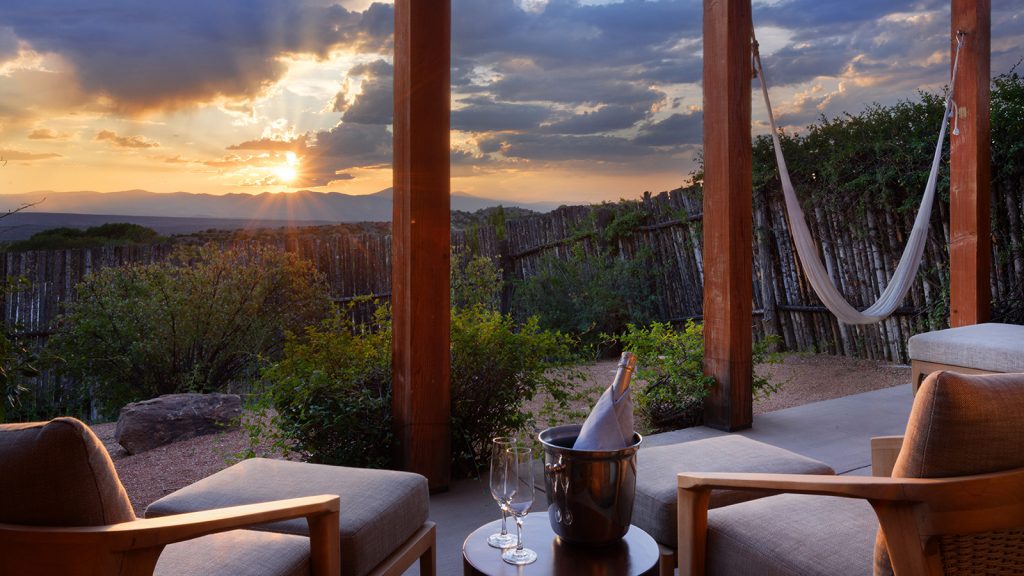
The epic view from a room at Four Seasons Resort Rancho Encantado Santa Fe.

“The experience is different because  the horses reflect back the exact present moment with each person.” —Kelly Wendorf, founder, The Equus Experience

EXPERIENCES 

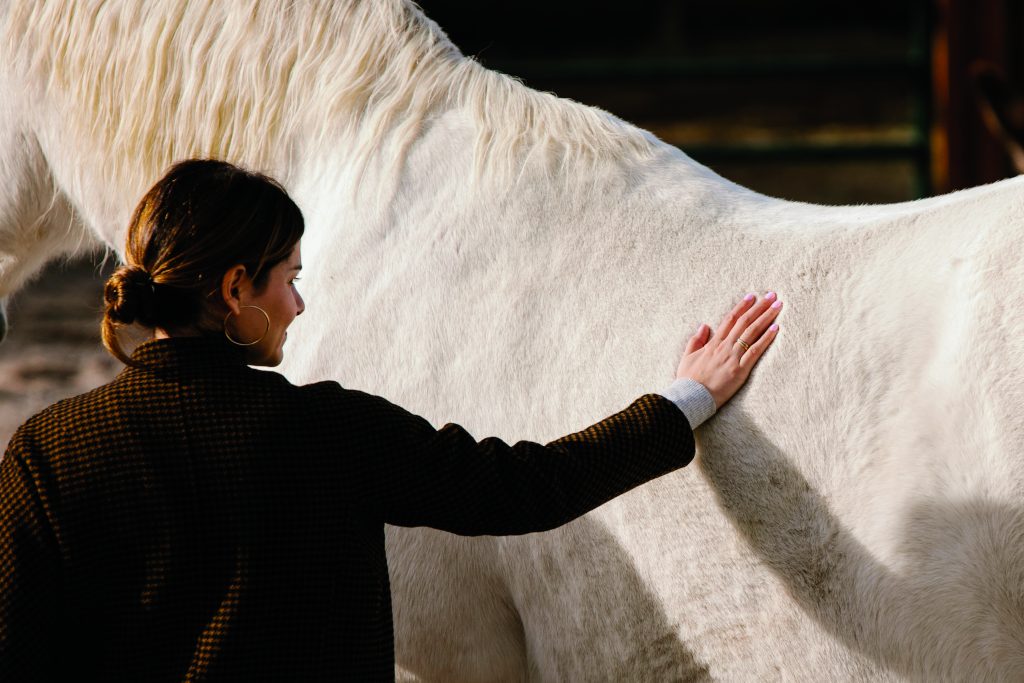
Equine Bonding: The powerful connection between horses and humans has been recognized for centuries. The Equus Experience is an innovative approach to personal knowledge and the development of leadership skills with the aid of our equine friends. No riding is involved; instead, participants interact with the horses to learn mindfulness, boundaries, and trust. “The experience is different because the horses reflect back the exact present moment with each person,” founder and CEO Kelly Wendorf, a personal development coach, has said of the two-hour and four-hour experiences of self-discovery. 

Equus Experience, Santa Fe
The Equus Experience. Photograph by Andy Brophy.

 White Water Thrills : Wild and scenic, the majestic Rio Grande is famous for its roaring rapids. Santa Fe’s Four Seasons offers white water rafting experiences tailored to every interest and skill level. The Racecourse, a four-mile series of Class II and Class III rapids, promises an exhilarating ride. The Rio Chama, a Rio Grande tributary, provides a more serene rafting experience, with stunning views of sandstone cliffs and open blue skies. 

Bring It Home: an antique Navajo rug. Located on historic Santa Fe Plaza, Shiprock Santa Fe has Navajo rugs and blankets (top right)—some dating to the late 1800s—fine art, and vintage and antique turquoise jewelry.  

Well Worth It: How to De-stress from the Inside Out

Growing up in South Lake Tahoe, I had my own version of wellness: an adventurous day on the mountain followed by a hearty family dinner. While lasagna and a loaf of bread (extra butter!) might not have been the healthiest meal by today’s standards, it certainly delivered what I believe to be the most important aspect of wellbeing—joy.  

There are many paths to healthy living, with powerful vitality often coming from personal enjoyment rather than a restrictive regimen. Consider this new column an invitation to welcome more joy into your life through impactful ways to restore, perform, nourish, and glow. Each month, I’ll share results-driven strategies to enhance your wellbeing. In this installment, I focus on the art of rejuvenation. The methods will support personal nourishment, restore the nervous system, and allow for a greater sense of presence.  

Zen in 10  

Nora Tobin
Tobin is a certified integrated health coach.

There’s a moment, often on the edge of burnout, when the body needs restoration. Thankfully, recovery doesn’t require hours in a spa or a plane ticket to paradise (though both are welcome). You can seamlessly weave rejuvenation into the rhythm of daily life, especially when you understand the underlying chemistry.  

Cortisol is a hormone that helps regulate the sleep-wake cycle, influences metabolic efficiency, and lowers inflammation. When the body is under chronic stress, though, high levels of cortisol are released into the bloodstream, resulting in a disruption of the hormone triangle of cortisol, thyroid, and estrogen/testosterone. The thyroid, which governs weight management and energy, becomes depleted; estrogen and testosterone, responsible for sex drive, diminish in efficiency; and, according to The Journal of Physiology, too-high levels of cortisol circulating throughout the body causes rapid weight gain in the abdominal area, poor sleep patterns, and decreased feelings of happiness.  

The good news is that you can rebalance your cortisol levels. Here are three proven strategies to reduce cortisol and revive energy from the inside out. Each of these techniques takes 10 minutes or less and can be implemented anywhere. 

4-5-6 Breathing: A Built-In Reset Button 

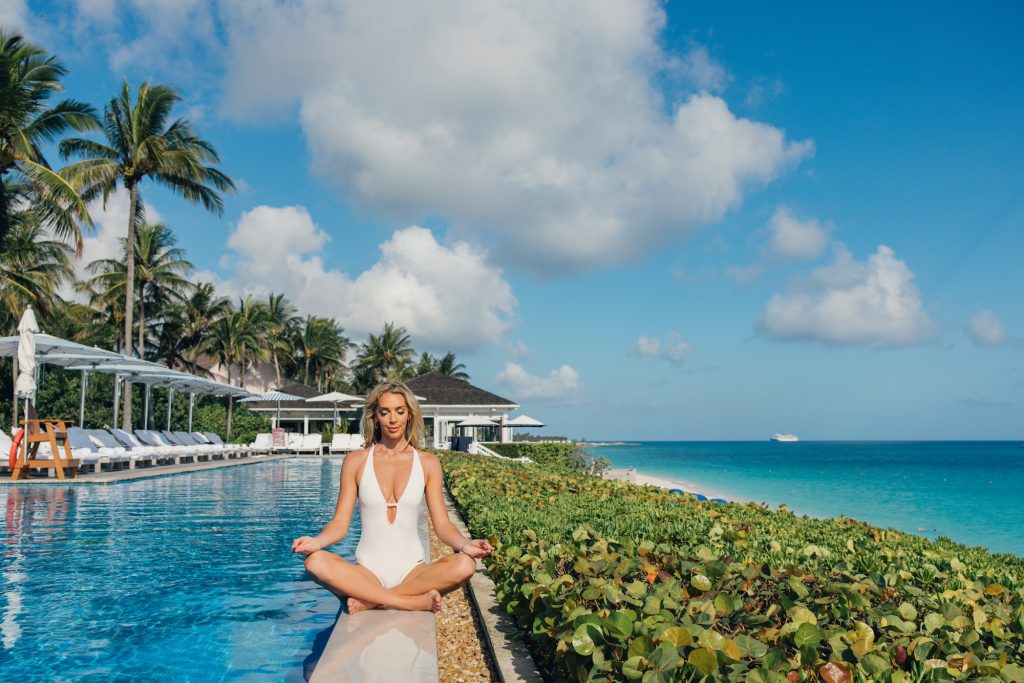
Nora Tobin at Four Seasons Bahamas, Photo by Robyn Damianos
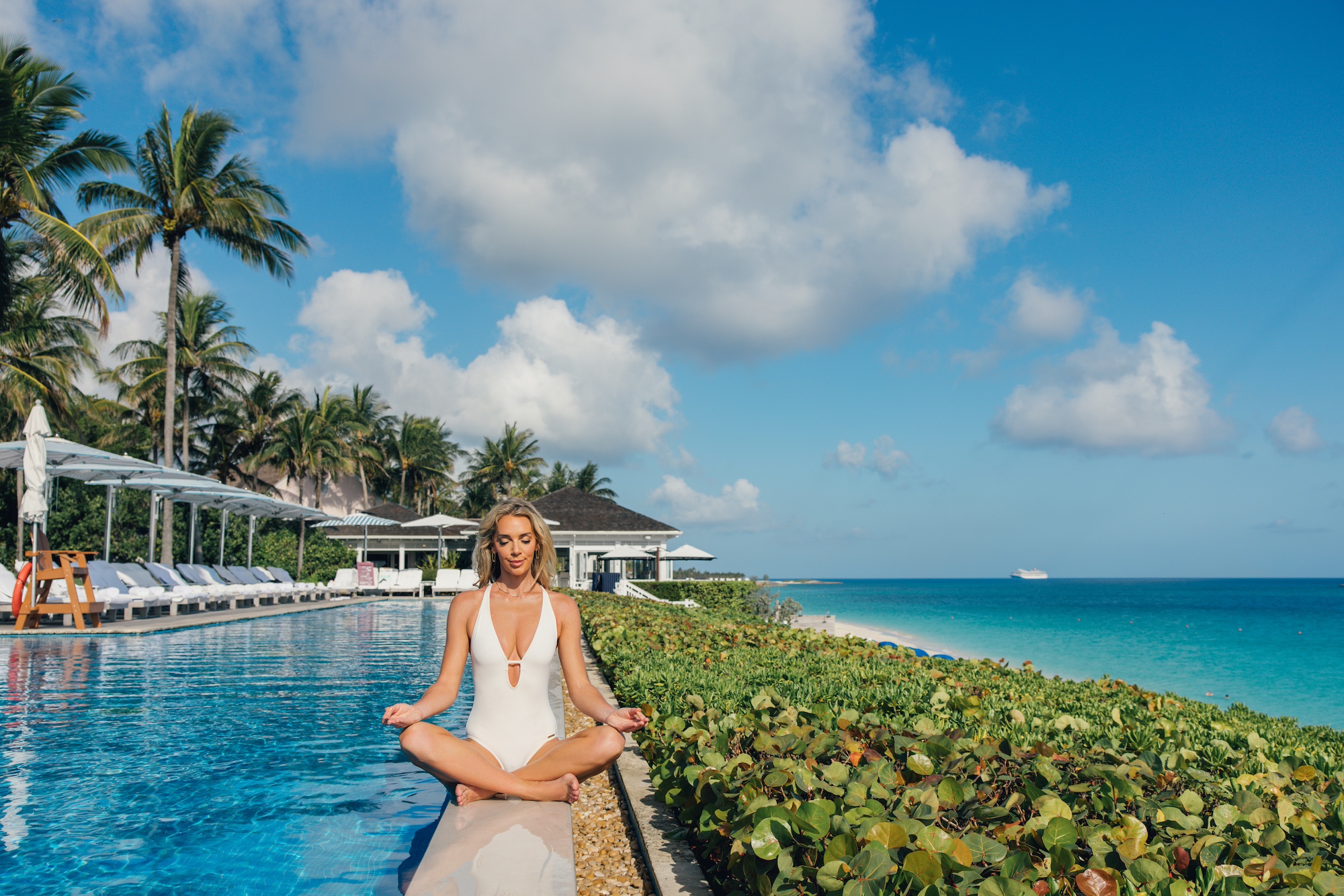
Tobin at The Ocean Club, A Four Seasons Resort, Bahamas, where she has hosted three-day Rejuvenation Getaways. Photograph by Robyn Damianos.

The breath is a powerful tool that can modulate the autonomic nervous system, effectively guiding the body out of a heightened stress response, known as fight-or-flight, and into a state of physiological calm.  

Consciously slowing down and deepening the breath stimulates the vagus nerve, the superhighway between the brain and the body that helps regulate the heart rate and the release of “feel-good hormones” such as serotonin. During periods of stress, the sympathetic nervous system triggers the fight-or-flight response, elevating heart rate, blood pressure, and stress hormone levels. The vagus nerve counters this response by activating the parasympathetic rest-and-digest state, helping slow the heart rate, reduce inflammation, and restore a sense of calm. This vagal activation is essential for emotional regulation and long-term stress resilience. 

Regulating the vagus nerve, and thereby reducing the negative effects of stress, can be achieved through several evidence-based practices, including gentle yoga, cold therapy, nature walks without technology, and breath work, the easiest of the strategies. 

Here’s how to practice the 4-5-6 breathing technique:  

  • Inhale deeply through the nose for a count of four. 
  • Hold the breath for a count of five. 
  • Exhale slowly through the mouth for a count of six. 
  • Repeat this technique for five rounds. 

Practice this breath work each day, not just in moments of stress. The consistent effort signals to the body it is safe and starts to create a daily sense of calm. (Here is a four-minute guided stress-relief session that can be enjoyed anywhere your summer takes you: Guided Breath Work to Calm the Mind.) 

Magnesium: The Mineral of Calm  

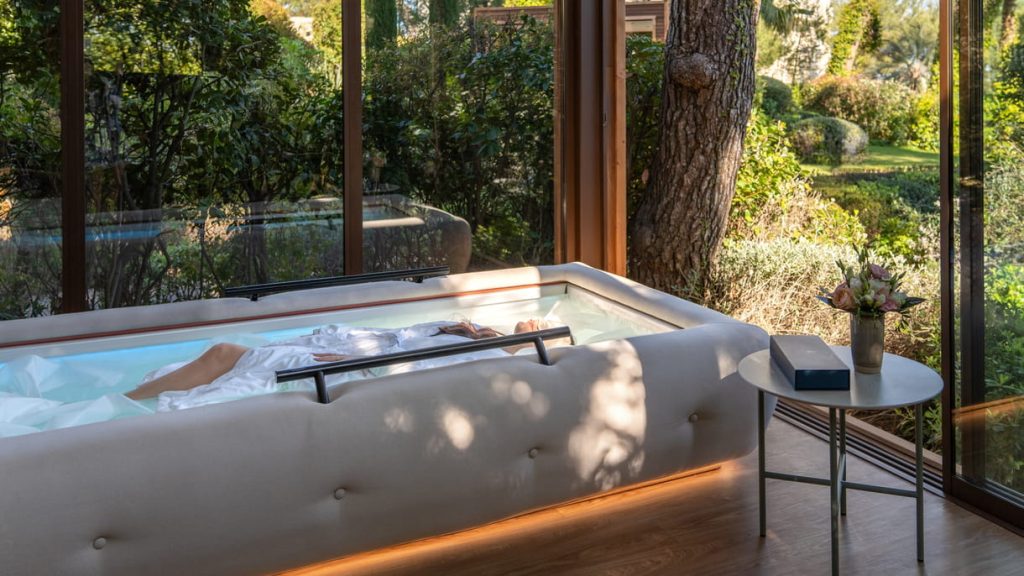
Four Seasons Grand Hotel du Cap Ferrat, Epsom Salt Bath
At Grand Hôtel du Cap Ferrat, a Four Seasons Hotel, guests can enjoy a floating Epsom salt bath at the spa.

Magnesium is essential for more than 300 biochemical reactions in the body, including muscle relaxation and nervous system regulation. It acts as a natural buffer to cortisol by modulating the hypothalamic-pituitary-adrenal (HPA) axis, which governs how we perceive and physiologically respond to stress.  

When magnesium levels are adequate, the body is better able to prevent excessive cortisol release and serve as a mood regulator. A study published in the U.S. National Institutes of Health’s National Library of Medicine found that magnesium may play a crucial role in regulating neurotransmitters, particularly by modulating NMDA receptors and enhancing GABAergic activity. These mechanisms contribute to its calming effects on the nervous system.  

In periods of high stress, magnesium is rapidly depleted, creating a feedback loop that intensifies anxiety and irritability. By replenishing magnesium, especially in highly bioavailable forms such as magnesium glycinate, the body is better equipped to manage mental and environmental stressors.  

How to increase magnesium in your daily routine:  

  • Integrate topical magnesium: Epsom salt baths and magnesium oil can produce an immediate sense of ease. For work trips, I like to pack Epsom salts, so that I can effectively unwind with a bath at the end of the day.   
  • Prioritize magnesium-rich foods: Enjoy avocados, almonds, pumpkin seeds, leafy greens, and dark chocolate to naturally support nervous system function and reduce daily stress. My purse typically contains a bar of dark chocolate!  

A 10-Minute Walk: The Gentle Shift in State

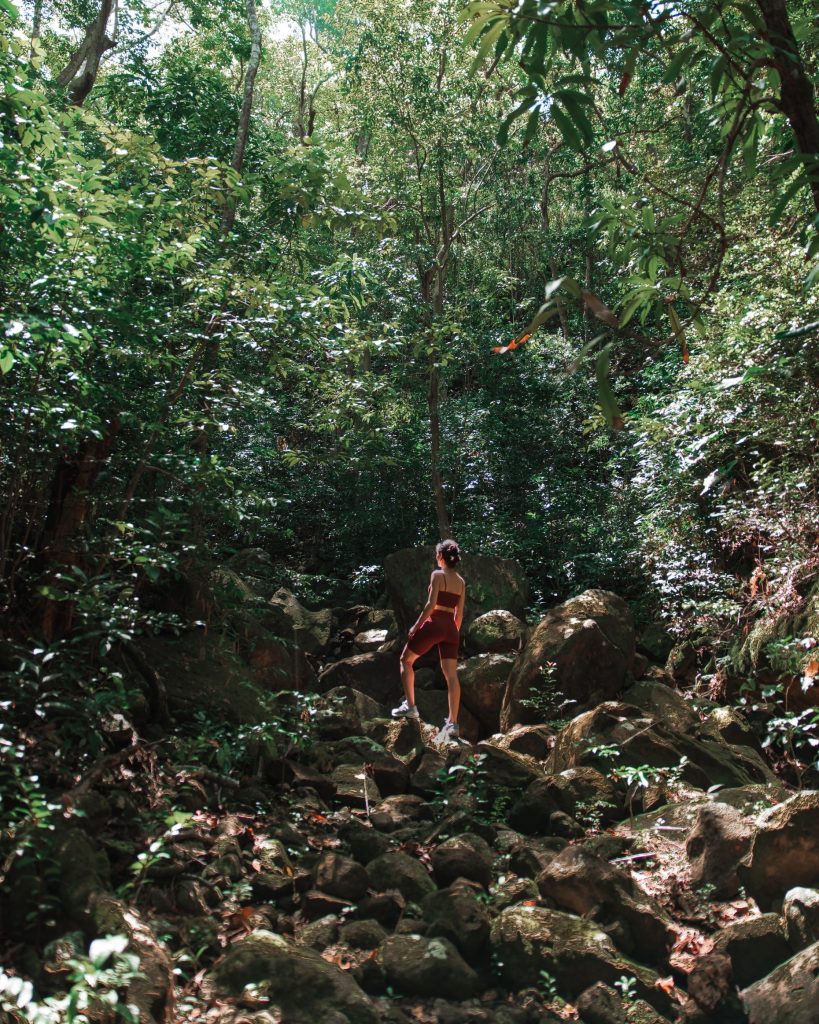
Four Seasons Puta Mita Monkey Hill HIke
On the Monkey Hill Hike at Four Seasons Resort Puta Mita, Mexico.

Studies from Stanford University have found that walking without technology has a positive effect on cortisol levels—and just 10 minutes has a profound effect. The walk provides a mental break, while stimulating the release of key neurotransmitters dopamine and serotonin. The rhythmic movement of walking also engages bilateral stimulation. This has been linked to reductions in anxiety and the stimulation of neural connections for creative thought.  

And, according to Harvard Medical School, walking—especially when done consistently—can be as effective as antidepressant medication for some individuals with mild to moderate depression. The mental-health benefits stem not only from the neurochemical shifts but also from the behavioral activation that walking encourages. Getting outside, engaging in movement, and experiencing a sense of progress can all break the cycle of inertia that often accompanies low mood and chronic stress. When paired with exposure to natural light or green space, the effects are even more pronounced, encouraging both mental resilience and hormonal balance. 

Nora Tobin is a leading authority in high-performance wellness, delivering customized programs to executive teams, professional athletes, and celebrity clientele. She is the CEO of Nora’s Naturals and a Certified Integrative Health Coach. As a Four Seasons Hotels & Resorts visiting practitioner, she offers customized retreats and leadership off-sites. 

Off-Season Is the New On-Season

People who live in popular tourist destinations like Tokyo and Paris know that autumn is the best season. Spring is when the crowds begin; summer, when they peak; and winter is festive but at the whim of Mother Nature. Fall, though? That’s when they get their streets back. If you enjoy your vacation on the quieter side, it’s a perfect time to visit.

Below, we’ve rounded up four Four Seasons destinations to consider booking off-peak. Open sidewalks and friendly locals await. 

Fall in Paris

Four Seasons Hotel George V. Paris, Shopping
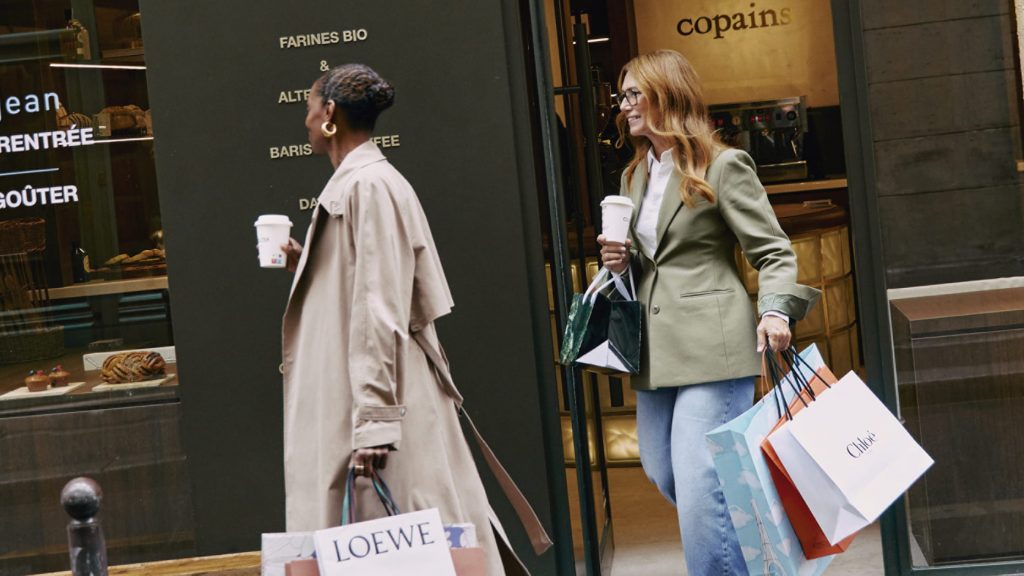
Visit the best Parisian boutiques with a shopping insider.

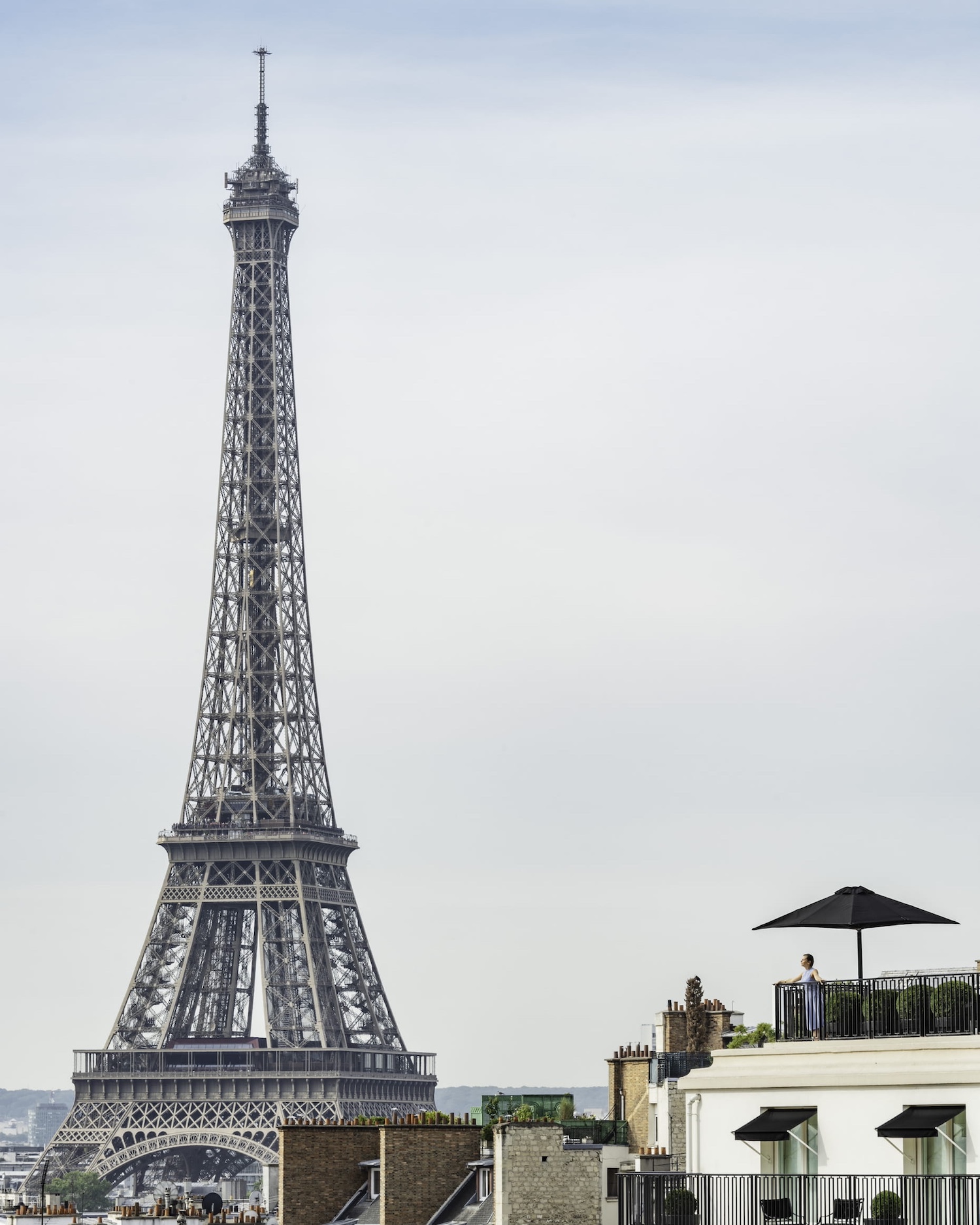
We may be biased, but autumn is the best time of year to visit the City of Light—and Four Seasons Hotel George V, Paris, the best place to stay. Let us count the ways: It’s housed in a gorgeous Art Deco landmark building. It’s located in the Golden Triangle neighbourhood of the 8th arrondissement, just off the Champs-Élysées, steps from world-class shopping. Some suites have jaw-dropping views of the Eiffel Tower.  

Oh, and did we mention the property has a trio of Michelin-starred restaurants (between them, they’ve won six stars)? Three-starred Le Cinq by Christian Le Squer—considered one of the world’s most exquisite examples of French dining—is a restaurant that foodies plan entire vacations around. Two-starred L’Orangerie offers refined French cuisine in an airy conservatory setting. And Le George specializes in Mediterranean flavors and sustainable sourcing.  

From mid-September to mid-November, you’ll have the opportunity to book a So Chic, Darling! experience with a local fashion insider, who will take you on a chauffeured tour of must-visit boutiques and ateliers. At tour’s end, recharge with a stop at a café for pastries and drinks.  

Four Seasons Hotel Paris, Eiffel Tower

Fall in Montreal

Four Seasons Hotel Montreal, Market
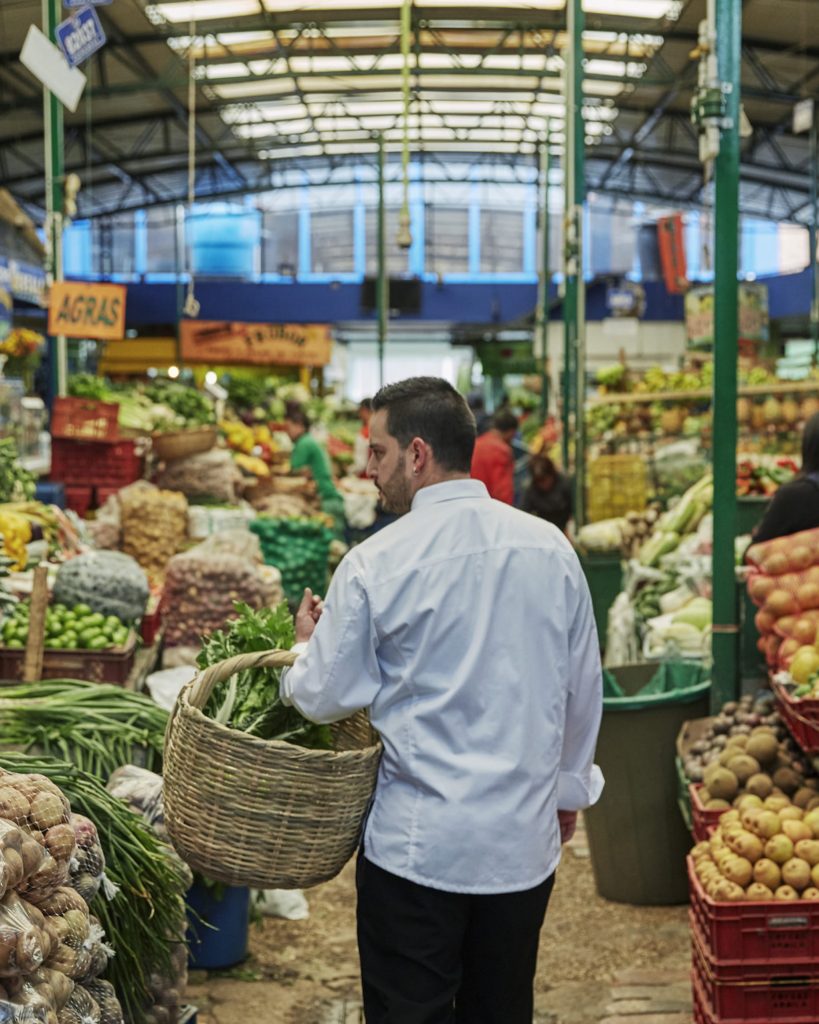
Book a private market tour in Montreal.

For a getaway that combines foliage viewing with sophisticated dining, look no further than Montreal, where you can get your fill of gourmet bagels, next-level smoked meats, flaky French pastries, and, of course, poutine, Canada’s national dish. One of only two North American cities to crack the top 10 on Condé Nast Traveler’s Best Food Cities in the World list for 2024 (Vancouver shares the honour), Montreal is a must-visit for those with big appetites and discriminating palates. 

Foodie travellers will want to consider aligning their Montreal visit with MTLàTABLE (October 30 to November 16), the popular annual event where diners enjoy prix-fixe options at more than 150 participating eateries. A postprandial walk along the trails at Mount Royal Park for a dose of autumn colours and crisp air is a must. The forest-like park, initially laid out by Frederick Law Olmsted (who designed New York City’s Central Park), is known for its city skyline views. 
Once you’ve had your fill of fall foliage, retreat to Four Seasons Hotel Montreal, where, naturally, there’s a stellar restaurant on-site—world-renowned chef Marcus Samuelsson’s Marcus Restaurant + Terrace—in case you’re still hungry. Looking to detox after all the indulging? Book a luxurious treatment at the hotel’s Guerlain Spa, one of only five spas in Canada to be rated five stars by Forbes Travel Guide. 

Four Seasons Hotel Montreal, Marcus

Fall in Tokyo

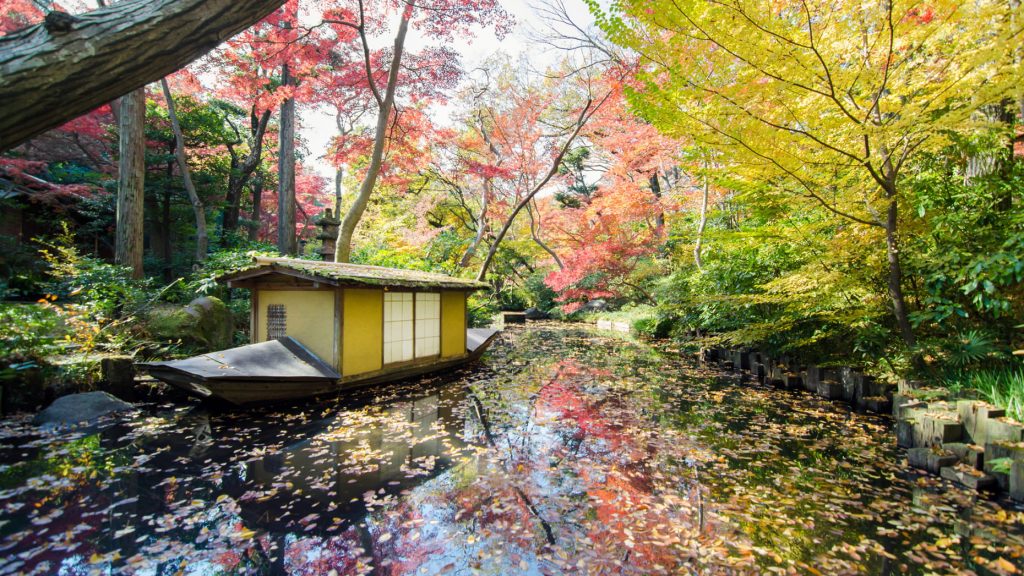
Four Seasons Hotel Tokyo, Foliage
Autumn foliage in Tokyo.

Tourists may think of Tokyo as a futuristic city of skyscrapers and neon lights, but it’s also filled with plenty of ways to engage with nature. In fact, according to a recent survey, Tokyo ranks No. 1 on the list of cities with the most green spaces in the world—all of which makes it a great destination for fall foliage viewing. 

When it comes to a place to stay, you have two standout options: Four Seasons Hotel Tokyo at Otemachi and Four Seasons Hotel Tokyo at Marunouchi. Otemachi is the newer, larger property, boasting 190 guest rooms and suites and occupying the top floors of a 39-story high-rise in the financial district. In addition to its award-winning bar, Virtù (one of Asia’s 50 Best Bars 2024), and Michelin-starred restaurant, est, the hotel’s most-buzzed-about feature is its jaw-dropping views. When the elevator doors open into the lobby, guests are wowed by the panorama of the city and, best of all, the grounds of the Imperial Palace below, right next to the building. 

For a more boutique, street-level experience, consider the Marunouchi hotel, which has just 57 guest rooms and suites and is located next door to Tokyo Station. The accommodations are currently undergoing a renovation (to be finished by March 2026), but the hotel’s spa and prized restaurant, Sézanne, recipient of three Michelin stars and winner of Best Restaurant in Japan on Asia’s 50 Best Restaurants 2025 list, remain open. Headed by chef Daniel Calvert, the elegant restaurant interprets Japanese ingredients through the lens of French cuisine. 

Four Seasons Tokyo at Otemachi

Fall in Vail

Four Seasons Resort Vail
Get your fill of mountain biking before the snow arrives.

Ask locals in any traditional ski town their favourite time of year, and you may hear a surprising answer. While winter is when they can enjoy their beloved snow sports, autumn is when they get to experience nature the way it’s intended to be experienced: without lines. 

Visit Vail in the fall, and your encounters will be more colourful (think yellow and orange and red)—and potentially more rewarding. No, you probably won’t be able to ski or snowboard, but those mountains hold other opportunities for fun. Biking, hiking, trail running, fly-fishing, and horseback riding allow you to fully engage with the majesty of Colorado’s Rocky Mountains. 

Another reason to book an autumn stay in Vail: Oktoberfest. Thanks to its Bavarian-inspired village center, Vail has become one of the best spots in the U.S. to celebrate the iconic brews-and-bratwurst festival. Extra credit: Come dressed in your lederhosen or dirndl, and enter the costume contest for bragging rights. 

Four Seasons Resort and Residences Vail, just steps from the high-end restaurants and shopping at Vail Village, is the ultimate luxury basecamp for your fall vacation. After a day spent outdoors, it’s time for après-ski at the resort. After all, après-ski isn’t just for the winter months; it’s an attitude—and a year-round pursuit. 

Four Seasons Vail

Mexico City Food Tour: A World of Flavours in 24 Hours

The Michelin Guide awarded a total of 26 stars throughout Mexico in 2024. It was the first time the coveted restaurant guide recognized the country’s vast cuisine, which was molded by Mexico’s indigenous culture and the influences of Spain’s colonization that linger to this day.  

It was also a pivotal moment in Mexico’s 13,000-year-old food culture, because the secret was officially out to the rest of the world: Mexican food is the best, boldest, and most diverse cuisine. The country that gifted the world such crucial staple ingredients as tomatoes, chiles, cacao, vanilla beans, chia seeds, spirulina, and perhaps the most quintessential ingredient used for everything from food to fuel—corn—finally got its overdue flowers on the international culinary stage. 

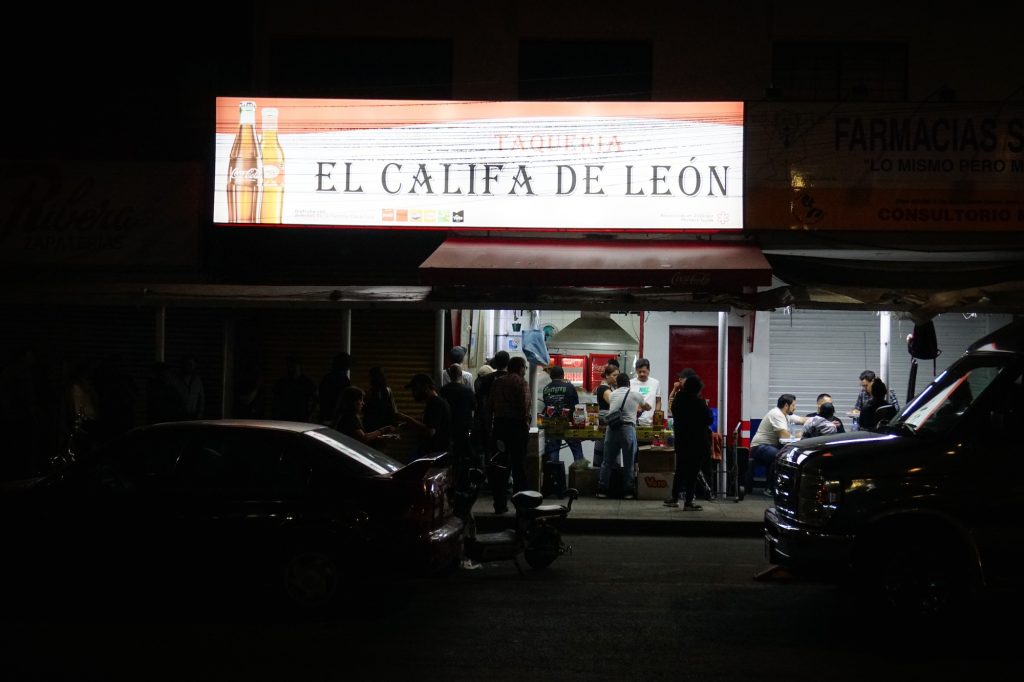
The world’s only Michelin star–rated taqueria, in Mexico City, offers just four tacos on the menu.

It’s not that a country that has maintained much of its indigenous identity and foodways needed a European-based tire company to validate its food. Still, the Michelin Guide aims a wrecking ball at the watered-down, cheesy, rich, sleeping-Mexican-on-a-saguaro representation of the cuisine that has existed around the world for so many years. “Many people don’t understand that Mexican cuisine is a ‘mother cuisine,’” says Pati Jinich, cookbook author, chef, and host of the PBS television shows La Frontera and Pati’s Mexican Table

Jinich was a political analyst before she switched to food; now, she’s the country’s most prominent advocate for defending regional Mexican food throughout her work in the United States. “It’s a global cuisine with Mexican pillars,” she says, “and has become stronger and bigger thanks to all the immigrant waves that have come into Mexico.”

Arabic shawarma gave rise to al pastor tacos. Italian pasta begat fideo, Mexican-style angel hair cooked with tomato. From France arose Guadalajara’s baguette-like birote sourdough, the basis of Jalisco’s beloved lonches and tortas ahogadas. And the distillation tools and techniques for mezcal and tequila arrived via the Manila Galleon Spanish trade route from the Philippines to Mexico. 

“Many people don’t understand that Mexican cuisine is a ‘mother cuisine,’” says Pati Jinich, chef and host of the PBS television shows La Frontera and Pati’s Mexican Table.

Mexico is also home to the world’s only Michelin star–rated taqueria, Taquería El Califa de León, located in Mexico City’s Cuauhtémoc district. Opened in 1969, it offers only four tacos, but they’re some of the country’s most simple, clean-tasting, and satisfying: seared bistec (chuck steak), grilled chuleta (pork chop), gaonera (ribeye), or costilla (beef rib). They are served on perfect corn tortillas made to order on a roller and simply adorned with a refreshing raw tomatillo salsa or a spicier and more complex red salsa made with dried red chiles.  

Bring up Mexico City to any food-obsessed person, and they will likely start shouting out their favourite spots. The capital city—or CDMX (Ciudad de México), as it is now called, instead of its old name, “Mexico DF”—is home to nearly 10 million residents and boasts more than 57,000 restaurants, making for a dining scene rife with high-low thrills. Many of its inhabitants moved there generations ago from other parts of Mexico, and visiting there is one of the easiest ways to taste the country’s vast regional variations and enjoy both traditional food and new-school modern Mexican. (To experience the best of the city today, from street eats and local markets to mezcal tastings, discover Mexico City Food Tours led by local experts.)

A Taste of CDMX

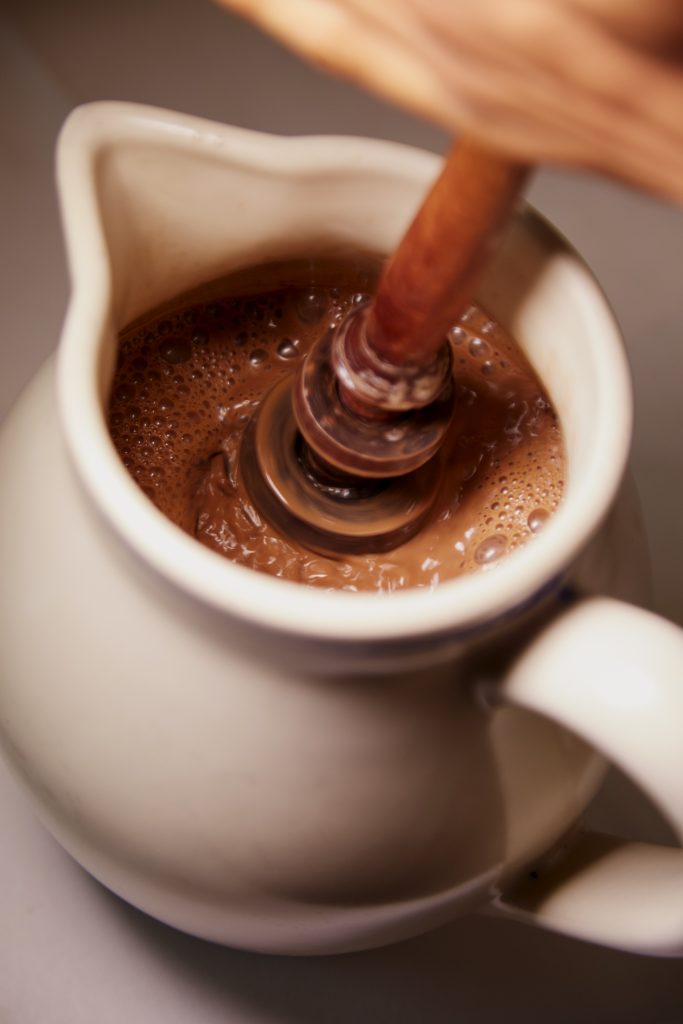
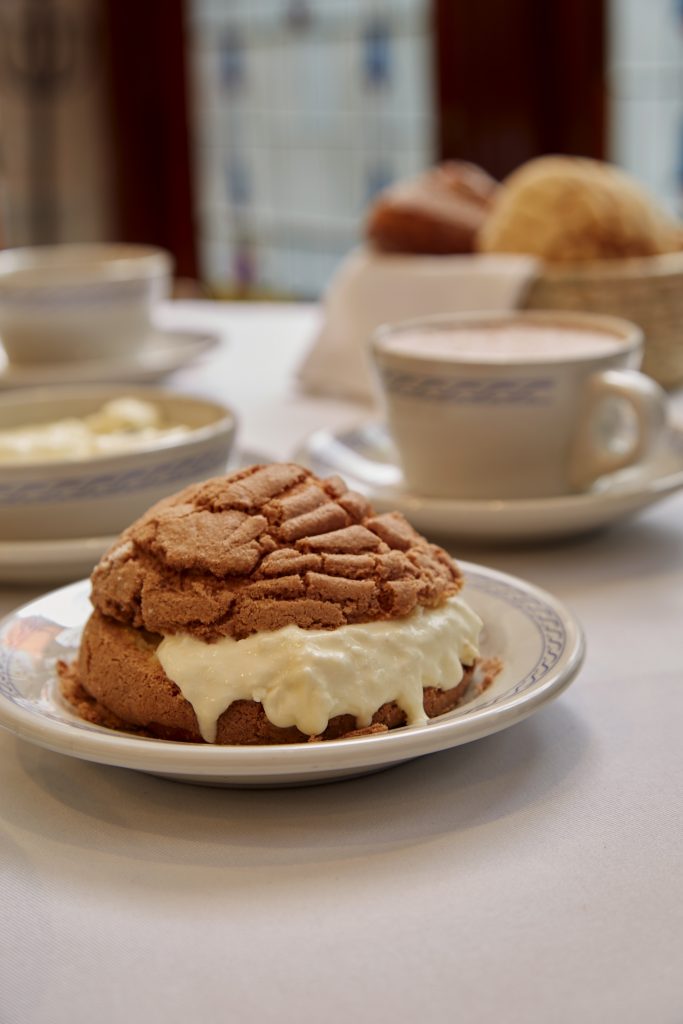
One of my favourite ways to explore Mexico City’s restaurants is to start the day at El Cardenal in Centro Histórico and admire its traditional “captain service,” where an army of lifelong waiters is always ready to refill your mug full of frothy drinking chocolate until you say “stop”—and another server is right behind them offering freshly baked warm, tender conchas (sweet bread) sandwiched with nata, a Mexican spreadable sweet cheese that is somewhere between clotted cream and stracciatella.

Frothy hot chocolate at El Cardenal.
Sweet bread with nata.

Afterward, I might walk off my breakfast through Centro’s bustling cultural sights and sounds at Templo Mayor, located next to El Cardenal, then go on to check out Diego Rivera’s magnum opus mural inside the Palacio de Bellas Artes. Mexico City is one of the most walkable cities, after all.  

For a pre-lunch snack, I would take a cab to my favourite raw bar in the world, Mi Compa Chava. It specializes in Mexico’s national seafood delicacy of scallop-like pen shell clams called callo de hacha, hand-dived and delivered every other day from Sonora. Each clam is the size of a jicama and seasoned to eye-opening levels of umami with chef Salvador “Chava” Orozco’s crushed peppercorn-like chiltepín chiles and salsas. Also obligatory is the handmade coconut soft serve, and if you are lucky enough to be there during Mexico’s mango season, their mango variation made with Colima’s rare barranqueño variety of ultra-sweet mangos.   

Next comes lunch at Oma, the Japanese omakase restaurant helmed by Abraham López, the Japanese-trained chilango (what you call someone who is proud to be from Mexico City) sushi chef at Four Seasons Hotel Mexico City. He proudly sources his menu using 90 percent Mexican ingredients, including responsibly farmed bluefin tuna, totoaba fish, and Japanese vegetables grown in Cuernavaca, Mexico City’s nearby city with warmer weather.  

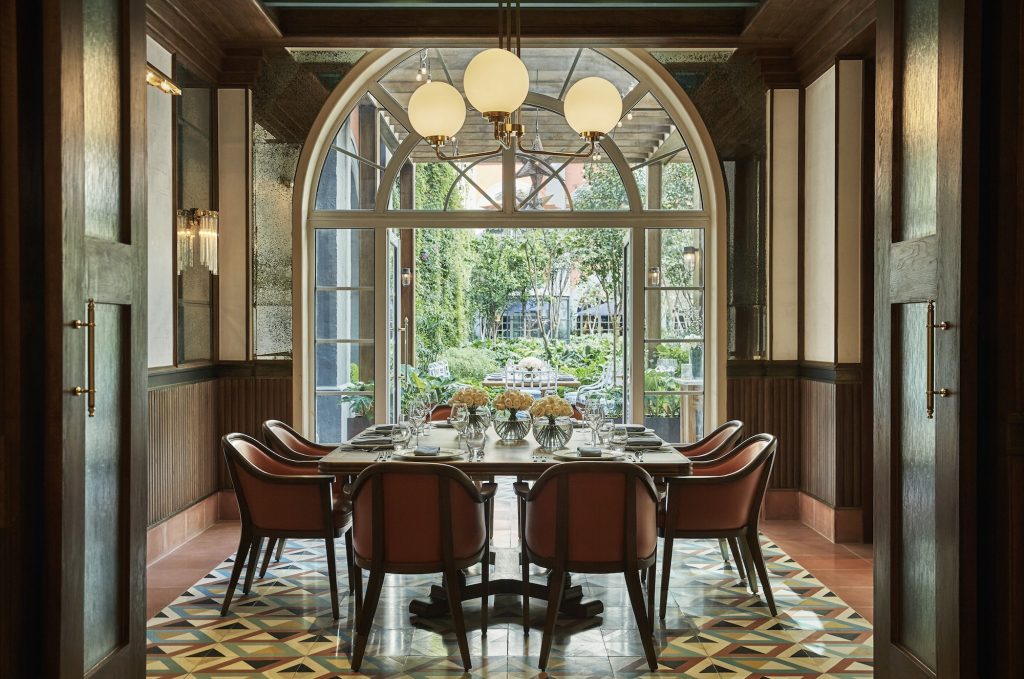
Zanaya at Four Seasons Hotel Mexico City.

López sees many parallels in Mexican and Japanese cuisines, because they both greatly respect ingredients and tradition. “I carry the Japanese spirit of wanting to get better every day,” he says.  

Omakase and tastefully inspired Mexican sushi are having a moment in Mexico, with restaurants like Oma calling dibs on prized seafood like toro and uni before it departs to Tokyo. On López’s menu, he takes inspiration from his Oaxacan roots and his mother, and he grates cacao onto Baja-grown kampachi and sears it so it’s juicy and filled with sweet and salty flavours. “Omakase does not have to be monotonous,” he says. “My favourite moment is when Japanese and Korean customers are skeptical about having a Mexican omakase and leave surprised and shocked to hear that our seafood is all from Mexican waters. I love changing perceptions.”  

For a more traditional coastal dinner, visit Zanaya, the innovative Mexican seafood restaurant at Four Seasons Hotel Mexico City. Its menu is influenced by the cuisine of the state of Nayarit—a true Mexican seafood powerhouse. There you can make your own tableside tacos with the menu’s smoky pescado zarandeado (fire-grilled fish) or try the electric-like aguachile, which is as spicy as it is refreshing. Either dish will transport you right to the Bahía de Banderas at first bite. 

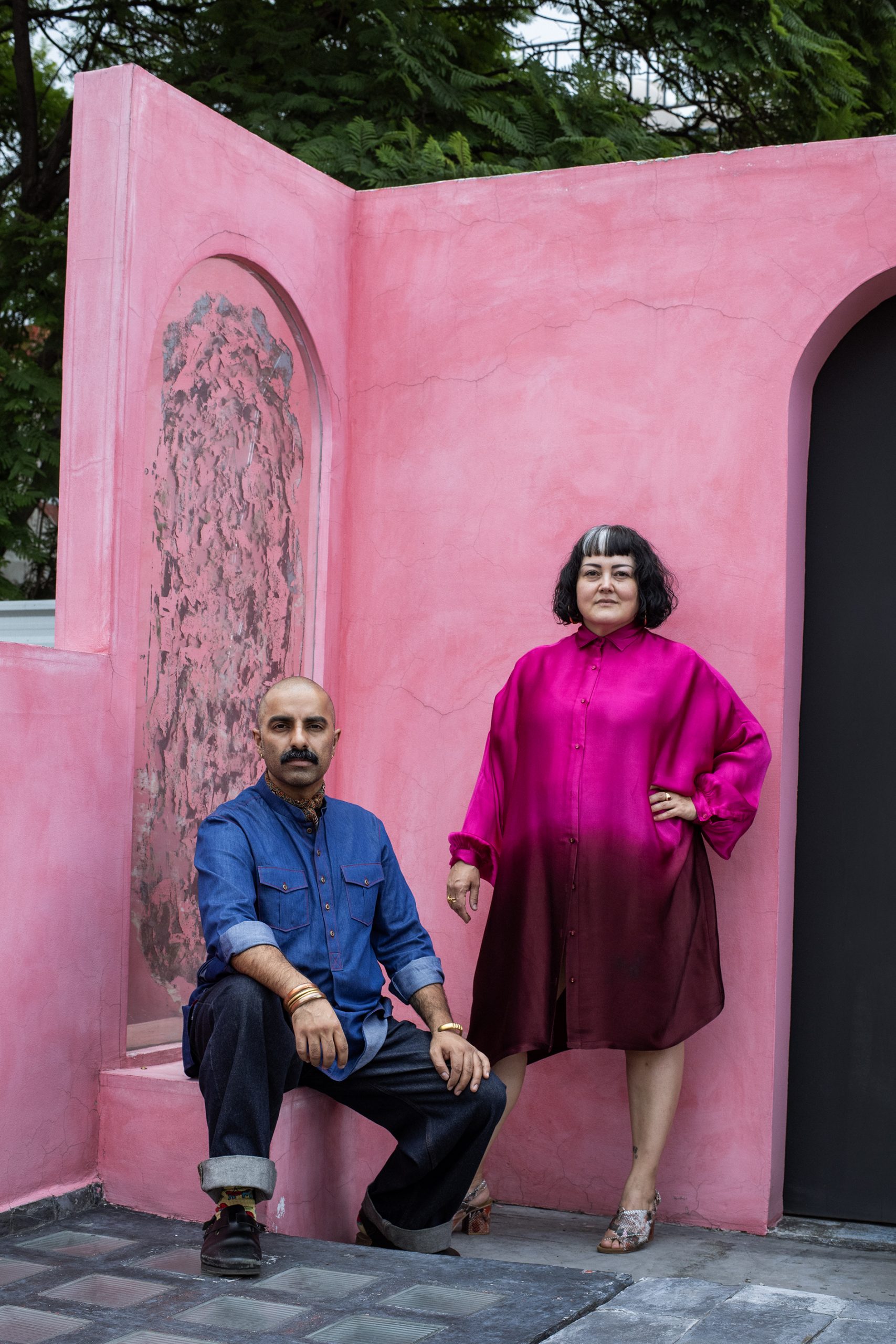
Keval and Listman of Masala y Maíz. Photograph by Ana Lorenzana
A fusion of global flavours at Masala y Maíz. Photograph by Ana Lorenzana

A mind-melting dinner—equal parts art, food, politics, and deliciousness—awaits at Masala y Maíz. Chefs and owners Norma Listman and Saqib Keval are among Mexico City’s most passionate advocates for human rights. They let it be known through a revolving “call to action,” a radical phrase posted on the front of their menus, and through interactions with their servers.  

It’s a thinking person’s restaurant that melds South Asian, East African, and Mexican flavours and techniques in one stunning setting. Standout dishes include coconut milk esquite (warm shaved corn in broth), large shell-on prawns gently cooked in vanilla bean–perfumed ghee, and a vegetarian infladita de maíz, which one eats like India’s street food, pani puri. The wine list is all natural grapes and the kind of juice that sparks a conversation with your dining companion, sometimes by the colour alone as it is poured. 

To end my ultimate day of indulging in CDMX, I would head to Enrique Olvera’s lesser-known lo-fi mezcal bar, Ticuchi, where guest deejays spin vinyl. Olvera is Mexico’s most prolific chef and the pioneer of modern Mexican food. His flagship restaurant, Pujol—featuring a tasting menu and a taco omakase bar—was awarded two Michelin stars last year.  

Ticuchi is his much more laid-back concept. Its six different margarita variations are all refreshing in their own way, and the more alcohol-forward “Nosferatu” Negroni, infused with cacao blossoms, is one of the best cocktails in the city. Olvera-approved bar snacks include the utterly sensational tamal de esquite.