Louise Ulukaya created Mon Coeur, her line of children’s and baby clothing, to fill a need. “I couldn’t find any brand that was sustainable, cute, and comfortable,” says the entrepreneur and mom of three. From hoodies and swimwear to onesies, every item features recycled material, and each purchase helps support beach cleanups, tree plantings, and other eco-initiatives via the nonprofit 1% for the Planet.
This year, Ulukaya is launching the Mon Coeur Foundation to support education for grade school students around the world. Philanthropy is a priority for herself and her husband, Turkey-born businessman Hamdi Ulukaya, the founder of Chobani yogurt, which donates 10 percent of company profits to the Chobani Foundation. “We don’t really call it philanthropy. It’s something we talk about on a daily basis. It’s part of our daily routine,” she says.
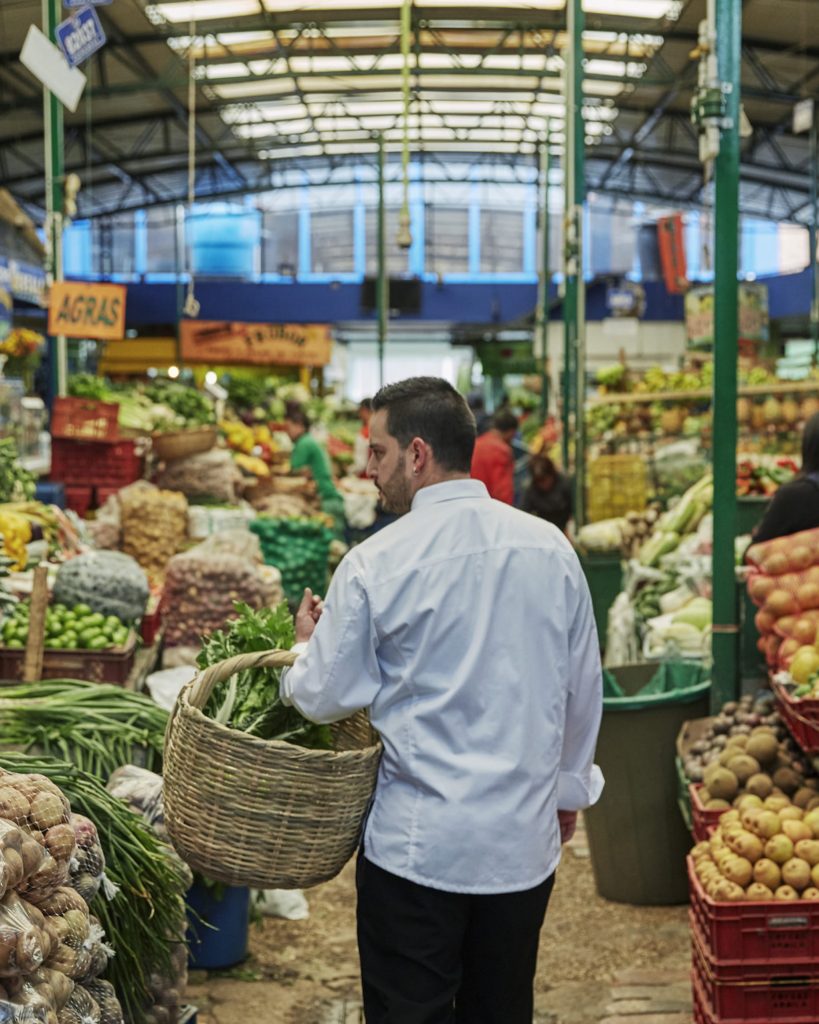
Ulukaya and her family are based mostly in New York (her father, chef Jean-Georges Vongerichten, launched his culinary empire there), but they also spend time in the South of France (where she grew up) and in Istanbul, a city she says she fell in love with “at first sight.”
Below, she shares her favorite places to visit in Turkey’s historical city.
Ulukaya. Photograph courtesy of Mon Coeur.
Seraf Vadi
“It’s great for a nice dinner date. It’s very beautifully designed with Anatolian heritage art all around the dining room. Their lahmacun [Turkish flatbread] is amazing.”
“I also love Lucca in the Bebek neighbourhood, which is kind of like the hip Soho-like area. The menu is super easy with the kids. The kefte dish with rice and salad is a must. When I first visited Turkey, I fell in love with the food first of all.”
Midnight
“It’s a very well-curated shop in Bebek, with jewelry, including pieces by a number of Greek designers, and nice bohemian clothes.”
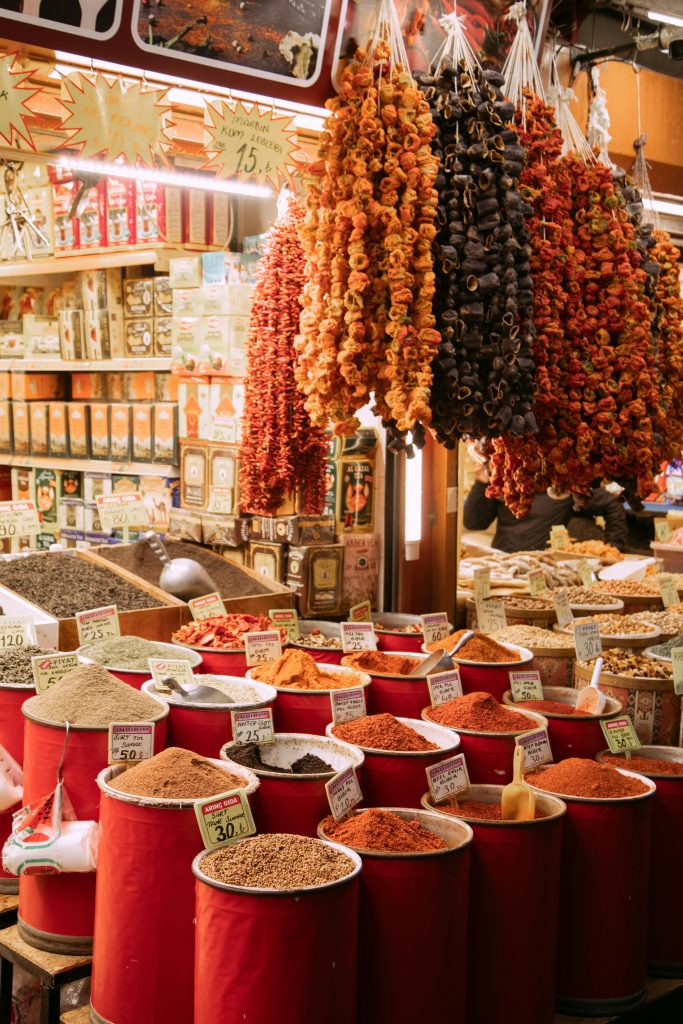
Spice Bazaar
“The energy is unlike anything else—you feel it even before entering the market.”
“The antiques district in the Cihangir neighbourhood is filled with vintage and artisan shops.”
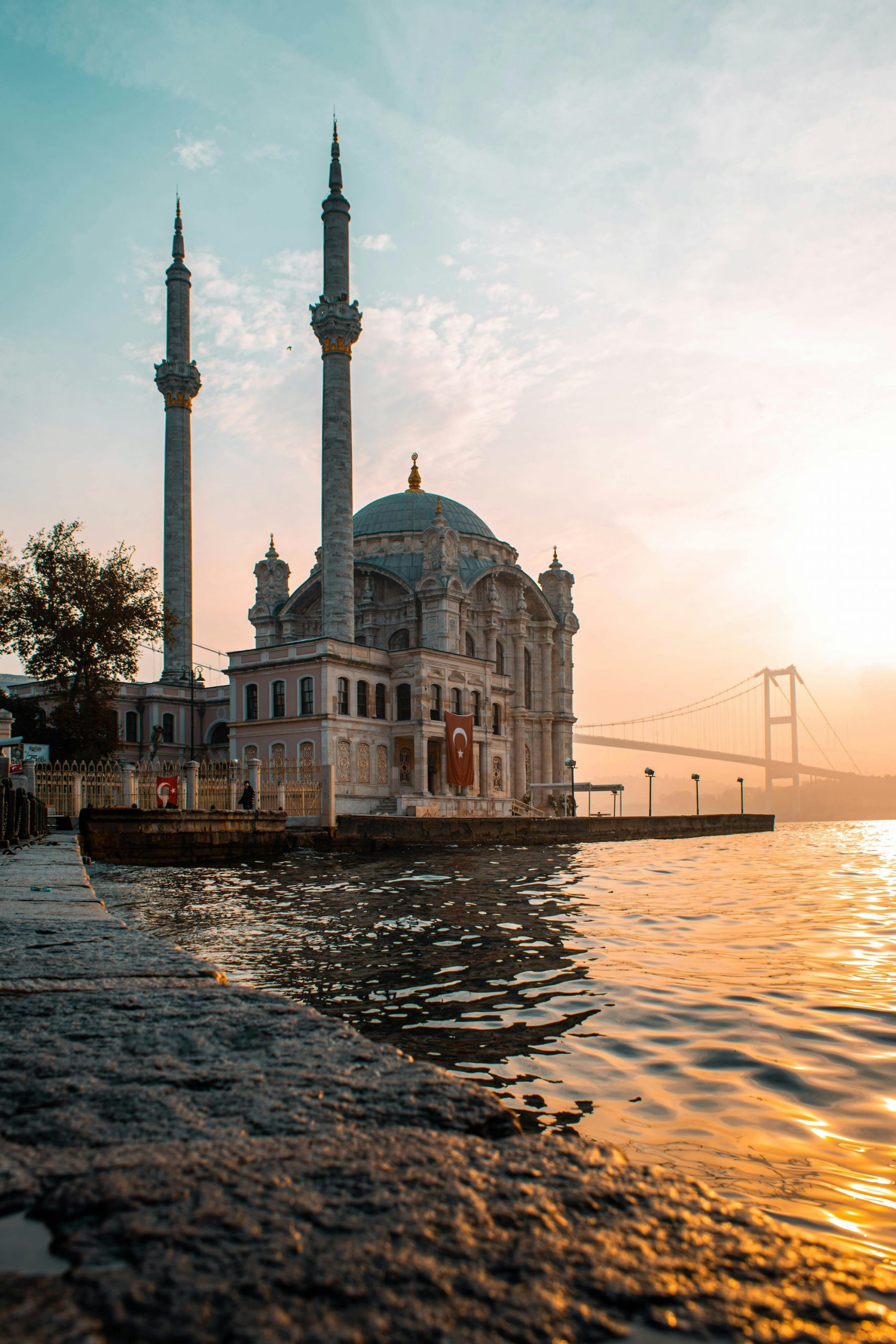
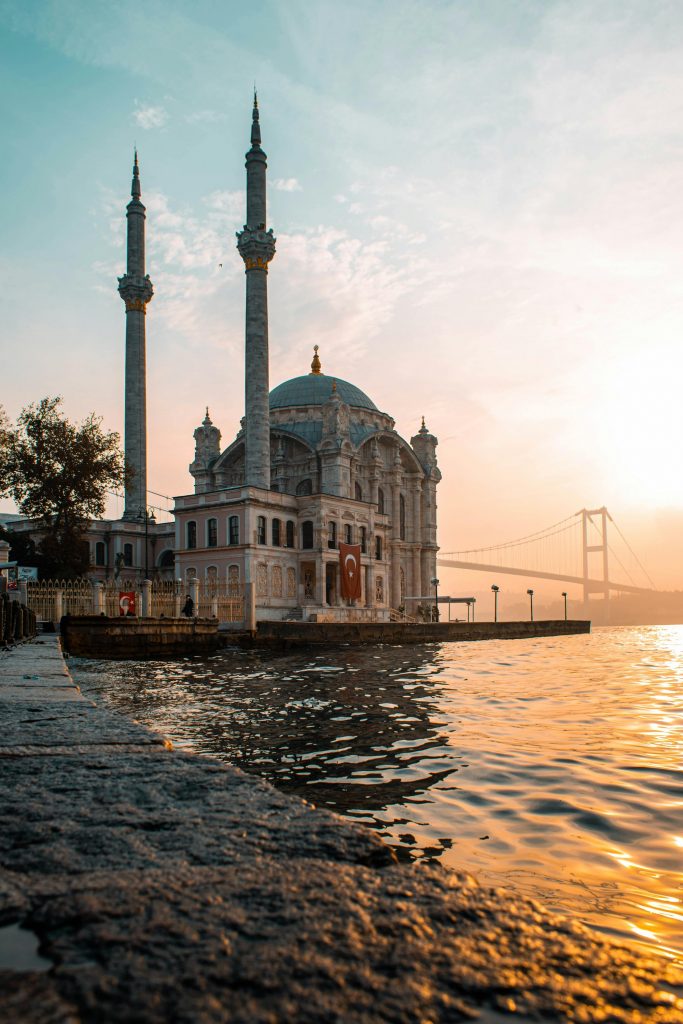
Ortaköy Mosque
“Located on the waterside of the Ortaköy Pier square, it’s spectacular at night.”
Ortakoy Mosque. Photograph by Oziel Gómez/Pexels.
Galataport
“I love walking on the Galataport waterfront with our kids. The view is beautiful, and we love getting a gelato at Vakkorama.”
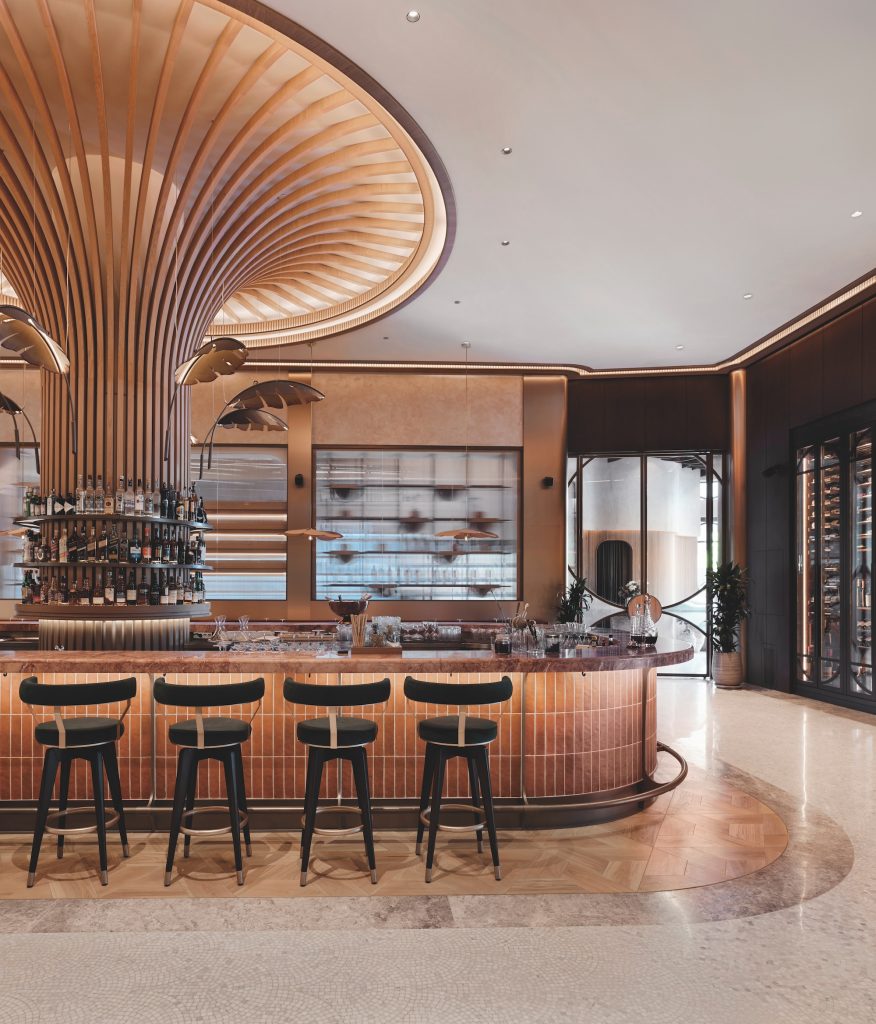
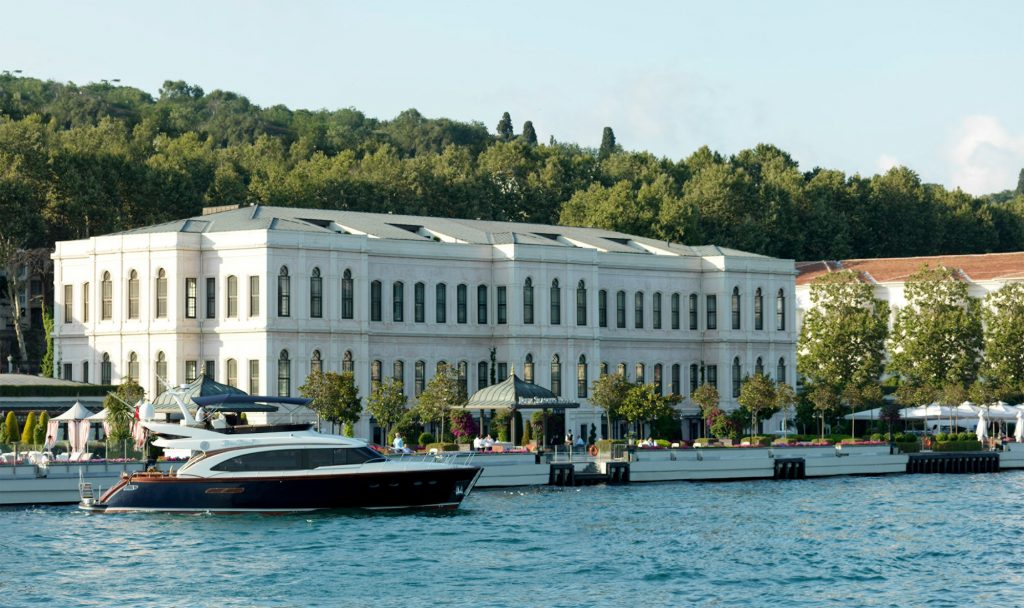
Four Seasons Hotel Istanbul at the Bosphorus
“When we got married in Istanbul about seven years ago, we stayed there. It’s very sentimental for me. We love it. You can just sit there and get a Turkish tea and watch the whole dramatic scenery on the Bosphorus. People are canoeing. Boats are passing by. And the pool—it’s the most amazing pool in the whole world.”
In a handsome neoclassical villa in the Athenian neighbourhood of Pangrati, chef Tasos Mantis is taking food back to its roots. The garden he tends with his father in Alepochori, an hour’s drive west of Athens, is the source of many of the ingredients at his Michelin-starred restaurant, Soil. “The garden is where we test ideas, observe natural rhythms, and rediscover forgotten flavours,” he says. “It teaches us to cook differently.”
Mantis’s approach to gastronomy is based on instinct and restraint, with a deep respect for the land that translates into tasting menus that go far beyond a simple meal. “We’re here to share something honest,” he says. “If a guest leaves Soil having tasted a flavour they didn’t expect or with a memory triggered, then we’ve succeeded.”
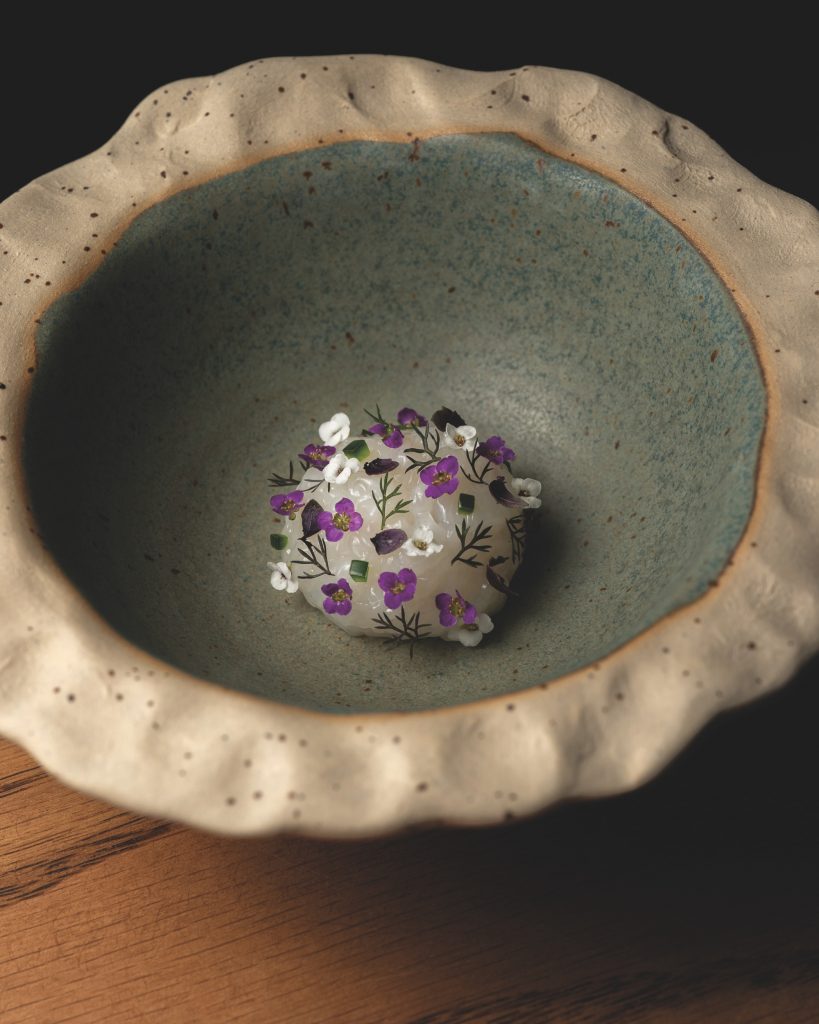
During my dinner at Soil, seeing tiny alyssum petals piled atop a delicate ball of chopped squid takes me back to my grandfather’s garden as a small child. I can even smell the flowers that used to blossom in sweet, pillowy patches along the lawn. It’s a powerful—and surprising—feeling, one of many experienced during a recent trip to the capital city.
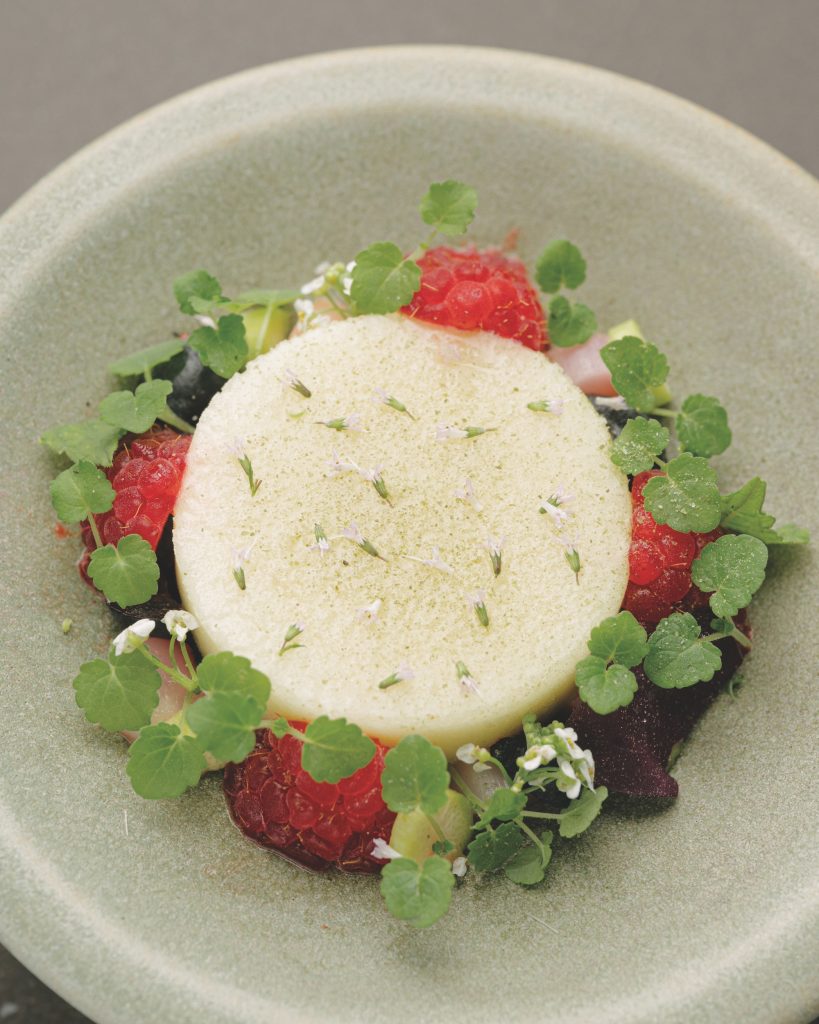
Berries with white asparagus, anise hyssop, and butterfly sorrel at Soil. Photograph by Yiamouris Studio.
A small bite at Soil pairs squid—cured in salt and citrus—with horseradish, basil, fennel pollen, and edible flowers. Photograph by Yiamouris Studio.
There’s an intoxicating energy in Athens right now. What was once seen by many as a necessary stop on the way to the Greek Islands is drawing an increasing number of international visitors each year. The city boasts showstopping heritage sites, exceptional museums and galleries, and a calendar packed with cultural events, like the upcoming Greek National Opera performance of Rigoletto at the Odeon of Herodes Atticus amphitheater in July and Robbie Williams’s October tour stop at the marble Panathenaic Stadium.
In this city that looks simultaneously to its past and future, many of the moment’s hottest restaurants take inspiration from the traditional neighbourhood kafeneio—part old-school coffee shop, part bar—and tavernas, the much-loved convivial, casual restaurants serving Greek favourites that are a magnet for travellers.
In the Psyrri neighbourhood, Taverna Klimataria has been welcoming Athenians since 1927 with traditional live music played beneath grape vines, accompanied by homestyle dishes like pork knuckle, meatballs, and stuffed peppers. Over in Pangrati, just behind the Panathenaic Stadium, Vyrinis, a mainstay for decades, serves comfort foods in a cheery courtyard, while a short walk away at Mavros Gatos, plates come piled high with meat—lamb chops, juicy sausages, liver—sourced from farmers across the country, accompanied by good house wine that costs just $9 a carafe.
Vinyl records line the shelves above the bar at Pharaoh. Photograph by Alex Antoniadis.
It was this unfussy style of cooking and commitment to local Greek produce that inspired food and travel writer Fotis Vallatos and three friends—a chef, a wine connoisseur, and a baritone opera singer—to open their restaurant Pharaoh in late 2022. “The idea stemmed from a shared passion that we have for the kafeneio culture in Greece, those multipurpose, old-school places that function as cafés, tavernas, bars, and, in the past, often as barber shops, post offices, and general stores,” says Vallatos. “But most importantly, they’ve always been social hubs, and sometimes centers for heated political debate. We wanted to bring this raw, authentic style of cooking into a proper restaurant setting in Athens, paying homage to its roots while elevating it.”
At first glance, Pharaoh doesn’t inspire much confidence: the restaurant is located on a dark, graffiti-covered street between two gray concrete buildings. But once you notice the light emanating from inside, the clink of glasses and the buzz of laughter audible from the street as people spill out onto the pavement, it’s clear something special is happening.
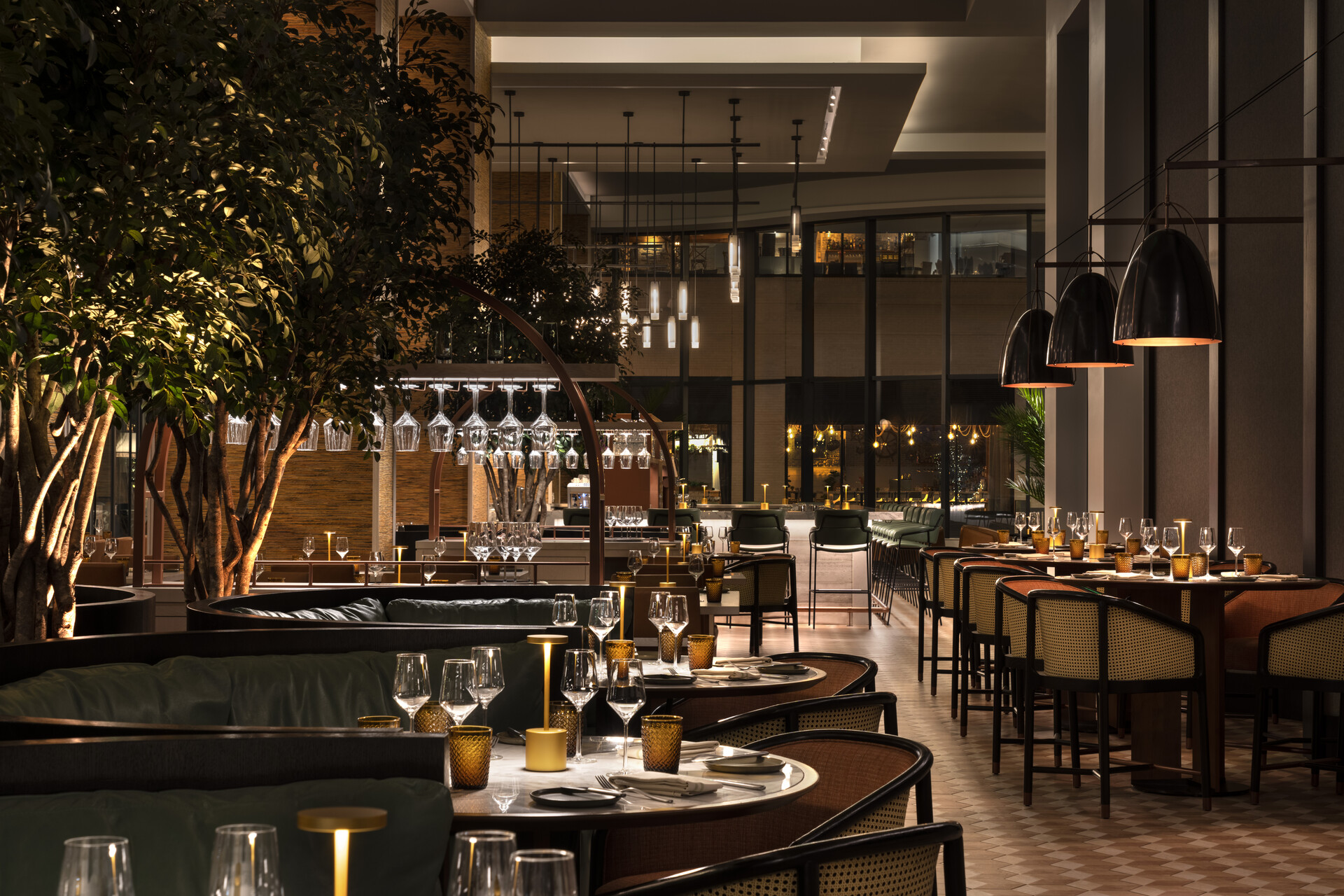
With its industrial-chic interiors combining stone walls, terrazzo floors, concrete pillars, and marble-topped tables, Pharaoh feels like a microcosm of Athens itself—a little rough around the edges yet full of life, with an appreciation for good food, good wine, good music, and good times. The best seats are at the stainless-steel bar counter where a DJ spins vintage vinyl.
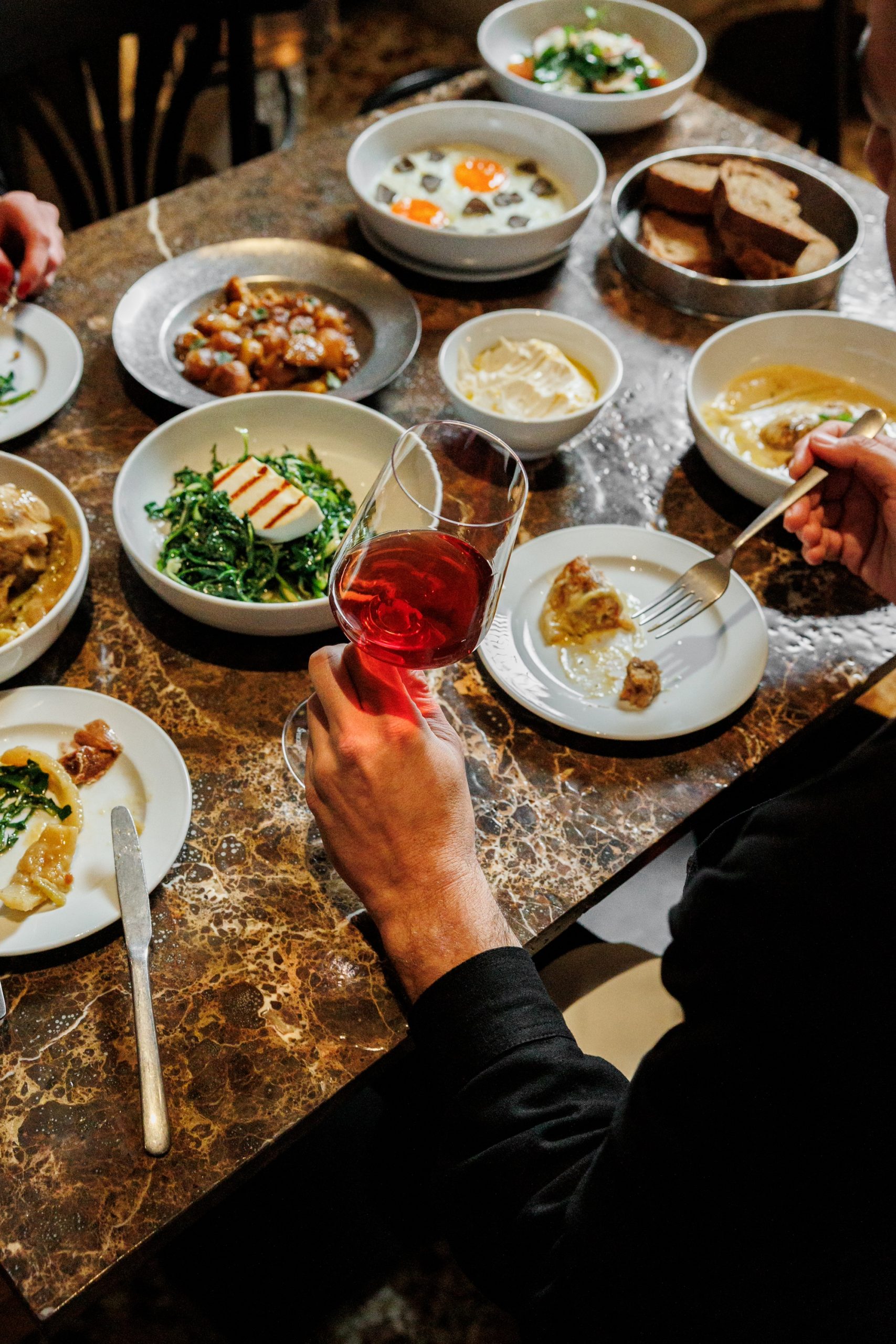
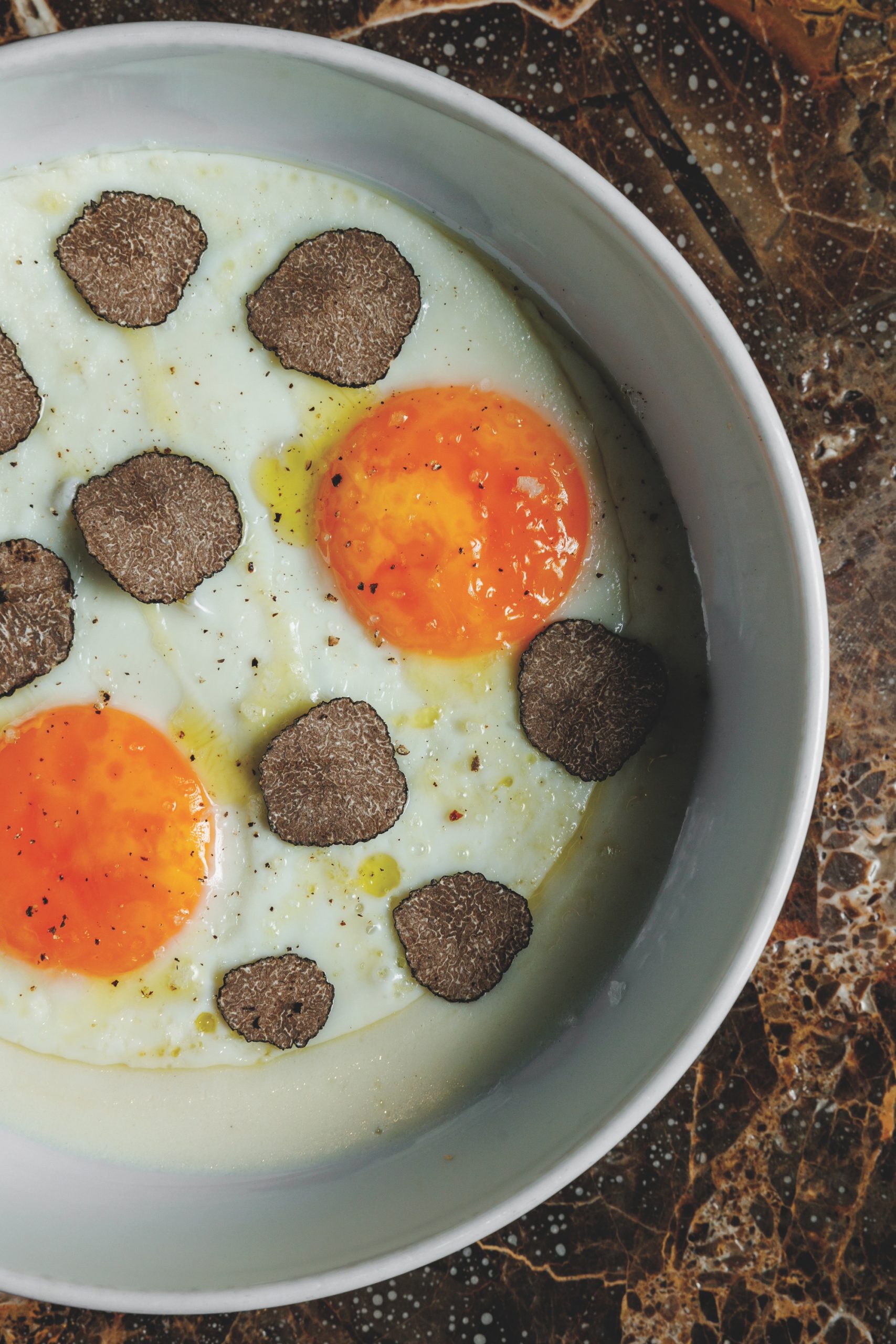
Shaved Greek truffle on top of eggs with staka (a cream skimmed from goat and sheep’s milk) at Pharaoh. Photograph by Alex Antoniadis.
Slow-cooked lahanodolmades (cabbage rolls). Photograph by Alex Antoniadis.
“The neo-bistro movement revitalized French cuisine…. That’s exactly what we’re seeing in Athens today, with a wave of new restaurants that focus deeply on traditional Greek food that’s elevated and presented in more vibrant spaces.”
—Fotis Vallatos, co-owner of Pharaoh
A counterpoint to the restaurant’s gritty urban setting, the cuisine is rooted in the home-cooked meals of Greece’s villages: hearty, fresh, and unpretentious, like the food my Greek boyfriend’s family cooked for me the first time we came on summer vacation together. At Pharaoh, there’s a deep appreciation for Greek culinary heritage in dishes like taramosalata—ubiquitous in tavernas across the country but here cloud-like in its lightness and topped with bottarga. Squid stewed in spinach combines rich flavours of land and sea, and grilled wild horta greens are infused with a charcoal smokiness, their bitterness tempered by a chunk of light and creamy anthrotyro cheese. Vallatos sees Pharaoh’s culinary approach as a revival of traditional Greek cuisine in its purest form, with chef Manolis Papoutsakis and team relying on charcoal grills, as well as wood-fired stoves and ovens, to cook their seasonal ingredients.
“You won’t find tomatoes, aubergines, or courgettes on our menu in winter,” says Vallatos. “In summer, we don’t serve broccoli, cabbage, or chestnuts, and we don’t use frozen produce or farmed fish.” Dishes are slow cooked over flames, allowing time for conversation and the restaurant’s extensive selection of natural wines to flow. “We feel that Pharaoh offers a return to authenticity, stripped of unnecessary modern interference,” he says, pointing to parallels between the dining scene in Athens and that of France 25 years ago. “The neo-bistro movement revitalized French cuisine and gave a platform to new chefs and fresh projects to shine, offering more casual and accessible food,” he says. “That’s exactly what we’re seeing in Athens today, with a wave of new restaurants that focus deeply on traditional Greek food that’s elevated and presented in more vibrant spaces.”
Chef Luca Piscazzi at the Michelin-starred restaurant Pelagos inside Four Seasons Astir Palace Hotel Athens.
At Four Seasons Astir Palace Hotel Athens—a seaside resort that sprawls over a pine-clad peninsula south of the city center—chef Luca Piscazzi finds Greek produce to be a constant source of inspiration. While his cuisine at Pelagos, the hotel’s Michelin-starred restaurant, blends his Italian heritage and French techniques, the ingredients he uses are predominantly Greek. Since his arrival in the country in 2019, Piscazzi has been venturing out into remote areas and islands to connect with small-scale artisanal producers, farmers, and other chefs. “These communities have a really strong sense of pride, and they’re keen to safeguard their traditions but also eager to stretch their culinary boundaries,” says Piscazzi, who has introduced hyperlocal products to his menus over the years, like kariki—a spicy blue cheese fermented in a gourd—from the island of Tinos.
Greece has influenced not only the ingredients Piscazzi uses but also how he uses them, and his culinary style has evolved to focus more on flavour. “The plate still needs to look nice, but now I try to make things more simple, more straightforward, and without too much decoration,” he says. “I try to remove things rather than add them.” His menu embraces earthy ingredients in dishes that are delicate, comforting, and, for a fine-dining setting, refreshingly uncomplicated. A mandarin orange filled with sea urchin and koji mousse topped with osetra caviar is sweet, citrusy, and salty, the individual flavours revealing themselves in each layer. A twist of cold spaghetti with a clam emulsion and creamy almond sauce is inspired by Piscazzi’s tendency to eat leftover pasta straight from the fridge. John Dory comes à la meunière, marinated in bergamot with crisp cavolo nero and sweet winter persimmon, and the monkfish osso buco is a rich and meaty triumph, perfect for a chilly winter night.
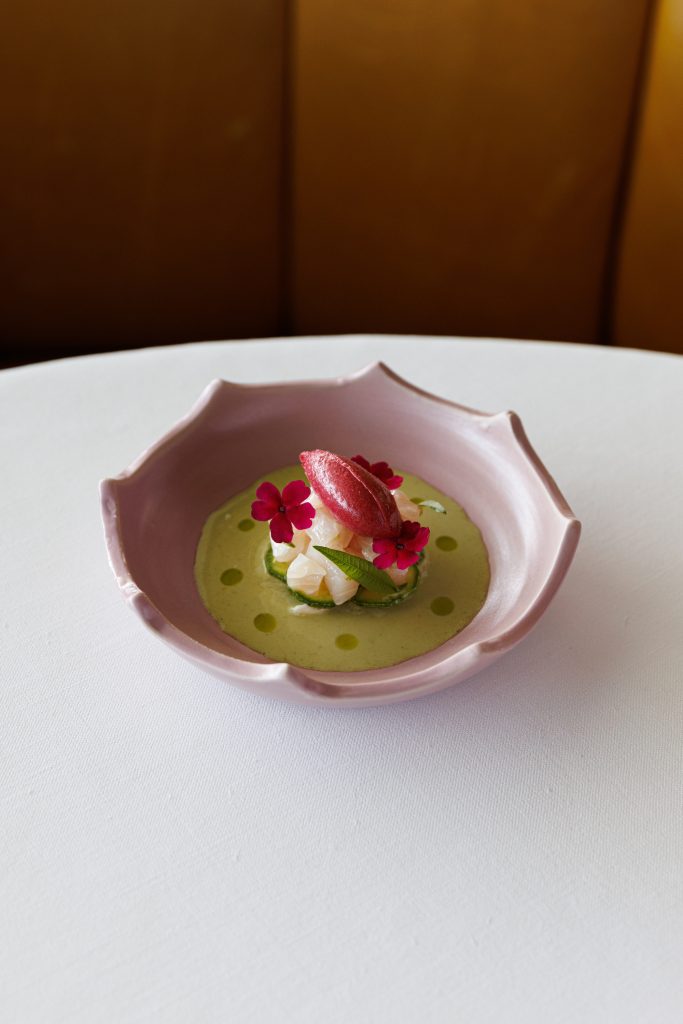
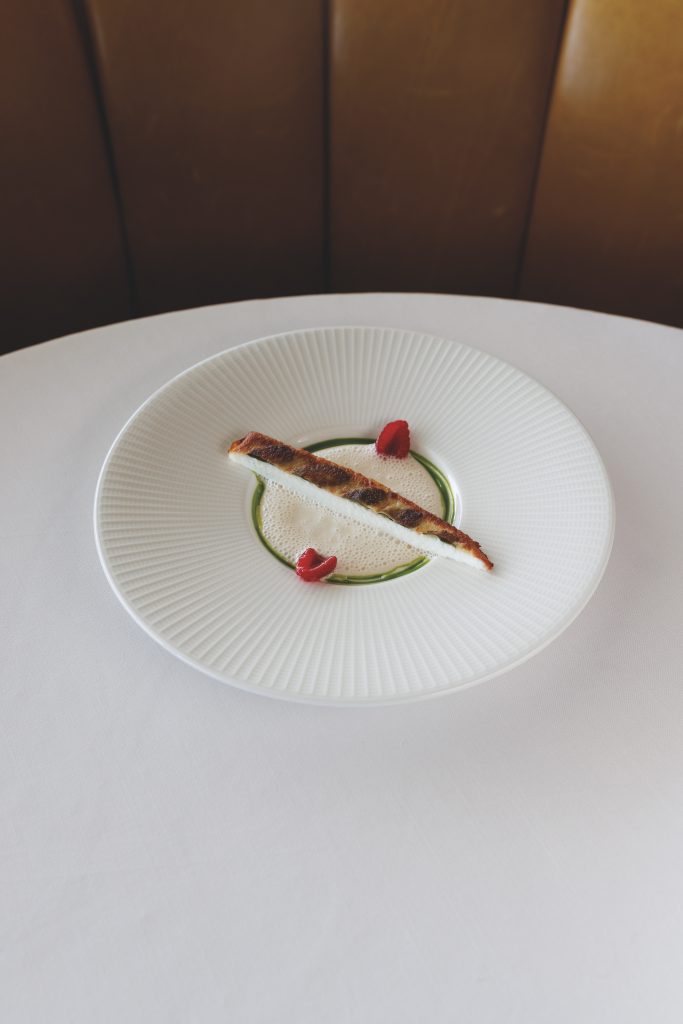
Ceviche at Pelagos, featuring yellowtail, pistachio, cherry, and elderflower. Sole with sage, Padrón pepper, raspberry, and Champagne sauce.
Chef Adam Kodovas’s two-year-old Ex Machina, located on a steep street in Pangrati, is equally rooted in Greek produce, peppered with influences and ingredients drawn from his Greek-Egyptian background and experience working in restaurants overseas. Kodovas’s food is reflective of his multicultural heritage, made with around 95 percent Greek products complemented by spices from Cairo’s Khān al-Khalīli bazaar, miso from Japan, and curry from Thailand and India. Many dishes evolve with the changing seasons, while those that don’t rely on seasonality stay true to their original form all year. The eggplant tartlet with miso, aged cheese, and feteer (a type of layered pastry) takes its inspiration from an Egyptian chef’s recipe and the markets of Cairo. Zero-waste gyoza are based on kitchen trimmings made into a rich ragu. No Man’s Pasta is a permanent favourite on the menu, inspired by a dish Kodovas’s mother called “orphan’s pasta.” “She used to make it when we couldn’t afford to have pasta with meat, and instead we’d just have it with butter and cheese,” he says. “I turn it into a kind of Japanese tsukemen dipping noodle dish, with a thick broth from fish trimmings smoked over fire in the bottom of the bowl.” On the surface it looks like plain pasta. Mix it all up, and it’s a delicious discovery.
Kodovas—whose many tattoos include the phrase “Hold Fast” inked across his fingers—feels that his background brings something different to the Athens food scene. His parents split up when he was nine years old, and he spent much of his life ignoring his Egyptian heritage. But a chance encounter with some customers from Cairo during the COVID-19 pandemic led to a chain of events that included a return to Egypt after 30 years, a family reunion, and the opening of Ex Machina with his new Egyptian friends as co-investors. “The name of the restaurant, from the phrase deus ex machina, refers to solving an unsolvable problem,” he says. “I made a lot of mistakes on the way, but I’m now at the stage in my life where I have this experience, and I can offer something unique. I developed a style of food that can’t easily be replicated, and I think it’s exciting.”
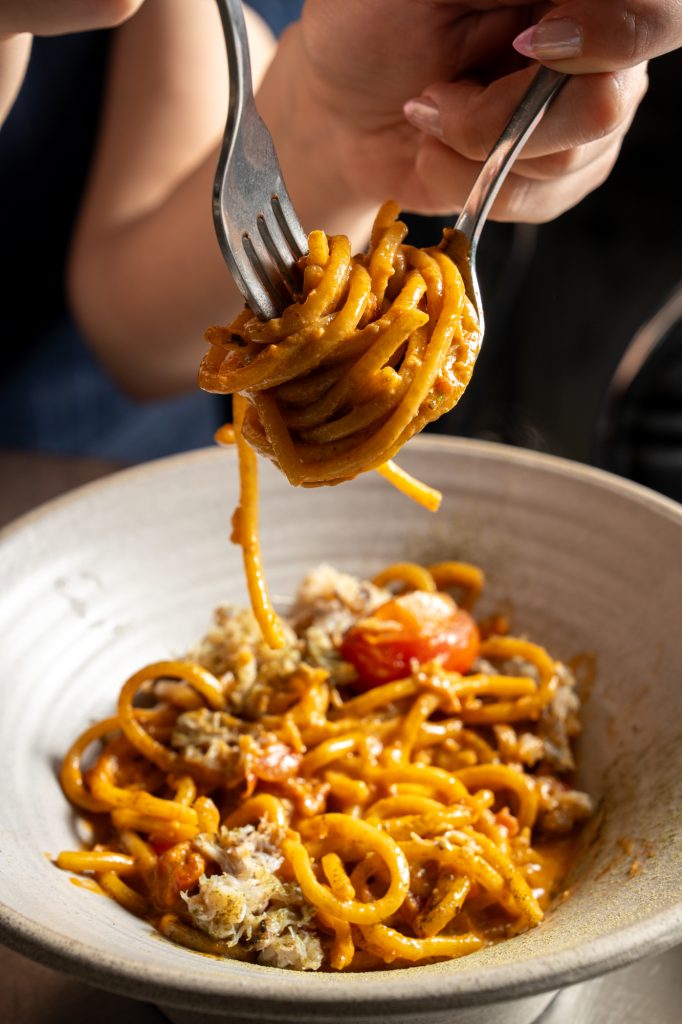
Spaghetti with blue crab, roe, bisque, and roasted cherry tomatoes. Photograph courtesy of Ex Machina.
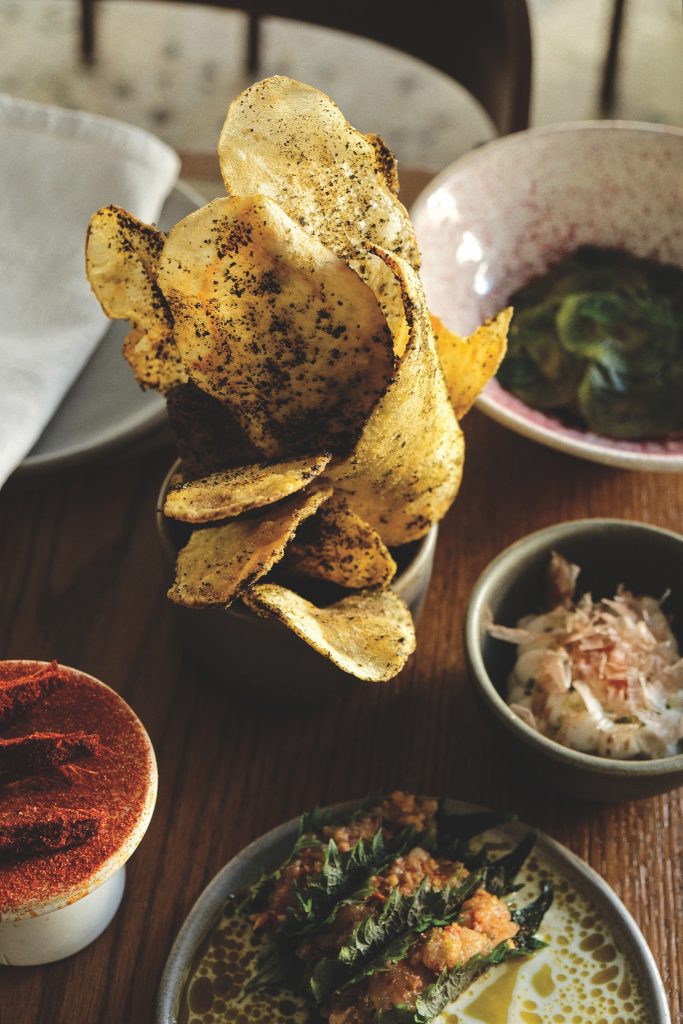
Furikake seasoning enlivens potato chips at Ex Machina. Photograph courtesy of Ex Machina.
Another recent arrival in Pangrati is Akra, opened in 2023 by chefs Giannis Loukakis and Spyros Pediaditakis. A light-filled, double-height restaurant meets bakery, it’s been a neighbourhood fixture since day one. On the ground floor, seafood, meat, and vegetables are cooked over olive wood, and on the mezzanine level, the pastry team kneads, folds, and shapes dough into bread and pastries. There’s a lot happening in a small space, yet everything seems to move in perfect coordination. Here, too, the focus is on Greek produce, with beef from Kalamata, pork from Drama, and cheeses sourced from across the islands. What’s available on any one day dictates the menu and shapes the recipes. “Our cuisine at Akra is everyday fresh cooking, something that fits into daily life,” says Loukakis. “Food trends come and go, but at some point, everything must stand the test of time and prove its purpose beyond just being fashionable.”
Mantis, the chef at Soil, believes that the Athens food scene is turning away from what he calls “imitation” and moving toward a rediscovery of Greece’s native character. “More and more chefs are turning inward. There’s a growing confidence in looking to local producers, and to the quiet richness of our culinary heritage,” he says. “We see ourselves as part of a broader return to the soil, to origin, to something slower and more intentional. It’s not about breaking new ground; it’s about going deeper into the ground we already stand on.”
The Chef’s Table at Soil. Photograph by Alex Antoniadis.
Dinners at Soil begin with a tableside introduction to ingredients—flowers, herbs, fruit, seafood—all presented in the “Alepochori box,” named for the village where the restaurant’s garden is located. Flowers are often the starting point for dishes, and many of the lesser-known ingredients on the menu have long been part of the Greek landscape. “They’ve always been growing quietly between the stones, along the coastline, and in forgotten corners of gardens,” says Mantis. “When picked at the exact moment their oils peak, their character is astonishing.” Mantis’s hyperseasonal approach leads him to work closely with foragers who supply him with wild herbs, flowers, and sea plants, some only available for a few days or weeks at a time. “Their arrival often shifts our entire direction. A dish might change completely based on a wild fennel flower or the sudden appearance of rock samphire [an aromatic coastal plant]. What guides us at Soil isn’t a trend or a fixed idea. It’s the pace of nature. It means understanding that we’re not in control, but that we’re in collaboration.”
The result is an extraordinary tasting menu. Dishes like the one-bite eel burger are packed with punchy umami flavours. Plump shrimp from Kiláda in the Peloponnese are marinated inside a woven pouch of kombu, served alongside a spoonful of mussel cream. For dessert, fresh chestnut is grated over an earthy Mont Blanc made of Jerusalem artichoke and black garlic. The restaurant serves everything on dishes designed and made by Mantis’s wife, ceramicist Elia Lampiri, contributing to the feeling that you’re dining in the home of family or friends, being fed by people who truly care about you.
Perhaps this return to roots, to community, to a sense of home through food but with a young, energetic, urban spirit, is something that city dwellers are longing for. It’s clearly a recipe that resonates with Athenians and, along with a focus on seasonality, regional produce, and a reverence for nature, something that every one of these restaurants holds close to its heart. “Ultimately, we want people to walk away not just having had a great meal, but having felt something, a connection to the past and to the energy of the present,” says Pharaoh’s Vallatos.
The feeling is palpable all over the Greek capital right now, and it’s making dining in this thrilling city better than ever.
People who live in popular tourist destinations like Tokyo and Paris know that autumn is the best season. Spring is when the crowds begin; summer, when they peak; and winter is festive but at the whim of Mother Nature. Fall, though? That’s when they get their streets back. If you enjoy your vacation on the quieter side, it’s a perfect time to visit.
Below, we’ve rounded up four Four Seasons destinations to consider booking off-peak. Open sidewalks and friendly locals await.
Fall in Paris
Visit the best Parisian boutiques with a shopping insider.
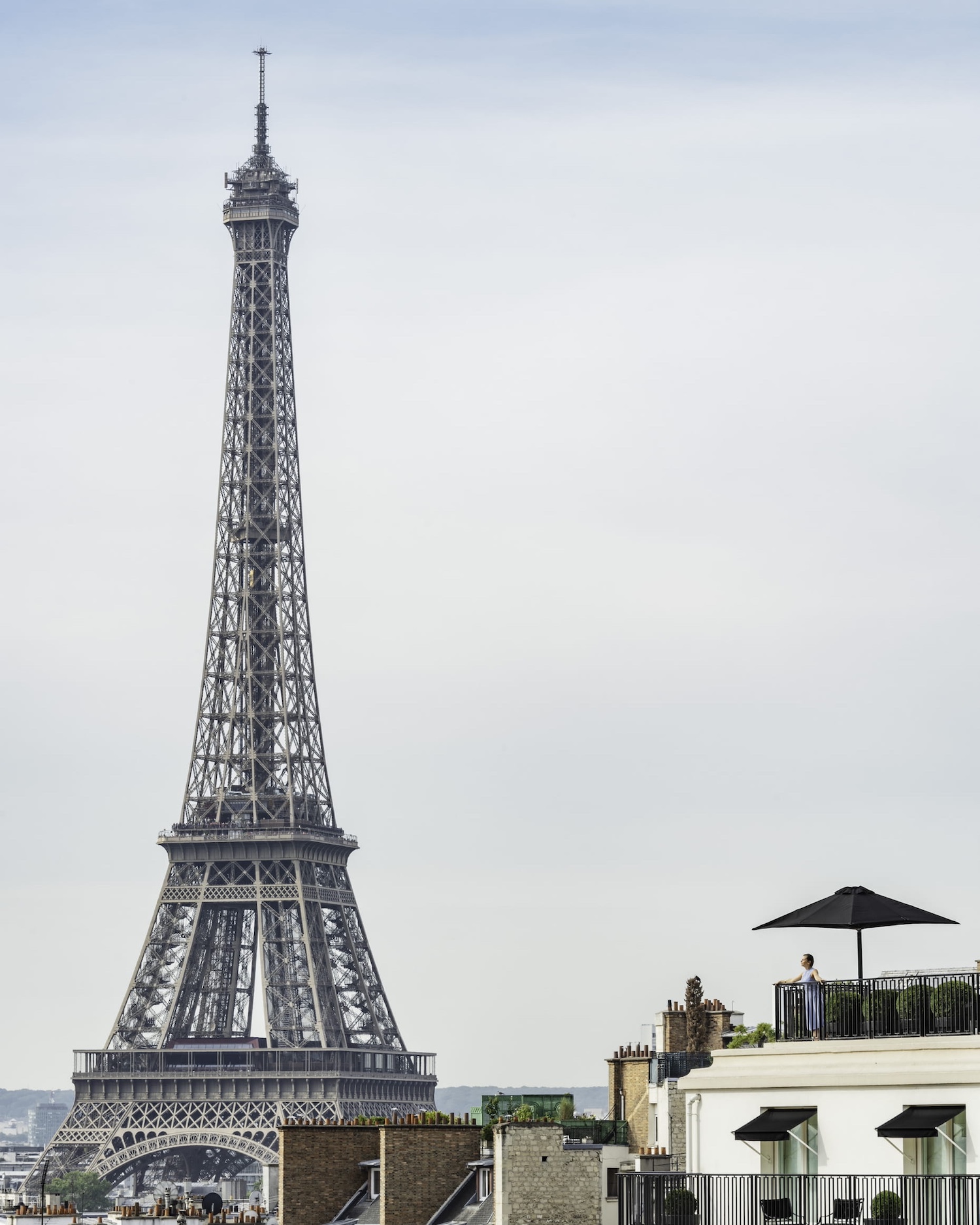
We may be biased, but autumn is the best time of year to visit the City of Light—and Four Seasons Hotel George V, Paris, the best place to stay. Let us count the ways: It’s housed in a gorgeous Art Deco landmark building. It’s located in the Golden Triangle neighbourhood of the 8th arrondissement, just off the Champs-Élysées, steps from world-class shopping. Some suites have jaw-dropping views of the Eiffel Tower.
Oh, and did we mention the property has a trio of Michelin-starred restaurants (between them, they’ve won six stars)? Three-starred Le Cinq by Christian Le Squer—considered one of the world’s most exquisite examples of French dining—is a restaurant that foodies plan entire vacations around. Two-starred L’Orangerie offers refined French cuisine in an airy conservatory setting. And Le George specializes in Mediterranean flavors and sustainable sourcing.
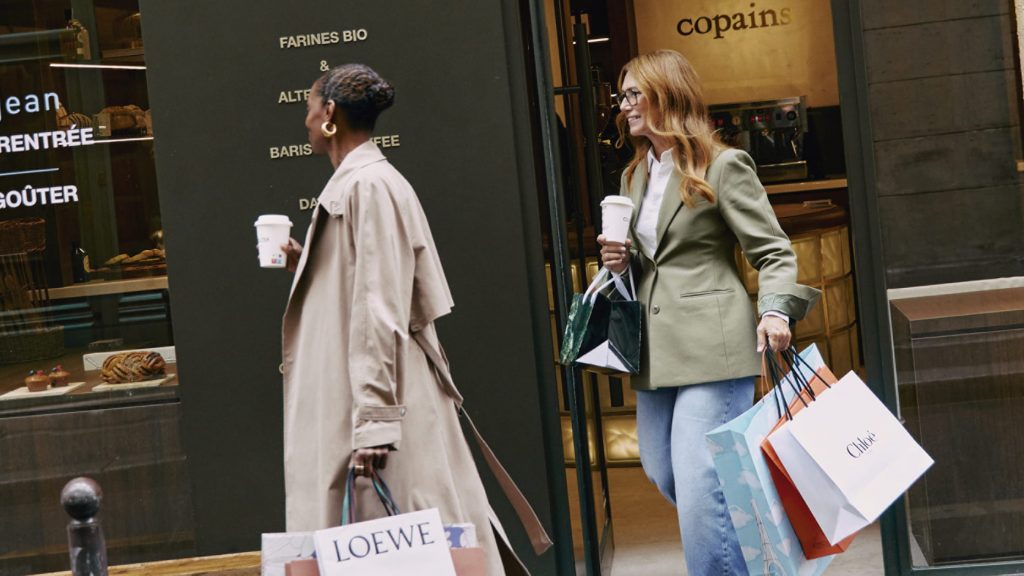
From mid-September to mid-November, you’ll have the opportunity to book a So Chic, Darling! experience with a local fashion insider, who will take you on a chauffeured tour of must-visit boutiques and ateliers. At tour’s end, recharge with a stop at a café for pastries and drinks.
For a getaway that combines foliage viewing with sophisticated dining, look no further than Montreal, where you can get your fill of gourmet bagels, next-level smoked meats, flaky French pastries, and, of course, poutine, Canada’s national dish. One of only two North American cities to crack the top 10 on Condé Nast Traveler’s Best Food Cities in the World list for 2024 (Vancouver shares the honour), Montreal is a must-visit for those with big appetites and discriminating palates.
Foodie travellers will want to consider aligning their Montreal visit with MTLàTABLE (October 30 to November 16), the popular annual event where diners enjoy prix-fixe options at more than 150 participating eateries. A postprandial walk along the trails at Mount Royal Park for a dose of autumn colours and crisp air is a must. The forest-like park, initially laid out by Frederick Law Olmsted (who designed New York City’s Central Park), is known for its city skyline views.
Once you’ve had your fill of fall foliage, retreat to Four Seasons Hotel Montreal, where, naturally, there’s a stellar restaurant on-site—world-renowned chef Marcus Samuelsson’s Marcus Restaurant + Terrace—in case you’re still hungry. Looking to detox after all the indulging? Book a luxurious treatment at the hotel’s Guerlain Spa, one of only five spas in Canada to be rated five stars by Forbes Travel Guide.
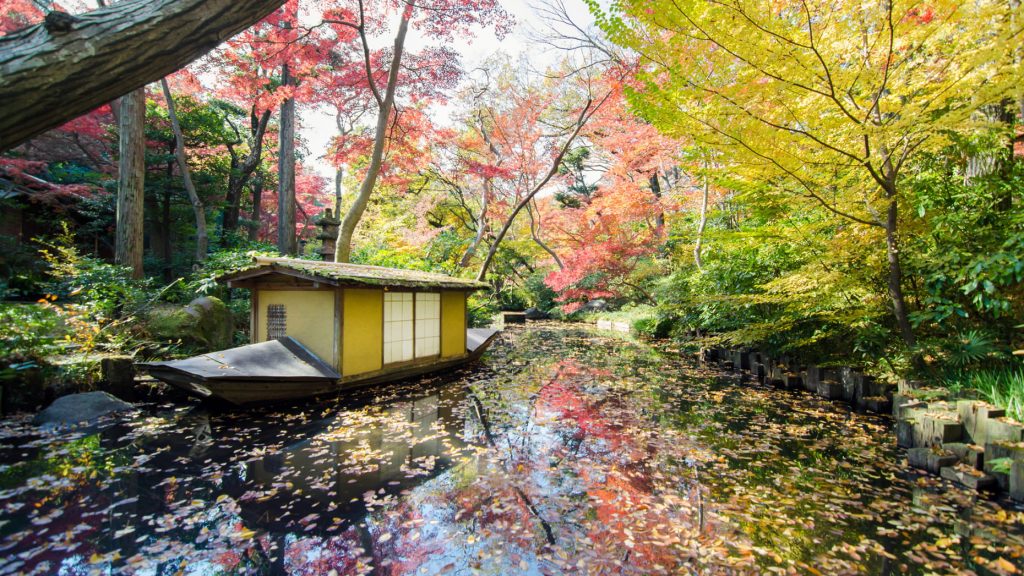
Tourists may think of Tokyo as a futuristic city of skyscrapers and neon lights, but it’s also filled with plenty of ways to engage with nature. In fact, according to a recent survey, Tokyo ranks No. 1 on the list of cities with the most green spaces in the world—all of which makes it a great destination for fall foliage viewing.
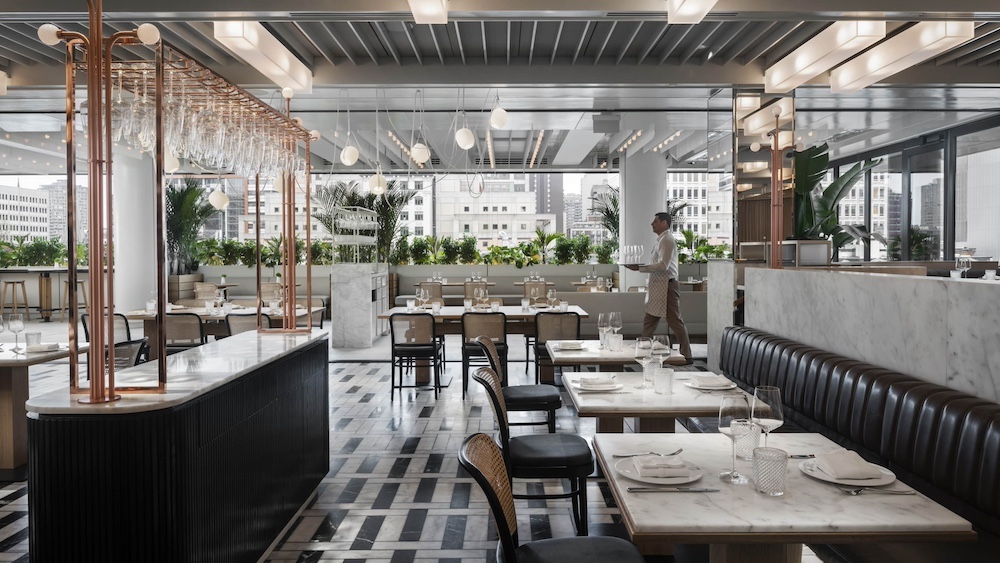
When it comes to a place to stay, you have two standout options: Four Seasons Hotel Tokyo at Otemachi and Four Seasons Hotel Tokyo at Marunouchi. Otemachi is the newer, larger property, boasting 190 guest rooms and suites and occupying the top floors of a 39-story high-rise in the financial district. In addition to its award-winning bar, Virtù (one of Asia’s 50 Best Bars 2024), and Michelin-starred restaurant, est, the hotel’s most-buzzed-about feature is its jaw-dropping views. When the elevator doors open into the lobby, guests are wowed by the panorama of the city and, best of all, the grounds of the Imperial Palace below, right next to the building.
For a more boutique, street-level experience, consider the Marunouchi hotel, which has just 57 guest rooms and suites and is located next door to Tokyo Station. The accommodations are currently undergoing a renovation (to be finished by March 2026), but the hotel’s spa and prized restaurant, Sézanne, recipient of three Michelin stars and winner of Best Restaurant in Japan on Asia’s 50 Best Restaurants 2025 list, remain open. Headed by chef Daniel Calvert, the elegant restaurant interprets Japanese ingredients through the lens of French cuisine.
Get your fill of mountain biking before the snow arrives.
Ask locals in any traditional ski town their favourite time of year, and you may hear a surprising answer. While winter is when they can enjoy their beloved snow sports, autumn is when they get to experience nature the way it’s intended to be experienced: without lines.
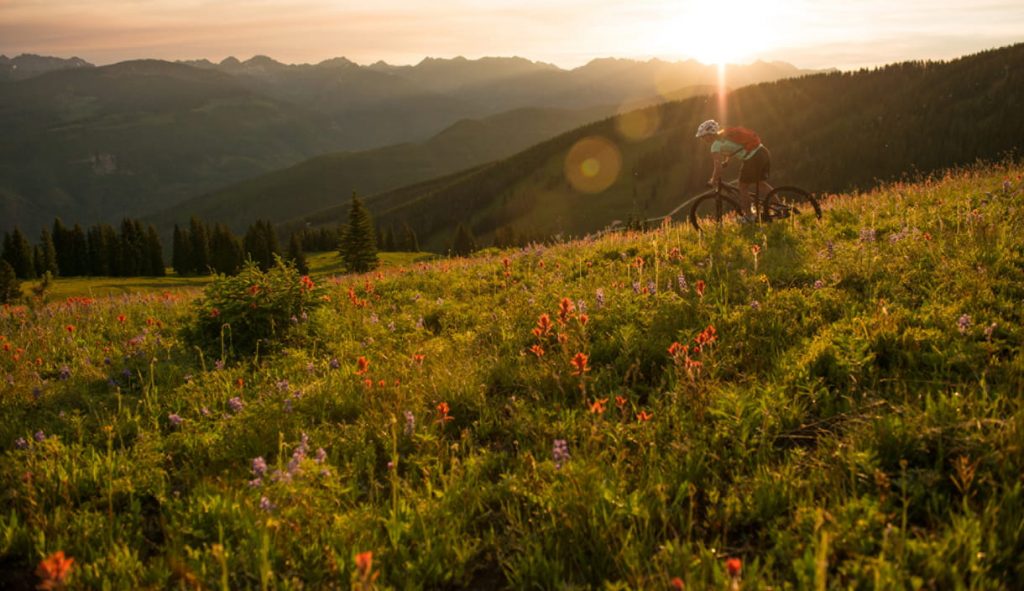
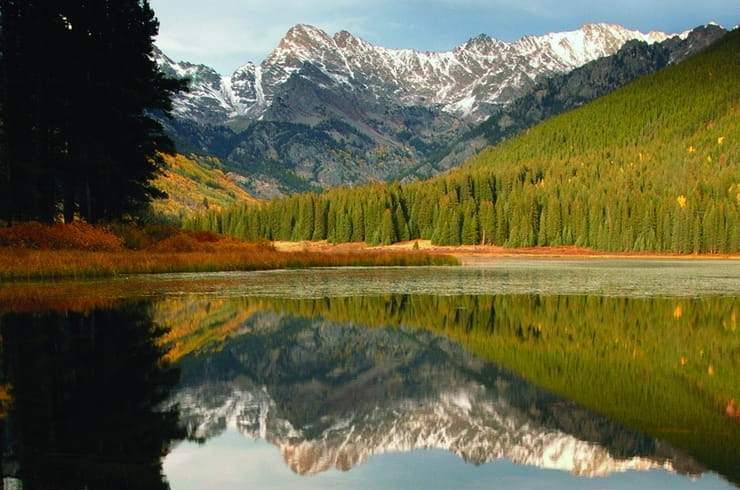
Visit Vail in the fall, and your encounters will be more colourful (think yellow and orange and red)—and potentially more rewarding. No, you probably won’t be able to ski or snowboard, but those mountains hold other opportunities for fun. Biking, hiking, trail running, fly-fishing, and horseback riding allow you to fully engage with the majesty of Colorado’s Rocky Mountains.
Another reason to book an autumn stay in Vail: Oktoberfest. Thanks to its Bavarian-inspired village center, Vail has become one of the best spots in the U.S. to celebrate the iconic brews-and-bratwurst festival. Extra credit: Come dressed in your lederhosen or dirndl, and enter the costume contest for bragging rights.
Four Seasons Resort and Residences Vail, just steps from the high-end restaurants and shopping at Vail Village, is the ultimate luxury basecamp for your fall vacation. After a day spent outdoors, it’s time for après-ski at the resort. After all, après-ski isn’t just for the winter months; it’s an attitude—and a year-round pursuit.
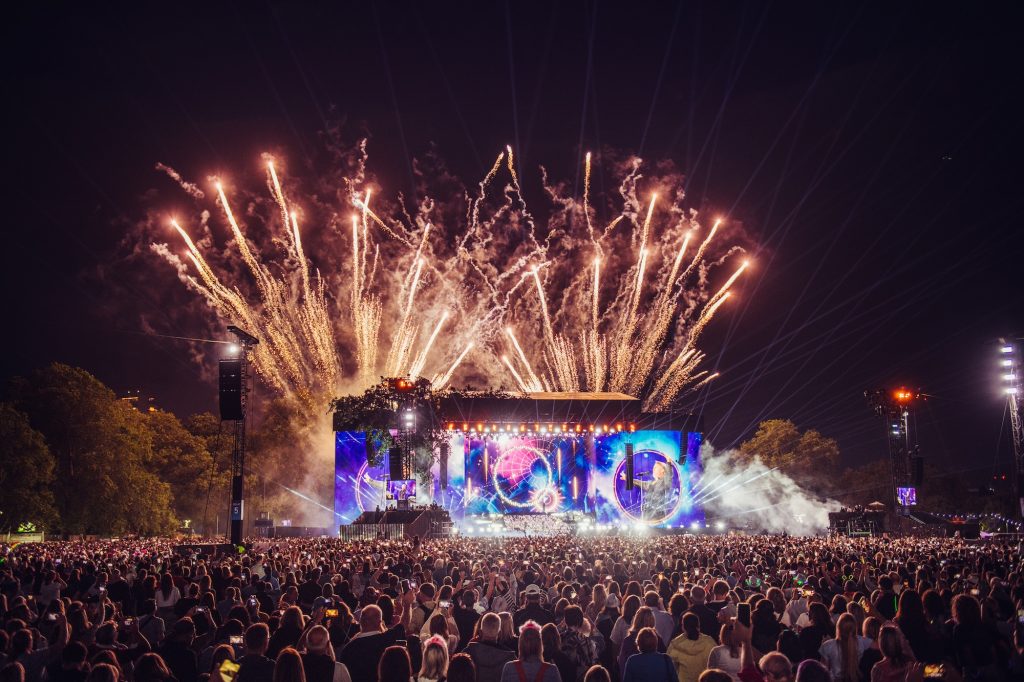
At last year’s Glastonbury Festival, held as always on a 900-acre farm in England’s Somerset region, the programming was typically eclectic and electric. Maybe you wanted to sway with retro abandon as Shania Twain sashayed alongside a parade of hobby horses and a glammed-out gang of dancers and drag queens. Or perhaps it was a chance to see Dua Lipa let loose amid confetti canons and pyrotechnics, or see SZA close the weekend twerking in fairy wings halfway up a tree onstage as she teased the crowd.
Music lovers have far more options in 2025—at Glastonbury and beyond—as the United Kingdom stakes its claim as the top gig-jetting destination, with a busier-than-ever festival calendar.
From June 2 to 7, the Austin-born festival SXSW (South by Southwest) will make its European debut in dozens of venues in London’s hipster-heavy East End. Also new is Lido (June 6 to 7 and June 13 to 15), a massive operation produced by behemoth AEG that features Charli XCX as a lineup curator.
Returning shows this summer include BST Hyde Park (multiple dates in June and July), an event that’s always headlined by a world-famous name (this year: Sabrina Carpenter), as well as Glastonbury (June 25 to 29), where headliners will include Rod Stewart and Neil Young. Also in the mix is the AEG-produced All Points East (August 16, 22, 23, and 24) with Raye, Tyla, and Doechii performing. (Smaller, niche festivals—like underground music-focused Wide Awake, lavish popfest Mighty Hoopla, soul-funk-powered Cross the Tracks, and electronic celebration Field Day—kicked off the festival season in May.)
Take That onstage at BST Hyde Park in London in 2023. Photograph courtesy of BST Hyde Park.
On the tour front, there’s a little thing happening called the Oasis reunion, with 17 U.K. shows, kicking off July 4 in Wales. Still, the big new event on music calendars this year is the United Kingdom’s take on SXSW.
The new SXSW offshoot will take inspiration from British music traditions while also presenting a fresh approach to programming versus the almost 40-year-old event in Austin, Texas (where last year’s lineup included everyone from Meghan Markle to Jane Fonda). Music, film, gaming, tech, and business will all be present, but SXSW’s London offerings will run simultaneously, rather than sequentially, per the Texas model. “The core mission of ‘South by’ is what’s new and what’s next, but we’re doing them all at the same time so there can be many more moments of convergence,” says Adem Holness, head of music for SXSW London. “You can watch a film, catch a talk, or come see a band.” Discoverability is crucial, with every venue, whether a church or a nightclub like XOYO, within a 15-minute walk.
Holness tapped the likes of A&R maestro Nathan Barley Phillips to sit on the jury that reviews submissions. And plans are for the newest SXSW to reflect the eclectic, international nature of London’s population: Korea’s Seoul Community Radio and Deadly (which champions Jamaican music) are among the co-curators on tap. “British and European audiences have an open mind for form and different types of performance—we can put classic next to experimental and electronic, and find a space in between the two,” says Holness.
SXSW’s team can take inspiration from an already thriving event that takes place in the same neighborhood each spring, the Brick Lane Jazz Festival. “We’re going to meet for a coffee next week,” says Brick Lane organizer Juliet Kennedy of her counterparts at SXSW London. “I’m up for helping them as much as I can.”
Kennedy runs a nightclub in the neighborhood, Ninety One Living Room, and started the festival in 2022 to help post-pandemic recovery in the live music sector. She posits that the liveliness of festivals in Britain right now derives, in part, from the harshness of the country’s COVID-era experience, which included multiple lockdowns over a two-year period. “That sense of togetherness is central to all festivals, but the pandemic is the reason we exist,” she says.
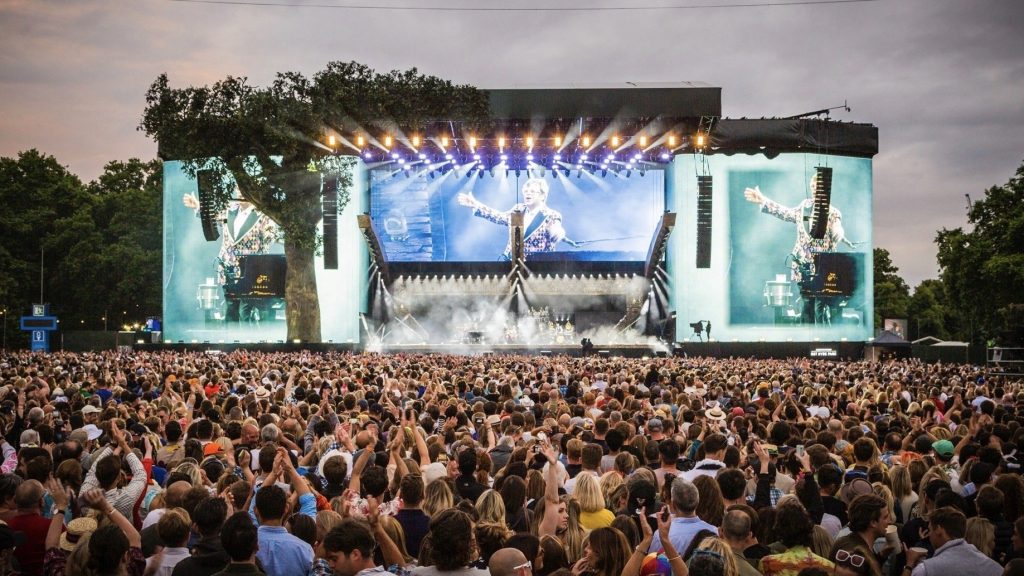
Elton John onstage at BST Hyde Park in 2022. Photograph courtesy of BST Hyde Park.
Three thousand people attended Brick Lane’s first year; for 2025 (April 25 to 27), Kennedy sold more than three times the number of tickets, each of which grants access to a dozen venues around the area. French singer Adi Oasis—“a goddess,” says Kennedy—headlined one night, and octogenarian American instrumentalist Laraaji closed the fest. “There’s a strong concept of jazz as a middle-aged sort of chin-stroking affair,” she says. “But it’s lively and young, and you can be on your feet dancing.”
The United Kingdom will host a complementary range of classical-skewing events, too. Helen Brocklebank, CEO of Walpole, the trade body for luxury in the United Kingdom, puts it succinctly: “This is a superpower of Britain—we do music like nobody else, from Glastonbury to Glyndebourne, always with a level of excellence.”
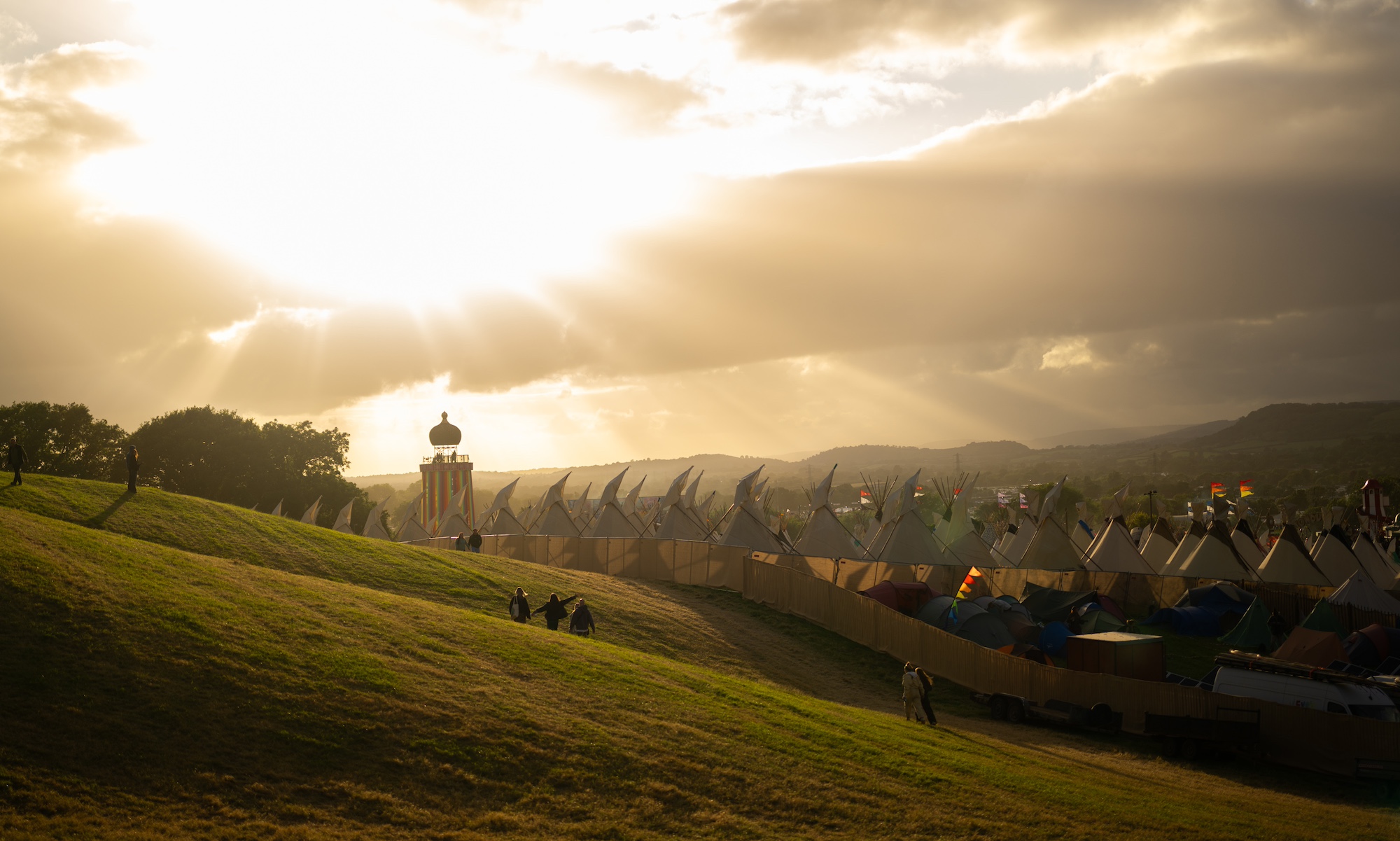
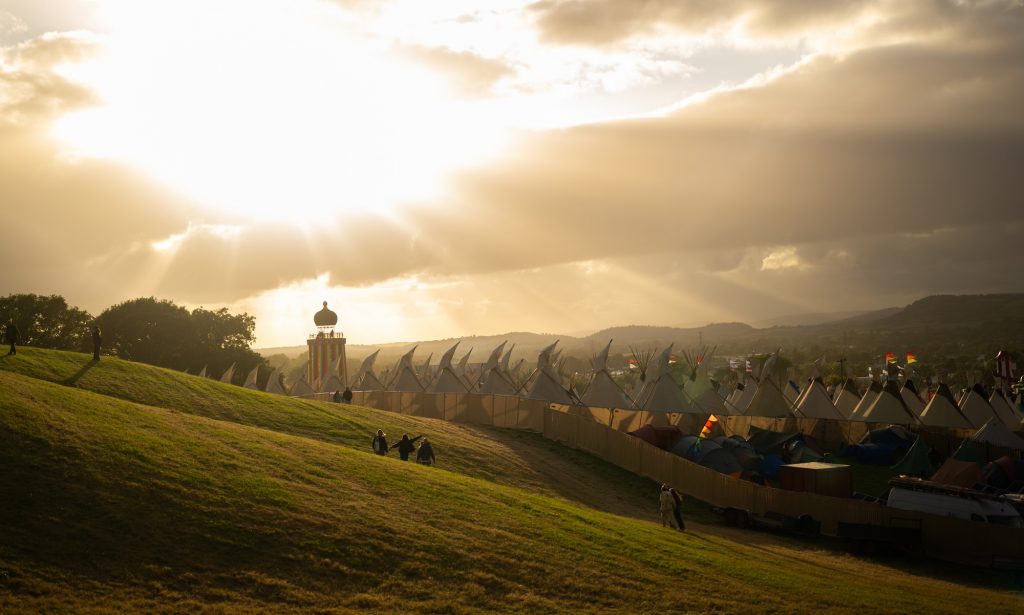
Attendees camped at the Tipi Field at 2024’s Glastonbury Festival. Photograph by Samir Hussein/Wireimage.
At Glyndebourne, staged at a grand country house in East Sussex from May 16 through August 24, guests can enjoy opera while picnicking on the lawn, Champagne in hand. This year, Glyndebourne will present its first-ever production of Parsifal, as well as a commission based on the children’s book The Railway Children. Artistic director Stephen Langridge notes that 25 percent of visitors were new to Glyndebourne last year, and 25 percent of those were new to opera. “We’re hoping to be the gateway drug,” he says with a laugh, noting the madcapness of locating an opera festival on the rolling lawns of a manor house. “It’s very English, and there’s an eccentric thing underneath it, especially when you see the sheep in fields nearby.”
Options for classical music lovers also include the nearly 110-year-old Thaxted Festival, taking place June 20 to July 13 in northwest Essex, and the BBC Proms, an eight-week summer season of shows at the Royal Albert Hall in London (July 18 to September 13). The latter, says Zeb Soanes, a presenter for the independent British radio station Classic FM, is “part of the fabric of British life, like Wimbledon and the chimes of Big Ben. It’s the largest classical music festival in the entire world, but the great thing is, it’s wonderfully all-inclusive. Rufus Wainwright did a concert, and late night, there is jazz, soul, and funk.”
British music festivals, then, are distinctive for their wide-ranging, unpredictable programming, but there’s something else that sets them apart, at least according to Lisa Verrico. She’s a journalist and longtime festivalgoer who has produced countless guides to Britain’s annual calendar of music offerings. Unlike Coachella—“you go once or twice to take a photograph of yourself there,” says Verrico—modern British festivals are intended to be fresh every year and, most crucially, family-friendly. Her twentysomething daughter first started accompanying her at the age of two and is now an avid attendee herself. Says Verrico, “If you grow up going to festivals and loving them, you’ll go back—that’s why, now, everybody goes.”
Visiting a new destination is more than an exploration of unfamiliar lands—it’s an exploration of self. If you’re willing to cast off traditional ideas about travel and welcome something different, perhaps even something that pushes you beyond the limits of personal comfort, you can unleash your creativity, shift your perspective in subtle yet extraordinary ways, and experience the world with intention.
Follow four bold travellers to some of their favorite destinations and learn how these places and their experiences there shaped the way they view the world and connect with it. You’ll discover that what you fear may be too daring is the starting point for truly transformational travel.
Commune with nature to connect with yourself
To say Kimi Werner is comfortable in the water is a vast understatement. As a child growing up in coastal Maui, she would often go snorkeling with her father as he free-dove and spearfished (what he caught was the family’s main source of food). And as an adult, Werner continues to find the ocean at the center of her life—and career(s): She is a U.S. National Spearfishing Champion, a bold free diver, a seafood-focused chef, and an ocean conservationist.
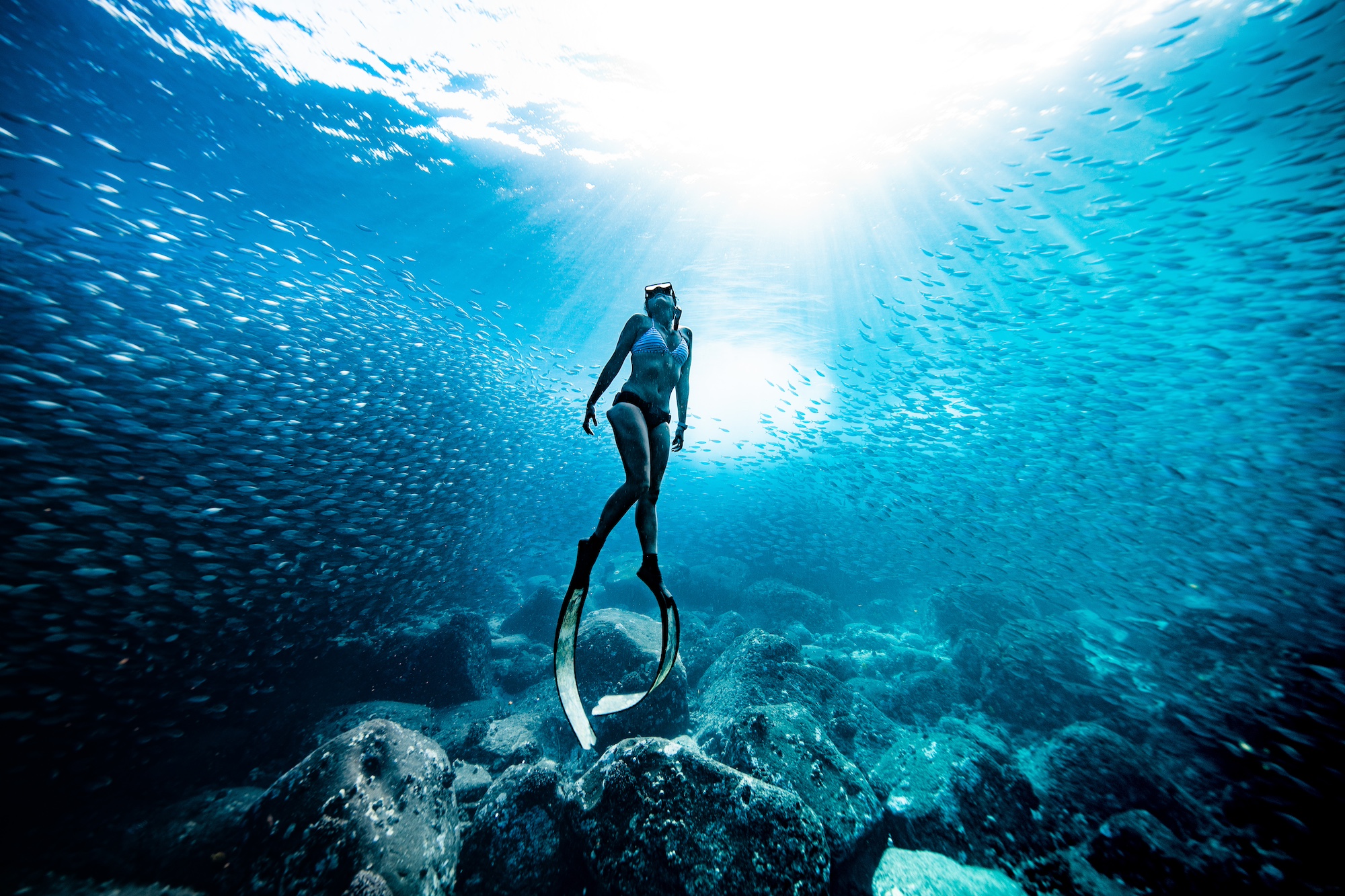
Free diver and U.S. National Spearfishing Champion Kimi Werner in her element.
Photograph by Perrin James
Werner has traveled all over the world—even to Antarctica—in pursuit of natural beauty and in service of protecting it, but her favorite place to explore remains her home state of Hawaii. She and her family live on Oahu’s North Store, which, she says, “still does function as a small town.The community is very much in tune with nature, and a lot of people live here because they want nature to dictate their lives, their choices, their schedules.”
Her top destination when it comes to Oahu? “Waimea Bay is hands down my favorite beach, and I think it’s one of the most magical places in the world. Whenever I go, I find myself questioning why I travel so far when I have something so beautiful right here.” For hiking enthusiasts, she recommends Keālia Trail (“I call it the StairMaster of the North Shore”) and Ka’ena Point Trail, where there is a bird sanctuary. All of these breathtaking spots are within a 45-minute drive of Four Seasons Resort Oahu at Ko Olina, which offers a morning or sunset Ma’ili Pillbox Hike for a closer hiking experience.
At Four Seasons Resort Hualālai, situated on an expansive stretch of coastline on the Big Island of Hawaii, you can get a taste of what it feels like to explore the ocean’s depths and push your physical limits via the Kimi Werner Freediving Experience, in which as many as four guests can spend two half-days learning to free dive with the national spearfishing champ. The package includes a four-course private dinner crafted by the resort’s executive chef, Richard Polhemus.
More experiences to inspire you to head outside
Learn to shred the waves with Surfing Lessons at Four Seasons Resort Punta Mita. All you’ll need is a swimsuit and sunblock. They’ll provide the rest: surfboard, rash guards, wetsuits, reef boots—and an unforgettable experience.
Join the resident marine biologist at Four Seasons Maldives at Landaa Giraavaru for Nighttime on the Reef, an after-dark snorkeling tour to find nocturnal sea creatures that wake up after the sun sets.
Whether you’re exploring the world or exploring creative pursuits, you’ll find one common thread: The most meaningful experiences occur when things happen unexpectedly. Unplanned adventures and thinking beyond the expectations of a typical vacation may lead to a deeper connection with your destination and yourself.
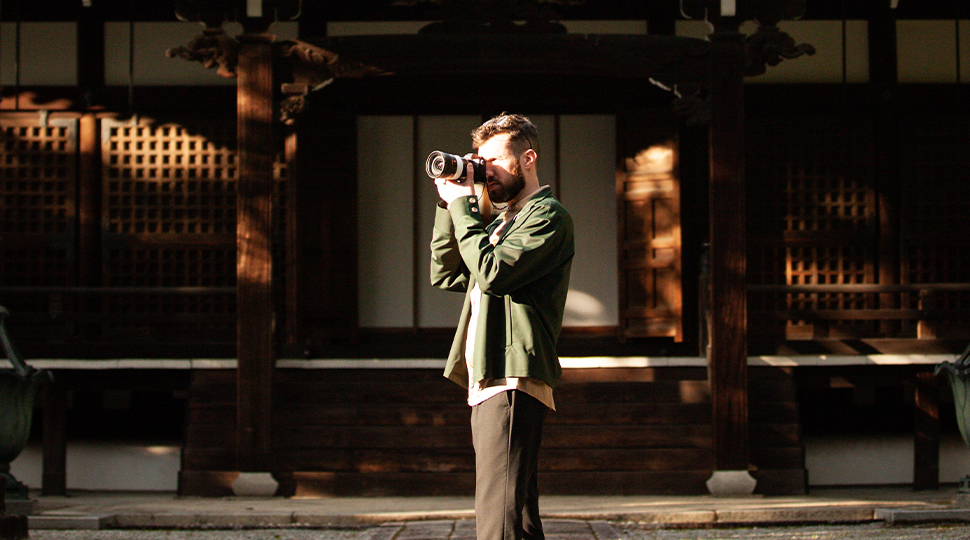
Photographer Dave Krugman captures a golden-hour moment in Kyoto.
Just ask photographer and creative director Dave Krugman. His numerous world travel experiences – including time spent in Kyoto – have led him to believe that one of the most essential elements of a successful trip, regardless of destination, is keeping an open mind.
“I try to leave a lot of breathing room for spontaneity and serendipity, because my favourite moments are when something happens, the path diverges, and I’m exposed to this thing that I couldn’t have planned even if I wanted to,” he says.
In Kyoto, those moments could be immersing yourself in the world of geiko and maiko – kimono-clad entertainers who perform traditional song and dance – and an ozashiki asobi dinner in one of the city’s historic geisha districts. Or learning the art of Zen meditation from the deputy head monk of Shoden Eigen-in.
During his stay at Four Seasons Hotel Kyoto, Krugman discovered a variety of new people, environments and experiences: A hotel guide led him on a tour of an ancient bamboo forest, and the Concierge arranged a visit to a local lantern workshop, where artisan lantern-makers taught him how to carefully layer thin sheets of paper over a frame to build his own mini lantern.
Even the Hotel’s atmosphere provided opportunities to connect with the culture and history of the city. Set around the 800-year-old Shakusui-en pond garden – one immortalized in a 12th-century epic poem – every setting at Four Seasons is carefully crafted with purpose.
Krugman cites travel as one of the biggest influences on his photography and his relationship with the world around him. “There is nothing more inspiring and invigorating than travel,” he says. “It always shows me that the world is so much larger than we imagine, so much more diverse. Witnessing this complexity and the vastness of the world is a humbling feeling, and it inspires me. Photography allows me to connect more deeply with all I see and experience.”
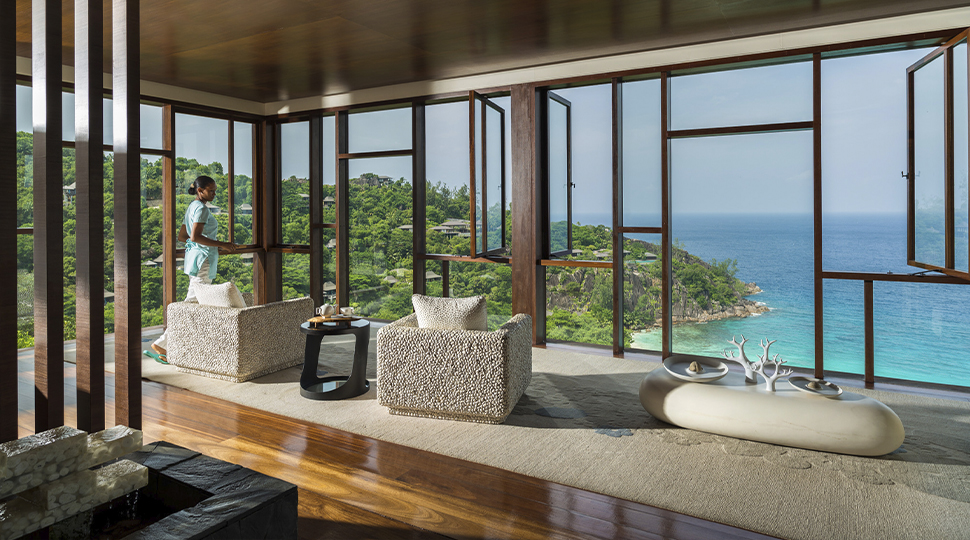
Head to the highest point of Four Seasons Resort Seychelles – the rooftop of Le Syel Spa. There, locally renowned artist Nigel Henri will help you sketch the picture-perfect setting during a personalized art class. Afterwards, your sketch will be scanned to create your own postcards, which will be mailed to your home along with your original artwork for framing.
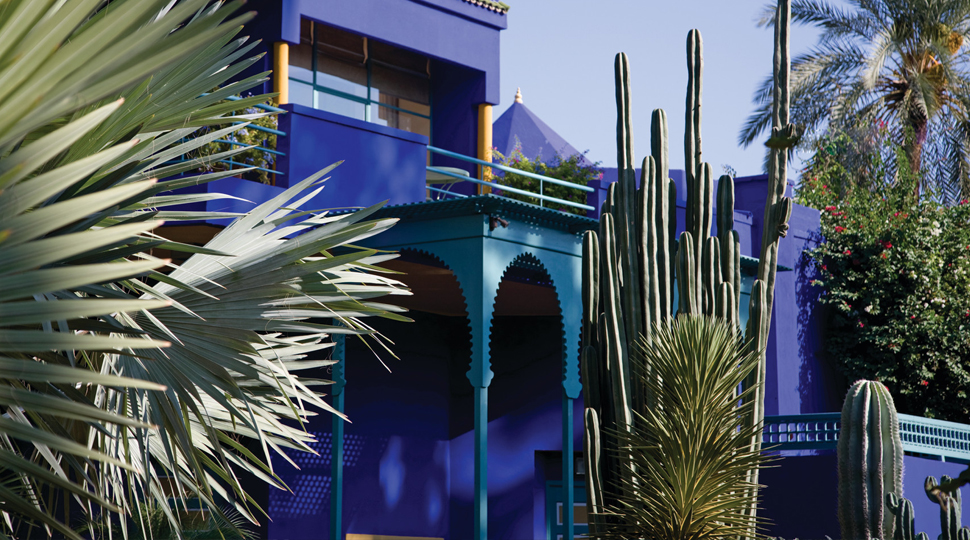
The bold colours of Marrakech inspired famed fashion designer Yves Saint Laurent, as you’ll see during a private tour of Villa Oasis, the home he shared with Pierre Bergé. Afterwards, step into the Musée Yves Saint Laurent Marrakech for a private guided tour before returning to Four Seasons Resort Marrakech for a dinner inspired by his Moroccan motifs.
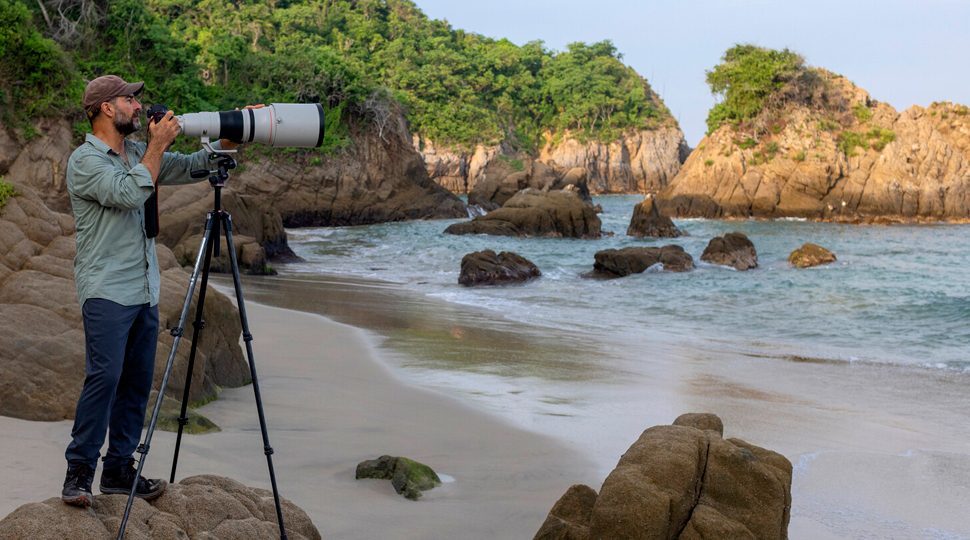
Get inspired by the natural wonders of the private reserve at Four Seasons Resort Tamarindo, México, during a unique macro photography class led by renowned “National Geographic” photographer Mauricio Ramos. You’ll explore the flora and fauna of this pristine coastline as you learn the art of capturing the perfect shot.
Redefine your own horizons
There are many valid reasons to talk yourself out of the adventure of a lifetime – a lack of travel companions, language barriers, concerns about food. But writer and entrepreneur Jessica Nabongo believes that embracing the unfamiliar in spite of your worries can improve your life and deepen your understanding of connection. She also believes that being afraid has no place in a travel itinerary.
Writer, entrepreneur and world-traveller Jessica Nabongo enjoys the Michelin-starred cuisine at Il Palagio.
“I would say that my travel philosophy is to travel without fear,” says Nabongo, the first Black woman to visit all 195 countries in the world. “I’m constantly living outside of my comfort zone. I think my comfort zone is discomfort,” she quips.
In Florence, one of Italy’s most beautiful cities and the centre of the cultural and intellectual revolution that swept through Europe during the Renaissance, Nabongo leaned into the unfamiliar to become uniquely acquainted with the region. A truffle-hunting excursion led her through the scenic Italian countryside, while a Michelin-starred dining experience and tours of iconic landmarks – like the Duomo, with its distinctive terracotta-tiled dome – offered new perspectives of the storied city.
Aside from abandoning fear, Nabongo’s second travel philosophy is to explore new places with a positive mindset: “I always say positive energy coats my stomach, because I’ve never had food poisoning!”
Arguably, sampling local fare is among the easiest ways to connect with a new place, a new culture and new people. In Florence, that could mean queueing up with the locals to eat lampredotto at one of the city’s myriad food stands. Or it could mean indulging in an intimate sunset dinner at the renowned Ponte Vecchio, the city’s signature arch bridge. Available exclusively to guests of Four Seasons Hotel Firenze, the bridge’s only open-air terrace provides a romantic setting for a decadent meal above the glittering jewellery boutique Dante Cardini.
Travelling with a reasonable amount of abandon can alter our perspective and shape the way we connect with the world around us, with others – and with ourselves. It can even change how we think of travel. For Nabongo, each new adventure doesn’t involve leaving home, but arriving there. Her experiences with hospitality in Florence and beyond have taught her to appreciate the fact that any destination is just as much about the people as it is about the location.
“For me, now, home is in people,” she says. “Yes, I physically live in Detroit, but I have homes in London, Accra, Dakar, Bangkok, Rome – I can think of so many places that I have homes because my people are there.”
On the Platinum Desert Safari curated by Four Seasons Resort Dubai at Jumeirah Beach, you’ll depart from the Resort for a wildlife drive through a pristine natural reserve. On your journey, you’ll spot rare desert species, enjoy a falconry performance and ride camels before enjoying a sumptuous six-course meal with a fire show and fragrant shisha.
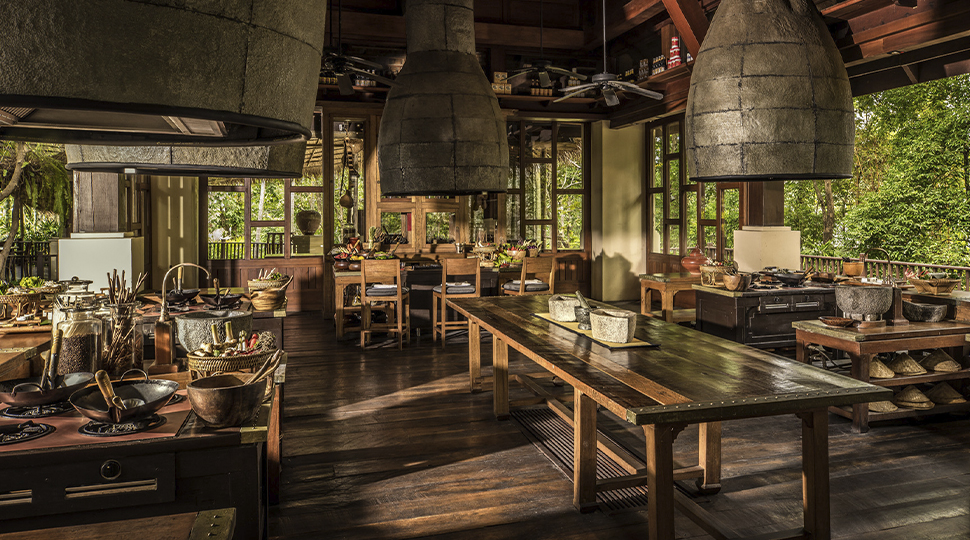
Explore new flavours and create a delicious souvenir in a cooking class at Four Seasons Resort Chiang Mai. Discover fresh indigenous ingredients in a secret garden as the chef gives you a tour, then learn to prepare them during a hands-on lesson in traditional Thai cuisine at the Resort’s Rim Thai Kitchen.
Experience the mystique of Teotihuacán pyramids like never before with Four Seasons Hotel Mexico City. On a private hot-air balloon flight, you’ll feel a thousand thrills inspired by the majesty and unsolved mysteries of these magnificent ancient temples.
Travel with intention for deeper cultural immersion
Trips all too often become mired in travel itineraries: Sights to see, foods to eat, things to do. Recommendations from friends or something you saw on social media. The pressure to check items off a list becomes so great that a long-awaited getaway can quickly turn into a chore instead of a rewarding experience.
Social entrepreneur, yogi, activist and mountaineer athlete Georgina Miranda sets sail in Costa Rica.
Georgina Miranda, who cites yoga and energy practice among her laundry list of talents, thinks about this a lot. She believes travel that’s overly focused on getting things done can limit your ability to truly arrive at a destination and connect with it. Instead, she suggests giving yourself 20 to 30 minutes upon arrival to be present in the moment without any obligatons. “It’s this art of being versus doing,” she says. “And I think Western culture really encourages us to constantly be doing, so we miss out on so much magic.”
Costa Rica is one of the destinations where she lets her senses capture that magic – the sight of verdant rainforests, the sound of waves rushing to shore, the cool mist of a thundering waterfall, the salty scent of the ocean breeze.
“It’s been in the recent years that [I realized] my travelling has changed so much,” she says. “I no longer want to see the world – I want to feel the world. And that really shapes how I travel.”
“If you’re open enough, you can let a lot of wonderful things come into your life when you travel,” says Miranda. “It snaps you out of autopilot and it gives you the opportunity to wake up to yourself again.” In Costa Rica, that experience could come in the form of a yoga session or meditation class at the Resort’s Spa to help you find your balance or set your intention for the day. The on-site Wellness Concierge can design a custom plan with you to help your best self emerge – centring your breath, body and mind to restore balance.
“There’s a moment when travelling that you realize you will never be the same because of what you’ve experienced,” Miranda says. “You have felt, touched, tasted and been immersed in a new reality, and so now your own reality is different.”
More experiences to help you travel with intention
Intentional travel can set the stage for a transformative experience. Reconnect and recharge at Four Seasons Hotel Westlake Village, where expert coaches will help you learn personalized strategies for life balance, optimized energy and overall health at the Center for Health & Wellbeing.
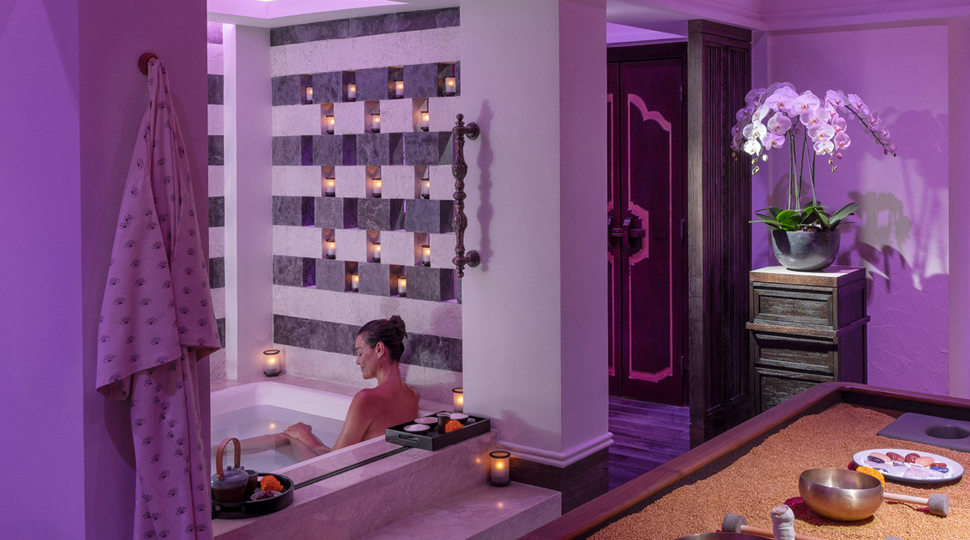
Enjoy a unique spa day at Four Seasons Resort Bali at Jimbaran Bay in the Illume Room, where science, technology and wellness merge for the ultimate therapeutic experience. Stimulate inner healing responses as you bathe in colour on a heated quartz-sand bed of crushed crystals, surrounded by the soothing sounds and vibrations of alchemy crystal singing bowls.