On a warm, breezy morning last September, a pair of 62-foot yachts lined up at Sultans Break in North Malé Atoll for the final day of the weeklong Four Seasons Maldives Surfing Champions Trophy. The competition—often regarded as the world’s most luxurious surfing event—takes place every September just minutes from Four Seasons Resort Maldives at Kuda Huraa, which features a collection of overwater suites and garden villas and a well-being centre, ŪRJĀ Naturopathy Island. Last year, guests had front-row seats aboard the plush Four Seasons yachts as French surfer Michel Bourez barrelled down the tube of a lengthy right wave for a victory-sealing perfect score.
The Four Seasons Maldives surfing competition was held at the “Sultans” break, just minutes from Kuda Huraa.
What makes this invitation-only showcase particularly special is that it brings together a mix of fresh talent and legendary veterans for an intimate event in one of the most idyllic places on Earth. In addition to the all-star roster of competitors, the contest boasts a unique format that includes single-fin, twin-fin, and thruster divisions, celebrating the sport’s past and present while simultaneously challenging the pros to acclimate to all three boards.
Bourez, winner of the 2025 Surfing Champions Trophy
Guests can get their own shot at world-class waves via the resort’s partnership with Tropicsurf, which offers coaching sessions. Enthusiasts who want to up the ante can take to the skies on a seaplane surf safari in search of the Maldives’ most carvable waves. On special occasions, including during the surfing competition (scheduled to take place this year from September 4 to 11), a surfing pro may also be aboard to offer expert advice.
Taj Burrow and his family rest on the pontoon of a private Four Seasons Maldives sea plane.
Last year, it was Australian Surfing Hall of Famer Taj Burrow who, with his wife and two daughters, tagged along on the adventure. When the seaplane neared Kudahuvadhoo, an island about an hour south of Kuda Huraa, Burrow spotted what he was looking for: head-high waves peeling off at a constant rate.
Burrow shredding
As Burrow surfed, his wife watched from a speedboat just a few dozen feet away while their daughters played on the two floaties tethered to the polka-dotted seaplane, one of two Four Seasons private aircrafts in the Maldives (which can transport guests to and from sister properties Four Seasons Resort Maldives at Landaa Giraavaru and Four Seasons Private Island Maldives at Voavah).
A speedboat was also on hand for the family.
After a couple of hours, Burrow paddled back to his family, calling the visit “the best family holiday [we’ve] ever been on.”
There is no shortage of exquisite wellness experiences at Four Seasons. Here’s but a sampling of the extraordinary treatments, facilities, and getaways offered at Four Seasons spas around the world.
Overwater Bliss in Mauritius
Four Seasons Resort Mauritius at Anahita
After a thorough reimagining, Mauritius’s only overwater spa, Oseyan at Four Seasons Resort Mauritius at Anahita, now offers more ways to relax and rejuvenate while taking in the serene natural landscape. The renovation includes a state-of-the-art hydro circuit with a cold plunge and experience showers, an overwater salon, and the Royal Spa Suite with a monumental stone tub and impeccable views of a turquoise lagoon. “At the heart of our philosophy is the belief that ‘a person is a person through others,’ ” says Joelle Jennepy, the resort’s senior director of spa and lifestyle. “We honour this connection by creating meaningful moments that remind us that well-being flourishes through shared humanity and care.”
Wellness Immersions
The newly built Wellness Shala at Four Seasons Resort Peninsula Papagayo, Costa Rica
For a getaway that puts personal revitalization front and centre, the new Wellness Villa at Casa del Mar at Four Seasons Resort Peninsula Papagayo, Costa Rica, can be booked for three- and five-day retreats revolving around such practices as sunset gratitude circles, sunrise light therapy, and sound baths. The 6,300-square-foot residence includes a private gym and cold plunge. Dedicated well-being stays are also available at Four Seasons Hotel Los Angeles at Beverly Hills, where Alo yoga equipment, LED face masks, and Peloton bikes are available in rooms and suites on the Wellness Floor. And at Grand-Hôtel du Cap-Ferrat, A Four Seasons Hotel, three new indoor-outdoor glass cabanas take the spa experience out into the property’s lush Mediterranean gardens. Guests can enjoy massages, work out with Technogym equipment, or try dry flotation therapy, relaxing on an Epsom salt–infused water mattress.
A Naples State of Calm
The ice room at the Sanctuary Spa at Naples Beach Club, A Four Seasons Resort, is part of a thermal circuit that includes aromatherapeutic steam rooms and more.
Florida’s newly opened Naples Beach Club, A Four Seasons Resort, has just unveiled its sublime two-level Sanctuary Spa, a 30,000-square-foot retreat offering an array of restorative experiences. Highlights include LPG Endermologie body sculpting—a cellulite treatment applied slowly and rhythmically along the spine to guide the body from fight or flight into a parasympathetic state—and the Ammortal Chamber, an experience featuring light, vibroacoustic, and pulsed electromagnetic therapy to support cellular regeneration and mental clarity. Says Paul Gabriel Nunez, director of spa and wellness, “Life is full of stress triggers, but rarely do we encounter something that can just as easily trigger relaxation.”
An Evening of Relaxation
A masseuse prepares for a couples massage at Four Seasons Resort Langkawi
At Four Seasons Resort Langkawi—a tranquil retreat set on a glorious mile-long beach—the Geo Spa recently debuted the Night Space Ritual, a wellness experience for two in the heart of the rainforest. It begins with an energy-cleansing ceremony, followed by side-by-side massages. “the essence of a healthy life always leads back to nature,” says the resort’s director of spa, Heriberto “Beto” Pena.
A Ritual of Renewal in Mexico
The sweat lodge at Naviva
With just 15 bungalows on 48 coastal acres, the all-inclusive, adults-only Naviva, A Four Seasons Resort, Punta Mita, México, is the most intimate property in the Four Seasons portfolio. Its sublime wellness program is deeply rooted in nature and tradition, featuring two open-air spa pods with private gardens and experiences such as a temazcal sweat-lodge ceremony, designed to cleanse both body and spirit.
The Yacht as Sanctuary
The sauna on board Four Seasons 1
Four Seasons Yachts, which began its inaugural season in March, offers revitalization, stillness, and relaxation as comprehensively as any property on terra firma. The L’Oceana Spa balances marine-inspired treatments with advanced recovery experiences, from spirulina body wraps to a cryo chamber to an ice fountain to the Ocean Vista Finnish Sauna set at 176 degrees Fahrenheit. A dedicated well-being coach can curate a personalized, multiday program that weaves together restorative sleep insights, reformer Pilates, guided breath mapping, and tranquil yoga by the water-level marina.
Take wing and explore eight destinations over 20 days, breathing, eating, and sleeping personalized well-being on the World of Wellness journey aboard Four Seasons Private Jet Experience. The incomparable one-time itinerary (May 7 to 26) invites rejuvenation of body, mind, and spirit with customizable experiences, including a hot-air-balloon drift above Mexico City’s Teotihuacán pyramids, a Moroccan beauty ritual in Marrakech, a Jeep trek on Mount Etna in Sicily, a Muay Thai lesson on Koh Samui, and a turtle safari in the Maldives.
With even preteens becoming captivated by beauty and skincare products, it’s no surprise that “offering kid-friendly spa experiences is growing across Four Seasons hotels,” says Dheeraj Singh Patwal, health and wellness manager at Thailand’s Four Seasons Resort Chiang Mai, where kid-friendly treatments include the nervous-system-soothing Angel Bliss massage and the Sugar, Honey and Rose Scrub. Many guests today, adds Patwal, view spas as “a place for relaxation, curiosity, and quality family time.” There are also facials designed specifically for young skin at Four Seasons Resort Megève (the Sweet Little Face using fruit-based ingredients) and at Four Seasons Hotel Firenze (the Florenteen’s Facial, which incorporates natural products from Florence’s historic apothecary Santa Maria Novella).
Healthy Aging
The longevity clinic at Four Seasons Hotel Singapore
Longevity is an increasing focus across the Four Seasons portfolio, from the new Chi Longevity Clinic at Four Seasons Hotel Singapore to Southern California’s Four Seasons Hotel Westlake Village, where the newly appointed director of wellness and longevity, Ben Carter, a licensed naturopathic physician, leads the property’s Center for Health & Wellbeing. The centre’s three-day wellness stays can feature a one-on-one meeting with a registered dietician, a tai chi workout, a stress-reduction workshop, and a metabolic assessment.
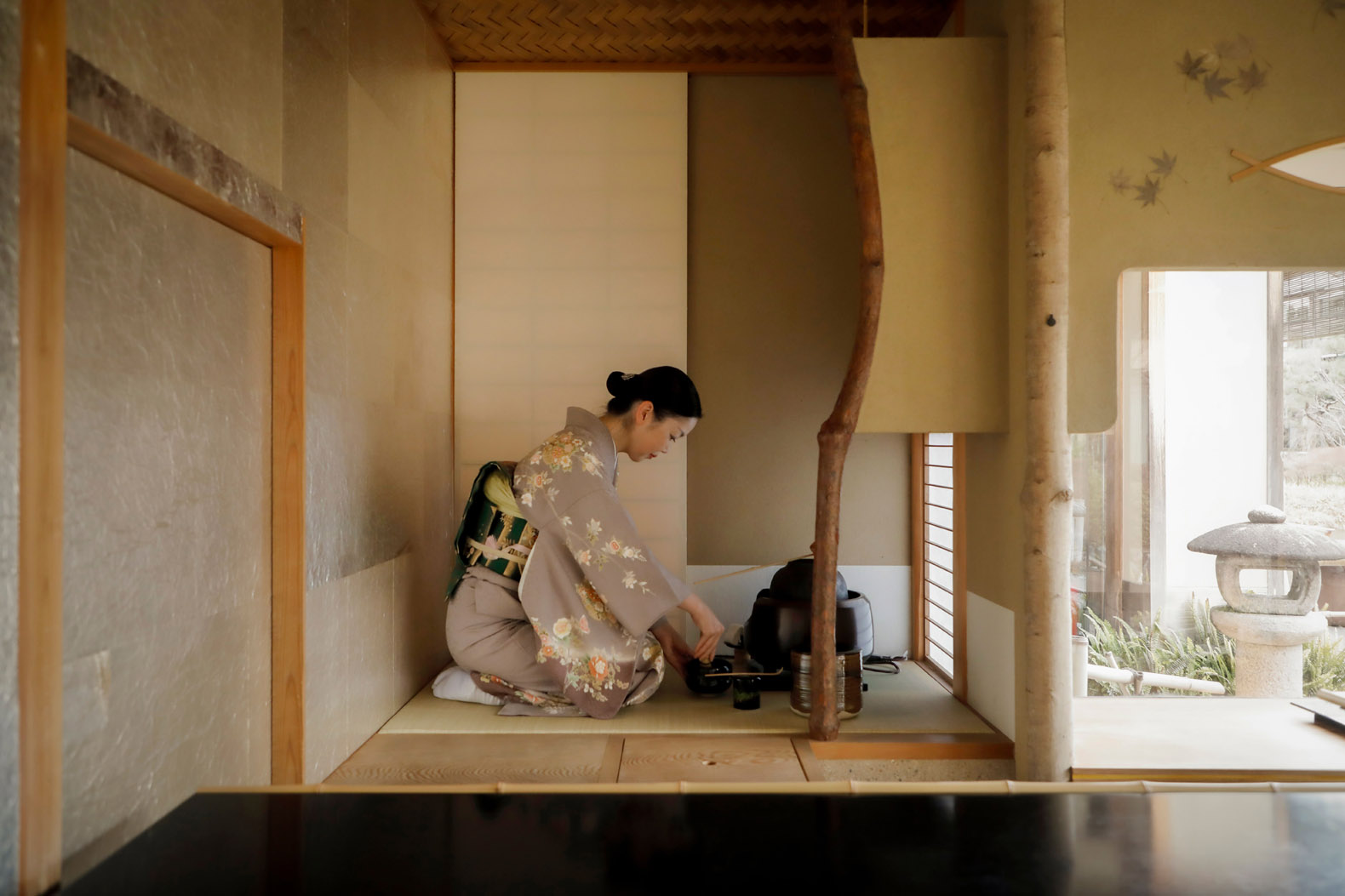
Matcha is having its moment, with the appetite for the beverage having grown exponentially outside Japan in recent years. Travellers looking for matcha and a meaningful, meditative cultural practice are able to immerse themselves through the art of chado (Japanese tea ceremony), deepening their appreciation through an experience that engages the senses on both a physical and a spiritual level. However, for visitors to Japan who don’t find the flavour of matcha to be quite their cup of tea, Japanese coffee culture might suit the palate. Inspired by 19th-century Western literary salons, retro-style cafés or kissatens invite quiet contemplation through attentive service and nostalgia-inducing Shōwa-era aesthetics often soundtracked by either classical music (meikyoku kissa) or jazz (jazz kissa). Almost always independently owned and operated, kissatens are the result of thoughtful and careful curation.
Here are five kissatens, each with its own distinctive vibe, to check out the next time you’re in Japan.
Elevated Elegance
Photograph by Ooki Jingu.
Koffee Mameya Kakeru (Tokyo): Reservations are required for this truly unique coffee establishment, more akin to an omakase tasting menu. Located a 10- to 15-minute drive from Four Seasons Hotel Tokyo at Marunouchi and Four Seasons Hotel Tokyo at Otemachi, it’s housed in a former warehouse and has recently hosted events with coffee growers from Brazil, Panama, and Santa Barbara, California.
Vintage Appeal
Monozuki (Tokyo): Time travel feels possible at Monozuki (founded in 1975), with its antique clocks that add to the mid-century charm of the venue, which focuses on black coffee. Just how old-school is it? Monozuki has no website or Instagram account. You can find it in real life at 3 Chome-12-10 Nishiogikita, Suginami City, Tokyo.
Hip and Moody
Gion Ishi Kissaten (Kyoto):Escape the crowds at Yasaka Shrine and enjoy a cup inside a distinctive Brutalist building that is also home to a jewelry, fossil, and mineral store (five minutes by car from Four Seasons Hotel Kyoto). The spot’s 1970s-style decor features impressive cypress-wood wall panelling.
Considered Design
Bread, Espresso & Arashiyama Garden (Kyoto):A 210-year-old thatched-roof home takes on a new life (with coffee beans roasted on-site) through the vision skillfully executed by the Kimoto Yosuke Architectural Design Room, which was shortlisted for the Sky Design Awards for its work. Patrons can choose from sitting Japanese style (shoes off, at low tables on the floor) or in the Western fashion, both with views of the stunning garden. Can’t make it to Kyoto? The cafe just opened its first U.S. outpost, in Redondo Beach, California.
Diner-Chic Charm
Iwata Coffee (Kamakura):A popular day trip from Tokyo, coastal Kamakura is home to Iwata Coffee, established in 1945. This café on Komachi Street has a long literary history (and was even visited by John Lennon and Yoko Ono). It specializes in “nel drip” coffee, a brewing method invented in Japan that brings out the flavour of the beans by filtering it through cotton flannel (or “nel”) for a mellow finish.
With a short and steady sweep, the therapist pushed the bamboo stick over my calves like a rolling pin working a lump of roti dough on a food cart’s counter. The scents of ginger and jasmine hung thick in the air. With every roll of the bamboo stick, I could feel the tension in my muscles loosen. When the therapist switched from the stick to her hands, she found my sore spots quickly, pressing her thumbs into tendons with pinpoint precision. The soft pling-plong tune of a wooden ranat ek, a traditional Thai xylophone, seeped from the speakers, droning in my head like a meditative hymn.
I was lying face down on a padded table inside the Urban Wellness Centre at Four Seasons Hotel Bangkok at Chao Phraya River, a dimly lit cocoon of dark woods and soft linens that feels worlds away from the city’s unending buzz. But the therapist’s routine, one of unfaltering kneads and gentle stretches, is a well-honed choreography I’ve encountered all over the country.
There are few cultures as synonymous with wellness as Thailand’s. Walk down any Bangkok soi (alleyway) or up any southern Thai beach road and the offerings are hard to miss: Foot-reflexology chairs line up on the pavement, and laminated menus advertise herbal compresses, Tiger Balm massages, and scrubs made with coconut oil and tamarind.
A floral milk bath at Tented Camp Golden Triangle. Photograph by Mailee Osten-Tan.
That ubiquity has deep roots. From its early beginning as a scattering of kingdoms to its growth into a multiethnic Southeast Asian powerhouse, Thailand has always sat at a cultural crossroads, and its wellness practices absorbed ideas as they passed through. Ayurvedic concepts of holistic health and inner energy pathways blew over from India, while Chinese migrants brought along acupressure techniques and herbal knowledge. Buddhism and indigenous animistic wisdom shaped spiritual beliefs and mental-health approaches. Over time, these influences fused into Thai Traditional Medicine (TTM), which still forms the foundation of Thai spa menus today.
“Wellness has long been part of everyday life here,” says Kotchaphan Mekloy, director of spa at Four Seasons Resort Koh Samui, a secluded, all-villa beach retreat on the palm-pinned northwestern tip of Thailand’s Koh Samui island. “It reflects the way Thai people have always lived, in close connection with nature and their community. Growing up, many families relied on home remedies passed down through generations. Our grandparents would warm herbal compresses of lemongrass and camphor to relieve muscle aches or drink infusions of pandan and galangal to boost immunity.”
But TTM’s fortunes weren’t always so rosy. As Western medicine gained ground in the 20th century, traditional Thai practices were increasingly dismissed as inadequate. Much of the ancient knowledge survived solely in homes and temples. It was only with the opening of Thailand’s first official school of Traditional Thai Medicine in Bangkok’s Wat Pho temple (home to Bangkok’s postcard-famous Reclining Buddha) in 1955 that TTM slowly reclaimed its stake in the modern healthcare system. Today, herbal remedies and massage therapies are taught and practised alongside modern medicine, and just last year, state hospitals began swapping select synthetic drugs for local herbal alternatives.
The flower garden at Tented Camp Golden Triangle. Photograph by Mailee Osten-Tan.
Stretch and Fold
Traditional Thai massage, or nuad phaen boran (ancient-style massage) as it’s locally known, is Thailand’s most emblematic wellness export. From marble-clad hotel spas to breezy bamboo salas on the beach, this stretch-heavy technique is so deeply embedded in the country’s spa culture that UNESCO added it to its Intangible Cultural Heritage list in 2019.
The recognition may be recent; the practice itself, with roots in Indian yoga and Chinese acupressure, is anything but. According to legend, Shivago Komarpaj, the northern Indian doctor who is said to have healed Buddha himself, laid the foundation for these yoga-like techniques some 2,500 years ago. References to massage therapies also appear in 13th-century stone inscriptions dating to the Sukhothai kingdom, the former capital of the Thai empire. A French ambassador to the kingdom wrote down his observations of “sick persons’ bodies being stretched and trampled under experts’ feet” back in the 17th century. Formal institutionalization came much later, with the launch of a Thai massage course at Wat Pho’s Traditional Thai Medicine School, which helped standardize techniques and train generations of massage therapists who would eventually carry the practice to almost every corner of the globe.
For guests accustomed to oil massages, the experience can come as a surprise. There’s no oil, for starters. Instead, guests change into loose-fitting pajamas and lie down on a padded floor mat rather than a raised massage table. The therapist works along sen lines (energy pathways), folding limbs into deep stretches, kneading muscles with elbows and forearms, and sometimes even using their body weight by stepping onto guests’ backs.
“It’s like yoga without doing the work,” says Mekloy. “A session should leave you feeling lighter and balanced. I often tell guests: ‘If you want to relax, choose an oil massage; but if you want to reenergize, try the traditional Thai massage.’ ”
The suspension bridge and lotus pond at Tented Camp Golden Triangle. Photograph by Mailee Osten-Tan.
Two of the resident elephants. Photograph by Mailee Osten-Tan.
Herbal Healing
If Thai wellness had a signature scent, it would be a blend of lemongrass, turmeric, and kaffir lime. These familiar notes are released when an herbal compress, or luk pra kob, is steamed and pressed onto the body, coating the skin in a dewy, citrusy warmth that relaxes muscles and melts away anxiety and stress.
Herbs have long played an important role in Thai healing. Roots, leaves, and peels were staples in village kitchens, where they were turned into poultices for aching muscles, balms to soothe inflamed skin, and infusions to restore appetite. “Many Thai herbs are anti-inflammatory: When they’re combined with heat and pressure, they help relieve muscle tension, improve blood circulation, and reduce swelling,” says Jutatip Sakulpanitcharoen, spa supervisor at Four Seasons Tented Camp Golden Triangle, which features 15 luxury tented accommodations set in the mountainous, elephant-populated far north of Thailand.
Luk pra kob treatments harness the herbs’ healing properties in tight, cloth-bound bundles, which are steam-warmed until pleasantly hot, then pressed across the body in slow movements. The heat opens the pores, allowing the active compounds to sink in more effectively, while the pressure boosts circulation. Herbal blends vary depending on the desired outcome: Turmeric fights inflammation and supports joint health, while plai, a close relative of ginger, is prized for easing muscle pain and swelling. At Four Seasons Resort Koh Samui, poultices with grated coconut help revive sun-damaged skin.
The scent, too, works wonders. “Certain aromas can relax the mind,” Sakulpanitcharoen says, explaining that dried pandanus, locally grown and unique to the Golden Triangle’s spa menu, helps release stress, while whiffs of camphor and bergamot can clear nasal congestion.
Muay Thai, or Thai boxing, may not belong to the Thai medicine kit in the traditional sense, but its benefits reach well beyond toned muscles and sharpened reflexes. Conceived more than a millennium ago as a battlefield combat between warring tribes, it has gradually earned its place in Thailand’s wider wellness landscape, sitting easily alongside body scrubs and Thai massages on treatment menus.
“Muay Thai is an excellent holistic workout,” says Somchai Homyok, a former professional fighter who coaches guests at Four Seasons Hotel Bangkok at Chao Phraya River, a resort-like urban oasis with sprawling swimming pools and rooms draped in creamy linens. “It engages the entire body, especially the cardiovascular system. But more than that, it requires absolute presence. You can’t throw a proper kick while thinking about your inbox.”
Known as the art of eight limbs (a nod to the use of fists, elbows, knees, and shins), Muay Thai evolved from military training into a spectator sport during the Ayutthaya era (1351 to 1767), when royal tournaments and matches at local festivals drew large crowds. Dedicated stadiums, such as Bangkok’s Rajadamnern Stadium, popped up all over Thailand after World War II, kick-starting a global popularity that still endures today.
Take away the spectacle, however, and the sport becomes, as Homyok puts it, “a form of active meditation.” Sessions typically begin with the wai khru, a deeply spiritual dance of respect to the opponent, before continuing with structured rounds that prioritize balance, timing, and technique. “While it may appear aggressive from the outside, a well-guided session focuses on proper biomechanics,” Homyok says. “It’s energizing, but it also clears the mental clutter.”
Wat Suan Dok, Chiang Mai. Photograph by Mailee Osten-Tan.Fresh herbs, flowers (including the Chulalongkorn rose) and rice farmed on-site are used in spa therapies at Four Seasons Resort Chiang Mai. Photograph by Mailee Osten-Tan.
Mind Over Matter
Whether it’s a Muay Thai workout or traditional massage, sati (mindfulness) is a thread woven into almost every Thai wellness repertoire. It lingers in the stillness after a session or the therapist’s instructions to “take a deep breath” before they start stretching.
“Meditation and mindfulness are at the core of Thai wellness. They’re traditionally rooted in Buddhist practice and were used to cultivate inner calm, mental clarity, and spiritual balance,” says Dheeraj Singh Patwal, health and wellness manager at Four Seasons Resort Chiang Mai, where teak-wood buildings inspired by northern Thailand’s Lanna heritage are set amid bamboo forests and rice paddies.
In Thailand, these practices are more inclusive than ever. Temples such as Bangkok’s Wat Mahathat Yuwarat Rangsarit and Wat Suan Dok and Wat Umong in Chiang Mai have evolved into meditation centres where everyone, Buddhist or not, is welcome to give mindfulness a try.
At Four Seasons Resort Chiang Mai, Patwal brings a similar spirit of openness into the spa’s wellness programming. He organizes chats with monks from the nearby Wat Pa Dara Phirom temple, where guests take part in incense offerings, listen to chants, and discuss Buddhist teachings about the purpose of life before drifting off in a guided meditation.
For those who prefer something more physical, there are sunrise yoga sessions overlooking the resort’s rice fields, as well as guided pranayama breathwork workshops designed to calm the nervous system and release emotional tension. “It doesn’t have to be a rigorous spiritual undertaking,” Patwal says. “Even a short experience can spark insight, a new way of noticing emotions or a deeper awareness of the body. It’s about carrying a small but lasting bit of peace and presence back home.”
For seven consecutive years, the Art Deco–style Bar Trigona at Four Seasons Hotel Kuala Lumpur has earned recognition as one of Asia’s 50 Best Bars. Under the creative direction of head bartender Rohan Matmary, who also serves as the hotel’s beverage manager, the bar distinguishes itself not only for its unforgettable cocktails, but also for a deep commitment to local ingredients and sustainability. Through its Tree-Volution initiative, the property supports tree planting in Malaysia, including at Trigona Farm, which grows produce exclusively for Bar Trigona.
Originally from Mumbai, India, Matmary brings both innovation and heart to his work, along with a love of Malaysia’s capital city. “Kuala Lumpur has a sense of community,” he says. “There is a unique joy and unity in the way people of different origins come together to celebrate the country’s rich heritage.”
Below, he shares his favourite go-to spots in Kuala Lumpur.
Matmary at Bar Trigona
Neighbour Club by JWC: “This is one of my favourite coffee spots. What sets them apart is the way they approach coffee with the kind of precision you would expect in a cocktail bar, yet they make it accessible to everyone. I also admire that they highlight locally sourced Malaysian coffee, which is still relatively rare to find in cafés across the city.”
Bar Trigona at Four Seasons Hotel Kuala Lumpur
Bar Trigona: “One of the initiatives I am most proud of is Bar Trigona’s Single Origin section on the cocktail menu. Each drink in this series celebrates a single ingredient harvested at Trigona Farm, using every part of the plant. A recent standout is Banana, built entirely around the Pisang Mas tree. We vacuum cook the fruit with Tuak, a traditional Malaysian rice wine, to create a light yet complex serve that has quickly become a symbol of Bar Trigona’s new identity: cocktails that are conscious, creative, and deeply connected.”
The Penrose team
Penrose: “Among my favourite [bars] is Penrose, where the hospitality is consistently warm and the cocktails are crafted to an international standard.” (Matmary notes that he also enjoys Three x Co and Cabinet 8, “both of which bring a refined touch to mixology,” and “for a distinctly Malaysian perspective,” he says, “I often turn to Coley and Reka.”)
Ruma: “I find inspiration in Ruma, a Malaysian brand that draws on Scandinavian minimalism. Their designs are simple yet sophisticated.”
The 140-foot-tall Murugan statue at Batu Caves. Photograph by Ravin Rau / Unsplash.
Batu Caves: “I enjoy starting my mornings here. Arriving early, when the air is cool and filled with the aroma of morning dew and temple rituals, creates a serene atmosphere. The 272-step climb feels both invigorating and rewarding, offering a perspective of the city that is hard to match.”
Thean Hou Temple in Chinatown
Chinatown: “One of my favourite experiences [offered by Four Seasons Hotel Kuala Lumpur] is Evenings in Chinatown, which brings together the energy of a hip neighbourhood with the rich food-and-beverage culture that makes Kuala Lumpur so unique.”
A signature snack (with chayote paste and wild mango) inspired by Rajah Brooke’s Birdwing, the national butterfly of Malaysia, at Dewakan
Dewakan: “This is [among] my most recommended dining experiences in Kuala Lumpur. The tasting menus celebrate local harvests with creativity and finesse, using indigenous ingredients in thoughtful, seasonal expressions. The setting on the 48th floor, with sweeping city views, makes it an experience that feels both rooted in Malaysia and elevated to a global stage.”
Nadodi:“The restaurant resonates with me on a cultural level, as it reimagines the flavours of South India in an avant-garde style. It delivers refined, region-inspired curations that feel both personal and innovative. Overlooking the [Petronas] Twin Towers, it creates an intimate setting that beautifully balances heritage with modernity.”