What to Do in Jakarta: A Furniture Designer Gives a Tour of His Hometown

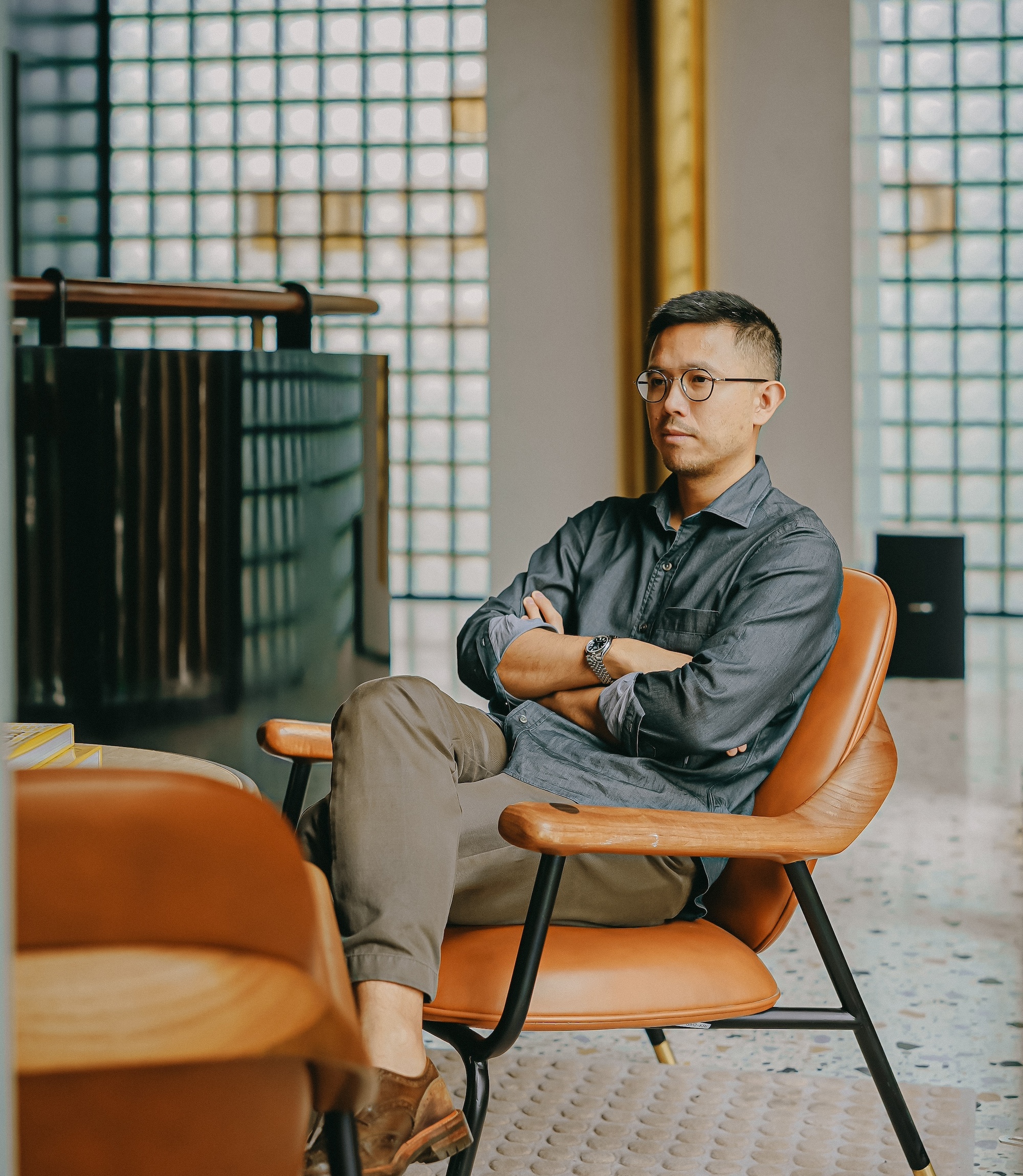
Alvin Tjitrowirjo creates poetic beauty out of the underappreciated. Since opening his studio AlvinT in 2006, the Jakarta-based designer has distinguished himself by his sculptural, refined furniture made of rattan. Derived from various species of quickly growing climbing palms, rattan has long been deeply associated with Indonesian culture. Tjitrowirjo’s mission is to elevate and prize this sustainable material amid the daily onslaught of cheap, modern consumerism. “It’s not just about making beautiful products; it’s about developing a new type of awareness of rattan as a valuable heritage material,” says Tjitrowirjo, who works with several communities of rattan weavers and farmers across Indonesia. We asked him to share his insider guide to his hometown.

Shop
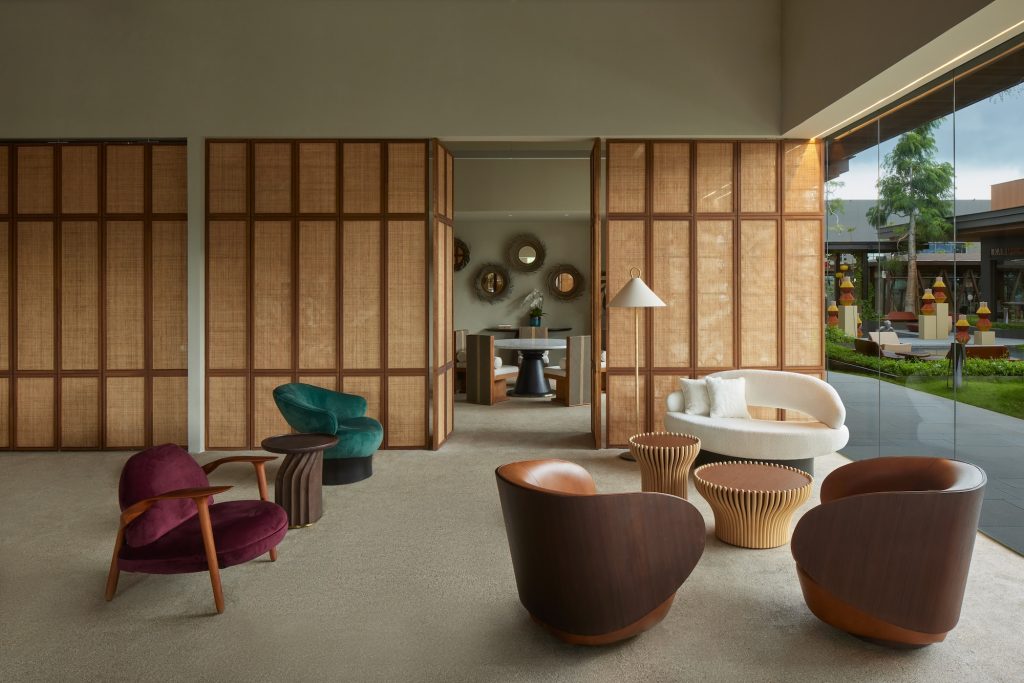
AlvinT Gallery, Photograph by Martin Westlake
AlvinT. Photograph by Martin Westlake.

Indonesia Design District: “We recently opened a gallery [here]. There are about 100 tenants—furniture, lighting, everything for the home centralized in one curated complex.” 
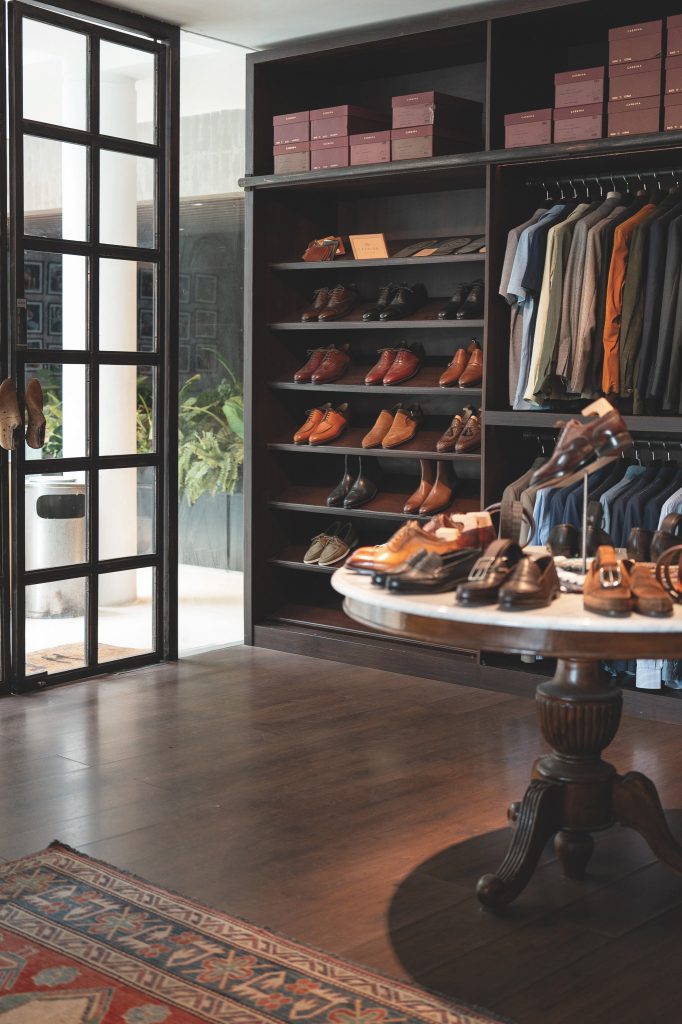
Archie in Jakarta
In addition to a great selection of men’s shoes, Archie offers custom tailoring.

Archie: “[The menswear store] is cool for their collection of Alden [shoes]. I’m a big fan.” 

Sejauh Mata Memandang: “I like this [lifestyle brand] for their level of creativity in exploring batik, as well as their activism toward protecting the planet. They also now make denim out of recycled used denim.”  

Do
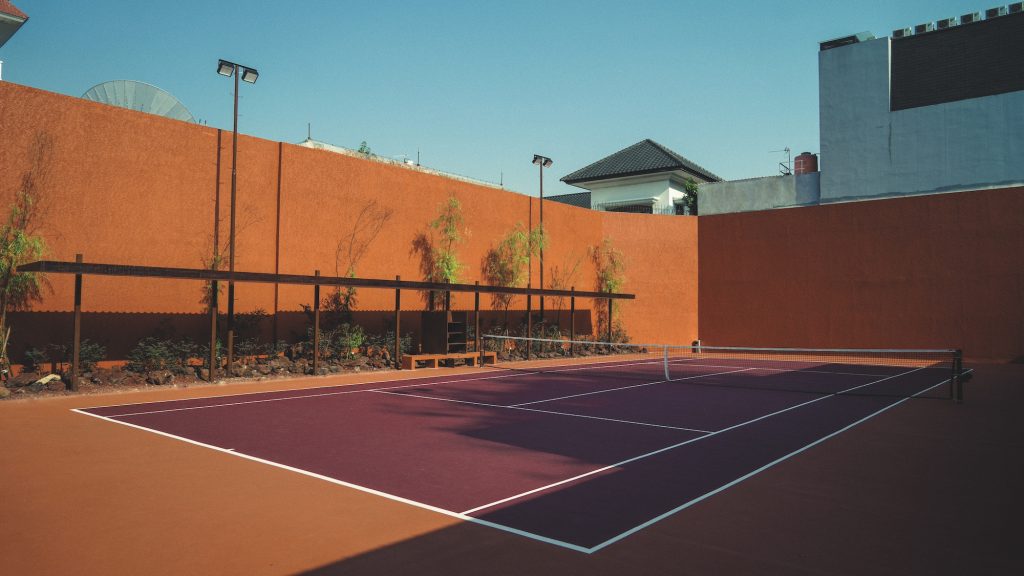
Common Grounds, Terra Menteng Tennis Club

Terra Menteng Tennis Club: Common Grounds, “one of the pioneers of specialty coffee in Jakarta since 2015,” recently opened up a cafe-cum-tennis-club. “My favourite beans are Aceh Gayo, which balance between burnt chocolate and nutty with a slight bright citrus.” 

Kota Tua: “Built by the Dutch, Old Town is filled with canals and squares and surrounded by charming colonial buildings. The northern part is filled with old mom-and-pop shops.” 

Eat
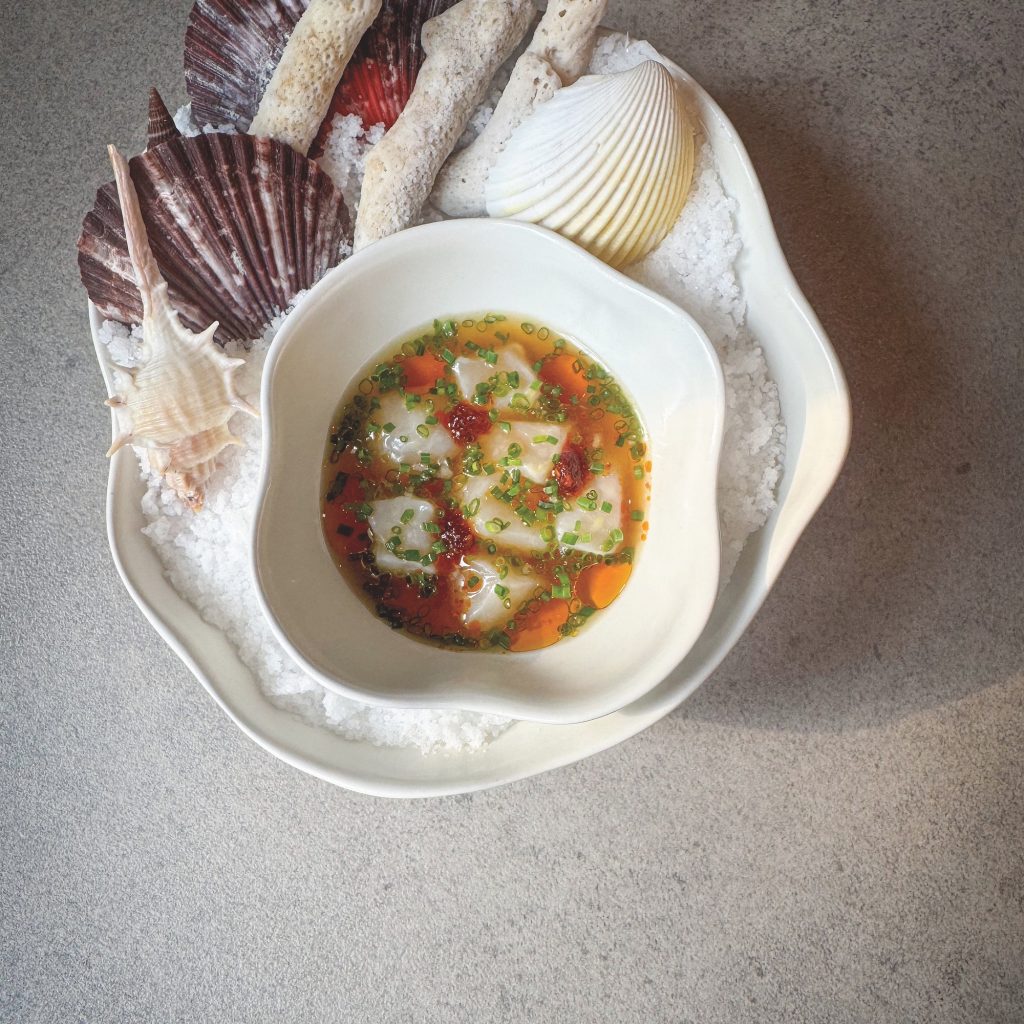
Scallop Pindang in Preserved Chili at August
Marinated Yamanaka scallops at August.

August: “One of the forerunners of bringing Indonesian cuisine to the next level—with a little bit of a French twist. They have [the dish] Foie PB&J, and their lamb loin is delicious.” 

Pierre: “Located in Jakarta’s central business district, this French restaurant by the Union Group has an excellent quality of food and a classical European interior that won’t go out of style. The lounge bar is a nice place to get a good dose of socializing.” 
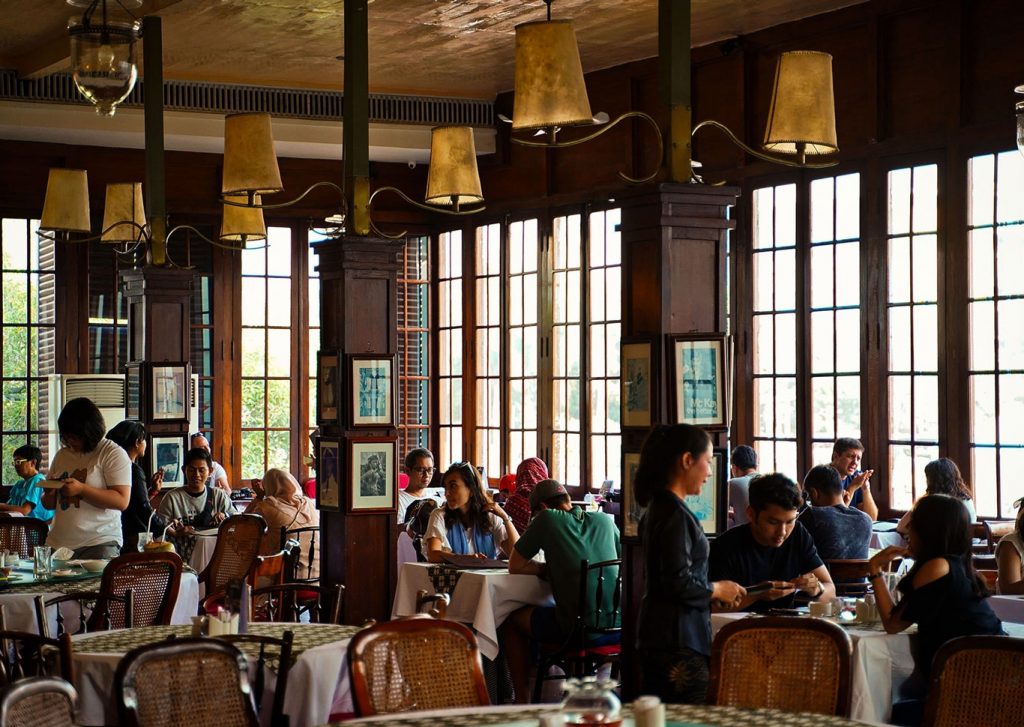
Cafe Batavia
Café Batavia is one of the oldest restaurants in Indonesia.

Café Batavia: “It used to be an office of the Dutch East India Company. I love how they have kept the original teak bar and floors. I always go for a window table to witness the chaotic and dynamic movement of people in [Old Town’s] Fatahillah Square.” 

Bakmi Pulau Laki: “One of my favourite noodle [shops] is located in a neighbourhood where all the street names are names of islands in Indonesia. It’s a place to go for lovely, fresh handmade noodles with minced pork and chicken and fresh pork wontons.” 

Drink
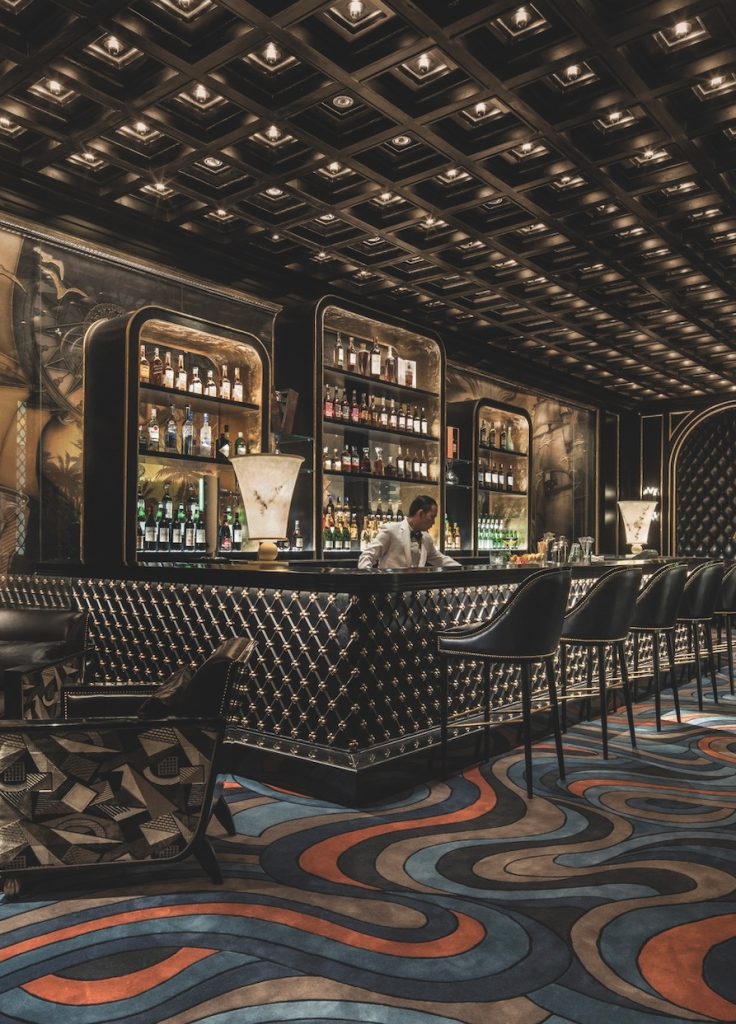
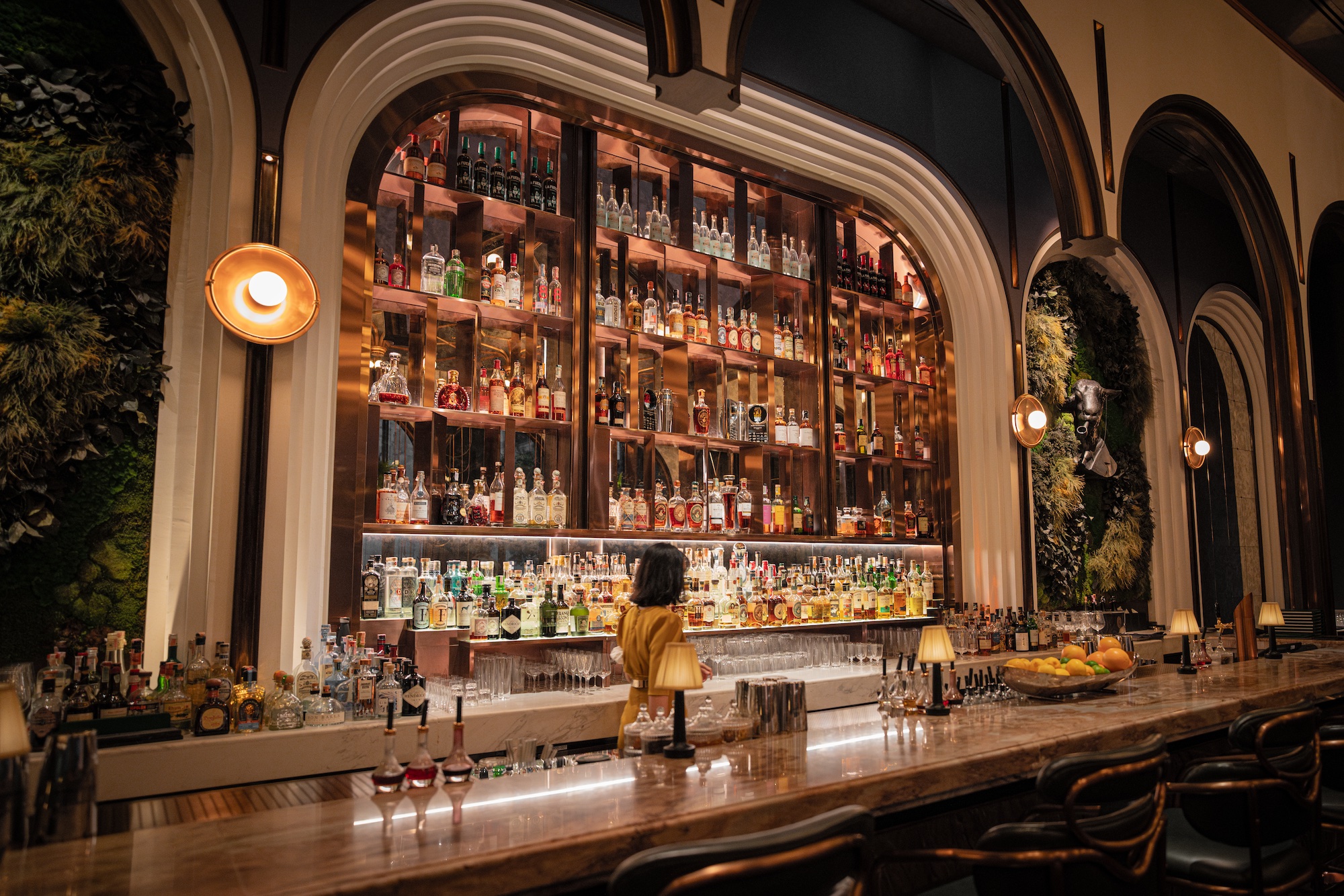
Four Seasons Jakarta, Nautilus Bar

Nautilus Bar at Four Seasons Hotel Jakarta: “The moody interior, combined with the grand piano, is a good [respite] from the hustle and bustle of Jakarta.” 
The Talk of Tokyo: An Interview with Chef Daniel Calvert

At just 37 years young, Daniel Calvert has amassed more accolades than most chefs would accrue in several lifetimes. After spending his formative years sharpening his talent under the tutelage of legends like Thomas Keller and Éric Fréchon, Calvert opened Sézanne within Four Seasons Hotel Tokyo at Marunouchi in 2021, cooking French cuisine with a spotlight on seasonal Japanese ingredients. Sézanne now holds three Michelin stars and recently clinched the seventh spot on the World’s 50 Best Restaurants 2025 list. We caught up with the celebrated chef for a taste of his approach to the culinary arts.

Sezanne
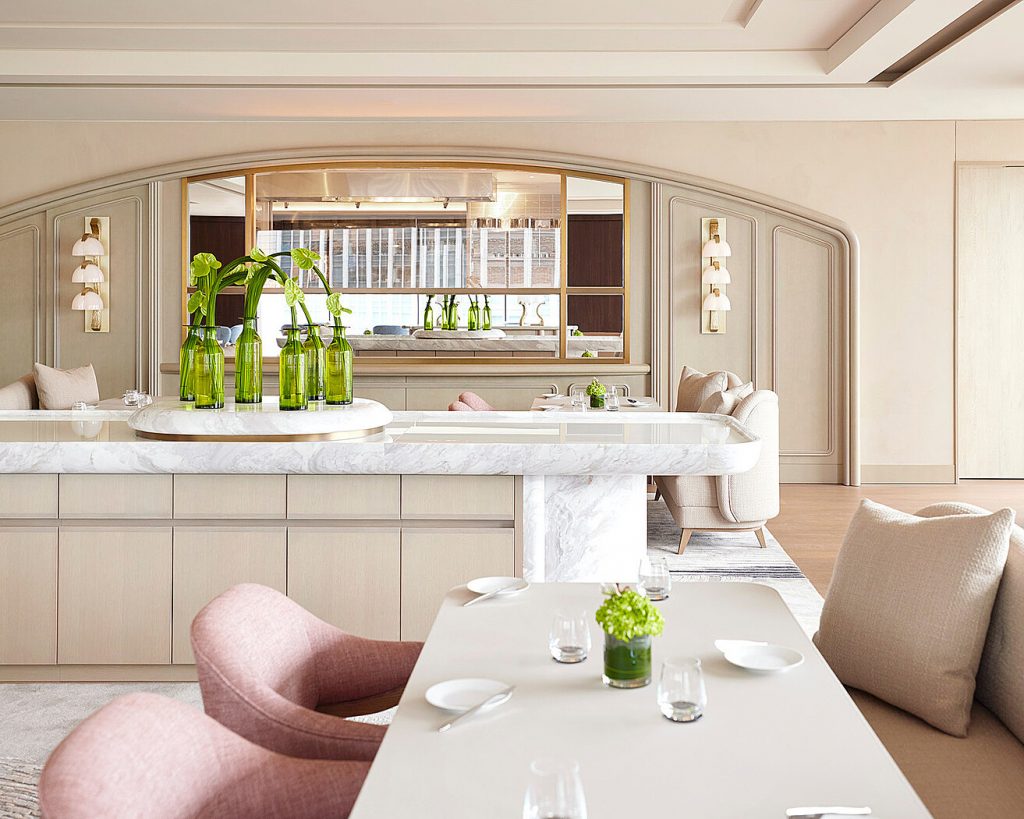
Sézanne’s light and airy dining room.

Q: Congrats on Sézanne being named the seventh-best restaurant in the world. What does that mean to you personally?  

“You know, we don’t do a whole lot of marketing or media at Sézanne, so to be organically nominated at this level really means a lot to me. [The voters were] industry people, chefs, writers, journalists, foodies, all these kind of people who are well-dined. And to be honest, just to be in the top 50 is enough for me. 

“I didn’t expect ever to get to the top 10. [But] I don’t really think about it, nor does it go [to] our heads. We come in the next day, we do our job, and we try to keep standards high, and that’s it.” 

Q: Is there a recent dish that diners particularly loved?  

“I mean, we do a lot of crazy stuff [with] beautiful, expensive ingredients, but when people say to me, ‘Wow, that corn soup that you served was amazing,’ that makes me feel like I’ve done my job. Anyone can put some caviar on top of something or serve a bunch of truffles, and it’d be impactful. But if I can impress someone with a bit of sweet corn…”

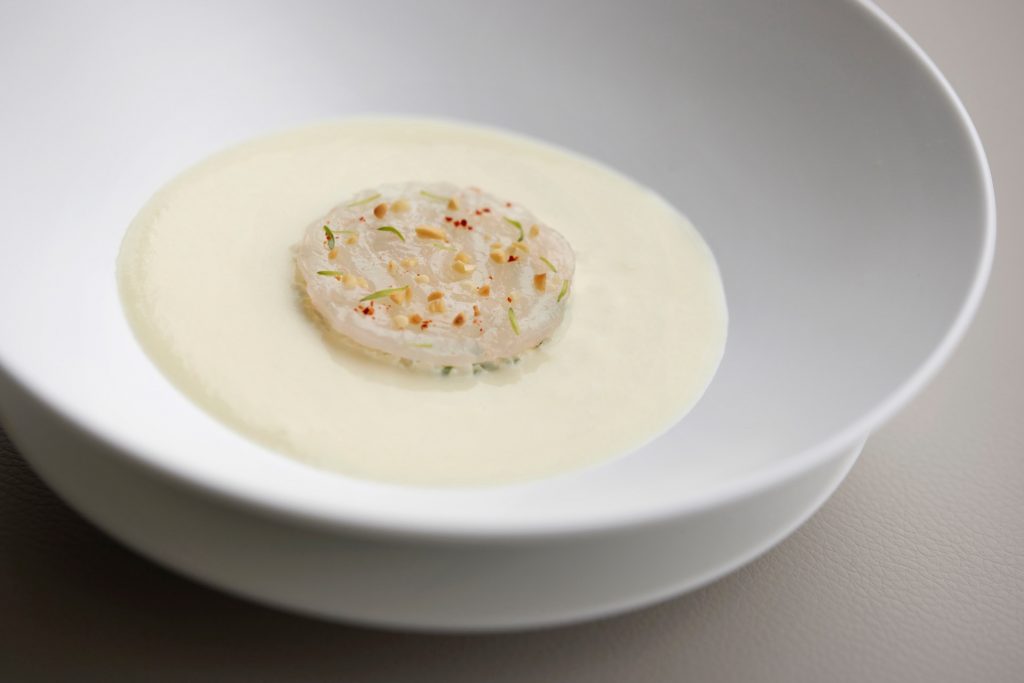
White Asparagus Soup at Sezanne
White asparagus soup with shiro ebi (white shrimp) and Piedmont hazelnut.

Q: How often do your menus change?  

“Very often, because we go to the markets very often in Tokyo. The seasons move very quickly in Japan. It’s a very long country, just like Italy. So you kind of start the season down in the south, and you’re chasing the season all the way up to the north.

“We are always looking for the next great product. And it’s a full-on process. It’s not just write a menu and I sit in my office all day like a lot of executive chefs, I’m sure. I actually don’t even know what my office is anymore. I think someone else has that office. Actually, last night someone referred to it as Ashley’s office, who is my sous-chef. I take that as a compliment.”

Q: What’s an exciting ingredient right now for you?  

“We’re just moving into matsutake mushroom season. Japanese people actually prize it more than a truffle.” 

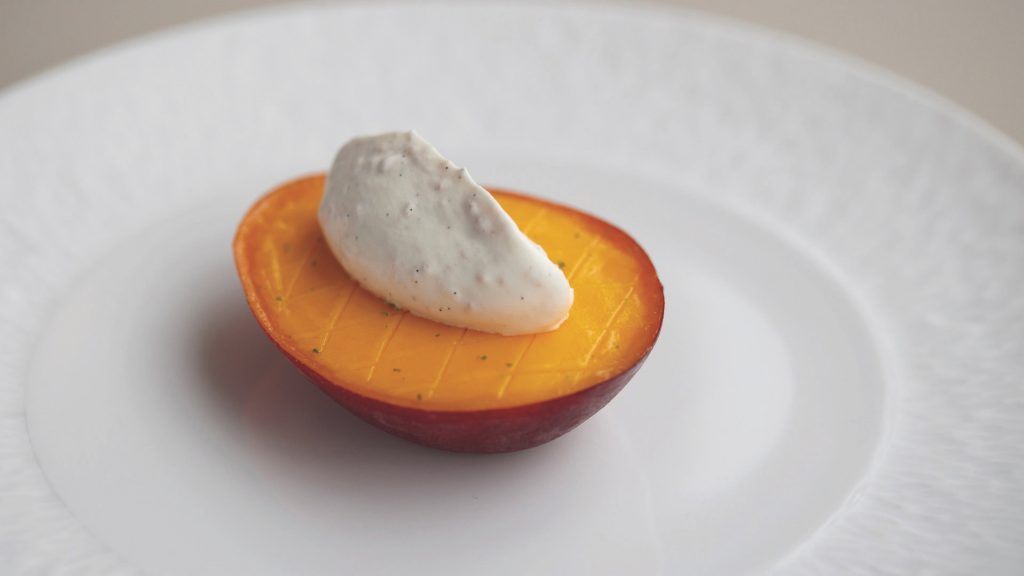
Miyazaki Mango at Sezanne
Miyazaki mango with shortbread “crème Chantilly.”

Q: How does luxury work its way into the equation at Sézanne?  

“To me, luxury is coming into the restaurant and having a team of people who are here cooking for you, to order, when you arrive. That’s why you go out for dinner, right? You don’t go out to dinner because everything’s pre-prepared and just reheated.” 

Q: What do you like to cook at home for yourself?  

“Well, my wife cooks at home. She’s a one-pot wonder. I’m not allowed to cook—I make too much mess.” 

Q: What’s a memorable dish that you’ve had?

“Not really a dish, but when I moved to Hong Kong from Europe, I’d been working in fancy restaurants for my whole career. And I thought this was the way things have to be done. It has to be French; it has to be three Michelin stars; it has to be this. Japanese food and French food are always put on a pedestal, but at that point, Chinese food was not celebrated as it should have been. There’s just a whole world of techniques and ingredients and processes that are worthy of attention.”

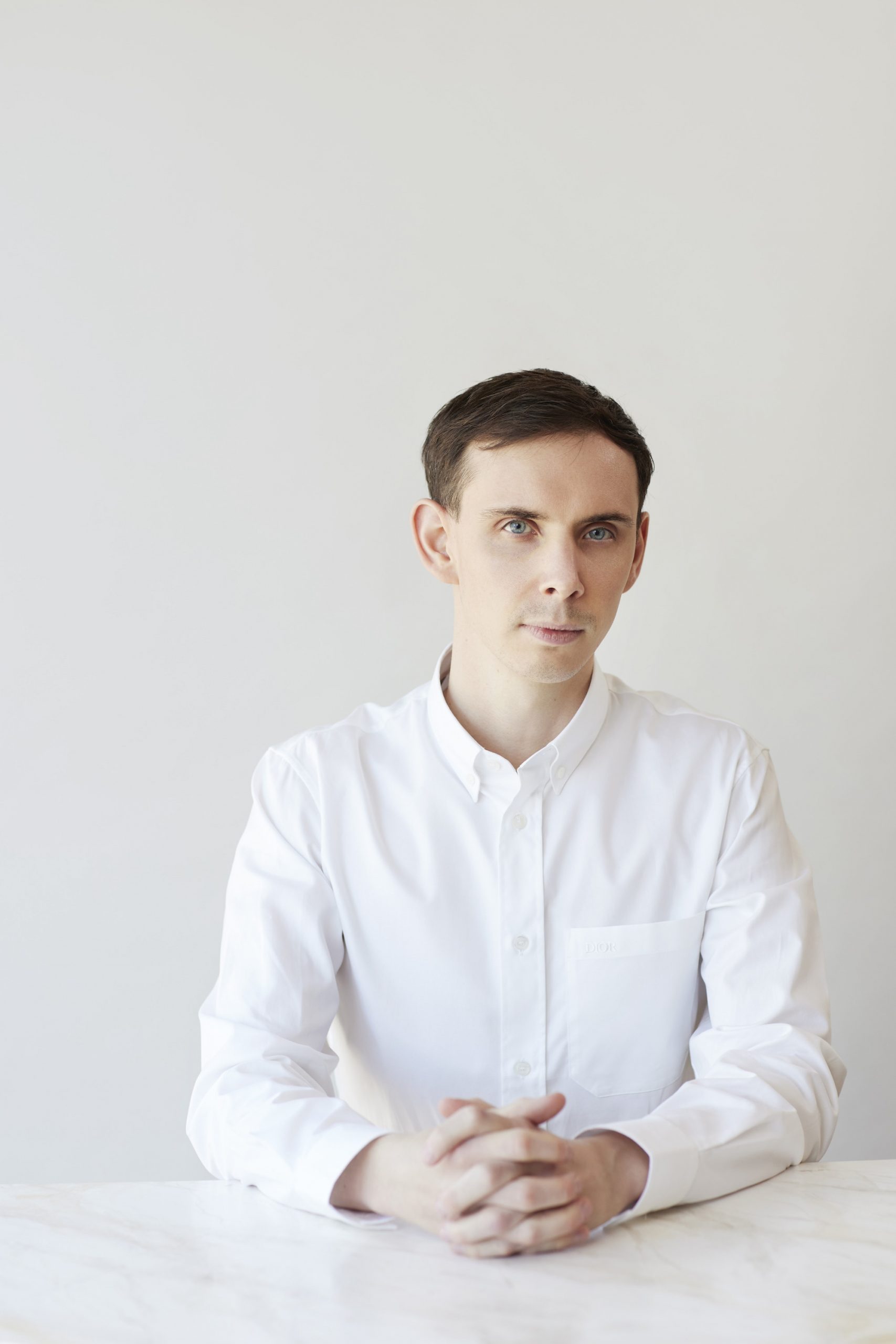
Sezanne's Daniel Calvert
Chef Daniel

Q: I read your first job was at 16 and you offered to cook for free. Is that true? 

“Yeah, actually, [I was] 15. I gave up my six-week school holiday to work for free because I wanted to get experience. I left school the following year. It really gave me a foot in the door. Looking back now I can’t believe I gave up so much of my holidays to work for free, but I guess that’s what successful people do.”

For more on award-winning restaurants at Four Seasons, head here.

What to Do in Bangkok: One of the World’s Best Chefs on Her Favorite Haunts

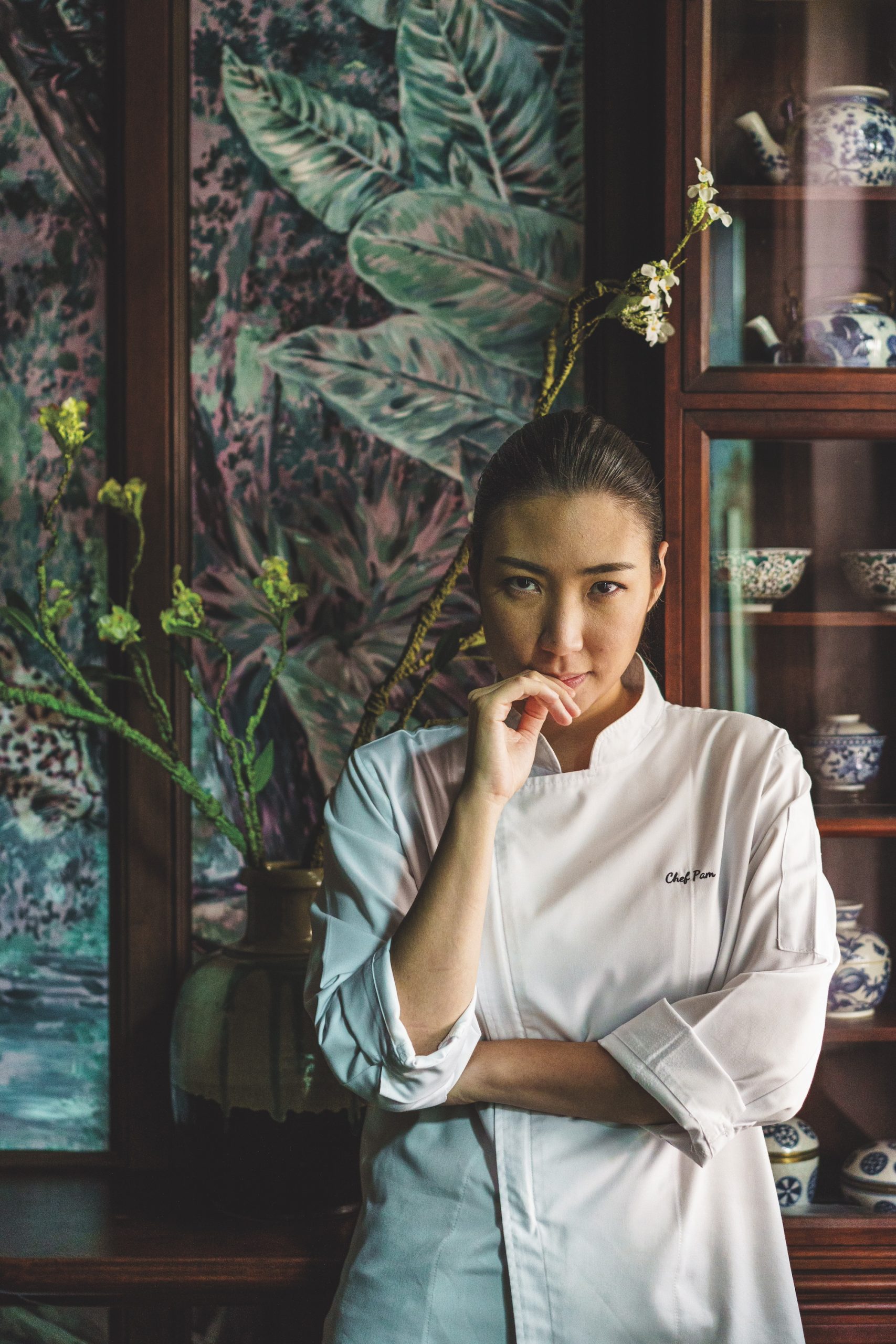
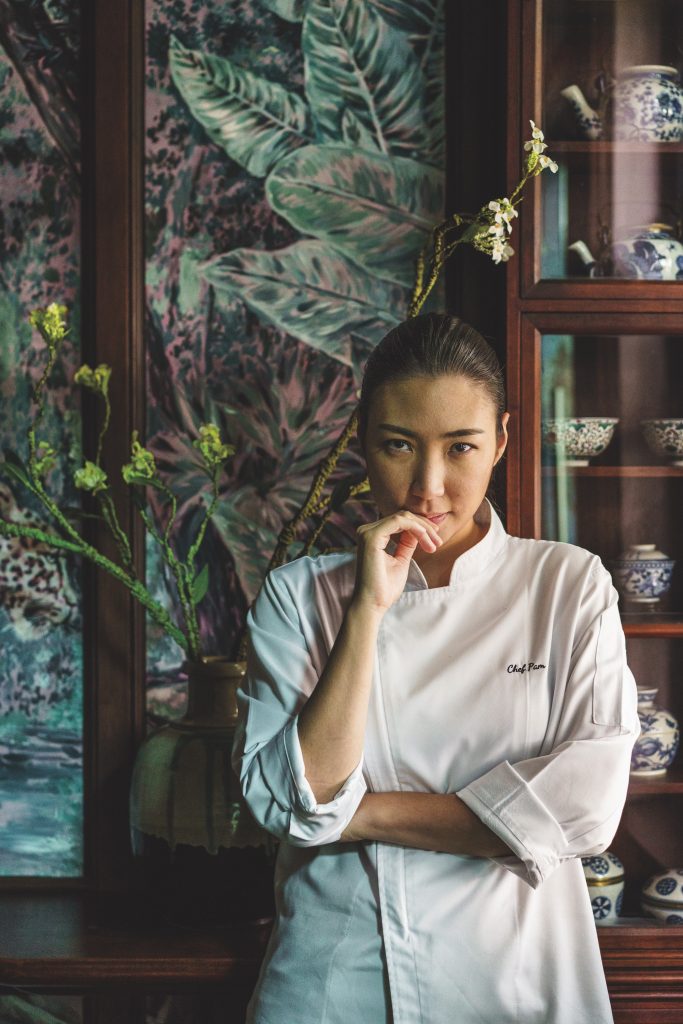
Pichaya “Pam” Soontornyanakij, known as Chef Pam, is the Thai chef and restaurateur behind Potong, her 36-seat fine-dining flagship in Thailand’s capital city. Recently named the World’s Best Female Chef by the World’s 50 Best Restaurants, she is the first Asian chef to win the title—the latest of many accolades she has earned since winning Les Disciples d’Escoffier’s Asia Youth Hope Cooking award in 2011.

Raised in Bangkok with Thai, Chinese, and Australian heritage, Chef Pam studied at the Culinary Institute of America, then honed her budding talent at Jean-Georges, the New York City flagship of chef Jean-Georges Vongerichten. There, his “philosophy of food” influenced her, she says. “It was eye-opening to see that Thai ingredients could combine with butter and cream and create new flavours with new complexities.”

Potong in Bangkok
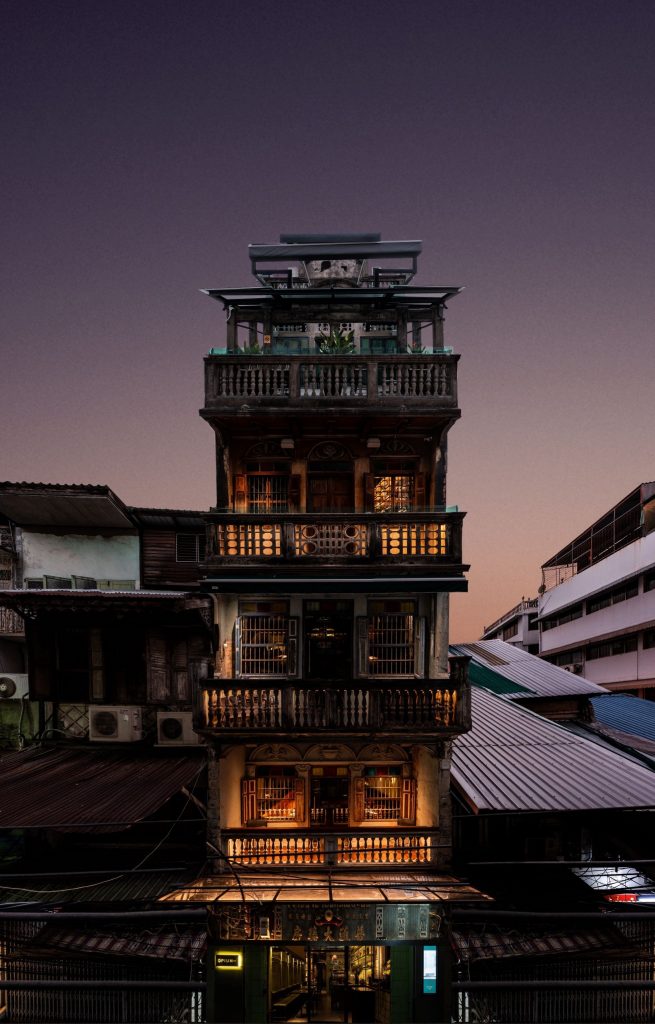
This building that is now home to Potong once housed Chef Pam’s family’s herbal pharmacy. Photograph by DOF Sky/Ground.

It’s a lesson she’s applied to her growing empire of Bangkok restaurants, comprising Potong—No. 13 on the World’s 50 Best Restaurants 2025 list—which she opened in 2019 in the building that had been her family’s century-old pharmacy; Opium, a hidden bar in the same building; Khao San Sek, a casual Thai eatery; Tora, a Japanese izakaya; Smoked, for Texas-style barbecue; La Copita, a new agave bar; and her latest, Ra-O, a reimagined Thai grill. Here, she shares some of her other favourite places in and around Bangkok.

Eat

Chef Pam, Photo by Chris Shalkx
Chef Pam. Photograph by Chris Shalkx.

Sai Nam Phueng Noodle Shop:Rung Rueang is my favourite noodle place, but everyone knows about it and it’s always busy. The other noodle place I love, Sai Nam Phueng, is very underrated and not as well known. It’s a simple, family-run place where everything is done well, especially noodles with stewed chicken wings. It’s addictive. I always have three bowls.”

Nusara: “My favourite Thai restaurant is right across from Wat Pho, and when you dine, you’re looking out onto the temple illuminated beautifully at night. My favourite dish is their take on pad krapow stir-fried beef with Thai holy basil, only they make it with short rib so it melts in your mouth.”

Visit

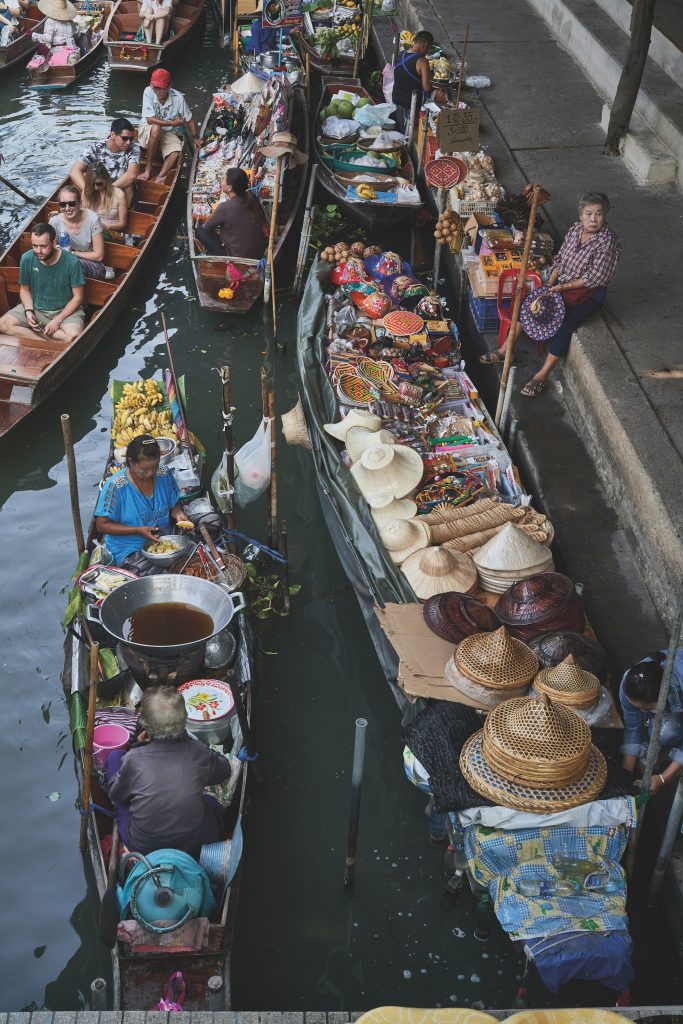
Damnoen Saduak Floating Market in Bangkok
Damnoen Saduak Floating Market. Photograph by Norbert Braun/Unsplash.

Damnoen Saduak Floating Market: The famous floating market, just southwest of Bangkok, has become a huge tourist attraction, but Chef Pam recommends visiting if you want “to see how things were…when they [traded] on the canal.”

Song Wat Road: “This up-and-coming area in Chinatown, very close to Potong, has a lot of history. Centuries ago, it’s where boats and ships came to trade their goods. Today, the area has become very hip because a new generation that appreciates the history has converted old warehouses into cafés, galleries, and shops. Locals and tourists who appreciate the culture and heritage are coming. People don’t want to go to malls anymore; they want to see local coffee roasters and local chocolatiers. There’s a strong neighbourhood vibe—Song Wat was just named [one of] the coolest communities in the world.”

Koh Kret: “When someone visits me and wants to do something new, I take them to Koh Kret, a tiny island an hour from Bangkok, where they specialize in clay pottery and speak their own language. A one-minute boat ride across the river, it’s like a country within Thailand. We’ll go to Chit Beer, a craft brewery.”

Stay

BKK Social Club at Four Seasons Hotel Bangkok at Chao Phraya River
BKK Social Club.

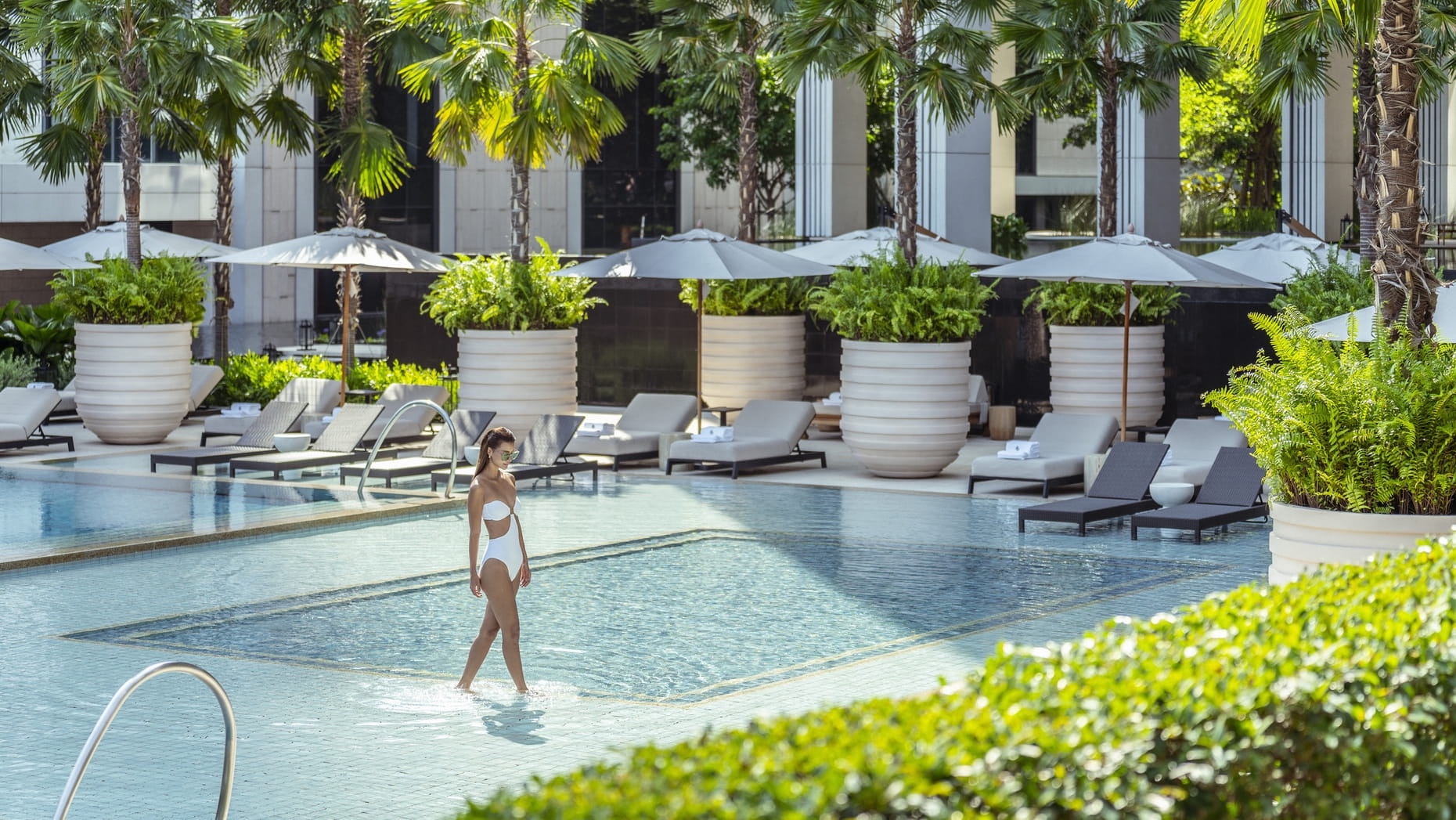
Four Seasons Hotel Bangkok at Chao Phraya River: “Every time I go to the hotel, I’m greeted by name. I feel the warmth. I love BKK Social Club, where [beverage manager] Philip Bischoff is so welcoming; he’s become a good friend. He comes to our bars, and I go to his. I don’t place an order—I have whatever he mixes for me. And Cafe Madeleine is also amazing: [executive pastry chef] Andrea Bonaffini’s pastries taste as good as they look.”

Four Seasons Hotel Bangkok

The Culture Cut: A Museum Opening, the Return of Gold, and Other Spottings from Around the World

Heads up: there’s a new gold rush coming; the Middle East is the hot place to be for art lovers; and Hawaii has two just-opened, must-try sushi restaurants. Here’s what’s on our radar from the world of art, culture, style, and fine dining.

See

Richard Serra in Qatar
Serra’s East-West/West-East sculpture.  Photograph by Iwan Baan, courtesy of Qatar Museums.

Art in the Desert: Extraordinary public art pops up all over Qatar’s capital city of Doha—home to both Four Seasons Hotel Doha and Four Seasons Resort and Residences at the Pearl-Qatar. But two unexpected monumental sculptures are worth seeking out in the country’s remote desert. Richard Serra’s steel monoliths loom over the sands of the Brouq Nature Reserve, while Olafur Eliasson’s Shadows Travelling on the Sea of the Day in Al Zubarah uses mirrors and metal rings to create a disorienting yet dazzling experience. —Nicola Chilton  

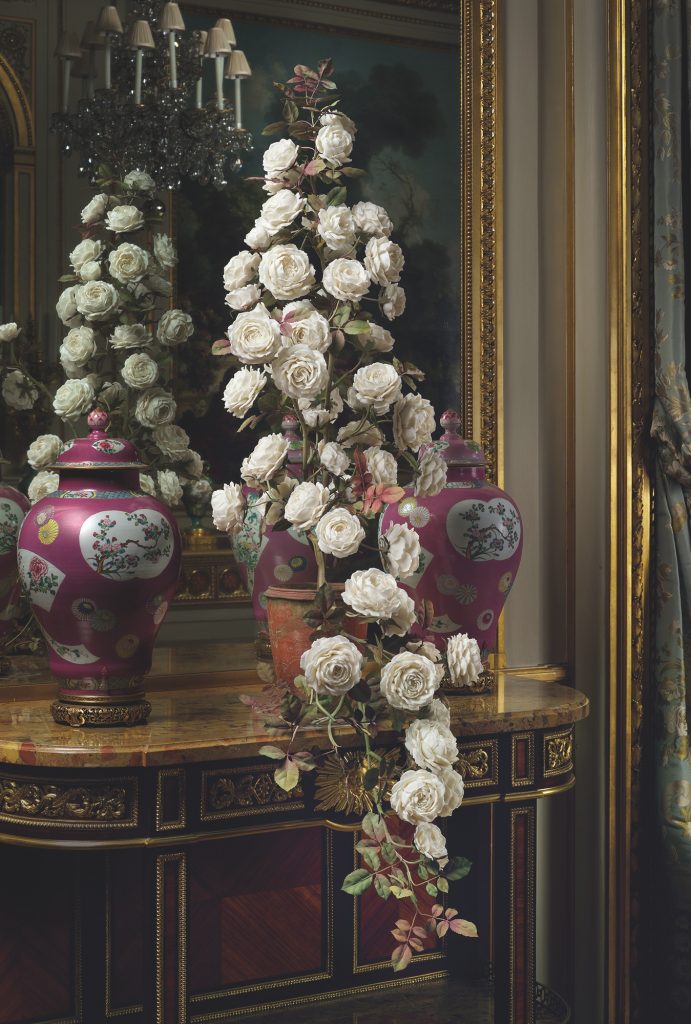
Cascading Roses at the Frick
Porcelain roses at the Frick. Photograph by Joseph Coscia Jr./The Frick Collection.

The Frick Collection: The storied New York City museum has emerged from a glorious renovation of its Beaux-Arts building and gardens, welcoming visitors to the second floor for the first time and featuring an exhibit of porcelain flower works by sculptor Vladimir Kanevsky. Located on East 70th Street between Madison and Fifth avenues, the esteemed museum is just blocks away from Four Seasons Hotel New York City. 

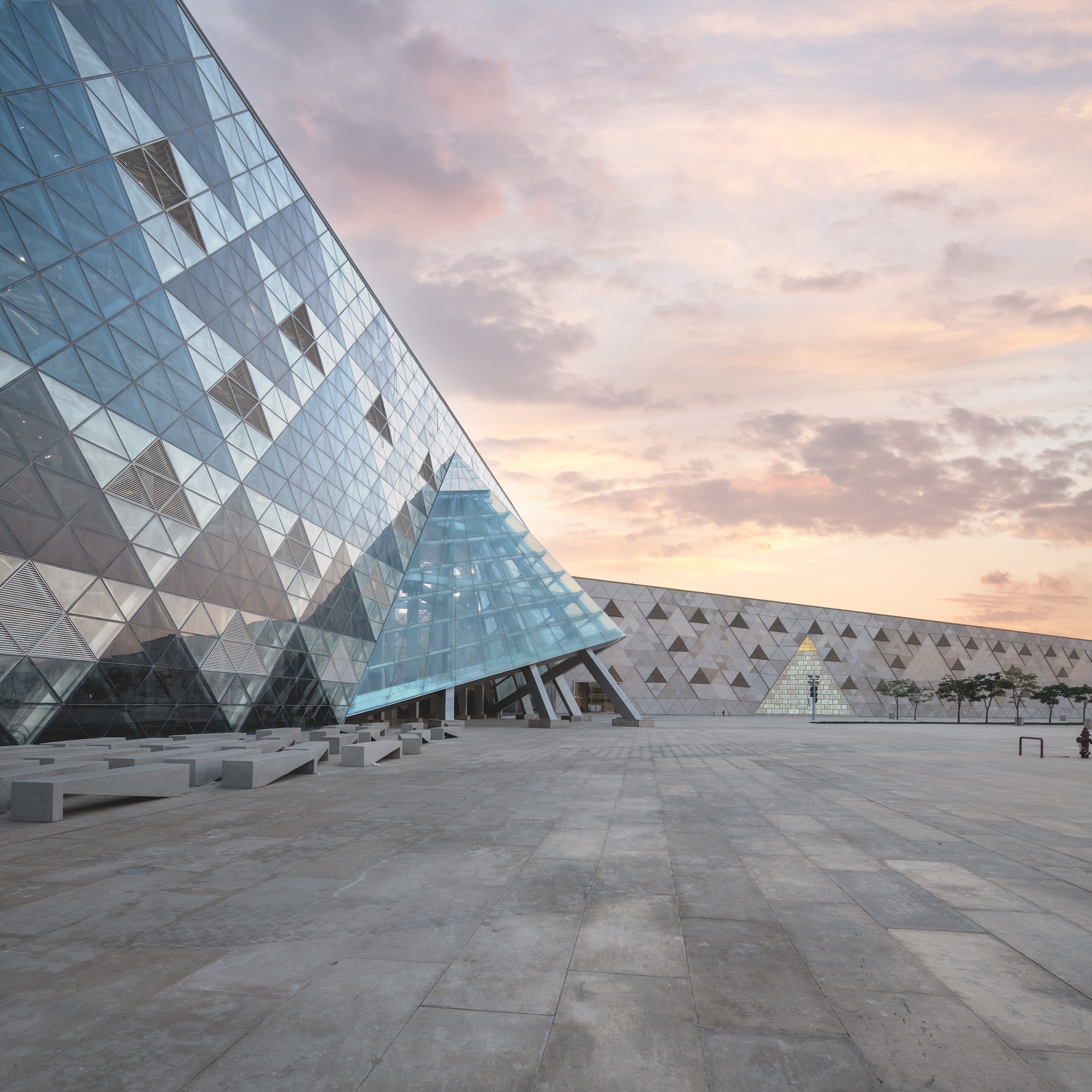
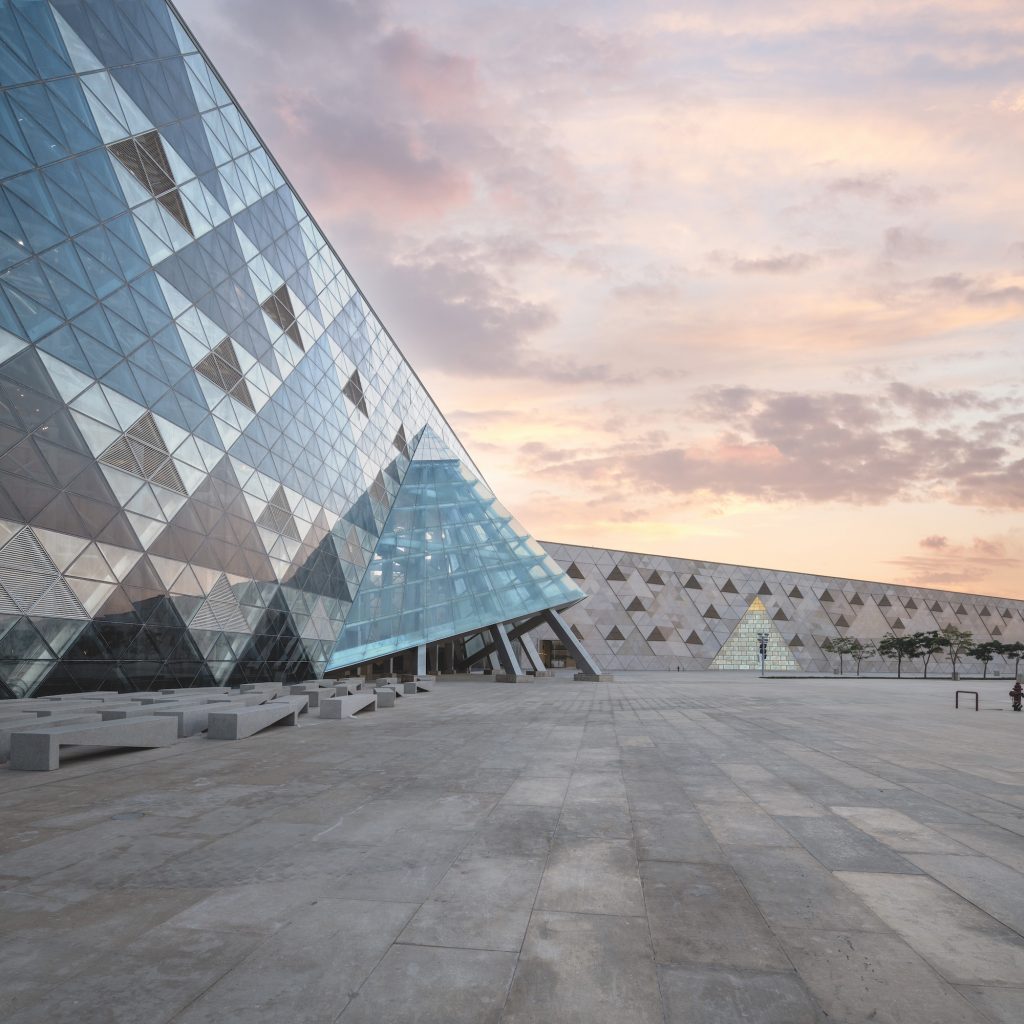
Grand Egyptian Museum
The Grand Egyptian Museum

Grand Egyptian Museum: After a partial debut last fall, the GEM celebrates its highly anticipated full opening this November. Housing more than 100,000 artifacts, including a colossal statue of Ramses II, and affording panoramic views of the Pyramids of Giza, the archaelogical institution located outside Cairo will finally unveil the Tutankhamun Galleries, featuring thousands of items laid to rest with the boy king (he was nine years old when he assumed the throne) and displaying them together under one roof for the first time. —NC 

Eat

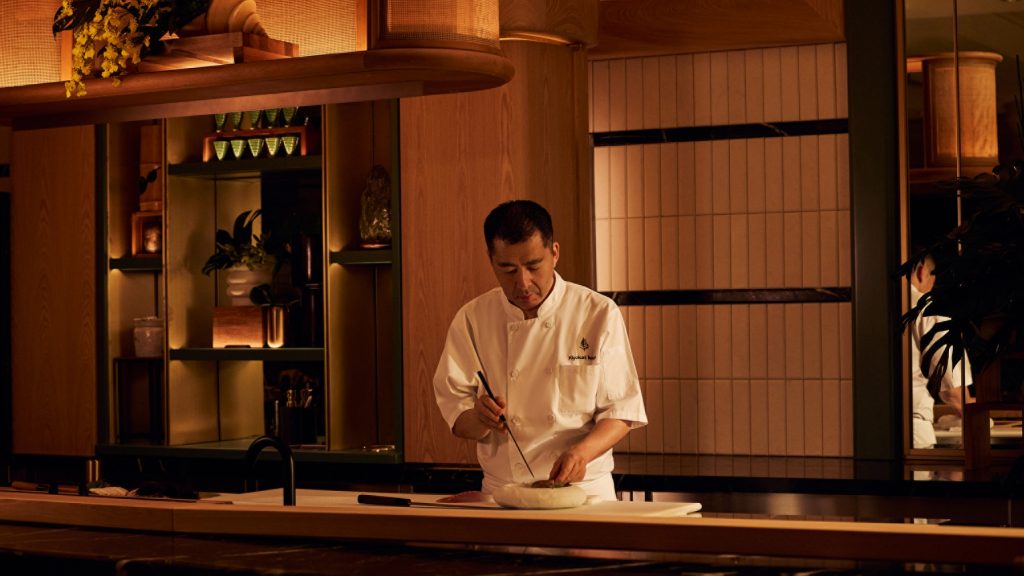
Komo at Four Seasons Resort Maui
Komo at Four Seasons Resort Maui at Wailea

Island Fresh: Two sublime sushi spots recently debuted in Hawaii. Graced with the Hawaiian name for a subspecies of the black noddy seabird, the Big Island-based Noio is an intimate space perched above Four Seasons Resort Hualālai’s ‘Ulu restaurant. Chef Nuri Piccio’s delectable creations range from Japanese Wagyu tempura and sake-steamed chicken to the crown jewel, a seven-course omakase experience. For the new restaurant Komo—inside Four Seasons Resort Maui at Wailea—the Tokyo-born chef Kiyokuni Ikeda flies in a selection of fresh seafood each week from Japan’s Misaki Megumi Suisan. Komo’s signature Mystery Box is a choice way to experience Ikeda’s masterful, precise method with nigiri while enjoying the element of discovery. 

Shop

Rolex Oyster Perpetual 1908
Rolex’s Perpetual 1908

Gold Watches: After years of stainless steel being the metal of choice for luxury watches (think steely examples of the Rolex Daytona, Audemars Piguet Royal Oak, and Patek Philippe Nautilus), the tide is shifting to designs crafted in precious metals, especially gold. At this year’s Oscars, Timothée Chalamet, Sebastian Stan, Kieran Culkin, and Robert Downey Jr. brandished gold timepieces on the red carpet, and sale prices of pre-owned gold watches are on the rise. In Switzerland at the recent Watches and Wonders fair, standout watches gleamed in timeless gold, among them Rolex’s stunning new Perpetual 1908 dress watch and Chopard’s latest L.U.C model featuring a sublime astronomical moon-phase display. —Degen Pener 

Versace La Vacanza
Sneakers from Versace’s new summer collection

Versace’s La Vacanza Collection: Seaside chic enjoys a maximalist interpretation in the Italian label’s new summer fashions. Dario Vitale, the brand’s chief creative officer, has rendered iconic Versace motifs in sea and sand hues to create must-haves, like the Mercury M_VS_01 Sneakers (shown), that epitomize casual glamour. Versace supports the reef restoration efforts of the Coral Gardeners nonprofit in French Polynesia. —Laurie Brookins 

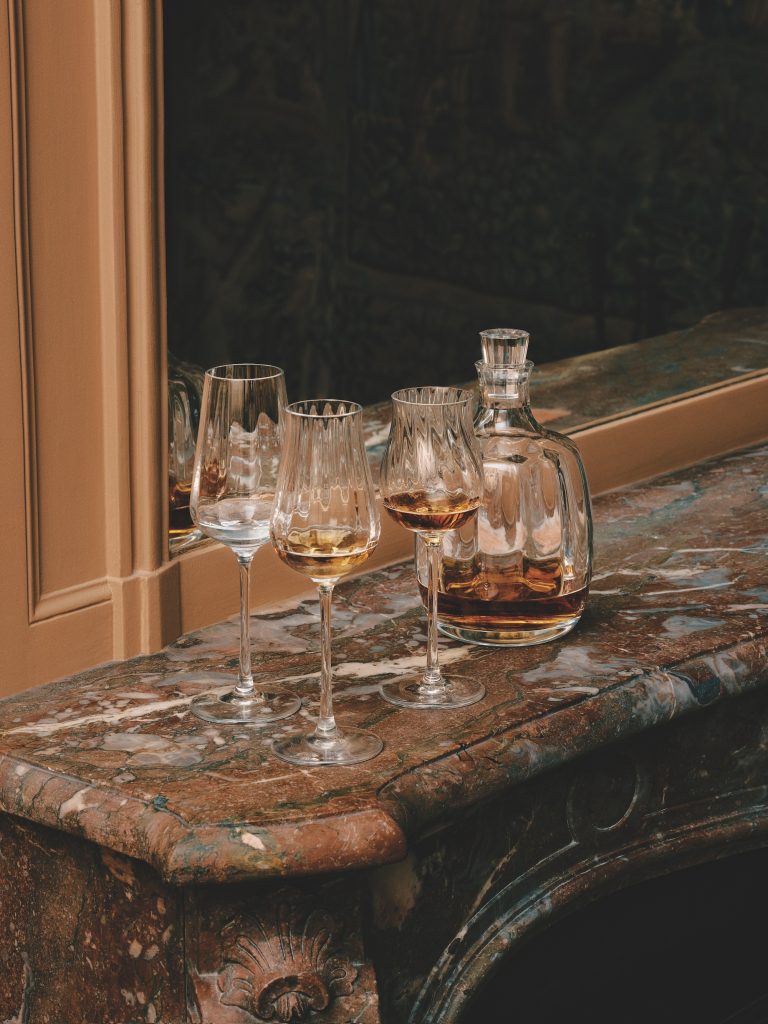
Saint-Louis Twist Collection
Saint-Louis’s Twist collection

Elegant Stemware: Saint-Louis—crystal glassmaker since 1586 in France’s Moselle département—has released a collaboration with Nicolas Julhès, co-founder of Distilllerie de Paris, which crafts gin, vodka, and rum in the French capital. The new Twist 1586 collection includes a decanter and long-stemmed glasses with Venetian ribs that guide the liquid to the mouth. —LB  

Spa

Four Seasons Bali at Sayan
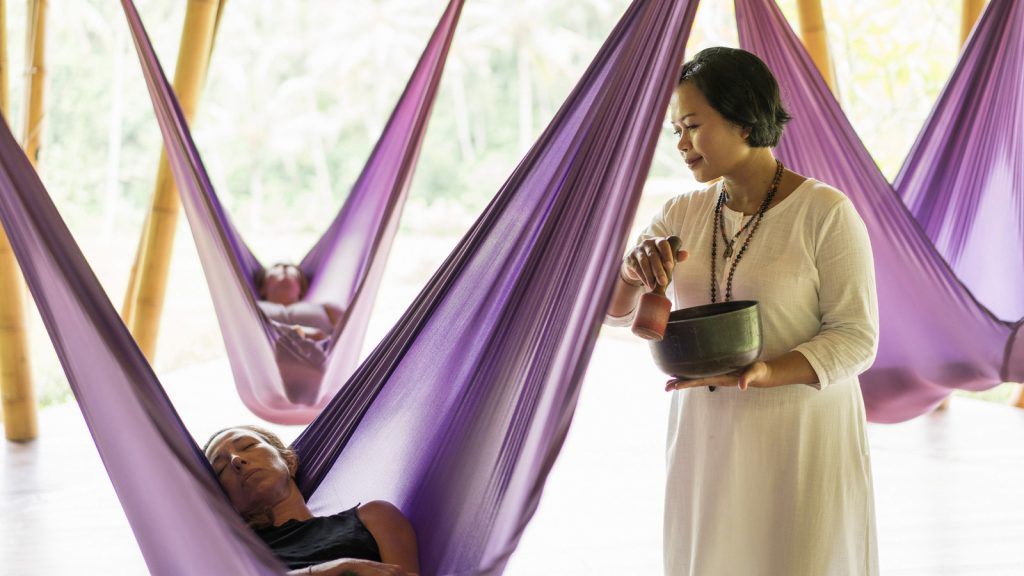
A sacred nap at Four Seasons Resort Bali at Sayan

Bali Bliss: The Indonesian island known for yoga retreats and spa escapes is more attuned to well-being than ever before, thanks to a new six-night immersion across two distinctive Four Seasons resorts. The escape draws inspiration from the fundamental Balinese concepts of sekala, the tangible or visible, and niskala, the intangible or invisible. “I see it as an awakening journey,” says regional director of spa Luisa Anderson in reference to The Seen to the Unseen, which takes guests from the oceanfront Four Seasons Resort Bali at Jimbaran Bay to Four Seasons Resort Bali at Sayan, located in a river valley near Ubud. The physical body is the primary focus at Jimbaran Bay, where classes and treatments at the Healing Village Spa include AntiGravity yoga, Pilates, massage, volcanic mud masks, ice baths, and infrared therapy. After a transfer to Sayan, guests have their spirits soothed at the Sacred River Spa with chakra ceremonies and mystical therapies, among them the gentle Restu Bumi ritual featuring Balinese instruments such as the gong and the sacred genta bell. Says Anderson, “It feels like Mother Bali cradling me in her arms.” —Kathryn Romeyn 

Luxury Redefined: Fine Dining’s New ‘It’ Ingredients

What if luxury is not what you think it is? We tend to view certain foods as fixed and universal signifiers of “living well.” These are the ingredients that make everyone at the table smile and sigh when the server mentions them, and they’re the ingredients that usually come accompanied by a supplement, meaning that the server is happy to ask the kitchen to dollop or shave one of them onto your dish as long as you’re amenable to paying an extra $100 or so. Truffles, caviar, foie gras—behold the Three Musketeers of haute cuisine, with uni increasingly cast as the young D’Artagnan who has joined forces with the classic trio. Such ingredients have become so entrenched in contemporary menus, so ubiquitous, you might assume they’ve always dominated the epicurean conversation. 

But luxury evolves—it moves around. One era’s cattle feed is the next era’s pricey indulgence. As the food essayist and New York Times critic Ligaya Mishan has written, “In medieval Russia, caviar was a peasant staple, less expensive than fish itself.” So abundant were the briny sturgeon eggs, and so removed from any idea of fanciness, that once upon a time, country folks shoveled heaps of caviar to their pigs “to fatten them up,” as Mishan tells us. (Lucky swine!) 

Luxury is evolving right now, too, and the new idea of opulence often manifests in subtle ways. Beyond the realm of caviar and truffles, there are other ingredients whose appearance on a menu tells you that the chef is thinking deeply about the art of cooking and the experience of pleasure. Maybe the chef has decided to elevate staples, such as rice, corn, and butter, or draw on ancient methods of intensifying flavour by drying out an ingredient, be it salty mullet roe or a sweet persimmon. Here we present five examples of extravagance-in-evolution: five ingredients that represent la dolce vita in 2025, even though they’ve been around for centuries. 

Heirloom Masa

Heirloom Masa, Photo by Vanessa Granda, Food Styling by Pearl Jones
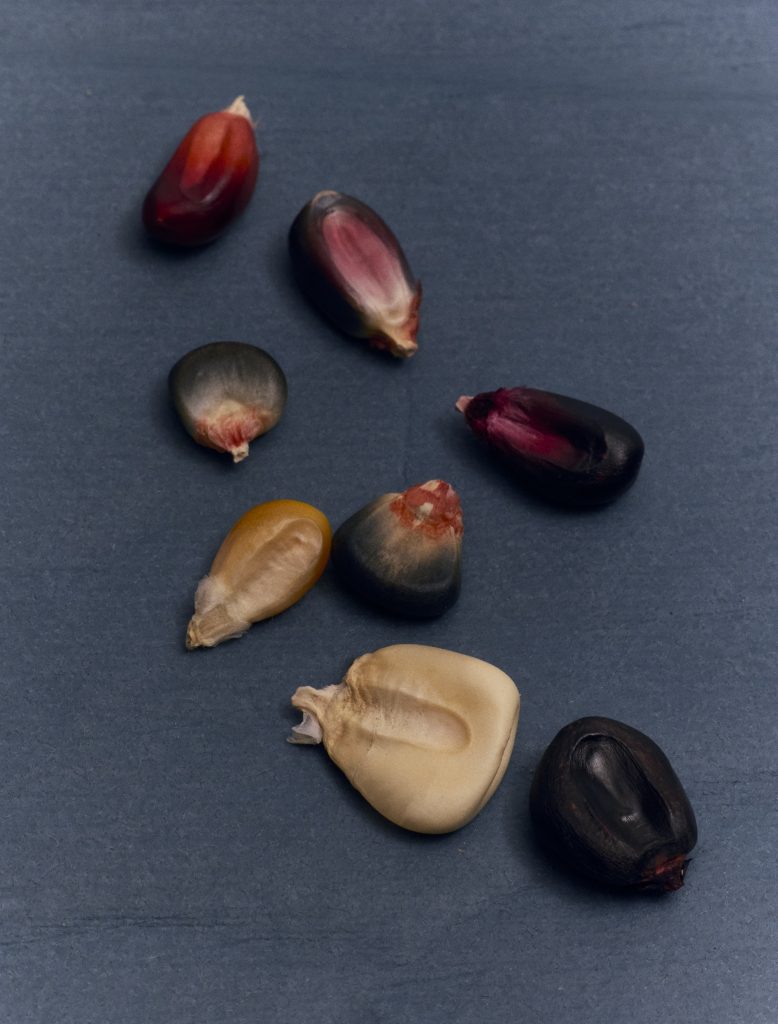
Photograph by Vanessa Granda; food styling by Pearl Jones.
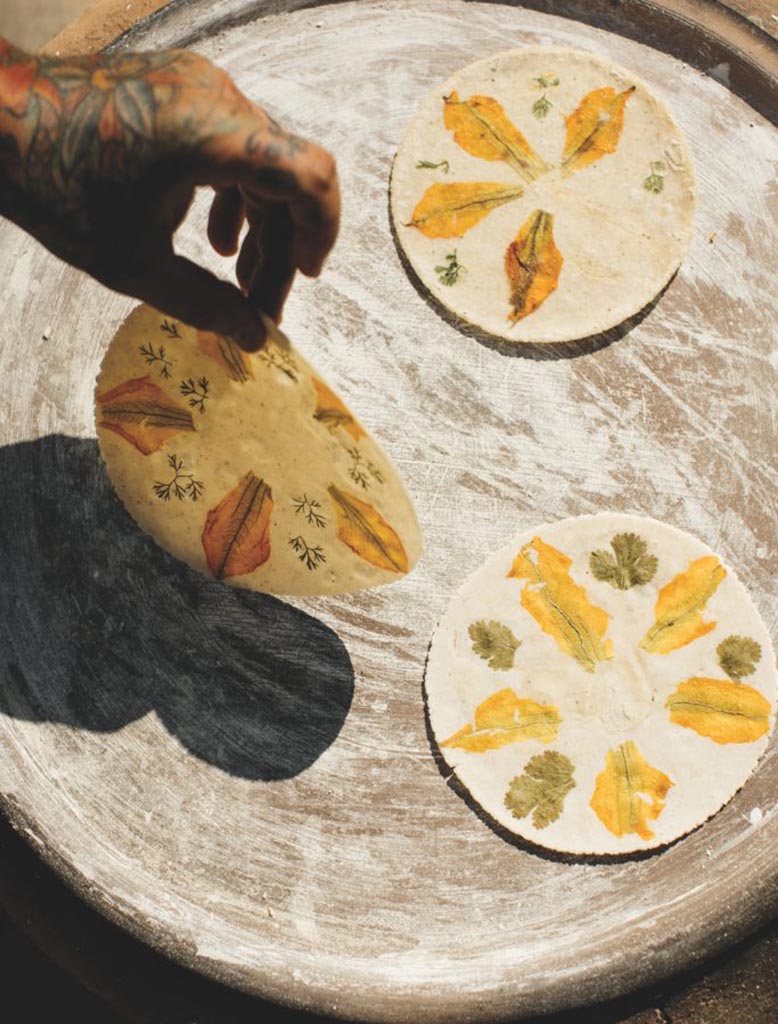
Photograph by Maureen Evans.

Dine in one of lauded chef Enrique Olvera’s restaurants—maybe Pujol in Mexico City, Cosme in New York, or Damian in Los Angeles—and you realize that few things come close to the deep, glorious earthiness of a tortilla made with heirloom masa. In fact, Olvera himself speaks of this ingredient in almost mystical terms: “The ability to taste the place,” he says. That, to him, represents the soul of luxury, especially in this age in which sturgeons can spend years swimming back and forth in stationary pools for the production of farm-raised caviar. “Luxury now is whatever is from that place that you cannot get any other place,” he says. “That flavour from the heirloom corn is from the soil, and flavour is a reflection of the health of the soil.”  

Heirloom corn, unlike its mass-market counterpart, comes in myriad hues and husks and sizes and names, from Pink Xocoyul (native to Tlaxcala, Mexico) to Cacahuazintle, a large, white variety used in pozole. And through the centuries-old process of nixtamalization—the soaking of kernels in an alkaline solution that unlocks their essence (as well as their nutrients)—the resulting masa dough can express itself in an endless spectrum of flavours: nuttiness, sweetness, barnyard-iness, even cheesiness.  

At Atlas Restaurant Group’s Maximón in Four Seasons Hotel Baltimore, Atlas corporate chef Aaron Taylor goes the distance in pursuit of these truer flavours and textures. He and the Maximón team buy whole yellow, blue, and white kernels from Masienda, a respected supplier of heirloom corn, and they nixtamalize and grind them on-site for tacos and quesadillas. “We do this every single day,” Taylor says. It’s a serious investment of time and labor, he adds, but “I think our tortillas are far superior to anything you find around town.”  

Masa isn’t just food; it’s culture. When chef Miguel Soltero at Four Seasons Resort Tamarindo in Mexico offers a quesadilla de milpa made with heirloom masa, that simple dish tells a story about all the good things that come from the milpa, or field, from corn to squash to chiles. And when Olvera, at Pujol in Mexico City, offers a basket of tortillas alongside a “mole madre” that has aged and deepened for longer than a decade, he is serving the greatest luxury of all: time. 

Beurre de Baratte

Butter at Emeril's Courtesy of Food Story Media
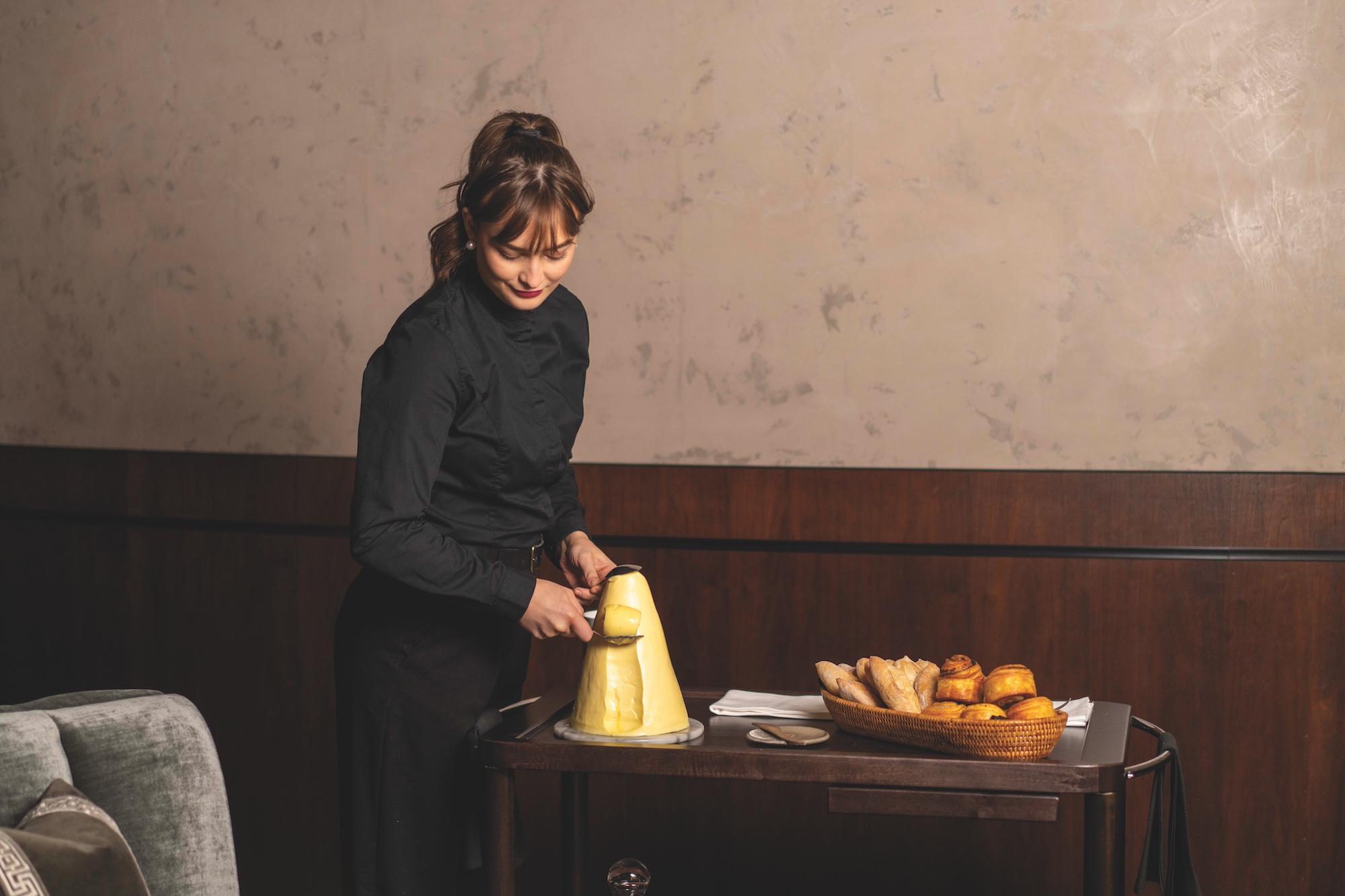
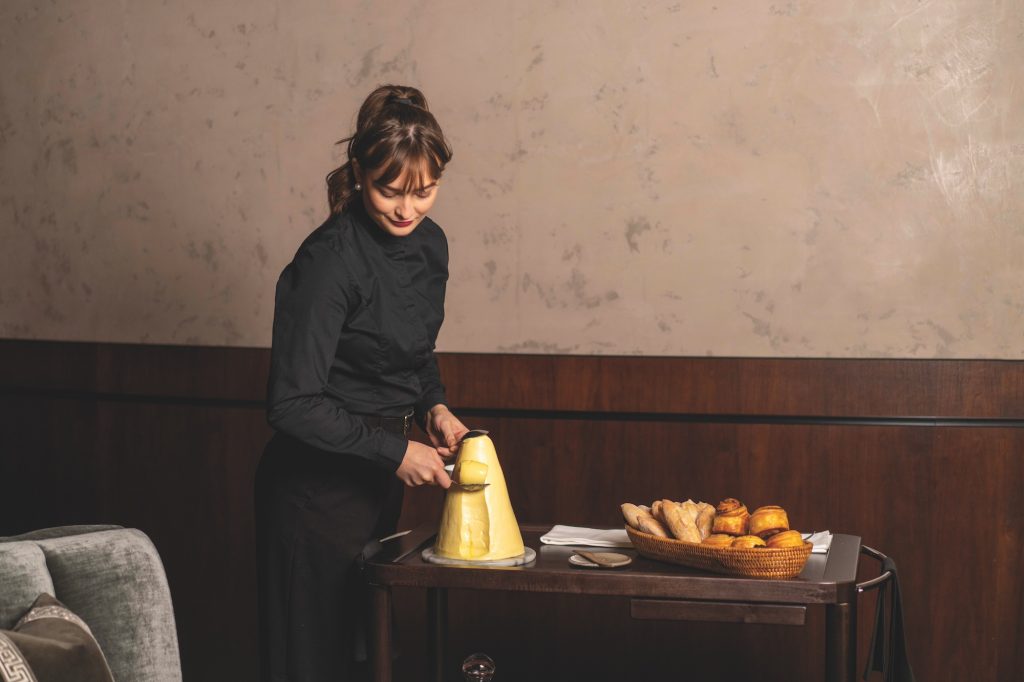
Beurre de Baratte at Emeril’s. Photograph courtesy of Food Story Media.

At Emeril’s in New Orleans, a cart rolls up to the table, crowned by a pale yellow pyramid. That creamy tower is a solid mass of Beurre de Baratte, a French butter whose slightly tangy and nutty base notes and borderline cheesiness of texture come from the patient, tedious, time-honoured practice of churning milk by hand. “I prefer Beurre de Baratte, as it’s rich and complex,” says E.J. Lagasse, the chef at Emeril’s in New Orleans. (Yes, he’s Emeril’s kid.) “I love the saltiness of it and the velvety texture. In my opinion, it’s ideal served at room temperature, which is how we serve it at Emeril’s.”  

The man behind the spread is Rodolphe Le Meunier, who grew up in a cheesemaking family in France, and whose approach to butter is patient and traditional and precise: cream from Normandy cows gets a chance to ferment, à la yogurt, before being churned and molded with wooden equipment of the type that might have been used hundreds of years ago. The result is cultured—in all senses of that word. It has depth.  

At Corner Office, a wine bar in Taos, New Mexico, you might encounter it as a soft and silky bed for sardines. But the butter is so delicious that at top spots around the world—including the three-Michelin-star restaurant Caprice at Four Seasons Hotel Hong Kong—chefs step back and let it own the spotlight, serving Le Meunier’s Beurre de Baratte seasonally with bread. That’s it—that’s the dish. What could be more luxurious? 

Bottarga

Bottarga, Photo by Vanessa Granda, Food Styled by Pearl Jones
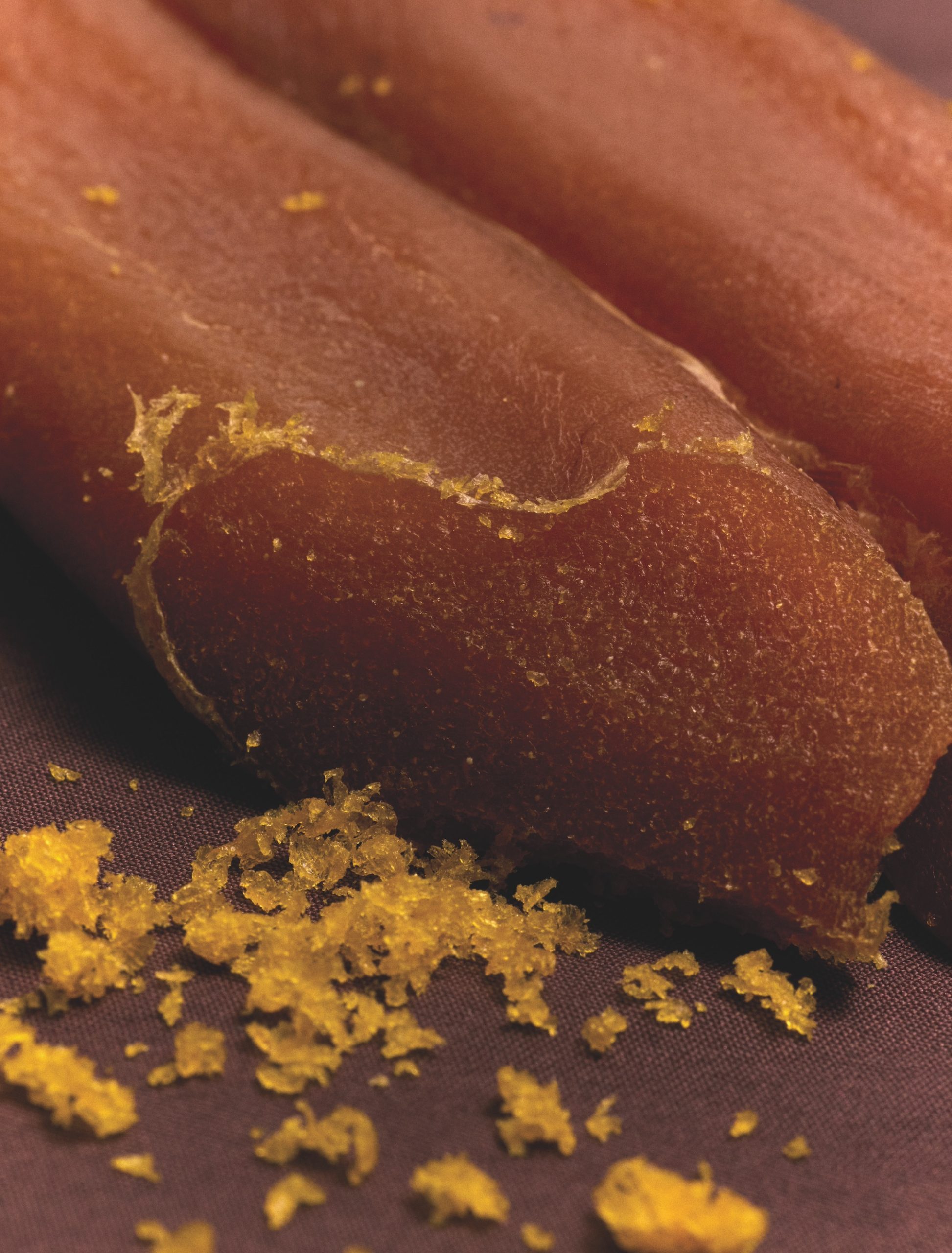
Photograph by Vanessa Granda; food styling by Pearl Jones.
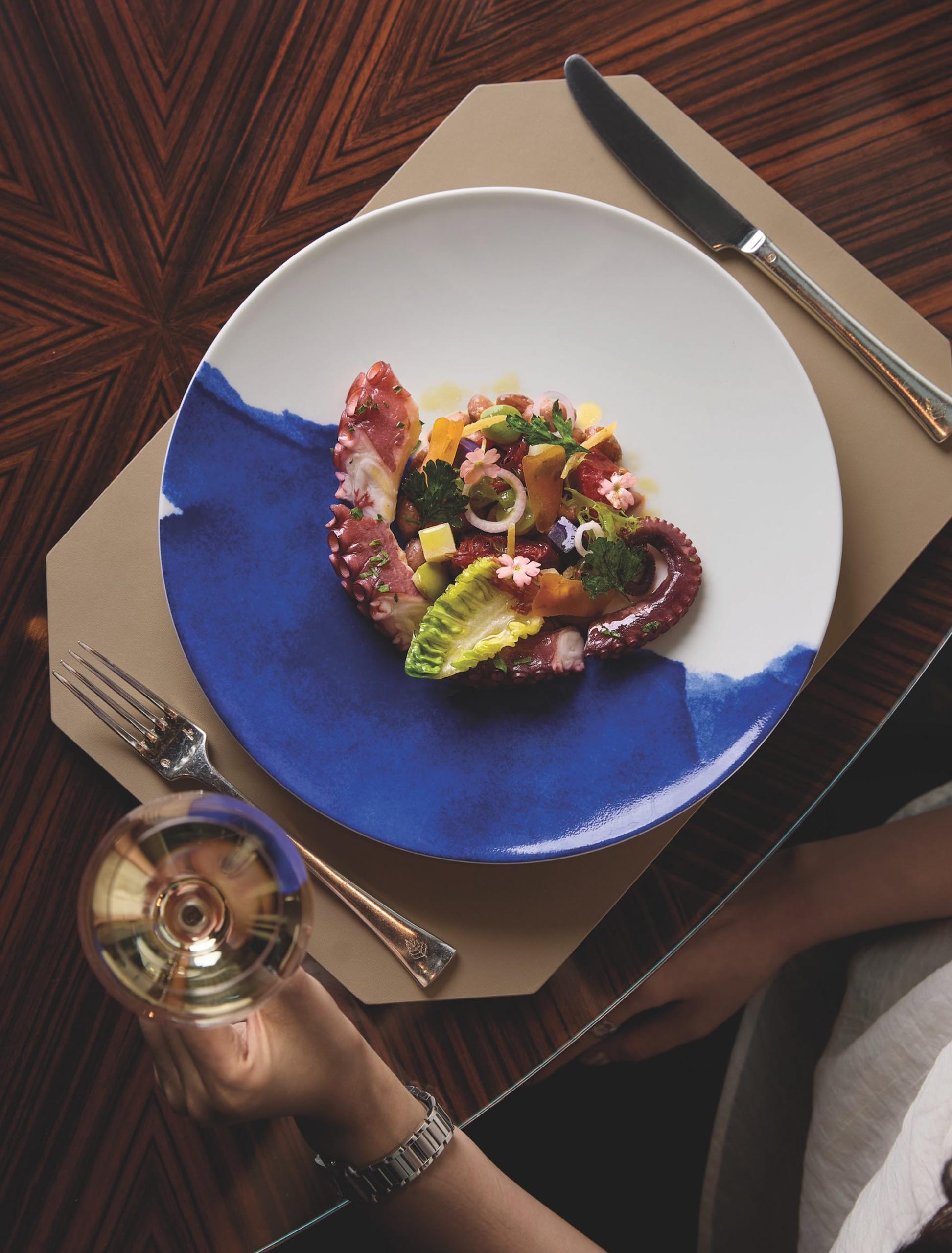
Warm octopus salad with bottarga, at Four Seasons Hotel Hong Kong.

 “I love [bottarga]. I eat it just cut up with a little olive oil on it. Caviar has its place, but bottarga has so much more complexity, for me. It’s one of those ingredients that’s still a little cultish.”
—Nicholas Stefanelli, chef at Masseria

How special is bottarga? Put it this way: Jurgen Kulli, executive chef at Fuego Grill at Four Seasons Resort Maldives at Landaa Giraavaru, uses bottarga that makes a trip all the way from the Mediterranean island of Sardinia to his kitchen on an island in the middle of the Indian Ocean. “It’s very rich in flavour,” says Kulli, who serves it with a carpaccio of dry-aged cobia, the large and hard-to-catch whitefish known for its subtle sweetness.  

Bottarga doesn’t necessarily sound inviting—it’s basically a lobe of mullet roe that has been compressed and desiccated in the sun until it’s a chunk of orange-yellow umami wax—but at first taste, all doubts evaporate. At Mode Kitchen & Bar at Four Seasons Hotel Sydney, executive chef Gaurav Bide views it as the perfect funky counterpunch to fresh seafood, serving it shaved over yellowfin tuna tartare. At The Lounge at Four Seasons Hotel Hong Kong, bottarga adds a bold note to the warm octopus salad.  

“I love it,” adds Nicholas Stefanelli, the chef at Masseria, a Michelin-starred Italian restaurant in Washington, D.C., who sources his bottarga from Gustiamo, a way station in New York’s South Bronx for all good things from Italy. “I eat it just cut up with a little olive oil on it. Caviar has its place, but bottarga has so much more complexity, for me. It’s one of those ingredients that’s still a little cultish.” At Masseria, Stefanelli shaves it over stuffed pasta with spring peas; at home, he uses it to luxury-boost a baked potato. It tastes like the sea and the sun, and bottarga aficionados know that there is only one sensible response when you spy it on a menu: Order it. 

Heirloom Rice

Heirloom Rice, Photo by Vanessa Granda, Food Styled by Pearl Jones

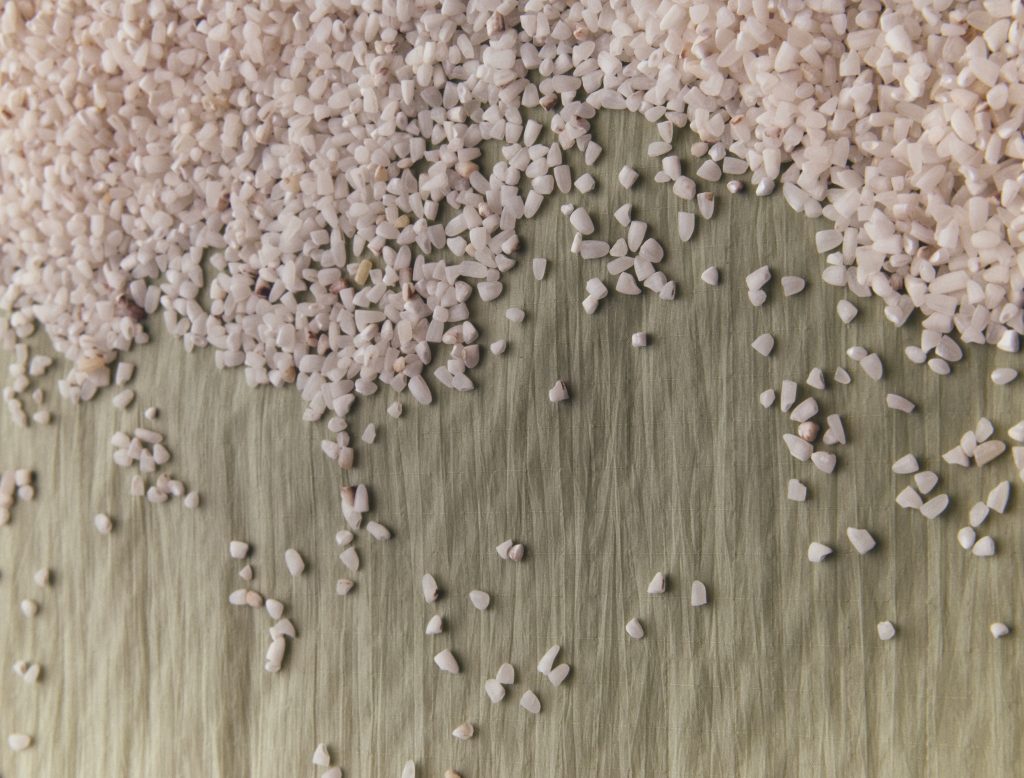
Anyone who has enjoyed the highest level of sushi artistry knows what a difference the rice can make. Far from a bland canvas for fish, rice is often the component of a meal through which sushi chefs express the core spirit of their approach to omakase, selecting based on the grain’s taste, texture, and serving temperature. This is true beyond sushi counters as well. When chefs opt to use premium strains of rice that are rooted in tradition and terroir, take note, because this tells you that you’re in a restaurant that prefers not to cut corners.  

What’s that nuttiness that you taste when you get a mouthful of shrimp risotto at Dunsmoor, a Los Angeles spot that celebrates traditional American foodways, or jollof-inspired crab rice at Bludorn, a Houston restaurant with an innovative approach to global ingredients? It’s Carolina Gold. An American variety, it was originally cultivated in the Lowcountry of South Carolina by West Africans who had been enslaved for their agriculture knowledge, and it almost vanished until the team at the heirloom grain company Anson Mills rescued it from obscurity. “We use it in all four of our restaurants,” says chef Aaron Bludorn. “There’s a richness to it that I can taste—almost a meatiness.”  

Sticky and pearly, koshihikari rice is at the opposite end of the spectrum. Where Carolina Gold is robust, koshihikari is diaphanous, which is why chef Rogelio Garcia uses it to accompany Japanese bluefin tuna at Auro, the Michelin-starred restaurant at Four Seasons Resort and Residences Napa Valley. “I love working with koshihikari because of its pearl-like texture and aromatic quality,” he says. “There’s a subtle sweetness to it, a clean finish that allows the fish to shine while quietly elevating the dish. It’s not just about taste—its colour and sheen also create a beautifully refined presentation on the plate.” Rice is nice, but koshihikari and Carolina Gold are just a little bit nicer. 

Hoshigaki

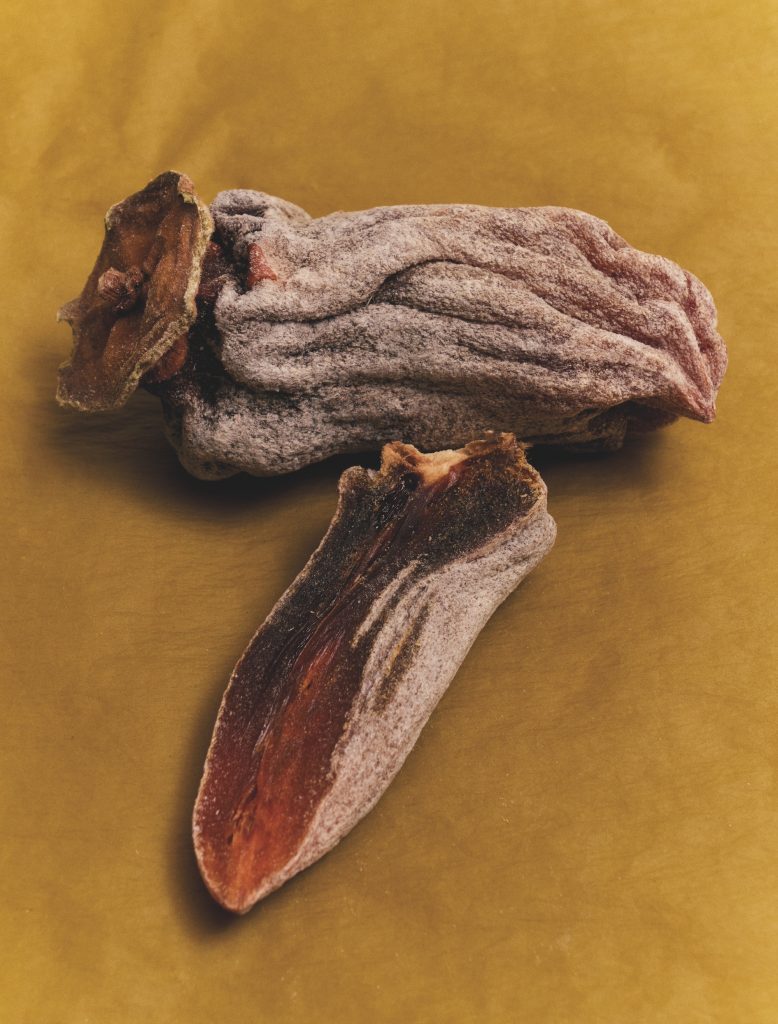
If you have a food-obsessed friend who makes the Japanese snack at home (a practice that has been trending in recent years), you might spy hachiya persimmons drying in their kitchen. Squint and they almost look like golden lanterns hanging from a temple. The persimmons dangle on strings in sunlight and fresh air until they shrivel into gnarled, chewy, sugar-dusted delights. (Caretakers have to massage them now and then to break down pulp—talk about luxury.) They’ve been revered in Japan and across Asia for hundreds of years, but only in recent decades have hoshigaki begun appearing on Western menus. Raisins and prunes, of course, represent common examples of what happens when we concentrate the flavour of fruits by drying them out, but hoshigaki (known as gotgam in Korea) can take that process to an exalted place.  

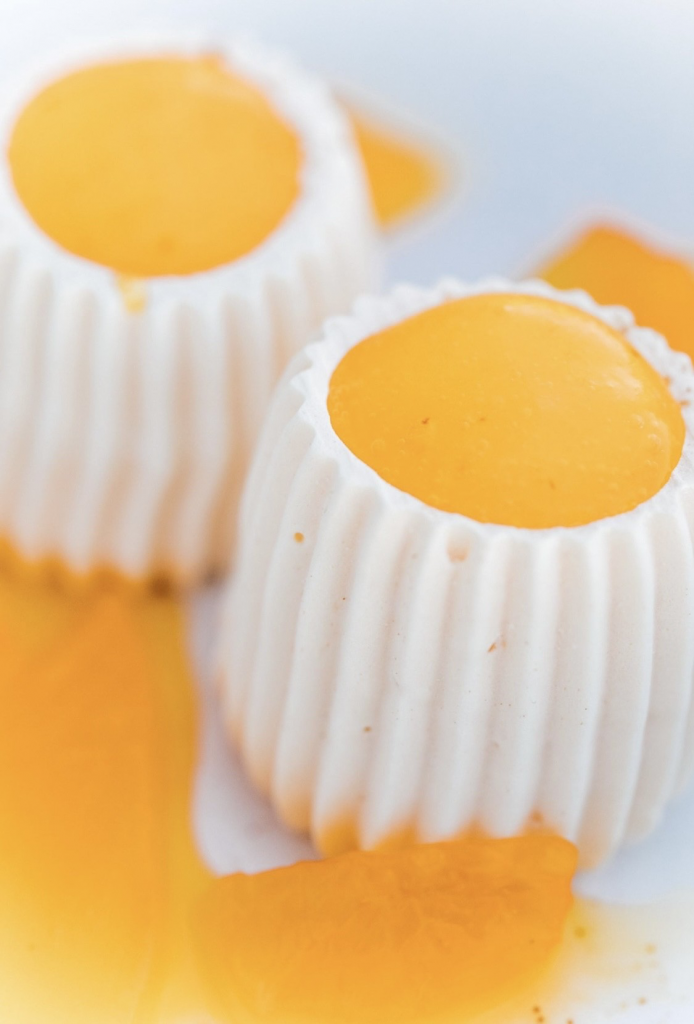
Pair them with a sharp cheese—as chef Ignacio Mattos occasionally does at Estela, his intimate and creatively influential flagship on East Houston Street in New York City—and the marriage of fruit and funk will make you melt on the spot. Honouring the seasonal nature of this Asian delicacy, pastry chef Michele Abbatemarco, of Michelin-starred est restaurant at Four Seasons Hotel Tokyo at Otemachi, serves hoshigaki in the autumn months with ricotta cream, chamomile gelato, persimmon jelly, candied persimmons, a mandarin sauce, and a dusting of coffee powder. Whatever the presentation, the best approach is to take your time relishing every bite—dried persimmons are a slow food, after all.