The Vision of Four Seasons

In the past six decades, Four Seasons has grown from a single hotel to a global collection that spans land, sky and sea. Today’s Four Seasons is the product of an ongoing vision – one that focuses on the guest, first and foremost – and constant innovation. Previously, in this three-part series, we’ve recapped the developments of the 2000s to the present and the 1980s and 1990s. Here, we go back to the brand’s origins: its commitment to a culture of service in the 1970s and its beginnings in the 1960s, including the reflections and predictions of Founder and Chairman Isadore Sharp.   

Mm966 Fourseasons Dm Uk 2017

1970 to 1979: An Emphasis on Excellence

Despite his beginnings in construction and building, Isadore Sharp knew that luxury and quality weren’t just about the materials – they were primarily about the guest experience. 

A few years after opening the first Four Seasons, Isadore Sharp happened to meet a British family who planned to put a hotel on some property they owned in London’s Hyde Park area. Initially, they were set on offering very basic accommodations as an alternative to the city’s grand hotels. It took some doing, but Sharp eventually convinced them that they could drop any pretence and stuffiness while still treating guests like royalty, and the Inn on the Park London opened in 1970. It was the first Four Seasons outside of Canada, just in time for the immense growth in international jet travel during that decade. 

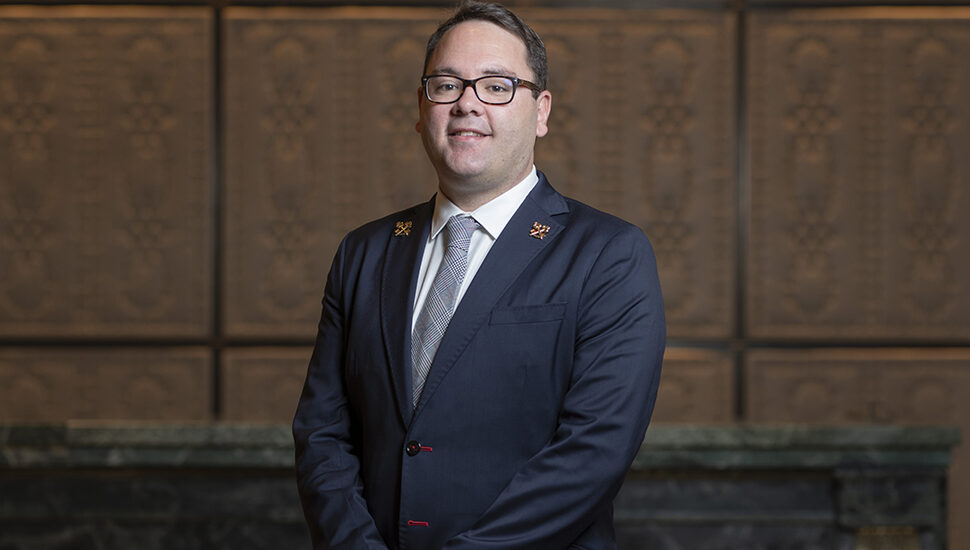
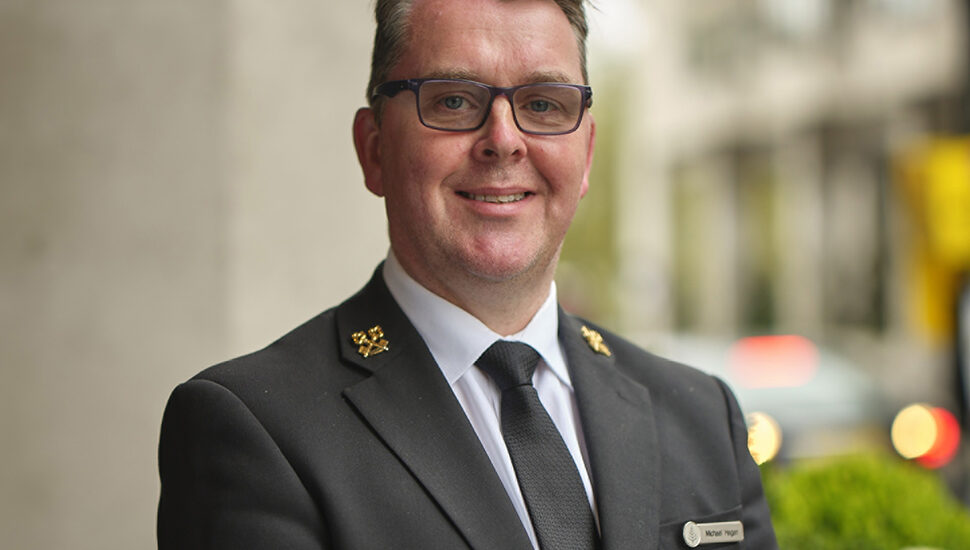
“Four Seasons has always pioneered in luxury hospitality, and the London opening – with the vision of being the best hotel in the city, as part of a globally recognized brand – was no different,” says Michael Hagan, Head Concierge at the Hotel, which is now known as Four Seasons Hotel London at Park Lane. “It remains one of the flagship properties to this day.” 

Hagan, who joined Four Seasons as a Concierge, has been in his current role for 11 years and still loves every minute of it: “Every day is wonderfully different, and we get to meet amazing guests and create unforgettable experiences for them,” he says. “I still get the same joy and satisfaction from this as I did when I first worked in the concierge team all those years ago.” 
Quality was key to the success of that first London Hotel. It was small but well-appointed, with a central location and personalized 24-hour service – and it stayed fully booked. After a couple of years, Sharp knew he had arrived at a winning formula that would become a pillar of the Four Seasons business model in 1972: a focus on medium-sized hotels of exceptional quality that would strive to be the best in the destination. 

Over the next few years, Four Seasons refined the concept that would become its second pillar: luxury defined by service. The highly skilled concierge teams, especially, take that mission to heart, treating every guest as a VIP: “Our guests rely on the Concierge to get that impossible ticket or restaurant reservation,” Hagan says. “They stay with us because we have the reach and connections to make the impossible possible.” 

Four Seasons employees are empowered to tap into the collective expertise of their teammates around the globe. “The fact that we can call our colleagues anywhere in the world and share our knowledge and work together is priceless and truly sets Four Seasons apart from the rest,” Hagan says. And that network continued to grow throughout the rest of the decade as Four Seasons continued its expansion into the U.S. market with properties in San Francisco and Washington, DC.

In the 1970s, Four Seasons grew from three properties in a single country to a singular hospitality brand with more than a dozen properties in three countries. All these years later, the trend continues: “Four Seasons is continually growing,” Hagan says, “and with more openings happening soon, the future is very exciting.” 
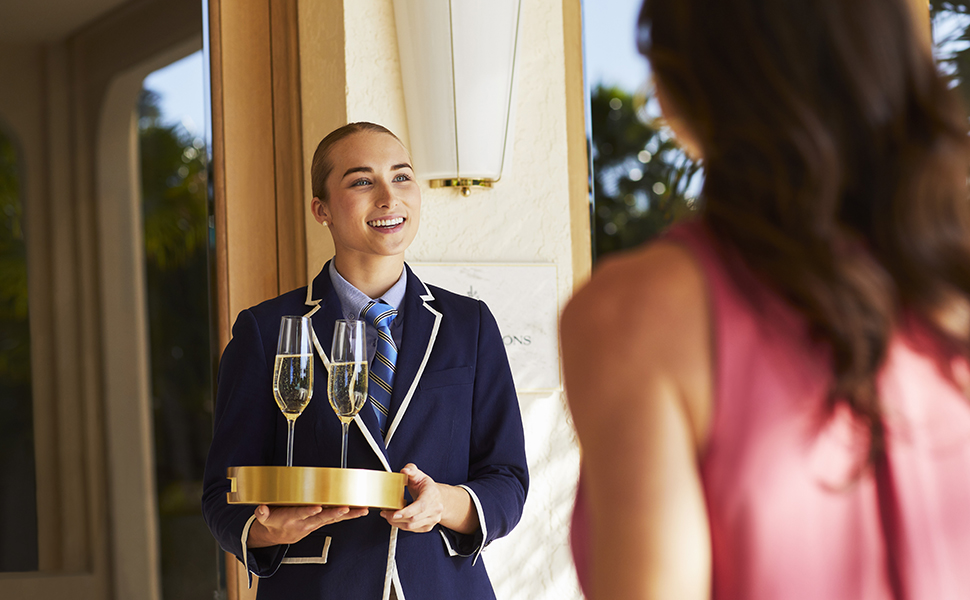
Four Seasons Palm Beach, Florida

1961 to 1969: A New View of Hospitality

The first Four Seasons was a small hotel with a big idea: to treat every customer as a special guest. 

Isadore Sharp didn’t set out to create a visionary hospitality brand, but it’s hard to imagine his path taking any other direction. And that’s not just because the business has been a 60-year passion for him. It’s because hospitality lies at the core of who he is and how he approaches the world – in the office, at hotels and in every moment of life. 

When he built the first Four Seasons, working with his contractor father, Max, he considered himself primarily in the construction business, not hospitality. But Sharp’s true vocation – caring for and investing in people – was evident. He was driven to learn how to get other people to work in a way that they enjoyed. Establishing rapport among all team members was key, as was encouraging people to rise to the challenges ahead of them.  

“The idea of empowering people is just natural,” he says. “You want people to feel that there’s a purpose in what they’re doing, that they have a meaningful role. Ownership or responsibility really brings out the best in people.”  

It took more than five years to get that first hotel, a 125-room motor hotel in downtown Toronto, financed and built. But when it opened its doors, it was all about the guest. To inspire and empower every team member to provide exceptional care for guests and for each other: It was a visionary idea, one that other companies still strive to emulate. 

Sharp learned early on to trust his intuition and follow his heart – and what they told him was to look at his business from the point of view of the customer. Sometimes, “it’s just a subliminal thought process, and I guess that’s what I have developed, working in hospitality,” he says.  

“In the beginning, not having any technical knowledge about the way to operate a hotel,” he recalls, he shifted his perspective from “What should I be doing?” to “What does the customer want and need?”  
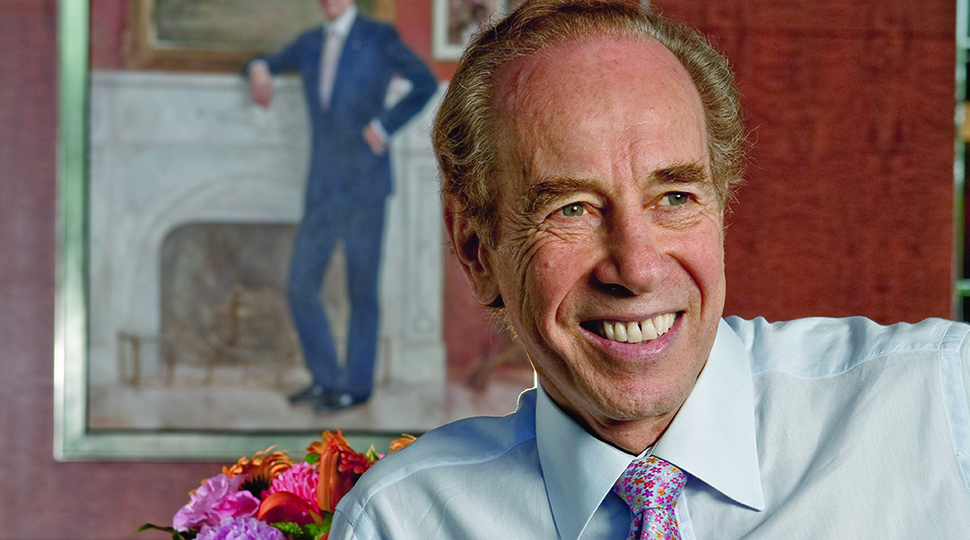
“We weren’t looking for gimmicks or tricks – all the things that we incorporate really have a purpose,” he says, recalling the early idea of placing a doily under a coffee cup to communicate to other team members that a guest is drinking decaf. Small practices like that continue today, and they planted the seeds for much bigger guest-first initiatives.  

“Probably the most dramatic innovation as a result of the pandemic was the idea from [President, Global Operations] Christian Clerc to engage an internationally recognized academic institution to help us confidently navigate the complex path ahead, with an emphasis on science and accuracy. This engagement helped us define our enhanced health and safety program, Lead With Care,” Sharp says. “What could be more important today than giving people that comfort level about their health and protection?” When you look at things from a customer’s perspective, he says, “innovation never stops.” 

By the end of that first decade, Sharp’s construction portfolio included two more hotels: Toronto’s Inn on the Park, which opened in 1963, and a third property in the late 1960s that would set the stage for the developments of the 1970s. Architect Peter Dickinson, whom Sharp had commissioned to design the first hotel, designed the Inn on the Park – an urban resort-style hotel perched on a hill above a broad expanse of parkland and housing one of the city’s top restaurants.  

As Sharp reflects on the time since that first opening in 1961, he says his biggest points of pride are the creation of a company that holds continued promise for the future, and the positive effect that Four Seasons has had on the lives of its team members around the world. And he is confident that the brand will continue building on this legacy. “When I look at the future, I can only see one thing: The company will continue down this path of achieving, of reinforcing what the brand stands for,” he says. With more than 50 projects in the pipeline and a number of new business deals expected each year, Sharp sees unlimited potential for growth. “I believe when we celebrate our 100th anniversary, we will still be recognized as the leader in luxury hospitality.” 

Read more: Mr. Sharp shares more stories from the last 60 years – plus four insights into the heart of hospitality – in Issue 4 2021–22 of Four Seasons Magazine.  
The Hawaiian Islands as You’ve Never Seen Them Before

Hawaii is a land of perpetual enchantment, and even for an island native, there are new ways to discover its secrets. That’s what Kauai-born Chelsea Yamase found when she dove into Hawaii by Four Seasons, which combines exclusive experiences on four Hawaiian islands into one 12-day itinerary. She and the equally intrepid Sam Kolder helicoptered through clouds of smoke over an active volcano, took a sunrise hike to Sweetheart Rock and picked exotic fruit on an organic farm with an executive chef. Flying high and diving deep, Yamase and Kolder immersed themselves in the rich culture and dramatic geography of this Polynesian paradise for an experience you won’t want to miss.

Volcano Helicopter Tour

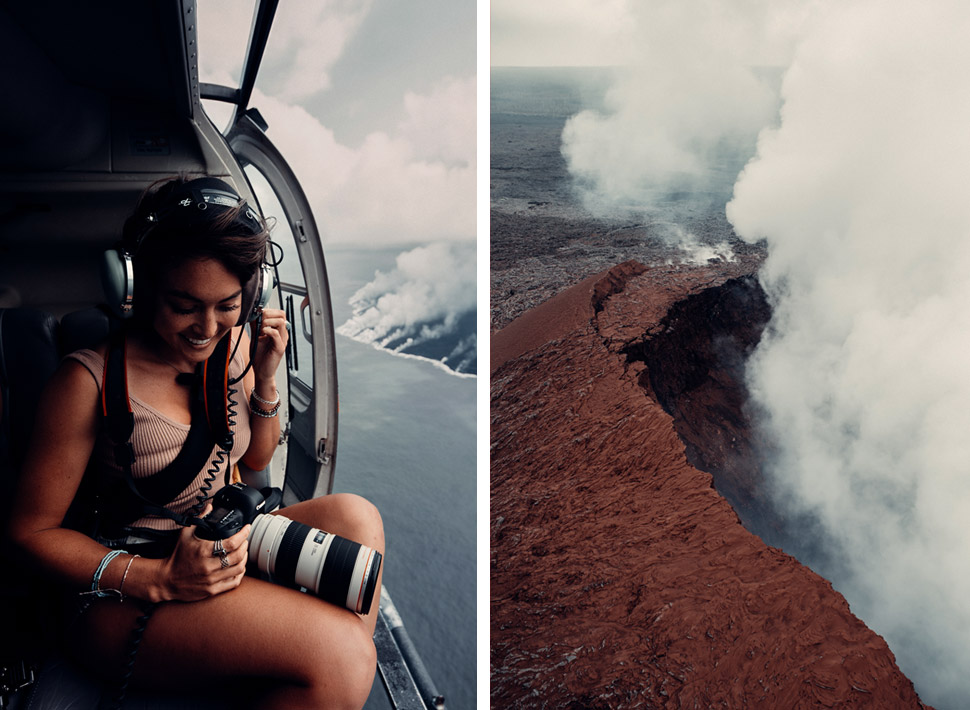
To devise a private aerial tour of the Big Island, Four Seasons turned to revered Hawaiian kumu (teacher) Kamakaonaona “Uncle Earl” Regidor, manager of Ka’upulehu Cultural Center, which is on the same site as Four Seasons Resort Hualalai. He designed the ride to showcase the sheer forces of nature still sculpting the Big Island. The helicopter picks up passengers on the 14th fairway of the Hualalai Golf Course and then flies them into the steamy sky above Mauna Loa, one of the world’s most active volcanoes. From there, guests touch down at a secluded black-sand beach and spend the afternoon exploring Halema‘uma‘u Crater, recently reshaped by the 2018 eruption of neighbouring Kilauea.

“We were very blessed to fly over Mauna Loa and the adjacent fissure when the flow was at the height of its activity last year,” Yamase says. “Seeing rivers of molten lava forming brand-new land gave me this overwhelming sense of awe. Even hundreds of feet away the heat hit us like a wall. We flew around columns of smoke, and you could smell the sulphur and hear the crackling and crunching of hot meeting cold. It’s a very primal experience. The colours and sights were stunning from the helicopter – it’s really the only way you can fully grasp what you’re seeing.”

Sunrise Hike and Cave Diving

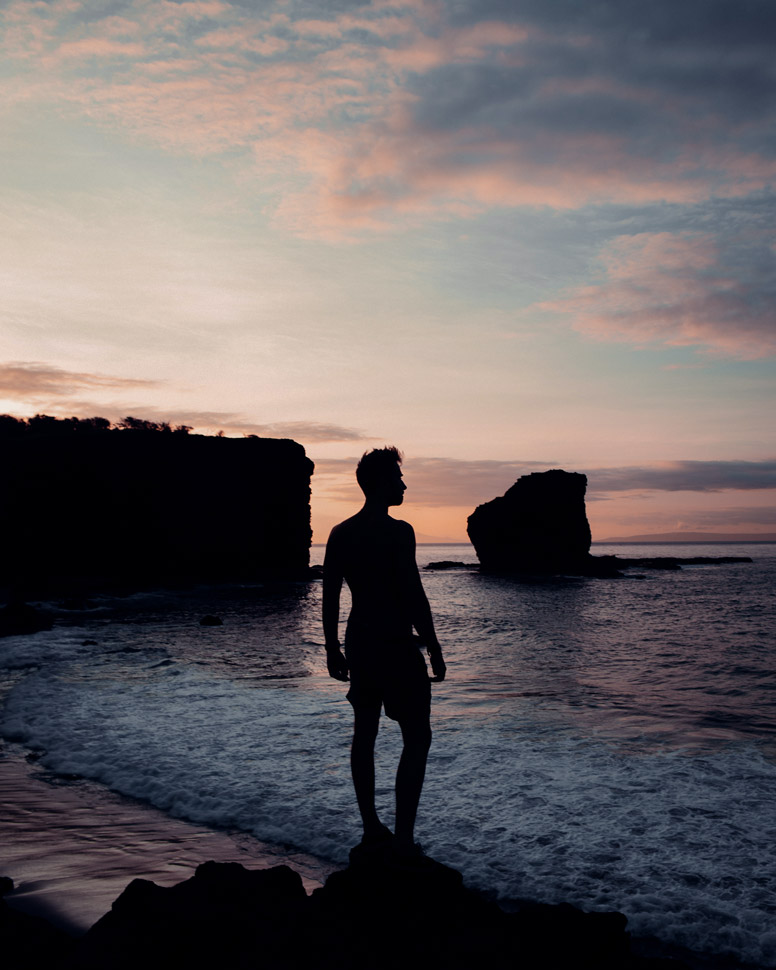
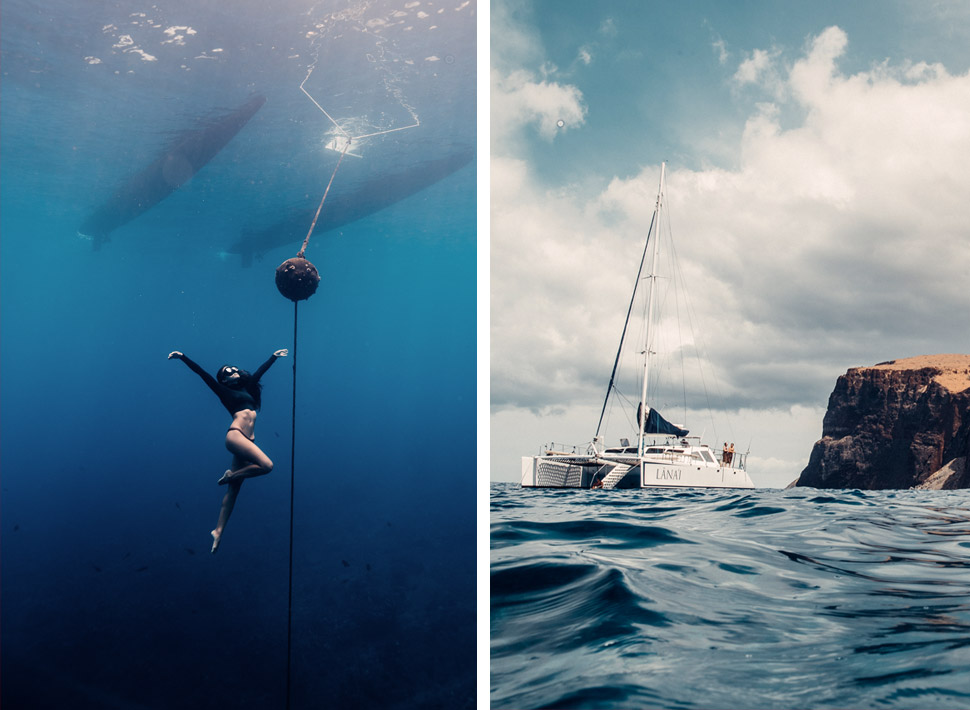
The terrain on Hawaii’s secluded “pineapple island” is so diverse that guests invariably end up designing their own experience within the larger itinerary. Riding through upland trails and valleys on horseback, diving into Hulopo‘e Bay from the side of a luxurious catamaran that’s yours alone – there’s a thrill for every kind of adventurer. Kolder and Yamase kicked off their stay at Four Seasons Resort Lanai with a sunrise hike to Puʻupehe (Sweetheart Rock), an 80-foot (24-metre) rock formation rising from the waters that separate Mānele and Hulopoʻe bays.

“Mornings in Hawaii, particularly on Lanai, are so quiet and peaceful,” Yamase says. “We decided to do the short walk up the cliff. My favourite moment was when we were up high on the edge, watching the sun make its way over the distant Maui mountains. It transformed the ocean from a reflection of gold to a deep turquoise and painted Sweetheart Rock ochre red. Seeing these same cliffs, as well of the rest of the coastline, from the deck of the catamaran later that day was a delightful mix of luxurious, relaxing fun. We lazed in net hammocks in the sun and did a bit of cave diving near a rocky island that juts out from the water like a shark fin.”

Hula Performance

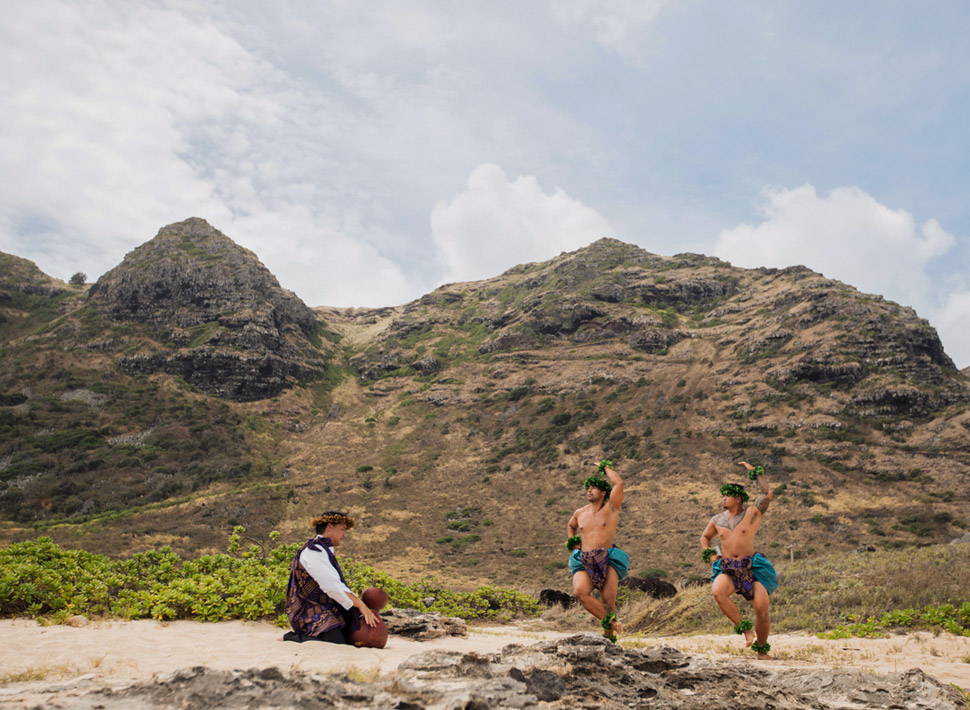
A hallowed tradition older than the written word, hula keeps the history of ancient Hawaii alive. Through movement and chants, dancers – who train by climbing lofty palm trees and swimming with boulders – recount the stories of this divine land and its people. On Ka‘ena Point, the westernmost tip of Oahu’s wild western coast, guests at Four Seasons Resort Oahu at Ko Olina experience a mesmerizing display of storytelling with physical strength. Here, Kumu hula La‘akea Perry shares the story of this spot, also known as Leaping Rock, a sacred setting where mortal souls jumped from earth into the realm of the gods.

“One of my favourite things about growing up in Hawaii is how meaningfully people engage with the land here,” says Yamase. “For me, it’s always been true that perception of a place can change with one’s knowledge of it. The myths and history of Ka‘ena Point added a layer of sacredness to the hike and to the trip overall. The chance to interact with a kumu hula as knowledgeable as La‘akea is a rarity even for someone like me who was born and raised in the islands. Hearing his oli [chant] gave me goose bumps.”

Farm Visit and Personalized Dinner

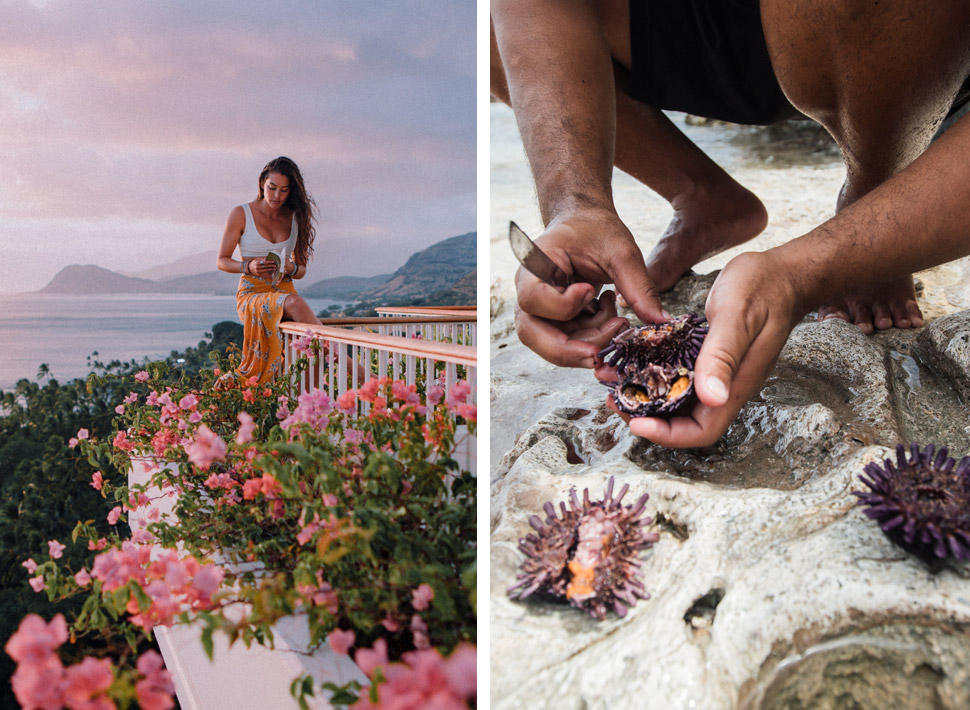
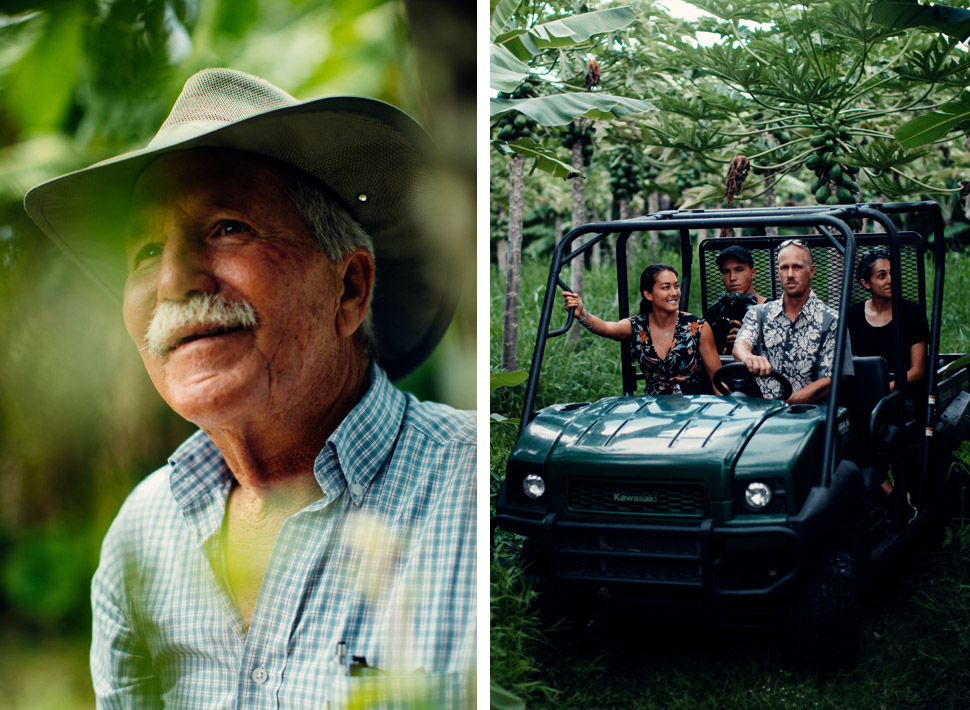
For this hands-on culinary adventure, Executive Chef Craig Dryhurst of Four Seasons Resort Maui at Wailea joins guests on a helicopter ride above Maui’s coast. The flight path sweeps over Haleakala and lands at ONO Organic Farms, where lifelong farmer Chuck Boerner blazes an edible trail on the verdant hillside. As Dryhurst returns to the kitchen to spin the fresh-picked ingredients into dinner, guests head to Hana, terminus of the scenic Road to Hana and site of many sought-after food trucks (think fish tacos and barbecue chicken). You’ll choose what’s next – floating through lava caves or hiking through a bamboo forest in search of serene waterfalls. Either way, you’ll make it back to the Resort in plenty of time to feast on an unforgettable meal prepared from the farm basket you picked only hours earlier.

“The dinner on the beach was closer to a sumptuous feast, with ingredients collected primarily from that ahapua‘a [parcel of the island],” Yamase says. “That whole day was one delight after another. The thought put into that meal and experience is something I’ll cherish forever.”

For more information about Hawaii by Four Seasons, visit our website or contact our reservations team.

Your Journey Begins Here

Discover the islands

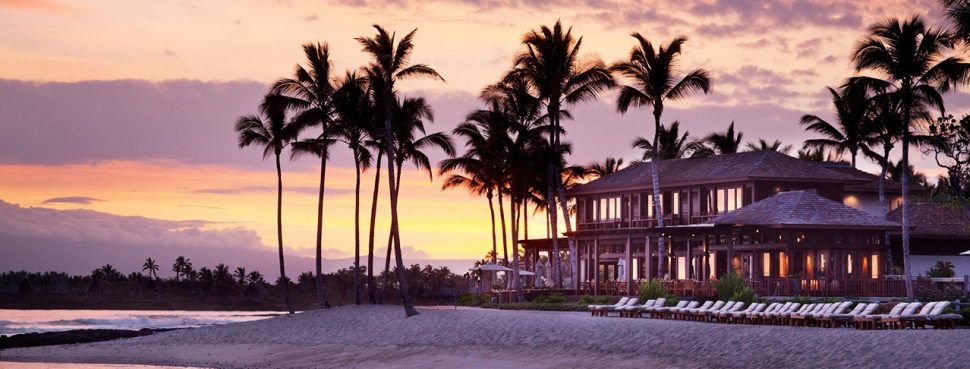
Four Seasons Resort Hualalai

How Gratitude Inspired a Global Quest

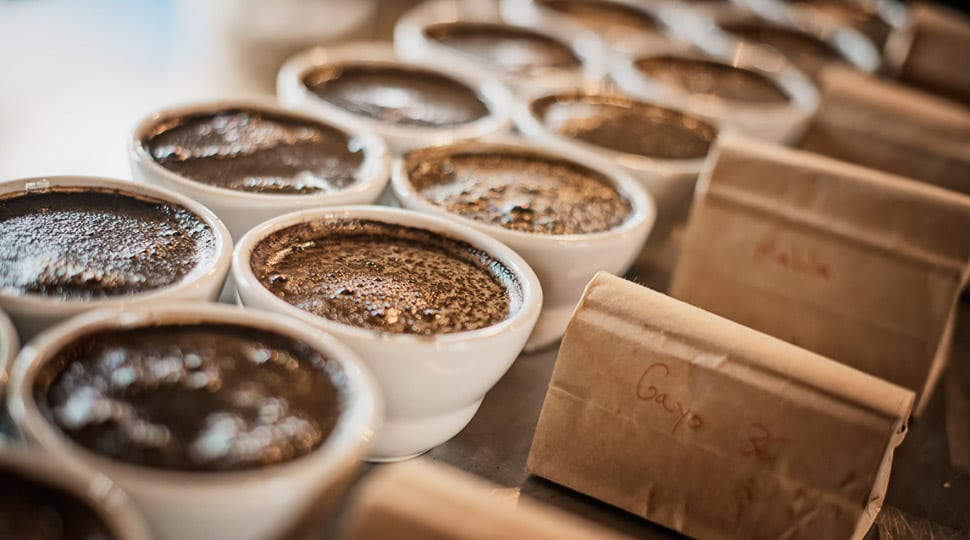
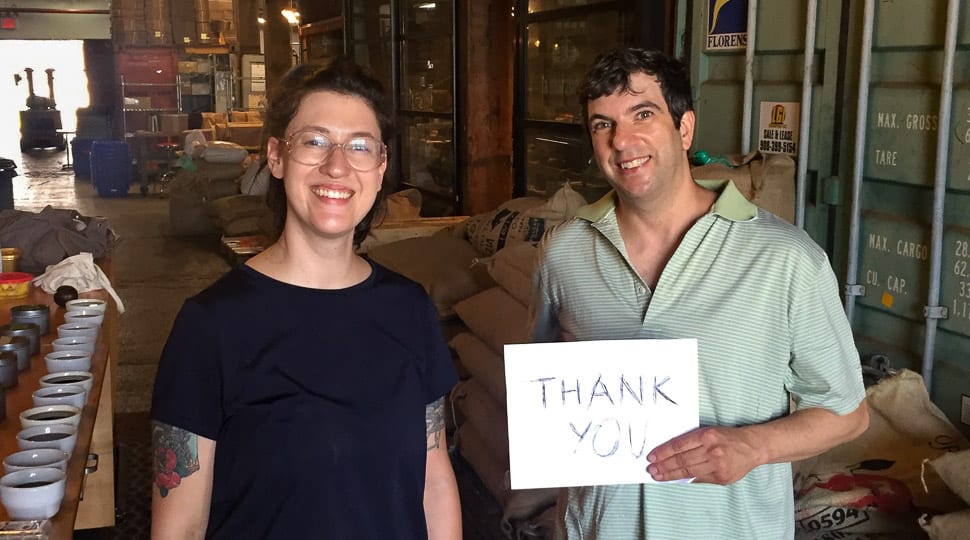
When A.J. Jacobs told his son they should be thankful to the farmer who grew their food, his son challenged him to thank the farmer in person. The idea sparked his new book, Thanks a Thousand (November, Simon & Schuster). Tracing the path of his morning cup of coffee, he learned not only that coffee sleeves are called zorfs and have been around for centuries across cultures, but also how incredibly connected we all are.


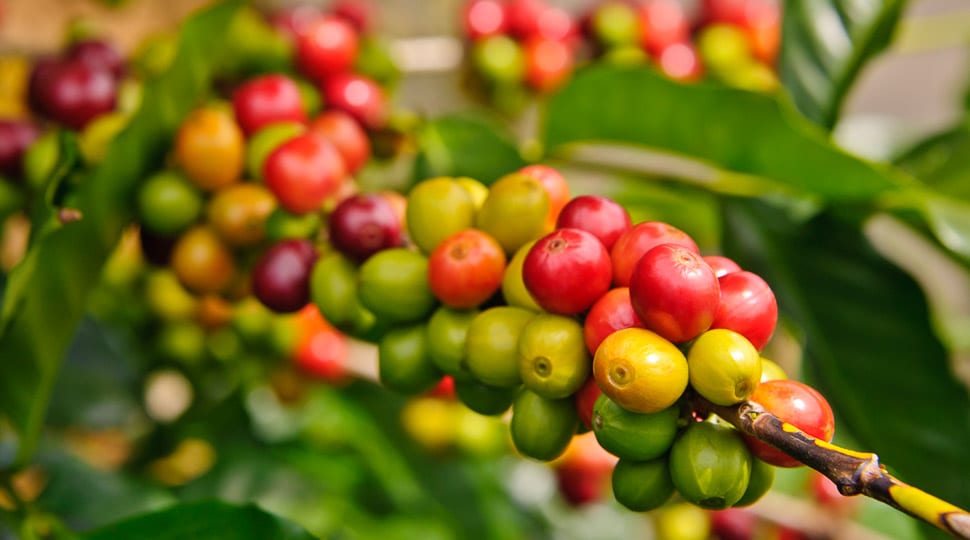
coffee berries

Once ripe, coffee berries are picked, processed and dried.

Why did you start your gratitude journey with something so seemingly insignificant?

Coffee is not insignificant! Without it, I’d be a zombie. That said, I wanted to start with something small because I wanted to show that even the simplest items require hundreds of people—designers, biologists, miners, politicians, financiers, truckers, goat herders. I chose coffee because I’m an addict. But it could have been anything. I could have chosen to follow the gratitude trail for my socks, toothpaste, light bulbs, you name it.

What was the most surprising discovery?

That it takes the world to make the smallest things in our lives. I could have spent years travelling the globe and thanking folks for my coffee. I could have gone to Chile and thanked the miners who get the copper for the wires in my coffee roaster. I could have gone to China to thank its manufacturers for making the special bricks in the steel factory that can withstand extreme heat. I bet I could have visited almost every nation on earth.

Line2


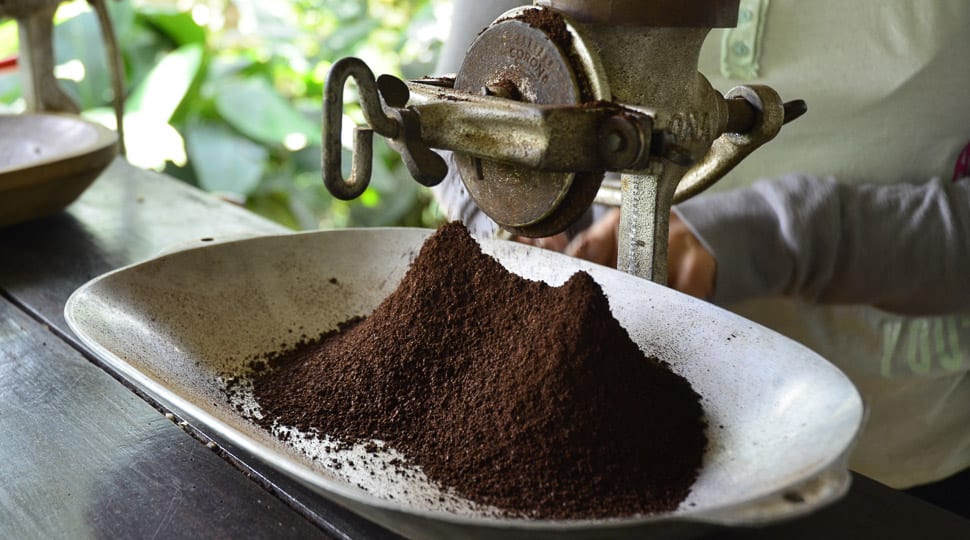
Ground coffee seeds

Dried coffee seeds (or “beans”) are then roasted and ground.

You say a crucial part of gratitude is the act of noticing. Travel is, of course, an ideal time to do this. How do we cultivate this ability even when in familiar territory?

Even at home, I try to have a travel mindset. I try to pretend I’m a tourist and notice the small things, like the cool light bulbs in my local café. I know we’re all rushed, but maybe let your food stay on your tongue for five seconds longer—just five seconds—and notice the interplay of flavours, the sweetness, the acidity, the texture.

What’s the difference between feeling and being grateful?

To me, the big difference is between feeling grateful and acting grateful. Both are good. But feeling grateful is more of a one-way street, whereas acting grateful makes it a two-way street. Both you and the other person come away happier. Acting grateful could be a small gesture. It could be just saying “thanks,” looking the person in the eye, giving them a non-fake smile. Acting grateful is the opposite of a vicious cycle; it’s a virtuous cycle. You thank the other person and they act kinder, then you act kinder, and eventually you are hugging each other. Well, maybe not hugging. But you are both happier.

Line2


Coffee roast

The type of roast and grind determines flavor.

Your gratitude quest followed the coffee bean’s journey backwards – from the café back to the farm. Why?

I like starting small and then following the ever-expanding circles. It lets you go down unexpected paths, and there are hundreds of them. But starting small makes it manageable.

How can someone plot their own gratitude quest? How do they choose between all the different paths they could follow?

First, choose something you’re really grateful for. Maybe wine or chocolate or even Coca-Cola. That way you know where you’ll end up—in a vineyard, a cacao farm or Atlanta’s Coke factory. Then make a list of all the parts that go into your product. There will be hundreds. Choose what interests you. There’s no wrong way to go.

Line2


A.J. Jacobs

Distributors help small coffee farmers supply your favorite roasts and beans to coffee shops around the globe.

Here, A.J. recounts his top three travel experiences while reporting the book – plus, where his gratitude might take him next.

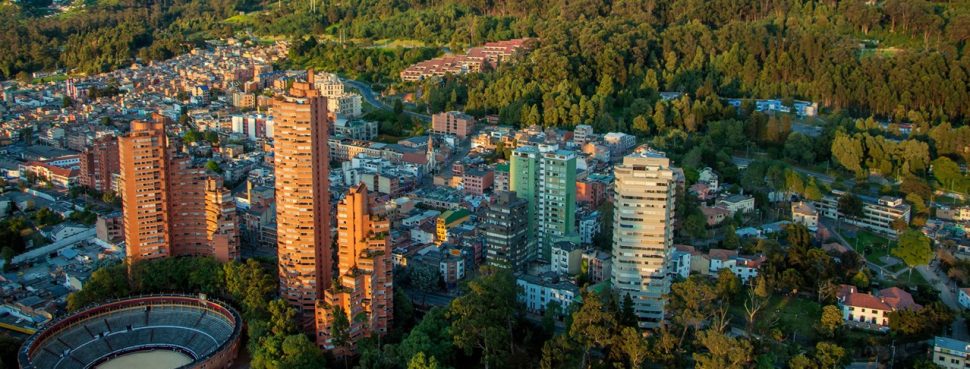
  1. I loved visiting Colombia, where I went to a farm where my [coffee] beans are grown. It’s in a tiny town in the southwest of the country. I was driven to the farm on a series of winding mountain roads, but it was worth the scary hairpin turns. The view of the fog-shrouded mountains was astounding. And there were the biggest chickens I’ve ever seen – the size of adult pit bulls!
  2. I also flew to Chicago and drove two hours to a steel mill in Indiana. It was fascinating to take a tour of the factory. It looked like the Fourth of July – the showers of sparks resembled an extended fireworks display.
  3. I live in New York City and drove 100 miles north to the Catskills. It’s a gorgeous area – and home to the reservoirs that give New York its water. The reservoirs are actually open to the public – you can hike and fish and rent boats there.
Line2


Coffee

Up Next

In the spring, our family is taking a vacation to Japan. There will certainly be a lot of thanksgiving on that trip. My kids are huge Nintendo fans. Since the company is based in Kyoto, we’re going to thank as many Nintendo employees in person as possible.


A.J. Jacobs is a journalist, a lecturer and the author of It’s All Relative and My Life as an Experiment, among other titles. He lives in New York, where his Thanks a Thousand journey began.

Your Journey Begins Here

Let us be a part of your next quest.

Eric Christian Olsen on the Magic of Mini Family Vacations

There are two reasons my wife, Sarah Wright, will never forget Four Seasons Resort Punta Mita. One: She was obsessed with the fresh guacamole, magically refilled by the staff. And two: After a beautiful dinner, three desserts and bottle of Bordeaux on the beach, I got down on one knee and proposed in the moonlight. That was seven years ago. It was our first Four Seasons experience, and we haven’t stayed elsewhere since.

Sarah and I both believe firmly in the fundamental philosophy that happiness is the journey, not the destination. The things that I remember most about my childhood are experiences like loading up the family station wagon for vacations in the Cascades, fishing in the Teton Mountains or bodysurfing with my dad for hours along the Oregon coast.

Sarah and I both believe firmly in the fundamental philosophy that happiness is the journey, not the destination.

We knew we wanted to recreate that with our kids. So, when I renegotiated my work contract, instead of asking for more money, I asked for four weeks off during production. This has allowed our family to take mini vacations throughout the year. We even created a vacation folder of all the places we want to explore next together.

We started planning family trips from the moment our son, Wyatt, was born. He travelled like a pro – toting a carry-on Gruffalo suitcase filled with books and Legos, wearing sandals to expedite security checks, and earning platinum airline status before he was 2 years old.


View this post on Instagram


A post shared by Eric Christian Olsen (@ericcolsen)

And we soon discovered that while a lot of hotels shun kids, Four Seasons truly welcomes every member of the family. I honestly think the staff is specially trained to handle toddlers with jet lag. One night, we arrived really late at Four Seasons Resort O‘ahu at Ko Olina. It was way past Wyatt’s bedtime when we sat down to a starlit dinner at the restaurant. The waitress could tell he was exhausted, so she asked him his favourite singer and he said, “John Denver!” (Totally my fault.) Suddenly, the restaurant musician started playing “Take Me Home, Country Roads.” The look on Wyatt’s face was pure joy.

Four Seasons Oahu at Ko Olina

When travelling with toddlers, you have to plan on things going sideways. But when we’ve stayed with Four Seasons, they go out of their way to pick up the slack. In London, my shuttle to MCM Comic Con never showed up. The Concierge at
Four Seasons Hotel London at Tower Bridge didn’t just drive me 16 kilometres through traffic in the house Maybach – he offered to do it every day.


View this post on Instagram


A post shared by Eric Christian Olsen (@ericcolsen)

At Four Seasons Resort The Biltmore Santa Barbara, it started pouring rain just as my family finished breakfast. You could tell Wyatt was nervous about navigating this deluge until one of the Resort staff members appeared with a kid-sized umbrella. Wyatt took it and sprinted out into the rain, jumping through puddles the whole way back to our bungalow. That simple act of thoughtfulness became a teachable moment for him: We navigate those unexpected obstacles while embracing and finding happiness in the present.

Four Seasons Resort The Biltmore Santa Barbara

On a trip to Grand-Hôtel du Cap-Ferrat, A Four Seasons Hotel, a Concierge team member scooped up Wyatt as soon as we stepped in and gave him a stuffed sea turtle. Wyatt’s favourite activity is swimming, and he learned to swim there in the Club Dauphin seawater pool overlooking the Mediterranean while that stuffed sea turtle watched supportively from the pool deck.


View this post on Instagram


A post shared by Eric Christian Olsen (@ericcolsen)

When we ask Wyatt where he wants to go next, he consistently says Oahu. He will tell you about a hidden beach, down the road from the Resort, where he can swim with turtles and eat avocados (secretly provided by Chef John). He’s 5 years old now and already has developed such an emotional connection to the Oahu staff. The chefs there know that he is obsessed with the movie Ratatouille. After lunch during one recent visit, they gave him a chef’s jacket and hat – which he carried around for the next eight months – and invited him into the kitchen to make chocolate sea turtles. That was a life highlight for him.


View this post on Instagram


A post shared by Eric Christian Olsen (@ericcolsen)

Experiences like this make me fall in love with Four Seasons time and again. It’s why I know we’ll continue to share milestones and once-in-a-lifetime moments on our travels. This journey of life is magical and fleeting, and we want to make sure we are taking stock of every experience we can.

YOUR JOURNEY BEGINS HERE

Where will your next journey take you?

Waves lapping onto beach

An Instagram Tour of Singapore – Plus What Your Phone Can’t Capture

Singapore is an Instagrammer’s paradise. Peranakan shophouses, which reflect the deep Chinese roots of the local population, line the streets like exquisite doll’s houses as modern glass high-rises like Four Seasons Hotel Singapore aim at the sky. Once you’ve got the perfect shot of your suite – the Hotel has unveiled newly redesigned interiors with fascinating Singaporean details to celebrate the Lion City’s 200th anniversary – head out to these picture-worthy places, recommended by our experts.

Singapore Botanic Gardens

It’s easy to take a quiet moment for yourself as you wander the sprawling 82 hectares (200 acres) of Singapore Botanic Gardens, the city’s first UNESCO World Heritage site. “In this 160-year-old tropical garden, you can take a stroll and enjoy a breath of fresh air,” says Wahidah Jabbar, Four Seasons Hotel Singapore Guest Recognition Specialist. The National Orchid Garden is the most popular stop – no surprise here, as it’s the largest collection in the world.

Outside the Frame:

Dress in your Sunday best for dinner at The White Rabbit, in an elegantly restored chapel from the 1930s. The acclaimed prix fixe menu is made up of classic, exquisitely plated European dishes.

National Gallery Singapore

The former Supreme Court building and the old City Hall have been combined to make the largest museum in Singapore. The National Gallery commingles modern architecture, a historic façade, stately staircases and an impressive collection of Southeast Asian art. Don’t miss the rooftop bar’s unobstructed views of the iconic Marina Bay Sands.

Outside the Frame:

Inside the same building is the National Kitchen by Violet Oon, serving elevated Peranakan-style food. The satay is not to be missed,” says Christopher Tsoi, Guest Experience Manager at Four Seasons Hotel Singapore, but for something different, try the beef cheek braised in a spicy tamarind gravy with gula melaka [a type of palm sugar].”

Koon Seng Road

Travellers from around the globe come for a photo shoot in Koon Seng Road, Singapore’s most colourful street. This row of Peranakan shophouses is painted in bright hues that preserve its Chinese history.

Outside the Frame:

Laksa, a spicy noodle soup, is a staple in Singapore, and 328 Katong Laksa is an institution. “Be sure to try one of Singapore’s most famous laksa there, where Gordon Ramsay had a cook-off in 2013,” says Sean Chew, Four Seasons Hotel Singapore Guest Relations Officer.

Old Hill Street Police Station

With 927 rainbow-painted shutters, Old Hill Street Police Station might just be the prettiest former jail in the world. Now home to the Ministry of Communications and Information (MCI) and Ministry of Culture, Community and Youth, this national monument is best photographed from across the street.

Outside the Frame:

Named one of Asia’s 50 Best Bars in 2018, The Old Man is just a 20-minute walk away. “This bar’s cocktail menu is inspired by Ernest Hemingway,” says Yanlin Tan, Four Seasons Hotel Singapore Reservations and Telephones Manager. “Be sure to take a seat at the bar, as it has a cold counter to keep your drinks cool.”

Tan Teng Niah

Tan Teng Niah, a Chinese villa painted in a crayon box of colours, is another example of what makes this vibrant city a photographer’s dream. Built in 1900, it’s the last Chinese bungalow standing in Little India. And as of this year, it’s for sale.

Outside the Frame:

Across the street at Tekka Hawker Centre is one of the best street food stalls in Singapore. “Try 545 Whampoa Prawn Noodles for just $4. It’s run by Lu Ruifang, a finance graduate turned third-generation hawker,” says Isylana Ismail, Four Seasons Hotel Singapore Guest Services Manager. Her recipe was passed down to her from her grandfather.”

Gardens By The Bay

An admittedly touristy spot, thanks to a marvellous collection of 1.5 million flowers and plants spread over a dozen different attractions, Gardens by the Bay is nevertheless worth a night-time visit for the light-and-music show known as Garden Rhapsody. “Get there around 6:00 pm so that you have some time to explore and find a good spot on the grass to enjoy the show,” says Kamarl John, restaurant chef at One-Ninety at Four Seasons Hotel Singapore.

Outside the Frame:

Started by KF Seetoh – the champion of Singapore street food and a friend of Anthony Bourdain – Makansutra Gluttons Bay gathers together a fantastic selection of food stalls serving local favourites like Hainanese chicken rice and chilli crab.

Fort Canning Park

This relatively small hill near downtown Singapore has seen its share of history – including the arrival of British forces in 1819 – but today the green space hosts free festivals, concerts and parties. “Keep an eye out for the Shakespeare in the Park productions in May and Films at the Fort outdoor movies in August,” Tsoi says. Pro tip: The park’s heavily Instagrammed spiral staircase can be difficult to find. It’s not actually inside the park, but at the end of Fort Canning Tunnel underpass just outside the entrance.

Outside the Frame:

You may recognize Chijmes as the beautiful Catholic church from the wedding scene in Crazy Rich Asians. In fact, it’s a neoclassical former convent redesigned into a complex with dozens of bars and restaurants.

Jewel Changi Airport

Singapore’s Changi Airport is a destination in itself. Consistently ranked as the best airport in the world, it boasts an addition, Jewel, that has locals and tourists pulling out their cell phones. “Get your insta-worthy shots at the world’s tallest indoor waterfall, then check out the Canopy Bridge with its glass-bottom walkway,” says Gladys Lim, Four Seasons Hotel Singapore Guest Relations Officer, of the 10-storey complex, which opened in April.

Outside the Frame:

For a unique dining experience, ride a bumboat out into the water. “At Smith Marine Floating Restaurant,” Lim says, “you can catch your own fish at the Smith Marine and have it cooked on the spot any way you like it.”

Your Journey Begins Here

Discover picture-perfect Singapore.

Explore