The Cantonese Connection

It was the first day of our Cantonese food adventures, and my Hong Kong Chinese friends had arranged a lunch in the Nan Yuan (“South Garden” in English), one of the grand old restaurants of Guangzhou, China. We wandered through the colonnaded gardens and halls resplendent in stained glass of many colours to our private dining room, where the feast began beneath a glittering chandelier. 

The menu was like a roll call of classic Cantonese cooking. We began with a warming soup brewed from pork stomach and kudzu root (an ingredient in traditional Chinese medicine) that was satiny on the tongue, before the waiter brought in a whole roast goose that had been chopped and then reassembled on the plate, its tender flesh crowned with dark amber skin that was meltingly crisp. Soon, there was sticky, wobbly fish maw, one of the dried seafood delicacies so adored in this region; a whole steamed grouper with glistening flesh; chicken and abalone stewed in a clay pot; stir-fried greens; and, to finish, sticky rice balls stuffed with bird’s nest (a delicacy made from the saliva of swiftlets) in a red bean soup that just murmured of sweetness. 
Lung King Heen at Four Seasons Hong Kong
A feast at Lung King Heen at Four Seasons Hotel Hong Kong.
Lung King Heen at Four Seasons Hong Kong
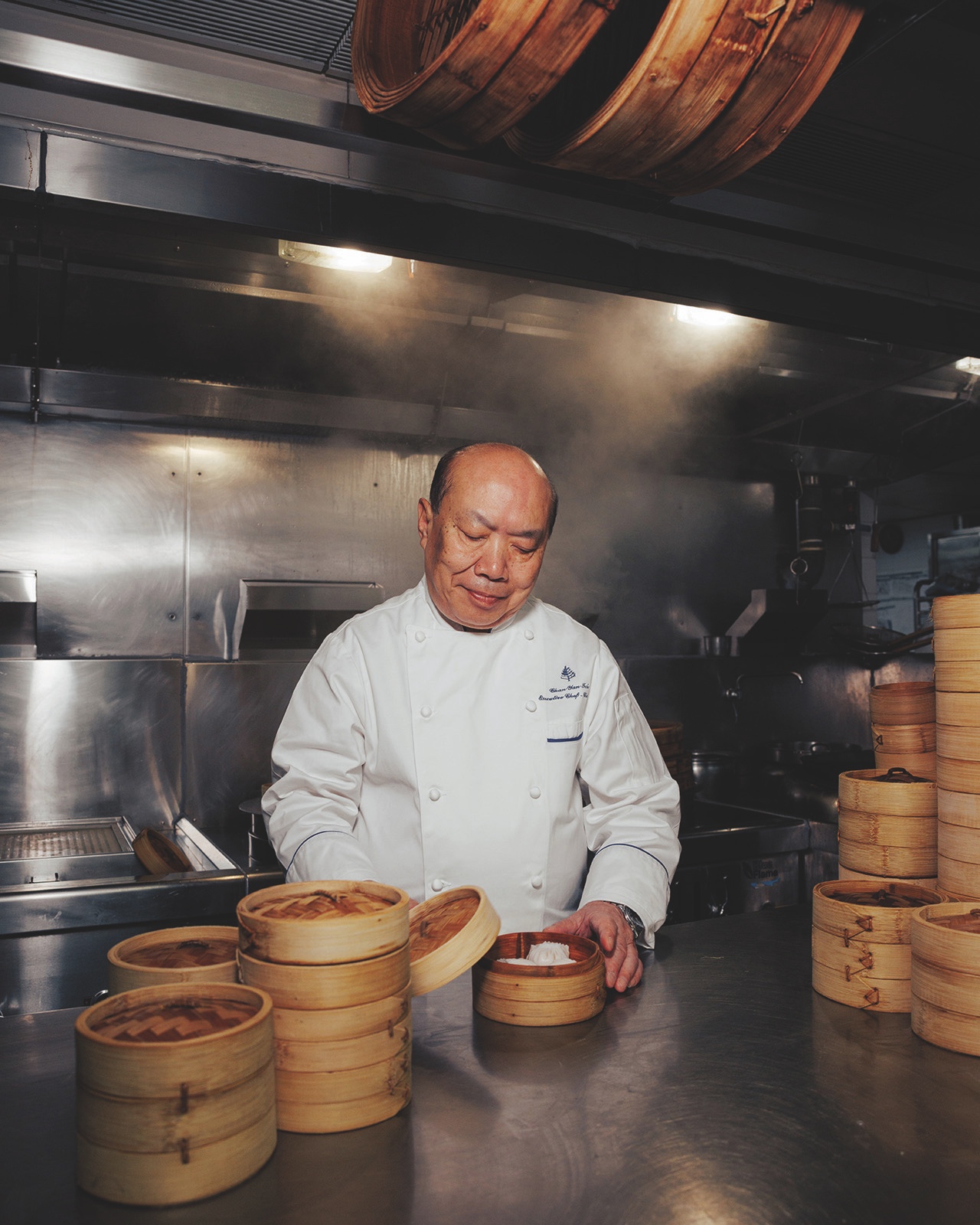
Chef Chan Yan Tak’s Lung King Heen was the first-ever Chinese restaurant in the world to garner three Michelin stars.

Cantonese is one of the world’s most familiar cuisines, yet also one of its least understood. It was the Chinese food first encountered by foreigners in modern times, in the trading enclaves of Macau and Canton (now Guangzhou). It was here, in Guangzhou, that chefs are said to have invented—to suit the tastes of visiting foreigners—the boneless sweet-and-sour pork dish that would become a staple of international Chinese menus. Later, emigrants from the Cantonese-​speaking south of China would voyage to America to work the mines and build the railroads, carrying with them the flavours of their homeland.  

Cantonese immigrants opened restaurants across America and in many other countries and invented what much of the world would come to know as Chinese food. It was a formula rooted in Cantonese tradition but heavily adapted to Western palates: tasty, inexpensive, and devoid of awkward bones and wobbly textures. Instead of steamed fish, vibrant vegetables, and gentle soups, there were fried noodles and boneless meats. This hybrid cuisine was to become wildly popular but also the victim of its own success. Outside of China, Chinese cooking, so diverse and complex, was rarely considered to be sophisticated. Instead, it was branded as cheap, lowbrow, and unhealthy.  

It’s one of the great ironies of history that China’s great gastronomic culture, along with one of its most esteemed regional traditions, should be so underestimated. Within China, Cantonese is regarded as one of the country’s Four Great Cuisines, along with those of Sichuan, Shandong, and the Jiangnan region around Shanghai. Although you wouldn’t guess it from the deep-fried tidbits and sweet-sour flavours that characterize Chinese food abroad, Cantonese cooks are renowned for their insistence on fresh ingredients, their light touch with seasonings, and their precise command of heat and timing.  
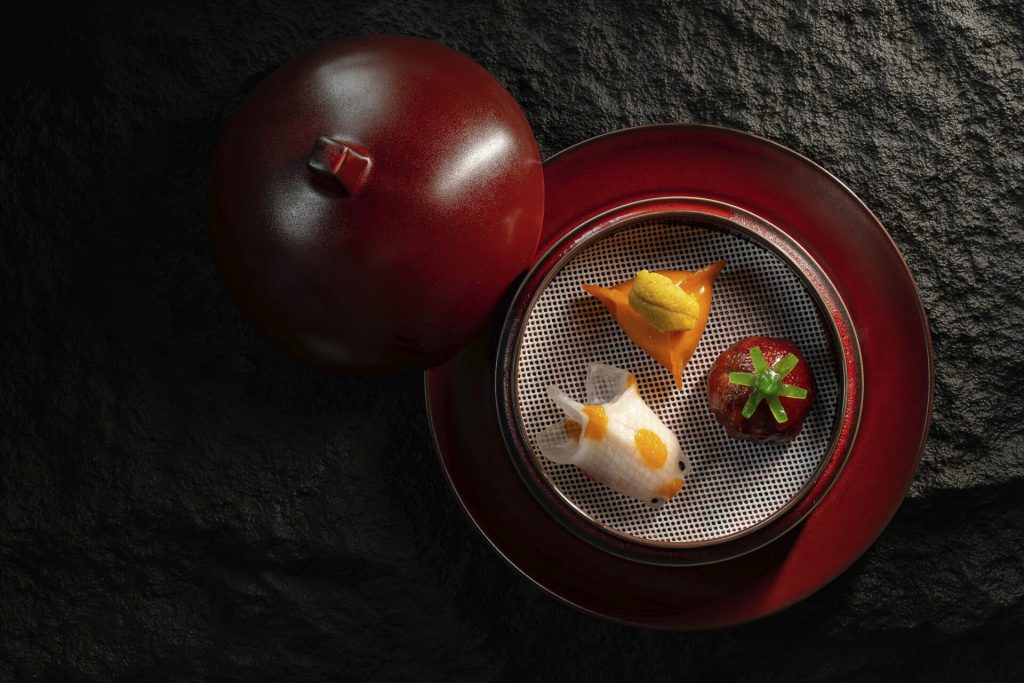
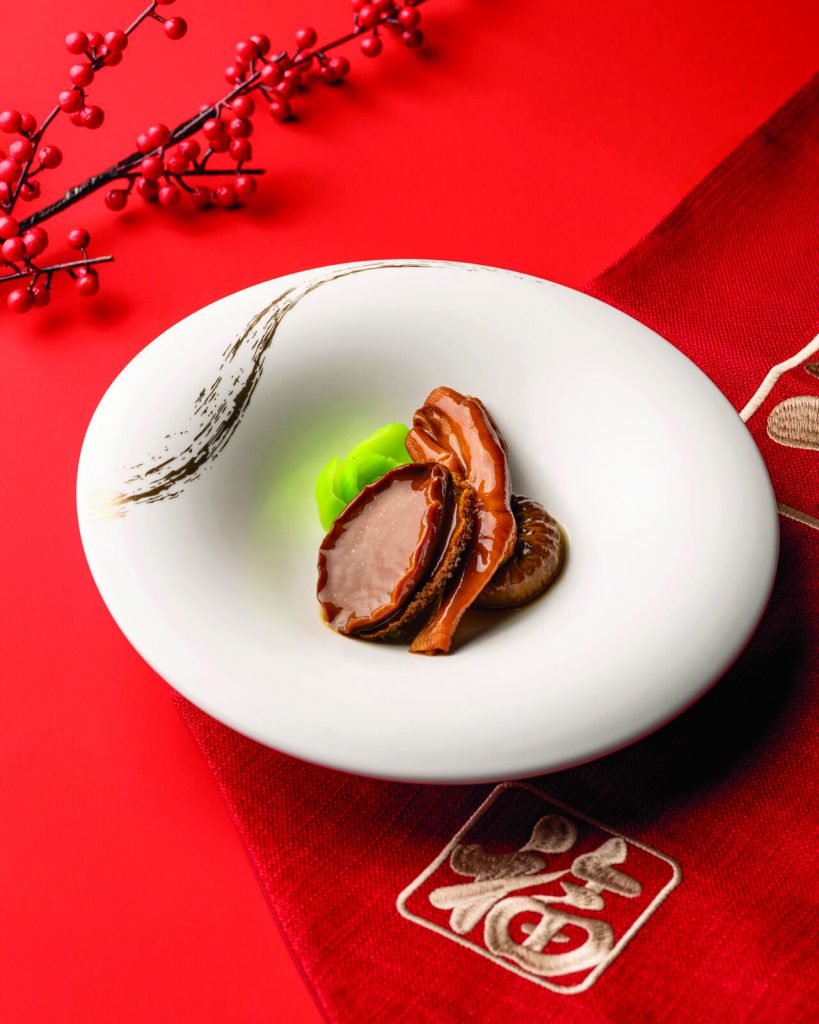
Yu Yue Heen at Four Seasons Guangzhou
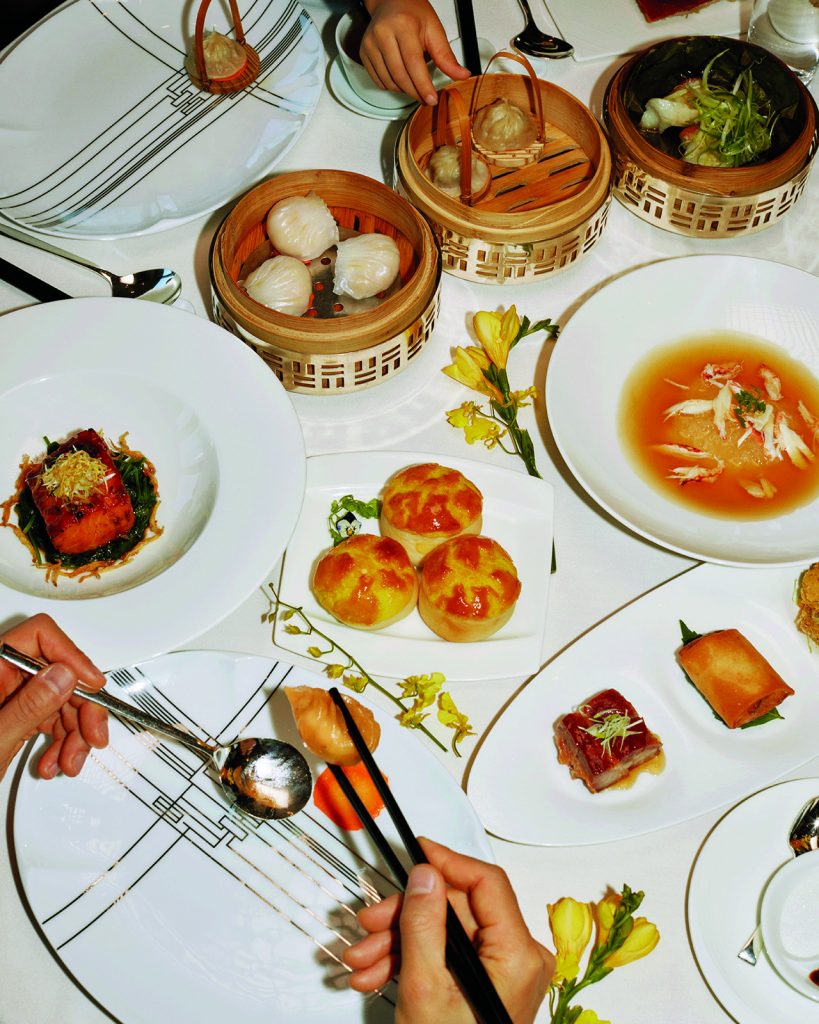
Artful delicacies at Yu Yue Heen at Four Seasons Hotel Guangzhou.

“Cantonese food is all about the essential tastes of ingredients,” says chef Yongsheng Li of the Michelin-starred Yu Yue Heen restaurant at Four Seasons Hotel Guangzhou. “With a fine steamed fish, we might season it with nothing but oil and salt because we don’t want to cover up its natural flavour. And we insist on eating foods in their proper seasons: lamb in winter, for example, toon shoots [from the Chinese mahogany tree] and other sprouting vegetables in spring.” Soups, made with ingredients designed to maintain health in every season, have a particularly important role in local meals. 

One of the most representative local dishes, says Li, is white cut chicken. “The key to this dish is to choose the right breed and age of chicken and cook it within hours of slaughter,” he says. Like many Cantonese dishes, it appears plain but is technically complex: the bird must be poached at a carefully controlled temperature, like an artisanal sous vide, resulting in taut skin and flesh that is brisk but juicy, with a little pinkness in the bones.  

The flavours of Cantonese cuisine are more discreet than, say, the fire and spice of Sichuan. Ginger, spring onions, and aged tangerine peel are favoured seasonings, along with soy sauce and black fermented soybeans. Certain cooking methods and culinary creations are regarded as quintessentially Cantonese: the delicate steaming of seafood; fastidious roasting techniques that give pork and poultry tempting aromas and crisp textures; translucent shrimp dumplings and a whole gamut of delicate dim sum. There are flash stir-fries imbued with wok hei (“the breath of the wok”); nourishing desserts that often take the form of soups; and hearty claypot dishes. Cantonese eaters take particular delight in the textures of their foods, which is why they enjoy so many ingredients that can perplex foreigners, like slippery-crunchy jellyfish.  
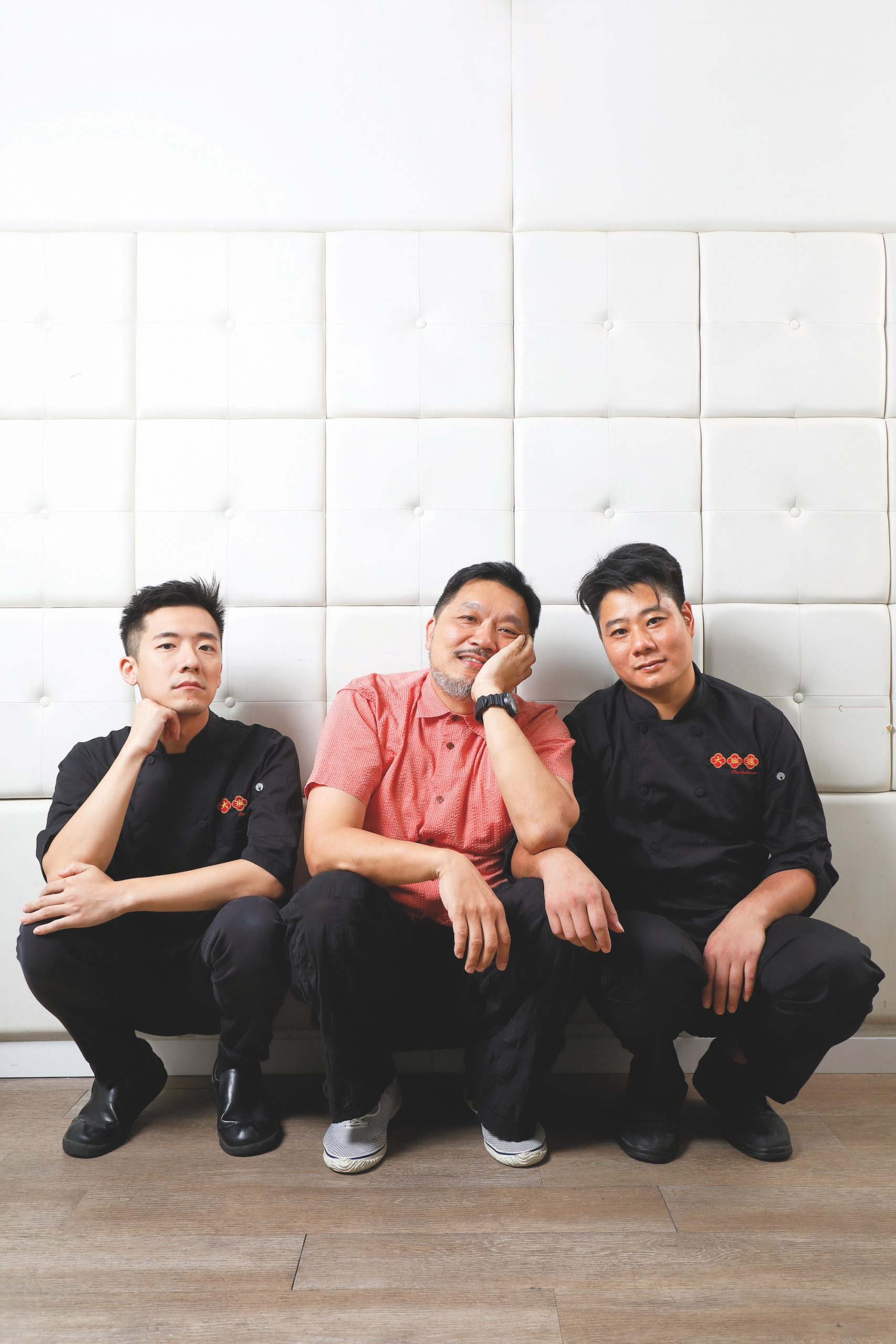
The Chairman
The Chairman chefs, including Danny Yip, at center.
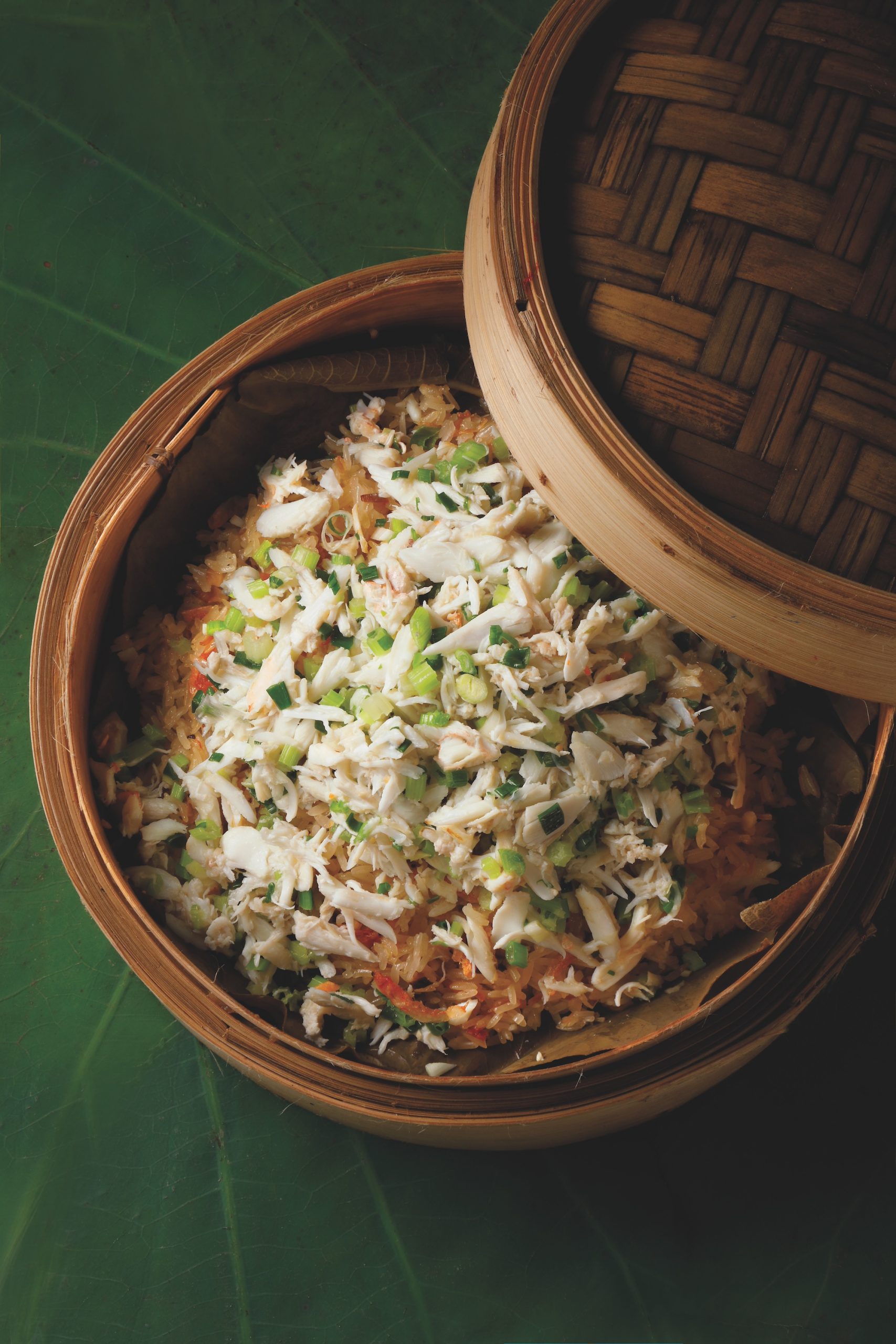
The Chairman
Sticky rice pairing steamed crab with tiny pink shrimp at the Chairman.

Cantonese food itself is diverse and wide-ranging. In Guangzhou, you could spend days exploring dim sum alone, popping into a tiny café that serves fresh cheung fun (noodle rolls made with steamed sheets of rice pasta) or brunching on dozens of dumplings in the gorgeous Tao Tao Ju restaurant in the heart of the old town. You might lap up some turtle broth from a blue-and-white china pot at Dayang, a hole-in-the-wall conspicuous for its towers of steamers, each layer filled with pots of a different kind of soup. At the other end of the social scale, you could spend a fortune on abalone and other prized delicacies. (And if you’d like a taste of the origins of Westernized Chinese food, you could go to the Guangzhou Restaurant for what they call their “nostalgic” sweet-and-sour pork with chunks of pineapple.)  

Any local gourmet can tell you that Cantonese isn’t even a single cuisine. It encompasses not just the rich gastronomic traditions of Guangzhou, the provincial capital, but also the distinctive foods of Shunde, known for its unusual dairy foods made from buffalo milk, and of the Chiu Chow region in the east, with its extravagant seafood, hearty peasant stews, and desserts such as sweet, lardy taro porridge. Another element is the rustic tradition of the Hakka people, whose classic dishes include stuffed tofu and pork belly steamed with salty vegetable preserves. And in Hong Kong, with its wealth and cosmopolitanism, Cantonese food mixes with the flavours of the world.   

For many years, Chinese food of any kind was neglected by the international arbiters of taste. Until the end of the 20th century, China itself was largely off the international travel map, and most Chinese restaurants abroad were of the cheap-and-cheerful variety. 

“Foreigners misunderstand Cantonese cuisine because they only encounter the basic stuff and never have the chance to taste more elevated versions,” says veteran Hong Kong food writer and restaurateur Lau Kin-wai. “Most Chinese restaurants abroad just serve Chinese food as it exists in foreigners’ imaginations.” 
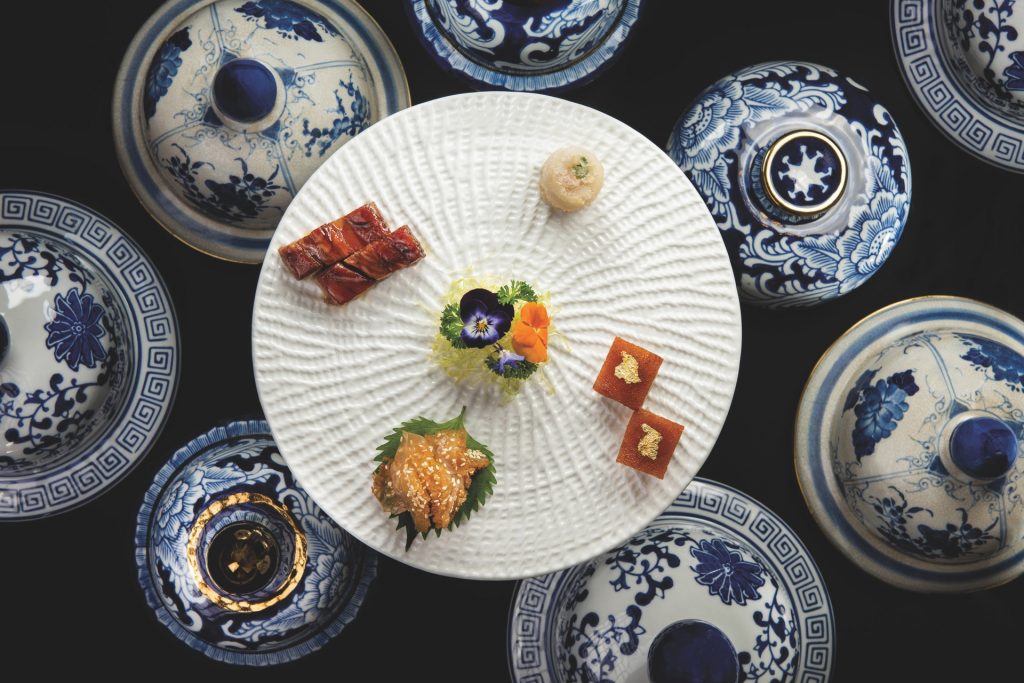
Zi Yat Heen at Four Seasons Macao
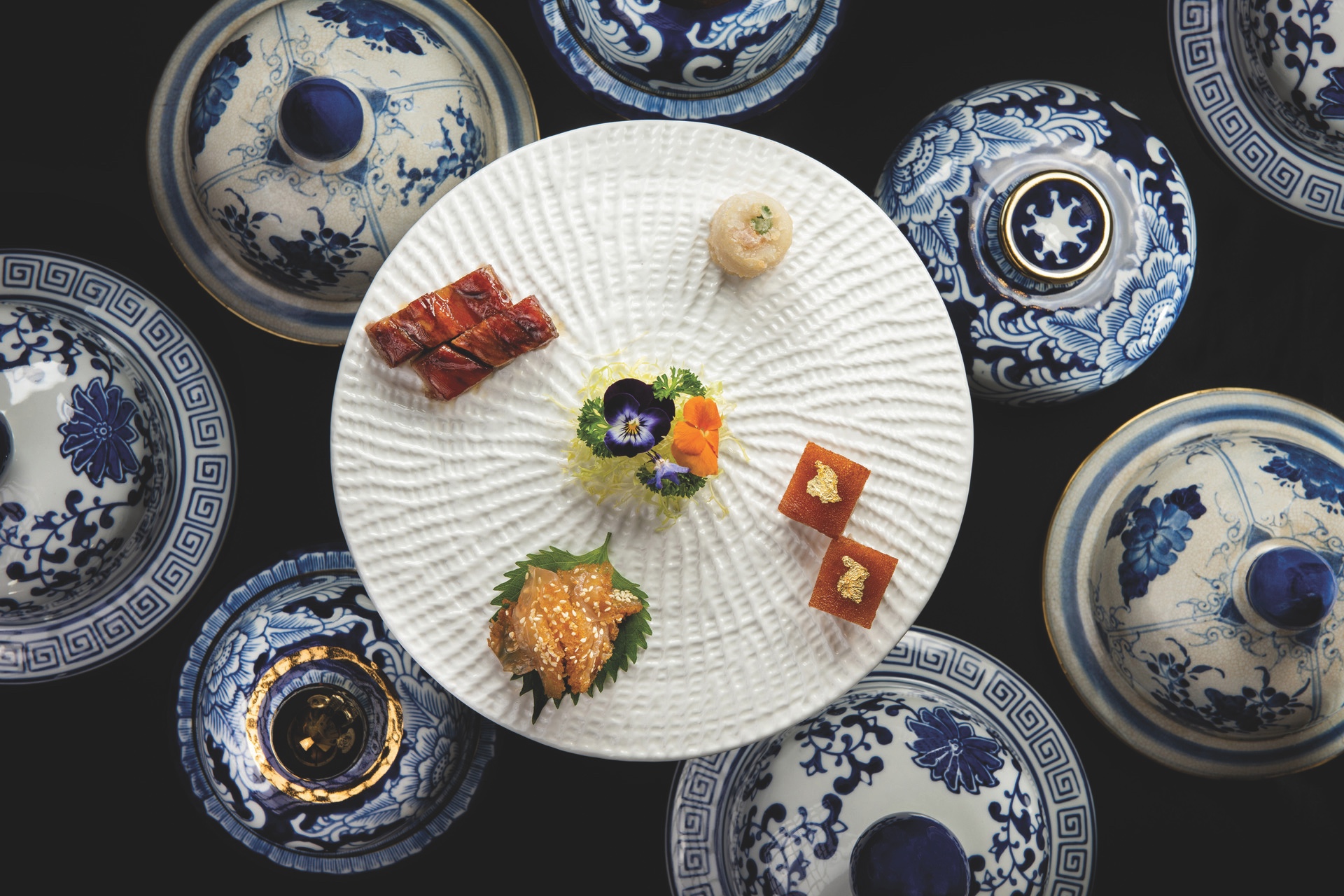
The appetizer plate at Michelin-starred Zi Yat Heen at Four Seasons Hotel Macao. “We imagine Cantonese classics with finesse, accenting them with global luxuries,” says Chef Anthony Ho.

Over the last couple of decades, the outside world has begun to wake up to the possibilities of Chinese food. Increased travel and emigration by people from many parts of China (not just from the Cantonese south) have spurred the development of a more authentic Chinese dining scene in Western cities. Sichuan cuisine has exploded in global popularity, shattering the idea of Chinese as a monolithic food culture, while the flavours of northern Xi’an, spicy Hunan, and the Shanghai region have also begun to attract attention. And China’s rise in wealth and power on the international stage is inevitably starting to raise the status of Chinese food and culture more generally.  

In 2009, Michelin for the first time awarded three stars to a Chinese restaurant, Lung King Heen at Four Seasons Hotel Hong Kong, which was then, as now, under the stewardship of veteran chef Chan Yan Tak. It was a belated acknowledgment that Chinese food could be both fine and expensive, and a seismic moment for a restaurant specializing in classic Cantonese cuisine. “I was taken aback, but also honoured by the recognition,” says Tak. The restaurant’s specialities include Superior Pottage, a rich, nutritious soup that distills the flavour essences of lean pork, Yunnan ham, and fine local chickens. This local delicacy is light-years away from the kind of food served in American Chinese diners.  

The same year, 2009, another Cantonese restaurant, the Chairman, opened in a quiet backstreet in Hong Kong and began to make waves. While living in Australia, its owner, Danny Yip, had been infuriated with the lowly reputation of Chinese food. After returning to his native Hong Kong, he decided to take a fresh look at traditional Cantonese food and produce “a fine version of home cooking.” He and his team applied themselves to reinventing humble dishes, like congee and claypot rice, using premium ingredients and spending months developing individual recipes, such as their now-classic steamed flowery crab with Shaoxing wine. In 2021, the Chairman was the first Chinese restaurant to top the annual list of Asia’s 50 Best Restaurants. 

The spotlight brought by these international accolades has opened the door to greater global recognition of Chinese cuisine. It has also helped to give other Cantonese chefs the confidence to take a fresh look at their traditions. After all, Cantonese food is in many ways perfectly suited to contemporary tastes and trends, with its emphasis on lightness and balance and its attention to fine, seasonal ingredients. 
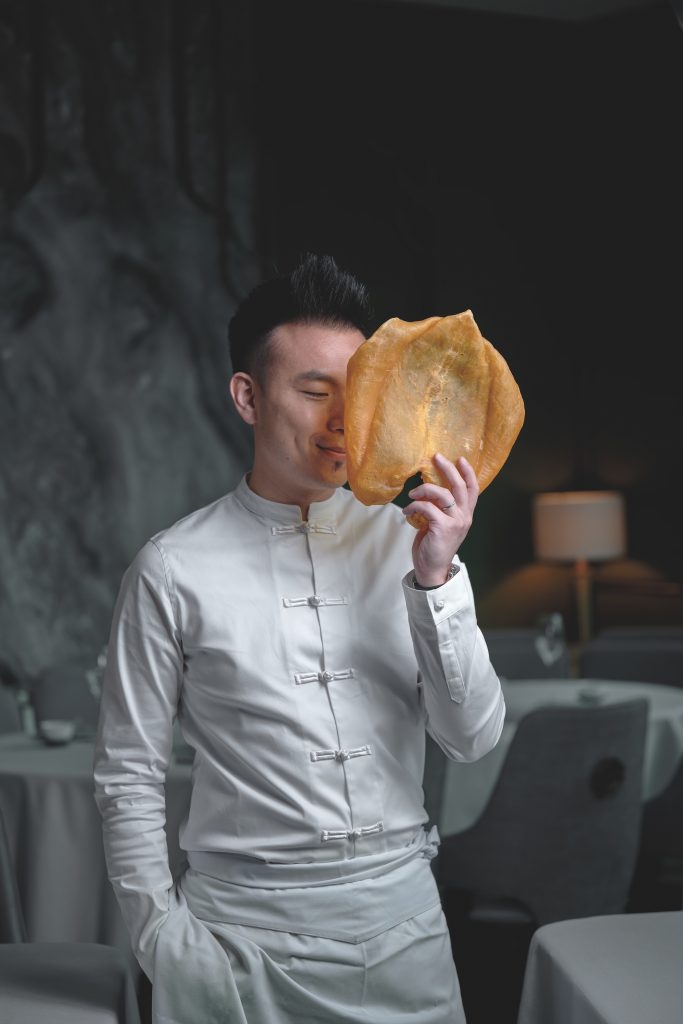
One chef who is helping to reshape perceptions of Chinese food is Vicky Cheng. Although Hong Kong born, he grew up in Canada, where his ambition was to become a famous French-trained chef because, he says, “I always believed French cuisine was the epitome of fine dining.” After years spent working in French kitchens, he realized, he says, that there was an essential contradiction in his life, because “I was craving Asian food every day.” So, he returned to Hong Kong for exposure to Asian flavours. His first restaurant, VEA, presented a fusion of his French and Chinese influences, and then in 2021, he opened Wing, a new kind of Chinese restaurant. 

“In the beginning, I knew nothing about Cantonese food because all my training had been French,” he says. He applied himself to studying the local culinary arts through a process of trial and error: in particular, he wanted to master dried seafood delicacies, such as sea cucumber and fish maw. “I knew I would combine French technique with local ingredients and felt that if I was going to tackle a fine dining approach, I needed to conquer these important delicacies, the Chinese equivalents of French caviar and truffles.” Now, he says, he cooks in a “boundaryless” way, without the baggage of traditional rules.  

Affluent Hong Kong Cantonese may be the world’s most discerning diners, well versed in both Chinese and international cuisines, and Cheng’s novel approach faced a certain amount of initial skepticism. A few years in, he has converted many of his critics, while his eclectic cooking seems perfectly suited to a culinary region that has long been China’s window onto the world. In 2025, Wing is in third position on the Asia’s 50 Best list.  

“We are just so happy that we are now on the international map, bringing the attention of the international crowd to Chinese food,” says Cheng. “And I hope this recognition on the world stage is just the beginning, not just for myself but for Chinese cuisine.”  

A New Season in Napa: Fall Fashion
Inspired by Wine Country

California’s Napa Valley is ideally suited for Cabernet Sauvignon grapes: The region offers a sunny, warm climate; good drainage; and volcanic soils that add an earthy, rich complexity to its wines. At the new Four Seasons Resort and Residences Napa Valley, where the vineyard is protected by the Palisades mountains and oak-covered hills, world-class winemaker Thomas Rivers Brown and his team at the on-site Elusa Winery have carefully designed and planted it to intensify the grapes’ flavour. Take part in the winemaking process, from harvesting grapes to blending and ageing the wine, or learn about Calistoga’s unique terroir during a tasting session – the Resort provides the most complete grape-to-glass experience in Napa.

“The moment guests step foot on the property, they are welcomed into an extraordinary wine country oasis,” says General Manager Mehdi Eftekari. “Awe-inspiring views of the vineyards and Palisades Mountains are an idyllic backdrop to enriching experiences at TRUSS Restaurant + Bar and Elusa Winery. In guests’ suites, the vines are mere inches from their terraces and balconies.”


The dramatic scenery of North America’s wine capital – and the Resort, set to open later this year – also provide an idyllic background for the season’s most stylish new fashions. The looks pair perfectly with the Resort’s natural colour palette, rich textures and easy elegance.

Explore Napa Valley with Four Seasons

2021 Fs Fall Fashion V2 1400x2000

The Resort spreads across 22.5 acres (9 hectares), offering dramatic scenery and viticultural discovery at every turn. It’s a natural hideaway for relaxation and indulgence, framed by picturesque forests and majestic mountains.

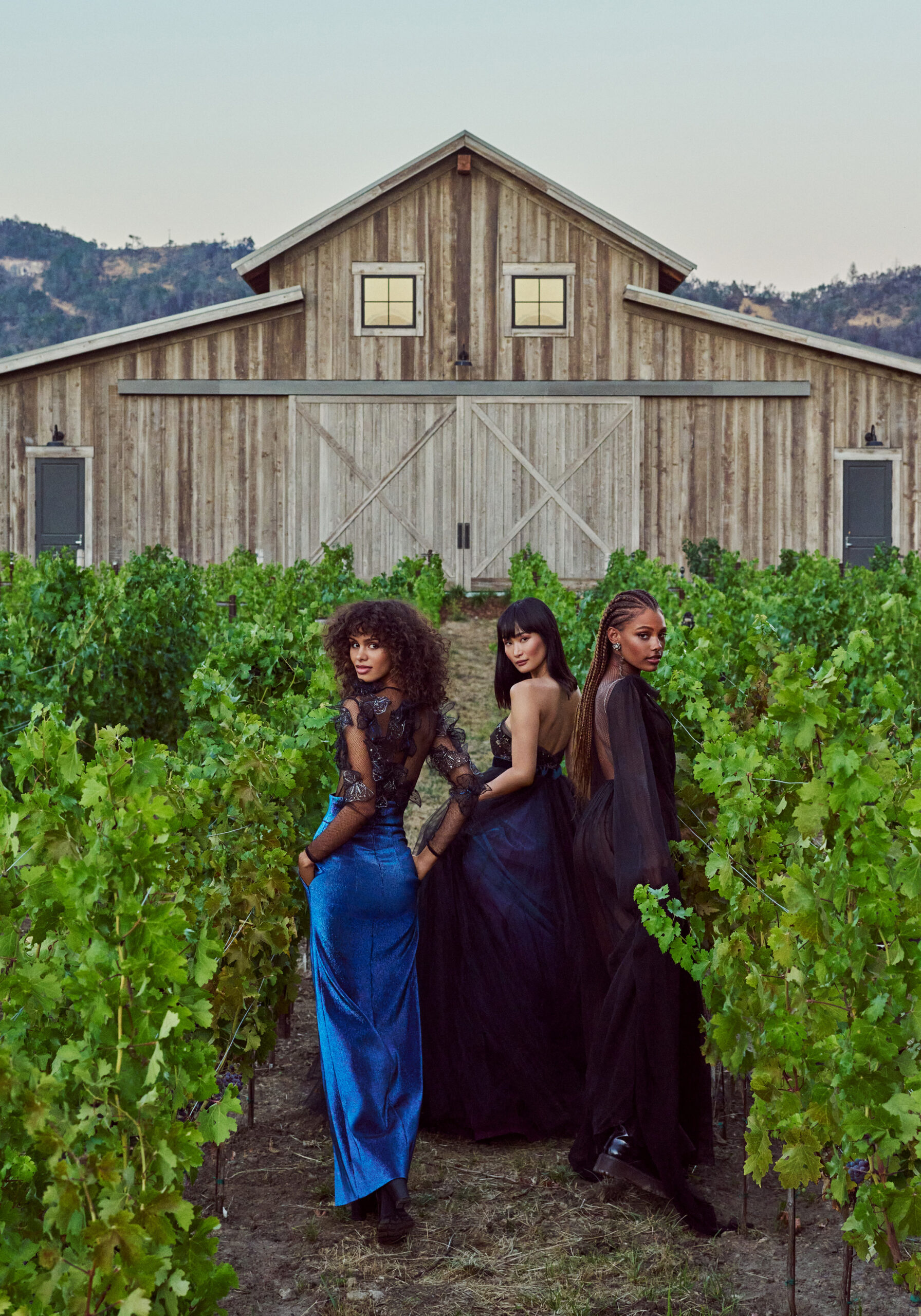
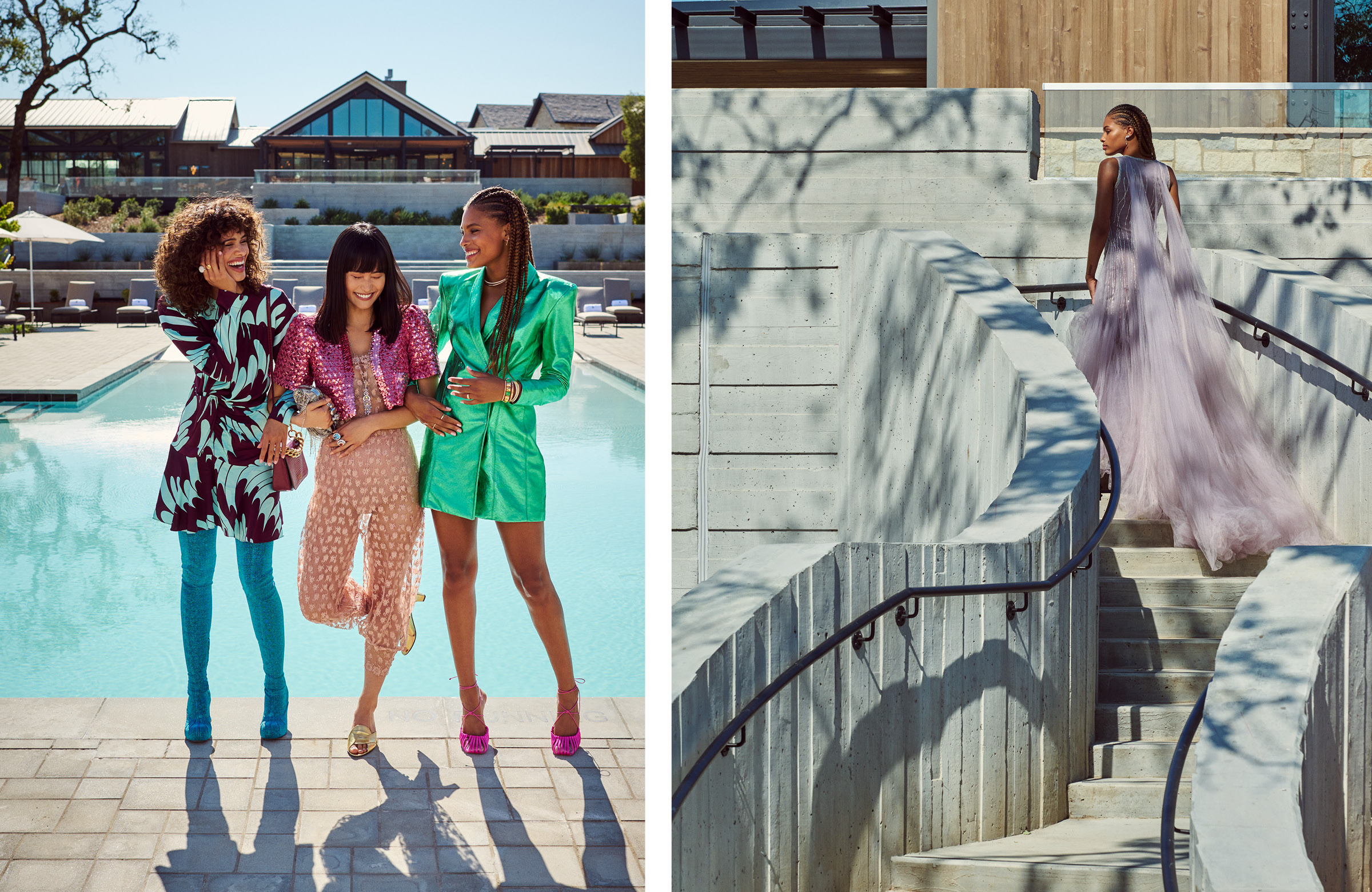
Left to right: On Julia: Genny top and skirt; Alexander McQueen boots. On Miki: Reem Acra dress. On Breanna: Valentino gown, Sethi Couture earrings.

2021 Fs Fall Fashion Collage1 1152x749

Make the most of Napa’s idyllic setting with a swim in the Resort’s two outdoor pools – the adults-only pool overlooks the vineyard, while the Resort Pool features shallow splashing areas that are perfect for families. Or celebrate the sunshine with elevated Napa cuisine at the modern TRUSS Restaurant + Bar or Cal-Mexican favourites at open-air Campo Poolside.

Left image, left to right: On Julia: Stella McCartney dress and boots; JYE ring (index finger); Sethi Couture ring (middle finger); Guess bag. On Miki: Gucci cardigan, jumpsuit and sandals; Wolford undergarments; Alexander McQueen clutch; Fabergé necklace and rings. On Breanna: Alyson Eastman dress; Chelsea Paris shoes; Tiffany & Co. necklace; Grace Lee ring (index finger); Katkim rings (ring fingers); Vhernier pink gold and jade bracelet; Sethi Couture bangles (near hand); JYE bangle (near sleeve). Right image: On Breanna: Reem Acra dress; JYE earrings.

Taste the Flavours of Napa

2021 Fs Fall Fashion 1152x749

Elusa winemaker Thomas Rivers Brown is celebrated for his non-interventionalist approach, letting the vineyard’s character shine. It’s a style that has paid off: Renowned wine critic Robert Parker Jr. has awarded him 23 perfect 100-point scores for his Cabernet Sauvignon projects over the past decade.

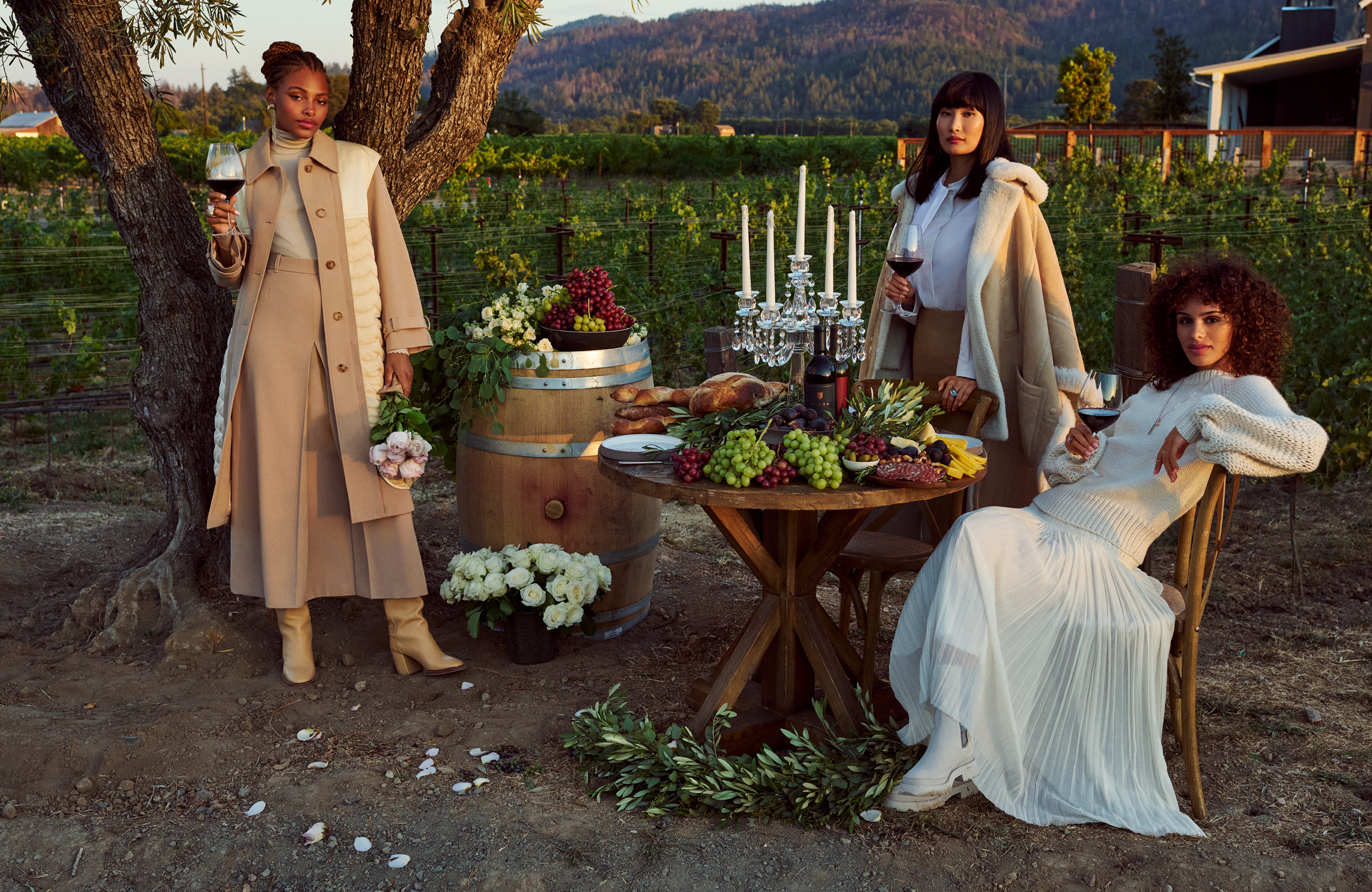
Left to right: On Breanna: Chloé coat, skirt, top and boots; Adeam earrings and ring. On Miki: Chloé poncho; Partow dress; Michael Kors Collection skirt; JYE ring (right hand); Vhernier ring (left hand). On Julia: Chloé jumper and skirt; Brunello Cucinelli boots; Sethi Couture necklaces, rings and earrings.

Savour Napa Valley wines

2021 Fs Fall Fashion Image 1152x749

Spa Talisa celebrates Napa’s rich vineyard heritage with treatments incorporating grape seeds – long recognized for their potent antioxidants and skin-pleasing polyphenols, flavonoids and anthocyanins. Try an exfoliating scrub of sugar and grape seeds to give your skin a soft, luminous glow. “Spa Talisa is rooted in Calistoga’s 150-year history as a wellness destination,” says Eftekari. “Guests can enjoy holistic treatments and private patios, or head to the steam decks for a locally-inspired steam experience.”

On Breanna: Gucci jacket, vest and trousers; Tory Burch ring.

Relax at Spa Talisa

2021 Fs Fall Fashion Collage3 1152x749

Century-old olive trees dot the Resort, adding character to the rustic yet elegant ambience indoors and out. Acres of vineyards, farmhouse-chic villas and romantic private terraces: It’s California wine country at its finest.

Left image: On Breanna: Brunello Cucinelli dress and cardigan; Katkim earring; Sethi Couture band (left hand) and stacked rings (right hand); Tiffany & Co. ring (middle finger). Right image, left to right: On Breanna: Dolce & Gabbana jacket, skirt and earrings; Akris top; Dior sunglasses. On Julia: Prada dress, top and stole; Tory Burch necklace; Katkim earring and rings (index and middle fingers); Grace Lee ring (index finger); Aaron Basha ring (right hand) and beaded bracelet; Vhernier gold and carnelian bracelet; Dior pearl necklace worn as bracelet; Stella McCartney sunglasses. On Miki: Altuzarra dress; Tory Burch top; Dior scarf; Max Mara head scarf; Dolce & Gabbana earrings; Alexander McQueen sunglasses.

2021 Fs Fall Fashion Collage4 1152x749

The Resort’s Vineyard Barn – with lofty beamed ceilings and prime views of the vines – is a coveted venue for weddings and events. Say “I do” in the vineyard, or gather with friends and family for a dinner party in The Cork Room, with floor-to-ceiling windows overlooking the winery.

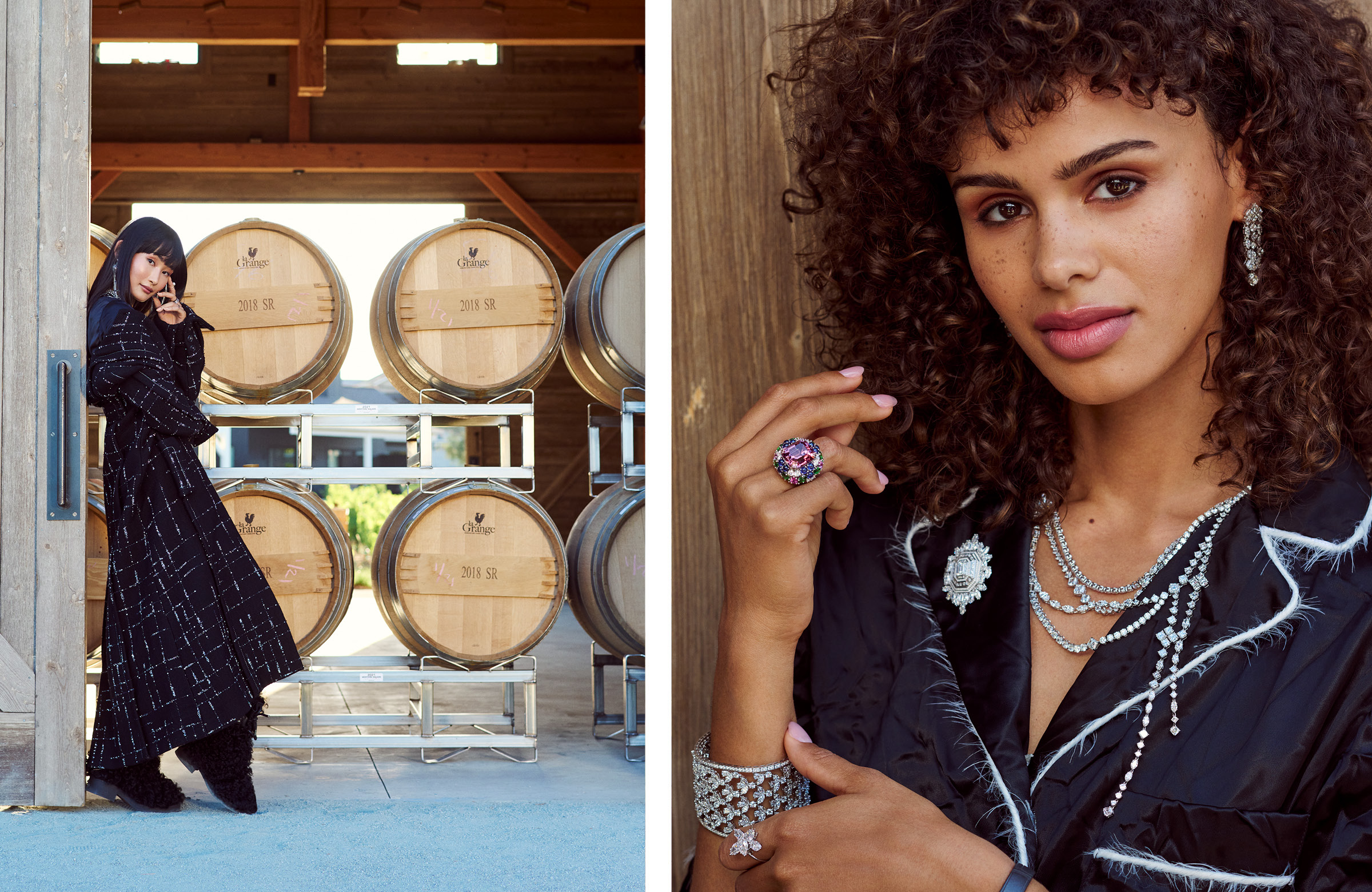
Left image: On Miki: Chanel coat, boots and earrings; Grace Lee ring (index finger); Sethi Couture rings (middle finger). Right image: On Julia: Harry Winston earrings, necklace, brooch, ring and cuff; Marina Moscone pajama shirt.

Photographer: Eric Ray Davidson

Stylist: Julie Matos

Assistant Stylists: Alyson Eastman and Johanna Houska

Makeup: Karina Moore

Hair: James Harris Jr.

YOUR JOURNEY BEGINS HERE

Where will you explore next?

Nvc 025 1280x480

Reconnect With the World:
How Travel Can Transform Your Outlook

Human brains are hard-wired to connect. It’s how we learn about the world around us and how we learn about ourselves. And in the series of moments that make up our lives, it’s moments of genuine personal connection that shine the brightest. This is never more true than when we travel.

For Jessica Nabongo, writer, entrepreneur and the first Black woman to visit every country in the world, making those connections is one of the most important and cherished parts of her journey not only throughout the globe, but through life.

“One question I ask people a lot is, what makes you happy?” Nabongo says. “Whether I’m talking to royalty or if I’m talking to someone who has nearly nothing living in a village, the messages remain very, very similar. It’s all about our personal relationships.”
Flo Jessica Nabongo V2 970x540

The daughter of Ugandan immigrants, Nabongo has been travelling internationally since she was 4 years old. In 2008, she left her corporate job and moved to Japan to teach English. She ended up living abroad for seven years, with stints in London, Benin and Rome, before returning to her hometown of Detroit, Michigan. But in 2017, with 60 countries already under her belt, Nabongo decided that she would set out to visit every single country in the world and share it all on Instagram under the handle @jessicanabongo. Two years and 136 countries later, she accomplished her record-breaking feat.


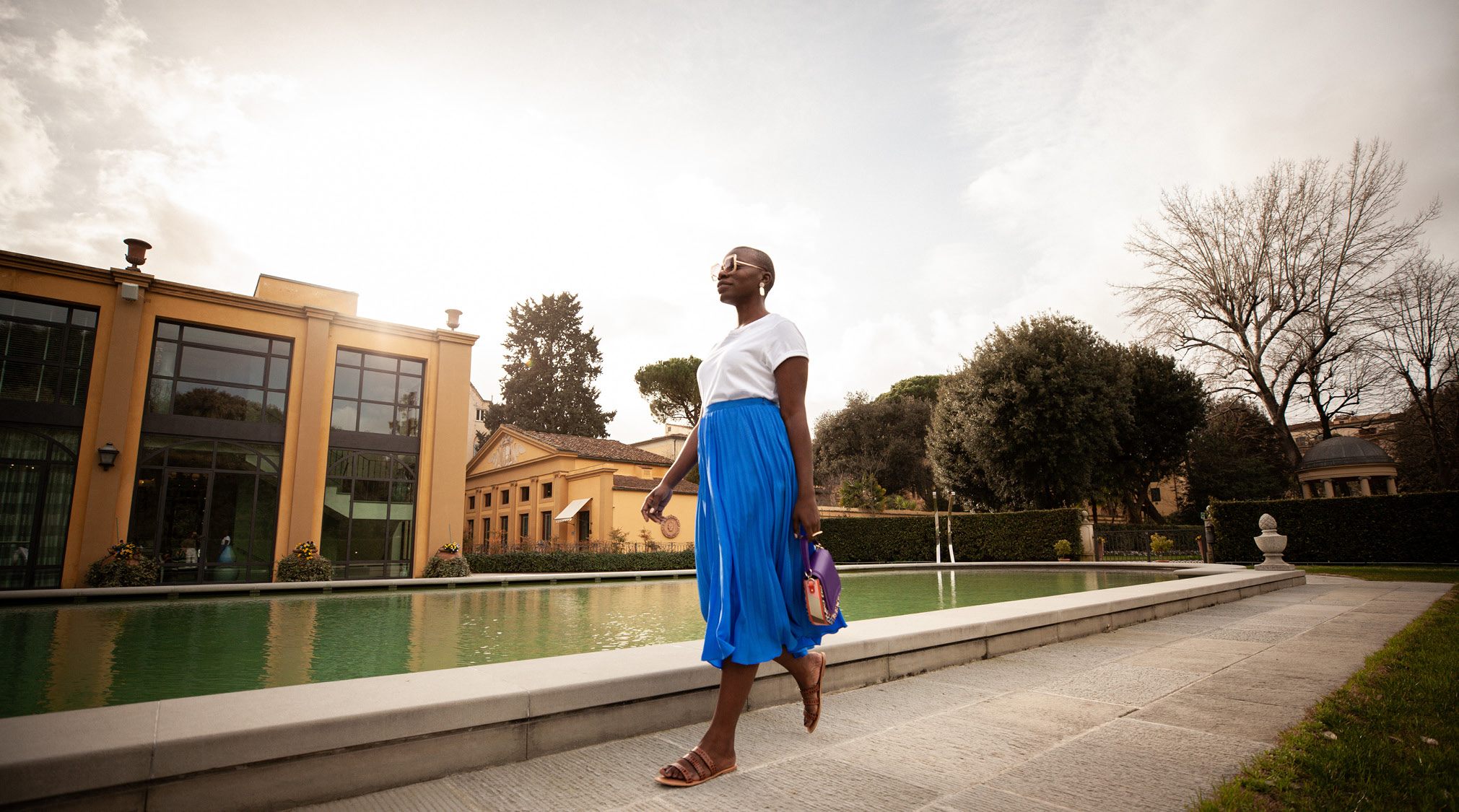
Recently, she connected with Florence, one of Italy’s most beautiful cities and centre of the art and culture of the Italian Renaissance, during a visit with Alicia Miller Corbett – editor of Four Seasons Magazine – to record a podcast sharing more about her personal journey and perspective on connection.

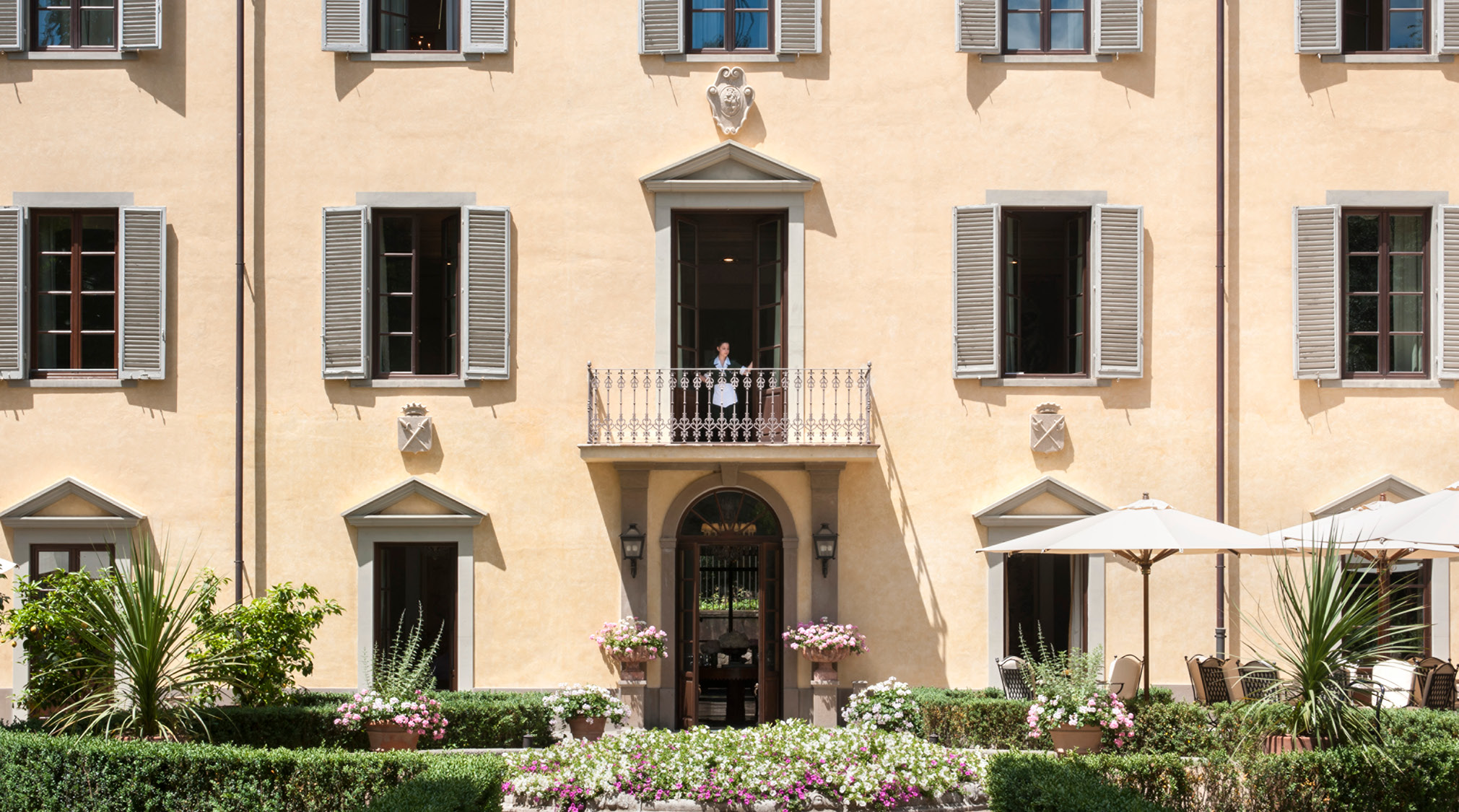
At Four Seasons Hotel Firenze, centuries of history lie within reach in the Hotel’s expansive private garden – the largest in the city. Originally planted in the 15th century and filled with statues, fountains and a small Ionic temple, the garden retains its ancient beauty and charm. After a stroll under centuries-old trees and a Michelin-starred dinner garnished with views of iconic landmarks like the Duomo, Nabongo could maintain the Renaissance mood in her guest room, where frescoes and original architecture bridge the gap between their time and ours.

Flo 2023 Fs Florence 067 970x540

Explore With Your Heart

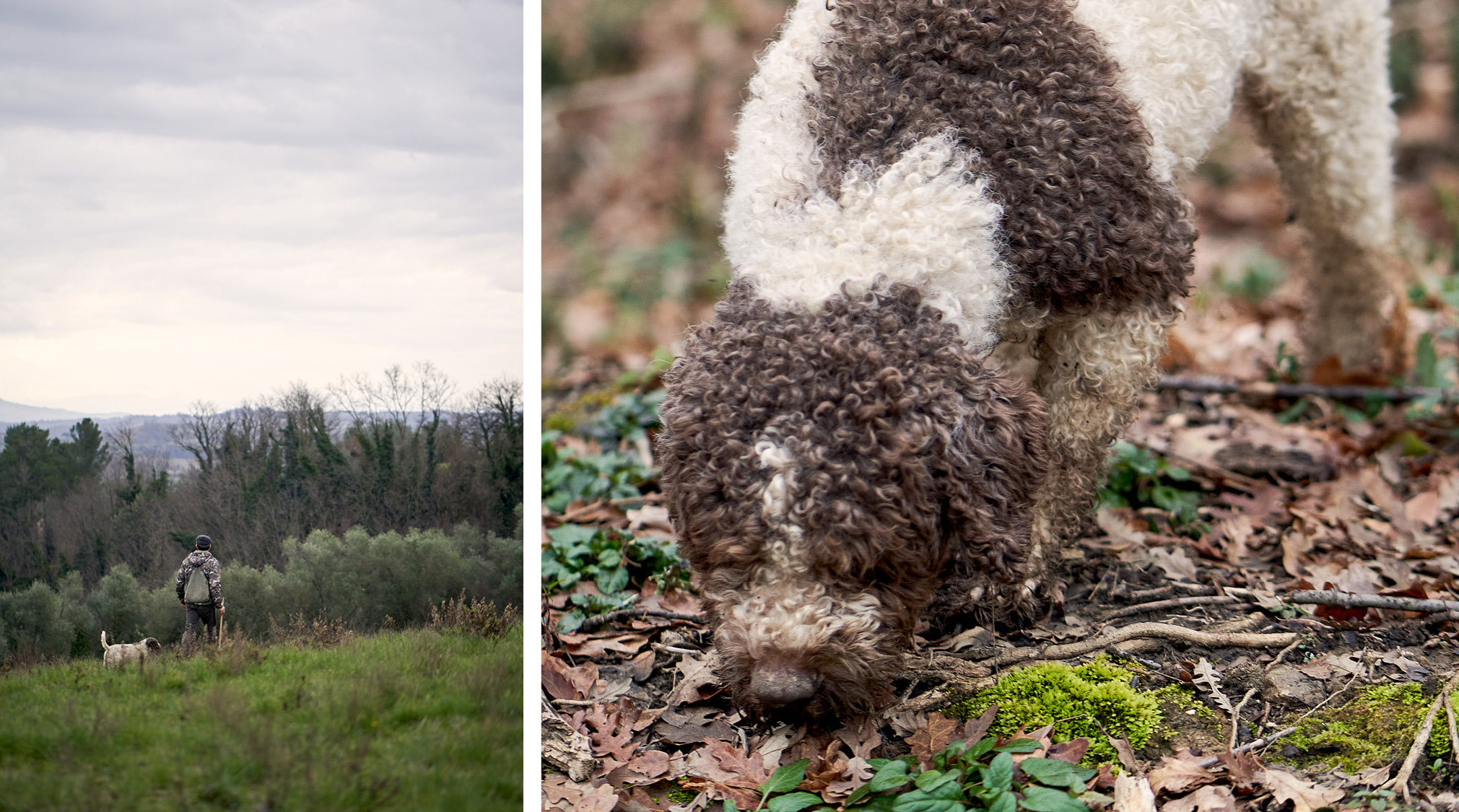
Deep in the Tuscan countryside, Giotto, a curly-haired Lagotto Romagnolo, goes sniffing through the woods in search of the elusive truffle. His owner, Luca, is close by. About an hour’s drive from Four Seasons Hotel Firenze, this truffle-hunting expedition offers Nabongo a rare glimpse into the rural heart of the region, both through the bucolic scenery and, later, through the cuisine. “To learn so much about the history of truffles, and to learn about it through [Luca’s] clear passion for it, it was such an amazing experience,” she says.
Explore Florence with Four Seasons

Extending an exploration beyond the major cities is one of the best ways to get know a new country. And for Nabongo, experiencing a destination is much more than a change in geography. “I think even beyond going outside the main cities, it’s about how you explore any place you visit,” she says. “My passport into a country – my entry point – is always the people.”

What happens if you don’t speak the language? No problem, says Nabongo. Her philosophy? “I speak with my heart and not with my mind.”

Flo 718 970x540

Get Out of Your Comfort Zone

Whether you’re worried about travelling alone, visiting certain countries or even sampling the street food, Nabongo always encourages people to leave their fears at home. “I would say that my travel philosophy is to travel without fear. And to travel with positive energy,” she says. “I always say positive energy coats my stomach, because I’ve never had food poisoning!”

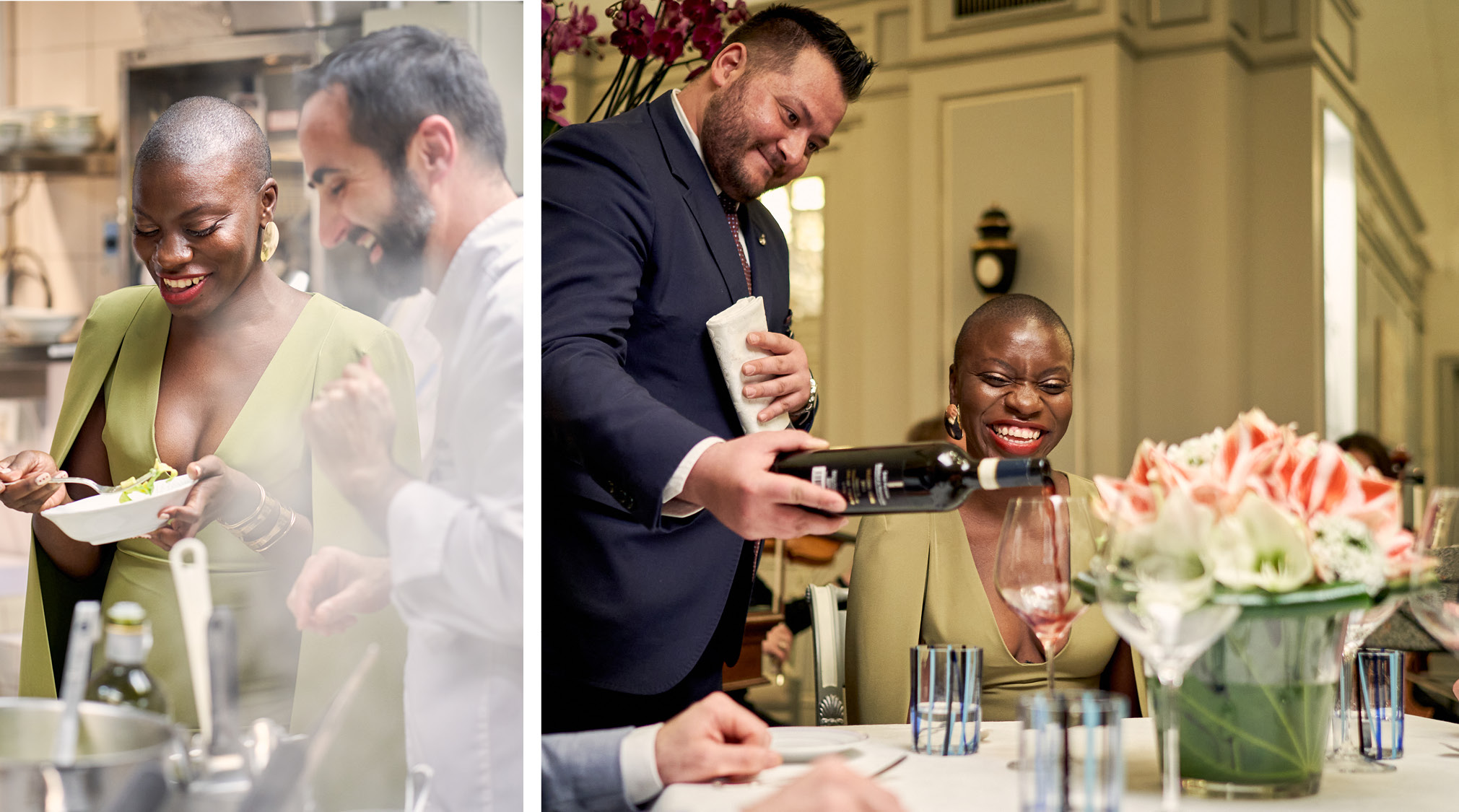
It’s true that one of the easiest ways to connect with a new culture – and with new people – is to sit down for a meal. In Florence, it could be a four-course gourmet meal designed by the Hotel’s Michelin-starred chef and served on the famed Ponte Vecchio – an experience available exclusively to Hotel guests – or standing in line with the locals for an order of trippa or lampredotto at one of the city’s ubiquitous food stands. Either way, being open to new foods and new people doesn’t just satisfy your body, it satisfies your soul.

Explore the World with Four Seasons

“I’m constantly living outside of my comfort zone. I think my comfort zone is discomfort,” Nabongo says, laughing. “Even beyond travel, my life philosophy is to live fearlessly – and live a life without limits.” By documenting and writing about her travels, she hopes that her journey and everything she shares can help inspire people to move past their limits, whatever they may be. “Because for me, I feel like I’ve created the life that I want to live,” she says. “And I feel that the reason I was able to do that is because I realized everything that I need is already inside of me.”

Fs Florence Collage V2 970x540

Redefine Your Idea of Home

Connections, expected or unexpected, can help inform how we interact with the world. And that can ripple out beyond us. A friendly encounter at a restaurant may inspire you to recommend it to a friend who’s visiting the same city. A conversation with a tour guide or fellow traveller might change your itinerary for the better. Or a new dish or drink is shared with you and you in turn share it with your family back home.

Nabongo can think of many of these moments that have impacted her throughout her travels, particularly when it comes to hospitality. “I think that hospitality comes from the experiences that I’ve had because so many strangers around the world have welcomed me into their home and cooked me meals,” she says. “As I’ve gotten older, I’ve made sure to sort of perfect how I’m welcoming people in my home. And honestly, it’s also redefined my definition of home. For me, now, home is in people. Yes, I physically live in Detroit, but I have homes in London, Accra, Dakar, Bangkok, Rome – I can think of so many places that I have homes because my people are there.”

To feel at home in the world. What more could a traveller – or a human, for that matter – ask?

RECONNECT THROUGH LIFE-CHANGING TRAVEL

Your journey begins here

Ponte Santa Trinita

Reconnect With the World: How
to Travel With Intention

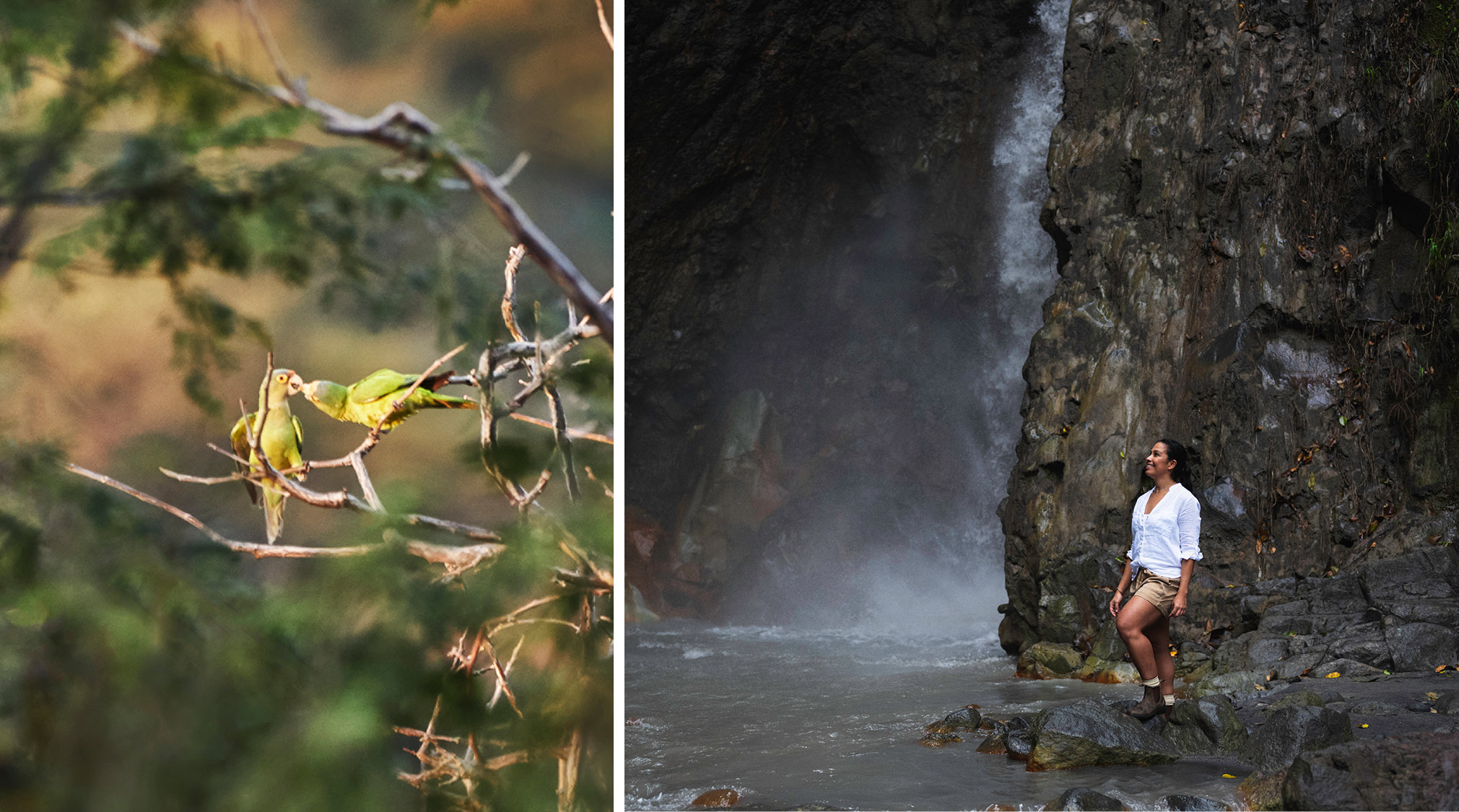
A stay in Costa Rica is a feast for the senses: sounds of ocean waves rolling in and out and animals rustling through the tropical dry forest, cool water hitting your skin as you swim beneath a thundering waterfall, the scent of the salty breeze. Tucked between two unspoiled beaches on the verdant north Pacific coast, Four Seasons Resort Peninsula Papagayo, Costa Rica is surrounded by rugged yet tranquil natural beauty that eases into your psyche, connecting you to this lush paradise. Our senses feed our brain information about the world around us, but if we let them, they can tell us much more.

“Your body is always speaking to you,” says Georgina Miranda, social entrepreneur, coach, activist and mountaineer athlete. “The question is, are you going to listen to it?” She recently explored this question during a visit to Costa Rica with Patrick Janelle – the creative director and world traveller behind A Guy Named Patrick – to record a podcast on personal experiences and perspective on exploring the world through our senses.

Cos 1157 970x540

For Miranda, who is also an energy practitioner and yogi, tapping into her senses and using them to keep her attention on the present moment is a big part of her mindfulness practice and of the way she moves through the world. In 2008, she set out to accomplish the Explorer’s Grand Slam – climbing the highest peak on each continent and skiing the last degree to the North and South poles – to raise funds for two non-profits combating gender-based violence in the Democratic Republic of Congo. Only 15 women in the world have ever completed the challenge, and Miranda is well on her way to adding her name to that list.

She has six of the Grand Slam summits done, including Mount Everest, and 10-plus years of far-flung adventures under her belt. And as she meets the challenges one by one, she’s seeing the world – and her place in it – in a new light. “There’s a moment when travelling that you realize you will never be the same because of what you’ve experienced,” Miranda says. “You have felt, touched, tasted and been immersed in a new reality, and so now your own reality is different. I felt this when I reached the top of Everest, and I felt it eating my first gelato when I was 21 years old and in Rome.”


Feeling is Believing

As she forges deeper connections to the destinations she visits and the people she meets, Miranda has a new-found appreciation for the life-changing benefits of travel. “It’s been in the recent years that [I realized] my travelling has changed so much. I no longer want to see the world – I want to feel the world,” she says. “And that really shapes how I travel.”

Explore Costa Rica with Four Seasons

For most of us, the seeing part of travel is easy enough. But how does one actually go about feeling the world? “It’s utilizing all of your senses, but then also the energy of a space,” Miranda says.

Cos 1343 Waterfall Collage 970x540

It’s one thing to read about the biodiversity that exists on an island like Costa Rica and research the birds you’ll see, the animals you’ll encounter or even the average size of the swells you’ll surf. But it’s not until you’re walking among the towering trees on the Trail of Giants, looking up to see monkeys jump from branch to branch, or you’re sitting beneath a twinkling canopy of stars and sipping a Cabernet Sauvignon aged with a real meteor, that your recognition of the experience transforms it into something you understand not just with your mind and your senses, but with your entire being.

“My travels have helped me feel more connected and in touch with humanity and the earth,” Miranda says. “Time with pristine nature – no matter where I am in the world – and learning about new people is a gift. It offers a sense of renewal in my soul unlike anything else. It’s like coming home to a part of myself that was forgotten.”

The Power of the Present

Even if you don’t practice mindfulness, tapping into the feel and energy of the destination you’re in is something every traveller typically aims for. “I think one thing [you can do] is to just be fully present,” says Miranda, who is an energy practitioner and yogi. “If you’re travelling long distances, you get to a place and you might be so caught up in the excitement of the list of things you want to go see and do that you don’t give yourself the opportunity to actually just arrive and really be there.”

She suggests giving yourself 20 to 30 minutes upon arrival to be present in the moment. Don’t have anywhere to go or anything to do except observe. “It’s this art of being versus doing,” Miranda says. “And I think Western culture really encourages us to constantly be doing, but you miss out on so much magic.”

Georgina Miranda Yoga 1400x500

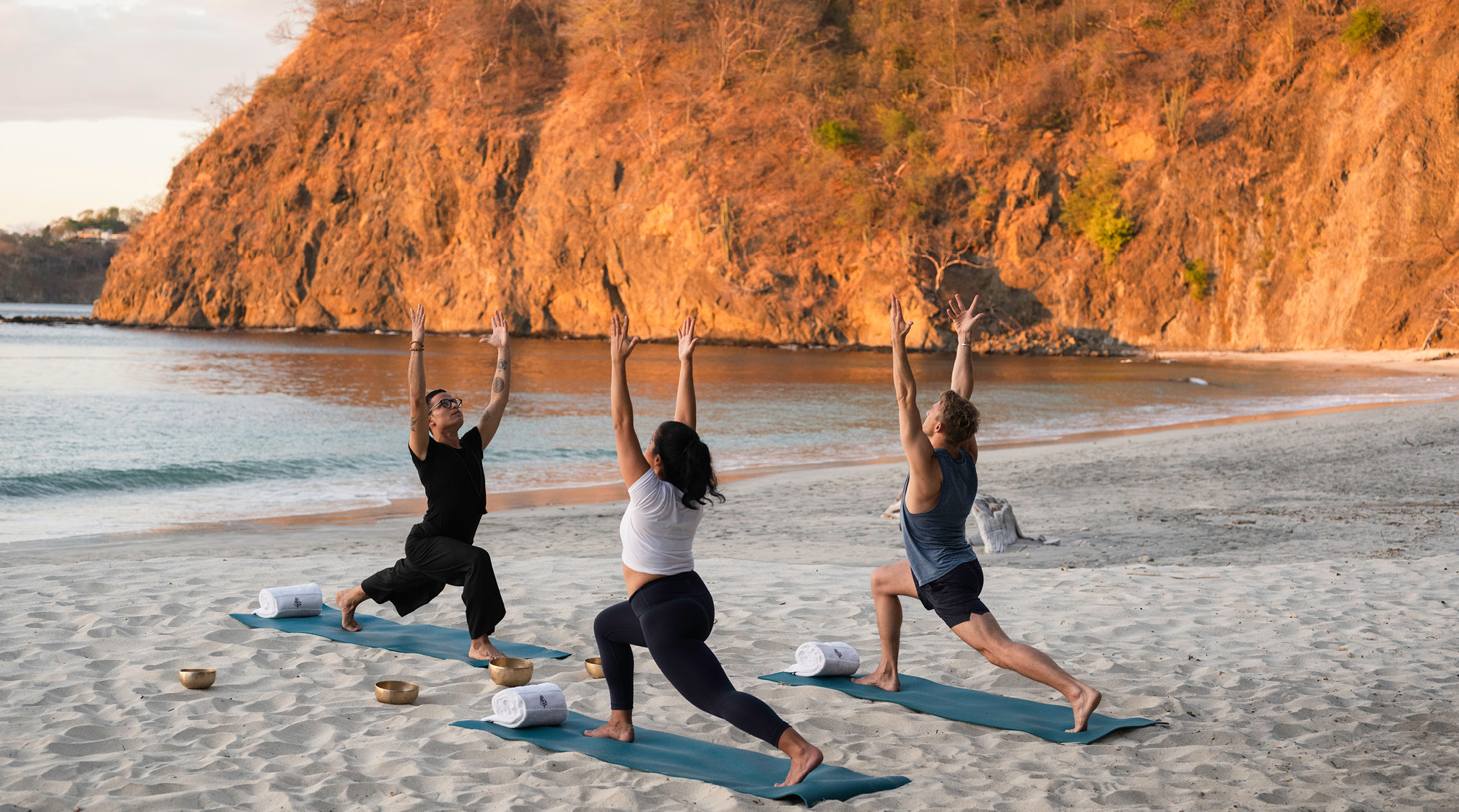
If you are having a hard time switching gears and tapping into the present, head to the Resort’s Spa. A yoga session, spa treatment or meditation class can help you find balance and set your intention for your stay. The Resort’s Wellness Concierge is on hand to design a custom plan with you to help your best self emerge – centring your breath, body and mind for balance in your life.

Explore the world with Four Seasons

Stepping out into nature, even for a few moments, can also do wonders: Float in the clear blue waters surrounding the Resort, dive under the waves on a snorkelling adventure, or set off with the Resort’s in-house adventure outfitter, Papagayo Explorers, for a guided trek to help you discover the peninsula through experiences with purpose.

“If you’re open enough, you can let a lot of wonderful things come into your life when you travel,” says Miranda. “It snaps you out of autopilot and it gives you the opportunity to wake up to yourself again.”

Georgina Miranda 970x540

Stepping Into the Flow

When we can live with intention and travel with intention, it’s all the easier to experience that magic that Miranda talks about. We can choose a purpose for a trip – to get a break from work, recharge or strengthen bonds with loved ones – but she cautions travellers not to get too caught up in ticking boxes and checking off items on to-do lists.

“I think every experience can be abundant. And somehow, you’re limiting that abundance with a list,” she says. She knows first-hand the feeling of disappointment that comes with not being able to do every single thing she had planned for a trip, and how it can get in the way of focusing on the beautiful things she did do and the people she connected with along the way.

The unofficial motto you’ll hear almost everywhere you go in Costa Rica is “pura vida.” The literal translation into English is “pure life,” but in reality it’s much more than that. It’s an attitude, a way to approach life that says “it’s all good,” both when things are going your way and when they’re not – especially then. It’s an outlook that perfectly lends itself to staying present and being open to new connections and discoveries – and the benefits that life has to offer right here, right now.

Georgina Miranda V2 970x540

Having travelled so much over the years, Miranda has a motto, too. “It came to me around 25, I think, and it’s really shaped everything,” she says. “The extraordinary is always possible. Never limit yourself or life’s potential.” And the extraordinary, she notes, is not someone else’s extraordinary. It’s yours. It’s whatever that means to you.

Whether you’re climbing real mountains or figurative ones, the world is filled with endless possibilities for connection. Stay present and you’ll feel it.

RECONNECT THROUGH LIFE-CHANGING TRAVEL

Your journey begins here

Hotel on beach

Reconnect With the World: How Travel
Can Free Your Creativity

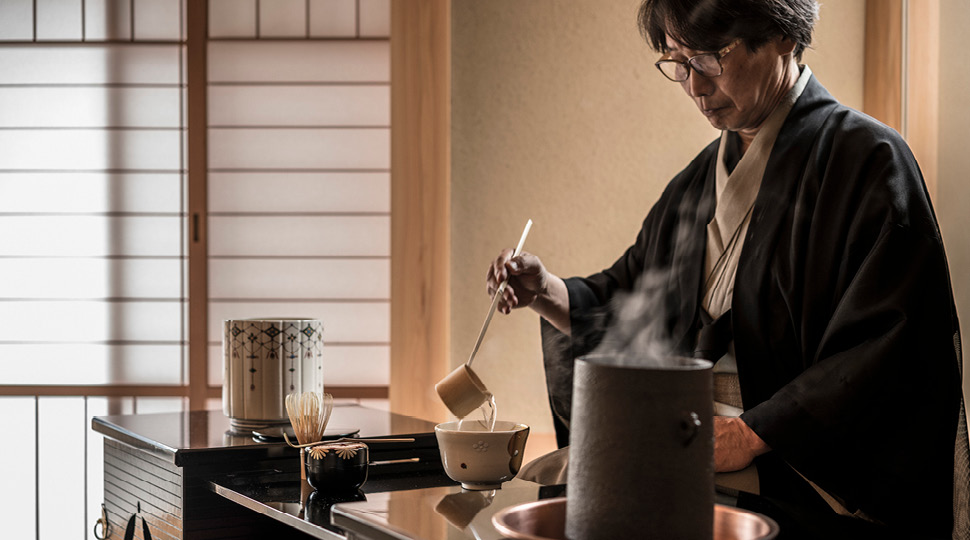
When you sit down for a tea ceremony at Four Seasons Hotel Kyoto, you’re bound to hear the Japanese saying ichi-go ichi-e (literally, “one time, one meeting”). It’s a gentle reminder that every single moment – no matter how small – is a unique opportunity, never to be repeated.

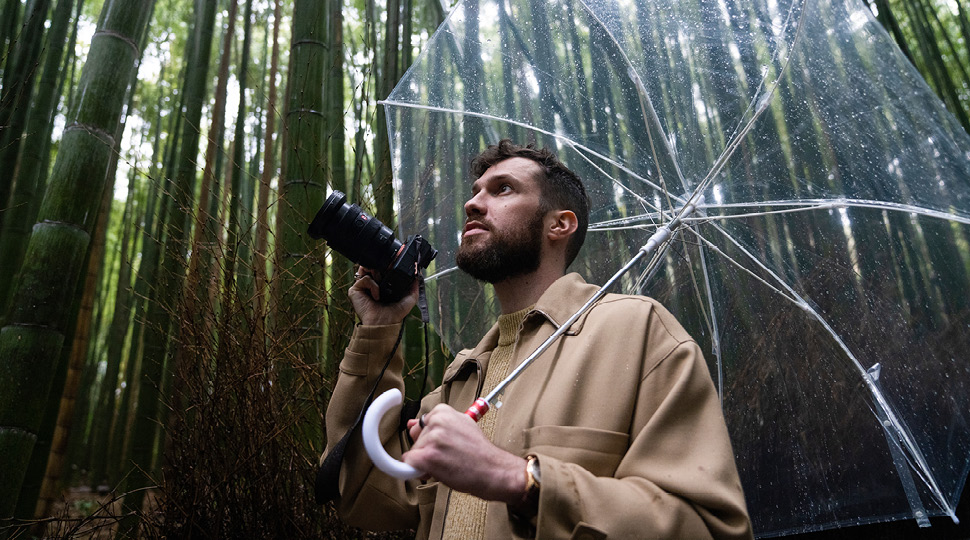
For photographer and creative director Dave Krugman, noticing and capturing those moments, like his bamboo forest image above, is a way of life.


“One of the reasons I love to make photographs is because I find memory to be a very fleeting thing,” says Krugman. “For me, a photograph is a stimulus for a cascade of memories. And every time I look at a photo I’ve taken, it takes me back to that moment and the feelings I was having and the people I met and the environment I was in. That’s why photography is such an important part of my life.”

Kyo 319 970x540

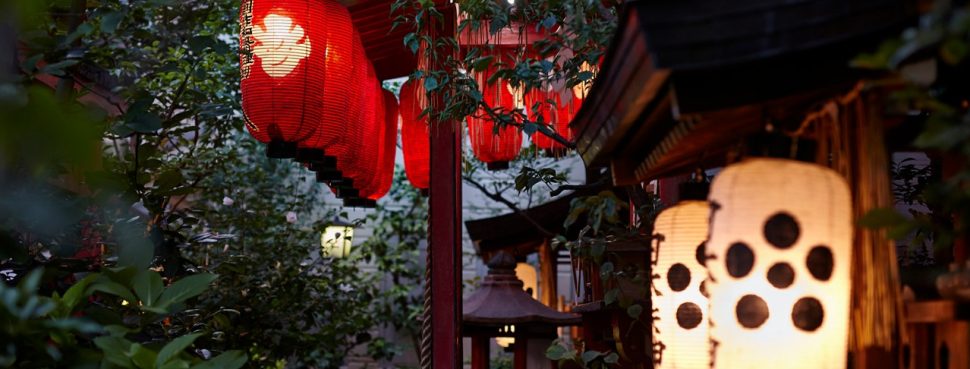
In Kyoto, Four Seasons helped introduce Krugman to a variety of new people, environments and experiences: A Hotel guide led him on a tour of a 1,000-year-old bamboo forest, and the Concierge arranged a visit to a local lantern workshop, where artisan lantern masters taught him how to carefully layer thin sheets of paper over a frame to build his own mini lantern. Krugman also sat down at Four Seasons Hotel Kyoto with Poppy Jamie – an author, entrepreneur, and founder of mindfulness app Happy Not Perfect – to record a podcast sharing more about his personal journey and perspective on how travel is essential to a creative life.

“I’ve learned that everything we look at, there’s a craftsman behind it,” he said.

Known for his moody yet vibrant cityscapes and street photography, Krugman cites travel as one of the biggest influences on not only his art, but on his relationship with the world around him. “There is nothing more inspiring and invigorating than travel,” he says. “It always shows me that the world is so much larger than we imagine, so much more diverse. Witnessing this complexity and the vastness of the world is a humbling feeling, and it inspires me. Photography allows me to connect more deeply with all I see and all I experience.”

In Kyoto – and when travelling with Four Seasons – the opportunities for connection are seemingly endless.

A man holds a clear umbrella and a camera while standing in a bamboo forest

Discover experiences that bring history to life

With ancient architectural masterpieces around every corner, family-owned shops selling handmade creations that have been made the same way for centuries, and a culinary scene featuring everything from Michelin-starred restaurants to chic craft cocktail bars and unassuming noodle joints serving up delightfully slurpable bowls of ramen, Kyoto is a city of artisans.

Explore Kyoto with Four Seasons

“I love the attention to detail in Japan,” Krugman says. “I feel like everything has its place and its ritual and its reason. As somebody who is such a visual person, it’s a real treat to experience that.”

Kyo 150 970x540

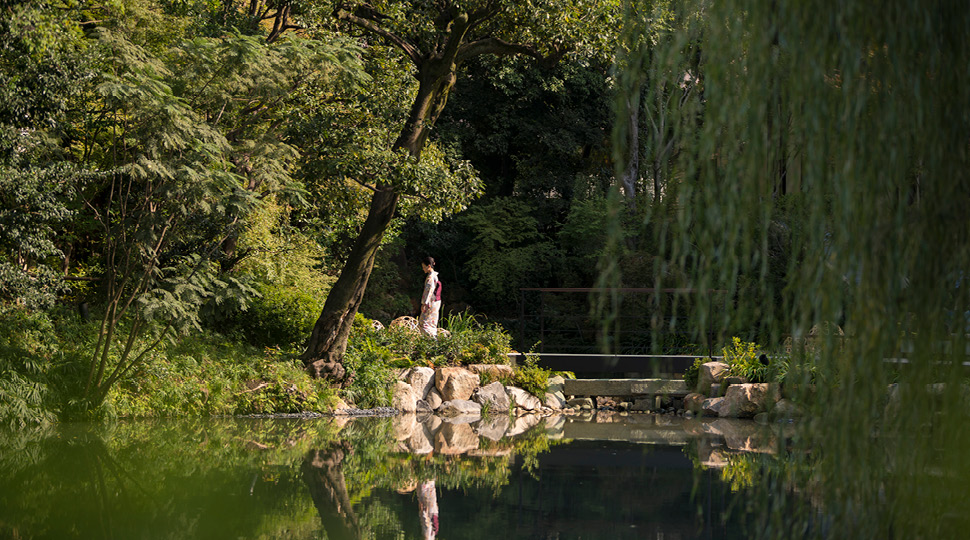
The atmosphere at Four Seasons Hotel Kyoto is no different. Set around the 800-year-old Shakusui-en pond garden – itself immortalized in a 12th-century epic poem – every setting is created with care and intention. There is beauty and meaning in everything. All you have to do is be willing to connect with it.

“Being a photographer and traveller has absolutely shifted my perspective,” Krugman says. “If I’m in a place I’ve never been before, every single thing I see provides an incredible education about the area I’m in.”

Try activities outside your comfort zone

After travelling the world twice over, Krugman can attest to one of the most essential components of a successful trip, no matter the destination: Keeping an open mind.

“I try to leave a lot of breathing room for spontaneity and serendipity, because my favourite moments are when something happens, the path kind of diverges, and I’m exposed to this thing that I couldn’t have planned even if I wanted to,” he says.

This doesn’t just apply to travel, but to the creative process – and to some of the most worthwhile experiences. “The best experiences in my life have been things that are just outside my comfort zone,” says Krugman.

Kyo Dave Krugman Collage Kyoto 970x540

In Kyoto, that could mean immersing yourself in the world of geiko and maiko – kimono-clad entertainers who perform traditional song and dance – at an ozashiki asobi dinner in the Gion geisha district. Learn the art of Zen meditation from the deputy head monk of Shoden-Eigen-in. Or head to Kibune train station for a walk along the river, passing crimson torii gates and fragrant cedar trees on your way to Kurama Temple for a traditional onsen bath. Being open to adventure can help you discover the city’s secrets.

Explore the world with Four Seasons

“My travel philosophy is to go into every situation with an open mind and a big smile,” Krugman says. “That attitude can open up so many doors for you.”

Uncover a new perspective on everyday life

For Krugman and for many of us, travel is much more than just a vacation. It offers a chance to connect with the world around us and discover new ways of doing things. Simply being somewhere new invites us to look at things differently, even something we do all the time – like sipping tea.

Kyo 176 970x540

Discover centuries of tradition and spiritual beauty at a Tea Master Ceremony in the Hotel’s Shakusui-tei – the intimate Tea Ceremony Room. A local tea master will teach you the history of the brew and the Japanese rituals for steeping, pouring and savouring the perfect cup – a flavourful taste of local customs.

“There is no better education than travel, because you’re exposed to so many new ideas, ideas you never even knew existed,” Krugman says. “And when you can incorporate that into your day-to-day life, you just grow with every new experience.”

RECONNECT THROUGH LIFE-CHANGING TRAVEL

Your journey begins here

Kyoto lanterns