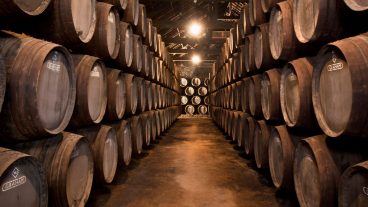
Everything You Should Know About Port Wine

As I sit down to write this column I have at my elbow a highball glass of ice, dry white port and tonic.

What, you might ask, is this travesty? Port is red, surely? Port is a sweet, old-fashioned after-dinner drink – not a refreshing aperitif. And besides, who ever heard of mixing it with tonic?

Well, Licínio Pedro Carnaz, for one. Carnaz is the sommelier at Four Seasons Hotel Ritz, Lisbon, and this white port concoction is one of the offerings at the Hotel’s Ritz Bar.

“It’s not well known,” he says, “but [it’s] one of our suggestions as an aperitif, and our guests get very surprised at it.”

The drinking of after-dinner port, vintage port, has been a ritual of the English cultured classes for centuries. In these less formal times, though, it’s a tradition that’s quickly evolving.

Millenials don’t have as many preconceived notions about port, so much more is possible. – James Tidwell, master sommelier at Four Seasons Dallas

“Today, the interest in port may not be the traditional ‘We’re going to open a 20-year-old vintage port,’ but [instead], in using port in different ways,” notes James Tidwell, Beverage Manager and Master Sommelier at Four Seasons Resort and Club Dallas at Las Colinas.

“If you’re talking to millennials about a wine that needs 20 years to be at its best, then you’ve lost them. Millennials are drinking it in any way that’s attractive and affordable.”


White Port and Tonic cocktail at Four Seasons Resort and Club Dallas at Las Colinas

This White Port and Tonic is a modern twist on the traditional wine and is popular among guests at Four Seasons Resort and Club Dallas at Las Colinas.

“But we do have a number of guests who are well-travelled and know wines from all over the world, and they tend to drink 10- and 20-year-old tawnies,” Tidwell continues. (Tawny port is long aged but in wood rather than the bottle, and has a nutty, mellow character.) “And baby boomers are drinking port in the more traditional styles – tawnies and LBVs [late bottled vintage, aged four to six years in wood] – after dinner and with desserts.”

Four Seasons Resort and Club Dallas at Las Colinas

A port primer
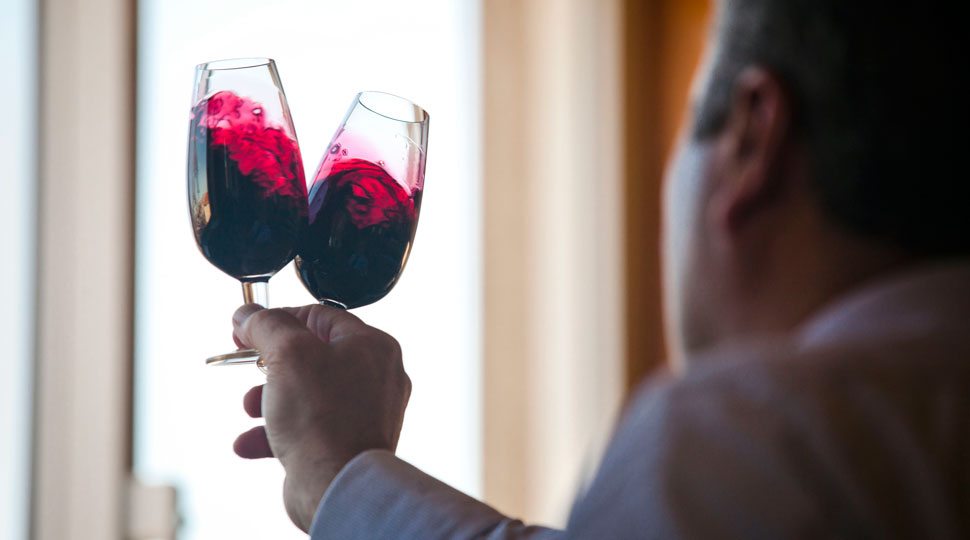

Man swirling port at Graham's Port winery

Port wine’s popularity through the centuries can be attributed to its flavour, which is both stronger and sweeter than traditional table wine.

Port’s longstanding popularity as an after-dinner drink can be credited to its fortification: About halfway through the fermentation process, a dose of a neutral grape spirit known as aguardiente is added to the wine, both fortifying it and halting the fermentation before all the sugar has been converted to alcohol. The resulting wine is both stronger and sweeter than traditional table wine, and comes in several varietals:

  • Vintage port is made in tiny quantities in only the best years and bottled after two years in 550-litre (145-gallon) traditional oak barrels called “pipes.” It then ages for 20, 30, even 50 years.
  • Crusted port is a blend of different vintages, bottled young enough so it throws a sediment, like vintage port.
  • Tawny port, long aged but in wood rather than the bottle, has a nutty, mellow character.
  • Late bottled vintage (LBV) port, a single-vintage port bottled after four to six years in wood, offers some of the character of vintage port at a more modest price.
  • Ruby port, a blend of young vintages, is fresh and fruity but lacks the complexity of older versions.
  • White port is similar to ruby but is made from white grapes. It is best chilled, as an aperitif.

Preserving port history

Port has been produced since the late 17th century, and became popular in England when constant wars with the French cut off access to Bordeaux. The continuing English influence can be seen today in the prominence of brands such as Graham’s, Taylors, Churchill’s, Cockburn’s and Croft, all named for English founders, many dating back to the early 18th century. Members of the Taylor, Churchill and Graham families are still involved in the business today.

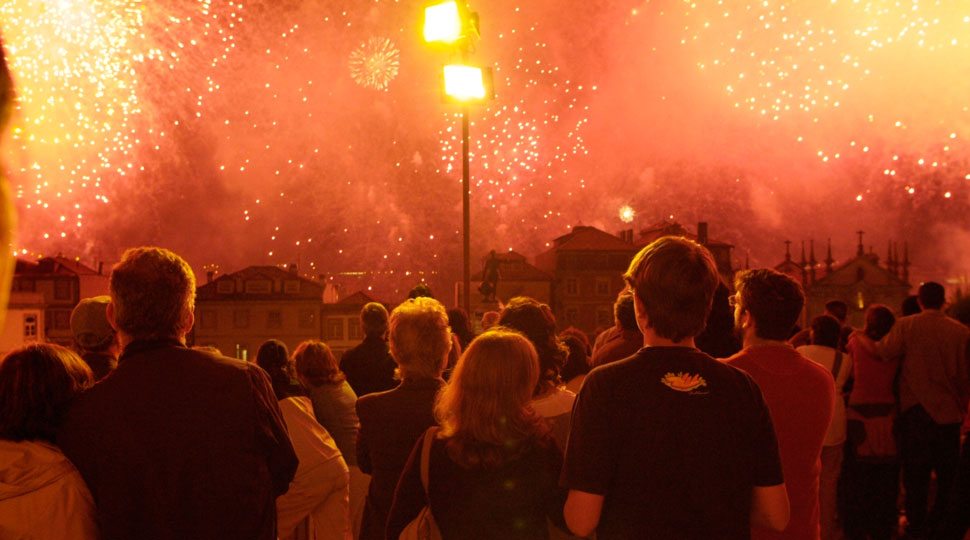
Many of these houses participate in an annual sailing race in the sleepy Portuguese town of Oporto (a three-hour drive from Four Seasons Lisbon) during the annual festival of São João (St John). The unusual barcos rabelos, emblazoned with their company names and logos, race upstream along the Duoro River – a nod to the route these boats once took to deliver the wine from the vineyards to the port lodges in Vila Nova de Gaia. With a flat bottom, no keel, and a long and heavy oar, these unwieldy boats are extremely difficult to control under sail.

“They were never designed as sailing boats, but we, in our infinite wisdom, use them as such, and as a consequence we sometimes have spectacular accidents,” says Dominic Symington of Symington Family Estates.

Four Seasons Hotel Ritz Lisbon

Evolving tastes

A century ago, English aristocrats may have imbibed only the best vintage port, but times have changed. Most in demand now, Tidwell says, are port coolers, chilled tawnies as aperitifs, and anything that’s experiential and accessible.

“Can people afford to drink mature vintage port on a daily basis? No. Can they go into a wine bar in Brooklyn and get a white port cooler? Yes. They can afford it, and it’s something they can understand.”

Adrian Bridge, CEO of The Fladgate Partnership, makers of Taylor’s, Croft, Fonseca and Delaforce brands, is seeing the same trend. “In the U.S., it’s the rapid growth in cocktails and punches, in on- and off-trade respectively, that has created the most excitement recently,” he says. “Barmen and mixologists are finding that port has a range of wonderful flavours that can be used in a number of cocktails.”

As drinking patterns change, port’s versatility and adaptability have become its strengths.

While he doesn’t sell much vintage port – the market for this rarity has always been Great Britain – Carnaz at Four Seasons Lisbon says the demand for tawnies and LBVs, in addition to remixes like the white port aperitif, remains steady: “We sell more LBVs because they are easier to drink, they are filtered [so there’s no sediment to worry about], they’re not so expensive, and they keep in good condition for a few days.”

Carnaz has observed another development in port drinking, one that would have shocked the practitioners of the old procedures. Now that Chinese people have discovered port – not surprising, he says, given their predilection for sweeter alcoholic drinks – “they like it especially with the Portuguese seafood dish arroz de marisco. It’s a very strange combination, but they love it.”

Your Journey Begins Here

Make sure your port tasting tour includes traditional varieties and new adaptations.
property-feature-image-LIS

A Michelin-Starred Chef Stirs Up Soupe à l’Oignon

I’m at Four Seasons Hotel George V in Paris, following my guide through the sumptuous gallery lined with regal Flemish tapestries. As I watch guests leisurely enjoy a late breakfast, suddenly he taps a hidden button on the floor, and we slip behind the wall into the labyrinthine kitchens of Le Cinq. The Hotel’s fine dining restaurant has just been awarded three Michelin stars for the second consecutive year, while the Mediterranean menu at Le George and the Hotel’s newest dining addition, L’Orangerie, each recieved their first Michelin star this year.

For me, to succeed in making a humble local product luxurious is the role of haute cuisine today. – Chef Christian Le Squer

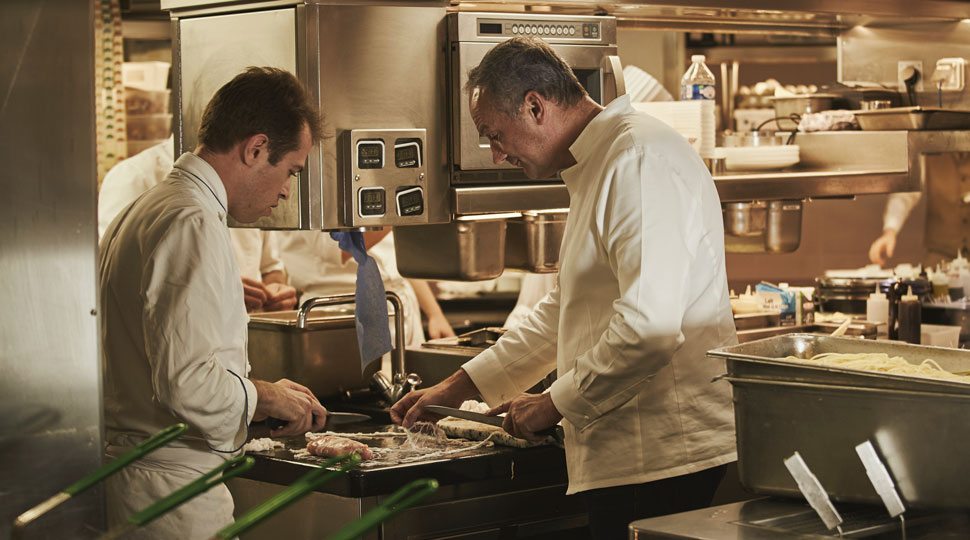
We navigate around hot plates, sizzling pans and trays of freshly baked croissants to find Le Cinq’s Executive Chef Christian Le Squer in his whites, supervising the meticulous preparation of one of his signature dishes, a soupe à l’oignon. The classic French soup he serves, like many of the Hotel’s deft details, is quintessentially French, yet unique.

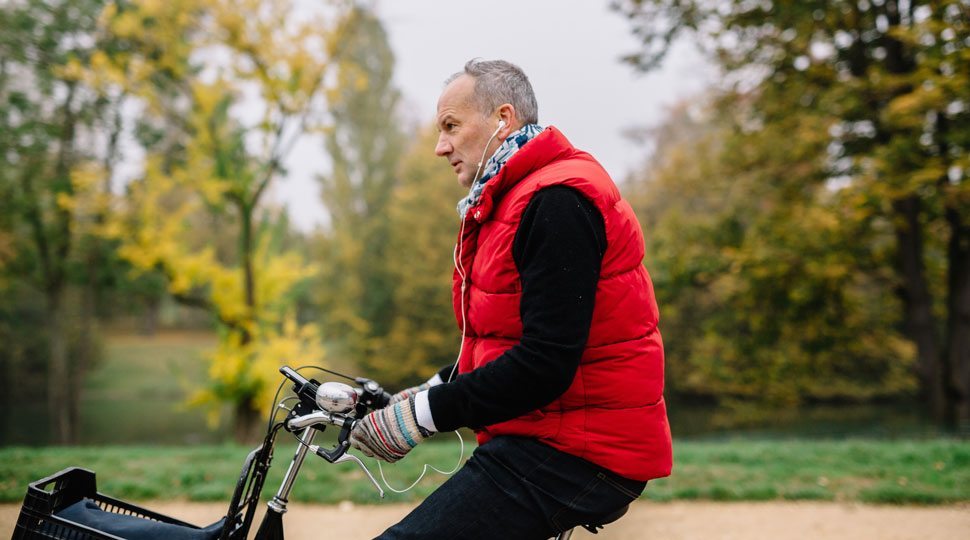
Originally from Brittany, Le Squer maintains a strong connection to slow-life values – he still cycles to work most mornings – and sustainability is important to him. To ensure the quality of the dishes, Le Squer and his team constantly seek out the best produce.

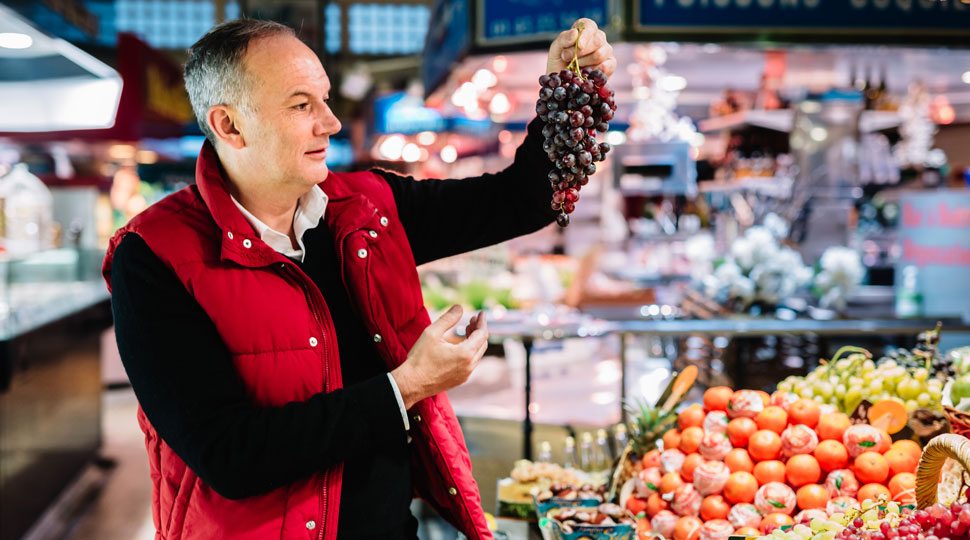
“We usually order from the best farmers, usually from people who specialize in one product,” he says. “For instance, for the onion soup, the onions come from one place in summer, and at this time of year they come from another, from the Cévennes [in south-central France], because they have a certain sweetness to them that I like.”

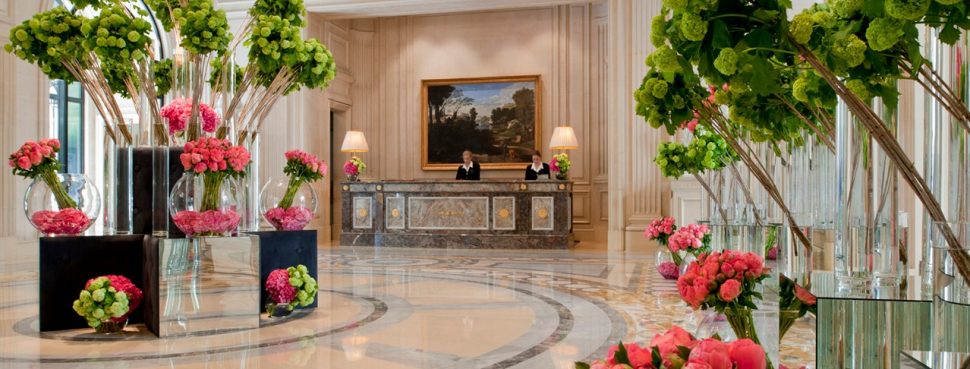
Four Seasons Hotel George V, Paris

Earning Michelin stardom

For more than 10 years, Le Squer was at Pavillon Ledoyen, another Parisian institution, where his cuisine earned him three Michelin stars. When he arrived at Four Seasons Hotel George V, Paris, in 2014, the chef’s challenge was to retrieve a third Michelin star for Le Cinq. By February 2017, he’d succeeded in doing so twice. And it’s easy to see why.

I’m just like a perfumer. Inside my head it’s like a library of scents, but for flavours. I remember flavours and I know which ones I’d like to put together. – Chef Christian Le Squer

The extravagant, colonnaded Louis XV and Louis XVI surroundings certainly help, as does the stellar service, but the jewel in the crown is Le Squer’s cuisine, which plays on refined simplicity and a dedication to marrying unusual flavours.

“What drives me is my insatiable passion for movement, for evolution, for finding surprising new combinations,” he says. He vividly recalls one such surprise, a match made between oysters and foie gras that he tasted in Japan: “The iodic taste of the oyster cut through the bold fatty taste of the foie gras. It was wonderful.”

A modern twist on a classic


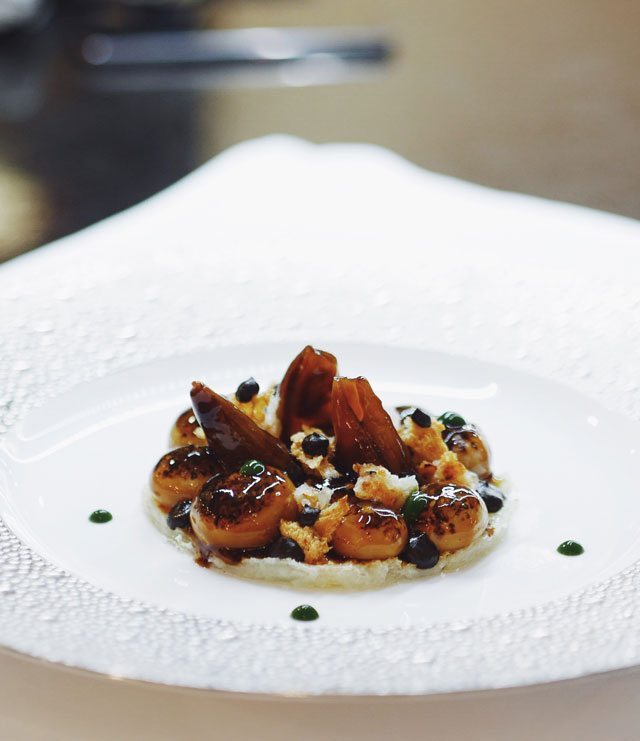
Chef Le Squer's onion soup

This French onion soup, a classic reinvented by Chef Le Squer, is served on a plate opposed to in a bowl. It’s one of the signature items at the three-Michelin-star Le Cinq restaurant.

While Le Squer’s creative cuisine can be adventurous and doused in plenty of Breton spirit – he particularly likes seafood and fish – his signature dish remains the modest onion soup. “I wanted to reintroduce this old traditional bistro dish,” says the chef of soupe à l’oignon. “However, we’ve completely redesigned it, like Yves Saint Laurent, who redefined how women dressed with his trouser suit. For instance, we serve it on a plate as opposed to in a bowl.”

When the dish is placed before me, I hesitate to spoil the presentation – small, bulbous sweet onions arranged like flower petals on a fine Parmesan galette, dotted with confit onion beads and finished with a dash of truffle and thyme coulis. But I do, and every mouthful is a burst of flavour with all the gourmand comfort of a home-cooked soup.

“It’s precisely that emotion that flavours create that I love. To share that emotion with people is incredible,” Le Squer beams. “You know, it’s important to remember that eating doesn’t belong just to the luxury world. Wherever you cook, the most important thing is always to bring flavour – and therefore emotion.”

Your Journey Begins Here

Taste this soupe à l’oignon for yourself.

Explore

10 Buildings That Define the City of London

Why are 10 million visitors from around the world drawn each year to the City of London? The compact area around Four Seasons Hotel London at Tower Bridge offers unmatched access to the past, present and future of England.

Over two millennia, innumerable important buildings were erected that tell the evolving, three-dimensional story of London.

The City of London is London in miniature, but also on its grandest scale. Within the streets and alleyways of the Square Mile, as it’s often called, lie many of London’s most intriguing and historic buildings.

The City today encompasses much the same area and shape as the city the Romans founded after their conquest of Britain in AD 43. The River Thames – wider and shallower then – was narrow enough here to bridge, but deep enough to allow ships to come and go from the coast, making it the perfect spot for a trading post. Londinium, as the Roman city was named, rose along the river’s northern banks; it was a commercial and connected city from day one.

Over two millennia, innumerable important buildings were erected: public spaces, places of worship, grand private houses, banks, offices. Here are 10 of the best, whose stones – and glass and steel – tell the evolving, three-dimensional story of London.

Roman Amphitheatre | AD 70

Where it began


Old outline of a Roman ampitheater

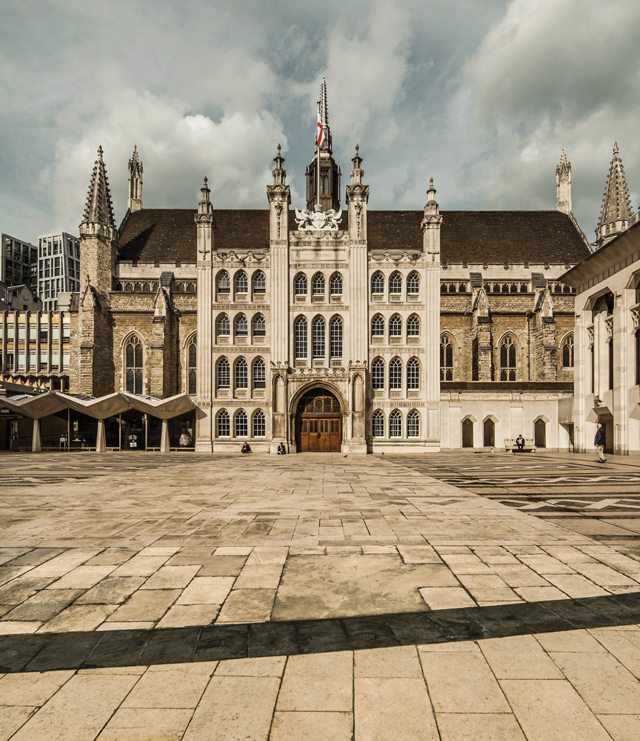
Guildhall Yard was built on the site of the Roman city’s amphitheatre. Today, a subterranean display gives an evocative impression of the amphitheatre’s scale, and its outlines are traced above ground in the paving of Guildhall Yard. 

The City of London stands directly above the site of Londinium, and many Roman structures have been unearthed – some more recently than others. The site of the city’s amphitheatre was unknown until 1988, when excavations for the new Guildhall Art Gallery uncovered two sections of curved stone wall, 6 metres below Guildhall Yard. Investigation revealed that the amphitheatre was originally built in AD 70, and that it was extended in the second century to seat around 6,000 spectators, who would have watched gladiatorial contests and other public events there.

Tower of London | 1100

Power and might


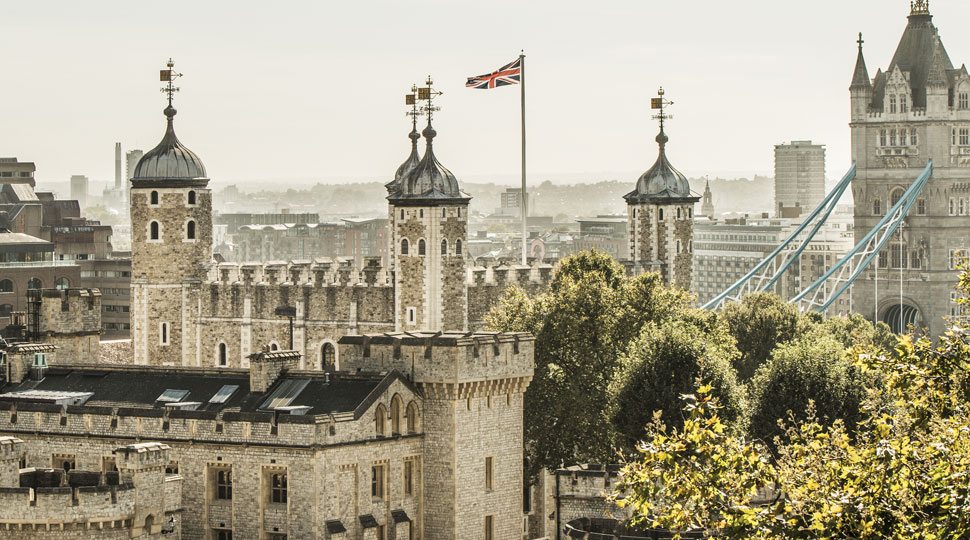
Tower of London

Begun in 1066 and completed in 1100, the Tower of London served as an assertion of Norman might and protection over the city.

After the Romans retreated in the early 400s, the City seems to have been largely abandoned. Though King Alfred initiated repair of the Roman walls in 886, it wasn’t until Britain was conquered by the Normans in 1066 that the City regained its importance, signified by the construction of the central castle keep of the tower of London.

A royal residence and military stronghold, the keep is still the heart of the Tower of London. And though much of it was restored in the 1800s, the chapel of St John on the first floor remains the finest example in the country of Anglo-Norman architecture at its purest and most powerful.

St Bartholomew the Great | 1123

Divine inspiration


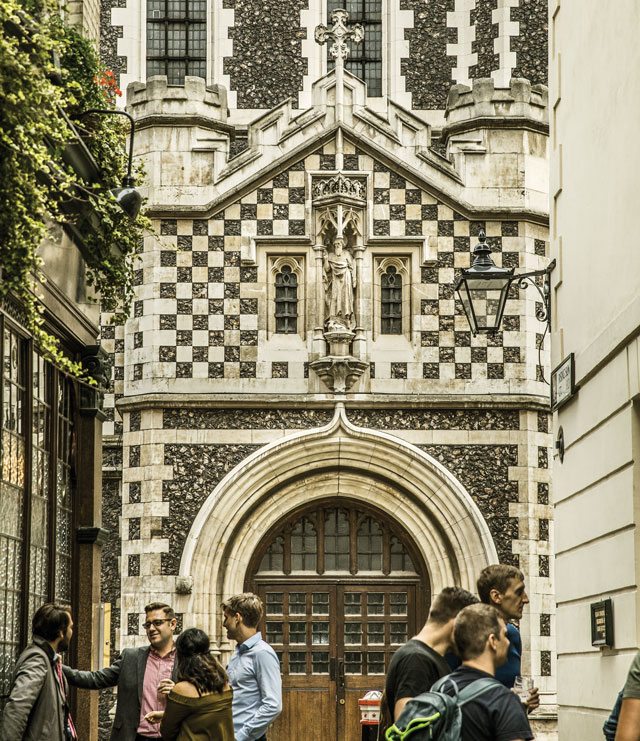
St Bartholomew the Great

St Bartholomew the Great is all that is left of the much larger 12th-century church.

The City today may be synonymous with banks, but in the Middle Ages it was dominated by religious institutions, such as the Augustinian priory and hospital of St Bartholomew. The hospital, known simply as Barts, was founded in 1123 by one of King Henry I’s courtiers and still exists on its original site.

Across the road, St Bartholomew the Great is all that remains of a once much larger church. Its interior – which you may recognize from the film Four Weddings and a Funeral – is wonderfully atmospheric, with its original Norman arches and internal oriel window. The five pre-Reformation bells in the tower are still rung for some Sunday services – London’s oldest man-made sounds.

The Monument | 1677

Tragedy and renewal


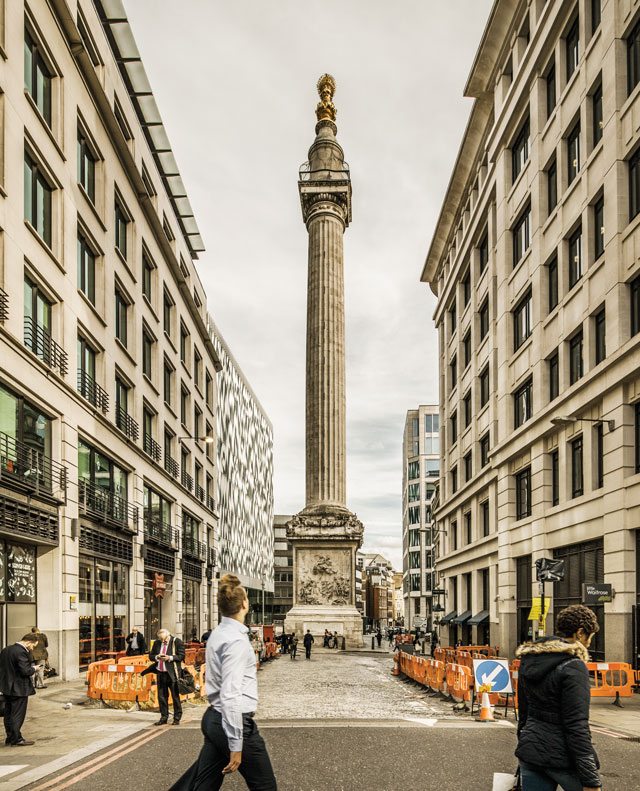
The Monument in London

At the summit of the Monument, which commemorates the Great Fire of London, sits a gilded sculpture of a flaming urn.

The Great Fire of London in 1666 was the largest single catastrophe in the City’s history, but out of the ruins rose many of its finest buildings. Chief among these are the churches rebuilt under the direction of Sir Christopher Wren, who designed St Paul’s Cathedral and the Monument, the 62-metre fluted Doric column that commemorates the Great Fire. Metres from where the conflagration began, it is built of creamy white Portland stone and contains an open spiral staircase with 311 steps that lead to a viewing platform.

Drapers’ Hall | 1772

Economy and social structure


Exterior of Drapers’ Hall in London

Drapers’ Hall is unusual in standing on its own private, gated road, Throgmorton Avenue, built in the 1870s and complete with a quiet garden.

London’s medieval professions were organized into guilds. Though their original trade-union purposes generally have been superseded, a surprising number of guilds have survived, and their guildhalls are among the City’s most rewarding secrets. The Drapers’ Company bought the site of its present hall from Henry VIII in 1543 but rebuilt in 1667 after the Great Fire – though that work has been hidden behind later Georgian- and Victorian-era alterations.

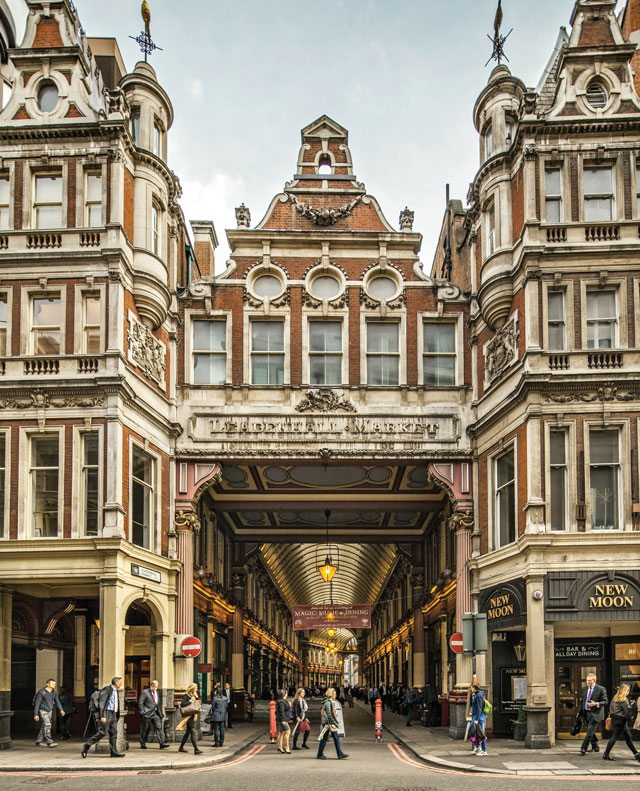
Leadenhall Market | 1881

Public life and commerce


Leadenhall Market in London

An attractive example of Victorian architecture, Leadenhall Market was designed by Sir Horace Jones, whose most recognized work is Tower Bridge.

Tucked behind the futuristic Lloyd’s building, Leadenhall Market is one of London’s most attractive remaining bits of Victoriana. The buildings date from 1881, but there has been a general market on this site since 1445. Leadenhall Market occupies a historic site on the summit of one of the two low hills of Londinium; beneath it lie remains of the Roman forum, including the lower courses of an arch that can be seen in the basement of Nicholson & Griffin’s barbershop on the corner of Gracechurch Street.

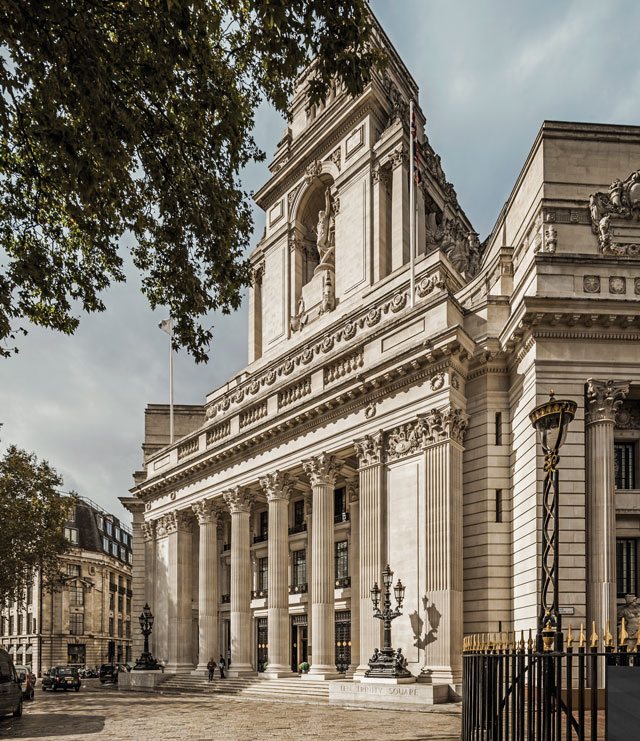
Ten Trinity Square | 1922

Connection to the world


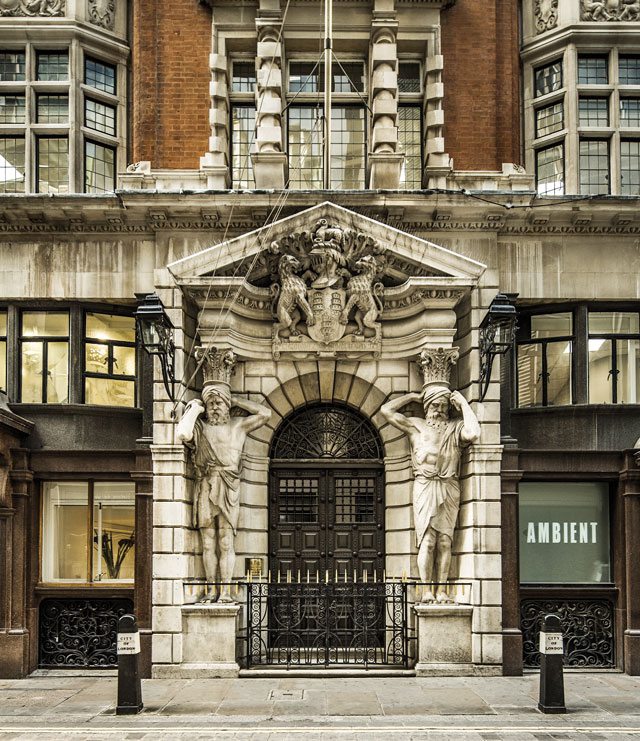
Exterior of Four Seasons Hotel London at Ten Trinity Square

Completed in 1922, the Beaux Arts building that today houses Four Seasons Hotel London at Tower Bridge has been meticulously restored to preserve many design details.

The Port of London Authority was formed in 1909 to run all the docks of London, then the largest seaport in the world, and to be responsible for the River Thames from Teddington to the ocean. Its splendid headquarters – today home to the new Four Seasons Hotel London at Tower Bridge – was designed by Sir Edwin Cooper and built between 1912 and 1922.

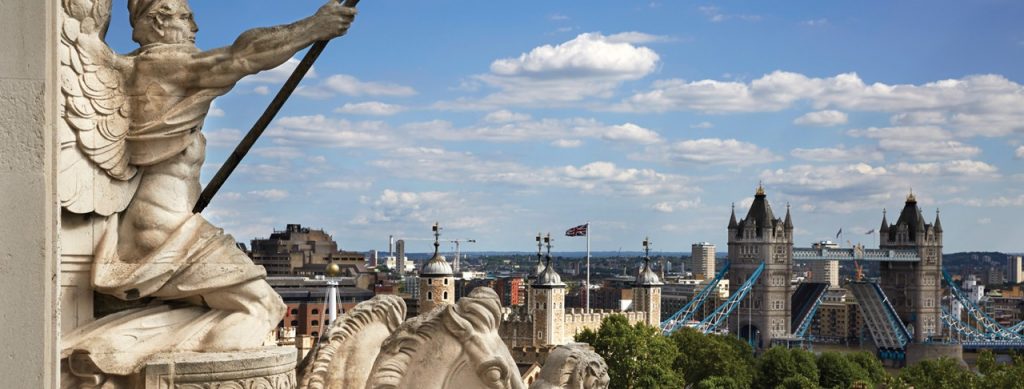
A Grade II* landmark on the Statutory List of Buildings of Special Architectural or Historic Interest, the building’s great tower features a statue of Old Father Thames, who points downriver to the source of London’s trade. The reception of the first general assembly of the United Nations, held in 1946, was hosted here in what is now known as the UN Ballroom, and was attended by (among others) King Faisal of Saudi Arabia and U.S. first lady Eleanor Roosevelt.

Four Seasons Hotel London at Tower Bridge

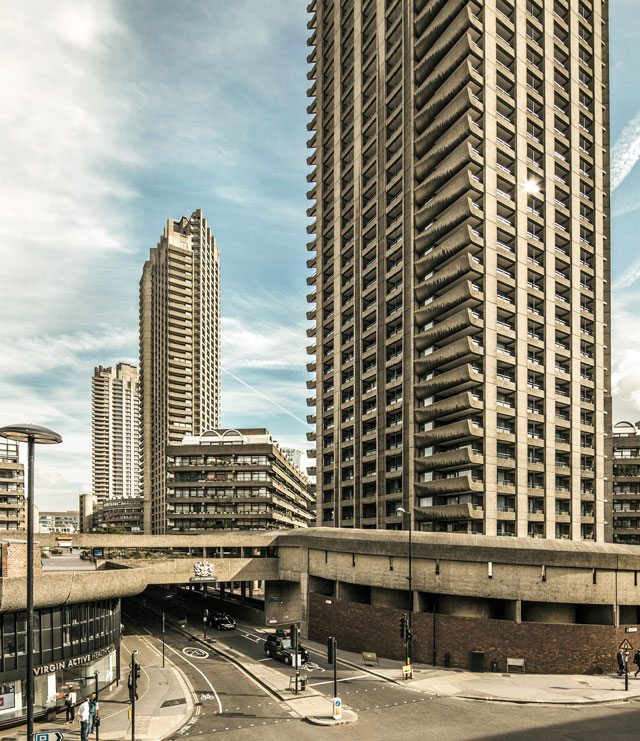
The Barbican | 1969

Rubble and reinvention


The Barbican in London

The Barbican’s Brutalist concrete style divided critics even before the complex’s completion in 1969.

December 29, 1940, was one of the worst nights of the London Blitz. In 1958, the City Corporation bought 35 acres that had been destroyed that night, and commissioned Chamberlin, Powell and Bon to design a massive complex: more than 2,000 apartments in residential blocks and three 40-storey brutalist-style towers. Though many considered it overbearing, it has acquired fans, as well as a noteworthy performing arts centre – the largest of its kind in Europe – and is now one of London’s most desirable addresses.

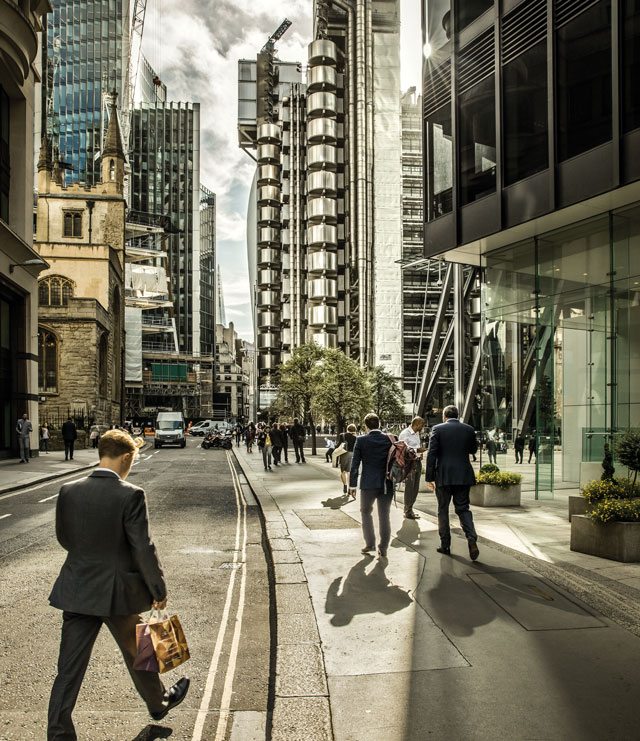
The Lloyd’s Building | 1986

Business and innovation


The Lloyd’s Building in London

The Lloyd’s Building features an “inside-out” design, with building services like plumbing and wiring housed on the exterior.

Starting small at Edward Lloyd’s coffee house in the 1680s, London’s maritime insurance market gradually evolved into the giant Lloyd’s of London. In 1986 it moved into its fourth and largest building, designed by architect Richard Rogers using a modular system for future flexibility. This inside-out approach, with a concrete frame clad in glass and stainless steel, was revolutionary. In 2011, it became the youngest building ever to be given Grade I status, putting it on a list of protected monuments that includes St Paul’s Cathedral.

Bloomberg London | 2020

Past and future in harmony


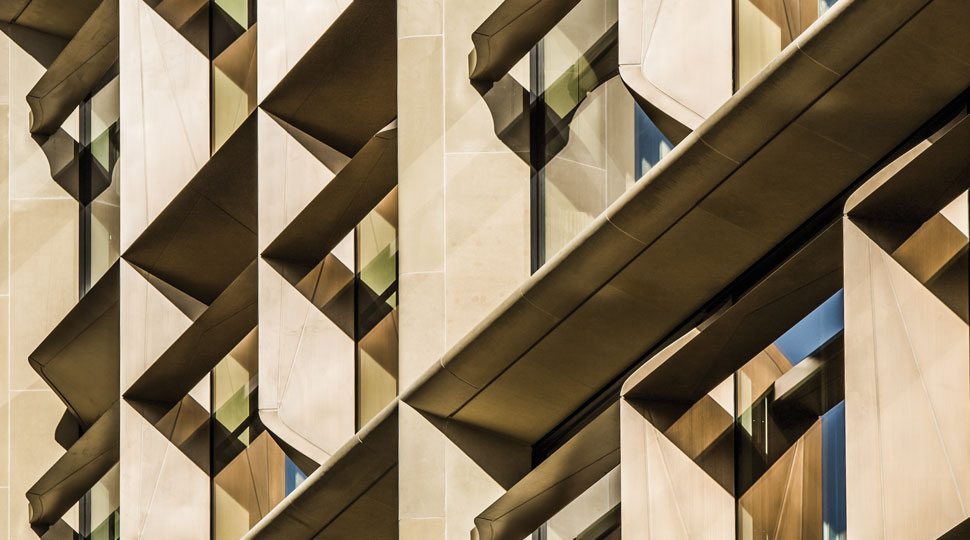
Bloomberg London Architectural Detail

Bloomberg London’s exterior is defined by English sandstone and polished bronze fins, which shade the windows and channel fresh air inside.

Michael Bloomberg’s European headquarters, begun in 2010 and set to open by 2020, will have 4,600 desk spaces and cover 3.2 acres. Designed by Sir Norman Foster + Partners, two 10-storey blocks are separated by an internal street that follows the line of a Roman road. The massive structure is supported by thousands of piles and clad in English sandstone and innovative polished bronze fins.

Underneath lie the remains of a Roman temple, circa AD 240, to be reconstructed in the basement on its original site, putting one of London’s oldest buildings inside one of its newest – and bringing our story almost back to where it began.

YOUR JOURNEY BEGINS HERE

Start planning your historic stroll through the Square Mile.

Statue on building

10 Animals You Can Meet on Vacation

Animals bring peace, laughter and comfort into our lives, and vacations are no exception. Sometimes the most memorable part of a trip is the local wildlife you encounter, which makes spotting a parrot tucked into a palm tree, or hugging an elephant for the first time, worthy of an Instagram post. Take a look at animals you might encounter on your next getaway, from the gentle giants of Thailand to a playful monkeys in Nevis.

Elephant love in the Golden Triangle

A photo posted by Cook Tirasak (@cookinstagram) on

Thailand is known for its elephants, and Four Seasons Tented Camp Golden Triangle is home to a few of the friendly 4-ton mammals – so guests have the opportunity to walk with, bathe or play with them. Be sure to say hello to Yuki, who loves wandering into neighbouring banana plantations for a treat, or give a bath to Yuki’s best friend, Phuang Phet, who prefers sugar cane. Meet the whole four-legged team here and discover each rescued elephant’s backstory.

Four Seasons Tented Camp Golden Triangle

Meet miniature Dougal in Hampshire

While at Four Seasons Hotel Hampshire, stop by to pet 3-year-old Dougal, the Shetland pony. The Hotel has a top-class Equestrian Centre so guests can take lessons and explore the English countryside on horseback. Treat children ages 7–16 to the Own a Pony experience, in which they learn about riding, grooming and stable management.

Four Seasons Hotel Hampshire

Sea turtle hatchlings in Punta Mita

The beaches of Punta Mita are crowded each summer with thousands of female turtles coming ashore to lay their eggs. In midsummer, visitors can spot an adult olive ridley, green, hawksbill or loggerhead turtle during her maternal migration. In December, guests at Four Seasons Resort Punta Mita can be a part of the baby turtles’ exciting journey to the water during the annual safe release programme.

Four Seasons Resort Punta Mita

Giraffes standing out in the Serengeti

A post shared by Vidya Sagar (@vidya_sagarr) on

=

Marvel at the world’s tallest mammal on the Great Plains of the Serengeti. Though they can run at speeds of up to 35 miles per hour, giraffes spend more of their time grazing on acacia trees to get both food and hydration. For optimal photo opportunities, book a walking safari at Four Seasons Safari Lodge Serengeti. Globetrotter Leah Walker did, and she met zebras, hippos and even a lion.

Four Seasons Safari Lodge Serengeti, Tanzania

Parrots perched in Hawaii

A photo posted by Yev (@yevmonster) on

The Hawaiian Islands are home to an abundance of colourful bird species, including this eye-catching blue and gold macaw, a type of tropical parrot that was spotted at Four Seasons Resort Lanai. A macaw is distinguished by its medial – a facial patch as unique as a fingerprint.

Four Seasons Resort Lanai

Giants of the sea in the Maldives


The underwater beauty of the Maldives is almost unmatched. With its plankton-rich waters, Baa Atoll is a favourite destination for many impressive sea creatures, including manta rays. You have a chance to swim with these strange and graceful fish all year round when you visit Four Seasons Resorts Maldives, but the best months for the most mantas are June through September.

Maldives Private Island Voavah at Baa Atoll

Grazing ‘buffalo’ in Jackson Hole

A photo posted by Ryan Sheets (@ryanjonsheets) on

While out in the beautiful mountainous landscape of Jackson Hole, Wyoming, travellers have a high probability of spotting a bison, also known as the American buffalo. The powerful beasts can run up to 35 miles per hour, can jump up to 6 feet in the air, and love gathering around the warm springs and geysers for the steam.

Book a wildlife safari with Four Seasons Resort and Residences Jackson Hole for an exciting four-hour journey. The guides know the best places to spot local wildlife, like bison, moose, bear and elk.

Four Seasons Resort and Residences Jackson Hole

The eagle lands in Langkawi


Malaysia’s Kilim Karst Geoforest Park is rich in biodiversity, and visitors to the nature preserve may glimpse one of the world’s fiercest birds: the eagle. Watch these royal birds of prey soar above you as you venture out by boat from Four Seasons Resort Langkawi.

Four Seasons Resort Langkawi

The world’s largest tortoise in Seychelles

Guests at Four Seasons Resort Seychelles should stop by the Resort’s turtle pen to say hello to Tedwina, the giant tortoise. Her favourite food is mango peel, and she loves interacting with people, especially children.

The Resort team originally named her Ted, thinking she was a male, but quickly changed it. Guests can pet or feed Tedwina, along with Taka, Maka, Cinderella and Socrates. The giant tortoise is the largest of tortoise species in the world.

Four Seasons Resort Seychelles

Green vervet monkeys in Nevis

Sea turtles aren’t the only local residents that Nevis is known for. In fact, there are more monkeys on the island than people, so guests at Four Seasons Resort Nevis are guaranteed to spot at least one of these curious and playful creatures. Families of monkeys frequently appear on the championship 18-hole golf course at the Resort. Sunset tours on golf carts guide guests to some of the best vantage points for Caribbean Sea–gazing, including the place where monkeys congregate on the 15th green.

YOUR JOURNEY BEGINS HERE

Start planning your adventure into the wild.

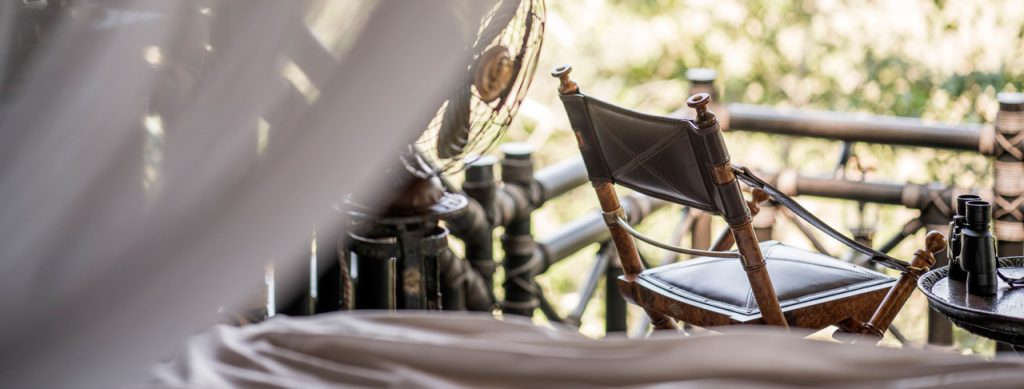
Close-up image of an outdoor chair.

10 Food Festivals Worth Travelling to Find

Of course you always seek out a seat at the best bars and restaurants when you travel. But for a deeper dive into the culinary scene of your chosen destination, align your trip with a food festival. From a multi-stage music fest showcasing the best of a city’s eats to gatherings focused on a particular regional dish, the stops on our smorgasbord tour abound with local cuisine and culture.


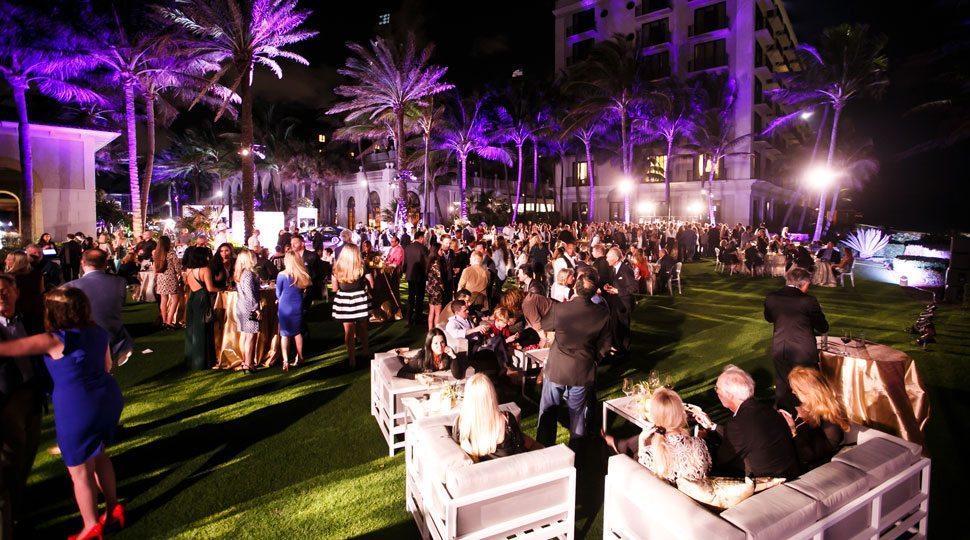
Palm Beach Food and Wine Festival

The Palm Beach Food and Wine Festival attracts culinary talent from around the globe.

Palm Beach Food and Wine Festival

As if Florida isn’t seductive enough in winter, the Palm Beach Food and Wine Festival adds yet another excuse to head South in December. This lauded culinary event attracts powerhouse chefs like Daniel Boulud, Mike Lata and the Sunshine State’s own Michelle Bernstein to a number of local venues, including festival home base
Four Seasons Resort Palm Beach. Beyond the capstone Grand Tasting, buoyed by book signings and the sounds of a DJ, there are multi-course wine-paired dinners revolving around themes such as sustainable seafood and modern Southern cuisine.

Four Seasons Resort Palm Beach

Big Apple BBQ

Every June for the past 16 years, 16 top pitmasters from California to New York have taken over Madison Square Park for a two-day-long backyard barbecue right in the middle of Manhattan. Meat and smoke are the main ingredients for the Big Apple BBQ, which will be relocating elsewhere on the island in 2019 (no word yet). The venue may be changing, but greats such as Sam Jones, Rodney Scott and John Stage will no doubt still be prodding the fire. Move from tent to tent sampling Eastern Carolina pulled pork sandwiches, St. Louis–style ribs, Texas brisket and jalapeño-tinged sausage. Serious foodies who want to talk shop with their BBQ heroes know to swing by Thursday night when the mouthwatering aroma of hot coals and slow-roasting swine starts to fill the air. Can’t muster the motivation to move after the feast? Both
Four Seasons Hotel New York and Four Seasons Hotel New York Downtown are just a cab ride away.

Four Seasons Hotel New York

Tokyo Ramen Show

For 11 days in October/early November, the many flavours and styles of Japan’s most buzzworthy noodle soup come together at the Tokyo Ramen Show in Komazawa Olympic Park. The steaming comfort food comes not just from Tokyo purveyors, but from ramen makers in Hokkaido, Kagoshima and everywhere in between. Make Four Seasons Hotel Tokyo at Marunouchi your home base, and stay awhile: 18 vendors ladle soup for the first six days and an entirely new cast takes over for the final five. Ramen is known for its wildly varied flavours and ingredients, which differ from city to city, town to town. You can taste for yourself a kaleidoscope of regional variations like miso-based broth with horsehair crab and dashi with dried bonito flakes and sea kelp. And don’t miss the mash-ups – ramen shops collaborating with one another to create completely new dishes only available here.

Four Seasons Hotel Tokyo


View this post on Instagram


A post shared by Outside Lands (@outsidelands)

Outside Lands

Gone are the days of sad and soggy music festival fare. Melon salad, Malaysian lamb curry, samosas and stir-fried veggie glass noodles are among the menu choices when 70 or so of San Francisco’s best restaurants set up al fresco kitchens at the Outside Lands music festival in August. About a dozen food trucks are on hand, as well as, in true California fashion, a Cypress Grove pop-up slinging artisan cheese plates. Oh, and there’s music too: If you like your meals paired with the stylings of Florence & The Machine, The Weekend, Beck and Bon Iver, this fest’s for you. Rest and recover at the centrally located Four Seasons Hotel San Francisco.

Four Seasons Hotel San Francisco


View this post on Instagram


A post shared by Holly Jones (@thevinogirl)

Chef Fest, Hawaii

If cosying up to an intimate group of all-star chefs in one of the most exquisite natural settings in North America is your idea of a memorable holiday, make your way to
Four Seasons Resort Hualalai in October for Chef Fest. Interactive cooking classes with such experts as Hugh Acheson, Brooke Williamson and Andy Ricker at the Resort’s outdoor kitchen are the main draw, but beach cookouts, al fresco tastings with local farmers and pre-brunch paddleboarding excursions further enhance the tropical environs. Treat yourself to the cocktail showcase at the Resort’s Palm Grove Pool and toast to the most tasteful of beach getaways.

Four Seasons Resort Hualalai


View this post on Instagram


A post shared by Salon du Chocolat (@salonduchocolat)

Salon du Chocolat, Paris

Held each fall at the Porte de Versailles expo centre about 15 minutes from
Four Seasons Hotel George V, Paris, Salon du Chocolat is one of several such shows around the world – but this one’s in Paris, a city famous for its sophisticated confections. The truffles and ganache here are enough to exhilarate any chocophile, but the centrepiece is the Salon’s unusual fashion show: Designers and chocolatiers collaborate on haute-couture outfits embellished with or delicately spun from chocolate.

Four Seasons Hotel George V, Paris

Prague Food Festival

Chances are a visit to Prague will lead to its majestic castle, a ninth-century marvel that is home to St Vitus Cathedral and the Renaissance-era Royal Garden. Here, just across the Vltava River from Four Seasons Hotel Prague, the Prague Food Festival unfolds each May. Don’t pass up a chance to consume the best dishes from Czech chefs – steak tartare and lamb ragout with bread dumplings, or perhaps sushi or empanadas – with the added zest of a fairy-tale dining spot.

Four Seasons Hotel Prague


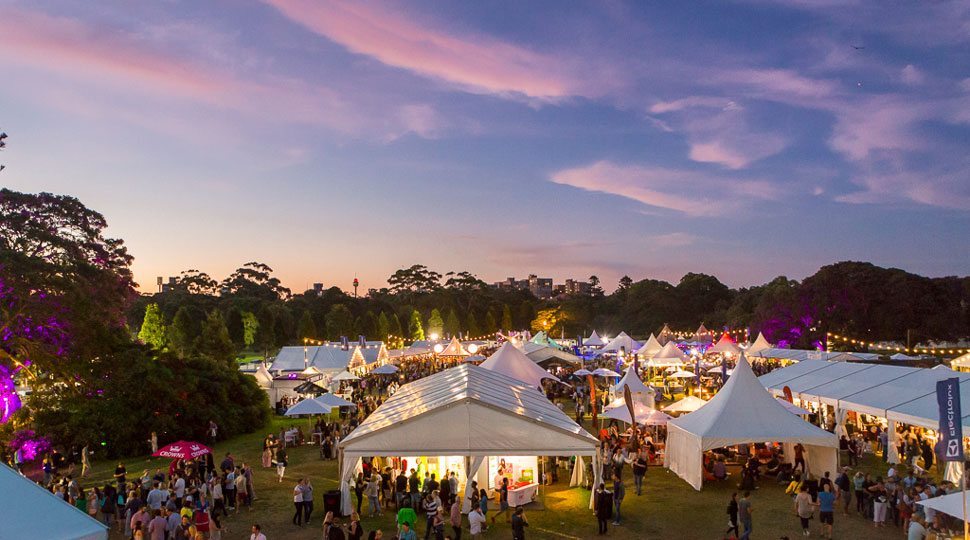
Taste of Sydney

Taste of Sydney pairs delicious bites with an al fresco setting.

Taste of Sydney

For four days in early March the all-encompassing Taste of Sydney festival takes over Sydney’s verdant Centennial Parklands, minutes from Four Seasons Hotel Sydney. Wine tastings and demos in butchery and baking add an interactive element, and an artisan marketplace of locally made ingredients and wares means you can savour the festival long after it’s over. More than 60 dishes from notable Sydney chefs like Mark Best and Nelly Robinson are the main attraction. Sample barbecued octopus, shrimp toast okonomiyaki and lamb skewers, then retreat to a glamping tent with a glass of Sauvignon Blanc from the Adelaide Hills.

Four Seasons Hotel Sydney


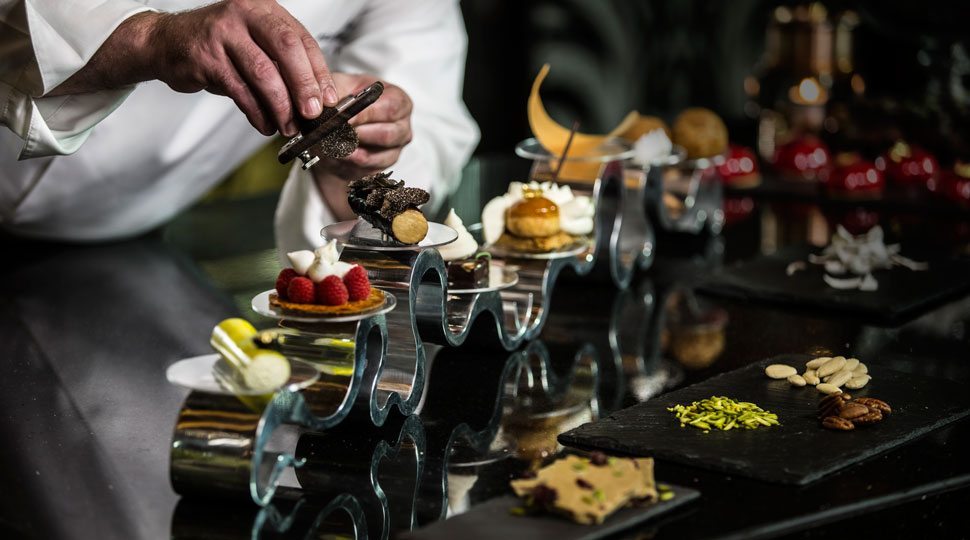
Desserts at Dubai Food Festival

A chef prepares miniature desserts at the Dubai Food Festival.

Dubai Food Festival

The Dubai Food Festival in February and March reflects the city’s rich diversity, attracting chefs like Jun Tanaka, Nikita Gandhi and Tim Read. Throughout the celebration, at various locations near Four Seasons Resort Dubai at Jumeirah Beach and Four Seasons Hotel Dubai International Financial Centre, local restaurants roll out limited-edition menus sure to evoke extreme Instagram envy. Sit down in one of their dramatic dining rooms, or head to a food truck or al fresco pop-up at the festival’s Etisalat Beach Canteen. Learn a little something at a chef master class, tour an urban farm and nosh at a street food bazaar – all part of this robust 17-day event.

Four Seasons Resort Dubai at Jumeirah Beach


View this post on Instagram


A post shared by Ubud Food Festival (@ubudfoodfest)

Ubud Food Festival

From tofu to turmeric, the Ubud Food Festival – sister event to the Ubud Writers & Readers and Bali Emerging Voices festivals – puts Indonesia’s vast culinary landscape front and centre each April. Start by reading the story of the woman who adopted Bali as her home and launched this annual festival, located minutes from Four Seasons Resort Bali at Sayan. Then master macarons with Bali’s Prince of Pastry, Rafi Papazian; make the healing herbal drink jamu; cook with clay pots and wood-fired stoves in a traditional paon (Balinese kitchen); and breathe deeply at a fiery sambal cook-off. Beyond the kitchen, consider the intro course on Indonesian language and culture, led by an instructor from the Cinta Bahasa Indonesian Language School.

Four Seasons Resort Bali at Sayan

YOUR JOURNEY BEGINS HERE

Explore the culinary delights at your next destination.

Four Seasons Resort Hualalai