Tips for Travelling With Teens

My teenaged son Stevie and I have been slowly travelling the world since 2011. We left the U.S. and adopted a nomadic lifestyle because I wanted to infuse more life into our everyday living. After working in health care for a few decades, I began to notice a common theme from people near the end of their lives—regret. I decided I didn’t want to live a life full of regrets, and it was important to me to instil this spirit in my child.

As any parent with kids over the age of 10 knows, there is a difference between travelling with a younger child and doing so with a teen. When they’re 9 years old, everything is magical and exciting. At 13, things that used to really interest my son, for example, elicit little more than a shoulder shrug.

Fortunately, over the last four-plus years spent travelling from Asia to South America and beyond, our relationship has become quite strong. We tend to function as a team, and my son rarely hears the typical (and sometimes ineffective) reasoning of “I’m the parent, that’s why,” when it comes to our travel decisions.

Here, I’ve gathered some of my best tips and tricks for pulling off an excellent vacation with teenagers and making the most of your time together. A family holiday helps ensure you’ll get quality time and make good memories, but it will take some extra effort. From itinerary planning to packing to using travel to train your teens for their independent future, here are some of the things I’ve learned as a globetrotting parent.

Involve your teen in trip planning

Eiffel Tower, Paris, France (L); Pantheon Interior, Rome (R)

Involving your teen in trip planning is key. My son and I recently collaborated on mapping out a trip to Europe, during which we went to Paris for my birthday and then visited a place on his list: the Pantheon in Rome. Photography courtesy Eustaquio Santimano and Gary Ullah

Even though your son or daughter will likely respond with a casual “whatever,” it’s important to include them in the trip planning process. Just like adults, teens want to be heard. And the more they’re involved in the early stages, the more likely they will be engaged and the less likely they are to complain during the trip.

This is also a great opportunity for kids to learn about compromise. My son and I discuss locations, things to do, costs, methods of transportation and so on. In fact, he usually picks our next destination himself. If either one of us has a particular interest, then we pay attention to that as well during the planning phase. For instance, this year we celebrated my birthday in Paris, and when we were in Rome, we made a point of visiting the Pantheon because it had been featured in one of my son’s favourite video games.

Use packing to teach accountability

FS Guest’s Luggage

Let teens be in charge of packing their own bags; it teaches accountability and the importance of planning ahead.

So many parents pack for their teen in a panic: What if they forget their toothbrush, their underwear, their iPad? But part of growing up is learning accountability. Will the world really end if they have to buy a new toothbrush or, heaven forbid, endure a morning with bad breath? (I see the self-proclaimed control freaks wincing at this notion.)

On the other hand, my son has a tendency to forget important items, which often ends up causing both of us some frustration. Packing is a great time to teach your teen the value of planning and generating lists. Sit down with your kid and have him or her come up with a packing list. That way, things don’t get left behind and travel days are much less stressful.

When they want to pack too much, just remind them they are in control of their bag, which means they will be carrying it through the airport, lugging it to the car, and pulling it into the hotel. If you are flying, make sure they understand that bags need to be under a specific weight. If they need to make adjustments, it’s better to let them make those decisions. It’s all part of the growing up.

Plan for downtime

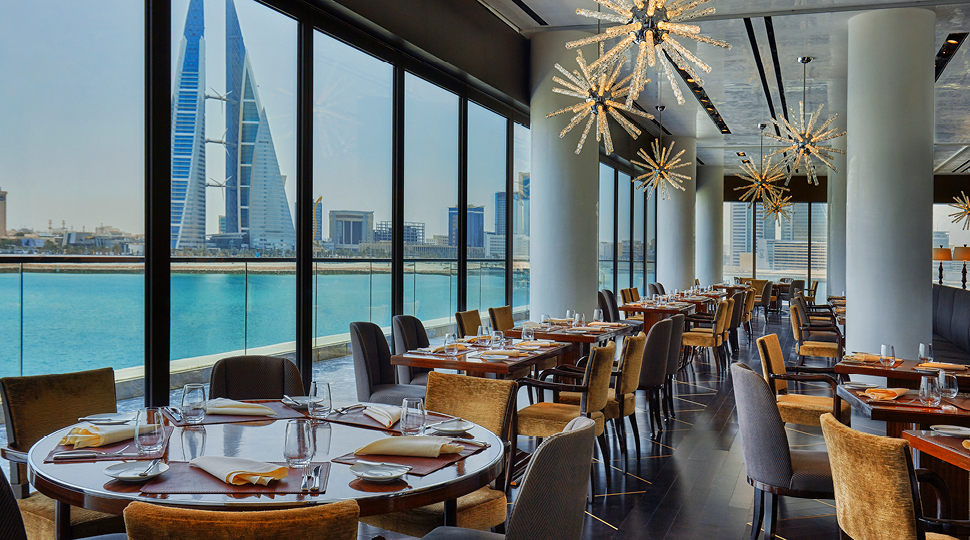
Downtime is crucial for teens, even on holiday. They may want to hang out in the room all day, which means you can make the most of hotel amenities, such as the contemporary Australian cuisine at Mode Kitchen & Bar at Four Seasons Hotel Sydney.

Downtime is crucial for teens, even on holiday. They may want to hang out in the room all day, which means you can make the most of hotel amenities, such as contemporary Australian cuisine at Mode Kitchen & Bar at Four Seasons Hotel Sydney.When travelling with teens to a new place, there is an incredibly strong temptation to rush about and not miss anything. However, a jam-packed day of sight-seeing just doesn’t work for teens.

Most teenagers sporadically get into hermit moods when they need their space. You may want to spend time together, but your child will be happier with some time alone during the journey—or at least time when they aren’t constantly on the move.

When my son and I have had an all-day excursion or a few days with a lot of movement, I make sure to follow that up with a lazy day. Sometimes this means he stays in the hotel to relax while I go out exploring on my own, and other times I hang in the room with him, or we spend some time at the pool. On some lazy days, I’ll even order delivery or room service. At Four Seasons Hotel Sydney, for example, I certainly didn’t mind spending a day relaxing by the pool and sampling the fresh flavours at Mode Kitchen & Bar.

Deal with screen time

Teenager on the phone

Fact: Teens are glued to their phones. Give a lesson in compromise by working with your teen to decide when and where screen time is appropriate while on vacation.

It can get frustrating always looking at your teenager’s face over some sort of electronic device. On holiday, some parents encourage their kids to leave their electronics at home. But I’ve found this is another opportunity to teach compromise.

Work out periods of time when screen time is acceptable. On the airplane, the train and long bus rides, why not let them disappear into their devices? It will make getting their attention much easier later on. For gamers, work with them to come up with times like these that are a win-win for everyone.

After all, it is their holiday as much as yours, and you’re never going to convince them to ditch the digital world entirely.

Photograph like a teen

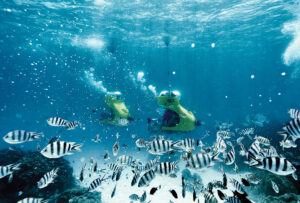
Talon Windwalker scuba diving on vacation with his teenage son

I involve my son (pictured here diving with me) in all facets of travel. As a result, we tend to function as a team and have explored much of the world together. Photography courtesy Talon Windwalker

Your child may take 20 selfies in five minutes, but that doesn’t mean they will pose graciously for you when you want a family picture. Usually the first few times will be met with cooperation, but after that, expect “the look.”

If you have a surly teen, try to restrict the number of photos you take with them. Make sure they are really worthwhile shots, in worthwhile locations. Alternatively, you can invite them to join you in a selfie. This works better than other methods because they understand the value of selfies in social media, and generally are happy to lend their cool factor to your profile. It is even easier to capture a photo with your teen if you have them take the photo with their own device, allowing them to edit and post it on their own social channels.

Avoid repetition

Four Seasons Florence

On occasion, let your teen hang out at the hotel while you go out exploring. The rooms at Four Seasons Hotel Firenze, for example, are incredibly comfortable and can be a cultural experience all their own.

Teens don’t always share our penchant for history and culture. After spending a lot of time in South America with Stevie, I began to hear “More ruins?” in an exasperated tone. In Thailand, it was “Another temple?” After a few months in Europe—“I’m tired of churches and castles.”

Again, this is where compromise comes into play. If we spend a day doing mostly things I’m interested in, the next is all about him. While visiting Ecuador, we spent one day visiting cathedrals, churches, cemeteries and local markets—not exactly riveting attractions to a teen. The next day was his, and he opted for a lazy day, which meant we didn’t see the outside of our hotel room. At Four Seasons Hotel Firenze, he stayed at the historic hotel while I went out to see the sights. Other times, he will tag along and hang out outside the “boring” church/castle/temple while I go exploring.

Compromise with food

Paris Cuisine for Adult & Teen: Verjus Bar à Vins’ Buttermilk Fried Chicken Sandwich topped with fresh cabbage salad (L); Frenchie to Go Hot Dog (R)

Don’t stress if your teen is not as eager to try new foods as you are. Even hamburgers and hot dogs can turn into memorable meals when ordered in other countries. Photography courtesy Verjus Bar à Vins (L); Photography Virginie Garnier (R)

For many adults, one of the joys of travelling is experiencing new food. Any time I’m heading to France, I dream of the fabulous wine, baguettes, cheese and crêpes. When looking at a menu with items such as tongue tacos, however, my son will sigh and tell people, “My dad will eat almost anything.”

Most of the time he can find something to satisfy his finicky appetite, but sometimes he just wants something that is familiar. While watching your teen eat macaroni and cheese in Thailand may make your inner foodie weep, give the kid a break and withhold that “but-you-can-get-that-at-home” plea on occasion.

It kills me when we’re in Paris, looking over a menu offering such tasty items as grilled stingray wing, and he picks a hamburger—but at least we can both enjoy the meal. Luckily, most places usually manage to add a local interpretation of even the simplest things, such as adding gourmet cheese or fresh bread to a hot dog.

Expect post-trip abandonment

Travelling with Teenagers

Teenagers may run off to spend time with their friends once you return home, but they’ll always cherish the times you spent travelling together. Photography courtesy Thinkstock

Don’t take it personally when you return home and your teen quickly puts distance between you—it doesn’t mean they didn’t enjoy the journey. At this age, their world revolves around their peers. It’s all part of stretching their wings as they prepare to leave the nest.

I’ve had plenty of lovely talks with college-age adults who reminisce about how they complained almost non-stop during family vacations, but add that those times remain some of their favourite family memories.

Someday your kids will thank you. It may not be until they’re 23, but it will happen.

YOUR JOURNEY BEGINS HERE

Select a destination and start exploring

Concierge

Water Adventures Around the World From Four Seasons

Earth is often referred to as “the blue planet” for its oceans, yet humans spend most of their time of terra firma. Get out onto the blue side with these aquatic adventures designed to offer the best water-sports holidays from Hawaii to the Maldives.

Modern-day thrill-seekers and adrenaline junkies know that life-changing adventures can be found both on and off solid ground. With hotels and resorts located in some of the most remarkable aquatic landscapes around the world, Four Seasons can expose venturesome travellers to some of the most inspiring (and unusual) marine adventures around – from “flying” underwater in Hawaii to spearfishing for octopus in Mexico.

Meet manta rays in Hualalai

Kon 2360 970x540

The waters around Four Seasons Resort Hualalai are home to a variety of creatures – green sea turtles, spinner dolphins, manta rays, reef fish, corals and more. Learn more about the island’s marine life with a private interaction with Kainalu, the Resort’s resident spotted eagle ray who lives in King’s Pond among over 90 different species of fish. Feed him shrimp and mussels as you get an in-depth understanding of his habits, history and species. Looking for a more adventurous marine expereince? “Fly” through the waters around the Resort with the Subwing watersport board as a boat pulls you along.
Catch your next meal in Mexico

Pun 864 970x540


Four Seasons Resort Punta Mita, México, brings new meaning to the concept “hook and cook.” Through the Resort’s new Octopus Catch & Cook programme, guests embark on a thrilling culinary experience that includes diving and spearfishing.

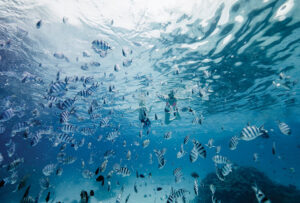
After arriving by boat in Bahía de Banderas—an underwater wonderland where stingrays, tropical fish and even dolphins mingle in colourful coral reefs and underwater caves—guests will free-dive in search of octopus. Back at the Resort, an expert chef helps prepare a variety of signature dishes with the freshly caught prize. A delicious three-course lunch of octopus salad, grilled octopus and dessert rounds out the afternoon.

Defy gravity in the Maldives

Four Seasons Maldives X JetBlades

Strap on the X-JetBlades in the Maldives to enjoy the water like a bird of prey, hovering over the waves and moving in all directions like the Rocketeer.

For the ultimate aquatic adventure, thrill-seekers need look no further than Four Seasons Resort Maldives at Kuda Huraa. The Resort’s Water Sports Centre provides action-packed activities for all ages, from wakeboarding to shark safaris. Get your adrenaline pumping from new heights when you try the X-JetPacks. Equipped with the latest hydro-flight technology, these jetpacks enable the brave to fly freely through the air in any directions and dive as far as 5 metres (16 feet) below the surface. Expert tips and training will even have you mastering tricks and turns before your session ends.
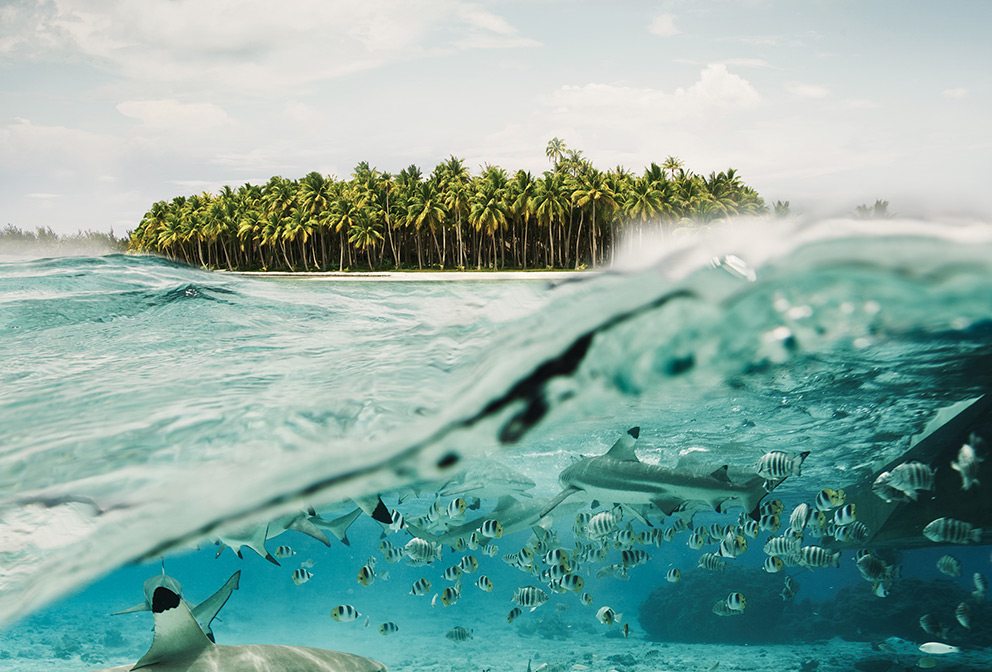
Glide through the ocean in Bora Bora

Bora Bora Underwater Turtles and Fish

Move gracefully through the calm, life-filled waters of Bora Bora on a Seabob, taking in the fish, turtles and plant life that populate these warm waters. Photography courtesy Marc Carveo

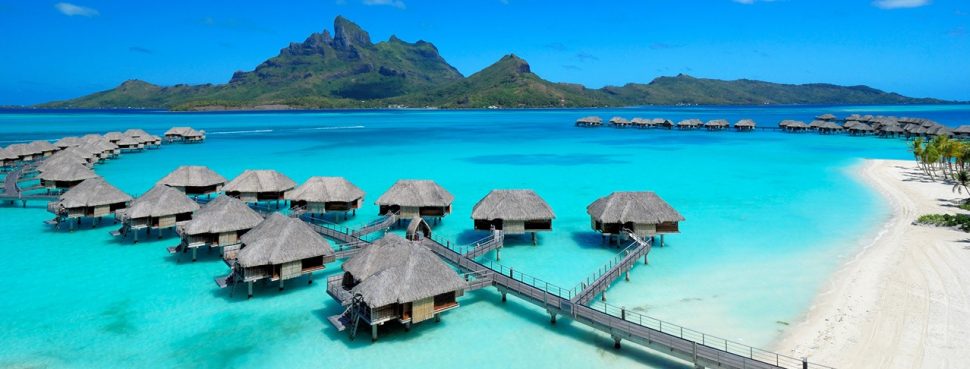
A French Polynesian paradise, Four Seasons Resort Bora Bora also helps guests experience the island’s natural adventures, from sport fishing to shark feeding. Explore the beauty of the South Pacific below the surface during a submarine scooter dive: The Seabob is a motorised device that allows you to glide through Bora Bora’s colourful lagoons, mastering the curves and turns of the ocean’s bottom along the way. Exotic fish and other marine life linger nearby as you enjoy a fast-paced underwater ride. Surfacing periodically, then going under for as long as you can hold your breath, you’ll be immersed in a high-speed world, enjoying the sea with dolphin-like agility.
Try yoga on the water in Maui

Mal 1001 970x540

Yogis know that the practice of yoga requires mental and physical strength. Four Seasons Resort Maui at Wailea puts a contemporary spin on this ancient art with its latest wellness offering, Stand-Up Paddleboarding (SUP) Yoga.

Island views create an idyllic backdrop as you paddle out into warm tropical waters for the latest water challenge. During each morning class, you’ll use the ocean’s calming waves to steady your breathing, focus your mind and test your body’s strengths with poses suited for any skill level. “Practicing yoga on the water demands an increased focus,” says SUP Yoga instructor and expert Amber Lee. A true test of balance and flexibility, SUP Yoga is designed for fitness fanatics and adventure-seekers alike.

Additional reporting for this story done by Kelly Neubeiser.

Your Journey Begins Here

Select a destination and start exploring

City at night

The Best Golf Courses in Asia: From Singapore to Shenzhen

Golfers travelling throughout the West often take it for granted that luxury resorts offer access to quality golf courses, an amenity as common in some regions as spas or swimming pools. But this has not been the case in many parts of the world—until now.

Golf is booming in areas relatively new to the sport, especially across Asia. According to the Royal & Ancient Golf Club of St Andrews, an organization known globally as the keepers of the game, there are more courses currently under development and construction in Asia than in any other continent—207 of them, in fact. China and South Korea are seeing the fastest growth, with the latter especially notable for the rapid proliferation of cutting-edge indoor golf simulators in addition to conventional courses.

With the golf boom in full swing (pun intended), we’ve found the best golf courses in Asia for lovers of the game from beginner to pro.

Seaside perfection in Hong Kong: The Clearwater Bay Golf and Country Club 

It was originally envisioned in the mid-1960s, but it took architects over a decade to transform a rocky, hilly site into the Clearwater Bay Country Club.

Originally envisioned in the mid-1960s, it took architects over a decade to transform a rocky, hilly site in Hong Kong into the Clearwater Bay Country Club. Photography courtesy The Clearwater Bay Golf & Country Club

There are several good golf clubs in Hong Kong, but The Clearwater Bay Club is the most dramatic. Sometimes called “Hong Kong’s Pebble Beach,” thanks to its unrivalled seaside location on a fishhook-shaped peninsula jutting into Clearwater Bay, it’s worth a visit for the views alone.

Most of the highest-ranked courses in Asia are located along this coast, and for good reason. The setting led Asian Golf Monthly to name The Clearwater Bay Golf and Country Club the best course in Hong Kong, while Golf Digest picked two of the holes—the third and 14th—for its list of the 38 best in all of China. The club has more than 3,000 international members from all over the globe, and though the course was built in 1982, it just underwent a renovation of all the greens and is in better shape than ever. It lies roughly a half hour from Four Seasons Hotel Hong Kong, and the Concierge would be happy to assist in arranging a tee time.

With rocks and water guarding the right side of the course, the third hole at Clearwater Bay is one of the most picturesque and demanding in Asia.

With rocks and water guarding the right side of the course, the third hole at Clearwater Bay Golf and Country Club in Hong Kong is one of the most picturesque and demanding in Asia. Photography courtesy Tomo Bystedt

The most scenic course in Malaysia: The Els Club Teluk Datai in Langkawi 

One of the most stunning courses in the world, the 6,750-yard course at The Els Club Teluk Datai meanders through centuries-old rain forest down to turquoise waters.

One of the most stunning courses in the world, the 6,750-yard course at The Els Club Teluk Datai meanders through centuries-old rain forest down to turquoise waters. Photography courtesy Els Club Malaysia

Four-time major winner Ernie Els has quietly carved out a niche as one of the world’s best players-turned-designers, with courses around the globe. He recently launched a line of even higher-end golf facilities, the Els Clubs, which reflect his personal taste in everything from clubhouse style to menu. (There are three so far.)

Set within an 8,000-acre (3,200-hectare) nature preserve, The Els Club Teluk Datai was named by the World Golf Awards as Malaysia’s most scenic course immediately upon opening. It runs through ancient rain forest and down to the very edge of the Andaman Sea, where the penultimate hole is the course signature, a par-3 across a rocky ocean inlet.

The course features an abundance of tropical flora, teems with monkeys and is managed by Troon Golf, a worldwide leader in luxury golf service and course maintenance. Carts are included in green fees, and caddies are available as an option. The Concierge at Four Seasons Resort Langkawi is happy to arrange tee times.

The best golf course in Indonesia: Nirwana Bali Golf Club

Flanked by the rolling surf of the Indian Ocean, the 13th hole at Nirwana Bali Golf Club is deceptively difficult.

Flanked by the rolling surf of the Indian Ocean, the 13th hole at Nirwana Bali Golf Club is deceptively difficult. Photography courtesy Pan Pacific Nirwana Bali Resort

To give the top-ranked course in Indonesia a real sense of place, star designer and golf legend Greg Norman used rice paddies for the rough and set three holes on a clifftop overlooking the Indian Ocean. The signature seventh does not merely play across crashing surf, but is also uniquely framed by one of the most important temples on the island, Tanah Lot, rising from a hillside behind the green.

Besides rice paddies, the course includes streams, jungle and ravines, running down to the beach and up to the cliffs. It is one of just 10 courses in all of Asia ranked in the world’s Top 100 by Golf Digest. Caddies help first-time visitors navigate the gorgeous layout, and many players immediately book a second round upon finishing. Located an hour south of Four Season Resort Bali at Sayan, this course is well worth the drive.

Designed by pros in Shenzhen: Mission Hills Shenzhen Golf Club

Mission Hills Shenzhen Golf Club Clubhouse

The 300,00-square-foot Mission Hills Shenzhen Golf Club Clubhouse is the nerve centre of the Mission Hills complex, featuring a pro golf apparel shop, dining facilities, lounges, a foot reflexology centre and a spa. Photography courtesy Mission Hills Golf Club

Bigger is not always better, but at one of the world’s largest golf resorts, Mission Hills in Shenzhen, it is. There are seven world-class courses by top architects and champions here, all within easy reach of Four Seasons Hotel Shenzhen, or as an overnight trip from Hong Kong. Designers include Jack Nicklaus, Pete Dye, Vijay Singh, Jumbo Ozaki, Nick Faldo, Ernie Els and the first Chinese golfer ever to compete at the Masters, Zhang Lianwei.

The Nicklaus-designed World Cup Course, a daunting near–7,300 yards, was the first in China to be accredited by the US PGA Tour to hold major international professional competitions. Tiger Woods to Greg Norman have competed here, and the course hosted the 1995 41st World Cup of Golf.

Among recreational golfers, the Faldo course has proved the most popular at the complex, thanks to its signature island green hole and a secluded location apart from the others. Caddies are available on all Mission Hills courses, and all 2,500 of them happen to be women. Book a tee time through the Concierge at the Hotel, the ideal hub for exploring golf in southern China. 

History and prestige in Japan: Tokyo Golf Club

Tokyo Golf Club Aerial - Course & Bunkers - Hole #17

Alison-designed courses such as the Tokyo Golf Club are noted for their vast, irregularly shaped bunkers dug well below the surface of small, elevated greens. Photography courtesy Tokyo Golf Club

Japan has more courses than any country in Asia, but this is the capital’s oldest and most prestigious club, dating back over a century. With a classic parkland design, its immaculate fairways are flanked by towering red oaks and feature deep, intimidating bunkers. Though it’s not long, there is more than enough challenge here, and the course regularly hosts the Japan Open and Japanese Amateur.

It was originally designed by Scottish Golden Age legend Charles Alison, but his routing was torn up during World War II, and the course was rebuilt differently, with the daunting “Alison bunkers” included to honour the creator’s original layout and style. Located in Sayama, just over an hour from Four Seasons Hotel Tokyo at Marunouchi, it’s among the most convenient of all the Tokyo area courses.

Highest ranked course in Singapore: Sentosa Golf Club

Sentosa Golf Club

With its trademark mounds, undulating terrain, and two mammoth lakes, the Serapong Course at Sentosa Golf Club in Singapore is a truly unique golfing experience. Photography courtesy Sentosa Golf Club

The highest-ranked course in the nation and site of the annual Barclays Singapore Open, Sentosa’s Serapong Course is that rare bird, a beautiful oceanfront golf course that is also very easy to reach from the city centre, just 20 minutes from Four Seasons Hotel Singapore.

Renovations for the tournament have stretched it into a 7,300-yard monster from the back, so it is very important to choose the right tees, especially since there are also plenty of water hazards, deep bunkers and undulating fairways. But players who can remain humble when choosing where to play from are rewarded with a fantastic course that plays right to the water’s edge, with dramatic views across to the city’s modern skyline. There are lagoons and inlets throughout, and visitors are constantly reminded they are playing golf on an island. They are also pampered, with a full-service clubhouse, optional caddies and a member-for-a-day experience at Singapore’s premier golf club.

Rain or shine tee time in South Korea: Golf Experience

TrackMan Radar Range

The easy-to-use TrackMan Radar Range is a self-service gaming and practice bay for both indoor and outdoor facilities, and available at Four Seasons Hotel Seoul. Photography courtesy Chris McEniry courtesy TrackMan Golf

South Korea has become the world leader in the use of high-tech indoor golf simulators, and the newest one is the Golf Experience at Four Seasons Hotel Seoul, which brings the world’s greatest courses to life in the beating heart of the vibrant city.

The facility includes five state-of-the-art 3-D hitting screens, each of which combines high-definition footage of iconic courses with the ultra-precise accuracy of the TrackMan, a radar launch monitor derived from military missile tracking technology that is widely considered best in class. The TrackMan reads the spin rate, angle and velocity of the ball coming off the club to compute exactly how far and with what path it would travel in the real world, and moves the player down the virtual fairways accordingly. This is real golf, with full swings and real balls, taken inside, on the 10th floor of the new Hotel. The technology is fun, but it can also be used very effectively for lessons, equipment fitting, posture and alignment, or to test clubs with instant and accurate data feedback.

Designed by golf royalty: Lotus Hill Golf Resort, Guangzhou

Bernhard Langer, Designer of the Course at Lotus Hill Golf Resort in Guangzhou

In 1986 Bernhard Langer, who designed the Lotus Hill Golf Resort in Guangzhou, became the sport’s first player to be officially ranked No. 1. Photography courtesy Keith Allison

This course was designed by Bernhard Langer, the first player ever to be ranked No. 1 in the world, a two-time Masters champion and five-time senior major winner. He does relatively few golf course designs and is known for being very hands-on, and this is one of his best—a parkland routing situated in the Pearl River Delta that manages to include water, in the form of lakes, ponds and creeks, on all but one of its 18 holes.

It features an exciting and memorable three-hole finish, including the signature island green par-3 17th, unlike all others in golf thanks to a massive cliff-like rock formation that towers over the putting surface. With a full-service clubhouse and caddies, Lotus Hill offers a first-rate outing that is only an hour’s drive from Four Seasons Hotel Guangzhou.

Your Journey Begins Here

Select a destination and start exploring

Four Seasons Hotel Guangzhou

The Best Travel Photography on Instagram: 10 Accounts to Follow

Travelling vicariously through Instagram is a pleasure. Sometimes getting a peek at new places through someone else’s lens is nearly as good as going there yourself. Whether planning a getaway or simply hoping to escape momentarily to somewhere extraordinary, tap your way to the accounts of these 10 travellers, who inspire us with their beautiful travel photography and stories from around the globe. They go to all the destinations we love, and as expert travellers they know the best ways to spend time there.

Here, meet the Instagrammers behind the images as they show us their favourite photos from the road, and offer tips on what to pack and how to take the best photo once you arrive.

Why we love her: Lesley is based in Argentina, and her travels take her from near (Brazil) to far (Israel) and nearly everywhere in between. Her feed offers a combination of beautiful destinations and fun travel snapshots, so you feel like you’re following a friend.

Her favourite destinations: “My favourite thing to do at any Four Seasons property is to get lost in my senses,” she says. “From the moment I walk in the door, so many aromas, sights and sounds overcome me in the best way possible. Four Seasons Hotel George V, Paris, is especially good at creating a unique atmosphere for the sophisticated traveller.” Another favourite is Patagonia: “I’ve been four times since I moved to Argentina two years ago (once for each season), and it continues to impress me with its views, cuisine, vastness and friendly locals.”

Travel tip: Always pack a few scarves. “Not only can they make any outfit look elegant, but they’re so versatile—turn them into a makeshift pillow or an eye mask to block the world out for a few minutes of privacy,” Lesley says. “And comfy shoes. My Nikon camera and a sense of adventure cannot be forgotten.”

Four Seasons Hotel George V, Paris

Why we love him: Alex is most at home in Vancouver, and his shots of the great outdoors have an almost otherworldly quality. His feed is packed with enough stunning photos of snowcapped mountains, wild animals and isolated cabins to make even the most dedicated urbanite want to head for the hills.

What’s always in his bag: A mix of high-tech and old-school tools. “I travel with my noise-cancelling headphones, a Canon 5D Mark III, a Macbook Pro, two hard drives for photo backups, a Swiss army knife and a headlamp.”

Number-one tip for travellers: “When arriving in a new country I always hold off 24 hours before I start shooting. I prefer to see how life works there and how people interact. And I try to meet knowledgeable locals—it’s always a great experience to hear about their stories and secret spots,” he says. “I also like using Google Earth to scout for great photo locations.”

Where’s next on his travel list: “The Faroe Islands, because they are still wild and untamed, and tourism is still in development.”

Why we love him: Cole’s feed combines the fantastic (people floating metres above landscapes) with the everyday (a cow in a field), but each photo has a sense of unreality that’s highly addictive. Plus there’s the occasional shot of a cute puppy.

Best souvenir: The ones you can’t buy. “I have a tiny sliver of rock—an early knife—shaped by human hands 9,600 years ago, found near the site of a Neolithic village on a recent trip to Jordan. That’s back when humans first left their nomadic lifestyle and learned to cultivate the land, the crux of a concept we call ‘civilisation.’”

Why we love him: Trey’s sense of adventure comes through in every photo, whether he’s camping inside an enormous, jungle-filled cave in Vietnam or crossing the Antarctic ice in a Hägglund tank.

His favourite destinations: “One of my favourites is Four Seasons Resort Bora Bora, because I was able to be there with my whole family for a week. I think my favourite times were the parts in between, when I was sitting there with my wife, looking at the amazing view, having a drink and doing absolutely nothing,” he says. “I also go back to Iceland again and again because it’s so rugged and beautiful there.”

Four Seasons Resort Bora Bora

Pro photo tip: Forgot your tripod? “You can use a scarf as a makeshift tripod to get steady photos,” Trey says.

Why we love her: A Texas native and Madrid resident, Erica takes photos of Spain’s quirkier side—like peacocks in city plazas—that fit neatly alongside architecture shots of the city’s gorgeous buildings and castles in the countryside. Warning: Don’t scroll through unless you’re prepared to book a flight.

The destinations she can’t stay away from: “Growing up, I visited Salt Lake City, Utah, and Tucson, Arizona, dozens of times because I have so much family in both locations,” Erica says. “However, I love returning as an adult because now I see these once-mundane places as destinations with wild landscapes and endless corners to explore. They look completely different through my camera lens!”

Number-one tip for travellers: Be flexible. “When things don’t go according to plan, which happens a lot, it’s up to you to decide how to handle the situation. It’s always best to find the humour in every circumstance,” she says. “With a positive outlook, it will probably make for a good story to tell when you arrive back home. I once helped catch two of Penang, Malaysia’s most wanted criminals. That definitely wasn’t a fun day, but I made the best of a sticky situation and now it’s one of my favourite travel stories.”

What she never leaves home without: Her Converse shoes and Canon camera.

Why we love her: Katie’s a frequent contributor to Four Seasons Magazine and an expert in navigating travel with kids. Her photos of soup dumplings make our mouths water, and scenic shots of junks in Victoria Harbour are interspersed with charming scenes from her family life.

Where she shops for souvenirs: Tokyo. “When in Tokyo a few years ago we bought more bento supplies than we could carry. Most of them were from a store in Ginza called Tokyu Hands, about 15 minutes walking distance from Four Seasons Hotel Tokyo at Marunouchi. On the same shopping trip, I loaded up on beautiful Japanese paper goods at Ito-ya, ranging from washi tape to hand-painted cards.”

Four Seasons Hotel Tokyo

Travelling with kids? ”Schedule at least one thing a day that appeals to kids so that they are more patient with doing things you like to do,” Dillon advises. “I also never pack a day with back-to-back activities outside of the Hotel. My daughter needs downtime in the hotel room or at the pool in order to reboot from touring. Plus, if you’re staying in a Four Seasons, it’s a shame not to enjoy it!”

Why we love her: Kobe’s Instagram feed is the stuff dreams are made of: turquoise waters, gorgeous accessories, mouth-watering cocktails and much more. They give us serious Insta-envy.

Pro travel tip: “If you are celebrating a special occasion, mention it! Whether it’s a birthday, anniversary or honeymoon, hotels always try to enhance your stay as much as possible when you are celebrating something special,” she says. And don’t forget to utilise your phone and its apps. “I use Instagram for everything from checking the weather at my destination to getting tips on how to get to out-of-the-way spots.”

Her favourite destination: “One of my absolute favourite travel destinations is Italy. From the ancient cultural sites of Rome to a hike along Cinque Terre, dining at Michelin-rated restaurants in the Amalfi Coast or boating at Lake Como, Italy has so much to offer for every kind of traveller—the museum-goer, the backpacker, or the luxury traveller,” she says. “In Maui, my favourite hotel is Four Seasons Resort Maui at Wailea, because the property is absolutely stunning—beachfront with beautiful pools, including an infinity pool, and a view of Haleakala in the distance.”

Four Seasons Resort Maui at Wailea

Why we love him: Matt calls Washington, D.C., home, but eye-catching photos of romantic German towns, the Northern Lights in Norway and pony-size Icelandic horses are what you’ll find in his colourful Instagram feed, along with the occasional goofy selfie.

His favourite destinations: South Africa and Australia. “South Africa is just a very special place, it has a spirit that’s impossible to define—it just has to be experienced to be understood,” he says. “Australia is interesting to me because it’s so very large. It would take a lifetime to see it all, and there are many interesting surprises in the least likely of spots.” Another favourite? Hawaii. “Four Seasons Resorts in Lana’i hold a special place in my heart, and returning to this beautiful island really is like going back home again.”

Best tip for travellers: Embrace spontaneity. “Don’t over-plan your trips—instead, allow the random moments to happen,” he says. “They’re usually the most treasured memories you’ll take home with you.”

Four Seasons Resort Lanai

Why we love her: Olga might have the most feminine travel feed on Instagram, and we can’t get enough of her flowers, desserts, sunsets and pink-hued everything.

What’s always in her suitcase: “When I’m going on a trip I always pack a pair of high-heeled shoes. No matter what the destination, whether mountains or sandy beach, I will always find a reason to take my shoes for a walk!”

Best souvenirs: It’s all about the scents. “Wherever I go, I always buy a new perfume and some local spices as souvenirs, so that when I come back home I can smell them and remember happy days. Smells are memories in a bottle.”

Her favourite destination: “The Côte d’Azur is the place I go back to again and again. Once you fall in love with Nice or Cannes, you will never forget it.” And we couldn’t agree more: The new Grand-Hôtel du Cap-Ferrat, A Four Seasons Hotel, already has us dreaming of an escape to Provence.

Grand-Hotel du Cap-Ferrat, A Four Seasons Hotel

Why we love her: Kim is based in Abu Dhabi and knows how to travel in style. Her Instagram showcases her photos of camels and souks at home, summers in the Hamptons, and vacations in Italy, from tiny villages to the Boboli Gardens in Florence.

Ingenious travel tip: “On every flight, I take a twin-size fitted sheet to cover my seat. It fits perfectly, is flexible when the bed is flat, and covers any germs. It’s my best travel secret!”

Her favourite travel destination: Istanbul. “I have stayed at Four Seasons hotels all over the world, but one of my recent favourites is Four Seasons Hotel Istanbul at the Bosphorus. It’s a magical location with breathtaking views of the Strait. Locals and tourists alike come for sunset drinks on the terrace.”

Her favourite travel companion: “My other ‘must-have’ on all of my trips is my stylish 6-year old son, Brady,” she says. “He has been to 17 countries and even has his own Instagram account.” Follow him @bradysworld.

Four Seasons Hotel Istanbul at the Bosphorus

YOUR JOURNEY BEGINS HERE

Select a destination and start exploring

Concierge

Discovering China by High-Speed Train

Travelling China by high-speed train, my young daughter and I were able to experience more of the country in nine days (we travelled from Shanghai to Hangzhou to Beijing) than if we had flown between cities. Not only did we enjoy premium class luxuries and convenience—almost every town in China is connected by the country’s extensive rail system—but views of the surrounding area and cultural interactions within the train gave us a taste of what life is like outside major cities in the Middle Kingdom. China’s trains are praised for their reliability, and we arrived at our destinations on time, almost to the minute.


High-speed trains in China

China has the longest network of high-speed railway in the world, with more than 16,000 kilometres (9,900 miles) of track for trains that can run at more than 200 kilometres (124 miles) an hour.

How to plan a rail journey in China

Our tickets and transportation to and from the train stations were arranged by Four Seasons Concierges before we left home and were conveniently billed to our rooms. Tickets must be purchased within 60 days of departure (58 days if purchased at a station), and it is wise to book in advance—high-speed trains do sell out. However, foreign travellers generally cannot buy tickets remotely, as a Chinese bankcard is necessary unless the purchase is made at a train station in cash, and most booking websites are only in Mandarin.

Which train to choose depends on timetables and preferred class of service. Letters distinguish the various types of trains; C, D and G designate high-speed options. We chose G trains for our journeys because they are the fastest and the only ones with lie-flat business-class seats. Business class is the most luxurious section, with three seats to a row and individual Chinese-language TVs. First-class seats, configured in rows of four, partially recline and are equipped with footrests. Second class has five seats in a row and offers the most basic seating on the train. Regardless of where you sit on a high-speed train, there is a power outlet.


Interior of a high-speed train in China

On our nine-day trip through China by rail, we enjoyed the cleaniness and ample light and space of China’s high-speed trains, which rival airlines for comfort and convenience.

High-speed rail from Shanghai to Hangzhou

After a quick security scan at Shanghai Hongqiao Railway Station, I spotted our train number and corresponding boarding area on a huge digital screen. The massive waiting room buzzed with energy as natural light and high ceilings provided a welcome sense of space. Sidetracked by shops and snack stalls lining the perimeter, we forgot to use the VIP lounge (available in some stations) included with our business-class tickets. As queues started to form, a kind man noticed our tickets and pointed to the other side of the waiting room. Each train boards through two gates, labelled “A” and “B,” which are located on opposite sides of the room. Train car number determines which one to queue at, and I had overlooked this detail.

Once on board, I realised that the concierge team at the Hotel had booked us the best seats on the train—first row sight-seeing seats. Sight-seeing seats are located in the first two rows of business class behind each of the train’s two driving coaches, and the windows here are the largest of any coach. The first row also has space at the train’s bulkhead for luggage, which meant that we didn’t have to place anything in the storage compartments between the coaches.

Impressed by comfort that rivals premium classes on some major airlines—our seats even swivelled to face the windows—I relaxed with complimentary bottled water and a snack box for the journey of less than an hour to Hangzhou. The train smoothly stopped at stations along the way, but scenes from the largely undeveloped countryside were blurred when it reached top speeds. Before I knew it, we had reached our destination, and the announcement (in both Mandarin and English) for Hangzhou Railway Station signalled that it was time to gather our luggage and disembark. Staff from Four Seasons Hotel Hangzhou at West Lake were there to receive us in exactly the spot they had indicated by email.

Hangzhou proved to be a gem, highlighted by spring blossoms along West Lake and a private longjing tea-picking tour. My daughter could not get enough of the Hotel’s tranquil gardens and the rustic paths along the lake that we traversed again and again. But after two days, we were back in our sight-seeing seats (booked by the Hangzhou concierge team) and headed for Beijing.

High-speed rail from Hangzhou to Beijing

At just over five hours, our Beijing train journey took almost the same amount of door-to-door travel time as flying would have, but with a few extra benefits. Opting for air-conditioning over a pressurised cabin proved more conducive to our physical well-being. High-speed trains are also affected less by variations in climate and traffic.

With a mother-daughter spa appointment on the books at Four Seasons Hotel Beijing, I wasn’t keen on being late. As it did on the Shanghai to Hangzhou leg, the train sped mostly through rural communities and small cities. To stretch, we walked through almost every coach. Our train was full, but we found an empty table in the dining car and chatted over a soda while others played cards to pass the time. Dining cars sell pre-packaged food, snacks and beverages, and snack carts are periodically ushered through every coach. However, most passengers bring their own food. In case the dining car or meal included with our business class seats (first-class seats receive a meal on long journeys, too) didn’t appeal to my daughter, I had pre-ordered in-room dining from the Hotel, and our lunch order was beautifully packaged for easy transport.

At Beijing South Railway Station, Four Seasons Hotel Beijing staff greeted us at our platform exit and escorted us to the hotel car. We were particularly grateful for this service after seeing the station’s enormous size. Beijing blessed us with blue skies over the Great Wall at Mutianyu, an easy visit to Tiananmen Square, and a Chaoyang acrobat show that finished with a meet-and-greet, arranged by the Hotel, after the performance.

I would do it all over again in a heartbeat. And with high-speed trains also running to and from Guangzhou and Shenzhen, and a route to Hong Kong currently under construction, our next train adventure promises to be as gratifying as the first.

Your Journey Begins Here

Select a destination and start exploring