There are few modern venues as instantly iconic as the Grand Egyptian Museum (GEM). The museum, which houses an estimated 100,000 ancient artifacts over 490,000 square meters, was a triumph for the country when it fully opened last November, a moment that was more than 30 years in the making. (Work on the project began in 1992, when a parcel of land in the shadow of the Great Pyramids of Giza was selected to serve as the site of the museum.)
To celebrate its inaugural year, the GEM will serve as the extraordinary setting for Gala de Danza presented by GEM Experience—an evening of dance, live music, and artistry taking place on 5 November 2026. (At the time of publication, tickets are still available for purchase.) “This collaboration is especially meaningful because it unites two forms of artistic legacy: the preserved masterpieces of ancient Egypt and the ephemeral brilliance of live performance,” explains Gala de Danza founder and artistic director Christina Lyon.
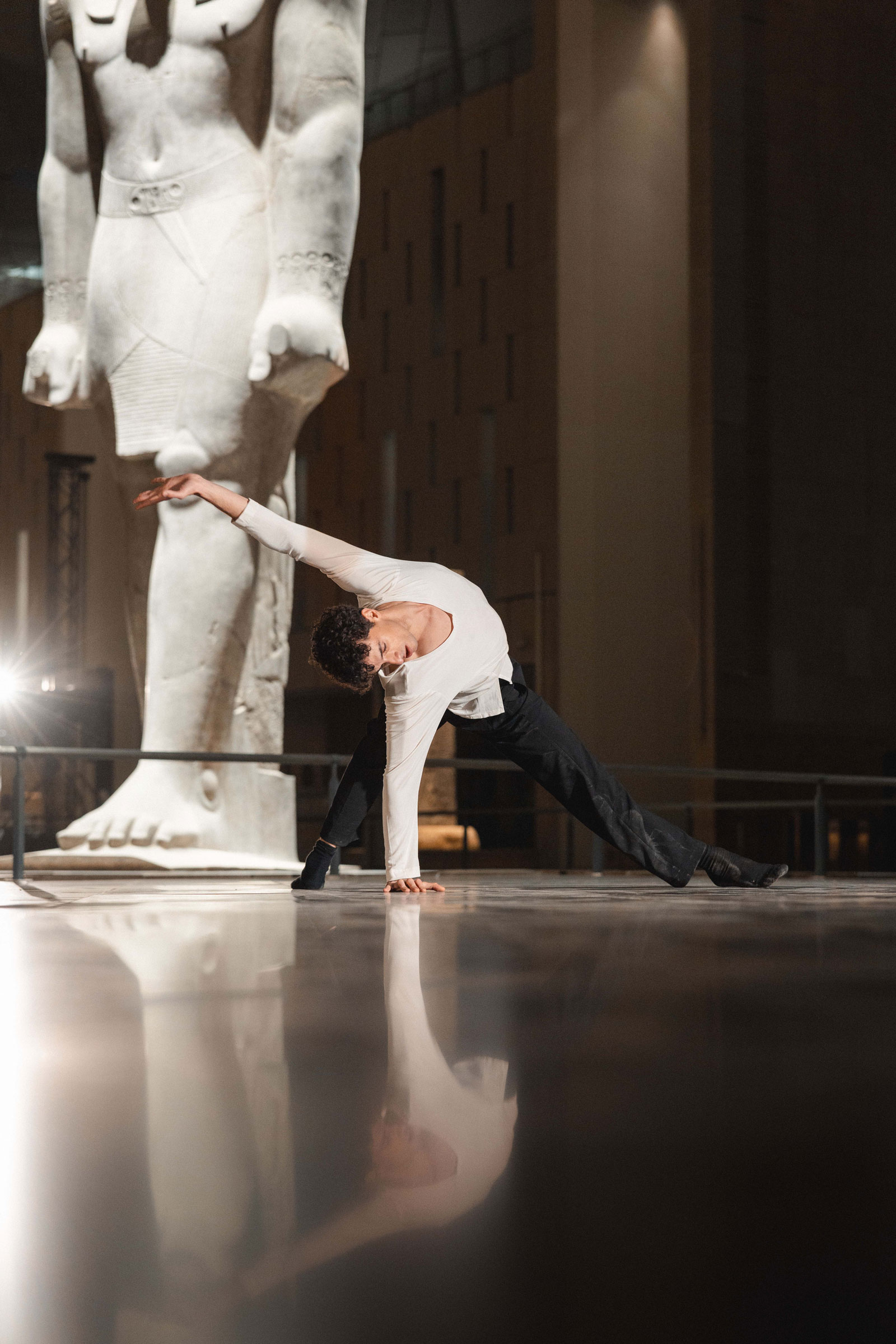
Dancer and Cairo native Luca Abdel-Nour performs inside the Grand Egyptian Museum
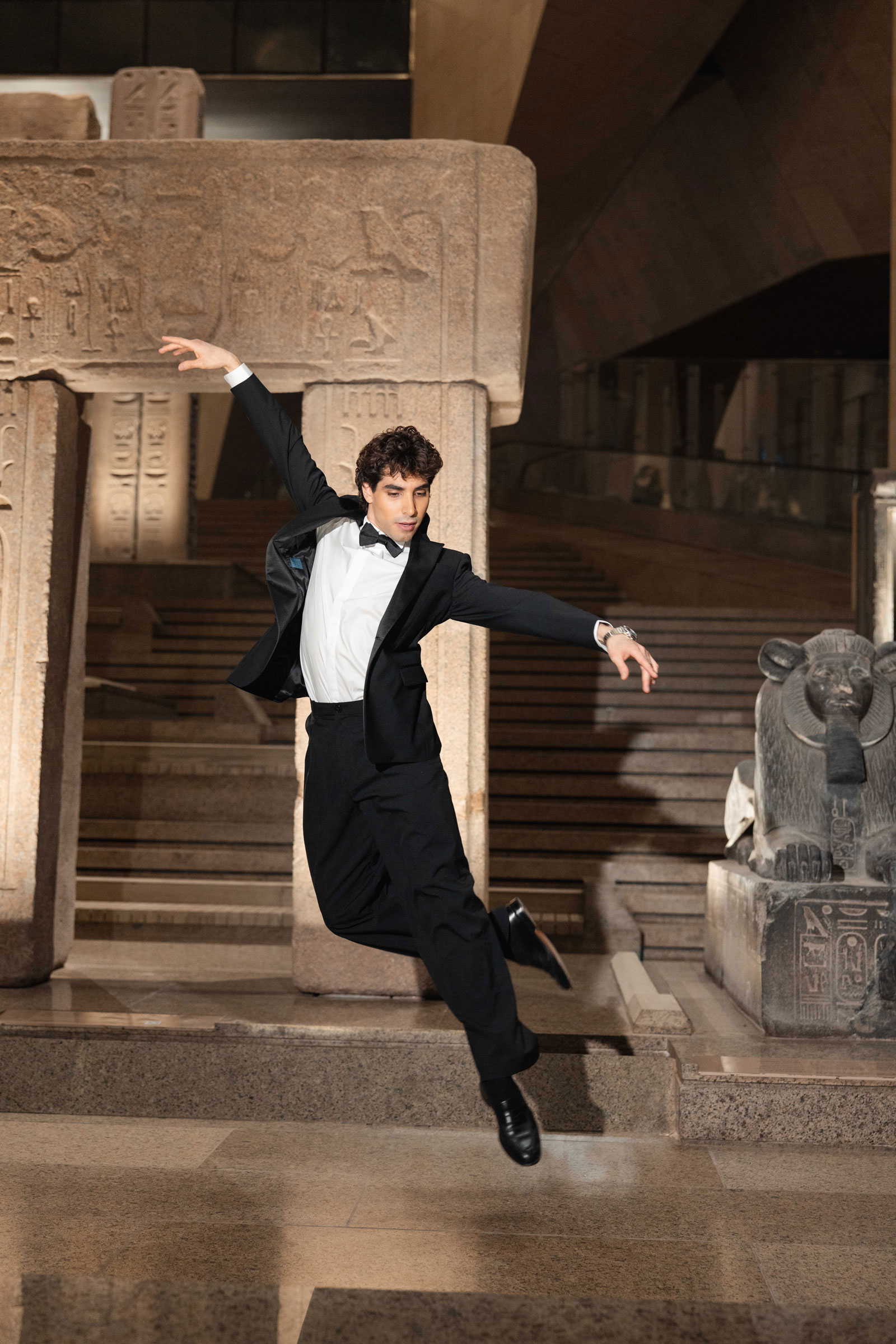
To her point, the 80-minute performance will use the museum’s galleries as a stage to showcase both home-grown and international talent. French Egyptian dancer and choreographer Luca Abdel-Nour, who currently serves as the coryphée at the Dutch National Ballet, will return to his hometown to choreograph the performance of company mate Yuanyuan Zhang, a principal dancer at the Dutch National Ballet. The two will be joined by Francesca Hayward and Cesar Corrales, both Principal dancers at the Royal Ballet, and Maria Khoreva, first soloist at the Mariinsky Ballet, among others. USC Kaufman Dancers from Los Angeles will perform a piece from acclaimed Brazilian choreographer Juliano Nunes; Josie Walsh of BalletRED will present a visionary new work, as will Céline and Cain Kitsaïs, the duo behind MAGICLAB, who recently brought their signature mix of dance, light, and performance to the opening of the new Abu Dhabi Museum. (They’ve also recently collaborated with the likes of Louis Vuitton, Chanel, and Roland Garros.)
Music for the evening will be anchored by opera singer Sawsan Albahiti, who led Zarqua Al Yamama, the first Saudi grand opera performance in Arabic, which made its historic world premiere in 2024. Innovative harpist William Close will also perform. Expect him to turn the museum into his instrument itself—he’s the inventor of the groundbreaking Earth Harp, a massive instrument with strings that can stretch up to 1,000 feet, often soaring over the audience’s heads.
Cesar Corrales, principal dancer at the Royal Ballet, will perform as part of the Gala de Danza
These dancers and artists will share the stage with by 50 youth performers from local Egyptian schools, a nod to Gala de Danza’s philanthropic mission. The festival, founded in 2013 by Lyon, a former professional ballet dancer, aims to support arts education initiatives by creating transformative cultural experiences for audiences.
This year’s Gala de Danza marks its debut performance in the MENA region (the festival has previously been hosted in London and Los Cabos) and is set to draw an international crowd. Ballet and arts lovers will descend upon Four Seasons Hotel Cairo at the First Residence and across the river at Four Seasons Hotel Cairo at Nile Plaza. Both properties are a quick cab ride away from GEM and give guests access to the heart of one of the world’s oldest cities.
Japan is a land of contrasts: subtropical islands and snow-capped mountains, sprawling urban landscapes and ancient forests, a drive to embrace the future and a deep connection to tradition.
The best luxury Japan itineraries lean into the country’s points of duality, giving you the opportunity to experience its multitudes in ways that dive far deeper than your average sightseeing tour. And that’s exactly what the new Japan: The Art of Old & New trip from Four Seasons has in store for travellers.
The nine-day Tokyo, Kyoto, and Osaka itinerary has been handcrafted by local experts to dive deep into the distinct worlds of the country’s most iconic cities. Here, we share a taste of the kind of immersive experiences—and classic Four Seasons hospitality—you’ll encounter as you make your way across the Land of the Rising Sun.
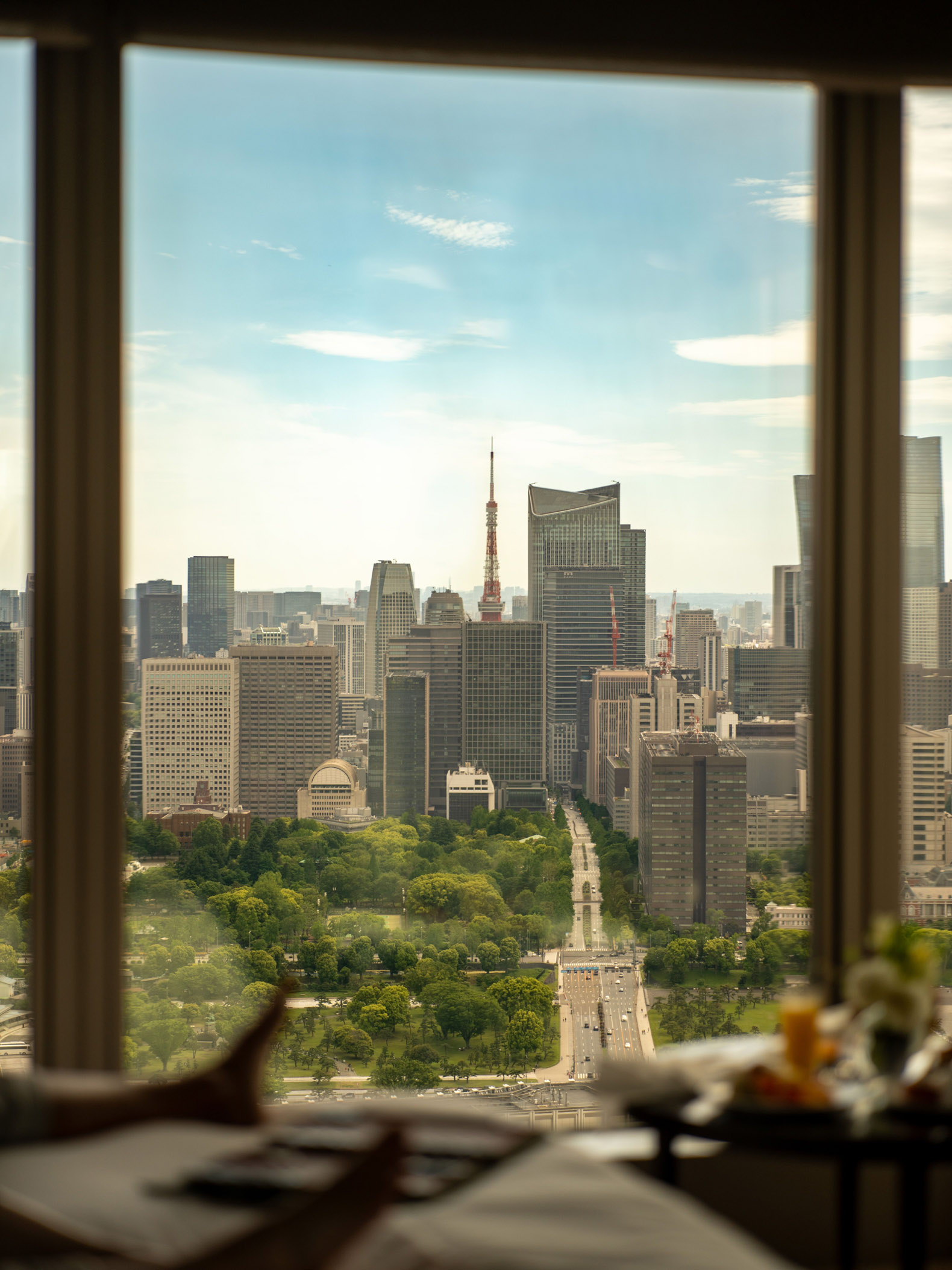
A view of Tokyo from Four Seasons Hotel Tokyo at Otemachi
Witnessing Tradition & Innovation in Tokyo
There’s no place in the world where tradition and innovation come together quite like they do in Tokyo. As JK Lee, Chief Concierge at Four Seasons Hotel Tokyo at Otemachi (where guests will be staying in the city), puts it, “While [Tokyo] is often celebrated for its energy and innovation, traditions remain deeply woven into everyday life.” He recommends balancing trips to Shibuya or Shinjuku with early morning visits to Toyosu Fish Market and the sumo stables as “an opportunity to slow down, connect with the local culture in a meaningful way, and [experience] the contrast that makes Tokyo so fascinating.”
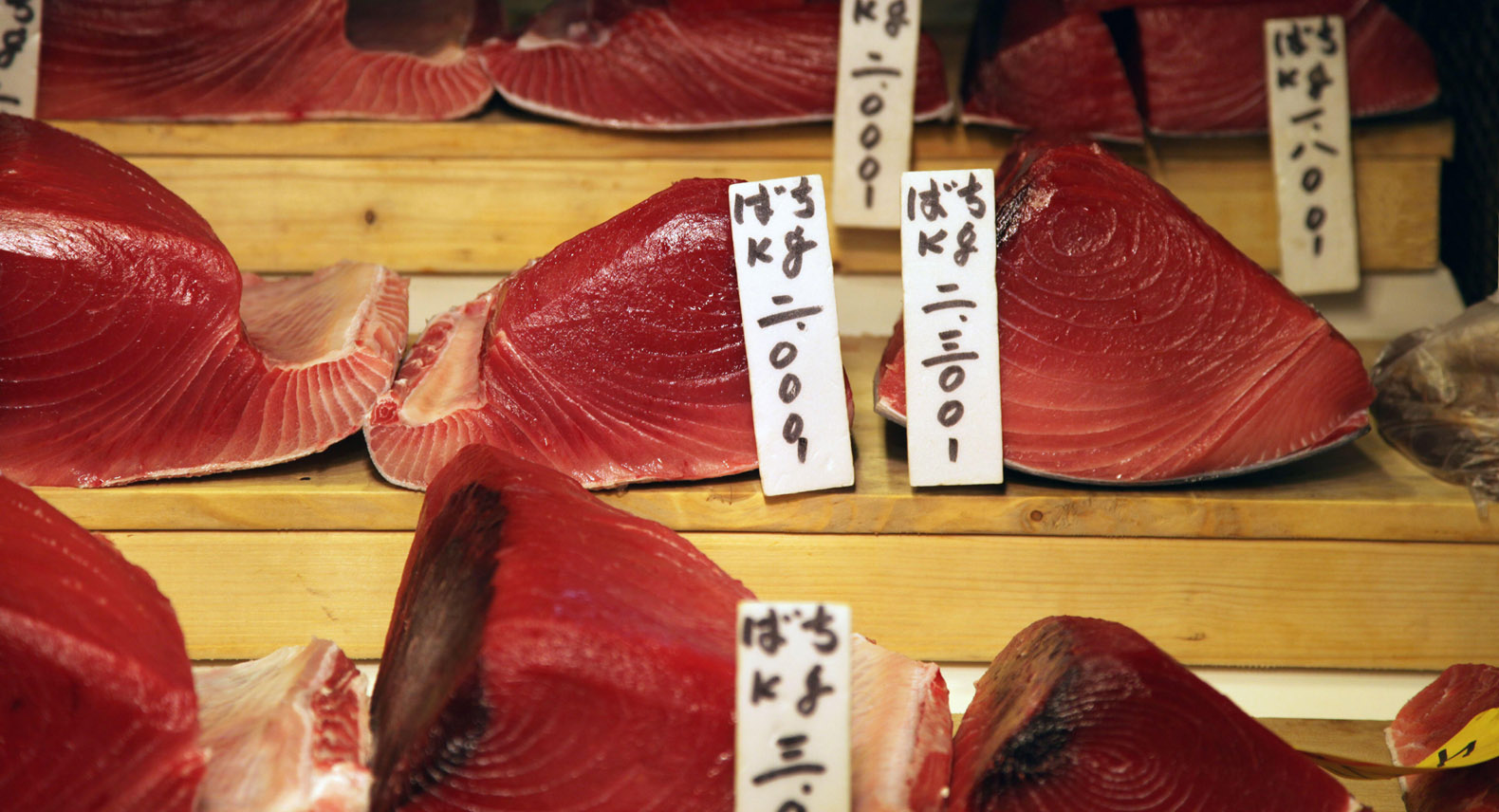
Cuts of the freshest tuna for auction at Toyosu Fish Market
Toyosu Fish Market Tour
While the Toyosu Fish Market itself opened in 2018, replacing the historic Tsukiji market, mornings here carry on a tradition that stretches 400 years back to the Edo period. Then, tuna was sold in the shadow of Edo Castle each morning. Today, the city’s top chefs descend on the floor of the market for the Toyosu tuna auction, jockeying for the day’s best cuts.
Guests of Four Seasons get a front-row seat to the fast-paced auction with a private tour of Toyosu Fish Market—one of the largest fish markets in the world—that is well worth the 4:00 a.m. wake-up call. The experience includes exclusive access to areas of the market few visitors ever see, including 1F: the sanctum within the market where sushi masters make their first and finest selections. While there, they’ll watch as the day’s best tuna is bought, and later, they’ll get to learn the art of sushi making alongside master sushi chefs.
Morning practice at Tokyo’s sumo stables
Tokyo Sumo Morning Practice Tour
An invitation to morning practice at one of Tokyo’s premier sumo stables is another experience that connects Four Seasons guests to the city’s history. In the stable, each day unfolds as it has for centuries. The sport was first professionalized by Tokyo’s leaders during the Edo period, when proceeds of tournaments were used to raise funds to construct the shrines and build infrastructure. (Some of which guests will get a closer look at on a private tour of the city following the stable visit.)
The experience is a visceral one: guests take their seats just steps away from the wrestlers to watch as they stretch and warm up and then step into the sacred circular dohyo to practice sparring. Expect the floor to rumble and the walls to shake as wrestlers go head-to-head, practicing traditional throws, falls, and grips in an attempt to push each other from the ring or body slam their opponents to the ground.
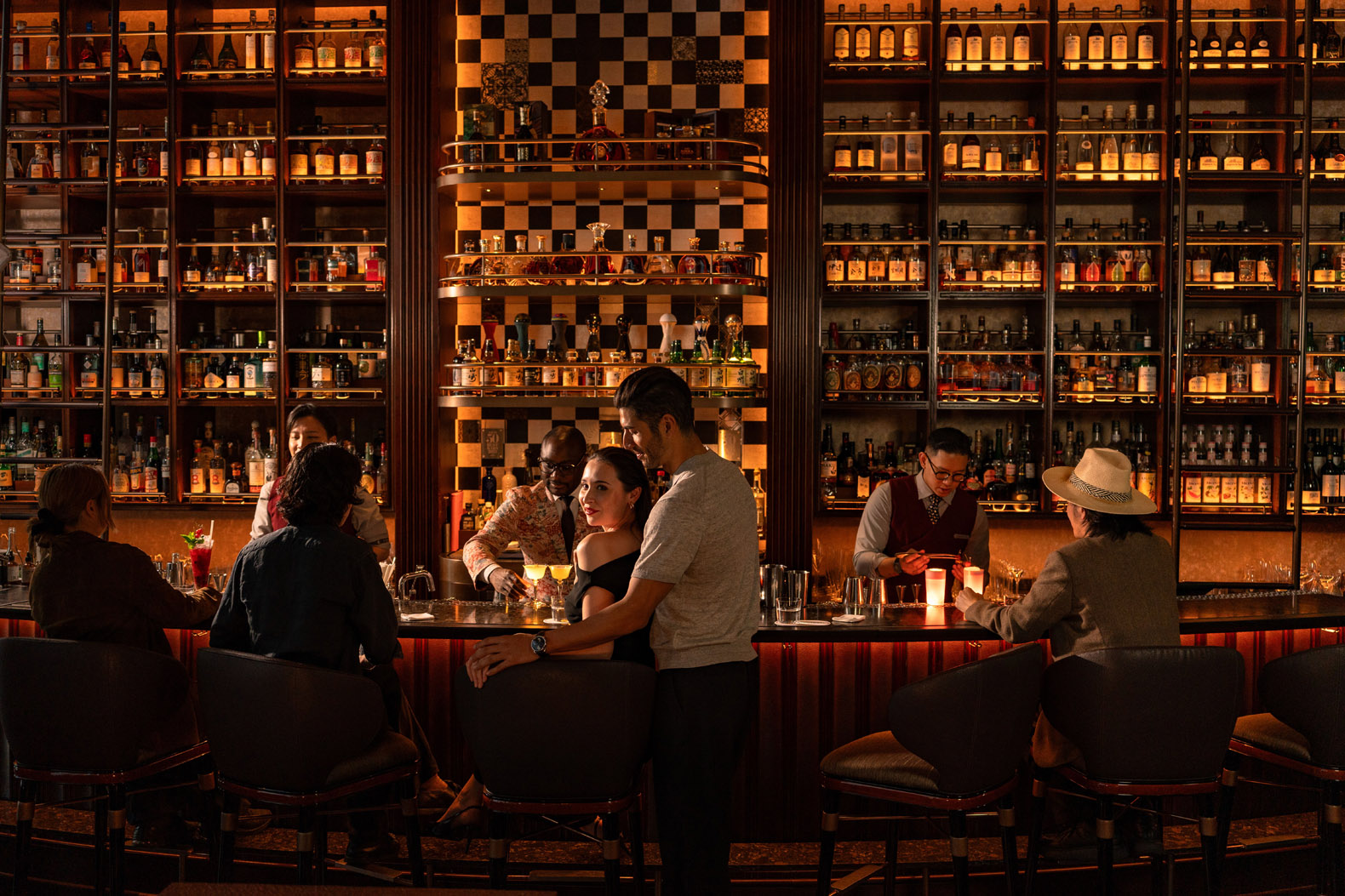
VIRTÙ at Four Seasons Hotel Tokyo at Otemachi
Tokyo Night Tour: Bar Hopping in Golden Gai and Beyond
While the quiet of the morning gives space for Tokyo’s traditions to become more visible, the neon glow of the city at night is when its innovative spirit manifests. Nowhere is that more visible than Shinjuku Golden Gai, the birthplace of Tokyo’s vibrant nightlife scene, where salarymen and counterculture rebels alike belly up to the bar.
Guests of Four Seasons get an inside track to the best of the city’s bars led by the bartenders at VIRTÙ, Four Seasons Hotel Tokyo at Otemachi’s award-winning cocktail bar. At each stop on the bar-hopping tour of Golden Gai and beyond (the destinations on each tour can be tailored to guests’ preferences), they’ll do more than just sip outstanding pours of whiskey and shochu—they’ll get to meet the visionaries shaping the city’s cocktail scene, adapting traditional techniques for the modern palate.
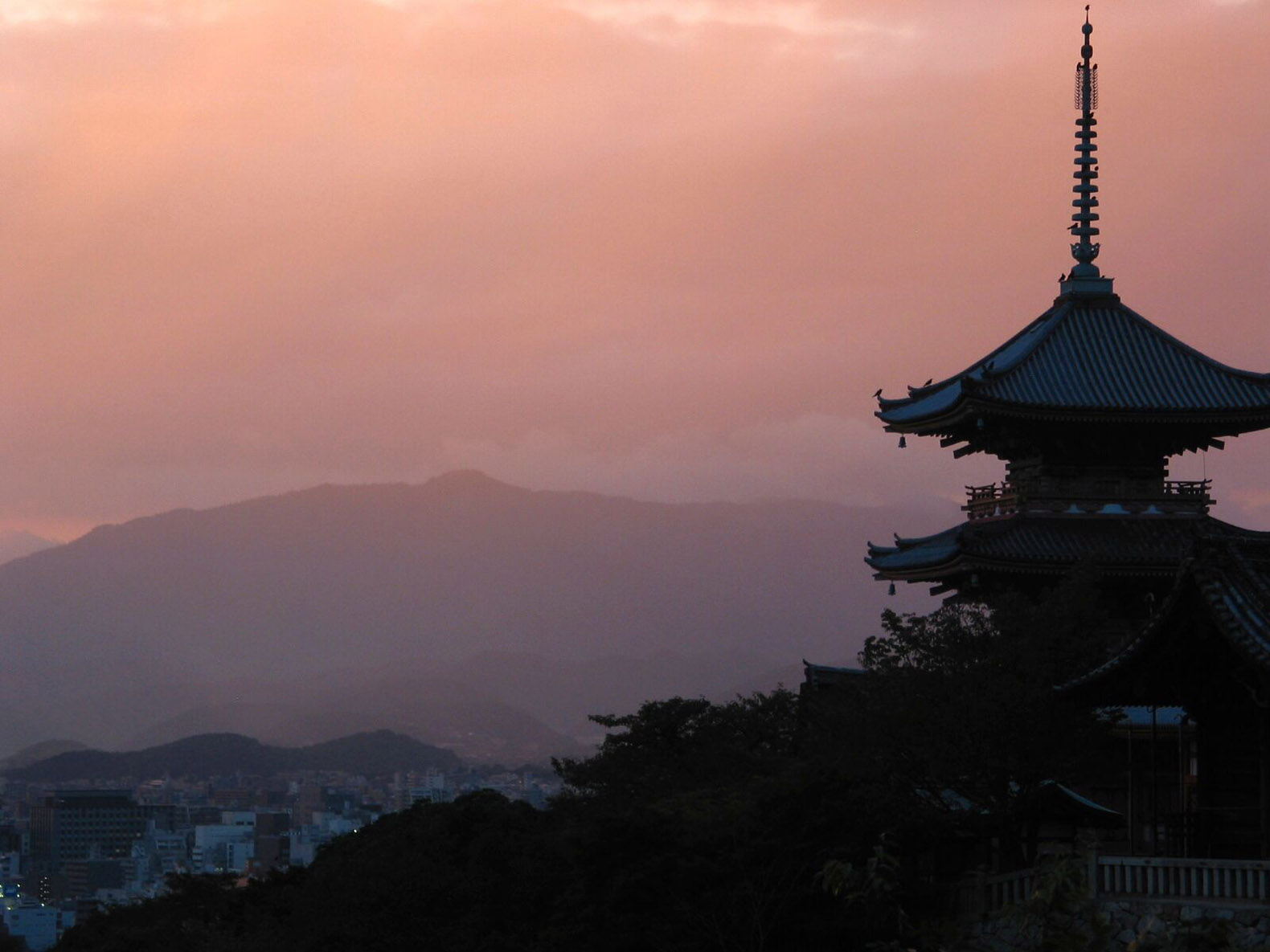
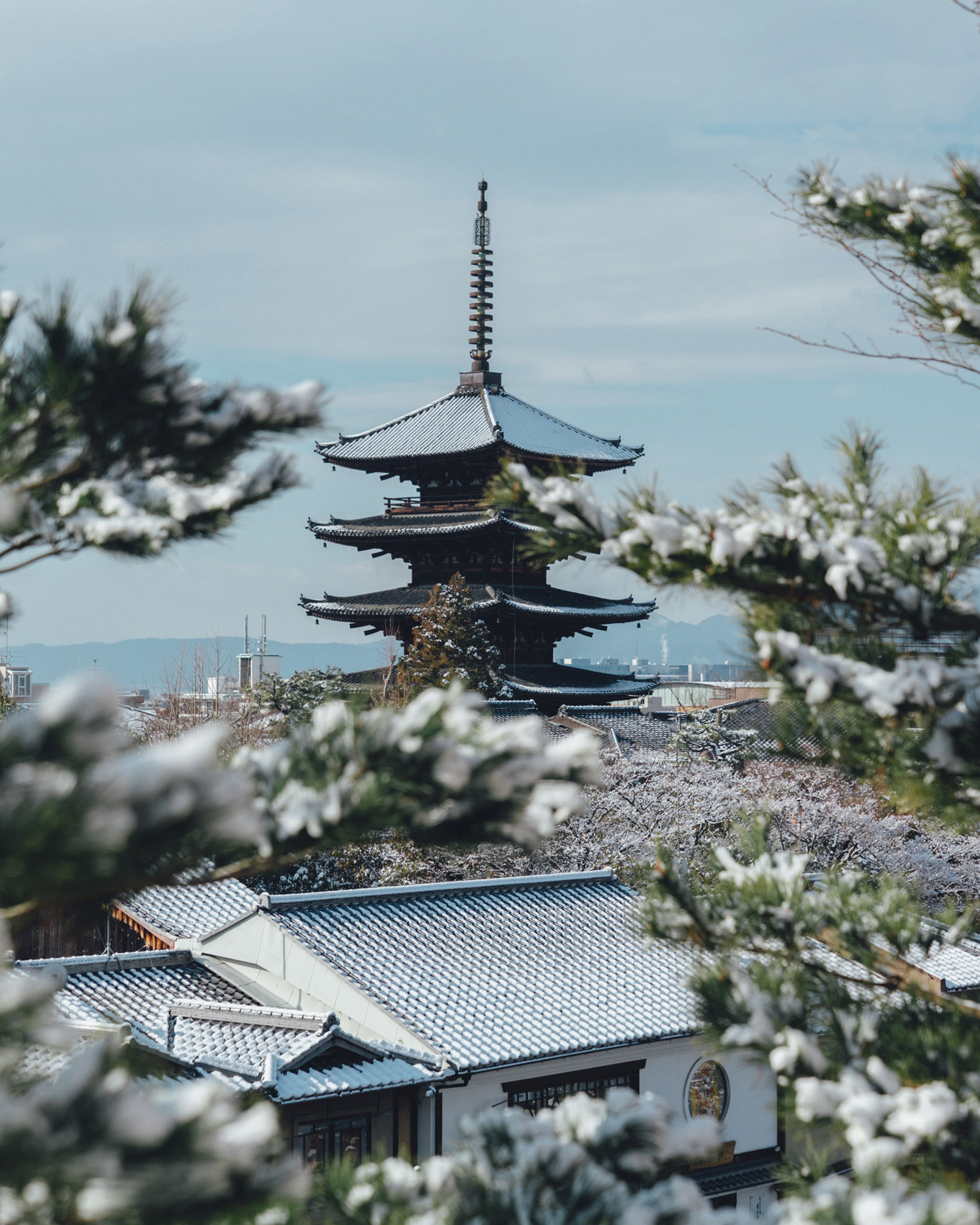
A view of Kiyomizu-dera in the spring
Finding Stillness in Kyoto
Originally called Heian-kyō, which translates to “capital of peace and tranquillity,” Kyoto is an ideal next stop after a fast few days in Tokyo, where the quietude of the city’s shrines and traditions resonate all the more deeply.
Kyoto’s enigmatic peacefulness is easy to tap into for guests of Four Seasons Hotel Kyoto, where the rooms, which blend modern minimalist design and traditional Japanese accents, are centred around Shakusui-en, an 800-year-old pond garden. Tucked into the heart of Higashiyama, the hotel is the perfect place to become immersed in the ancient rituals and deep sense of spirituality that permeate Japan’s ancient capital city.
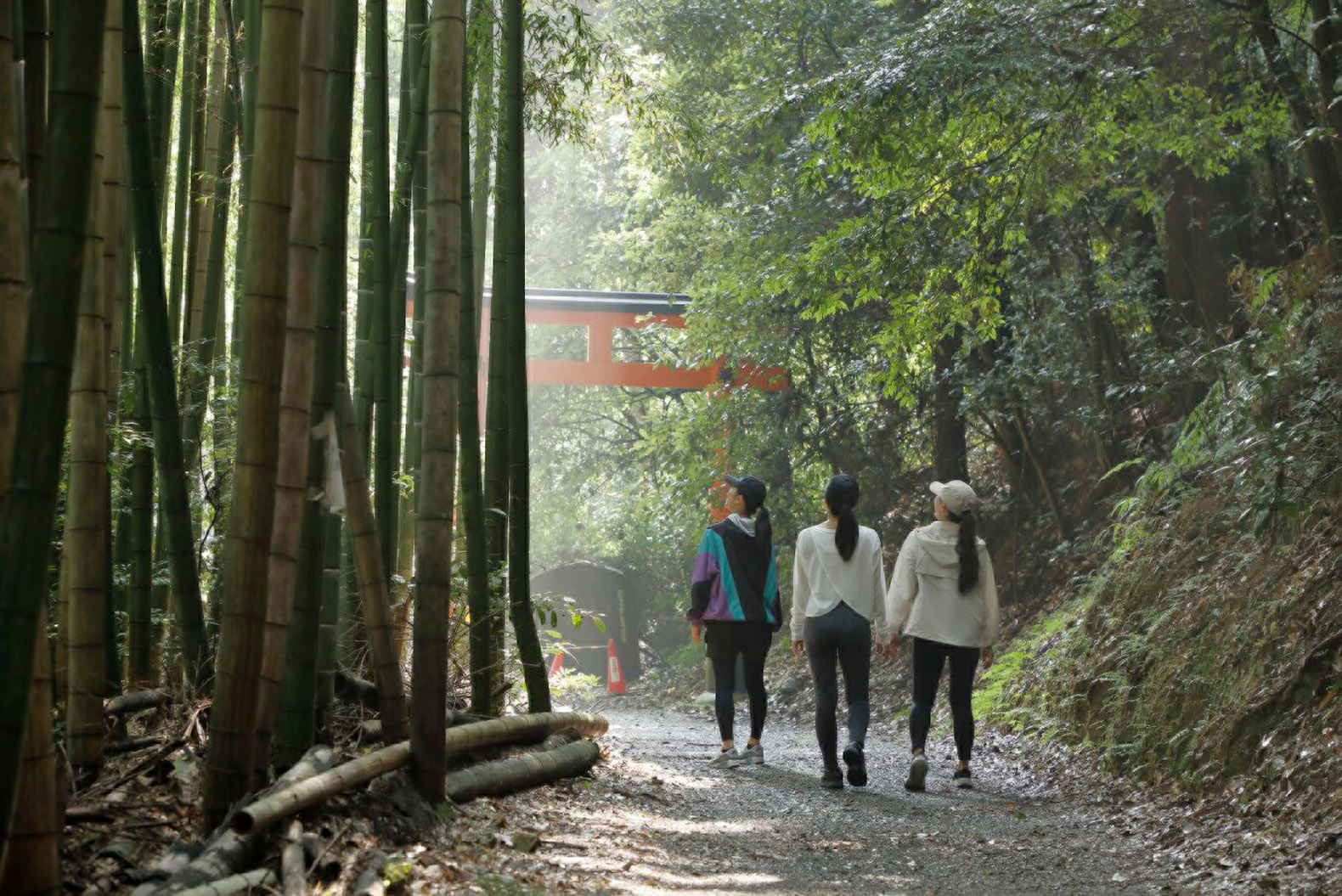
Forest bathing in Kyoto’s iconic Fushimi Inari shrine
Forest Bathing at Fushimi Inari
Though it sounds ancient, the practice of shinrin-yoku, or “forest bathing,” is surprisingly modern—it was introduced in the early 1980s by the Japanese government as part of the nation’s public health programming. Informed by Zen traditions, the practice is a simple one: take a few quiet moments of stillness to fully experience the sensory experience of being in the forest. Thought to be an antidote to the stress of city living, forest bathing is routinely used in Japan to help improve sleep, mood, and stress levels.
Forest bathing can happen in any pocket of nature, but Kyoto’s Fushimi Inari shrine complex is an extraordinary place to participate in the practice. Guided by a cultural ambassador, guests of Four Seasons can spend a morning hiking the paths lined by the iconic vermillion torii gates and finding moments of stillness to let the experience of being in the forest wash over them. As one of the ambassadors who leads the experience explains, “Away from the busiest paths, this journey through nature, history, culture, and faith invites [guests] to slow down, reconnect, and experience the shrine in a more peaceful and meaningful way.”
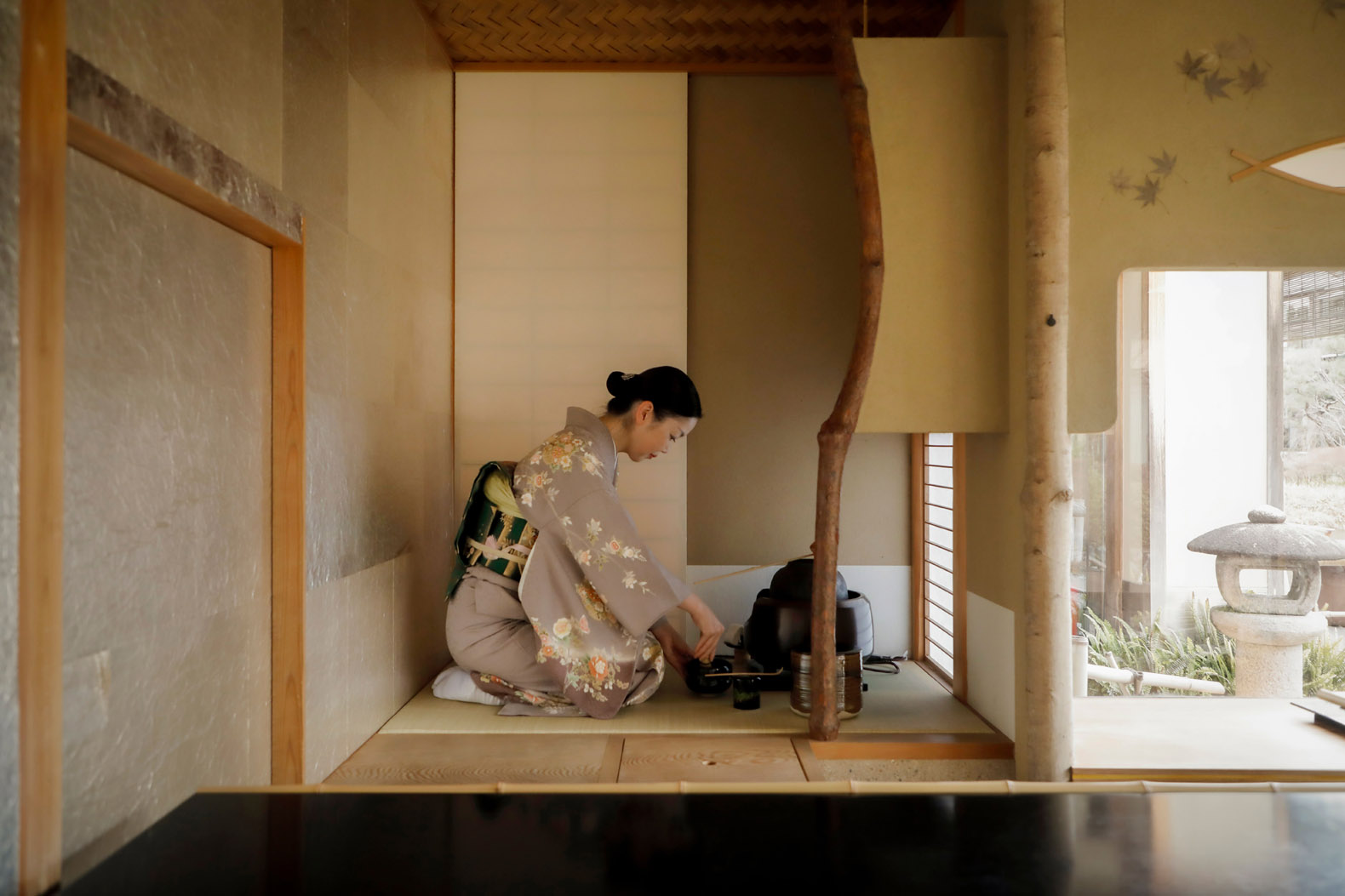
A tranquil moment during a tea ceremony at Four Seasons Hotel Kyoto
Kyoto Tea Ceremony
A stay in Kyoto is an exercise in being present, and perhaps no tradition encourages that kind of mindfulness more than a matcha tea ceremony. Guests of Four Seasons can learn the art of traditional matcha preparation alongside the hotel’s resident Tea Master. Held in Four Seasons Hotel Kyoto’s on-property tea house, FUJU, the ceremony guides guests through the carefully choreographed ritual of preparing, serving, and tasting matcha—an art form that takes tea masters years to learn.
The ceremony, which was originally developed by master Sen no Rikyu in the 16th century, has long been a central part of Japanese political and social culture. Today, the careful art of preparing matcha is an opportunity to come together to practice patience, presence, and paying careful attention to the beauty of the smallest details.
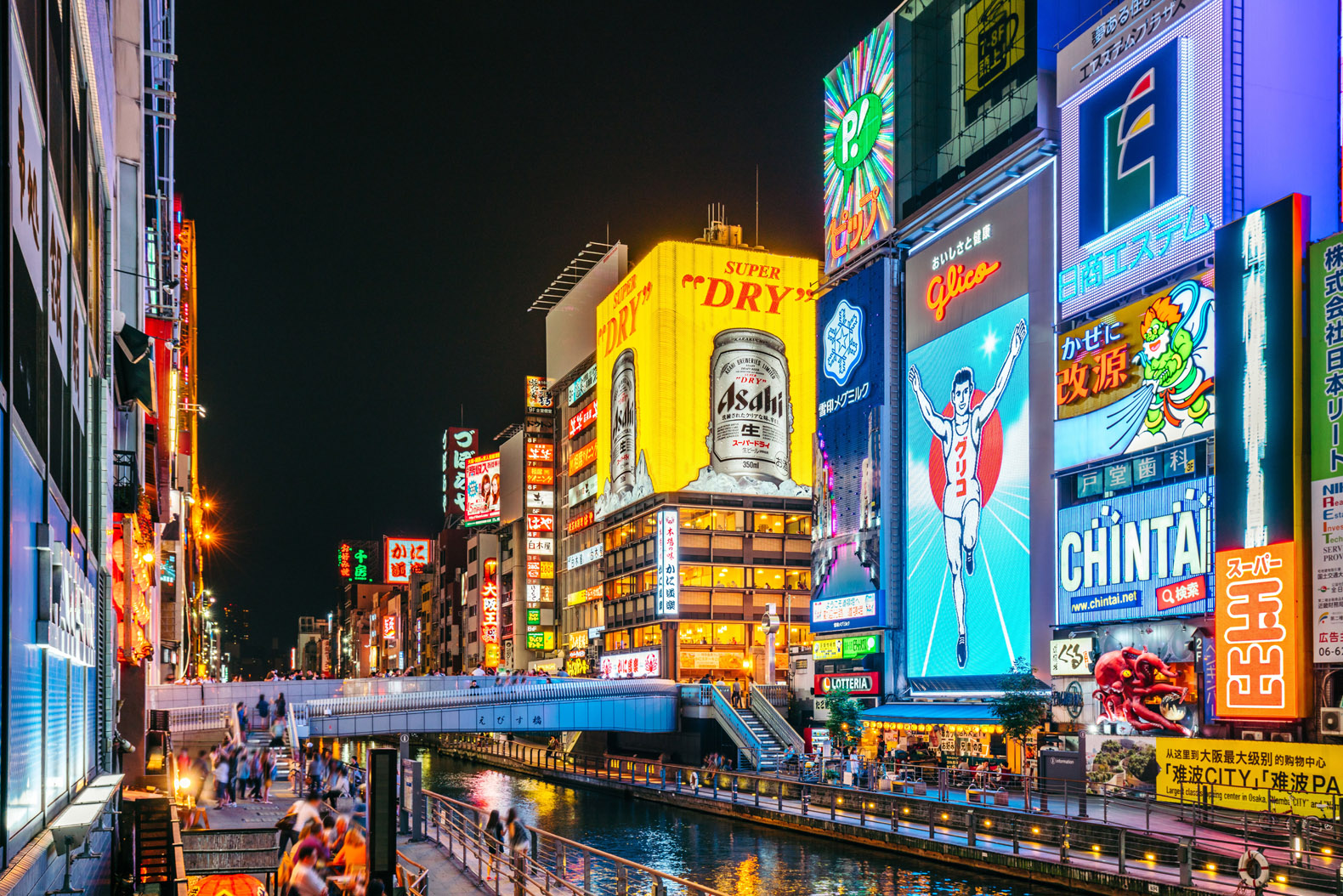
The vibrant lights of downtown Osaka
A Craft-Driven, Foodie-Fuelled Taste of Osaka
Osaka is the final destination of the Japan: The Art of Old & New itinerary—and is a fitting place for the journey to end. For 1,500 years, Osaka functioned as one of the gateways to Japan, serving as the site of cultural exchange, innovation, and trade that had far-reaching influence on the rest of the country. Today, remnants of the city’s history—which include ruins of Naniwa Palace (one of Japan’s earliest imperial palaces)—sit comfortably alongside ultramodern skyscrapers and a glittering skyline.
A stay at Four Seasons Hotel Osaka puts the city’s past and present on full display. Guests on the Japan: The Art of Old & New trip will stay on the GENSUI floor, where the Tatami Premier Rooms reimagine the traditional ryokan architecture and approach to hospitality for the 21st century. Located in the historic Dojima neighbourhood, just steps from the bustling Osaka Station and Umeda, the hotel is a crossroads of Osaka old and new—and an ideal place to embrace the city’s rich history of craftsmanship and culinary arts.
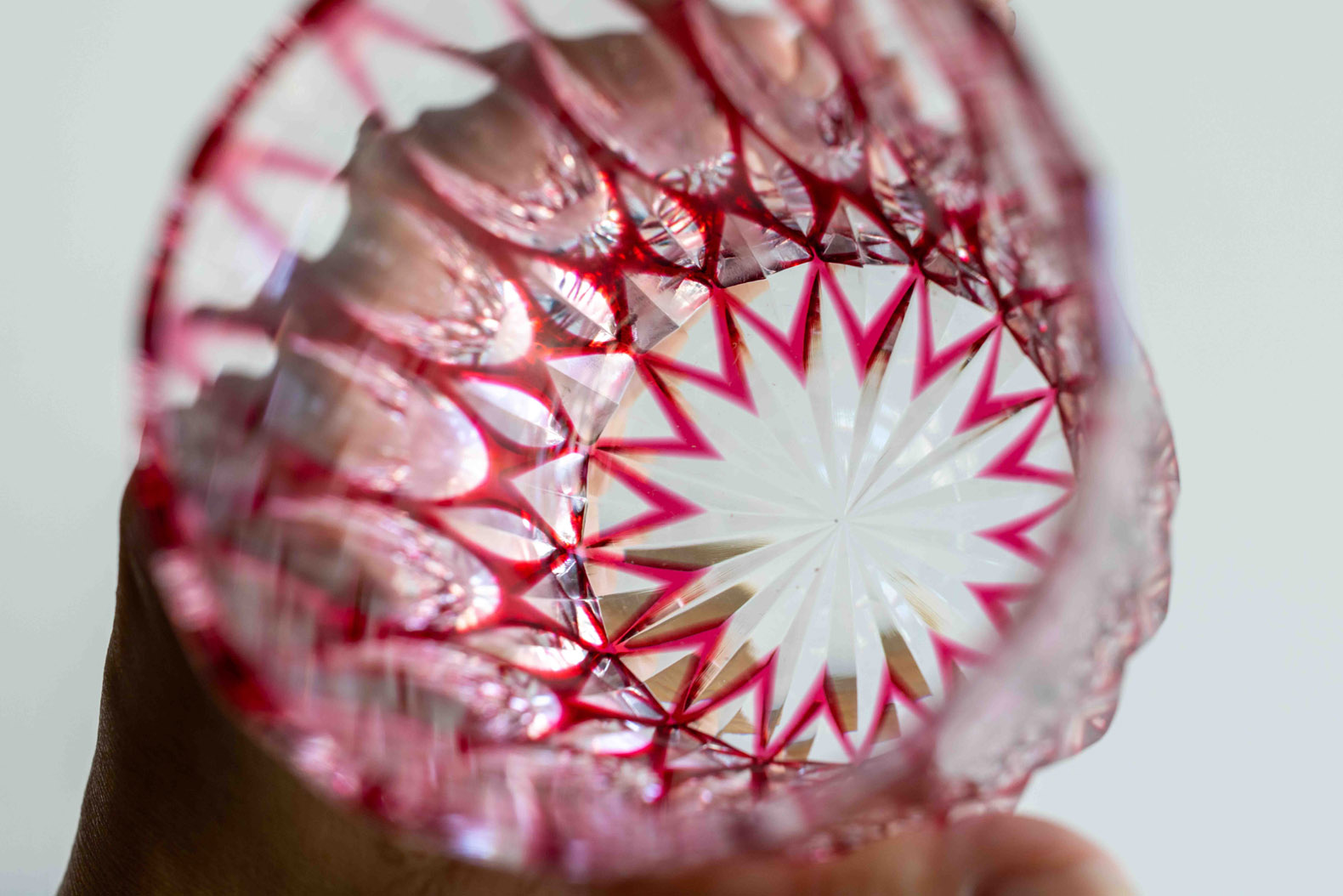
The intricate details of traditional Japanese Kiriko glass
Kiriko Glass Making
Though Tokyo is more known for glassmaking today, the art of Kiriko glass—in which fluid lines and sweeping patterns are carefully cut into colorful glass—was pioneered in the Osaka’s Temma neighbourhood in the 1700s. (Edo Kiriko, now more common, traces its roots back to Osaka.) While few of the family-owned workshops that once served as the centre of Japan’s glass industry still exist, there are a handful of artisans keeping the tradition—a confluence of European techniques first introduced by Dutch traders in the 1700s and Japanese aesthetic sensibility—alive and well.
Guests of Four Seasons will have the exclusive opportunity to learn the art of Kiriko glassmaking from a master craftsman at Temma Kiriko, a workshop founded in 1933. While there, they’ll watch as artisans blend time-honoured techniques with innovative designs and will collaborate with them on a unique piece of colourful cut glassware to take home as a treasured memento.
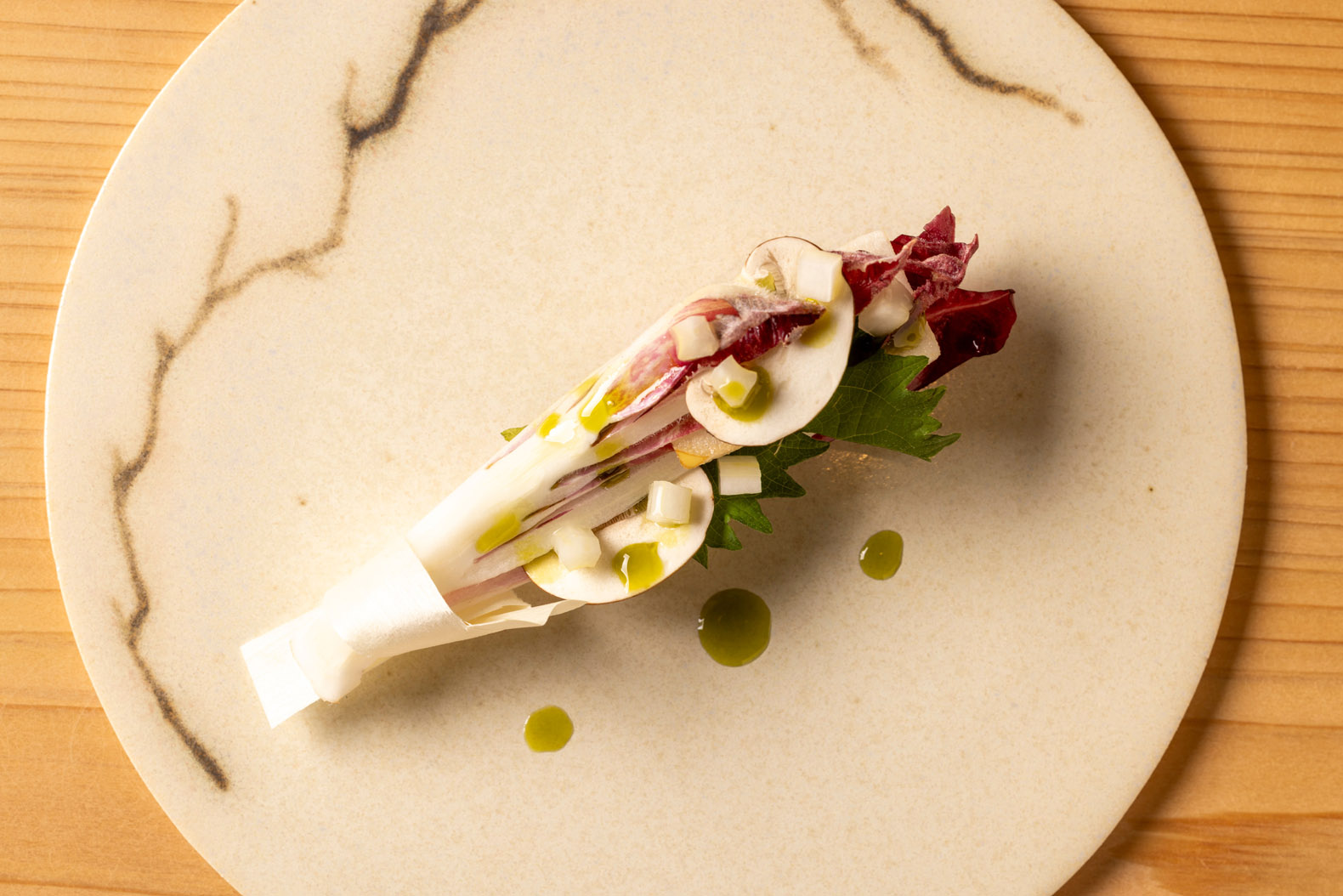
Endives Salad & Marinated Radicchio served at Sushi L’Abysse Osaka Yannick Alléno
Osaka’s Culinary Craft
Osaka’s history of craftsmanship extends beyond handmade art and objects and into the city’s culinary legacy. Known as the “kitchen of the nation,” the city has long played a key role in getting rice and other ingredients from farmers to the rest of the country. Today, access to fresh ingredients and melting-pot history still define Osaka’s culinary scene—and the approach to dining at Four Seasons Hotel Osaka.
Inspired by Osaka’s history as a place where cultures come together, Sushi L’Abysse Osaka Yannick Alléno, brings the precision of Edomae sushi to French haute cuisine. The Omakase menu is a collaboration between the Michelin-distinguished chef Yannick Alléno and sushi expert Chef Yasuda Itaru, where the season’s best ingredients are combined into innovative courses that showcase the best of both French and Japanese culinary arts.
If dinner at Sushi L’Abysse Osaka Yannick Alléno is where cultures collide, breakfast at SABO Lounge (exclusively available to GENSUI floor guests) is where the essence of Japanese ingredients is distilled. Starting the morning with a bento-style breakfast is, as SABO Supervisor Aina Ota puts it, “a simple yet meaningful way to experience the flavours of Osaka.” It’s also an excellent way to fuel up for a day spent touring Kuromon Ichiba Market, where Osaka’s reputation as the nation’s kitchen is on full display.
A Journey Through Japan
The latest multi-destination itinerary from Four Seasons is more than a whirlwind tour of the country’s most iconic destinations. It’s a ticket to a deeper experience, where Four Seasons’ unparalleled hospitality opens the door to a side of the country few visitors get to experience. From early mornings spent alongside tuna auctioneers and afternoons when savouring a cup of matcha prepared by a tea master is the only thing on the itinerary to evenings spent bathed in the neon glow of Dotonbori, the journey is a curated mix of contrasts unlike any other.
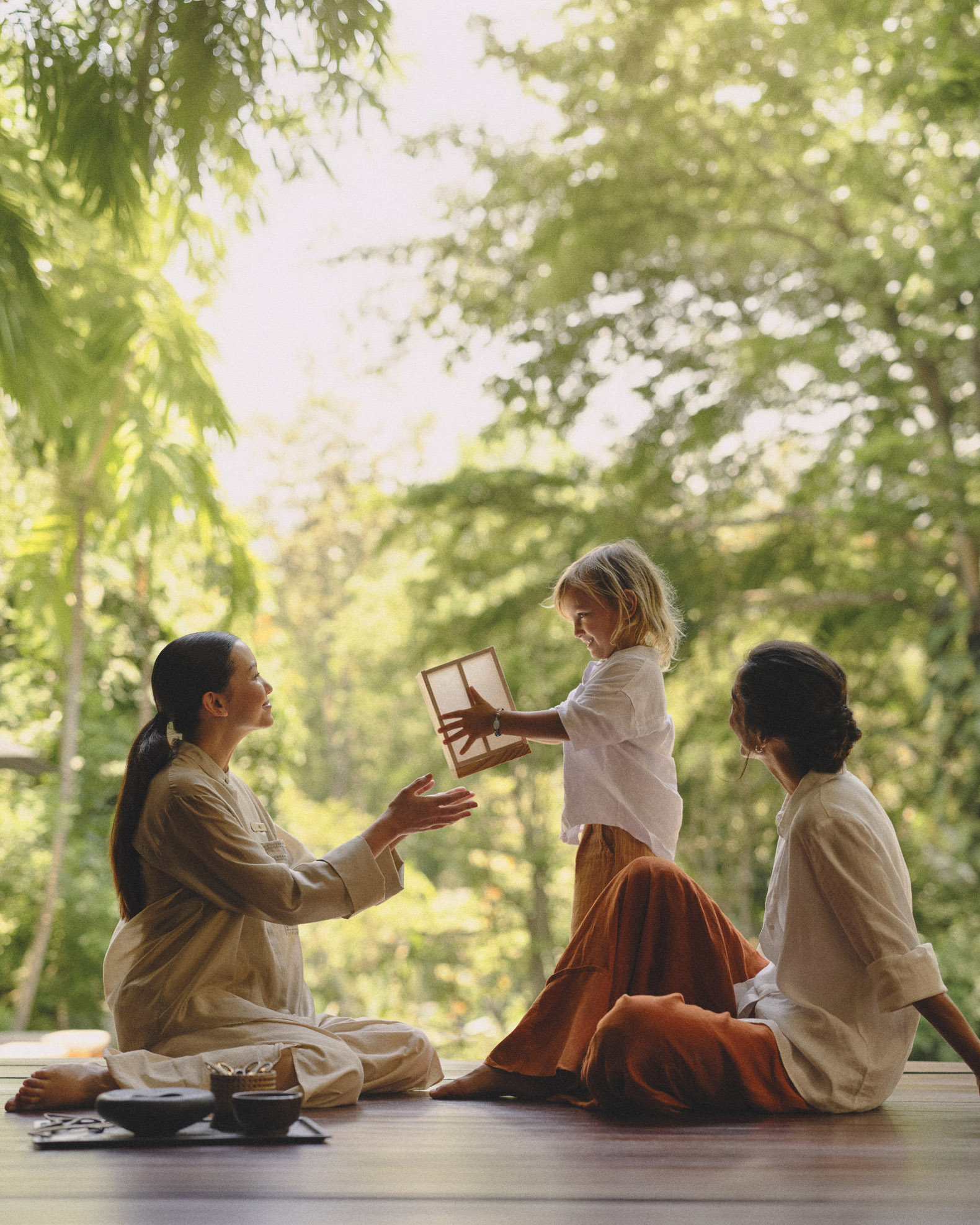
The most memorable moments are the ones that engage the senses: The feeling of rice paper beneath your fingers as you practice the art of lantern making. The sight of your children smiling and the sound of their laughter as they delight in learning a new skill. The lingering smell of spices and taste of fresh ingredients from the meal cooked together earlier that day. These are the paths by which the present moment becomes etched into memory.
Stays at Four Seasons hotels and resorts are crafted with this philosophy in mind. At Four Seasons Resort Chiang Mai, the artisans, chefs, and staff use Northern Thai traditions to create lasting impressions on guests. When they lead a workshop at the traditional Chaan Ban or host a cooking class in the open-air kitchen, they’re not just teaching—they’re noticing what inspires your senses, building connections around craft, and creating moments where you feel like you’re known by heart. “These simple things are a way to share our way of life,” says Mother Noi, who leads a traditional flower floating workshop at the resort. “The flowers may not last forever, but I hope the memory of the moment does.”
Here, we share just a few of the ways the craftspeople at Four Seasons Resort Chiang Mai create deeply personal experiences that engage the senses and create lifelong memories.
Lighting the Way
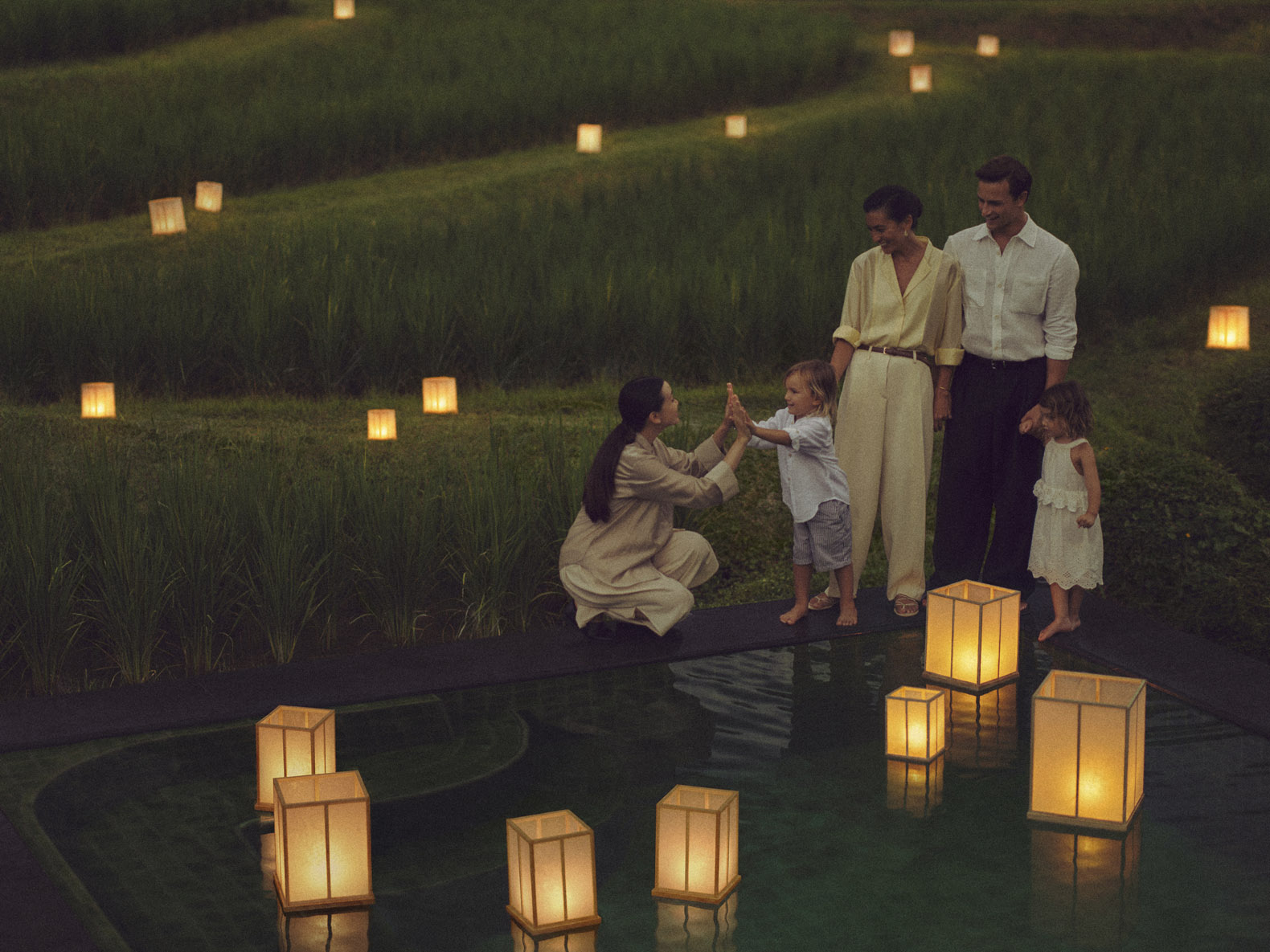
The open-air lobby at Four Seasons Resort Chiang Mai is where guests first encounter the breathtaking beauty of Loy Krathong—a festival held every November when thousands of floating paper lanterns are released into rivers, lakes, and waterlogged rice paddies across Thailand. The magic of the festival is captured in a larger-than-life mural that greets guests upon check-in.
The story of Loy Krathong is one that staff loves to share, and they find ways to turn a Thai tradition into a beloved family memory. An open afternoon becomes a chance to embrace the traditions of Loy Krathong, when one of the Resort’s artisans visits a guest’s villa with paper to craft lanterns and banana leaves to make krathongs, teaching the children these traditional Thai crafts. Come dusk, the resort’s lotus pond becomes a place where the lanterns made earlier that day can be launched.
“I grew up seeing lanterns as part of life and celebrations in Chiang Mai, so this tradition has always felt very close to me,” says Kanchana, one of the artisans at Four Seasons Chiang Mai. “It makes me happy to know that something we have learned and passed down through generations can be shared with people from around the world,” she explains. “Not only can they take home what they have made, but also a special memory of their time in Chiang Mai.”
Tastes of Tradition
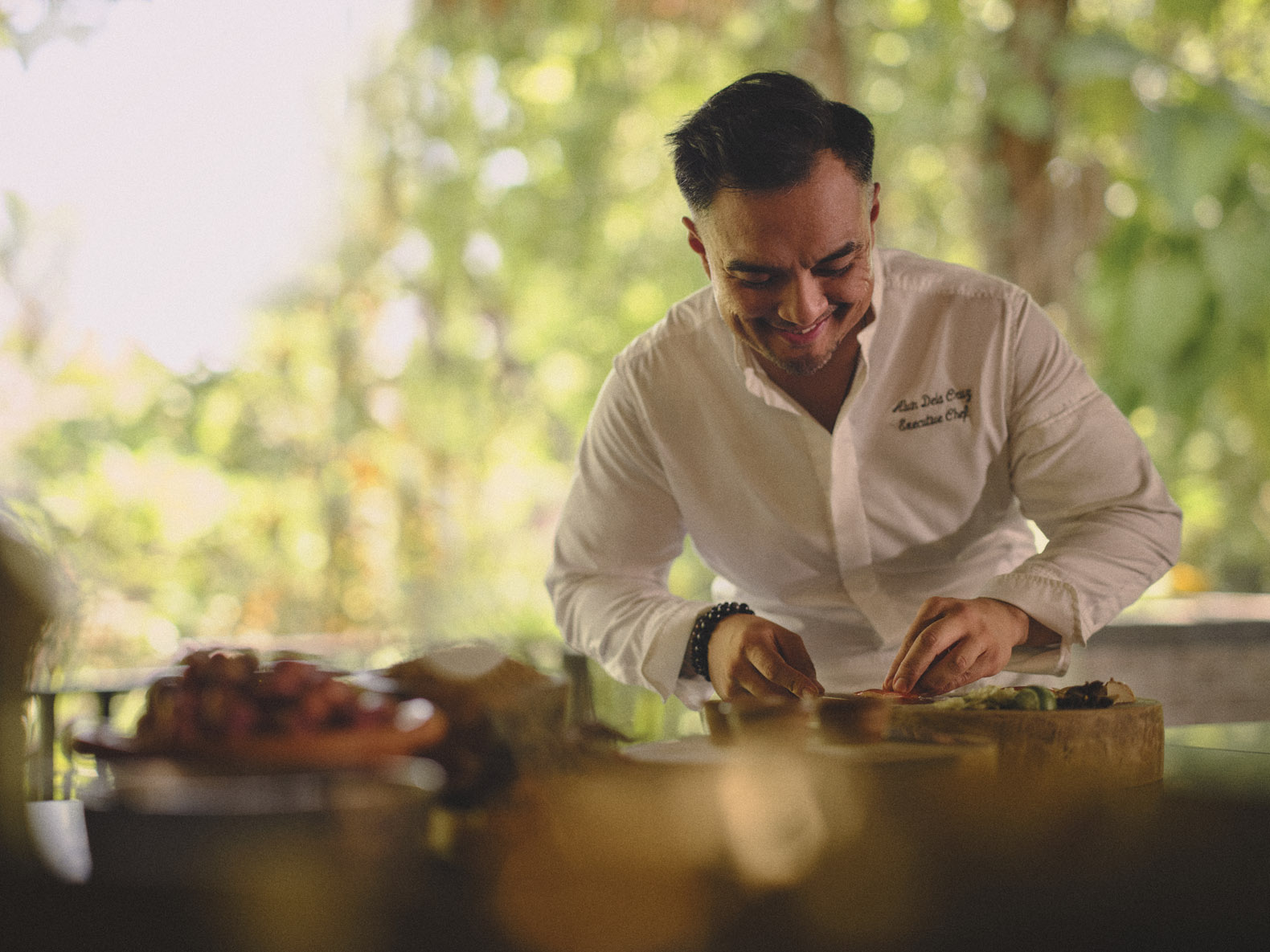
During chef-led cooking classes at RIM Thai Kitchen, guests aren’t the only ones learning. What chefs notice about guests during a few shared hours in the kitchen allows the experience of the cooking class to extend into the rest of their stay—and become moments that linger long after the journey ends. A guest’s story of how the smell of fresh basil harvested in the secret garden reminds them of their grandmother inspires the chef to use a little extra Holy Basil in the stir-fry they make for them the next day. The thong muan a child loved during their lesson becomes an afternoon ritual as staff surprises their family by the pool each afternoon with a plate of the delicate coconut wafers.
“Moments like that stay with me,” says Astuti Singh, senior Director of Digital Marketing, Public Relations and Communications at Four Seasons, “because they remind us that we may begin by sharing something from our culture, but our guests often give something back to us, too.” In these classes, the tastes, smells, and sounds of traditional Thai cooking bring families together—writing new traditions in the ancient flavours of khao soi curry and maing kham.
Woven Mementos
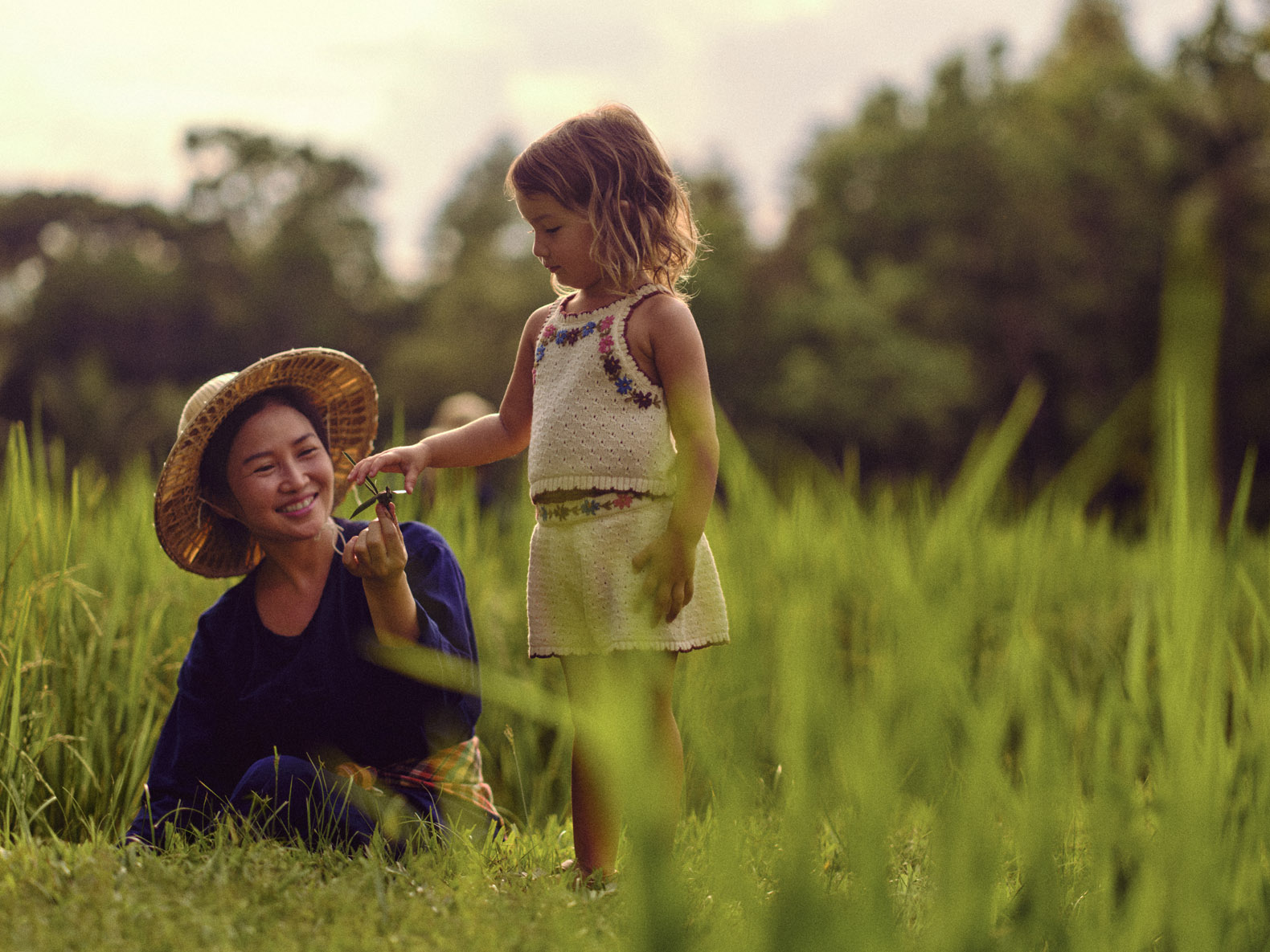
Four Seasons Chiang Mai is built around a working farm and rice paddies, giving guests the opportunity to experience the rhythms of life as they’ve played out in the mountains of Northern Thailand for centuries. The verdant leaves of the rice plants and palm trees create the rippling greens of the iconic landscape and are the materials used in many traditional Thai crafts.
Across the resort, artisans can be seen weaving animal figurines out of rice and palm leaves to use in flower arrangements. More than a decoration, these figurines double as playthings that have delighted children for generations—and are opportunities for staff to create lasting connections with the guests who visit the resort.
“When I teach a guest,” explains Uncle Boonsri, who leads a workshop on traditional animal weaving at the resort, “I feel I am sharing a little part of our culture with them. The woven animal may be small, but I hope the story and. Memory they take home with it will stay with them for a long time.”
The Art of Hospitality
At Four Seasons, hospitality runs much deeper than simply welcoming guests to destinations around the world. It is rooted in craft—an art form that has been honed over decades, shaped by local cultures, and that staff personalise for each and every guest who checks in. Because travel isn’t just about where you go, the most memorable journeys are the ones where you sense that you were known by heart.
Falling in love is spontaneous. But romance takes intention. It’s in thoughtful gestures both big and small. In paying attention to the little things. In noticing when—and why—someone’s face lights up.
Romance is what happens when you know someone by heart, which is exactly what the staff at every Four Seasons hotel and resort set out to do. They don’t just welcome guests, they remember, they notice, they anticipate, going to extraordinary lengths to transform a stay.
At Four Seasons hotels, that genuine care translates into moments that feel like fate—and that become part of guests’ love story. Here, we take a peek behind the curtain to see how the staff at Four Seasons Hotel Firenze creates a world where a couple on their honeymoon is known by heart.
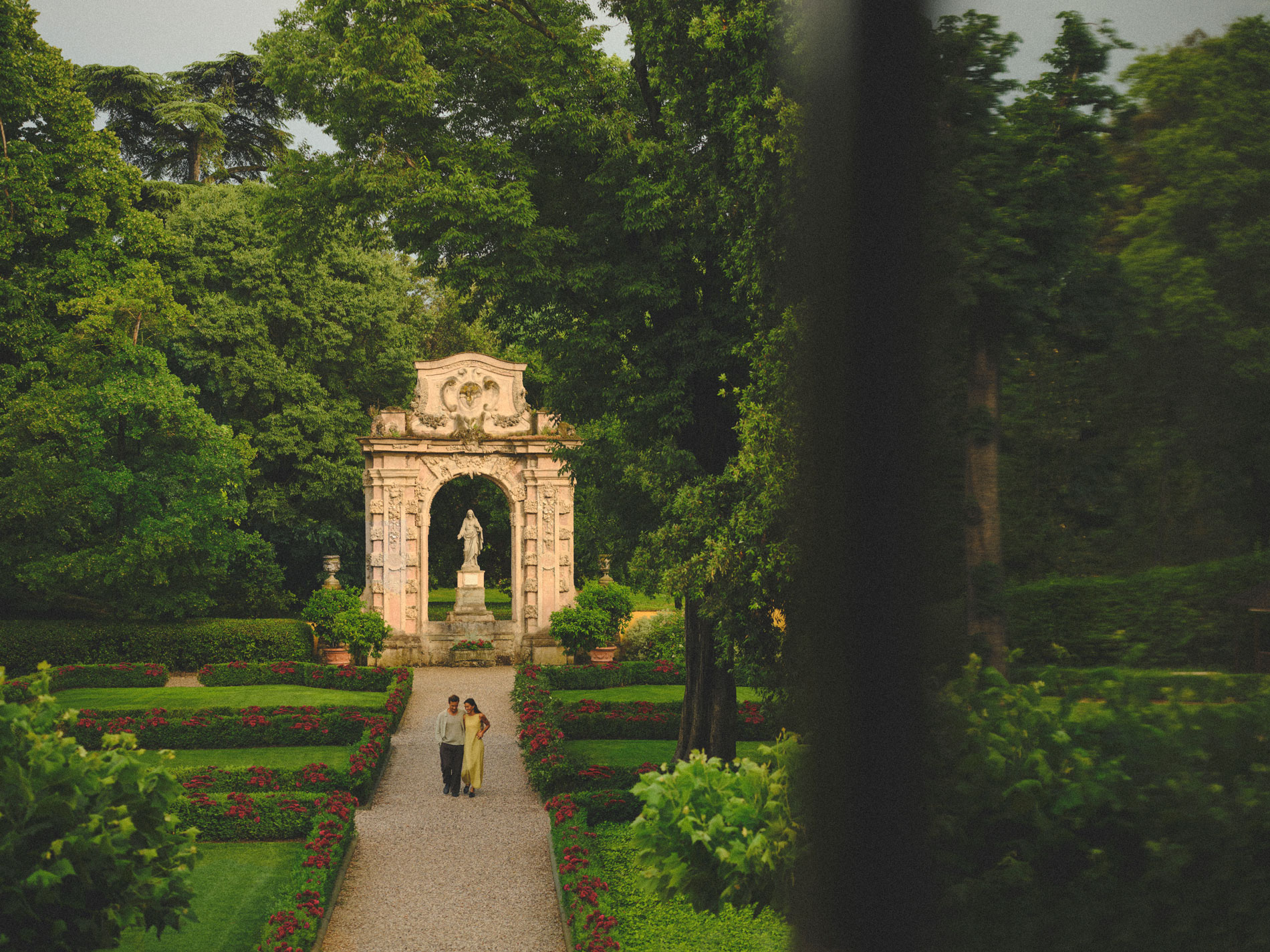
The private garden at Four Seasons Hotel Firenze
Sunrise
Soft morning light pours through the picture windows in the bedroom of your suite. A gentle knock sounds on the door, revealing a staff member with two steaming cappuccinos and a traditional Tuscan breakfast spread for you and your partner to take back into bed, where you slowly greet each other and the day ahead.
Mid-Morning
The private garden you’ve been watching come to life all morning is calling. Before heading into the heart of the city, you stroll hand-in-hand down it’s quiet paths, taking in ancient statues, fountains, and centuries-old trees. As you stop to smell the deep burgundy peonies that line one of the gravel pathways, you catch the eye of a staff member who greets you with a warm smile and wave.
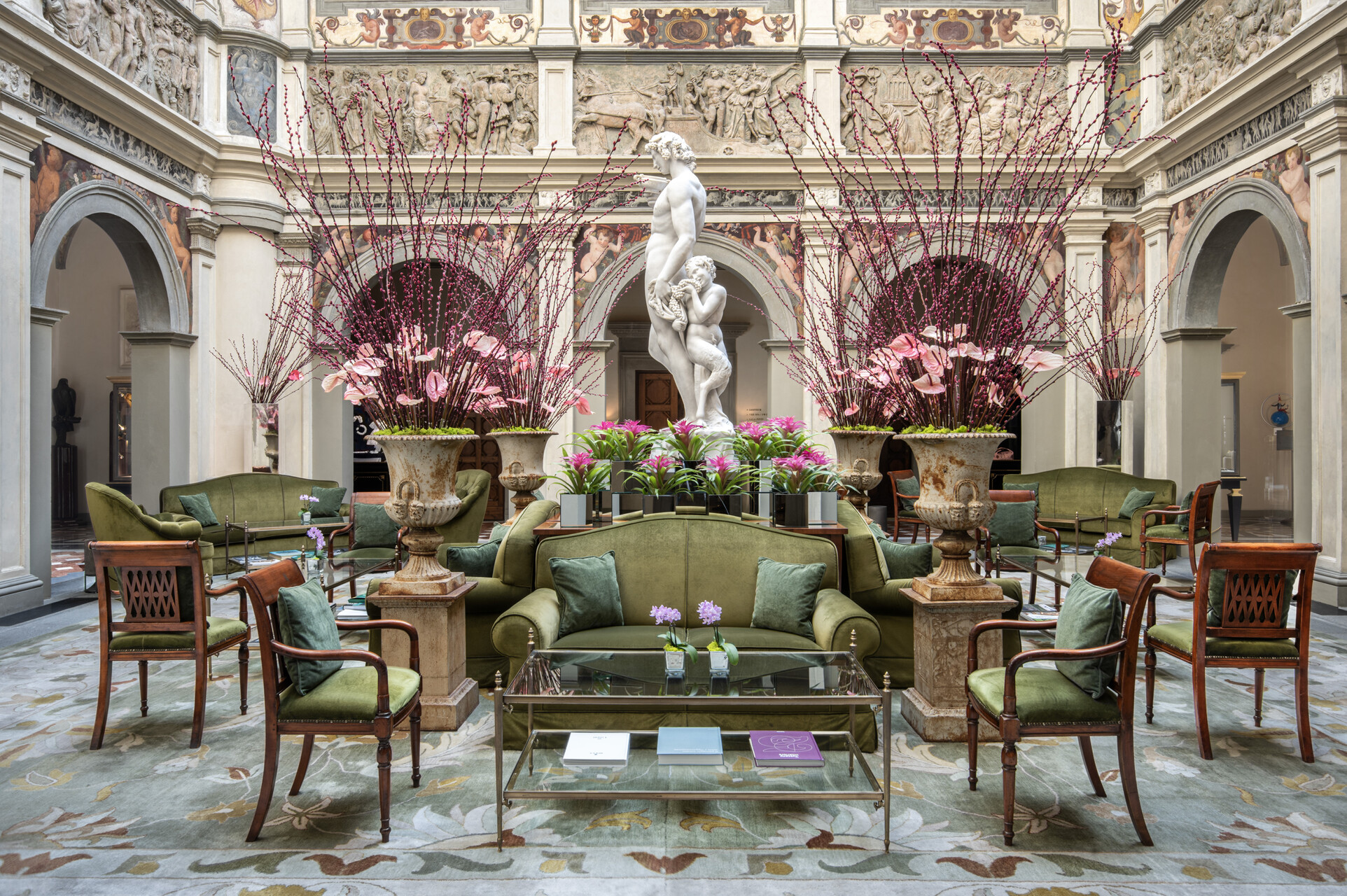
The lobby at Four Seasons Hotel Firenze
Afternoon
The scent of peonies lingers as another staff member finds you at the Al Fresco bar to escort you through the city’s narrow cobblestone streets to the profumeria. Along the way, they give you an impromptu architecture tour, and, when they learn you don’t yet have dinner reservations, offer to plan a private dining experience for you in your suite. Before leaving you at the workshop, they tell you to be ready for an unforgettable evening by half past six.
You spend the next few hours learning the art and science of perfume, crafting custom fragrances alongside one of Florence’s most experienced artisans. The eau de parfum you create has warm notes of delicate petals under the Tuscan sun, rich wood smoke, and your partner’s skin. You know you’ll think of this day, spent in love and in Florence, every time you wear it.
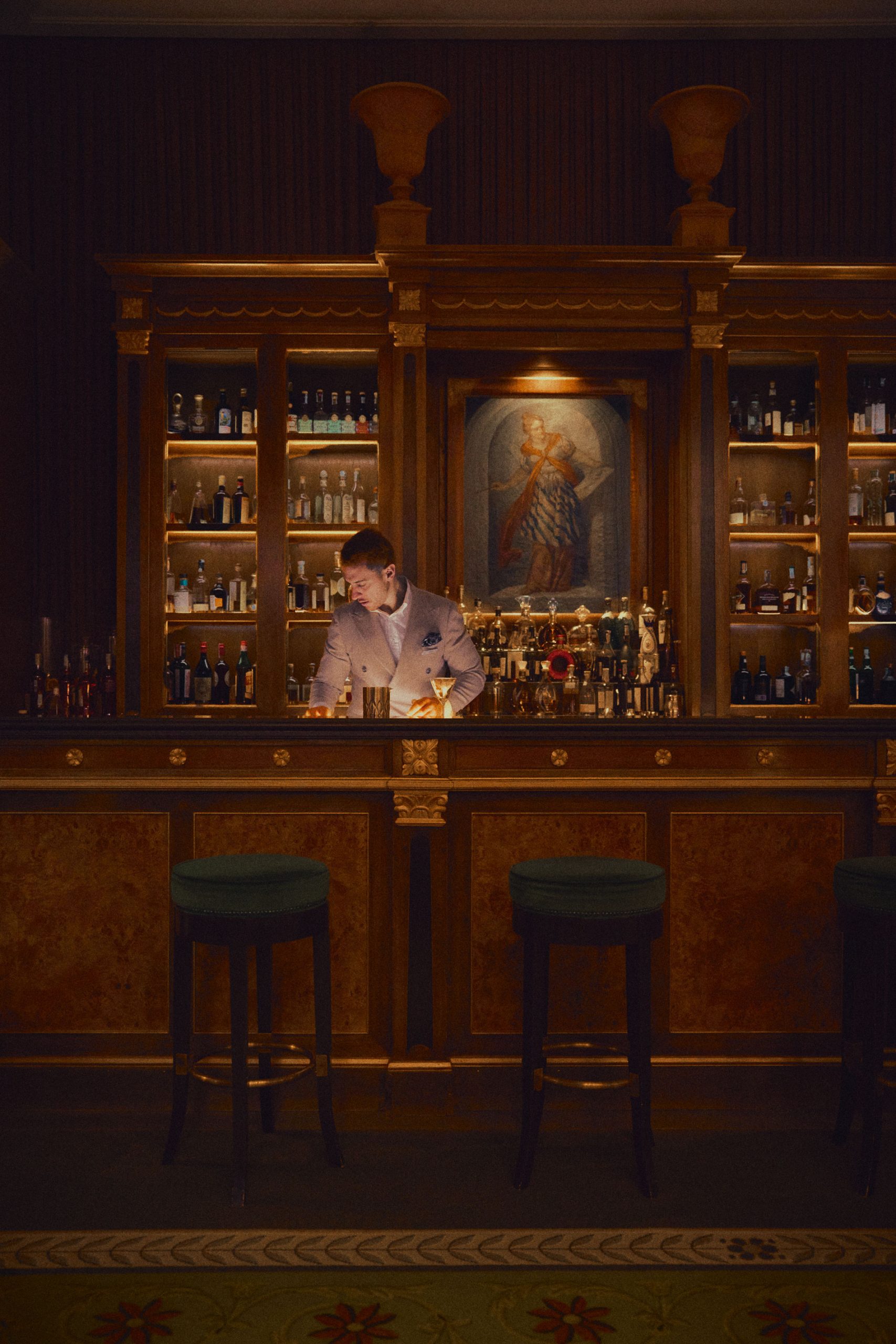
The Atrium Bar at Four Seasons Hotel Firenze
Sunset
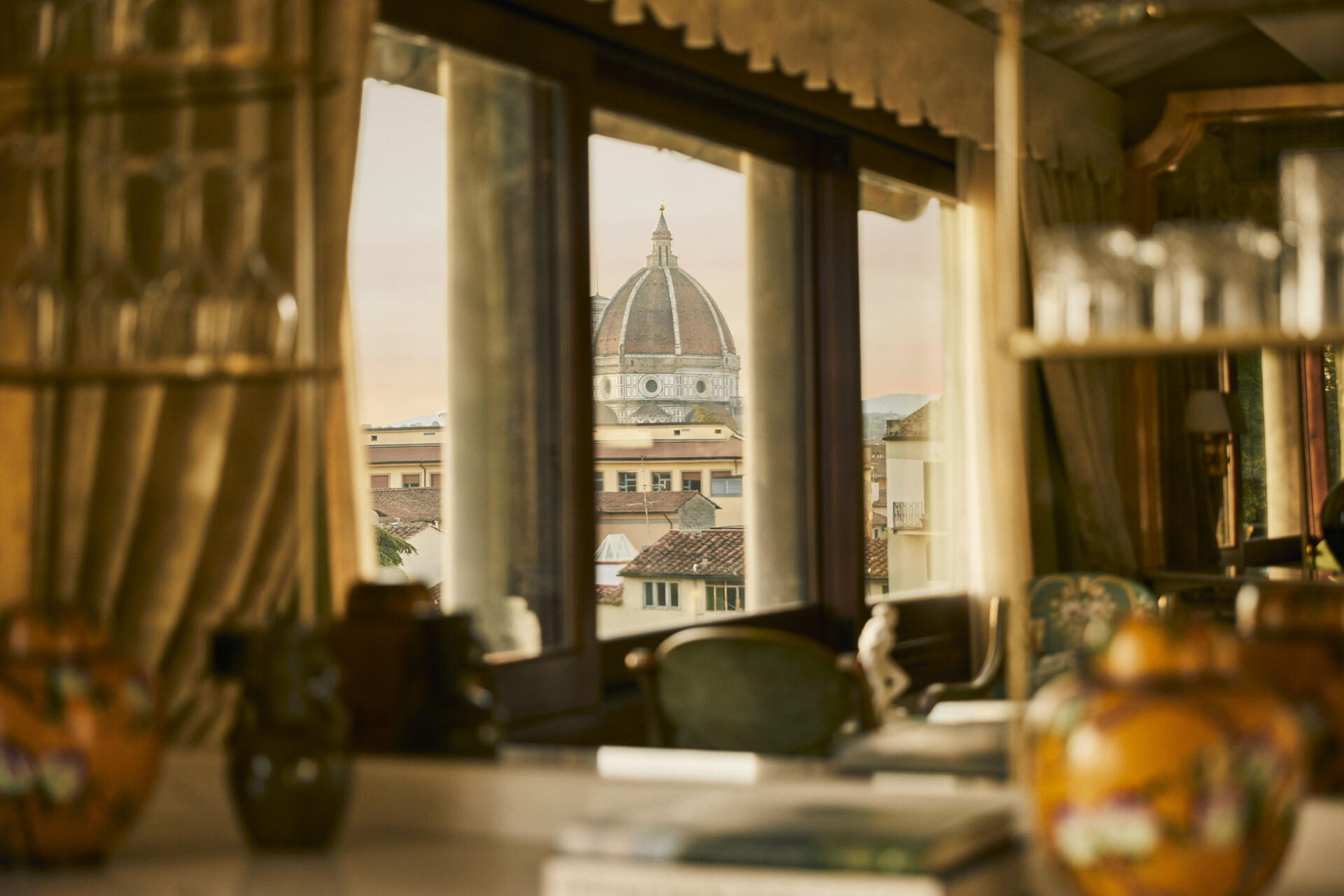
At 6:30 sharp, a staff member greets you in the drawing room of your suite in the 15th-century Palazzo della Gherardesca. They usher you past the lobby’s carved reliefs and Renaissance-era statues into a car waiting to whisk you south to the iconic Ponte Vecchio. Once there, a climb up an unassuming flight of stairs reveals a private terrace high above the crowds. You’ve arrived just in time to catch the sun as it turns the Arno into a river of gold, gilding your partner in a glow you’ll remember for the rest of your life.
Dinner
You head back to Four Seasons Hotel Firenze after the sun has sunk below the horizon. Before heading to your suite, you pause for an aperitivo in the Atrium Bar. Almost as soon as you’ve sat down, a bartender presents you with a Vintage Negroni and your partner with a glass of Sangiovese — both on the dry side, just as you told them you liked it when you stopped in before dinner the day before.
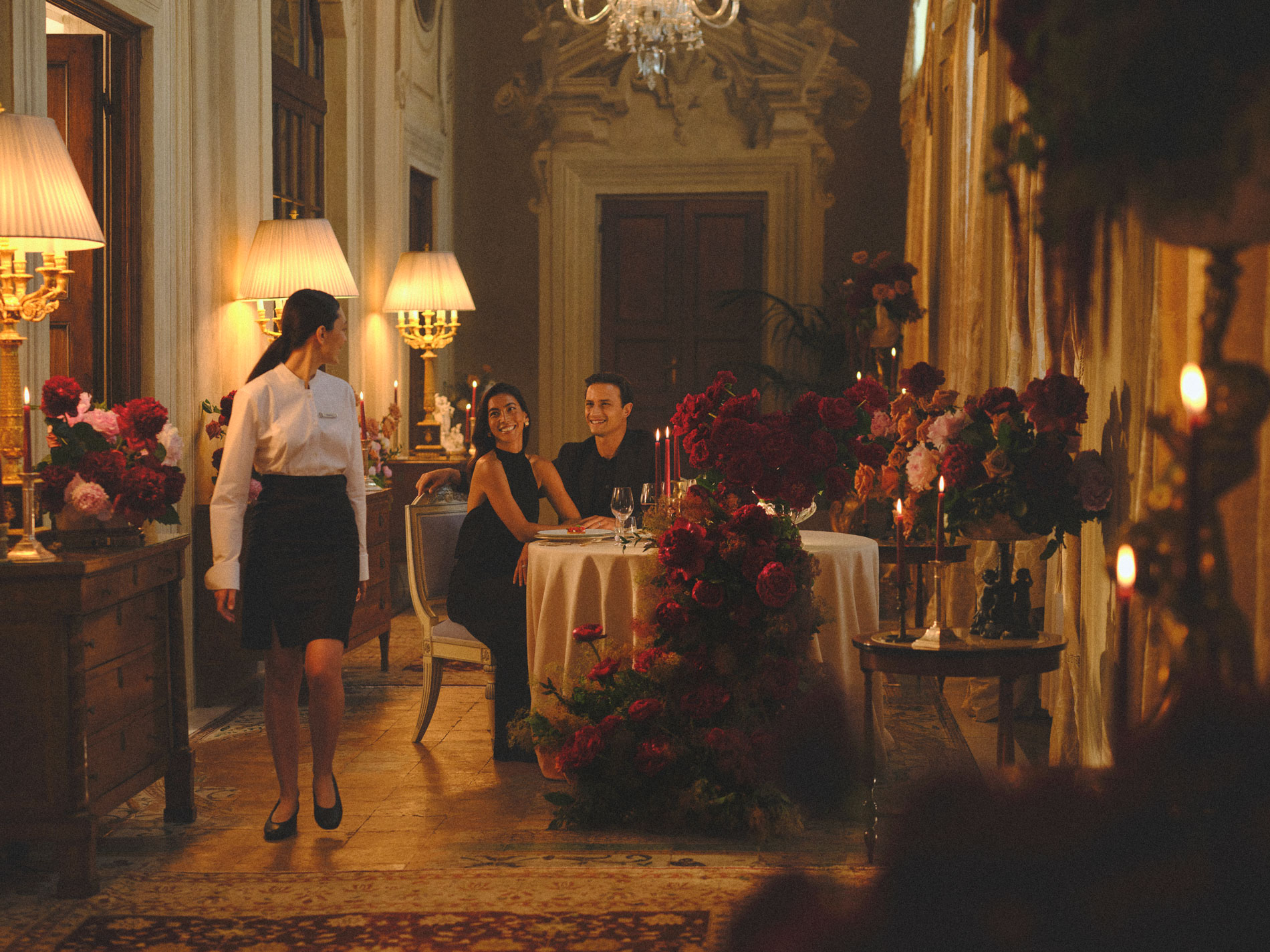
Private dining in the Royal Suite at Four Seasons Hotel Firenze
As you finish your drinks, the staff member who waved to you in the garden this morning arrives to escort you back to your suite: dinner is served. You step through the ancient door to discover the long interior hallway of your suite transformed. A table has been set underneath the frescoed ceiling, an arrangement of the very same burgundy peonies you were so enamored with this morning serving as a centerpiece. The staff member helps you get seated, and before leaving you and your partner to your multi-course meal, all prepared using the freshest seasonal ingredients curated by Michelin-starred chefs, they give you a nod and a smile that says — we know you by heart.
To learn more about Four Seasons’ commitment to truly exceptional experiences, head here.