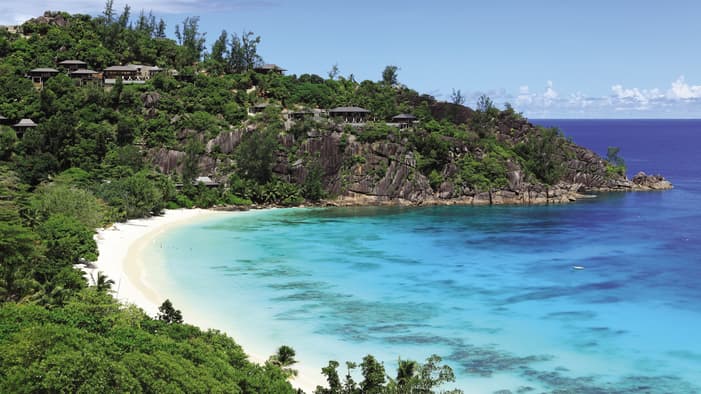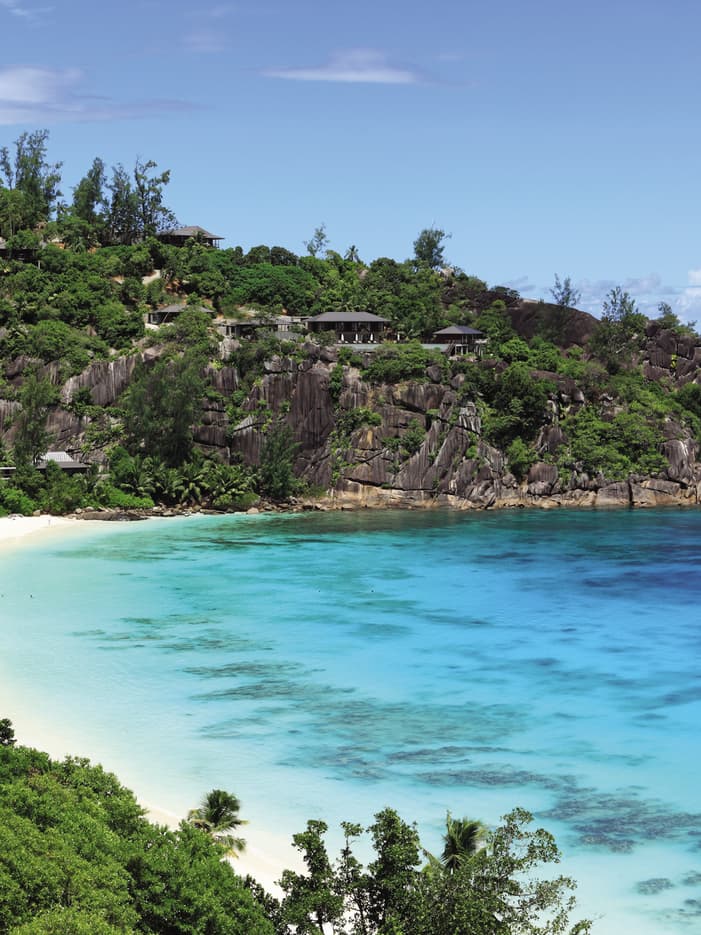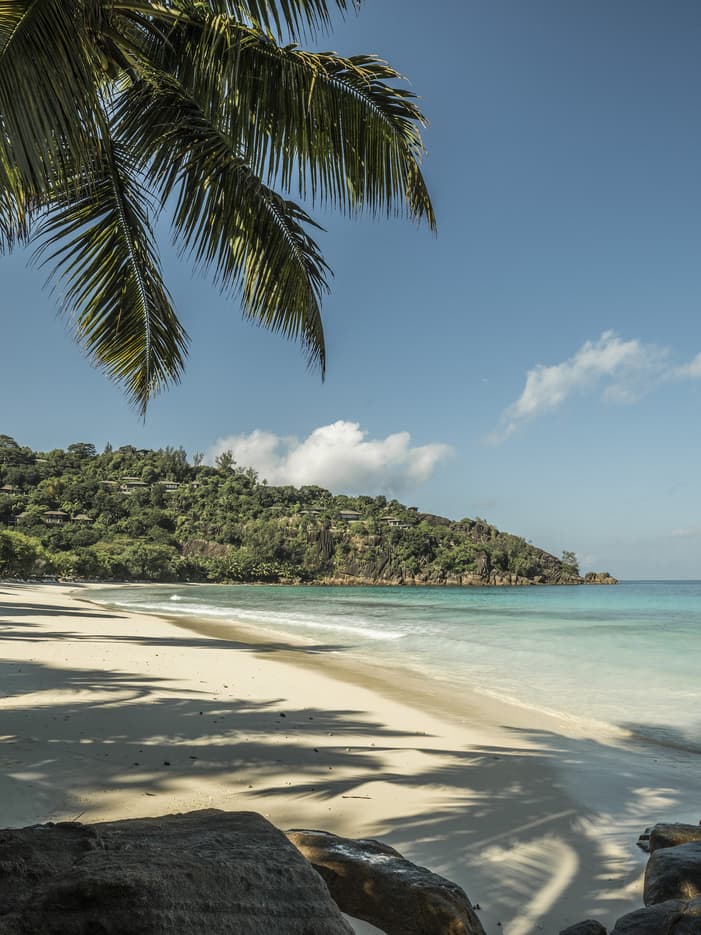
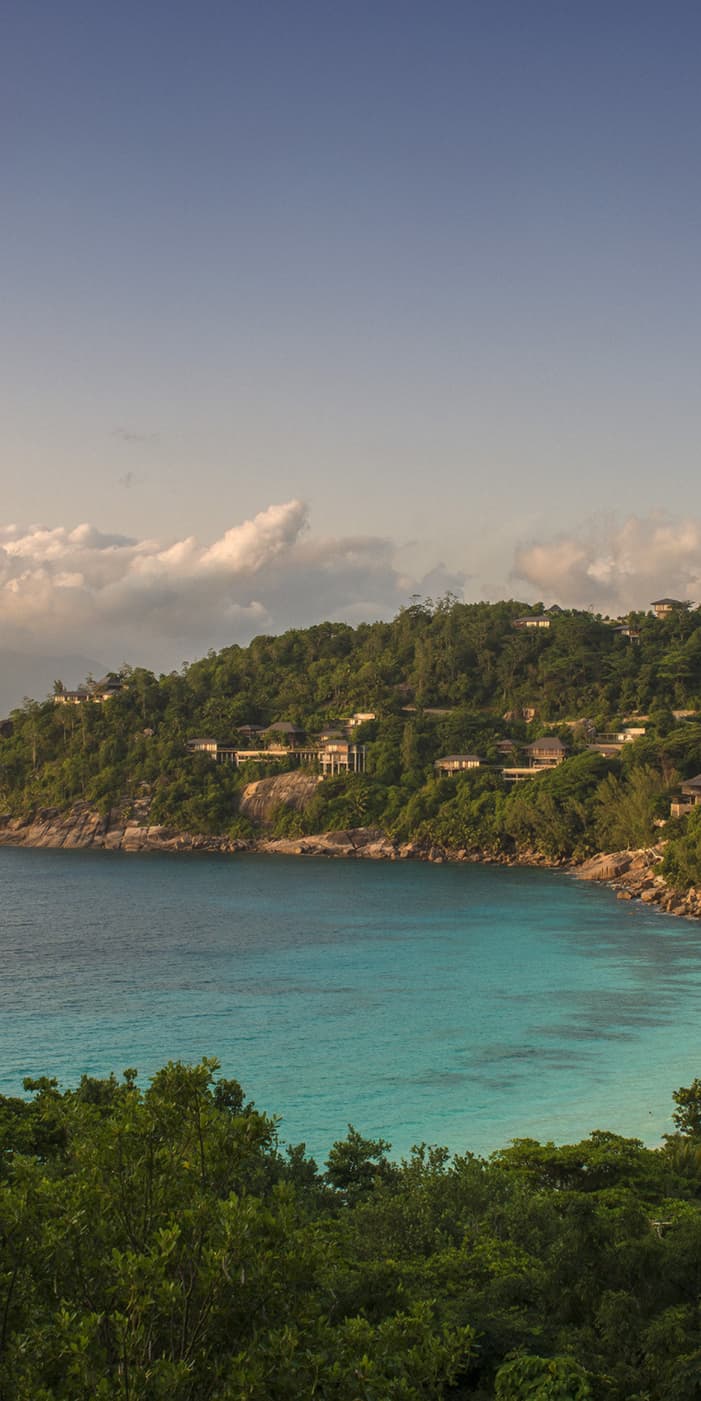
Discover Petite Anse Bay

Coral Nursery
At the heart of our 11‑year reef restoration project, four dedicated nurseries just off the Recreation Centre nurture young corals for about a year before they are transplanted onto the reef. Many are sponsored by guests, helping rebuild Petite Anse’s fragile ecosystem.
Where to find: Directly offshore from the Recreation Centre
Coral Patch
In these vibrant hubs of life, dozens of hard coral species grow closely together, creating shelter and food for countless fish and invertebrates. Supporting more than a quarter of all marine species, these diverse patches are the lifeblood of the bay.
Where to find: On the back shoulder of the reef where the water begins to deepen
Soft Coral (Leather Coral)
Named for its smooth, leathery appearance, this flexible coral sways gently in the current and can retract its tiny polyps when threatened. Thriving in shallow, calm waters, it adds texture and movement to the reef scape.
Where to find: Shallow reef areas with gentle to moderate water movement

Xenia Soft Coral
Famous for its constant rhythmic pulsing motion – aiding gas exchange and growth – this fast‑growing, delicate soft coral thrives in sheltered shallow areas and creates a mesmerizing underwater display.
Where to find: Sheltered shallow sections of the reef
Galaxea Coral
Easily recognized by its bright-green hue and long, stinging tentacles used to compete for space on the reef, this striking hardy coral adds bold colour to Petite Anse’s underwater landscape.
Where to find: Moderate depths across various reef types

Spotted Eagle Ray
This graceful winged ray glides through the water, using electroreception to hunt for buried shellfish – a truly unforgettable encounter in our bay.
Where to find: Mid‑water near reefs and sandy flats
Porcupine Stingray
This distinctive ray with a rough denticle-covered body and grinding teeth for crushing crustaceans feeds on shellfish buried in the sand.
Where to find: Sandy bottoms near reefs, often resting under rocks or overhangs
Big Mouth Mackerel
This ultra-fast swimmer can reach up to 80 kilometres per hour (50 miles per hour) and travels in large schools, changing colour to communicate and feeding with its mouth wide open near the surface.
Where to find: Near the surface; often seen in large active schools

Humphead Parrotfish
The largest parrotfish in the Indian Ocean, reaching up to 1.5 metres (5 feet), this fish uses its tough beak to graze on algae and plays a key role in producing the island’s white sand.
Where to find: Reef slopes and coral patches
LUNAR FUSILIER
This silvery fast‑swimming fish moves in large coordinated schools – its reflective body confusing predators – a common and captivating sight in mid‑water.
Where to find: Open mid‑water, often in large groups
Tallfin Batfish
Adults are tall, calm swimmers with a gentle, curious nature around snorkellers and divers.
Where to find: Reef edges and open water – alone or in small groups or large schools

Squid
The squid is among the ocean’s most intelligent invertebrates, capable of instant colour change for communication and camouflage. Squid are often seen at dusk in small groups near the water’s surface.
Where to find: Open water near the reef, especially at dusk
Spotted Boxfish
This slow-moving armoured box-like fish has a rigid, plated body. Juveniles look very different from adults.
Where to find: Reef crevices and corals

Red Spotted Coral Crab
Small but mighty (up to 5 centimetres or 2 inches), this crab lives inside coral branches and actively defends its coral home from predators.
Where to find: Between branches of Pocillopora and Acropora corals
WHITE (GEOMETRIC) MORAY
This striking black‑and‑white patterned eel opens its mouth to breathe, not threaten – a skilled ambush predator that hides in reef crevices.
Where to find: Reef crevices and ledges
WHITE MOUTH MORAY
A nocturnal hunter identified by its pale inner mouth, this moray relies on a strong sense of smell to find prey.
Where to find: In holes and crevices within the reef

NUDIBRANCH
This tiny, brilliantly coloured sea slug, often toxic and wonderfully patterned, is a rewarding find for careful observers.
Where to find: On corals, rocks and sand around the reef
Activities
 Love on the Reef
Celebrate your connection with a shared coral planting experience for couples. Work together to prepare fragments as a symbol of growth and unity. Then, watch as they are placed in the coral nursery. Follow your coral’s journey over time and create a living memento of your Seychelles adventure.
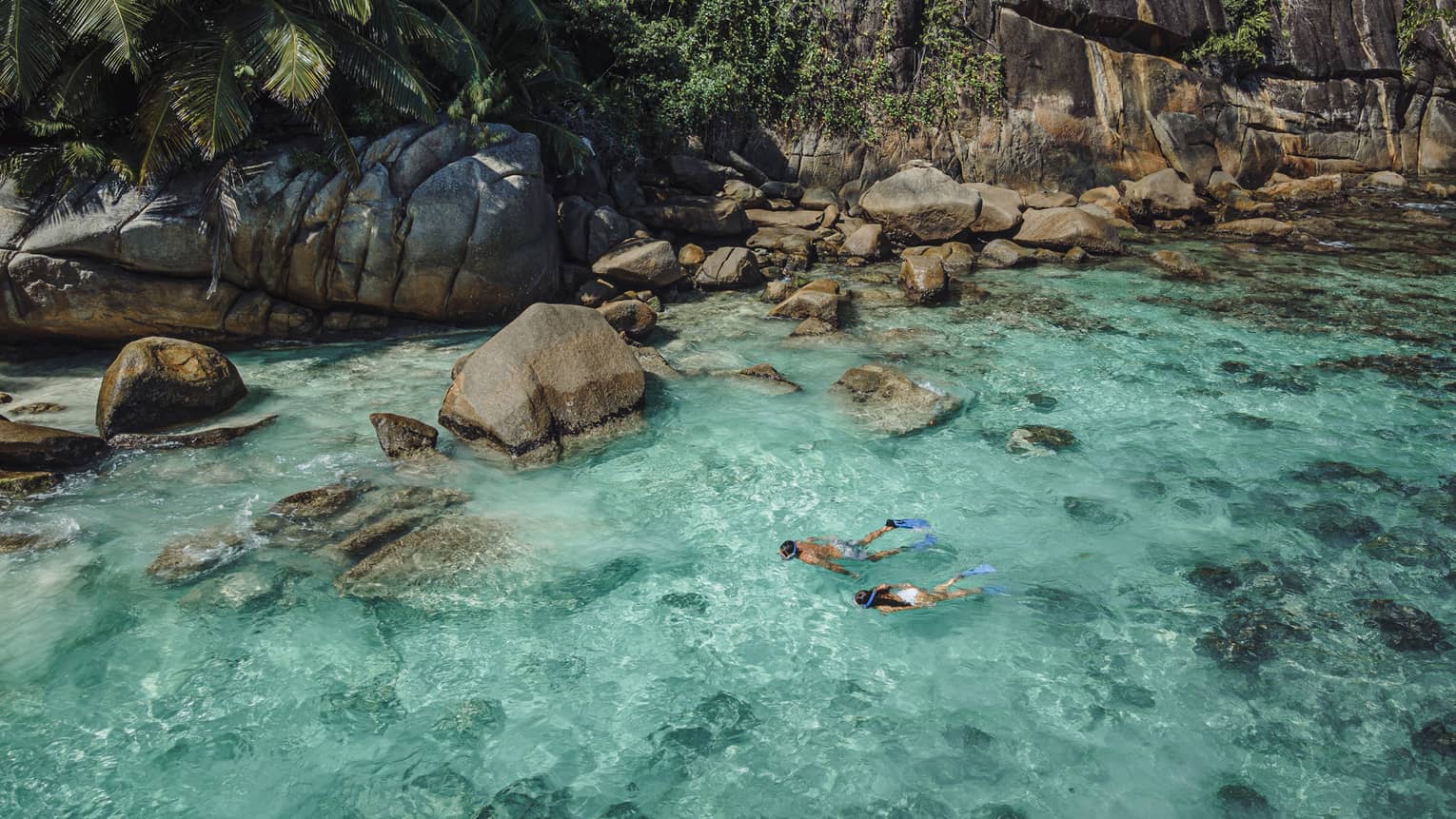 Snorkelling with Marine Biologists
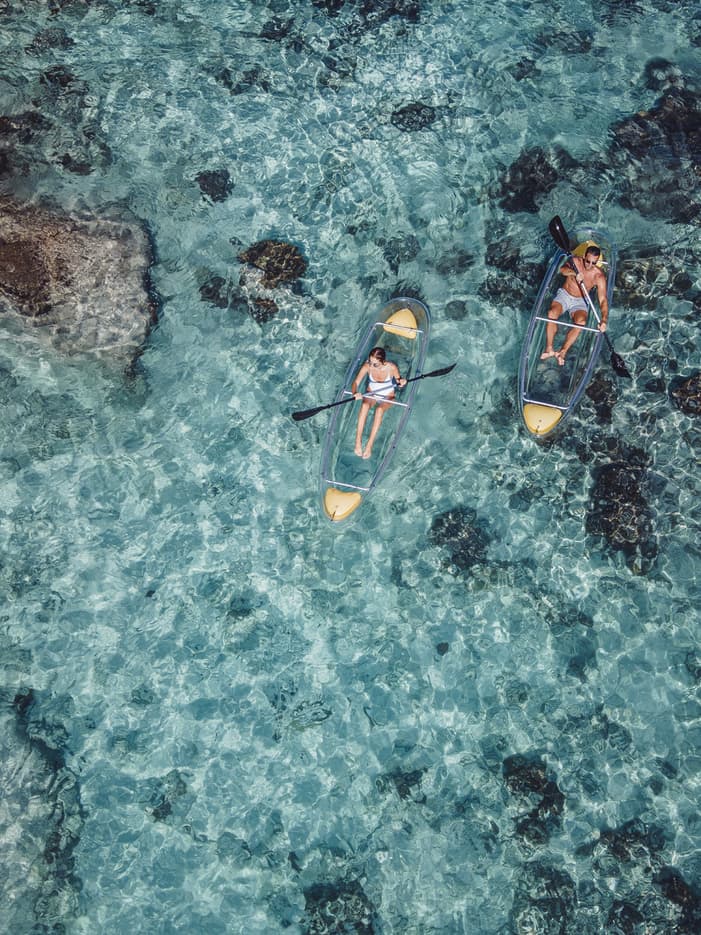
Head out into the turquoise waters of Petite Anse with our marine team to marvel at coral gardens rich with tropical fish, rays and turtles. Suitable for those with previous snorkelling experience, this magical adventure includes expert insights into marine life and local ecology.
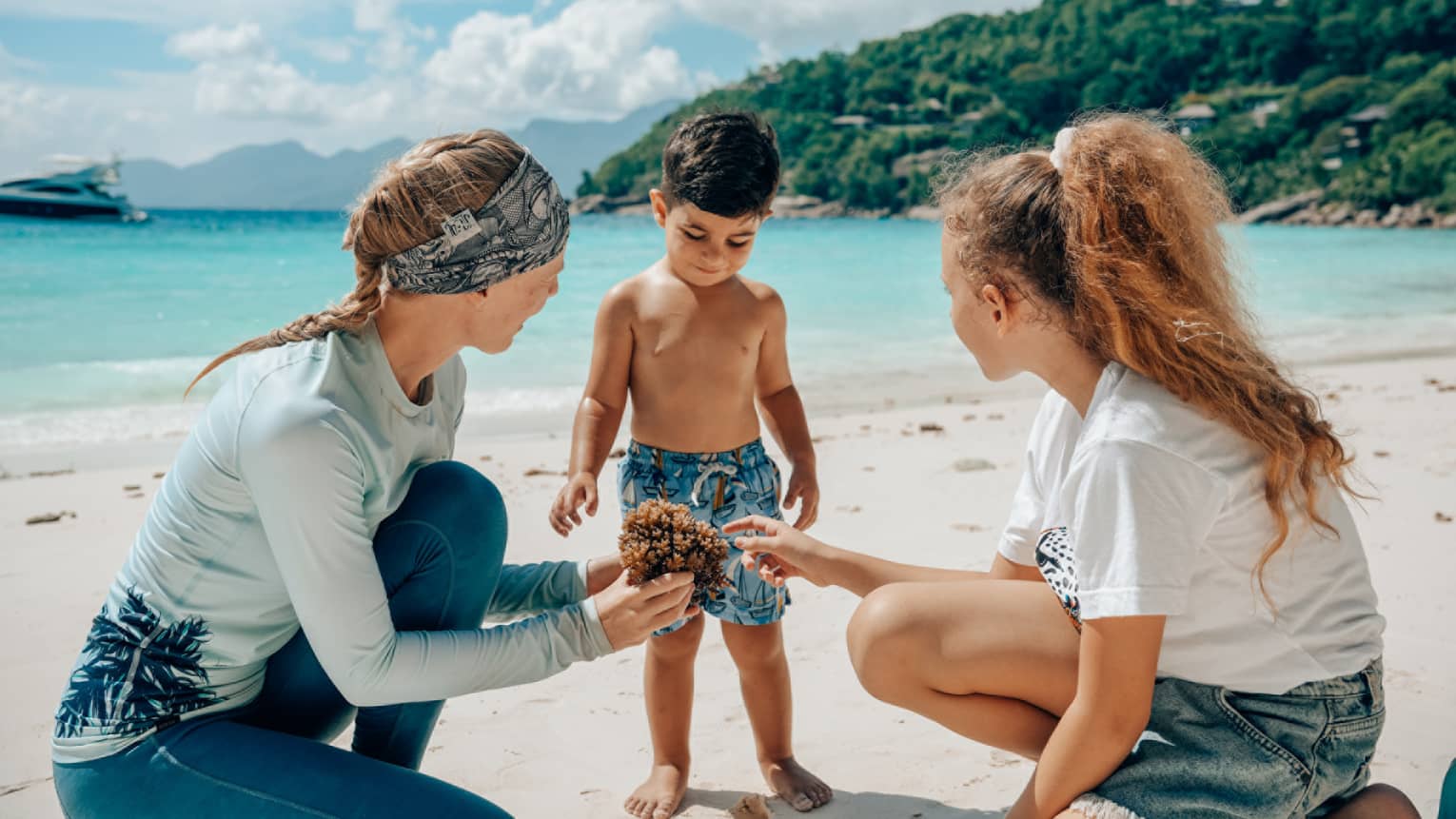 Coral Discovery
Uncover the secrets of the reef at a special workshop with our resident marine team. Learn how coral ecosystems function and why they matter. Discover ongoing restoration work at Petit Anse and engage with hands-on demonstrations that bring conservation to life.
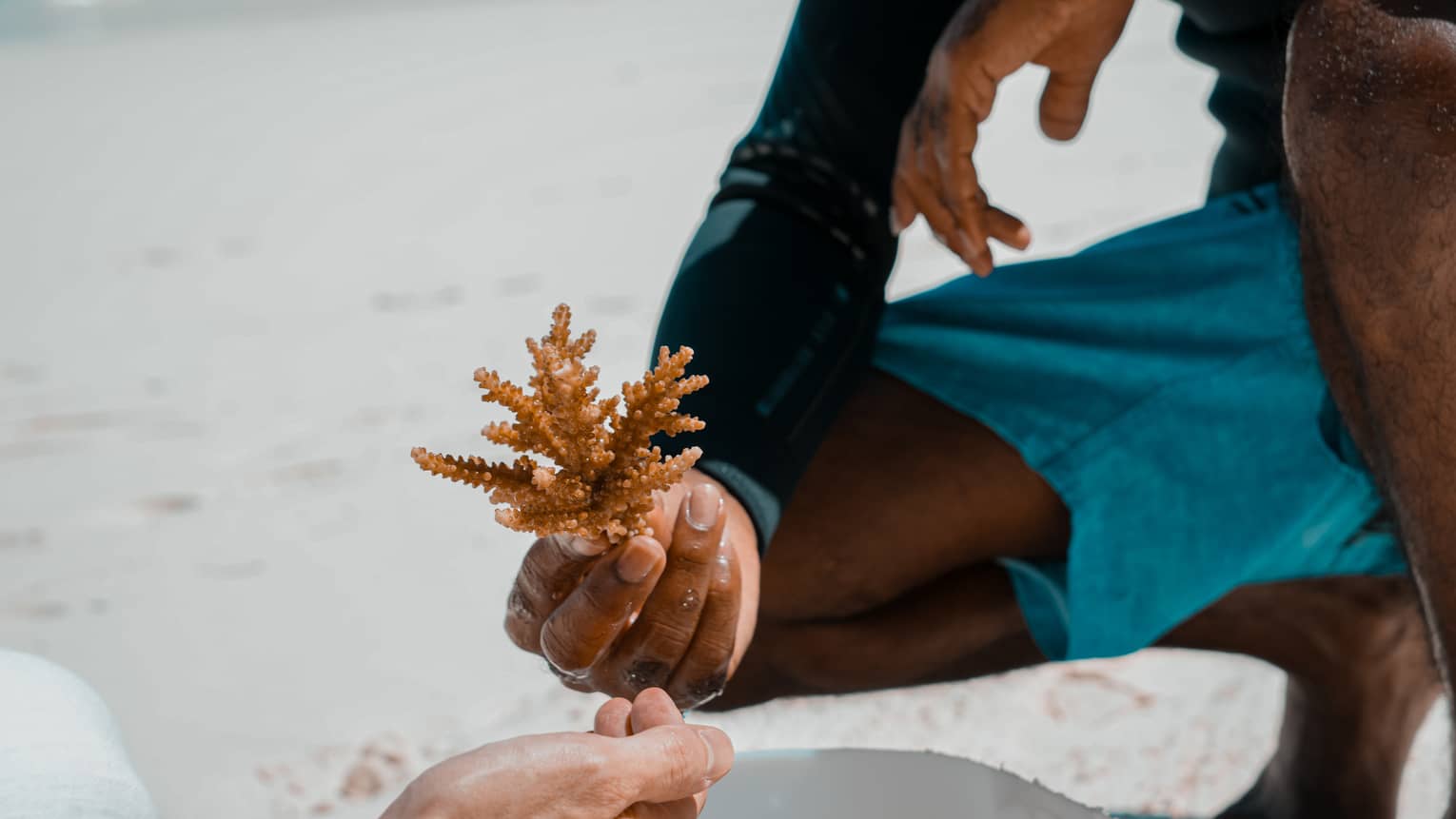 Restore the Reef
Work alongside our marine team and take part in one of the Seychelles’ most well-established reef restoration projects. Learn the process, prepare your own coral fragments, and help build a reef nursery. Includes the option to track its growth in the ocean over time.
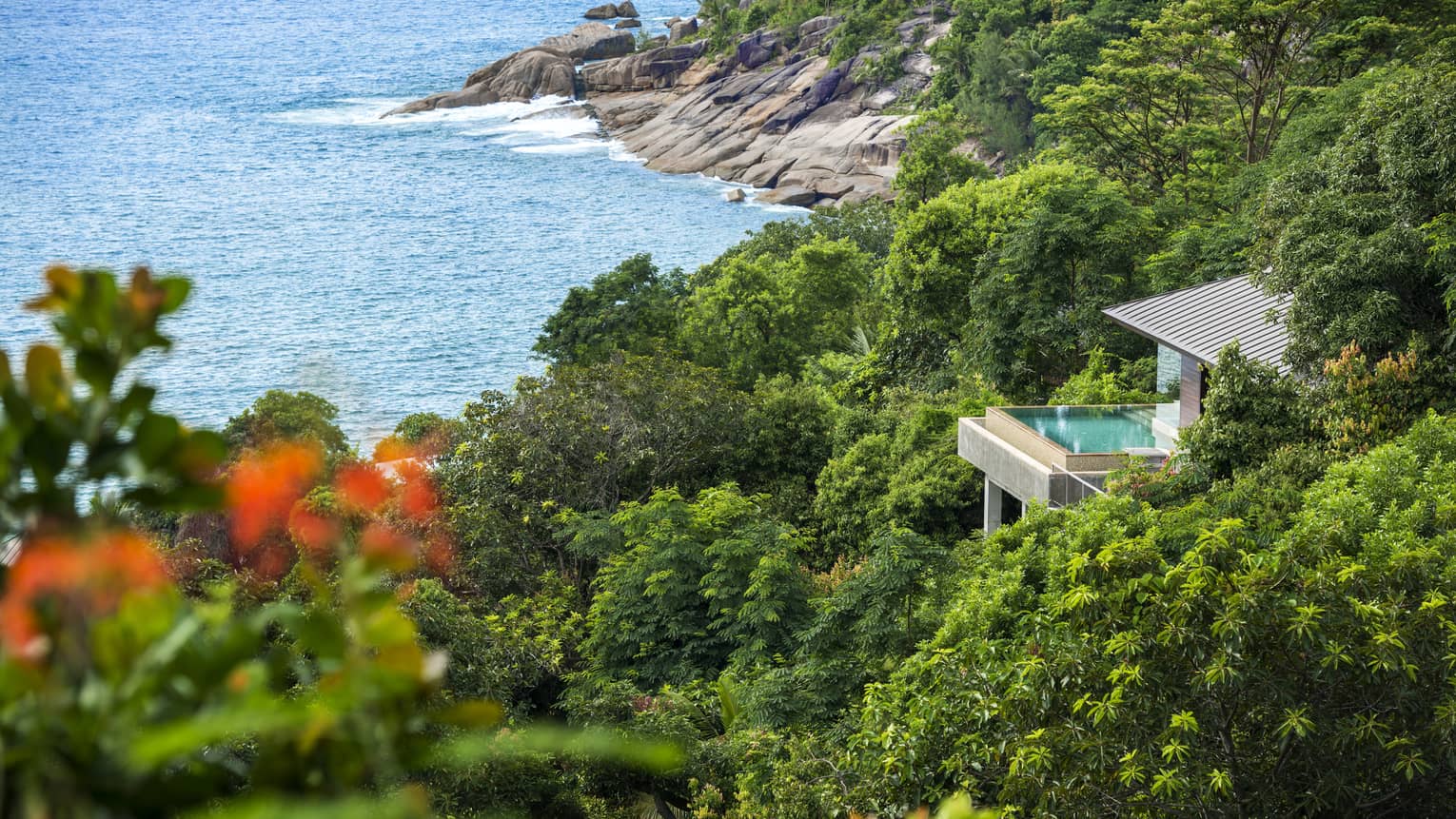 Landscape Tour
Our Resort was formerly a fruit plantation, and you can see how many of the trees were maintained on site as you explore the grounds. Pick fruits such as mango, starfruit, jackfruit and noni while learning about their uses in cooking, spa and healing. Speak to the Concierge to book this complimentary tour.
 Ocean Portraits
Capture your private Petite Anse experience with professional underwater photography and videography.
It feels like such a privilege to work in a bay as beautiful as Petite Anse, both for restoring the coral reef here and also for sharing it with all of the visiting guests.
Dr. Katrina Himpson Marine Biologist
Our Sustainability Efforts
- Minimizing Plastic
- In our mission to be plastic free, we no longer use any plastic straws or water bottles. Our water is produced and bottled into glass bottles in-house. Straws are made from plants and, on the beach, bamboo straws are used for drinks and fresh coconuts.
- Energy Efficiency
- To save energy, a nightly power-saving check is conducted to ensure that all unnecessary sources of energy and light are switched off. All lights around the Resort have also been replaced with LED bulbs. Our air conditioning units are fitted with a heat recovery system. In this process, the heat being removed by the air conditioning is directly transferred to the hot water tank to support the heating of the water to a fixed temperature, while reducing the need for further energy consumption.
- Chemical Free
- The cleaning agents used throughout the Resort are chemical-free and sourced from brands with a green footprint.
- Recycling
- To ensure maximum use of our water supply, waste water is treated in house and used for landscaping purposes. The kitchen and engine oil, batteries, glass bottles and tyres are collected by a local contracted partner to further recycle the items off-site.
- Sourcing Locally
- Aside from codfish, all our seafood, including yellowfin tuna, wahoo, grouper, snapper, jobfish, mahi mahi, calamari and octopus, are sourced through local fishermen. Many of our fruits, such as mango, papaya, coconut, starfruit and more, are picked from trees within the Resort premises, when available seasonally, while others are sourced locally.
The Team
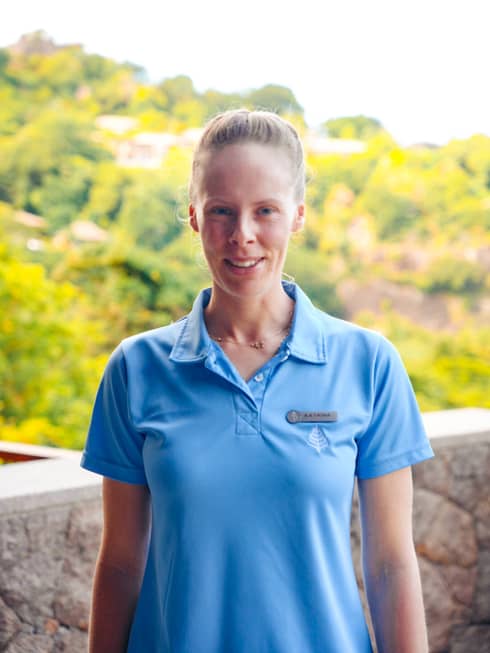
Dr. Katrina Himpson
Marine Biologist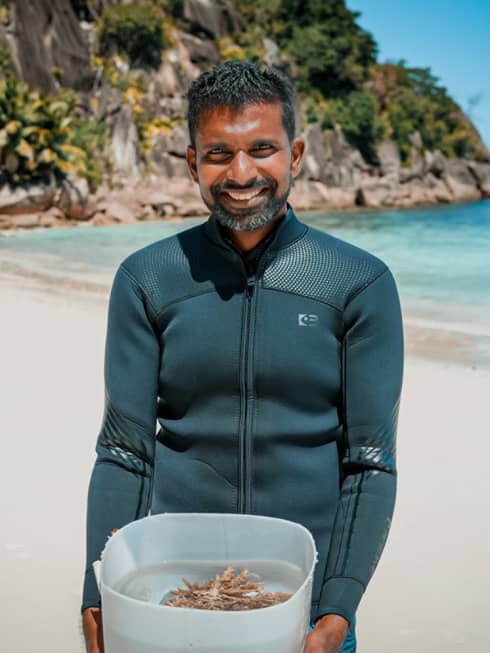
Mohamed Ali (Modex)
Marine BiologistYou May Also Like