with
Learn more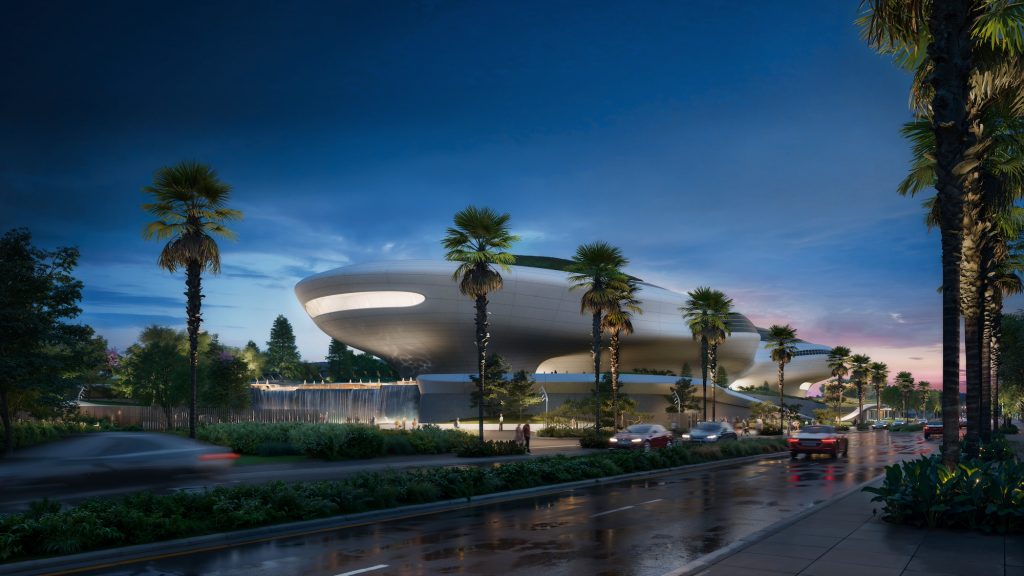
Out of This World
Two spaceship-like destination museums are making Los Angeles a primary pilgrimage site for art and design lovers this year.
Of all the artworks on the grounds of the newly expanded campus of the Los Angeles County Museum of Art (LACMA), the most effortlessly delightful is Shio Kusaka’s 12-foot-tall aluminum sculpture of a light beam with a clay flying saucer perched on top. Walk inside the structure and bask in the glow: It looks like you’re being beamed up.
It’s a fitting artwork for a new building that appears to have landed here from outer space, never mind the years-long mundane construction delays. And, weirdly, it’s not the only spaceship-like museum to dock in the city this year. The Lucas Museum of Narrative Art, opening in September near the University of Southern California, is also a swooping futuristic edifice featuring the sort of curves unimaginable before the advent of digital design tools.
Both museums, set on massive structures, hover above the earth, contributing to seismic safety and freeing up space beneath for walking. And, alien analogies notwithstanding, both have already become part of the urban fabric of L.A.
“That was the idea from day one. I want people to experience Los Angeles through the building,” says LACMA’s CEO and Wallis Annenberg director, Michael Govan. “It shouldn’t be a box you go inside, but somewhere you can experience the city, the sky, the weather.”
As the Bangkok-born, L.A.-based architect Kulapat Yantrasast points out, both buildings take the form of pavilions from the outside, with their own grounds. “You almost can’t imagine these buildings in New York, San Francisco, or Chicago,” he says, adding that it helps that “we have the best weather in the world, and enough space.”
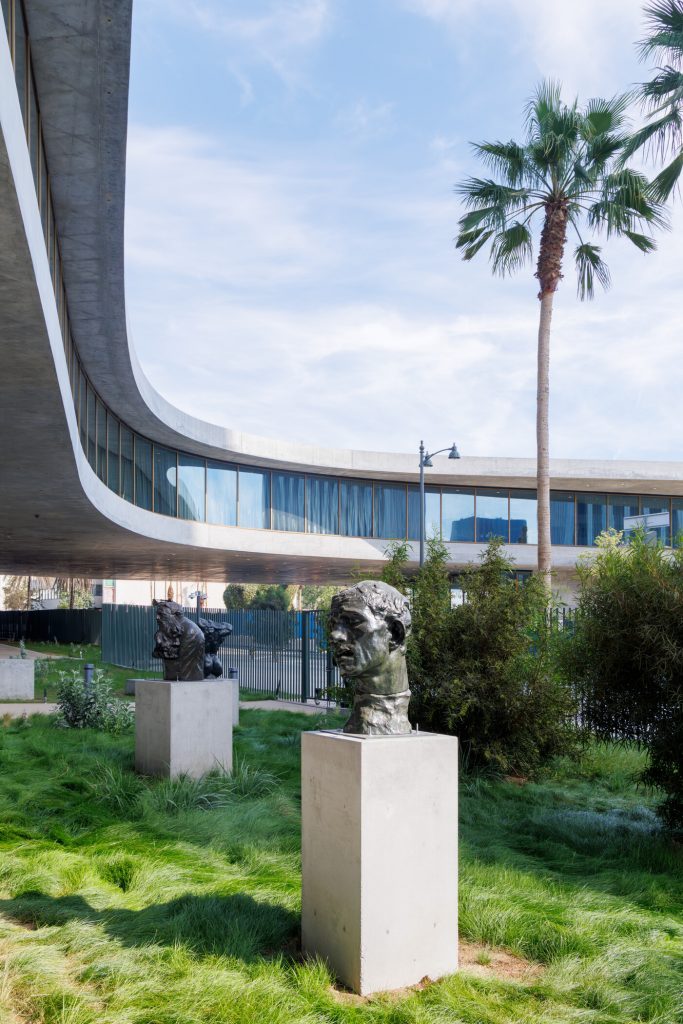
The openings of LACMA and the Lucas Museum make L.A. the place to visit this year for both architecture and culture, capping two decades of intense growth of the city’s extraordinarily diverse art scene. Over this time, international galleries such as Hauser & Wirth, Perrotin, and David Zwirner have opened branches. (A must-see exhibit this summer is Spencer Finch’s debut in Los Angeles at Lisson Gallery, showcasing his ethereal works including a site-specific light installation, from June 26 to August 22.) Meanwhile, leading art institutions like the Getty and the Huntington survived close calls with the 2025 fires that engulfed the city, and they have emerged stronger than ever.
Now there are even more reasons to visit L.A., with the LACMA and the Lucas institutions becoming the latest examples of destination museums, where the architecture is as much of a draw as the art. The original Guggenheim in New York (by Frank Lloyd Wright) and the Guggenheim Bilbao in Spain (designed by Frank Gehry) helped to create the phenomenon. In the case of Bilbao, it fueled a major tourist boom. And all the new venues in Abu Dhabi, including the forthcoming Guggenheim (also by Gehry), are aiming for something similar.
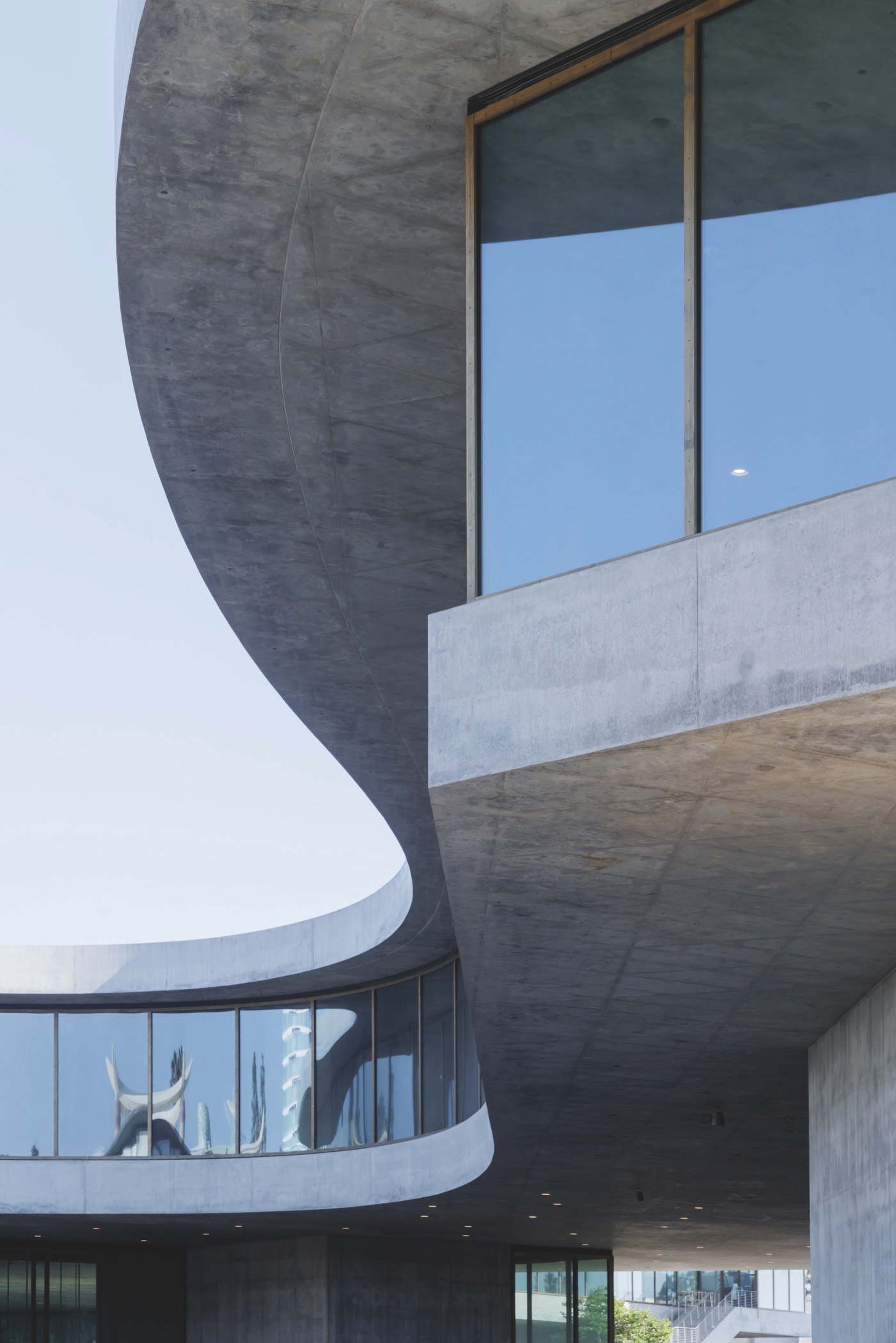
LACMA’s new David Geffen Galleries building—designed by the enigmatic Swiss architect Peter Zumthor at a cost of $720 million—is both sensual and severe: a curved concrete-and-glass form that originally looked like an inkblot but now roughly resembles a lobster claw. Instead of the neoclassical grand entrance announcing so many encyclopedic museums, this one instead has two points of access and galleries on a single floor. It’s designed to be a great leveler, treating any period or century of art history as meaningful as any other. Despite futuristic touches like gauzy metallic window shades, the concrete galleries have an old-world Roman bathhouse feel.
The Lucas—the billion-dollar brainchild of the sometimes-fanciful Beijing-born Ma Yansong of MAD Architects—gives off Millennium Falcon vibes. Covered with white fiberglass-composite panels, it looks like a starship that’s sending ripples undulating through the surrounding landscape: 11 acres of terraced gardens, oak groves, and flowering pathways. The building will hold, to the surprise of some fans, not just Star Wars artifacts from its co-founder, George Lucas, but also a wealth of “narrative” art that he and his wife, Mellody Hobson, have collected, from Norman Rockwell paintings to manga, with a stellar Frida Kahlo self-portrait mixed in.
While it’s too soon to tell if these museums will have a lasting impact on cultural tourism, they do promise to expand the relatively small set of architectural symbols representing the city. With striking geographic and demographic diversity, L.A. is hard to encapsulate in a single image. It has mountains to the east, beaches to the west, and in between a sprawl that has been variously described as 72 suburbs in search of a city and an “autopia” of freeways. Or, more accurately, it’s a layered and “dynamic megacity of booms and busts,” as Dana Cuff, a professor in the architecture and urban design department at UCLA, puts it, slowly reinventing itself as a “postsuburban metropolis.”
Other cities have more recognizable skylines or postcard-ready downtowns. Los Angeles has, instead, disconnected vignettes: the Hollywood sign, the Santa Monica Pier (never mind that Santa Monica is technically its own city), Rodeo Drive (in the city of Beverly Hills), the Griffith Observatory, and maybe the Capitol Records building. Back in 1978, when Hugh Hefner was raising money to replace the rotting wooden letters of the Hollywood sign with more resilient, fire-resistant steel components, he touted it as the Eiffel Tower of Los Angeles.
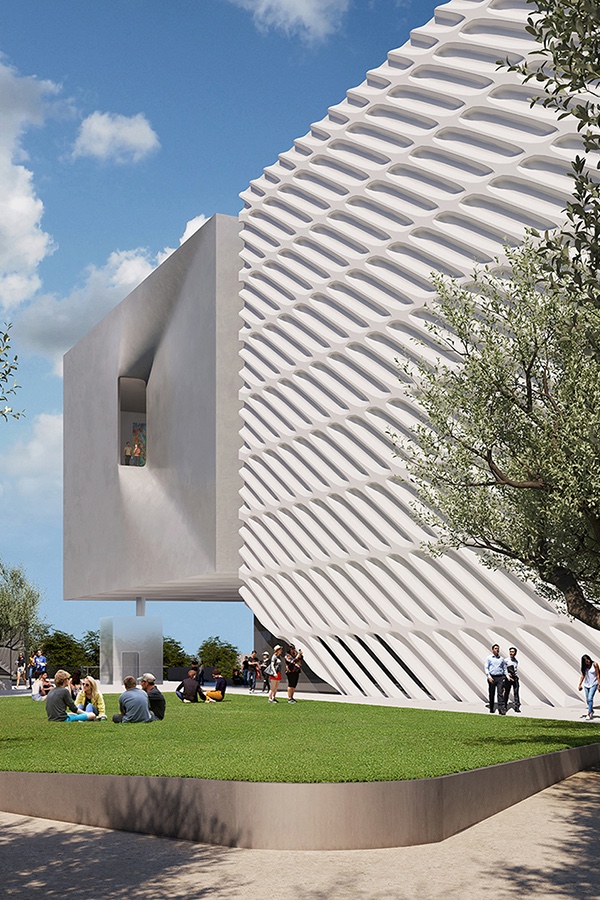
These days, as part of its ascendance as a cultural capital, Los Angeles also boasts several newer landmarks that go beyond palm trees and the entertainment industry and speak to the city’s art aspirations. First came the Richard Meier–designed Getty Center, a cluster of stately travertine buildings perched high on a hill in Brentwood, and Gehry’s curved-steel Walt Disney Concert Hall downtown, which captures the exhilaration of sailing wing and wing. Across the street, Diller Scofidio + Renfro’s Broad museum features a near-confectionary-like honeycomb-patterned façade; a new 50,000-square-foot addition in back is due to arrive in time for the 2028 Olympic Games.
Beverly Wilshire, Beverly Hills, A Four Seasons Hotel
Timeless glamour, approachable luxury
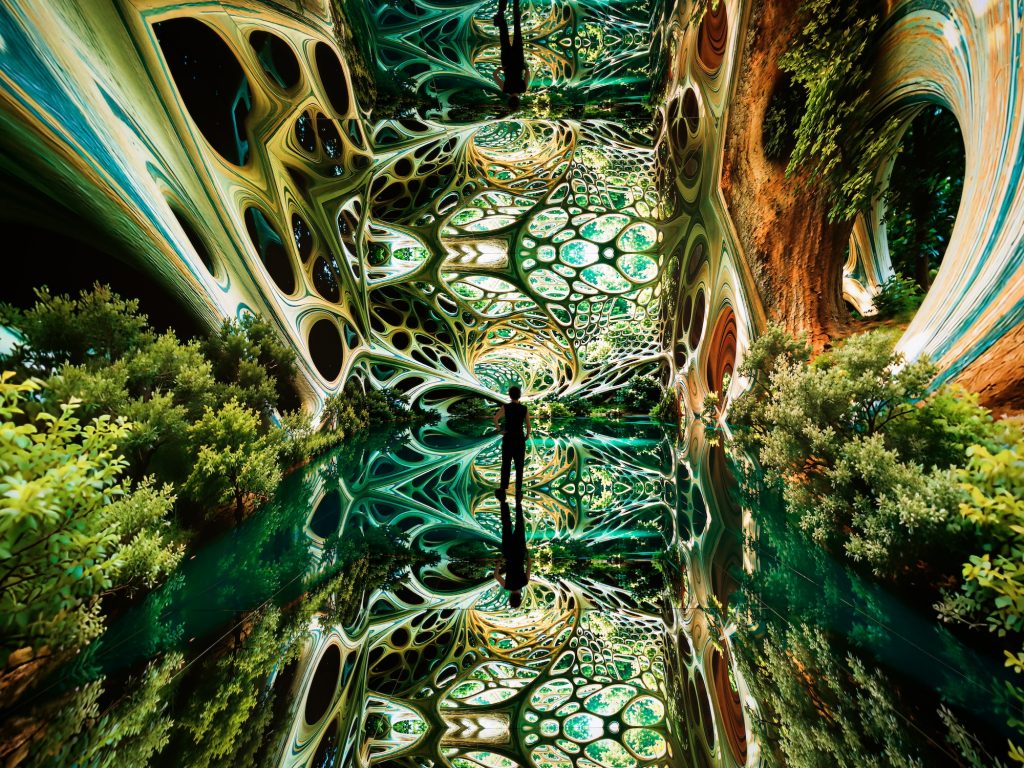
Less visible, but maybe just as Instagrammable, is a new immersive space just steps from the Broad: Dataland, from digital media artist Refik Anadol. Tucked into the Gehry-designed Grand LA development, it features a host of new artworks (including an inaugural exhibit inspired by the Amazon rainforest) fueled by custom-built A.I. that has been trained on millions of images, doubtless bringing a new generation of screenagers downtown.
For its part, the Broad, having just finished its first decade, is already drawing more younger visitors than any other major art museum around. Joanne Heyler, the Broad’s founding director and president, attributes its popularity partly to the way “we intentionally and firmly moved away from the notion of the museum as a neutral box. [Architect] Liz [Diller] and I still talk about the building being a protagonist,” she says, describing architecture with a sort of main-character energy—not shy to show off or even create some friction. Heyler adds anecdotally that the Broad has attracted more “guerrilla fashion shoots” than anywhere else in L.A. “I think it’s a great thing when a building becomes identified with a city.”
Similarly, one L.A. public artwork on the scale of architecture has also come to represent the city in countless commercials, movies, and more. Back when Zumthor’s building was just a dramatic sketch, Govan commissioned Chris Burden—best known as the performance artist who in 1971 had himself shot in the arm—to create a site-specific installation on the LACMA campus.
Leaving his macho-masochistic days behind, Burden planted a forest of 202 vintage cast-iron lampposts along Wilshire Boulevard. Govan has compared the installation, called Urban Light, to the Parthenon. The artist, who died in 2015, called it “a building with a roof of light.” Or as he once told me in more sublime terms, “It evokes the kind of awe we are preprogrammed by the history of Western architecture to feel when we walk through classical buildings with multiple colonnades.”
The large-scale sculpture has since served as the setting for marriage proposals and meet-cutes in real life and film, becoming an image—maybe the image—of a swooning, romantic Los Angeles. When the main characters in Kristen Bell’s Netflix sitcom Nobody Wants This finally, after so much mishigas, commit to each other at the end of season two, their reunion takes place in front of Urban Light, arguably making it Los Angeles’s new Eiffel Tower.
Four Seasons Hotel Westlake Village
A Southern Californian luxury retreat
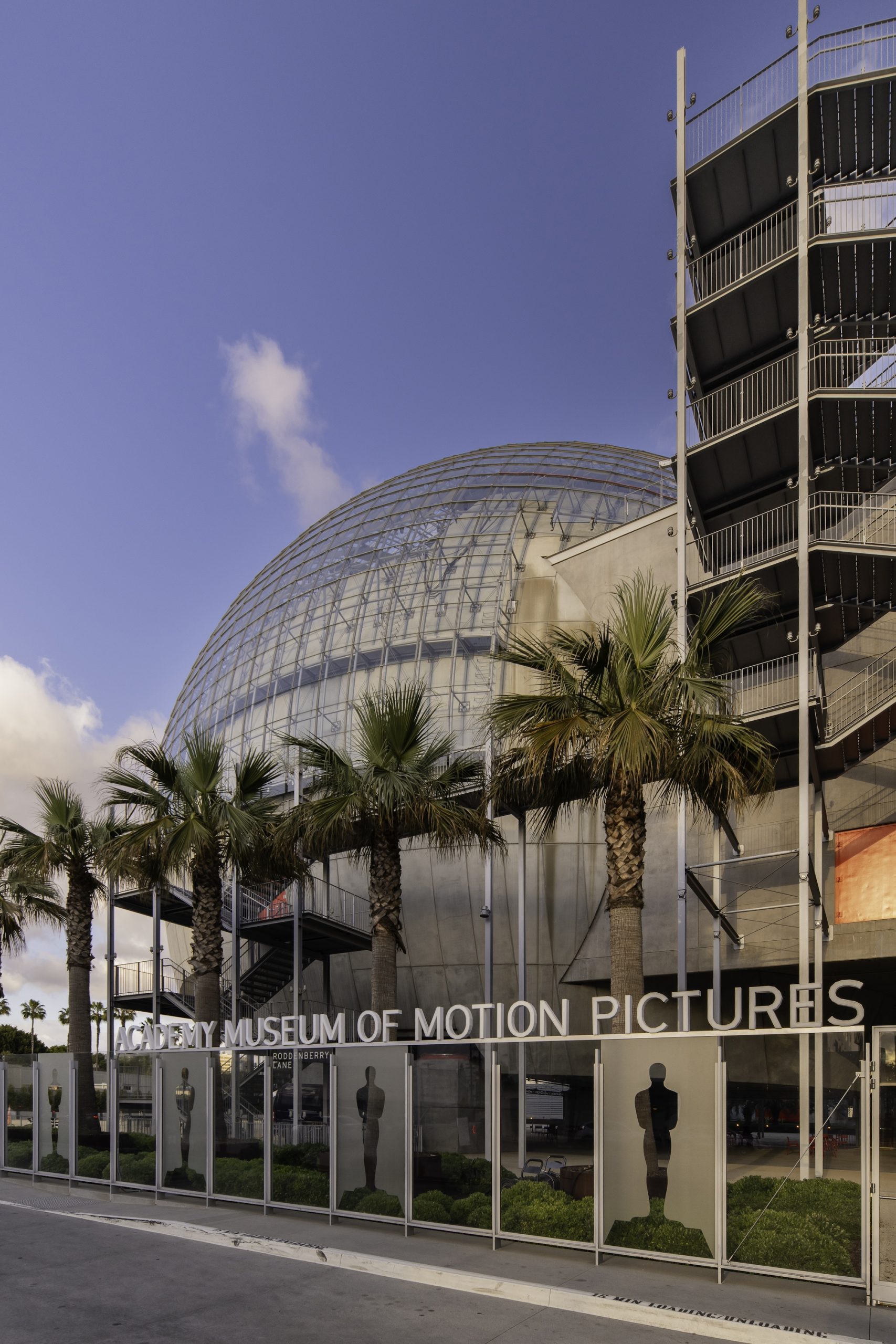
One reason why the artwork proves meme-worthy is its visibility from street level—a feature shared by the new LACMA and Lucas Museum buildings, as well as the Renzo Piano–designed Academy Museum of Motion Pictures, with its sphere-shaped movie-theatre structure that some have compared to a floating bubble, others to the Death Star. (It’s yet another L.A. building perched on plinths.) In contrast to the private residential architecture for which L.A. has long been renowned—homes by the likes of Richard Neutra and A. Quincy Jones tucked away behind gates and hedges—these edifices are prominent enough to be experienced entirely from the window of a passing car.
The new LACMA building can even be encountered on evenings, when the museum is closed. Zumthor has placed its restaurant, café, wine bar, LACMA store, and theatre on the ground level, along with a gallery space—“a sort of fishbowl,” says Govan—that debuts with an installation by hyper-expressive painter Christina Quarles. Also look for a video projection by Diana Thater underneath the bridge and, to the south, Jeff Koons’s ginormous Split-Rocker sculpture, vertical plantings in the shape of a dinosaur mixed with a rocking horse. Govan compares the Koons mongrel to the bronze lions guarding the Art Institute of Chicago.
The city’s new cultural temples also help to expand our vision of Los Angeles through exceptional views. These museums are not just in the business of framing art; they are themselves framing devices for sweeping and sometimes startling glimpses of a city under constant renovation.
In the case of Zumthor’s building, the strangest vistas come from a relatively late addition to the design process. When it became clear that his building would encroach on the fossil-rich tar pits next door, the architect and Govan made the radical decision to narrow its footprint north of Wilshire Boulevard and have it span over the street. The windows along this stretch let you look down at one of the country’s busiest thoroughfares, framing the never-ending flow of Audis, Rivians, and more as a worthwhile and maybe even beautiful sight.
Not to be outdone, the Lucas Museum features 360-degree panoramas from its rooftop garden, which the public might have some access to, as well as tighter views from fourth-floor windows. Notably, some vistas are oriented toward the historically underserved neighbourhoods of South Los Angeles, also known as South Central, which is where artist Lauren Halsey has just completed her Egyptian-inspired sculpture park, “sister dreamer,” featuring nearly 22-foot-tall columns honoring community heroes.
These are not your typical postcard pictures of L.A. Look for new, unapologetically urban images to complement, and maybe complicate, all the rugged sunsets over the Hollywood sign that have come to symbolize the city.
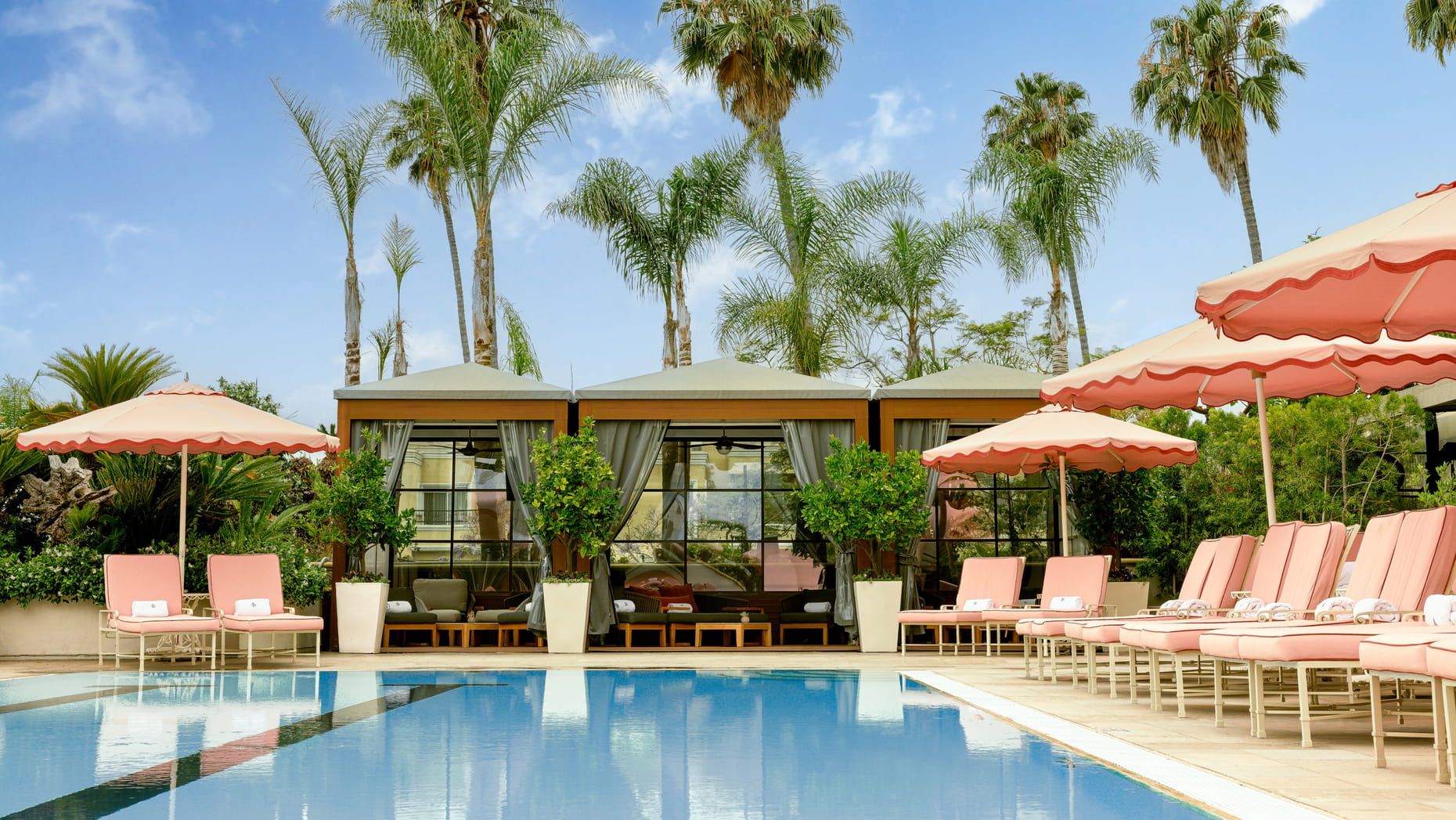
Four Seasons Hotel Los Angeles at Beverly Hills
A sun-filled urban oasis
More like this
longevity Singapore
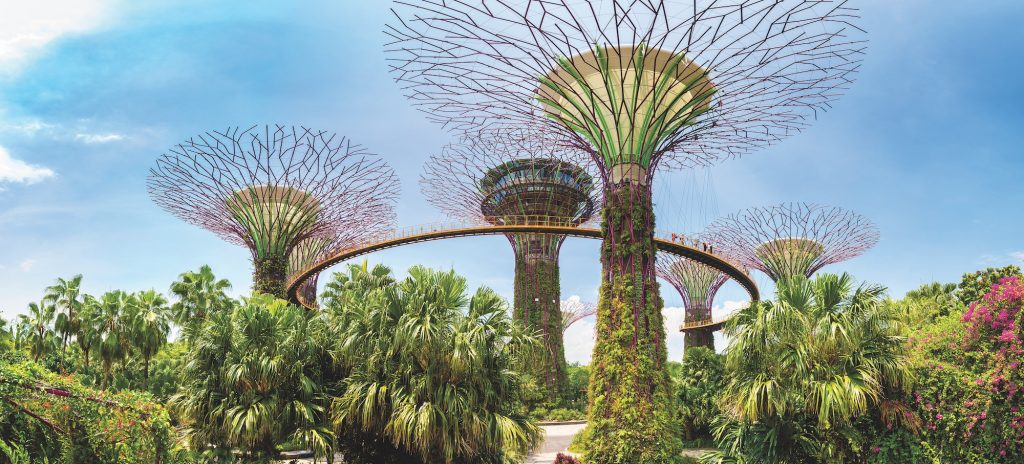
A Longevity Expert’s Guide to Singapore
Andrea Maier, co-founder of Chi Longevity medical clinics, maps out a health-conscious tour of the city-state, from treetop walks to plant-based plates.
hiking outdoors
Sydney, Naturally: 5 Ways to Enjoy the Outdoors in Australia’s Largest City
Here are the top must-visit destinations when exploring in and around Sydney.
Trending
-
Out of This World
Two spaceship-like destination museums are making Los Angeles a primary pilgrimage site for art and design lovers this year.
-
9 Family Vacations Recommended by Moms
Discover tips for family travel in destinations around the world from mothers who know travel, from Orlando to Hong Kong.
-
Rare Trade: Meet 4 People Searching the World for the Exceptional
Discover the rarest of the rare, from elusive ingredients to adventures with icebergs.