with
Learn more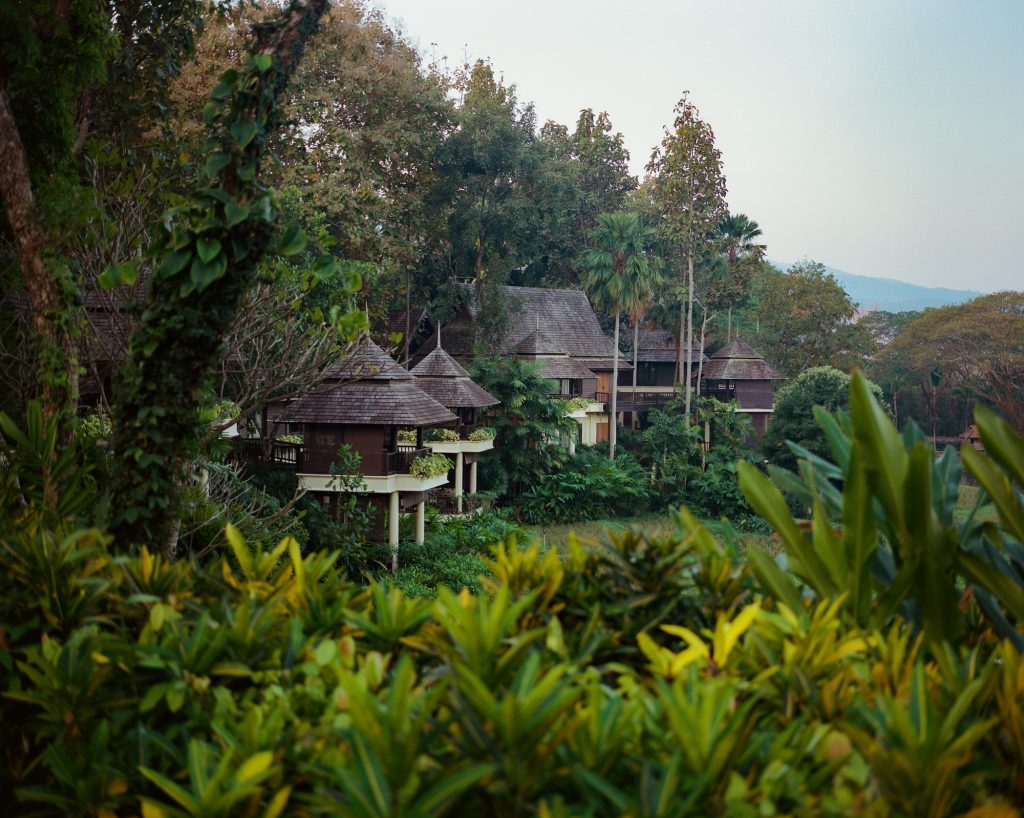
Thai Tranquility
Once dismissed by Western medicine, Thailand’s centuries-old tradition of healing finds full flower across the country, with distinctive treatments that restore energy and bring balance through movement.
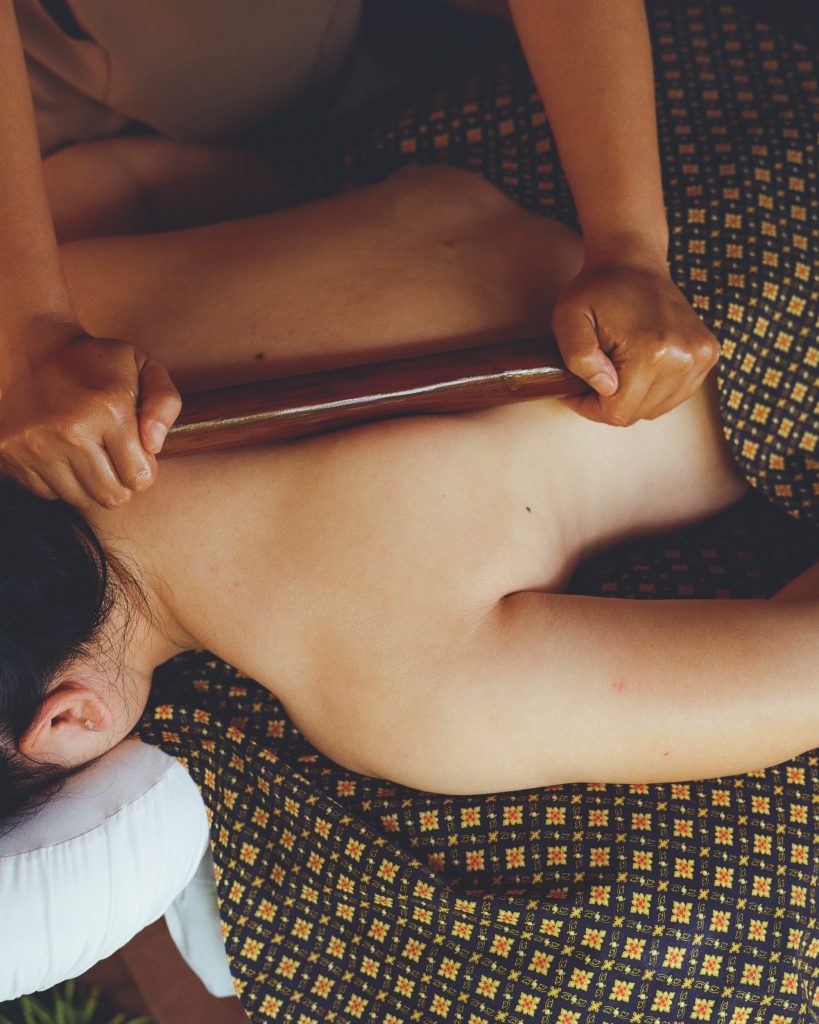
With a short and steady sweep, the therapist pushed the bamboo stick over my calves like a rolling pin working a lump of roti dough on a food cart’s counter. The scents of ginger and jasmine hung thick in the air. With every roll of the bamboo stick, I could feel the tension in my muscles loosen. When the therapist switched from the stick to her hands, she found my sore spots quickly, pressing her thumbs into tendons with pinpoint precision. The soft pling-plong tune of a wooden ranat ek, a traditional Thai xylophone, seeped from the speakers, droning in my head like a meditative hymn.
I was lying face down on a padded table inside the Urban Wellness Centre at Four Seasons Hotel Bangkok at Chao Phraya River, a dimly lit cocoon of dark woods and soft linens that feels worlds away from the city’s unending buzz. But the therapist’s routine, one of unfaltering kneads and gentle stretches, is a well-honed choreography I’ve encountered all over the country.
There are few cultures as synonymous with wellness as Thailand’s. Walk down any Bangkok soi (alleyway) or up any southern Thai beach road and the offerings are hard to miss: Foot-reflexology chairs line up on the pavement, and laminated menus advertise herbal compresses, Tiger Balm massages, and scrubs made with coconut oil and tamarind.
That ubiquity has deep roots. From its early beginning as a scattering of kingdoms to its growth into a multiethnic Southeast Asian powerhouse, Thailand has always sat at a cultural crossroads, and its wellness practices absorbed ideas as they passed through. Ayurvedic concepts of holistic health and inner energy pathways blew over from India, while Chinese migrants brought along acupressure techniques and herbal knowledge. Buddhism and indigenous animistic wisdom shaped spiritual beliefs and mental-health approaches. Over time, these influences fused into Thai Traditional Medicine (TTM), which still forms the foundation of Thai spa menus today.
“Wellness has long been part of everyday life here,” says Kotchaphan Mekloy, director of spa at Four Seasons Resort Koh Samui, a secluded, all-villa beach retreat on the palm-pinned northwestern tip of Thailand’s Koh Samui island. “It reflects the way Thai people have always lived, in close connection with nature and their community. Growing up, many families relied on home remedies passed down through generations. Our grandparents would warm herbal compresses of lemongrass and camphor to relieve muscle aches or drink infusions of pandan and galangal to boost immunity.”
But TTM’s fortunes weren’t always so rosy. As Western medicine gained ground in the 20th century, traditional Thai practices were increasingly dismissed as inadequate. Much of the ancient knowledge survived solely in homes and temples. It was only with the opening of Thailand’s first official school of Traditional Thai Medicine in Bangkok’s Wat Pho temple (home to Bangkok’s postcard-famous Reclining Buddha) in 1955 that TTM slowly reclaimed its stake in the modern healthcare system. Today, herbal remedies and massage therapies are taught and practised alongside modern medicine, and just last year, state hospitals began swapping select synthetic drugs for local herbal alternatives.
Stretch and Fold
Traditional Thai massage, or nuad phaen boran (ancient-style massage) as it’s locally known, is Thailand’s most emblematic wellness export. From marble-clad hotel spas to breezy bamboo salas on the beach, this stretch-heavy technique is so deeply embedded in the country’s spa culture that UNESCO added it to its Intangible Cultural Heritage list in 2019.
The recognition may be recent; the practice itself, with roots in Indian yoga and Chinese acupressure, is anything but. According to legend, Shivago Komarpaj, the northern Indian doctor who is said to have healed Buddha himself, laid the foundation for these yoga-like techniques some 2,500 years ago. References to massage therapies also appear in 13th-century stone inscriptions dating to the Sukhothai kingdom, the former capital of the Thai empire. A French ambassador to the kingdom wrote down his observations of “sick persons’ bodies being stretched and trampled under experts’ feet” back in the 17th century. Formal institutionalization came much later, with the launch of a Thai massage course at Wat Pho’s Traditional Thai Medicine School, which helped standardize techniques and train generations of massage therapists who would eventually carry the practice to almost every corner of the globe.
For guests accustomed to oil massages, the experience can come as a surprise. There’s no oil, for starters. Instead, guests change into loose-fitting pajamas and lie down on a padded floor mat rather than a raised massage table. The therapist works along sen lines (energy pathways), folding limbs into deep stretches, kneading muscles with elbows and forearms, and sometimes even using their body weight by stepping onto guests’ backs.
“It’s like yoga without doing the work,” says Mekloy. “A session should leave you feeling lighter and balanced. I often tell guests: ‘If you want to relax, choose an oil massage; but if you want to reenergize, try the traditional Thai massage.’ ”
Herbal Healing
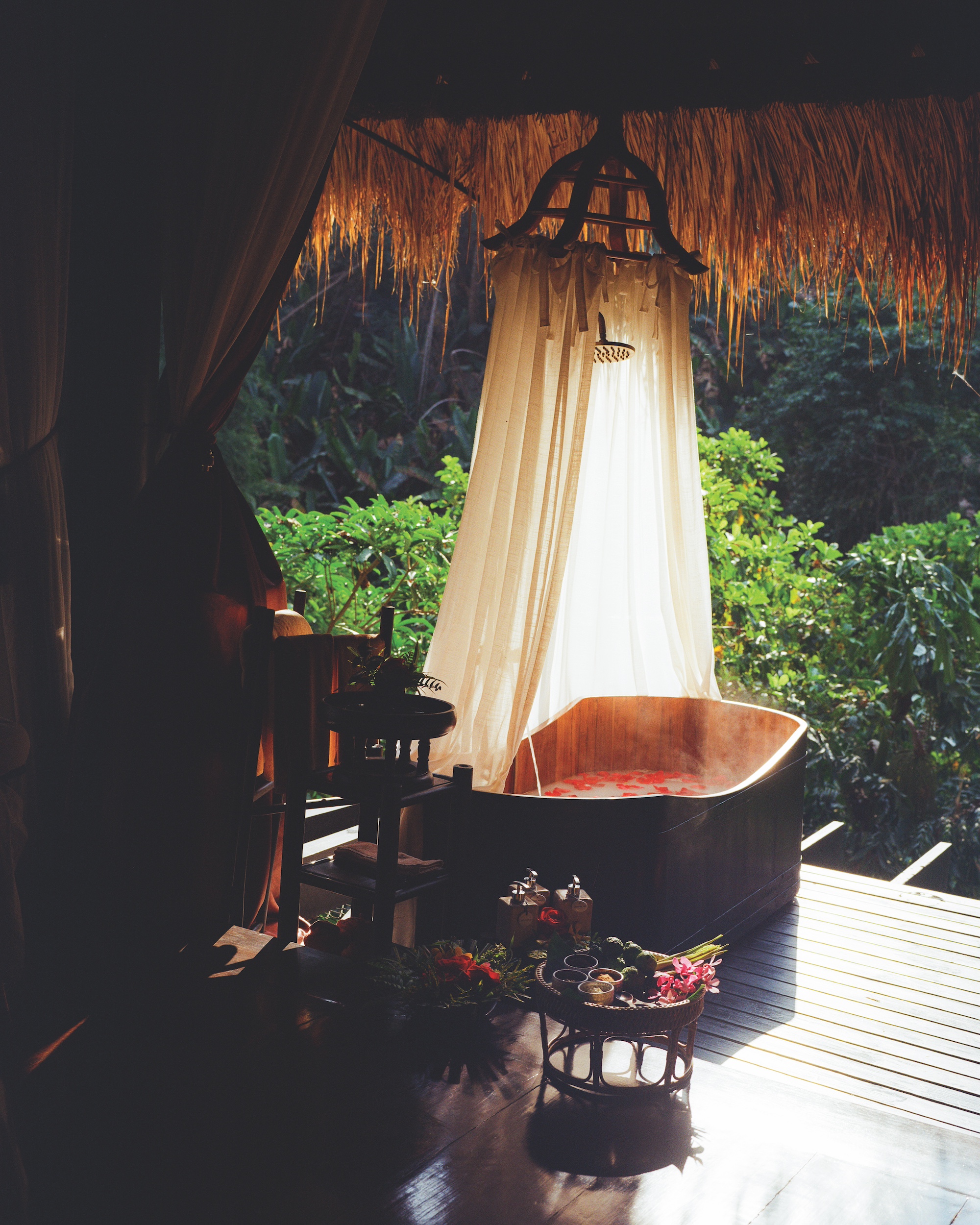
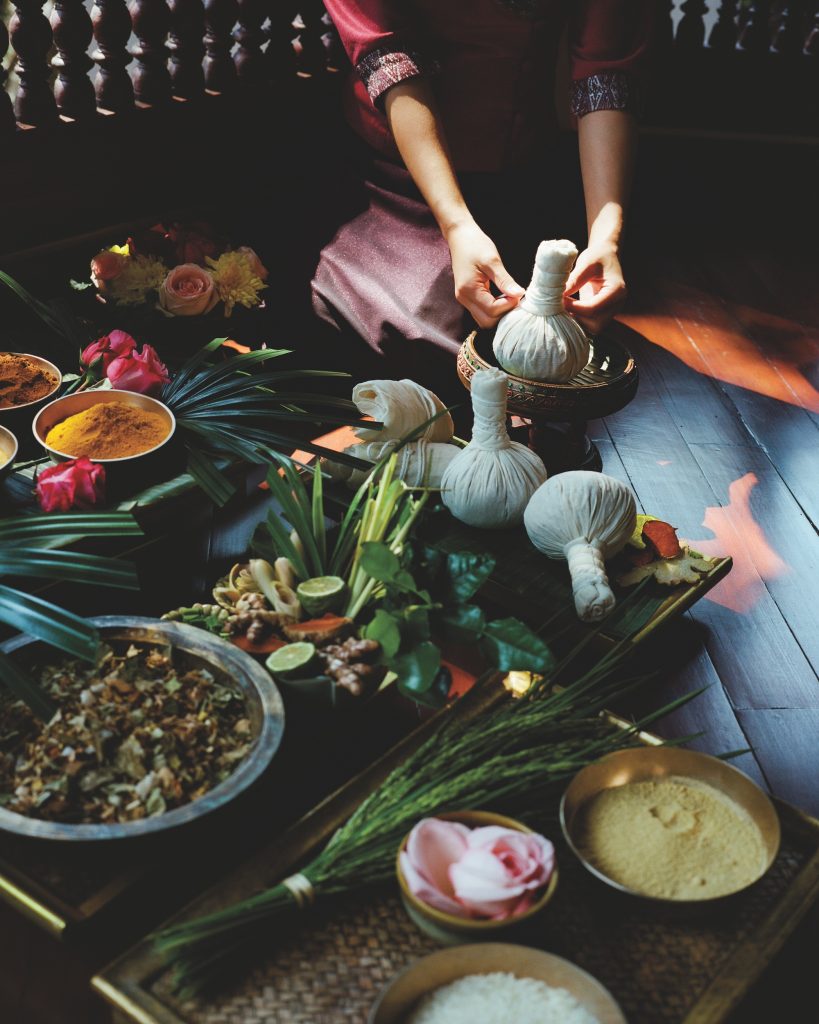
If Thai wellness had a signature scent, it would be a blend of lemongrass, turmeric, and kaffir lime. These familiar notes are released when an herbal compress, or luk pra kob, is steamed and pressed onto the body, coating the skin in a dewy, citrusy warmth that relaxes muscles and melts away anxiety and stress.
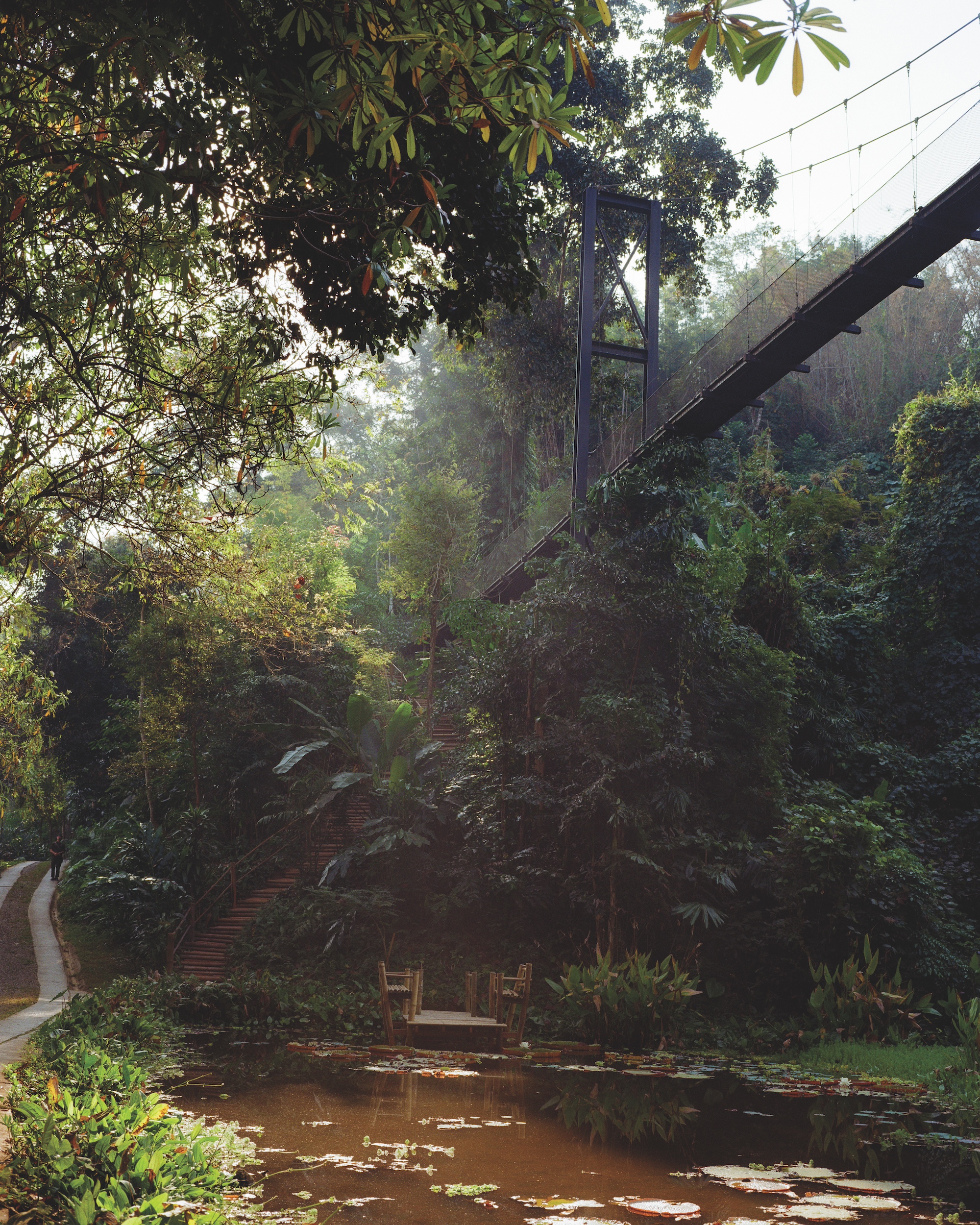
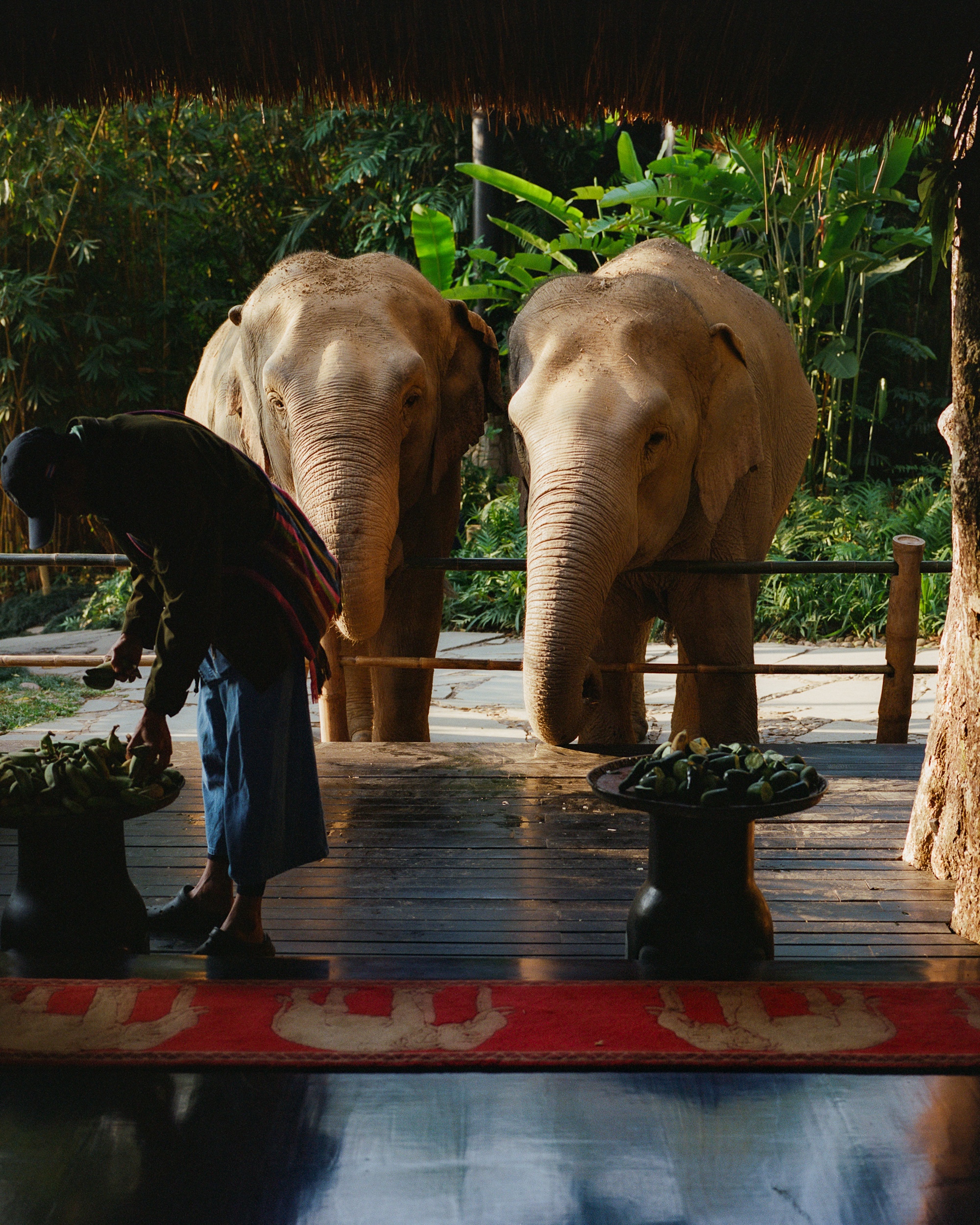
Herbs have long played an important role in Thai healing. Roots, leaves, and peels were staples in village kitchens, where they were turned into poultices for aching muscles, balms to soothe inflamed skin, and infusions to restore appetite. “Many Thai herbs are anti-inflammatory: When they’re combined with heat and pressure, they help relieve muscle tension, improve blood circulation, and reduce swelling,” says Jutatip Sakulpanitcharoen, spa supervisor at Four Seasons Tented Camp Golden Triangle, which features 15 luxury tented accommodations set in the mountainous, elephant-populated far north of Thailand.
Luk pra kob treatments harness the herbs’ healing properties in tight, cloth-bound bundles, which are steam-warmed until pleasantly hot, then pressed across the body in slow movements. The heat opens the pores, allowing the active compounds to sink in more effectively, while the pressure boosts circulation. Herbal blends vary depending on the desired outcome: Turmeric fights inflammation and supports joint health, while plai, a close relative of ginger, is prized for easing muscle pain and swelling. At Four Seasons Resort Koh Samui, poultices with grated coconut help revive sun-damaged skin.
The scent, too, works wonders. “Certain aromas can relax the mind,” Sakulpanitcharoen says, explaining that dried pandanus, locally grown and unique to the Golden Triangle’s spa menu, helps release stress, while whiffs of camphor and bergamot can clear nasal congestion.
Kicking It Up
Muay Thai, or Thai boxing, may not belong to the Thai medicine kit in the traditional sense, but its benefits reach well beyond toned muscles and sharpened reflexes. Conceived more than a millennium ago as a battlefield combat between warring tribes, it has gradually earned its place in Thailand’s wider wellness landscape, sitting easily alongside body scrubs and Thai massages on treatment menus.
“Muay Thai is an excellent holistic workout,” says Somchai Homyok, a former professional fighter who coaches guests at Four Seasons Hotel Bangkok at Chao Phraya River, a resort-like urban oasis with sprawling swimming pools and rooms draped in creamy linens. “It engages the entire body, especially the cardiovascular system. But more than that, it requires absolute presence. You can’t throw a proper kick while thinking about your inbox.”
Known as the art of eight limbs (a nod to the use of fists, elbows, knees, and shins), Muay Thai evolved from military training into a spectator sport during the Ayutthaya era (1351 to 1767), when royal tournaments and matches at local festivals drew large crowds. Dedicated stadiums, such as Bangkok’s Rajadamnern Stadium, popped up all over Thailand after World War II, kick-starting a global popularity that still endures today.
Take away the spectacle, however, and the sport becomes, as Homyok puts it, “a form of active meditation.” Sessions typically begin with the wai khru, a deeply spiritual dance of respect to the opponent, before continuing with structured rounds that prioritize balance, timing, and technique. “While it may appear aggressive from the outside, a well-guided session focuses on proper biomechanics,” Homyok says. “It’s energizing, but it also clears the mental clutter.”
Mind Over Matter
Whether it’s a Muay Thai workout or traditional massage, sati (mindfulness) is a thread woven into almost every Thai wellness repertoire. It lingers in the stillness after a session or the therapist’s instructions to “take a deep breath” before they start stretching.
“Meditation and mindfulness are at the core of Thai wellness. They’re traditionally rooted in Buddhist practice and were used to cultivate inner calm, mental clarity, and spiritual balance,” says Dheeraj Singh Patwal, health and wellness manager at Four Seasons Resort Chiang Mai, where teak-wood buildings inspired by northern Thailand’s Lanna heritage are set amid bamboo forests and rice paddies.
In Thailand, these practices are more inclusive than ever. Temples such as Bangkok’s Wat Mahathat Yuwarat Rangsarit and Wat Suan Dok and Wat Umong in Chiang Mai have evolved into meditation centres where everyone, Buddhist or not, is welcome to give mindfulness a try.
At Four Seasons Resort Chiang Mai, Patwal brings a similar spirit of openness into the spa’s wellness programming. He organizes chats with monks from the nearby Wat Pa Dara Phirom temple, where guests take part in incense offerings, listen to chants, and discuss Buddhist teachings about the purpose of life before drifting off in a guided meditation.
For those who prefer something more physical, there are sunrise yoga sessions overlooking the resort’s rice fields, as well as guided pranayama breathwork workshops designed to calm the nervous system and release emotional tension. “It doesn’t have to be a rigorous spiritual undertaking,” Patwal says. “Even a short experience can spark insight, a new way of noticing emotions or a deeper awareness of the body. It’s about carrying a small but lasting bit of peace and presence back home.”
More like this
amman Athens
World Class
Ace the family trip. Here’s our select global guide to places where textbook lessons come to life.
bars bogota
Zero Proof, Full Flavour
Across the globe, inspired tastes—not alcohol—are driving a reimagining of what it means to drink well.
Trending
-
Thai Tranquility
Once dismissed by Western medicine, Thailand’s centuries-old tradition of healing finds full flower across the country, with distinctive treatments that restore energy and bring balance through movement.
-
Bring The Four Seasons
Experience HomeRest peacefully on the world’s most comfortable mattress.
-
Opinion: In Defence of Luck
In the success equation, luck plays an important role.