with
Learn more
Delicious in Dubai
The city is staking its claim as one of the world’s most exciting dining destinations as chefs champion local ingredients while channelling cosmopolitan influences.
I’m sitting in a dark and dramatic dining room at just-opened Kraken, one of Dubai’s hottest new restaurants, surrounded by black walls, cave-like textures, and a mirrored water-effect ceiling that gives the illusion of being under the sea. It’s the kind of place an actual kraken, that sea creature of Norse lore, might make its lair if it found itself transported to the Middle East. Dining here is an adventure from the moment restaurant manager Mohamed Gamal, dressed in a chic marine-style uniform, greets me and cheerfully announces he’ll be my captain for the night.
The culinary action unfolds in a large open kitchen where fish skeletons hang next to a wood-fired grill. My dinner begins with shrimp chicharron crisps standing upright in a bed of dried black beans. They look like kelp rising from the ocean floor and are accompanied by labneh—dusted with loomi (dried lime powder)—for dipping. Next comes a yellowtail-tuna pizza served on a meringue base. It looks and sounds weird, like a fishy pavlova, and I hesitate before taking a bite. But the base has none of the cloying sweetness or stickiness I’d expected and instead presents a brilliant balance of rich and spicy flavours with crunchy and chewy textures. Strange, yes, but also strangely moreish.
An oyster follows, served with grass-green jalapeño granita, tiny balls of pickled cucumber, little dollops of sour cream, and delicate fronds of fresh dill. It’s sweet, sour, and briny at the same time, an explosive combination that pleases and surprises the palate. But what’s most surprising of all is that everything in the dish has been sourced locally. The oyster is from Dibba Bay, a farm off the coast of Fujairah established a decade ago by a pioneering Scot who surmised that a nation famed for its pearl oysters should also be able to produce edible ones. He was right. Everything else in the dish is grown on farms around the United Arab Emirates.
A few years ago, this would have been practically unthinkable. “We consider ourselves the most ‘locavore’ restaurant in Dubai,” says Grégoire Berger, chef and founder of Kraken. When he first arrived in Dubai in 2013, local sourcing was limited and inconsistent. “Today, fishermen, farmers, and producers have raised their standards tremendously,” he says.
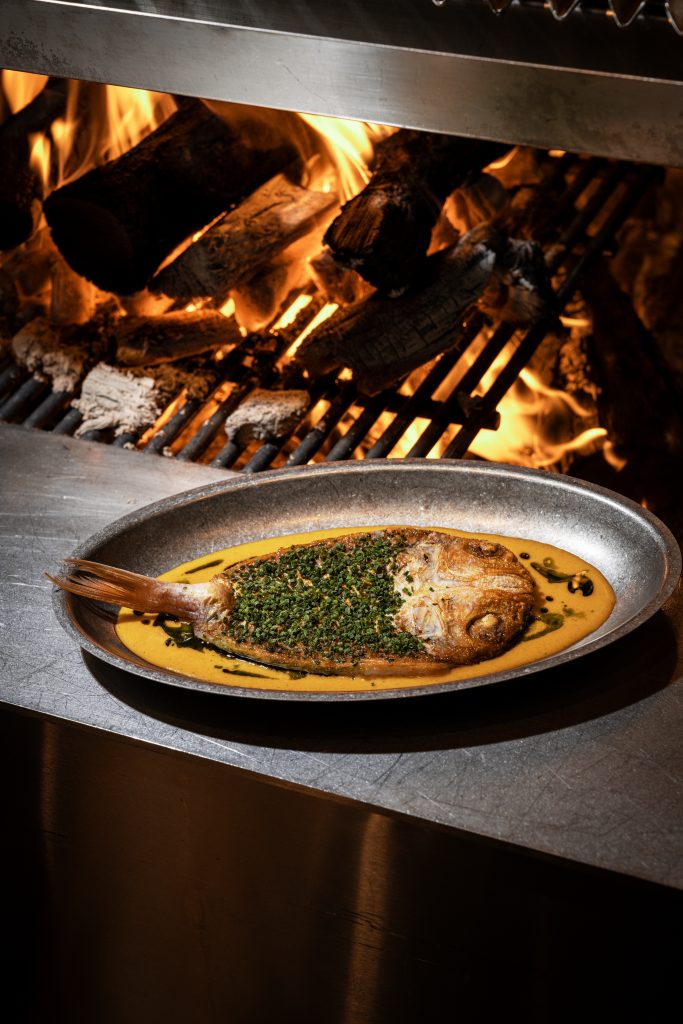
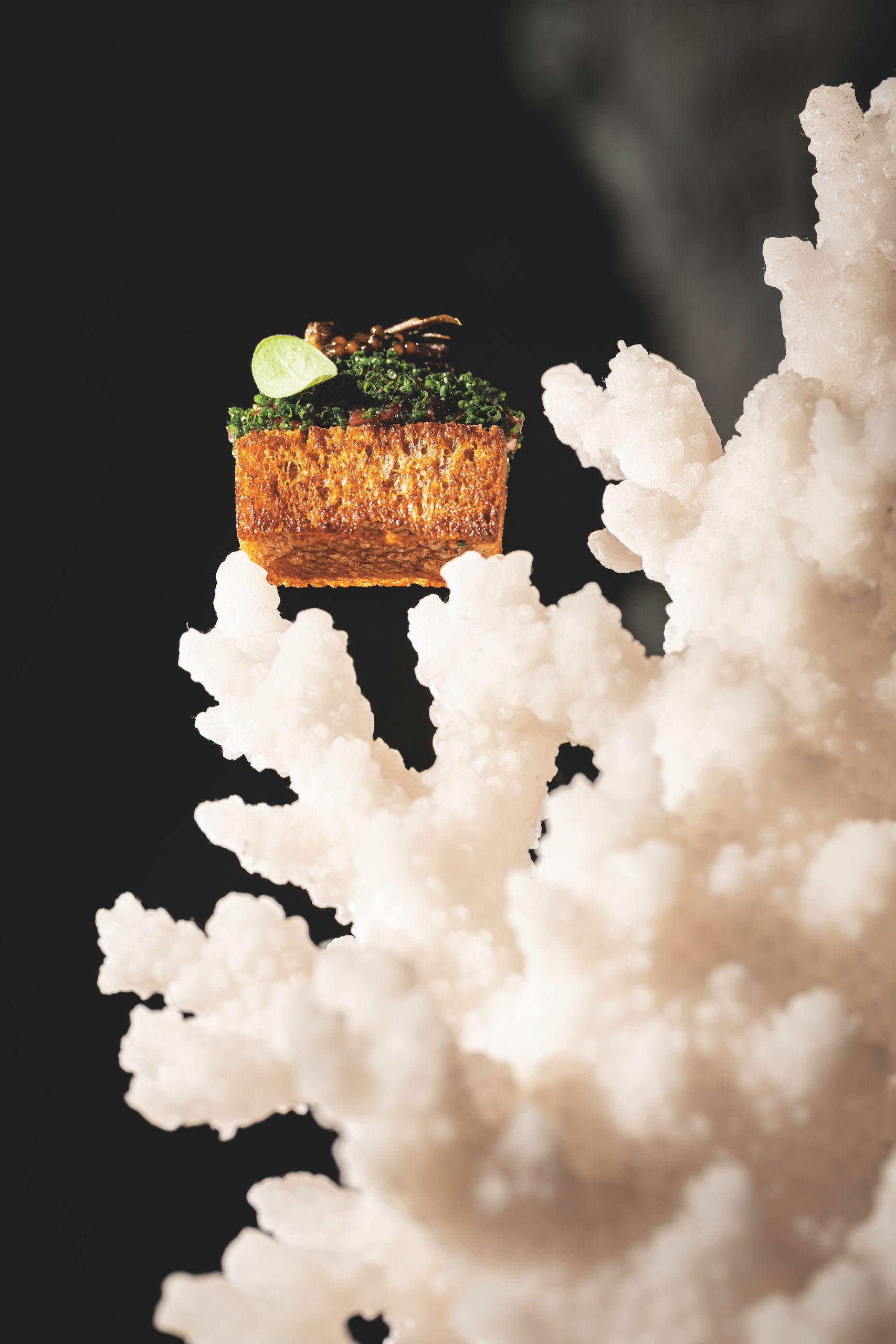
Before opening the restaurant, Berger and his team spent six months exploring the bounty of the land and sea across the United Arab Emirates. “Prior to this exploration, we wouldn’t have considered using UAE-caught fish. We now realize that the problem wasn’t the quality of the product, but the way it was treated,” he explains. The menu at Kraken features hamour, kingfish, tuna, and clams sourced from the waters around the emirates and neighbouring Oman, as well as local honey, dates, desert herbs, and vegetables. The Kraken team have set an ambitious future target of sourcing 99 percent of ingredients locally. “These products carry identity and place,” Berger says.
As a desert nation, Dubai has long, hot summer months that are not typically conducive to farming. This was once a land of seminomadic tribes who led harsh lives and made do with limited local resources—dates, camel milk, meat from grazing herds—and items that came by sea via traders.
Fast-forward just a few decades and the discovery of oil catapulted the emirate into the future, laying the foundation for the dazzling, international metropolis that rises today like a mirage from the sands. Since the beginning of the millennium, Dubai’s urban, cultural, and culinary evolutions have taken place at breakneck pace. But the high-end dining scene was, until fairly recently, largely limited to outposts of big-name restaurants with ingredients flown in from around the world. It was a safe formula that provided consistent quality and predictability, but it wasn’t going to set any taste buds ablaze with innovation or creativity that spoke to a sense of place. For a time, it felt as if every dish in town was smothered in gold leaf and truffle oil, Instagrammable clouds of dry ice floated around everything from sushi to cocktails, and tuna tartare, burrata salad, and chocolate fondant were staples on practically every menu. It’s a recipe that still works for some restaurants appealing to an audience in search of the blingy Dubai lifestyle, but the past decade has seen a complete transformation.
The birth of a homegrown, modern Dubai style of cooking has perhaps been the most exciting thing to emerge. This is cuisine that’s reflective of the people who have chosen to make Dubai home, whether they were born here, raised here, or arrived later in life. It combines influences of the emirate’s multiculturality with elements brought from the places of origin and the frequent travels of this particularly peripatetic community.
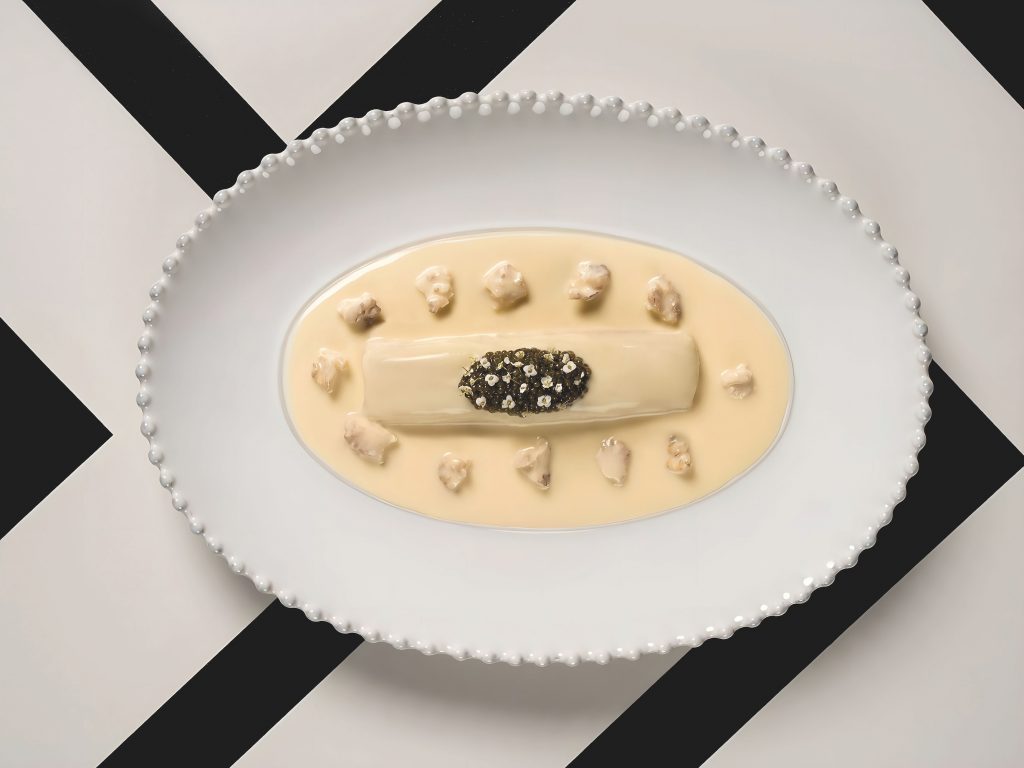
When Syrian chef Mohamad Orfali opened Orfali Bros Bistro in 2021 with his brothers Wassim and Omar, it felt as if the Dubai dining scene was shifting. “From the very beginning, we wanted to redefine what a Middle Eastern restaurant could be,” he says. “We wanted to take our roots and blend them with Dubai influences, breaking the stereotypes of traditional restaurants that belong to big chains or franchises. The goal was to create dishes that reflect our personal experiences, emotions, and memories, all while staying true to the essence of quality and craftsmanship.” That philosophy translated into dishes like spicy bulgur-wheat salad with Aleppo chili paste and shiso leaves, and Wagyu striploin with sour cherry, pine nuts, and cinnamon.
It was a recipe for success—a restaurant that was relying not on novelties or food trends to draw the crowds but instead on creating cuisine that came from the heart. It earned the Orfali brothers a Michelin star and the top spot on the Middle East and North Africa’s 50 Best Restaurants list, as well as tables booked up far in advance.
Since then, they have opened Three Bros, a more casual spot where lunch and dinner feature a succession of bold dishes like thinly sliced ōtoro with tuna garum, olive oil, and finger lime, and a tiny in size but huge in flavour chawanmushi (egg custard) with morel, shaved black truffle, and crunchy hazelnut. The nonalcoholic cocktails are works of art. The limetta olio is unmissable, an unctuous blend of fermented white grapes and olive oil, resulting in a drink that’s part martini, part sour, and entirely delicious. And the playful take on the PB&J sandwich—a perfectly formed triangle of sponge cake, peanut butter, and raspberry jelly that matches the restaurant’s ruby-red walls—makes for a fittingly fun finish in a restaurant that doesn’t take itself too seriously.
It’s not just Dubai’s restaurants that are homegrown. Across the emirate, an increasing number of spots are placing a focus on ingredients that are raised and sourced locally. In recent years, a combination of shifting trends, pioneering agricultural technology, experimentation, exploration, and sheer hard work by a passionate community of food lovers has made huge changes to the United Arab Emirates’ scene. Innovations such as water-saving vertical farming and A.I.-powered controlled-environment agriculture are extending the growing season beyond the more temperate winter months. Small-scale farms are producing niche ingredients like microgreens, edible flowers, and lion’s mane mushrooms.
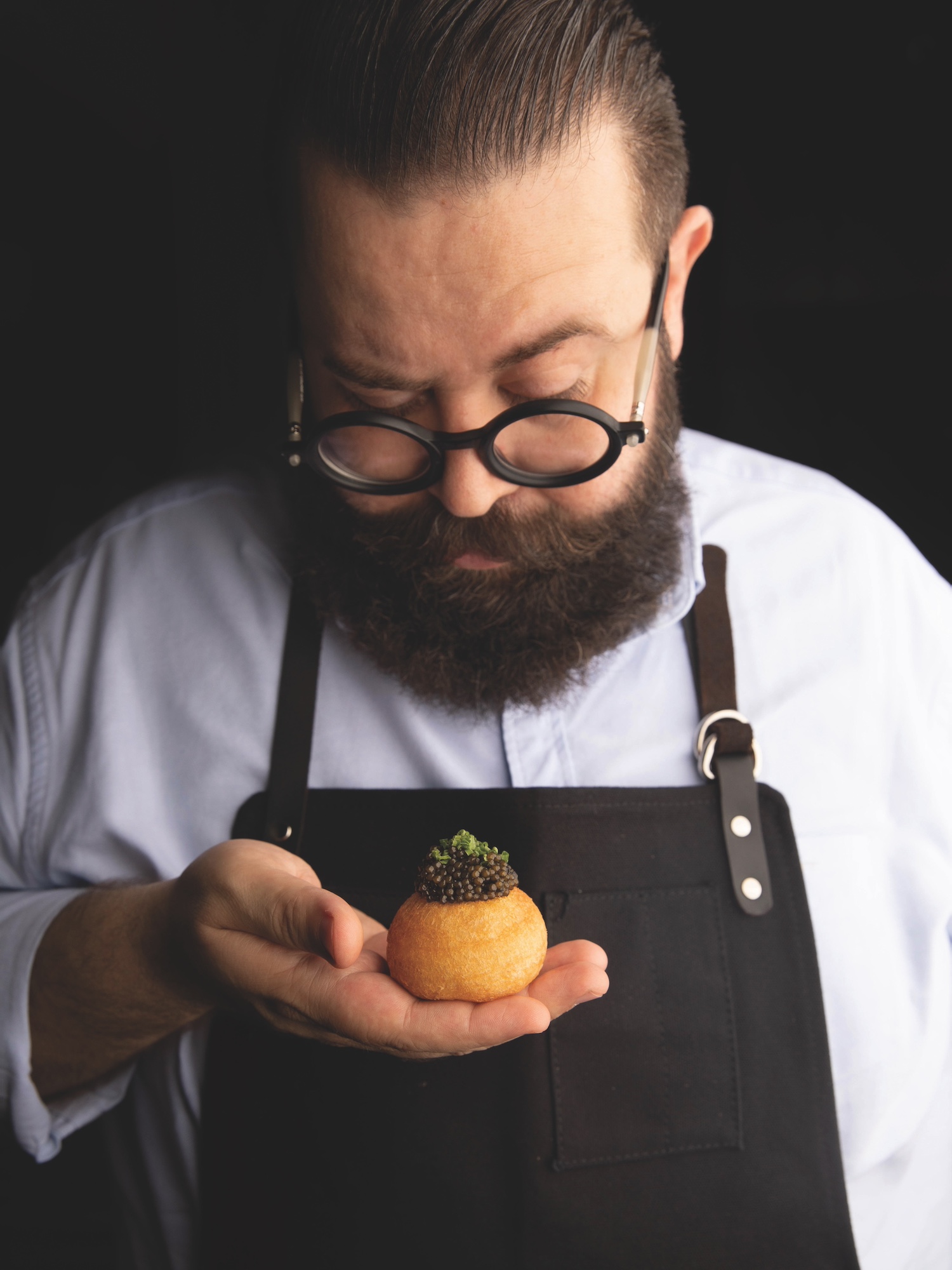
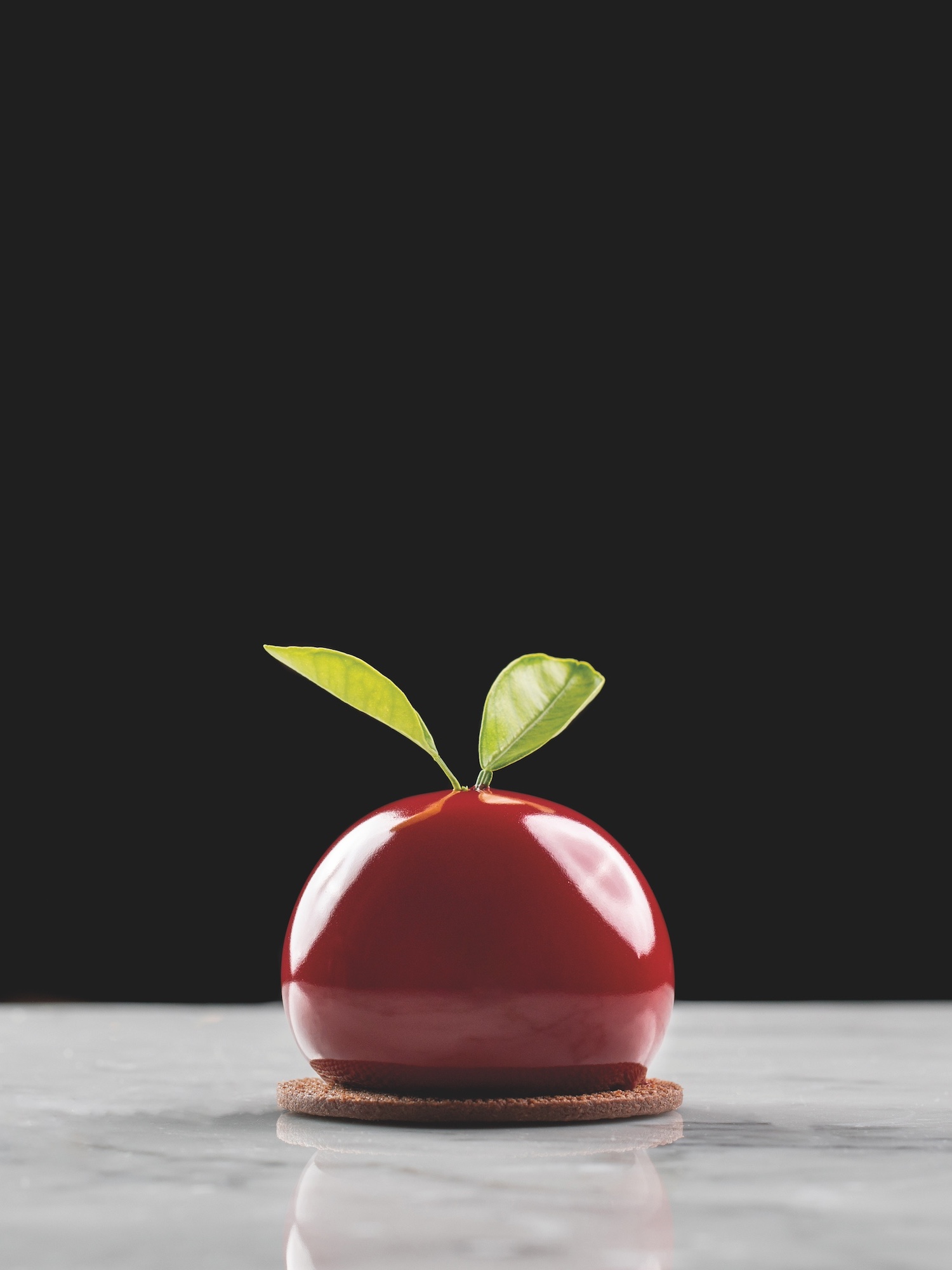
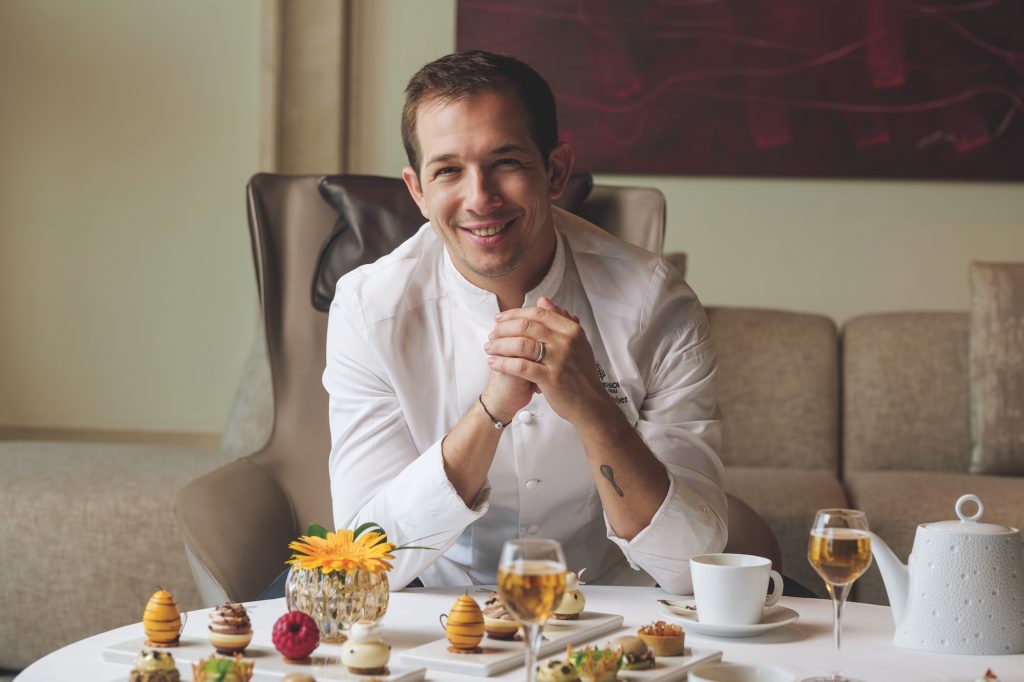
At Four Seasons Resort Dubai at Jumeirah Beach, a lush seaside oasis filled with palm trees and flowering plants, the use of locally sourced produce is rising. For Marcel Finsterer, chef de cuisine at Asian-inspired seafood restaurant Sea Fu, procuring ingredients within the UAE can be challenging, but it’s a pursuit he embraces. “You can find high-end ingredients here, but it’s very seasonal and requires strong relationships with the producers,” he says. “Some products are excellent at certain times of the year and then disappear, and that’s something I actually enjoy working around. It keeps the cooking honest and creative.” Finsterer personally visits each farm he works with—like Pure Harvest Smart Farms, based in the desert in the emirate of Al Ain and known for its exceptional tomatoes, and Mary Anne’s Fresh Produce, a grower of microgreens, herbs, and edible flowers located on the outskirts of Dubai—multiple times a year to understand their challenges and build relationships with the people behind the products, creating connections that he says change how he cooks. Among his favourite local ingredients are fragrant strawberries, mushrooms with a remarkable depth of flavour, and fresh herbs. On the sweet side, Nicolas Lambert, senior executive pastry chef, also sources locally, including honey, dates, citrus, camel milk, and figs grown in the northern emirate of Ras Al Khaimah. “Quality is excellent but highly seasonal, which I see as a strength rather than a limitation,” he says.
Local ingredients are also a priority at the intimate and stylish Four Seasons Hotel Dubai International Financial Centre (DIFC) in the heart of the city’s main business and entertainment district, including at Penrose Lounge’s Earth Afternoon Tea. “We work with Blossom Honey UAE for our golden honey and select seasonal vegetables from the local market,” says the hotel’s executive chef, Rami Nasser, who also sources microgreens, edible flowers, camel milk, and butter within the country. And in a city crowded with Japanese-fusion concepts, the hotel’s new restaurant KIGO stands out for its authenticity, ranking among the best kaiseki meals I’ve ever had. While fish and seafood are flown in from Japan, locally grown carrots find their way onto the menu because they’re sweeter than imported varieties. They’re not just chopped or diced here, though. The KIGO culinary team carves them into exquisitely detailed shapes of gingko, maple leaves, and cranes, subtly referencing the changing seasons.
At neighbouring Boca, a Michelin green-starred restaurant also in DIFC, founder and chief sustainability officer Omar Shihab is researching an ingredient that he hopes may become a game changer. He’s working with Emirates Nature-WWF and the International Center for Biosaline Agriculture to explore the benefits and potential uses of salt-loving salicornia, a native halophyte packed with umami and a crunchy texture that grows naturally along the country’s coasts. Shihab sees it having the potential to become the UAE’s superfood. Commercial cultivation has yet to be developed, although there are pilot farms in the northern emirate of Umm Al Quwain. “We’re demonstrating all the benefits halophytes present from an environmental, conservational, and nutritional standpoint, but also from an economic and entrepreneurial sense,” he says. In the restaurant, Boca’s executive chef Patricia Roig adds salicornia tips to a punchy local kingfish ceviche and to a rich risotto blended with seaweed.
This willingness to work with new products and flavours isn’t new to Dubai. This has long been a cosmopolitan place thanks to its strategic position on ancient trade routes that connected Arabia, Persia, Africa, and Asia. Today, more than 200 nationalities reside here, each bringing its own culinary culture with it.
At 12-seater restaurant Moonrise, perched atop Eden House in the Satwa neighbourhood, Dubai-born chef Solemann Haddad creates tasting menus that draw on food from his childhood in the city along with culinary influences from his French mother and Syrian father. He calls it Dubai Cuisine, embodying that easy cosmopolitan mix of cultures that are at home here and that blend with, borrow from, and inspire one another.
Indian cuisine has long had an influence on the food of Dubai, too. This is a city where the most casual hole-in-the-wall cafeterias sit alongside high-end establishments, where you can dine well on cheap and cheerful chaat, dosas, and thalis in small cafés in the Karama neighbourhood or exceptionally well at the world’s only three-Michelin-starred Indian restaurant, Trèsind Studio, on the Palm Jumeirah, where chef Himanshu Saini takes diners on explorations of creative and complex dishes served without the slightest hint of pretension.
But there’s one cuisine that hasn’t featured prominently in Dubai’s restaurants up to now, and Emirati chef Sahar Parham Al Awadhi believes it’s time to change that. “Emirati cuisine has been living within people’s homes for a very long time,” she says. “It’s time to take it outside of that setting and present it in a new way, elevate it, add in techniques and ingredients that didn’t grow here before, and really take it to the next level.” Al Awadhi recently created a menu of desserts and pastries for Gerbou, a new restaurant spotlighting contemporary Emirati cuisine opened in the leafy green Nad Al Sheba neighbourhood, featuring modernized versions of much-loved local desserts such as rengina, a sweet, sticky pudding made from pitted dates, and aseeda, a blend of pumpkin, ghee, and spices. And now she’s getting ready to open her own restaurant, Abra, named after the little wooden boats that have connected the two sides of Dubai Creek for decades. Located within the Etihad Museum on the site where the United Arab Emirates was founded as a nation in 1971, the restaurant will present what Al Awadhi is calling New Emirati Cuisine, with a focus on local sourcing.
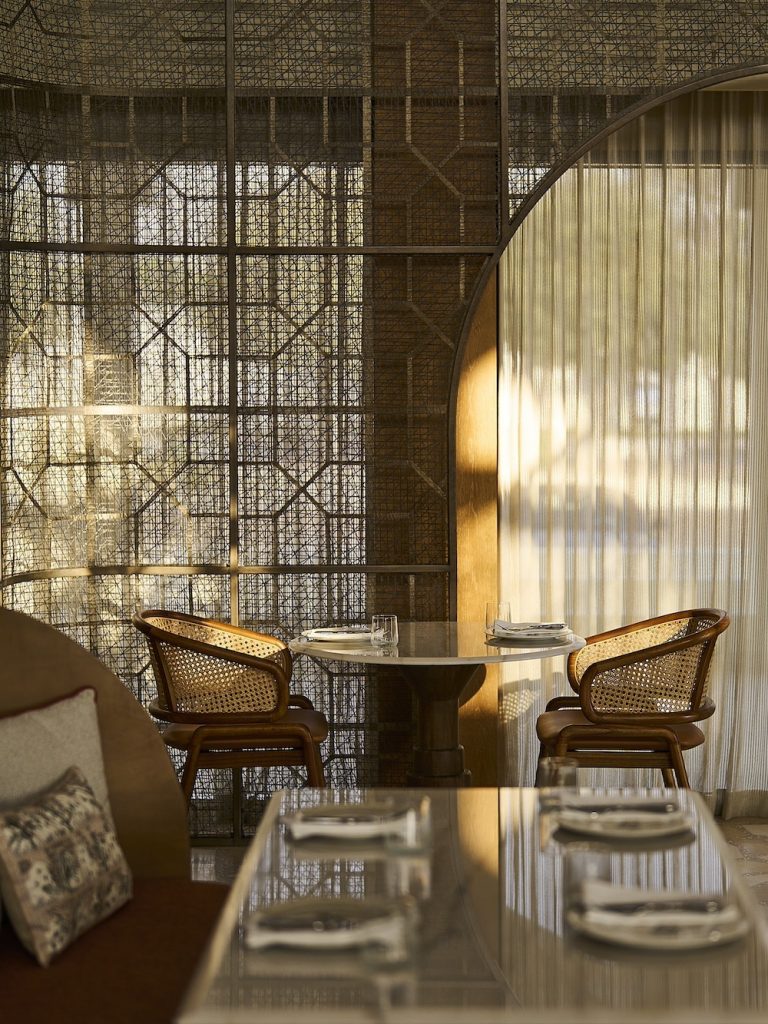
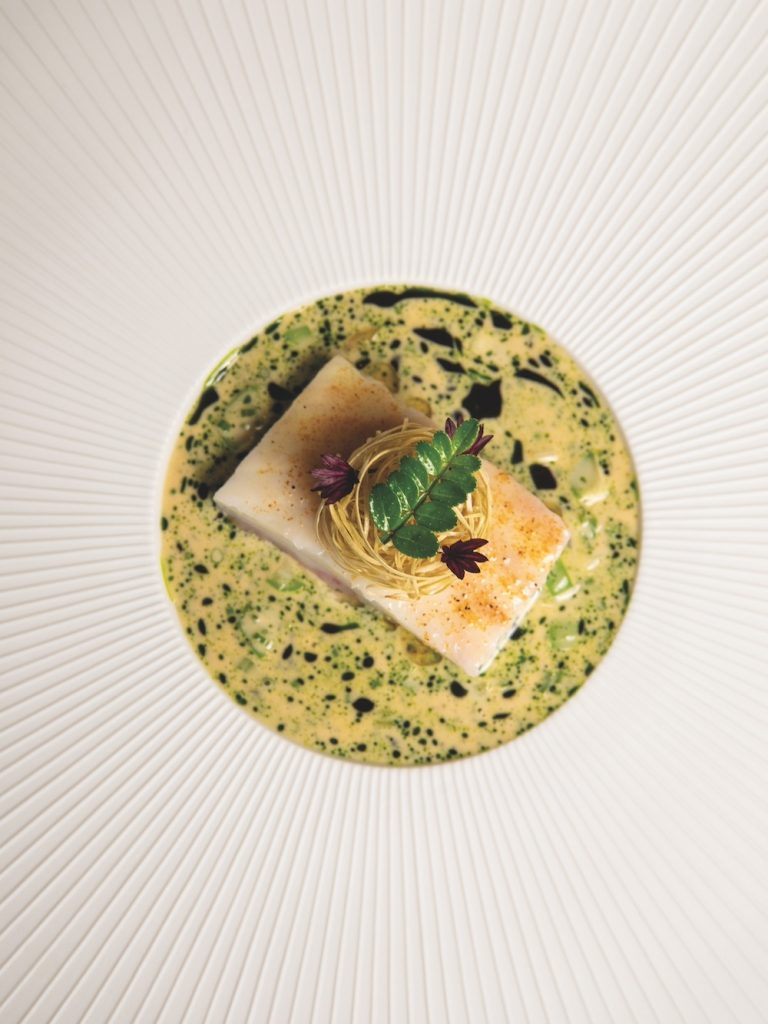
For Al Awadhi, locality doesn’t only mean Emirati-owned businesses: “It’s homegrown, no matter who it is, because there’s a huge community of artists, farmers, and producers who are contributing to growing in the UAE. For us, that’s what New Emirati Cuisine means.” Her menus will aim to use around 80 percent locally sourced ingredients, adapting to seasonality, including chicken, eggs, lamb, and clotted cream.
She will also be enhancing much-loved Emirati dishes with newer ingredients that complement traditional flavours, like lemongrass. “Emirates Bio Farm [an organic farm located an hour by car outside Dubai] has been growing lemongrass for the last couple of years. It’s not an indigenous ingredient, but since it grows here now, it’s become part of our local agriculture.”
Abra’s beverage menu is also firmly rooted in Emirati heritage, taking inspiration from the traditional apothecaries, called attar, in the souqs around Dubai Creek where dried herbs and spices are sold in colourful heaps. “If you’re sick, you go to the attar, explain your problem, and they mix things up for you to make a tea,” Al Awadhi explains. “We’re basing our beverage program on these holistic remedies.”
It’s a novel approach based in antiquity, a way of bringing lesser-known local traditions to the fore in a city that, at least on the surface, seems to be all about the future. Perhaps Dubai is now at an inflection point where it continues marching forward but is carrying its traditions, both cultural and culinary, along with it. “I was born and raised in Dubai, and one of the things that makes it so special is that it never stops growing,” says Al Awadhi. “It feels like we’re experiencing the formation of a city. Being able to be part of that is really special.”
More like this
wine
A Napa Winemaking Family Looks Beyond the Valley
The Caymus founding family are uncovering new pockets of California suited to the wine's signature style.
art dining
Canvases & Cuisines: Seven L.A. Restaurants Where Art Is on the Menu
Discover vibrant art while enjoying exceptional dining at these seven Los Angeles restaurants.
Trending
-
Stepping Out in Style: Three Independent Shoemakers to Know
In Mallorca, Paris, and London, these under-the-radar shoemakers are honouring the art of handmade footwear.
-
9 Family Vacations Recommended by Moms
Discover tips for family travel in destinations around the world from mothers who know travel, from Orlando to Hong Kong.
-
Rare Trade: Meet 4 People Searching the World for the Exceptional
Discover the rarest of the rare, from elusive ingredients to adventures with icebergs.