What I Learned on Safari

Though raised on the South Plains of Texas, where cotton fields are filled with cottontail rabbits and the most dangerous predator is a rattlesnake, I’ve put down roots in Paris, where French waiters and bureaucracy remain my most formidable adversaries. Serengeti National Park couldn’t be further from my routine, but that’s exactly what I craved.
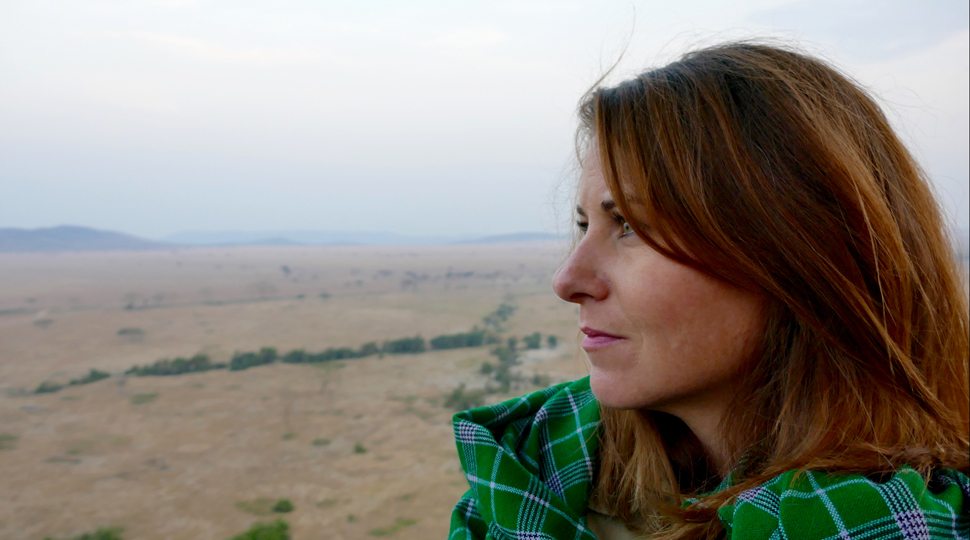
Leah Walker on safari
Africa felt like an exotic dream as I stared out at its Great Plains.

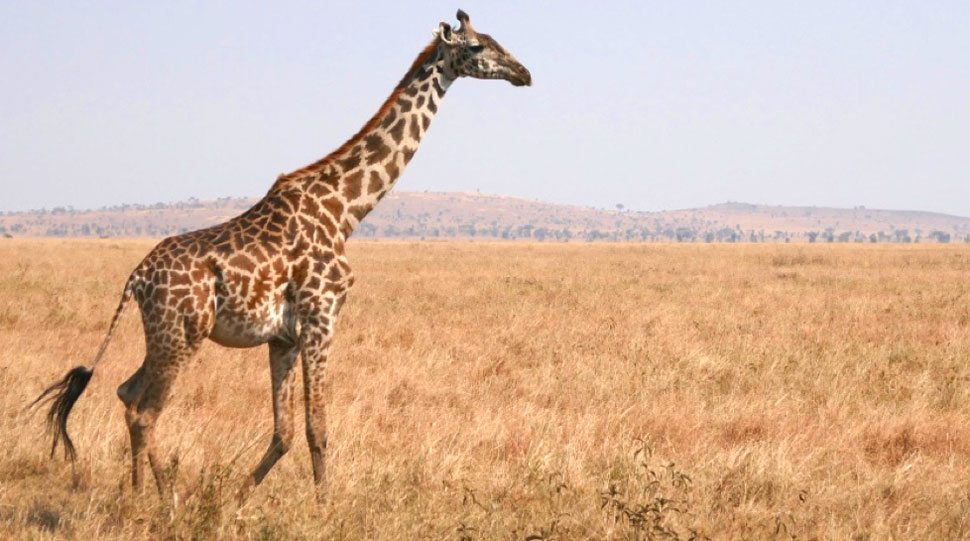
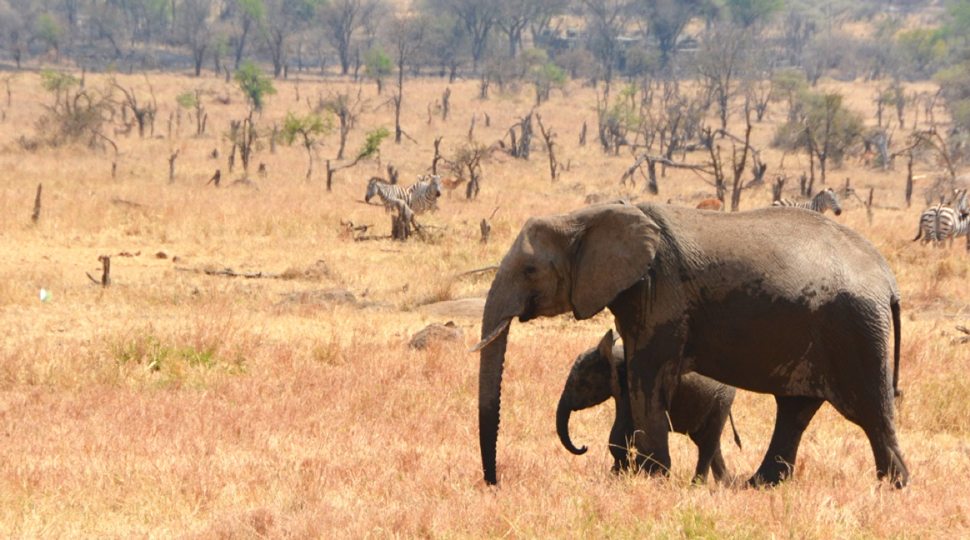
Texas is a world away from Tanzania, but the flight from Kilimanjaro seemed familiar as we passed over the Serengeti’s vast, dry plains. It was August, and I’d arrived during one of the dry periods when the Serengeti is hot, much of the flora is dead or on the verge, and controlled burns light up the night’s onyx horizon, filling the air with a haze reminiscent of an old sepia photo.

Flying in among the clouds, though, Africa still felt like an exotic dream.

The striking of the wheels on the rust-coloured dirt runway jolted me into reality. Eyes wide, I was ready to absorb every experience the Serengeti had to offer.

Jambo! Greeting the locals
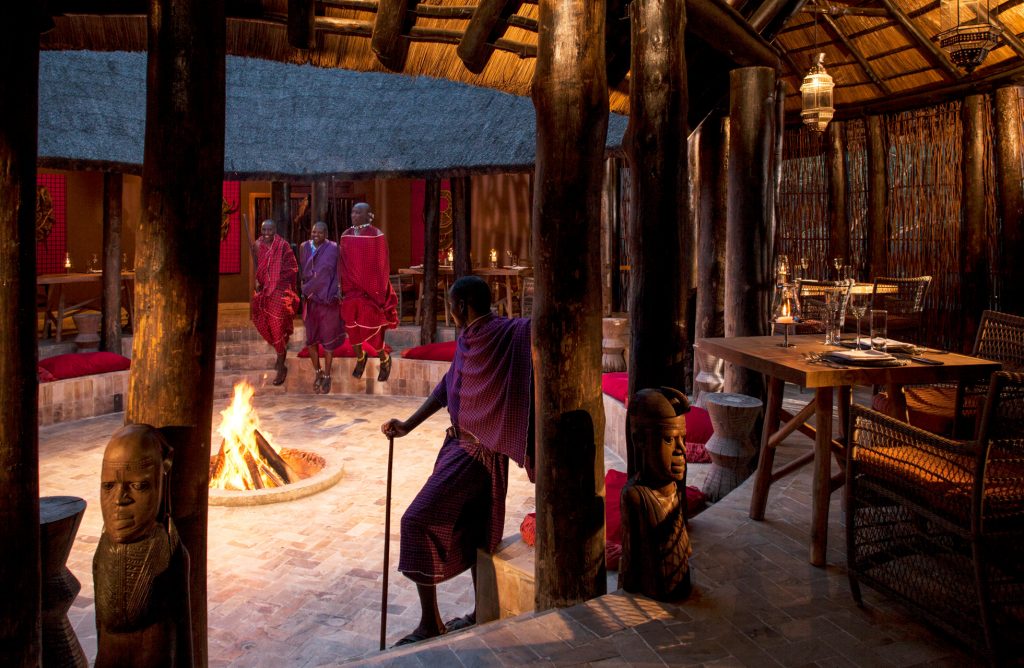
Masai men performing a dance at Boma Grill in Four Seasons Safari Lodge Serengeti. Photograph courtesy of Four Seasons.

My first glimpse of the Maasai came upon arrival to Four Seasons Safari Lodge Serengeti. Visually, I was fascinated with them – men draped in red-and-blue-chequered fabric, wearing shoes made from motorcycle tires, with rows of beaded jewellery on their arms and spears at their sides.

These Maasai, some with earlobes stretched and elaborate scarring on their skin, were the real deal.

They weren’t actors hired to play roles for tourists. These Maasai, some with earlobes stretched and elaborate scarring on their skin, were the real deal.

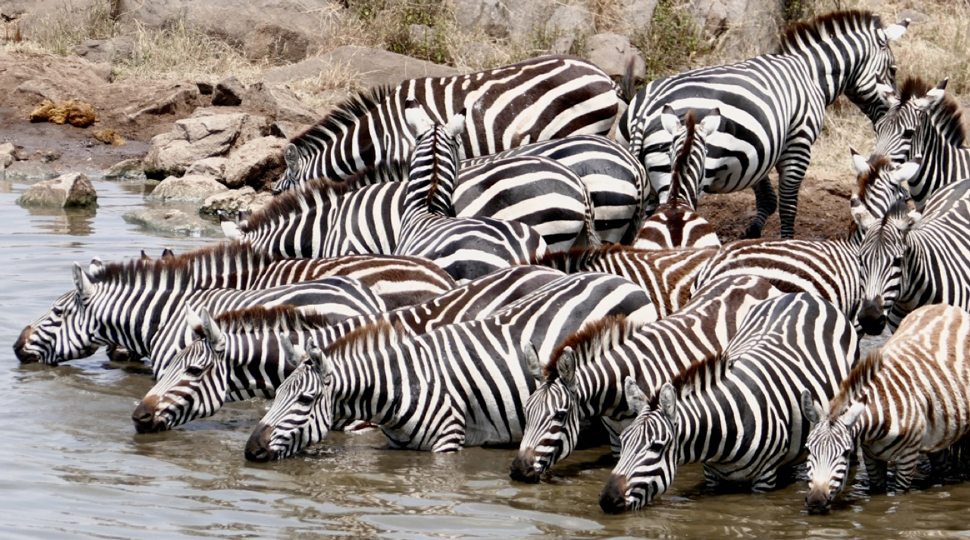
“Jambo!” they said as they took my luggage. This Swahili word for “hello” would be part of my Serengeti soundtrack, along with zebras barking and elephants trumpeting.

Descendants of a nomadic tribe originating in Kenya, the Maasai now graze their livestock in the Ngorongoro Conservation Area. Before they marry, have children and achieve warrior status, Maasai men must go through several rites of passage. This once included lion hunting, when spear and shield separated an aspiring warrior from the Serengeti’s most feared predator. Today, it’s traditions such as the adumu dance that are still observed.

Athletic, rhythmic and symbolic, I watched this exhilarating dance at the Lodge’s Boma Grill. During adumu, Maasai men gather in a circle, chanting. Taking turns, young warriors move to the centre of the circle. With arms tight against the body and heels never touching the ground, they spring up and down, with the best and highest jumpers earning the admiration of the crowd.

Into the wild: Game drives in the Serengeti
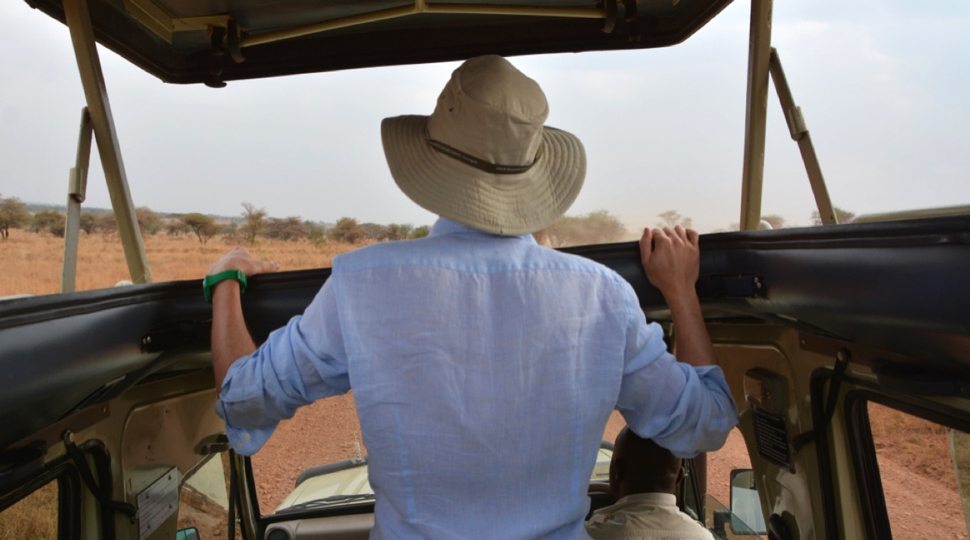
Man in the Serengeti
The Land Cruisers the Lodge uses for game drives feature open hatch roofs, ideal for viewing wildlife. – Photography courtesy Leah Walker

The next morning, with the sun peeking over the Lodge, I embarked on my first of two game drives into the Serengeti.

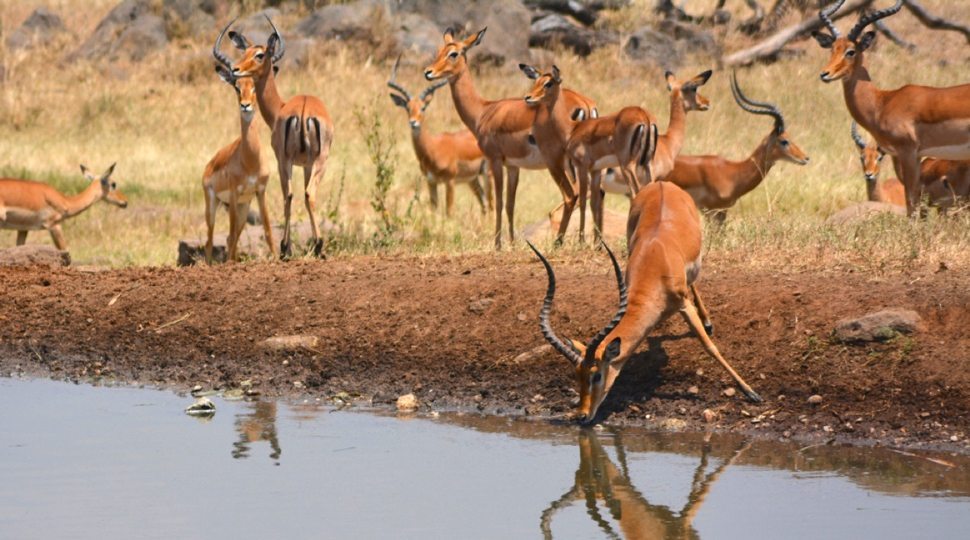
As we rode through the plains, suddenly my guide, Priscus, stopped the sand-coloured Land Cruiser; silence and an early-morning chill filled the air. A seasoned guide and naturalist, Priscus had his eyes on a small group of Grant’s gazelles – Serengeti’s largest antelope.

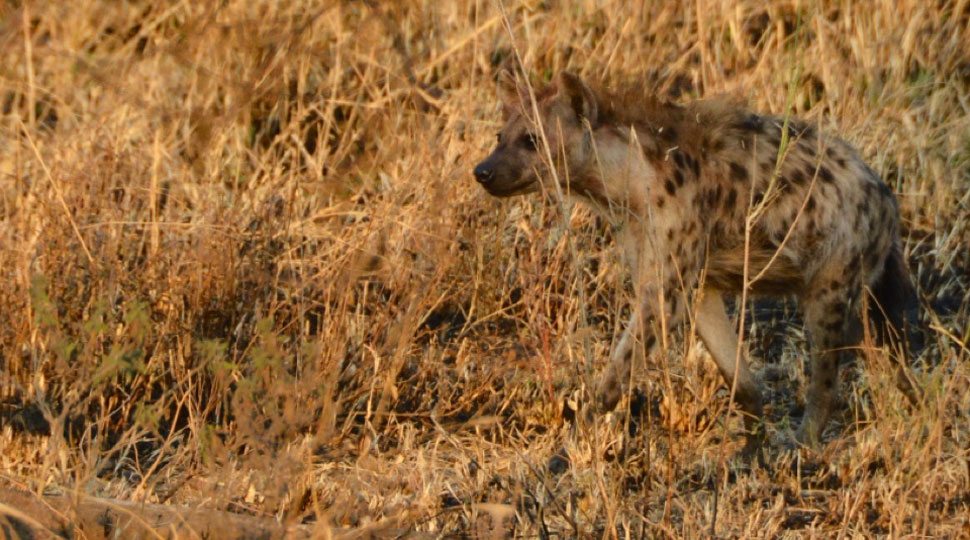
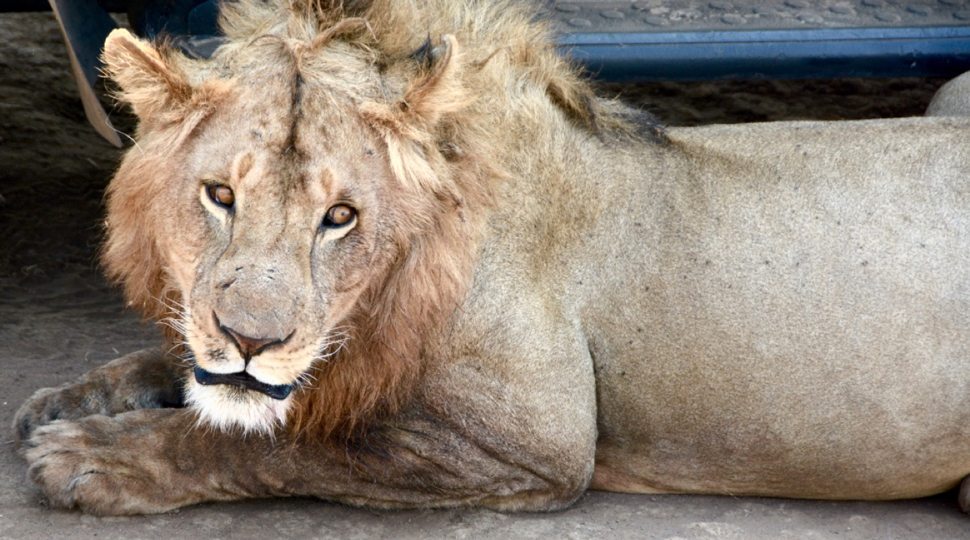
Rather than grazing, they were frozen. There was a threat, and they could sense it. Priscus followed the gazelles’ line of sight, and in a matter of seconds, we spotted a hyena, jackals and vultures. All scavengers. There was a fresh kill, which meant a leopard, cheetah or pride of lions wouldn’t be far.

Here, wildlife and those who observe it remain in a constant state of awareness. Understanding the behaviour of one animal spills over into the behaviour of another. An entire scenario is can be unravelled from the pricked ears of an antelope.
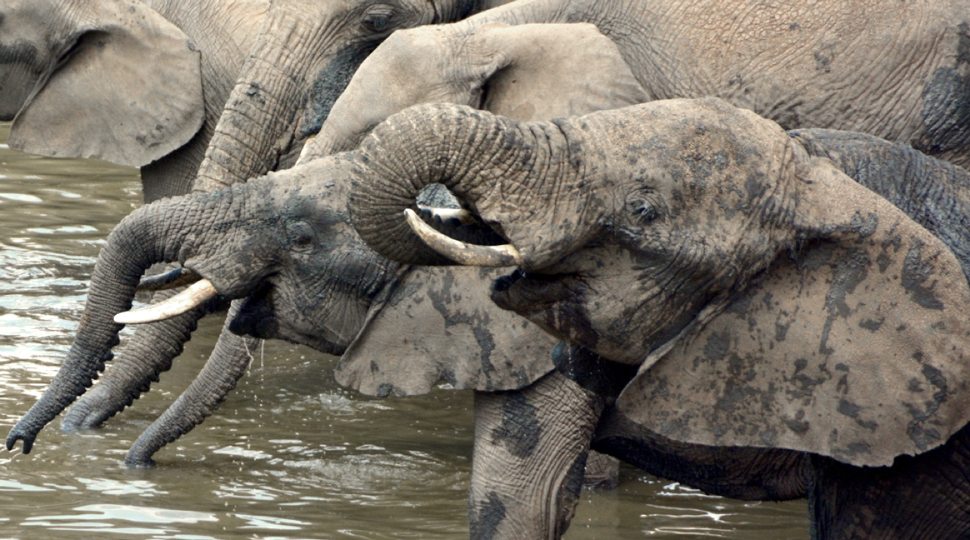
In the footsteps of lions, zebras and elephants: A walking safari
Walking safari
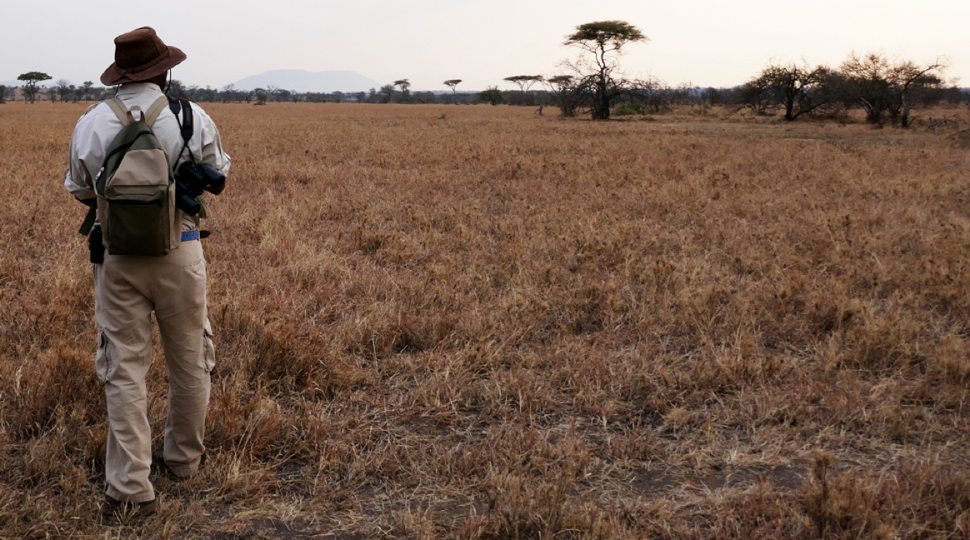
While out on a walking safari I witnessed the incredible beauty of The Great Plains.

A couple of hours before sunset, I was reunited with the Lodge’s naturalist and guide, Priscus. Along with Priscus, two spear-wielding Maasai warriors and two rifle-toting park rangers would accompany me on a walking safari into the Park’s plains. Vehicles in the Serengeti are limited to roads, so smaller details such as the flora, hyena tracks, 3-foot-high termite mounds and lion ant dens are easily missed.

We moved single file along a beaten dirt path through the open plains.

There was no way our presence would go unnoticed.

“Some animals walk on a trail, but not lions,” I was told. “If you see one fresh lion footprint then you better look around, because there are probably more. Look for bush, because they’re probably in the shade.” It was about an hour from sundown, and a chill ran down my spine at the thought of the hungry nocturnal hunters.

As bipedal creatures, humans are strange in the Serengeti. There was no way our presence would go unnoticed. “Elephants and buffalo are very strong, but they’re afraid of us,” Priscus said. “They don’t know how strong we are.” In the distance, a herd of 40 buffalo devoured their dry-grass dinner, though acutely aware of our group. These aggressive horned bovines would leave us alone as long as we stayed in the neutral zone.

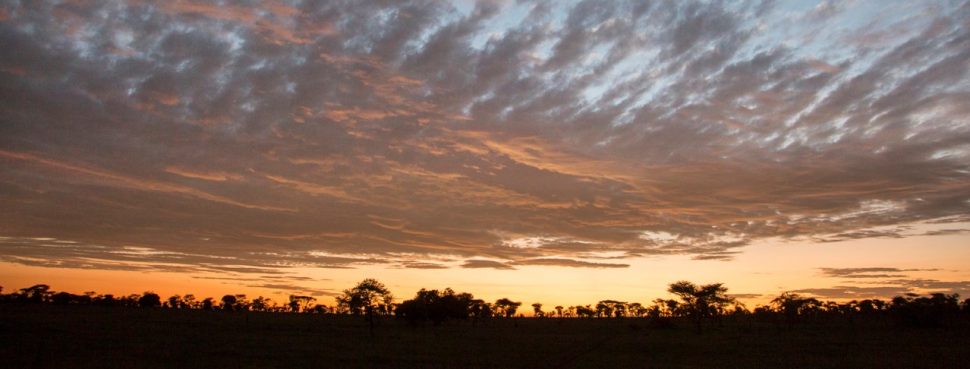
With the Serengeti sun dipping below the horizon, the sky was awash with gold, followed by orange and red. We continued walking, with one of the armed rangers leading the way: “Do you hear the zebras barking? That’s the thing about walking, you can hear the sound of nature without the grrrrr of the Land Cruiser.”

Soaring above the Serengeti: An aerial safari
Hot Air balloons above the Serengeti

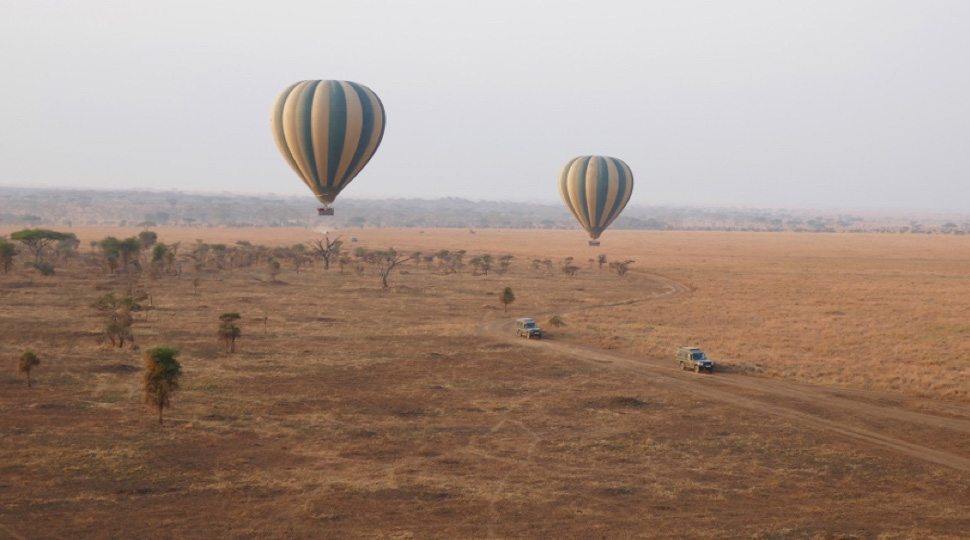
My last morning in the Serengeti was an early one, and I gleefully sprang from bed well before the sun. After an intimidatingly close look at the life of predator and prey, by car and on foot, it was time to take to the skies in a hot-air balloon.

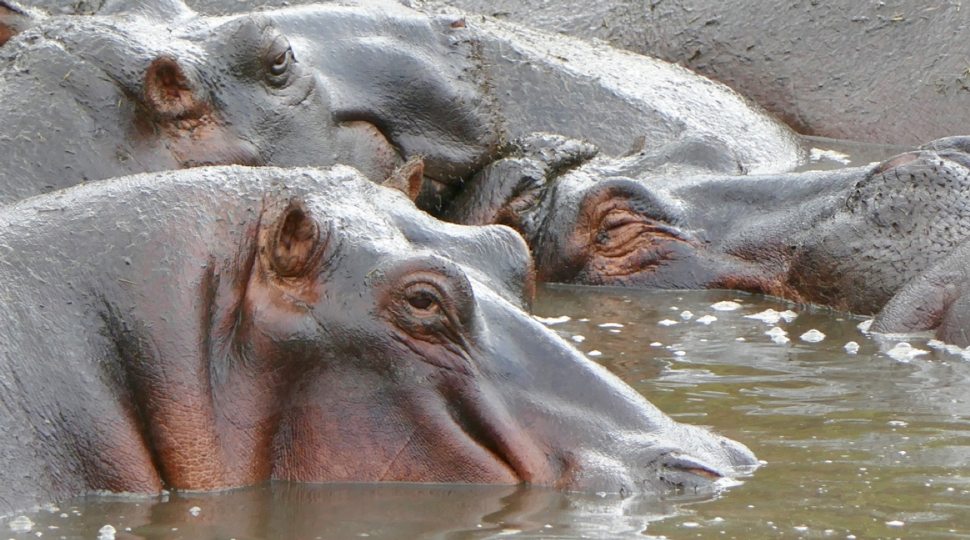
The scorched plains passed below like an aerial scene from The African Queen. The feeling of weightlessness and the sound of silence were worth the 4:30 am departure from the Lodge. Mimicking the colours of the Serengeti, the green and gold balloon effortlessly floated low over the rugged terrain. Dawn was breaking, signalling the antelopes, zebras and warthogs to begin eating. Hippos returned to their muddy pools, and lions savoured the previous night’s kill.

The captain fired up the burner, enabling the 16-passenger balloon to climb higher. We soared alongside hawks and eagles, spotting the nests of African white-backed vultures. I literally had a bird’s-eye view of the Serengeti. The hour-long flight passed in seconds.

Despite the captain’s smooth landing, my feet were still off the ground – I was drunk with euphoria. A seemingly permanent smile on my face, I gathered with the other passengers for ceremonial Champagne and a traditional English-style brush breakfast.

I couldn’t have scripted a better ending to my Serengeti story.

YOUR JOURNEY BEGINS HERE

Soar through the Serengeti on your own safari.
Serengeti sky

Night Swimming: 9 Pools You Should Only Swim at Sundown


Though swimming under the sun is a cool respite during the day, some pools look their best after dark. From an infinity pool overlooking the grassy plains of the Serengeti to a sky-high jewel in Dubai, these eight pools at Four Seasons Hotels and Resorts are open through sunset or later, and illuminate new ways to enjoy night swimming.

Maui: A pool for two

A photo posted by Sedge Beswick (@sedgebeswick) on


Dotted with candles and elevated above Wailea Beach, the Serenity Pool at Four Seasons Resort Maui is the perfect setting for night swimming beneath the stars. The poolside is available for private use from dusk to dawn for a chef-prepared multi-course dinner, a private dip with your choice of underwater music, and a couple’s massage in a luxury cabana. Coupled with astonishing panoramic views of neighbouring islands and the West Maui Mountains, this is island life at its very best.

Four Seasons Resort Maui at Wailea

Dubai: Aquatic glow


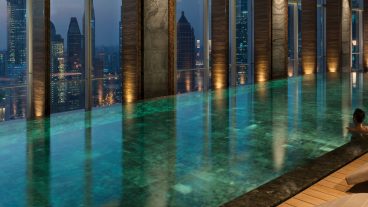
Shimmering like a blue jewel at night, the above-ground, glass-walled pool at Four Seasons Hotel Dubai International Financial Centre looks like an immense aquarium. Open for swimming until 10:00 pm, the rooftop pool provides an exciting underwater view of the surrounding sites. After a refreshing swim, slip into the nearby heated whirlpool.

Four Seasons Hotel Dubai International Financial Centre

St. Louis: Rooftop gazing


Private cabanas by pool

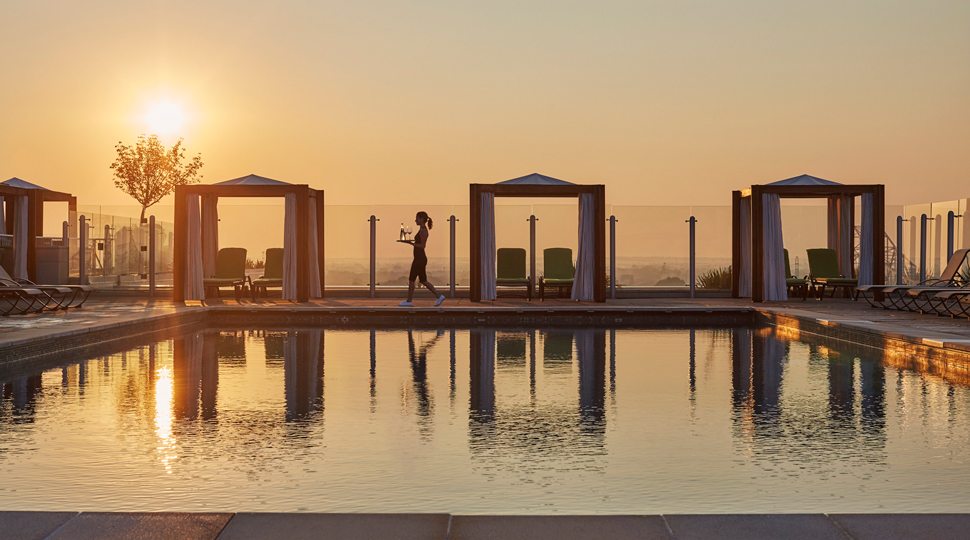
The rooftop pool at Four Seasons Hotel St. Louis offers rare panoramic views of the city skyline.

Glowing with soft blue and pink lights, the outdoor pool at Four Seasons Hotel St. Louis, open for swimming until 8:00 pm, is one of the few rooftop pools in St. Louis. From this poolside perch, enjoy exclusive views of the illuminated downtown skyline – including the Gateway Arch, Martin Luther King Bridge and the Mississippi River – while sipping cocktails from Cielo Bar. Once the sun sets, the pool’s underwater music changes to an upbeat, lounge-style soundtrack to match the city nightlife scene below.

Four Seasons Hotel St. Louis

Maldives: Twin sunsets


An infinity pool at sunset

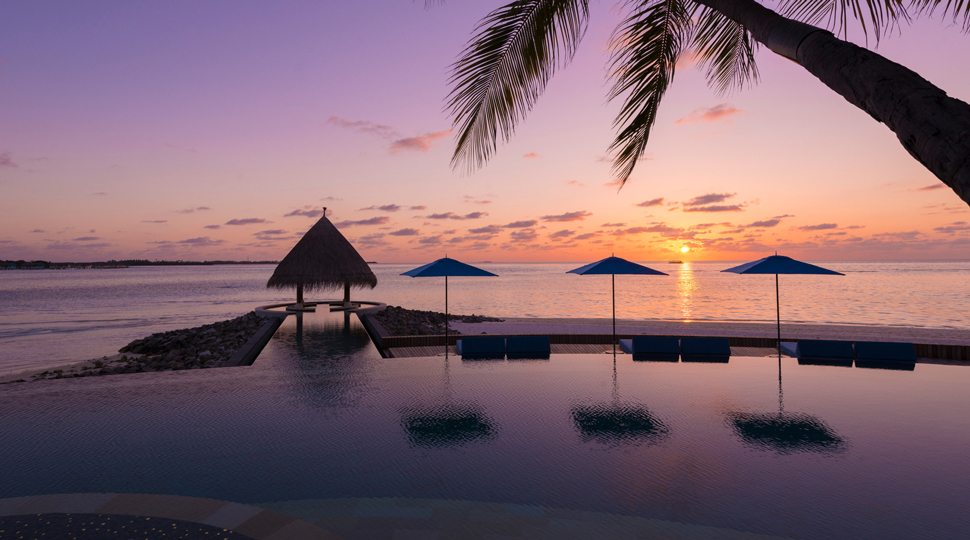
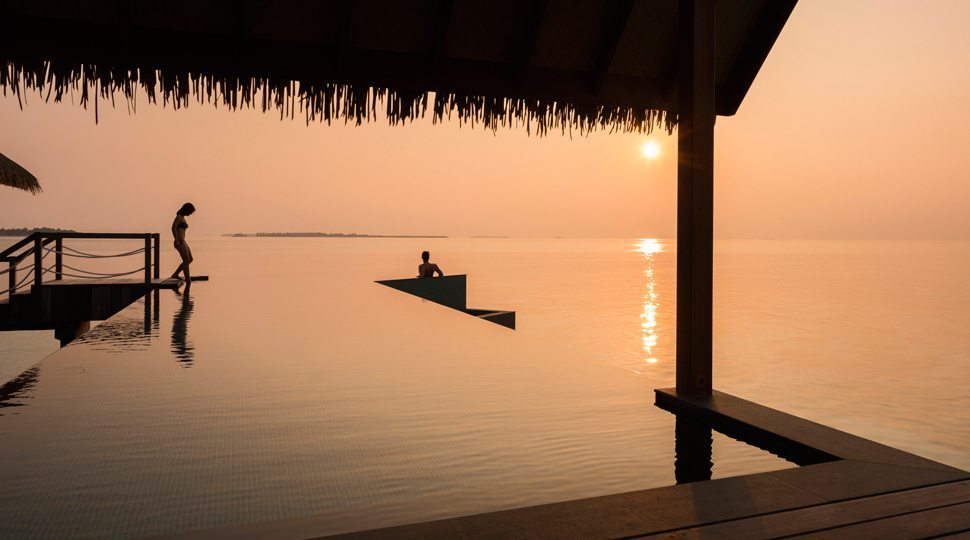
The freshwater swimming pool at Four Seasons Resort Maldives at Kuda Huraa is a romantic setting for an evening swim amidst the hues of the sunset.

For an awe-inspiring view of not one but two sunsets, the infinity edge pool at Four Seasons Resort Maldives at Kuda Huraa is the perfect place. Seeming to merge with the horizon, the outdoor pool, open until 7:00 pm, reflects the sun’s warm orange and pink hues, creating a second sunset that matches the sky. It’s a most unusual effect for an evening swim.

Four Seasons Resort Maldives at Kuda Huraa


A couple enjoys the infinity pool at Four Seasons Maldives Private Island at Voavah.

Celebrate with friends and loved ones by enjoying a private moonlit pool party at Maldives Private Island at Voavah, Baa Atoll.

Just a few miles away, step into your own private oasis: the sunset pool at Maldives Private Island at Voavah, Baa Atoll. Accessible only to you and your guests, the pool lies just outside the Two-Bedroom Water Villa and appears on The Telegraph‘s list of incredible infinity pools around the world. Make it your vantage point as it blends seamlessly with the night and a blanket of stars.

Maldives Private Island Voavah at Baa Atoll

Hampshire: Swim under the stars


Open late for adults only, the heated outdoor vitality pool at Four Seasons Hotel Hampshire offers massage features and is surrounded by the quiet countryside – making it a sweet retreat after a day of exploring on horseback, playing tennis or shopping the charming streets of the village. After a soak, swim into the connected indoor infinity pool and gaze at the stars shining through its glass ceiling.

Four Seasons Hotel Hampshire

Serengeti: Nocturnal watering hole


A beach at dusk

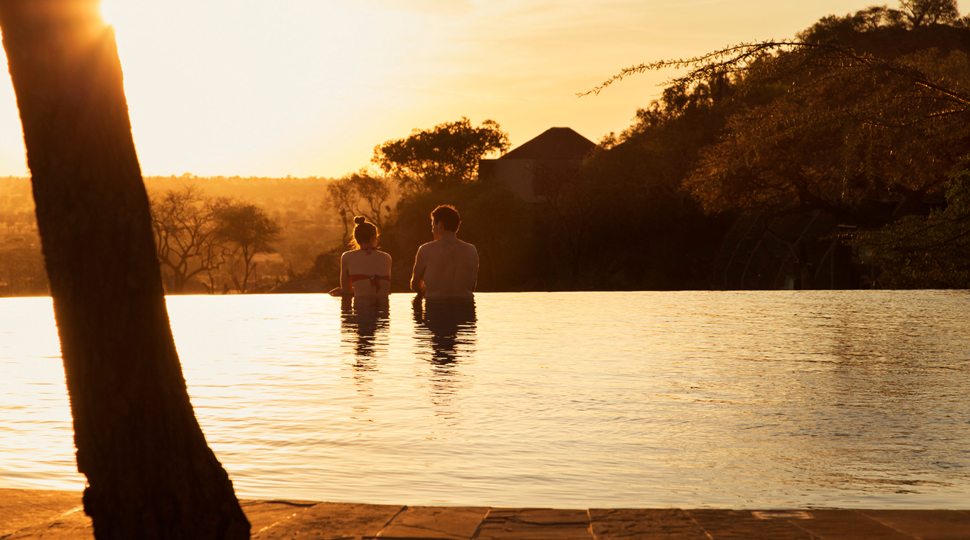
Enjoy an awe-inspiring safari sunset while soaking in the free-form pool at Four Seasons Safari Lodge Serengeti.

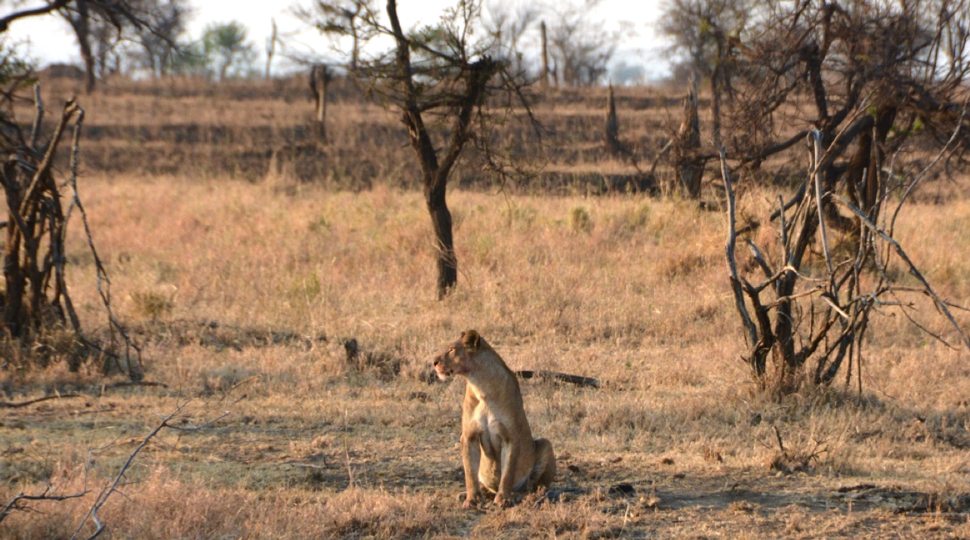
Open through sunset, the free-form infinity pool at Four Seasons Safari Lodge Serengeti is an idyllic setting for watching the sun descend and the Serengeti transform. By day, the pool overlooks the elephants and water buffalo that frequently stop for a drink at the neighbouring watering hole. But as the day comes to a close, guests will enjoy picturesque views of a Safari sunset and the chance to overhear the nocturnal wildlife, like a lioness or hyena.

Four Seasons Safari Lodge Serengeti, Tanzania

Abu Dhabi: Seaside poolside

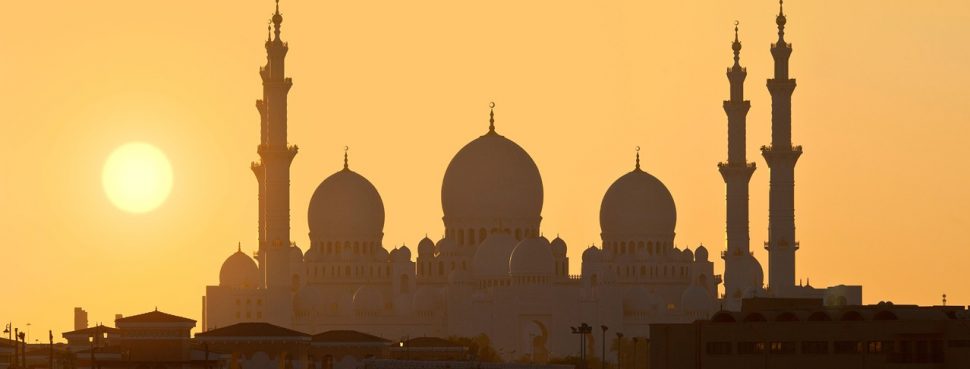
Open until midnight, the outdoor pool at Four Seasons Hotel Abu Dhabi is the perfect setting for a refreshing nighttime dip out in the open air. After sundown, unwind with dinner, drinks and DJ music on the third-floor rooftop pool deck. Nearby Eclipse, Terrace Lounge, an open-air restaurant and bar, is ideal for a post-swimming cocktail or poolside indulgence in seafood.

YOUR JOURNEY BEGINS HERE

Start planning your evening

Sun by building in India

Where the Birds Are: 8 Places to Enjoy Avifauna

Some of the most colourful guests at Four Seasons Hotels and Resorts are positively fair-weather types: birds. From brilliant migratory songbirds to resident waterfowl, the fine-feathered friends that frequent the destinations below are among the world’s most stunning and sought-after avifauna for birdwatching.

Some of them frequent the properties’ grounds; others require an excursion to encounter. And although birders and naturalists know that sightings are never guaranteed, if you pay attention while visiting these locations, you may catch a glimpse of their bright, elusive plumage.

Hawaii: Scarlet Hawaiian Honeycreeper (Drepanis coccinea)


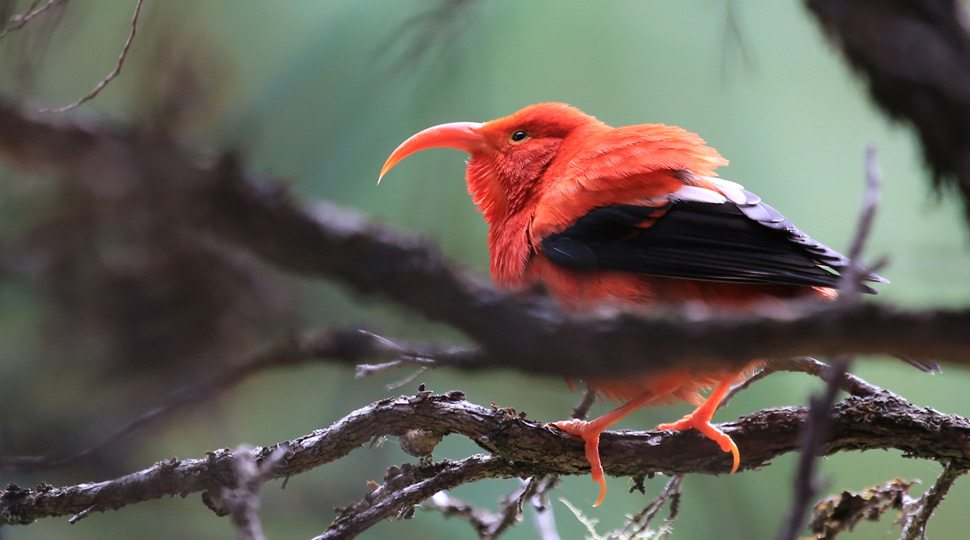
With its coral-coloured bill and vivid feathers, the Scarlet Hawaiian Honeycreeper fits perfectly within the bright, flowering gardens at Four Seasons Resort Hualalai.

Also known as the ʻiʻiwi, this blazing-red bird with the sickle-shaped bill is a favourite of birding visitors to Four Seasons Resort Hualalai. One of the 44 Hawaiian endemics, the altitudinally migratory ʻiʻiwi resembles a hummingbird, with a similar appetite for nectar. It can be seen at higher altitudes, such as on Mauna Kea (about an hour and a half away from the Resort), and has occasionally been spotted at higher elevations on Hualalai itself, just 20 miles from the property. Although these honeycreepers were once plentiful on most Hawaiian islands, they’re currently endangered on Oahu and Molokai and have been extinct on Lanai since 1929.

Twitchers who want to birdwatch on the grounds of Four Seasons Hualalai can visit its Waiakauhi Pond, a convalescent habitat for waterfowl and migratory shorebirds, such as the slender and elegant Hawaiian Stilts (Himantopus mexicanus knudseni). The U.S. Fish and Wildlife Service worked together with the Resort to develop the habitat and help preserve this endemic and endangered subspecies.

Dubai: Hoopoe (Upupa epops)


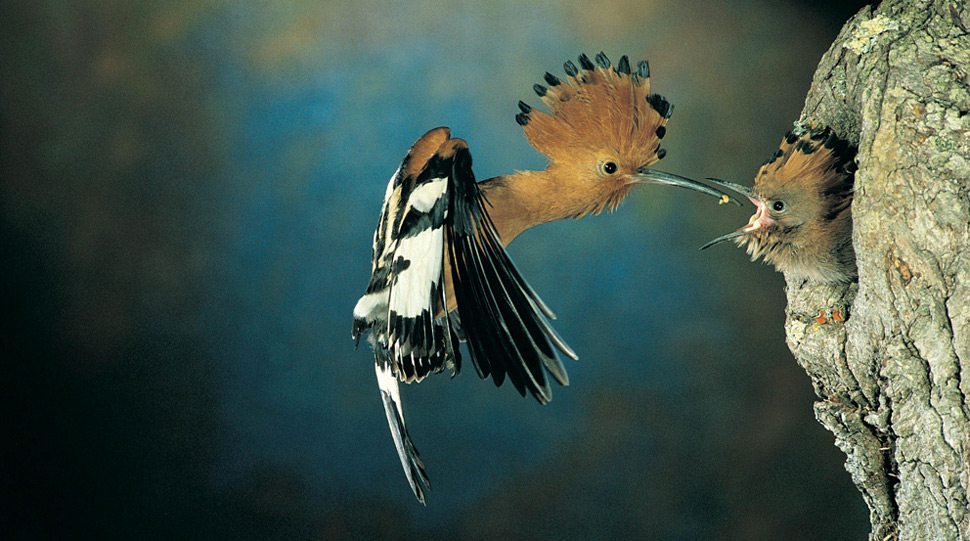
Hoopoes frequently perch on the lawn of Four Seasons Resort Dubai at Jumeirah Beach, where guests can hear their hoot-like call.

Audio courtesy Sheldon R. Severinghaus/The Macaulay Library at the Cornell Lab of Ornithology

The lawns of Four Seasons Resort Dubai at Jumeirah Beach and other Arabian Gulf hotels are becoming desert sanctuaries for many birds, thanks to water features, beautiful landscaping, and abundant native plants and trees. The Dubai property also plays host to Red-vented Bulbuls and the occasional Purple Sunbird, but the funky hoopoes, with their “Mohawk” look, are the staff favourite.

The bird’s unusual name is onomatopoeic, mimicking the elegant black-and-cinnamon bird’s double hoot-like call. Though subspecies exist, the hoopoe is the only extant member of its family in the world.

Costa Rica: Keel-billed Toucan (Ramphastos sulfuratus)


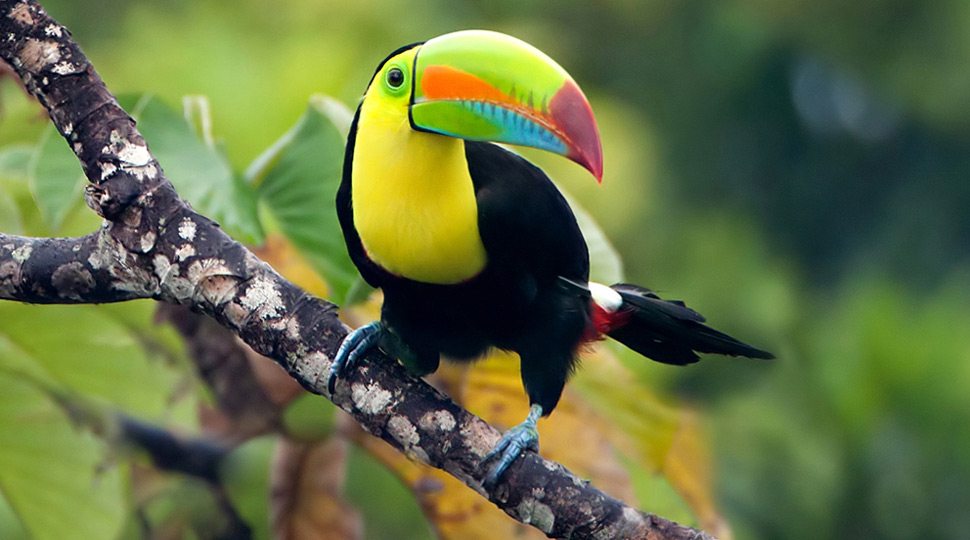
A view of the Keel-billed Toucan’s striking, bright chest and rainbow bill in Costa Rica’s fruit trees or forests is the sighting of a lifetime.

Audio courtesy David L. Ross, Jr./The Macaulay Library at the Cornell Lab of Ornithology

Costa Rica is rich in bird biodiversity: The small tropical country is home to roughly 850 species, from Sapphire-throated Hummingbirds to dazzling quetzals. But let’s face it: Everyone wants to see a toucan. Six members of the toucan family Ramphastidae call Costa Rica home, including the Keel-billed. These yellow-chested, rainbow-billed beauties are occasionally visible in fruit trees and forests on the nearby lower slopes of Cordillera de Guanacaste and the Nicoya Peninsula, both about 90-minutes from Four Seasons Resort Costa Rica at Papagayo.

Papagayo is not without its own brilliant avifauna. The peninsula is named for the numerous colourful parrots that inhabit its lush canopies. Visitors who attend the 930-hectare (2,300-acre) Resort’s morning and afternoon nature walks can learn about the 25 species of endangered trees found on the peninsula and the birds who visit them, including Crested Caracaras, Great Kiskadees, Tropical Kingbirds, Inca Doves and Yellow-naped Parrots – each of the parrots a bright green marked with a vivid yellow line along its forehead and the nape of its neck.

Thailand: Scarlet-backed Flowerpecker (Dicaeum cruentatum)


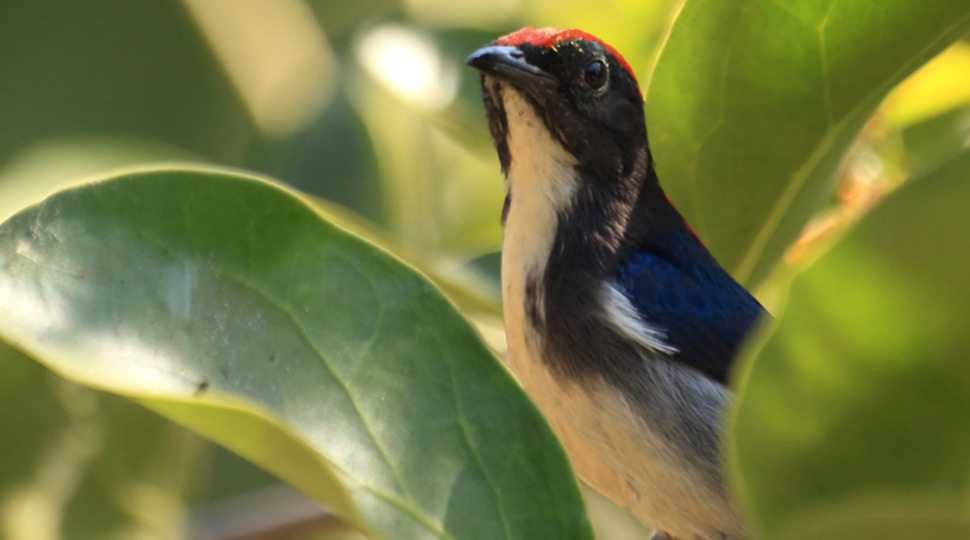
The Scarlet-backed Flowerpecker, one of the smallest birds in Southeast Asia, is a rare but beautiful highlight at Four Seasons Hotel Tented Camp, Golden Triangle.

Audio courtesy Roger D. and Megan J. McNeill/The Macaulay Library at the Cornell Lab of Ornithology

Many brightly coloured passerines flit through the moist bamboo thickets and steamy riverine forests of the Golden Triangle where Burma, Laos and Thailand converge. But few are as elegant and photogenic as the elusive Scarlet-backed Flowerpecker.

Sightings of the birds from Four Seasons Hotel Tented Camp, Golden Triangle are rare, but not impossible. They’re more likely at Chiang Saen Lake, about 45 minutes from the camp, or on trees at nearby fruit gardens where you can watch them quietly nibbling on figs and buah cherries. They may be one of the smallest birds in Southeast Asia, but their deep ruby red, sparkling white and navy blue markings are unmistakable.

Australia: Sulphur-crested Cockatoo (Cacatua galerita)


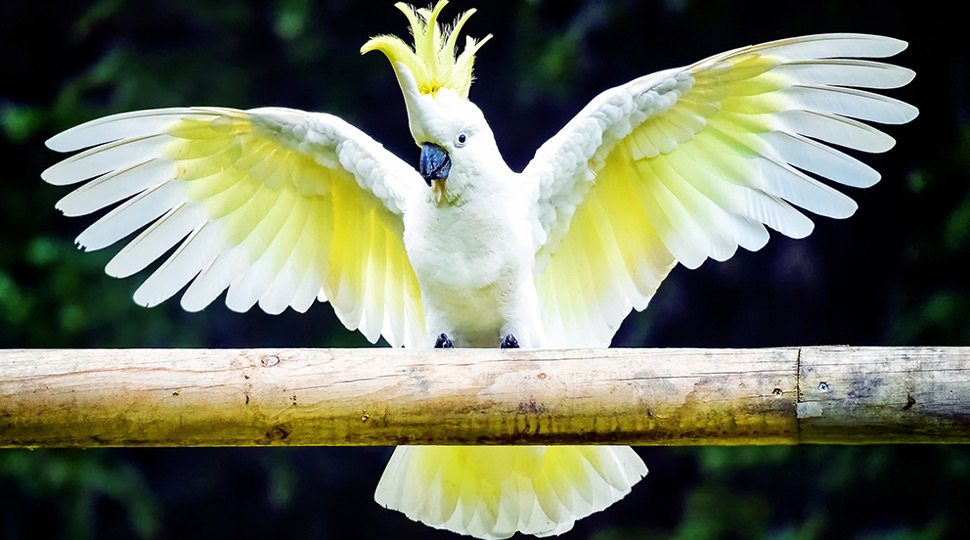
The Sulphur-crested Cockatoo is one of the most familiar and beloved birds in Australia, and it’s not unusual to see this bird’s snow-white feathers and brightly coloured crest in parks and green areas across Sydney.

When you first sight one of these flamboyantly feathered birds, you might think you’ve spotted an escaped pet. But these large, cacophonous, snow-white cockatoos with the butter-coloured crest live wild in Sydney and appear in spots throughout the country, including the Botanic Gardens and Hyde Park, both within walking distance from Four Seasons Hotel Sydney. It’s a vivid reminder that you’ve crossed the Wallace Line, a faunal boundary marking two distinctly different ecozones.

Sulphur-crested Cockatoos are known for their curiosity, screechy calls and longevity. One legendary Sulphur-crested Cockatoo, christened Cocky Bennett, lived for over 100 years.

Geneva: Mute Swan (Cygnus olor)

Audio courtesy Dolly Minis/The Macaulay Library at the Cornell Lab of Ornithology

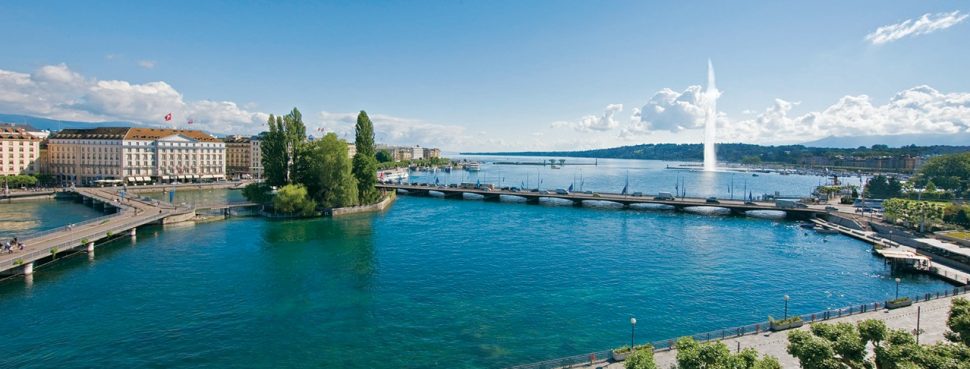
It’s not a long wait before a wild white swan glides along the shoreline of Lake Geneva. Just steps outside Four Seasons Hotel des Bergues Geneva, these grand birds with black masks and orange beaks can be seen along the lake, and on the tiny island of l’Ile Rousseau in front of the Resort, often with their S-curve necks in perfect formation like ballerinas.

From the 13th to the 19th century, western European swan populations were nearly exterminated by hunting. Protective measures to save the lake’s waterfowl took effect in the late 1800s, allowing the swans to reclaim their former range. In the 1960s, numbers declined again, but fortunately they are increasing today.

Florida: Florida Scrub Jay (Aphelocoma coerulescens)


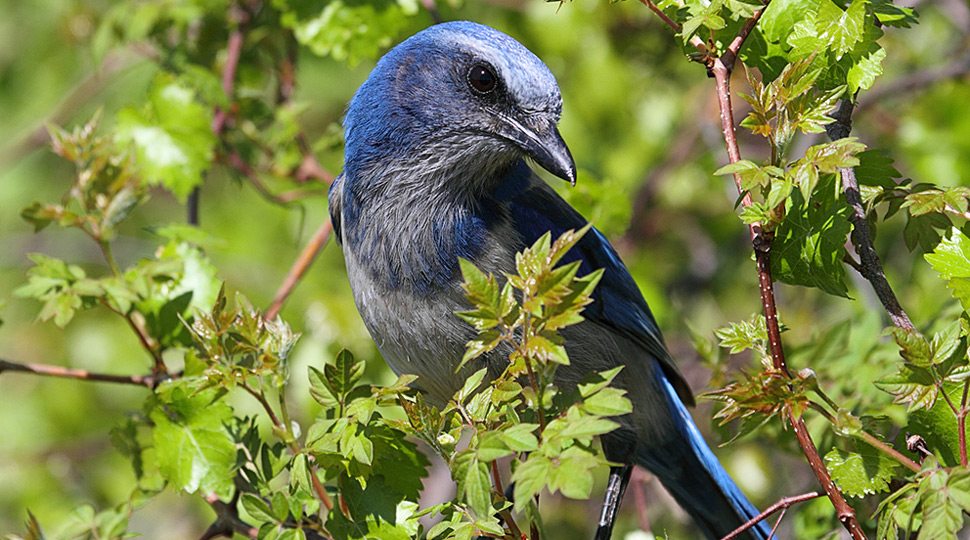
Guests at Four Seasons Resort Orlando at Walt Disney World® can take a break from the bustling city to spot Florida’s only endemic bird, the deep blue Florida Scrub Jay.

This jay is Florida’s only endemic bird, and one of only 15 endemic bird species in the continental United States. Because Florida’s scrub oak habitat has rapidly dwindled in the past few decades, and therefore the number of birds has, the jay has been designated a threatened species.

It’s possible to see this bold and feisty bird at Four Seasons Resort Orlando at Walt Disney World® Resort and the Tranquilo Golf Club, both of which are home to dozens of replanted live oak trees, the preferred habitat of the Scrub Jay – not to mention shrubs, ground cover, bushes and palms that it and other birds can use for food and shelter. For birders who want a more guaranteed sighting, the Florida Scrub-Jay Trail is a mere 30 miles (48 kilometres) away.

Serengeti: African Grey Hornbill (Lophoceros nasutus)

Audio courtesy Linda R. Macaulay/The Macaulay Library at the Cornell Lab of Ornithology

The chance to sight the Big Five beasts may draw travellers from far and wide, but Four Seasons Safari Lodge Serengeti is also a fine spot for observing African birds. Right on the grounds, it’s possible to come face to face with mischievous African Grey Hornbills, which are sometimes spotted amid the fig trees along the Lodge’s boardwalks.

With its heavy-looking, downward-curving bill, the bird has an oddly primitive appearance, but it moves with the agility of a lion, both in the air and on the ground.

“While flying, they dip in mid-flight, which is quite distinctive, and as the most pronounced of all the hornbills in this region, their piercing, whistle-like call is also quite distinctive,” says the Lodge’s Discovery Centre Manager, Oli Drieke.

Guests who wish to see more of these creatures should cover more of their habitat by embarking on the game drives and walking safaris offered at the Lodge.

Your Journey Begins Here

Pick a destination to start your exploration

Four Seasons Hotel Bergues Geneva, Switzerland

Souvenirs That Will Change Your Life

For the traveller, destinations are far more than the sights they see or the mementos picked up along the way. The places they visit offer new perspectives and unforgettable experiences with the power to enrich their lives long after they return home.

This November, embrace your inner traveller and embark on a Cultural Escape aboard the Four Seasons Private Jet. During this 19-day journey, you’ll travel to six destinations across three continents, including Dubai, the Seychelles, the Serengeti, Florence and London. Follow a customised itinerary and experience the art, history, landscapes, food, traditions and people of each unique destination.

The difference between a tourist and a traveller lies in the way they perceive their destination. For the tourist, their destination is a place, an endpoint on an itinerary that offers access to a checklist of attractions and souvenirs.

At the end of this incredible journey, you’ll carry home with you new passions, tastes, lessons and perspectives forged from intimate interactions with local cultures—which only Four Seasons can deliver. Here, we highlight some of our favourite souvenirs.

Spiritual serenity in Seychelles

Seychelles yoga

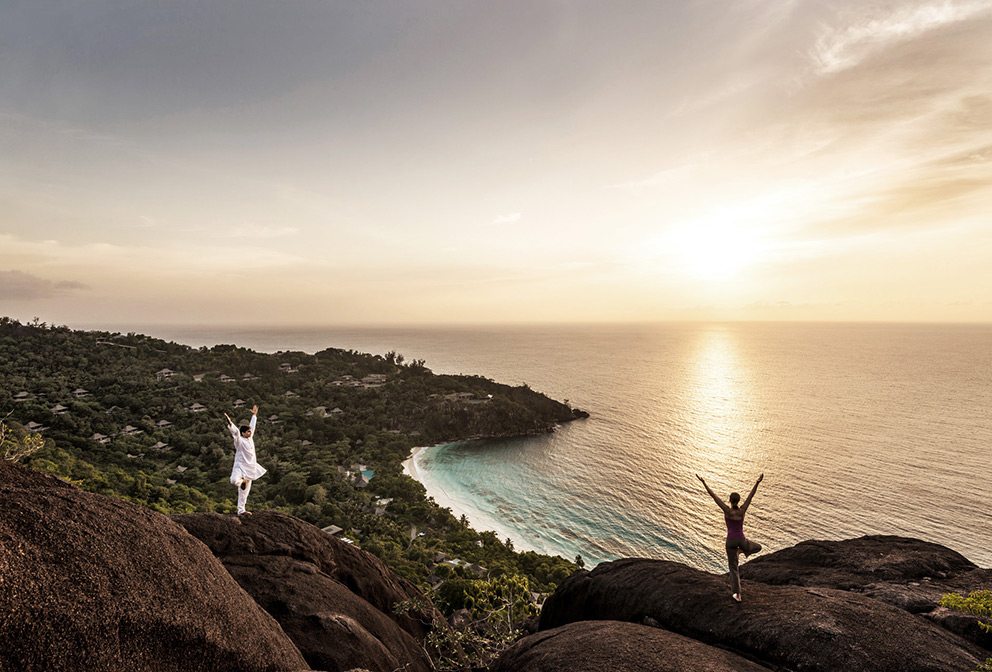
Take home a new feeling of tranquility and sense of spirituality after a yoga practise in Seychelles.

In the Seychelles, all paths lead to beauty. The African nation comprises 115 islands in the Indian Ocean, and it’s a favourite destination for romance, outdoor adventures, wildlife sightings and relaxation.

From your base at Four Seasons Resort Seychelles, located on the archipelago’s main island of Mahé, you can dive, snorkel, hike through nature preserves and shop local markets. Yet it’s difficult to find a better way to soak in the spirit of this beautiful setting than through a yoga session.

At sunset, accompany an expert yogi on a short hike through the forest to a mountaintop overlooking the ocean. Your yogi will guide you through peaceful meditation and yoga, teaching you breathing and relaxation techniques to the sights and sounds of nature. You can also practise a hatha flow out on the open water during a one-on-one paddleboard yoga session. It’s a great way to lose yourself in the tranquility of the sea.

What you’ll take home: Once you’re back in the real world, summon your new meditation techniques, pranayama breathing exercises and Technicolor memories as a reminder to slow down, find peace and live mindfully. “At its core, yoga means union of mind, body and soul,” says Arun Dev, one of the Resort’s yogis. “Union of ego and the spirit, union of the mundane and the divine.” Embrace that unity to find solace in the hustle and bustle of everyday life.

Four Seasons Resort Seychelles

A rekindled love for Mother Nature in the Serengeti

Maasai Serengeti

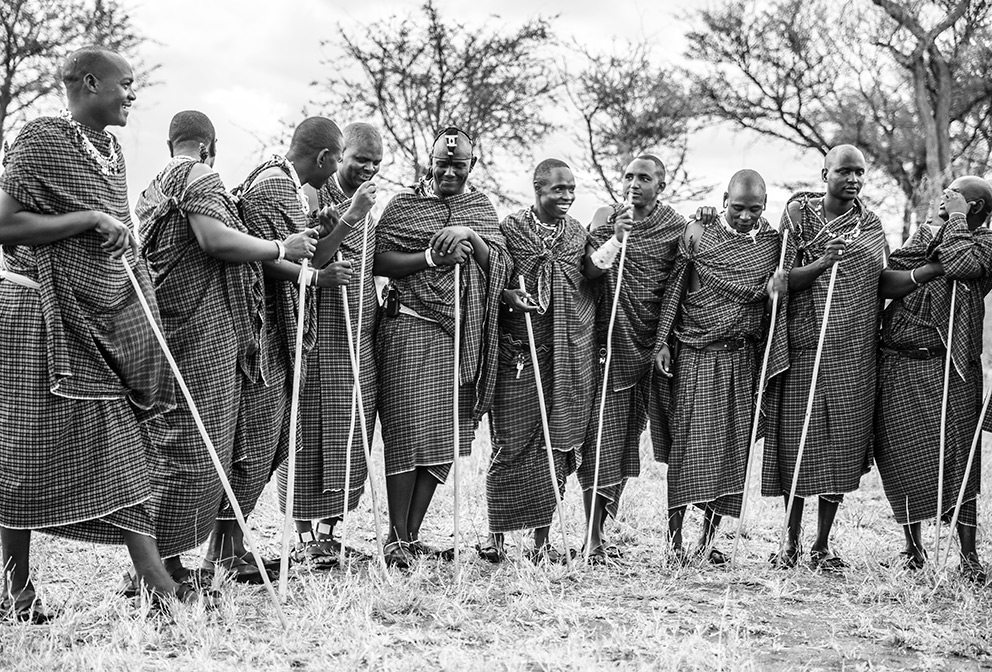
Appreciation for nature is deeply rooted in the Maasai people. Learn why it is so important to have a profound respect for the wildlife during your stay in the Serengeti.
Photography courtesy Robb Aaron Gordon

Most who travel to Africa’s fertile plains seek views of the Big Five: lions, leopards, Cape buffalo, elephants and rhinos. If, after your game drive or hot-air balloon safari, you still crave a deeper understanding of the Serengeti and its wildlife, look no further than the Maasai.

The semi-nomadic Maasai tribe inhabits the Great Rift Valley region of southern Kenya and northern Tanzania. Members are known for their athleticism, craftsmanship and superior knowledge of and respect for the landscape and its animals.

During your stay at Four Seasons Safari Lodge Serengeti, accompany a Maasai warrior on a walking safari to learn how to identify animal tracks, plants and insects, or venture out with your guide for a full-day visit to a Maasai village. In the evenings, the Resort’s Maasai guides congregate for traditional dance ceremonies.

What you’ll take home: The Maasai are known for masterful beadwork, particularly ornate and colourful necklaces. You can buy one of the locally made varieties, but your true souvenir is a newfound appreciation of nature inspired by the Maasai people. Before formal religion was introduced to East Africa, nature played a large role in the Maasai faith. Plants and animals hold a cultural significance for the Maasai, and many plants are still used in traditional medicines. Learn about the importance of living alongside and preserving nature, as well as the Maasai’s high respect for local wildlife.

Four Seasons Safari Lodge Serengeti, Tanzania

Tuscan flavours in Florence

Florence food

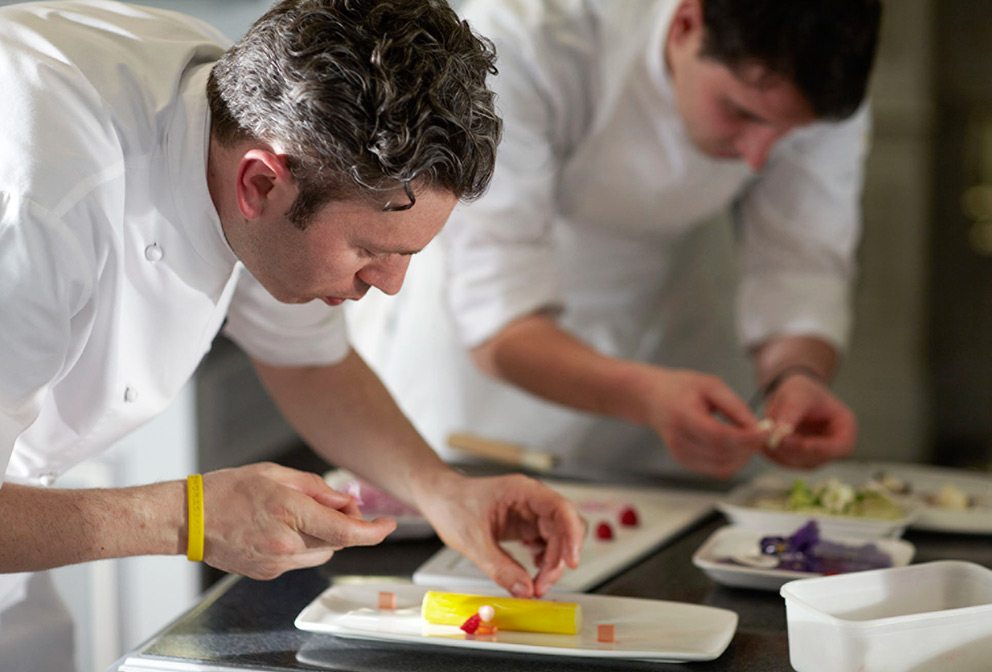
At Four Seasons Hotel Firenze, and throughout Italy, food is meant to be savoured and prepared only with the finest ingredients.

In Italy, food is more than just fuel for the body. Italians take pride in preparing cuisine, using the finest and freshest ingredients to produce dishes that rival works of art. In homes and restaurants from Florence to Palermo, mealtimes are never rushed. Instead, they are savoured moments for tasting and enjoying every flavour together.

During your three-day stay in the city, you’ll gain exclusive access to exhibitions and artisan studios, and travel to the vineyards of the Chianti wine region. But gourmands shouldn’t miss the full-day culinary excursion at Villa Monteoriolo, a 15th-century estate that has been producing olive oil for more than 200 years.

Using the estate’s homemade olive oil and locally sourced ingredients, an expert chef will teach you Tuscan cooking techniques and guide you through the preparation of a multi-course dinner, which you’ll enjoy in the villa’s intimate dining room.

What you’ll take home: Tuscany’s climate and soil produces a low-acidity olive oil that is one of the freshest and most flavourful in the world. Pick up a bottle at Villa Monteoriolo so you can practise your new Italian cooking skills for loved ones at home, using only the most authentic ingredients.

Four Seasons Hotel Firenze

Evolved coffee rituals in Dubai

Arabic coffee in Dubai

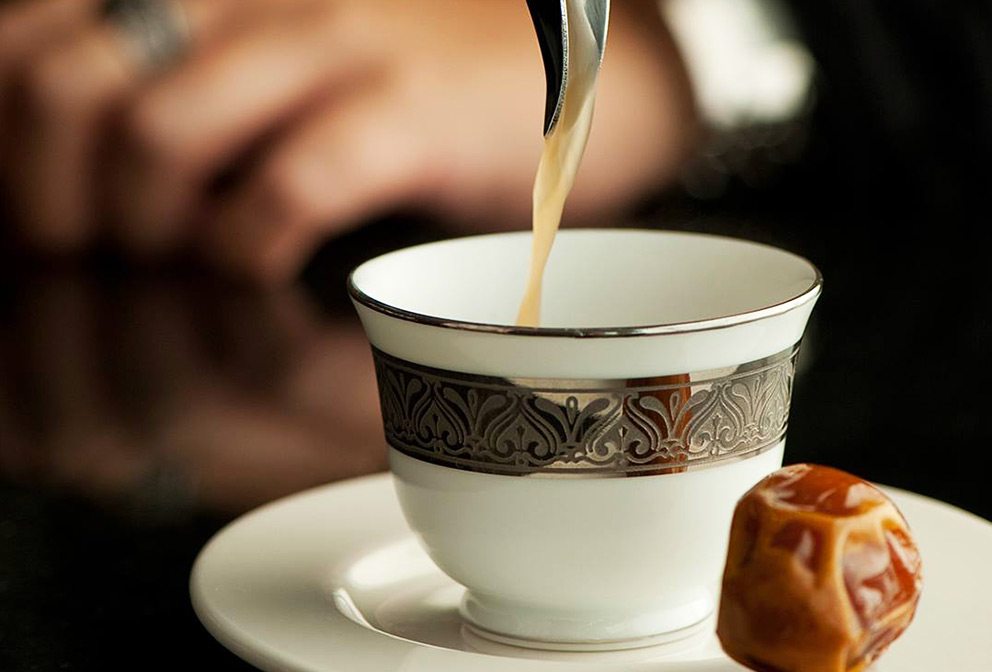
In Dubai, coffee is more than a caffeine fix—it is an art and a symbol of joy, carefully tasted and enjoyed.
Photography courtesy Bateel International L.L.C.

Though this seaside metropolis is decidedly modern, with its steel-and-glass skyscrapers and over-the-top attractions, Dubai’s multicultural population imbues it with charm and character.

Throughout the city, you’ll find cafés serving Arabic coffee, a blend of coffee beans and spices such as cardamom, cloves, ginger, rosewater and saffron. The coffee is often served with dates rather than sugary confections, and it’s poured from a dallah, an ornate pot made of brass, steel, silver or gold.

The drink is traditionally prepared to welcome guests, and it plays a distinct role in your most exhilarating adventure while in Dubai: a journey by 4×4 into the desert for a royal dinner under the stars. You’ll be welcomed by a traditional Arabic coffee service before you go sandboarding, watch a falconry demonstration and feast on an elegantly prepared dinner.

What you’ll take home: Arabic coffee, dallahs and finjaans—the small round coffee cups that accompany the traditional service—can be found at Dubai’s souks and luxury shopping centres. Even if you don’t purchase a set for yourself, take home the spirit of community inspired by the Arabic coffee ritual. Bring the symbol of hospitality to life for guests in your home for years to come, sharing your understanding of coffee-drinking etiquette with every sip.

Four Seasons Hotel Dubai International Financial Centre

Trip details

Four Seasons Private Jet

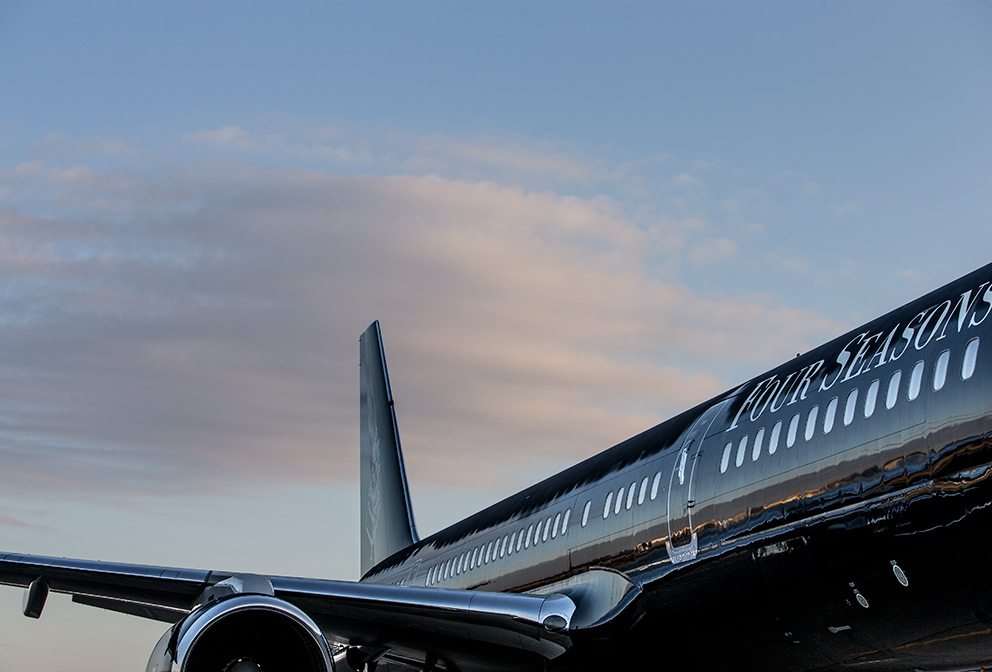
Throughout the journey, travel aboard the Four Seasons Jet, a retrofitted Boeing 757 that is spaciously configured with only 52 seats – leaving ample room for you and the souvenirs you pick up along the way.
Photography courtesy Robb Aaron Gordon

Your cultural escape through Europe, Africa and the Middle East begins and ends at Four Seasons Hotel London at Park Lane. From London, you’ll travel aboard the custom-designed Four Seasons Jet and enjoy Four Seasons accommodations and renowned service at every step of the journey. The trip begins on November 4, 2016.

Discover more about the Cultural Escape itinerary and begin your journey >

YOUR JOURNEY BEGINS HERE

Select a destination and start exploring

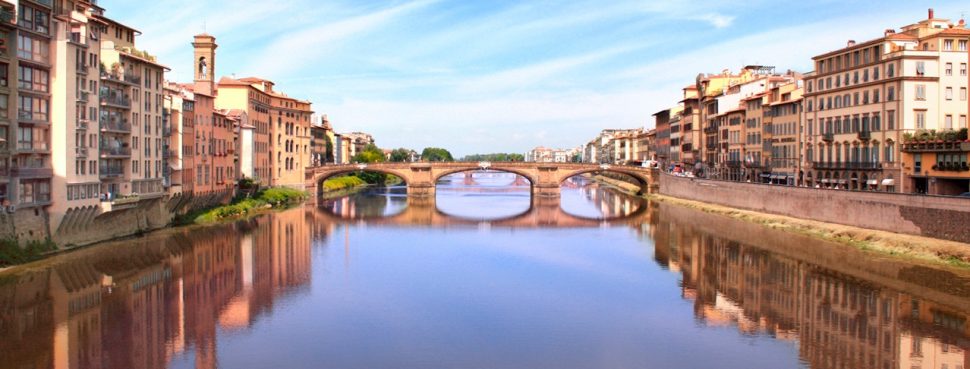
Ponte Santa Trinita