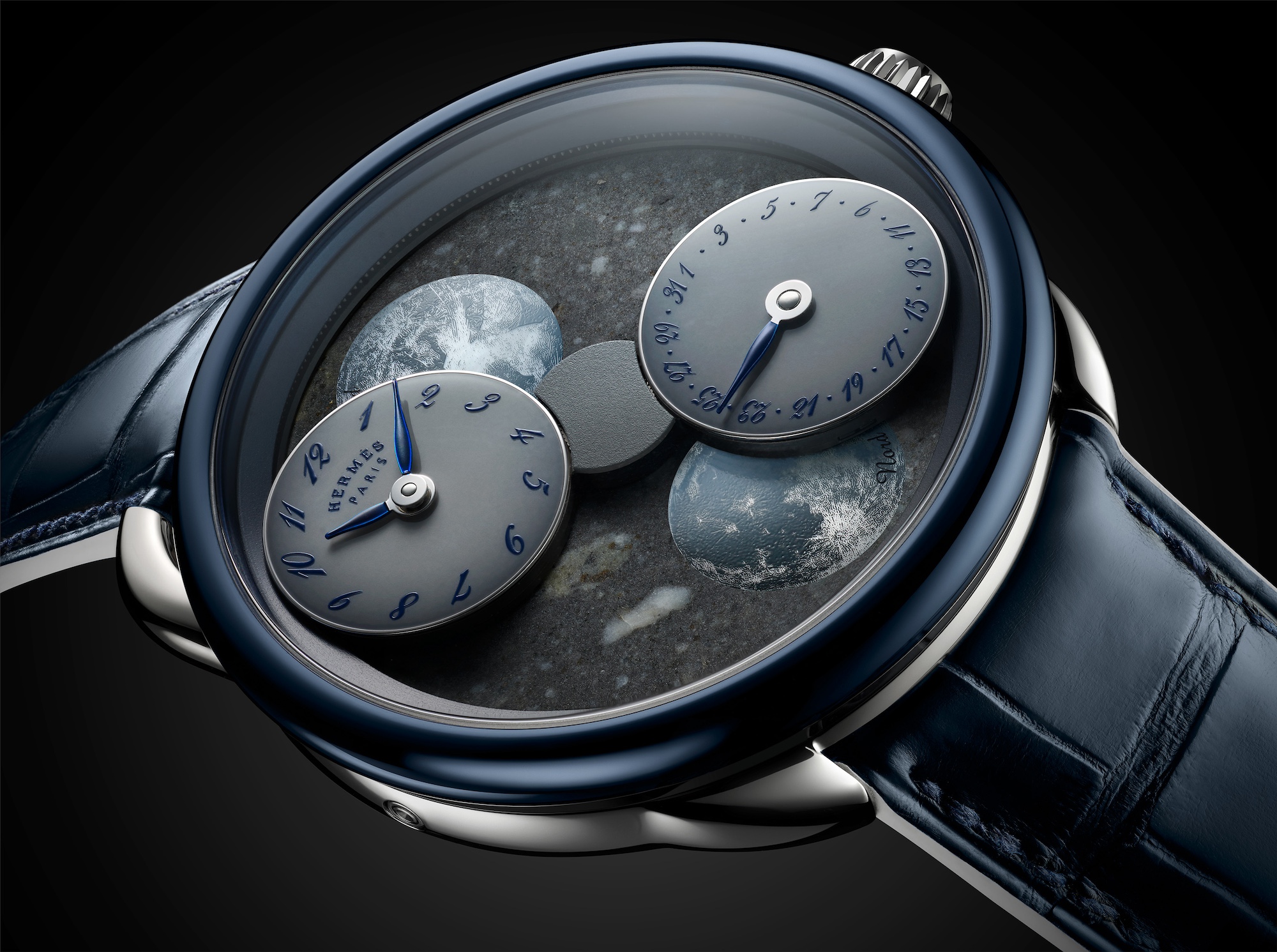
Luc Labenne has designed quite the adventurous life for himself, from tooling around North Africa on his Suzuki DR 600 motorcycle to trekking across deserts in Chile and Oman, all in search of his next big find. Just don’t ask him where he’s headed next.
“Too many people might follow right behind me,” Labenne explains.
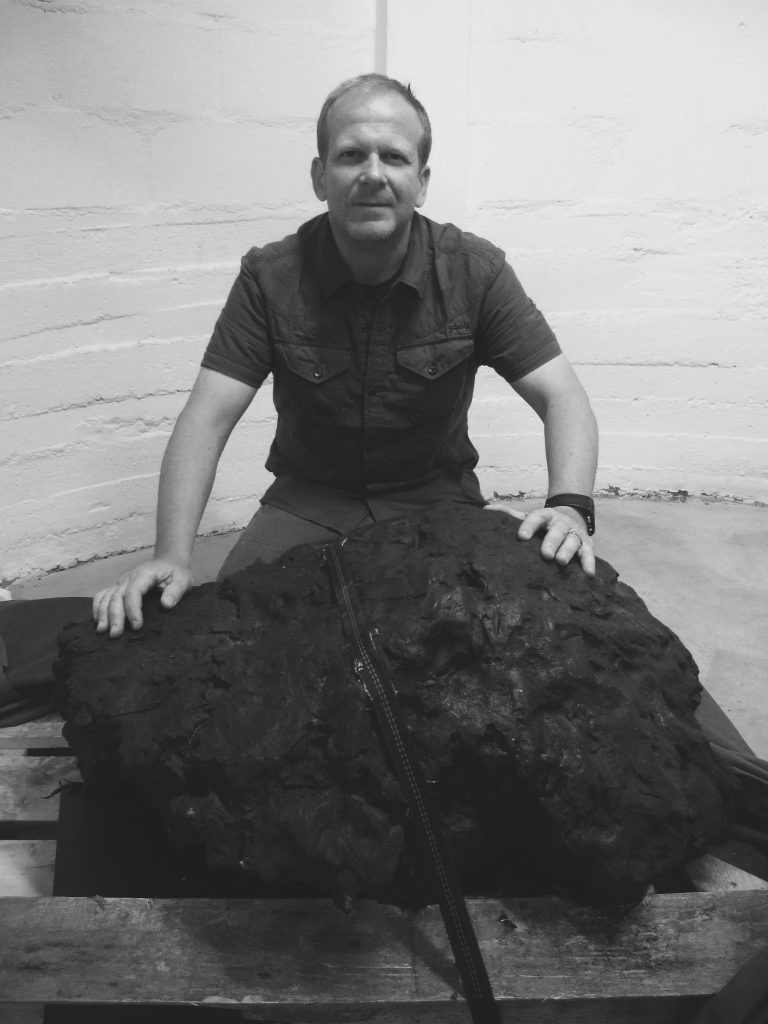
The Paris-based Labenne is known in luxury circles as “the meteorite hunter,” a career that has attracted clients that include Hermès, Cartier, Boucheron, and the independent watchmaker Louis Moinet. Though he trained as a physician, Labenne has loved geology and astronomy since he was a teenager. He eventually succumbed to the allure of searching for meteorites (typically alloys of nickel and iron) that originate in outer space as meteors before reaching the Earth’s surface.
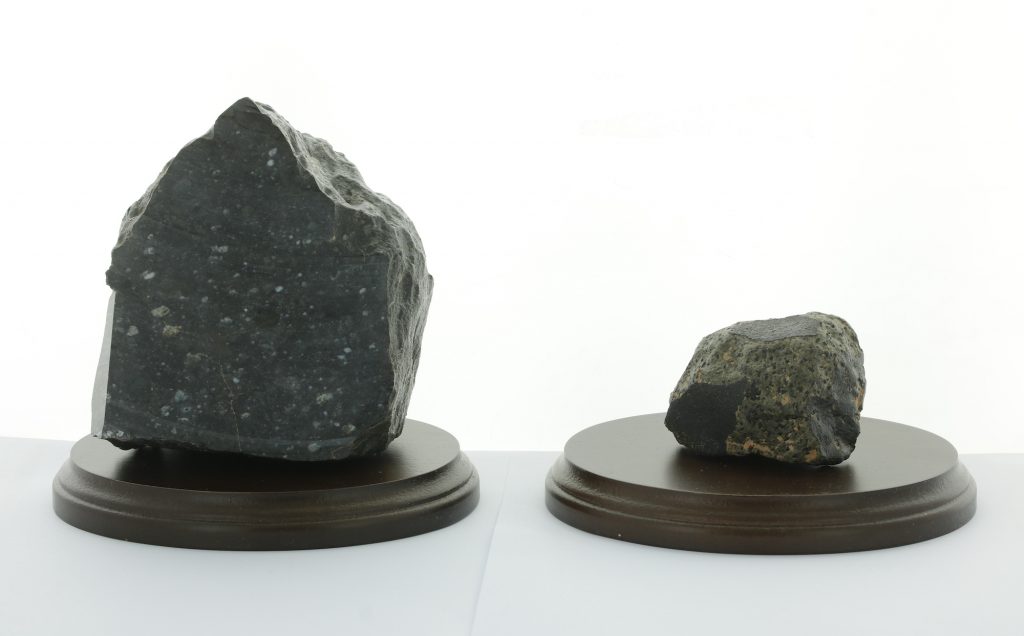
Upon discovering a meteorite—Labenne uses a metal detector but prefers not to go into detail about his methods—he catalogues its GPS position and other details; back home, he’ll analyze the rock with his spectrometer. If the results are promising, he’ll send the rock to one of the labs he works with to determine where it originated. The most valuable meteorites are officially classified as either lunar or Martian. “When I sell it, classification is necessary,” he says.
Lunar or Martian meteorites are fetching ever-higher prices these days. In July at Sotheby’s New York, a 54-pound Martian meteorite —“the largest piece of Mars on Earth,” as the auction house advertised it—sold for a record-breaking $5.3 million, well above its estimate of $2 million to $4 million.
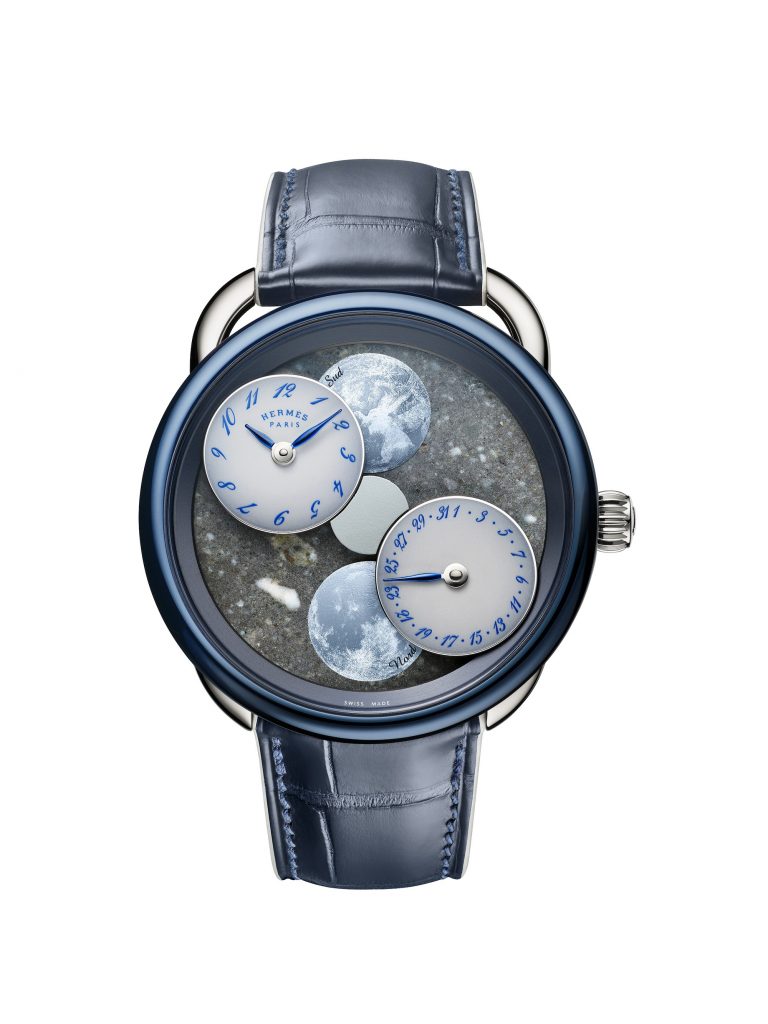
The meteorites Labenne finds are typically much smaller, though still prized by collectors and luxury-goods companies, including watch brands that transform slices of meteorite into distinctive dials. Hermès sourced meteorites from Labenne for its latest Arceau L’Heure de la Lune, a limited-edition timepiece that features two rotating discs depicting the surface of the moon.